Overview: The River of Gold
Tucked away in the Pauri Garhwal district of Uttarakhand lies Sonanadi Wildlife Sanctuary – a pristine wilderness that serves as a vital ecological corridor between two of India’s most famous national parks: Jim Corbett National Park and Rajaji National Park. Established on 9 January 1987, this protected area spans 301.18 square kilometres and forms a critical component of the Corbett Tiger Reserve.
The sanctuary derives its name from the Sonanadi River, which translates to “River of Gold”. In earlier times, gold panning was carried out in the river before the area became a protected forest. Today, the river and its pristine waters flow through dense Sal forests, bamboo clusters, and riverine grasslands, creating a haven for wildlife.
Sonanadi is not merely a sanctuary; it is a critical tiger and elephant habitat, boasting one of the highest densities of Bengal tigers and Asian elephants in the region. It is also recognised as an Important Bird Area (IBA) , hosting over 600 species of birds. With its rich biodiversity, serene landscapes, and the unique opportunity to explore on foot, Sonanadi offers an offbeat wildlife experience that stays with you forever.
Key Information at a Glance
History of Sonanadi Wildlife Sanctuary
The Birth of a Sanctuary (1987)
Sonanadi Wildlife Sanctuary was established on 9 January 1987 with the aim of protecting the rich biodiversity of the region. The sanctuary was carved out of the Kalagarh Forest Division, creating a protected area that would serve as a vital link between the forests of Corbett and Rajaji.
Project Tiger and Project Elephant (1991)
In 1991, Sonanadi was brought under the umbrella of Project Tiger and became an integral part of the Corbett Tiger Reserve. It was also included in Project Elephant, recognising its importance as a critical habitat for the northwest population of the Asian elephant.
Today, the Corbett Tiger Reserve, which includes Corbett National Park and Sonanadi Wildlife Sanctuary, holds the second-largest population of tigers in the world.
The “River of Gold”
The sanctuary is named after the Sonanadi River, which translates to “River of Gold”. Historically, the river was a site for gold panning, a practice that continued until the area was declared a protected forest. Today, the river flows through the sanctuary, nourishing its dense forests and diverse wildlife.
Geography of Sonanadi Wildlife Sanctuary
Location and Topography
Sonanadi Wildlife Sanctuary is located in the Pauri Garhwal district of Uttarakhand, at coordinates 29°37′33″N 78°41′05″E. It lies between Jim Corbett National Park and Rajaji National Park, forming a critical ecological corridor between the two protected areas.
| Feature | Details |
|---|---|
| Altitude | Low-lying Terai region |
| Area | 301.18 km² |
| Biotic Province | Shiwalik (Terai) biotic province |
The River Systems
The sanctuary is drained by several rivers and streams, including the Sonanadi River (after which the sanctuary is named), the Palain River, and the Mandal River. The riverine landscapes, with their scenic riverbanks and small waterfalls, add to the sanctuary’s natural beauty.
A Critical Ecological Corridor
Sonanadi serves as a vital biological corridor between Corbett National Park and Rajaji National Park. This connectivity allows wildlife, particularly elephants and tigers, to move freely between these protected areas, maintaining genetic diversity and healthy populations.
Flora of Sonanadi Wildlife Sanctuary
A Diverse Tapestry of Forests
The sanctuary encompasses a rich variety of forest types, making it a botanist’s delight:
| Forest Type | Description |
|---|---|
| Northern Tropical Moist Deciduous Forests | Dominated by Sal (Shorea robusta) |
| Northern Tropical Dry Deciduous Forests | Found in drier areas |
| Himalayan Sub-tropical Pine Forests | Higher elevations |
Dominant Tree Species
The sanctuary’s forests are predominantly composed of dense Sal trees, along with bamboo clusters and riverine grasslands.
Medicinal Plants
The sanctuary is also home to a variety of medicinal plants, adding to its ecological and economic significance.
Fauna of Sonanadi Wildlife Sanctuary
Sonanadi is a haven for wildlife enthusiasts, boasting almost all the larger mammals found in Corbett and Rajaji National Parks.
Mammals — The Flagship Species
Reptiles
| Species | Description |
|---|---|
| Python | Large constrictor |
| Monitor Lizard | Common |
| King Cobra | Found in the sanctuary |
| Turtles | Various species |
| Gangetic Gharial | Found in riverine areas |
| Mugger | Found in the sanctuary |
Birds — An Important Bird Area
Sonanadi is recognised as an Important Bird Area (IBA), hosting over 600 species of birds.
Religious Beliefs and Sacred Sites
Garjia Devi Temple
Located near the sanctuary, the Garjia Devi Temple is a prominent Hindu shrine in the region. Devotees visit this temple, especially during Kartik Poornima (November–December), to seek blessings.
Garjia Temple
The sanctuary is also close to the Garjia Temple (also known as Garjia Devi), a small shrine located in a hamlet of Garjia.
Nearby Spiritual Attractions
| Site | Significance |
|---|---|
| Garjia Devi Temple | One of the famous temples of the Nainital district |
| Corbett Museum (Dhangadi Gate) | A popular tourist spot |
How to Reach Sonanadi Wildlife Sanctuary
By Air — Nearest Airports
| Airport | Distance | Details |
|---|---|---|
| Jolly Grant Airport, Dehradun | ~100 km | Nearest airport |
| Pantnagar Airport | ~100 km | Alternative airport |
| Indira Gandhi International Airport, Delhi | ~250 km | Major international hub |
From Dehradun Airport:
- Hire a taxi to Kotdwar (approx. 2.5 hours)
- The drive from Delhi to Kotdwar typically takes 4–5 hours
By Train — Nearest Railway Stations
| Station | Distance | Details |
|---|---|---|
| Kotdwar Railway Station | 1.4 km | Nearest station |
| Ramnagar Railway Station | 51 km | Alternative station |
From Kotdwar Station:
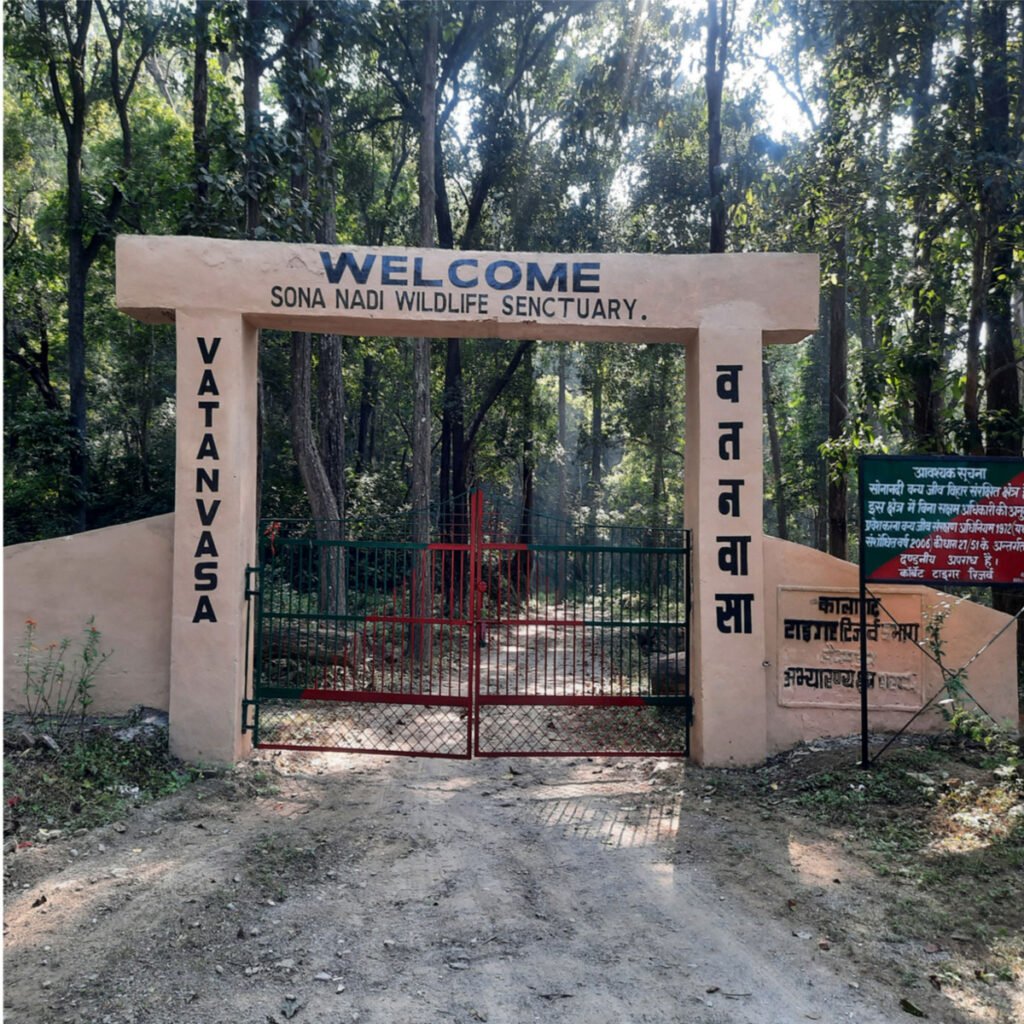
- Take a taxi to the Pakhro Gate or Vatanvasa Gate of Kalagarh Tiger Reserve
- The journey to Pakhro Gate takes approximately 30 minutes
By Road (Most Popular)
| Route | Distance | Travel Time |
|---|---|---|
| Delhi → Kotdwar | ~250 km | 5–6 hours |
| Delhi → Ramnagar | ~250 km | 5–6 hours |
| Dehradun → Kotdwar | ~100 km | 2.5 hours |
Key Entry Gates:
- Vatanvasa Gate – Entry point to Kalagarh Tiger Reserve / Sonanadi Wildlife Sanctuary
- Pakhro Gate – Located 23 km from Kotdwar, a 30-minute drive
Distance from Major Cities
| City | Distance to Kotdwar | Travel Time |
|---|---|---|
| Delhi | ~250 km | 5–6 hours |
| Dehradun | ~100 km | 2.5 hours |
| Haridwar | ~80 km | 2 hours |
| Rishikesh | ~70 km | 1.5–2 hours |
| Ramnagar | 51 km | 1.5 hours |
Weather and Best Time to Visit
Climate Overview
Sonanadi Wildlife Sanctuary experiences a subtropical climate with distinct seasons. The sanctuary is located in the Terai region, which is generally warm and humid.
Seasonal Breakdown
| Season | Months | Temperature | Conditions | Suitability |
|---|---|---|---|---|
| Winter (Peak) | October–February | 5°C – 25°C | Cool, comfortable, ideal for wildlife viewing | ⭐ Best |
| Summer | March–June | 15°C – 40°C | Warm to hot; animals gather near water sources | ⭐ Good |
| Monsoon | July–September | 20°C – 35°C | Heavy rainfall; sanctuary closed | ❌ Closed |
Best Time to Visit by Season
| Season | Months | Suitability | Highlights |
|---|---|---|---|
| Winter | November–February | ⭐ Best | Pleasant weather, high wildlife activity |
| Autumn | October–November | ⭐ Best | Post-monsoon freshness, clear views |
| Spring | March–April | ⭐ Good | Pleasant weather, blooming flora |
| Summer | May–June | ⭐ Good | Animals visit water sources; tiger sightings more likely |
| Monsoon | July–September | ❌ Closed | Sanctuary remains closed |
Why Visit in Winter (November–February)
- Pleasant temperatures ranging from 5°C to 25°C
- The sanctuary is teeming with wildlife
- Ideal for nature watching and photography
- All zones of the sanctuary are open
Why Visit in Summer (March–June)
- Animals frequently visit water sources
- Higher chances of tiger sightings
- Warm but manageable temperatures
- Early morning and evening safaris are recommended
Why the Sanctuary is Closed in Monsoon
- Heavy rainfall makes the forest roads inaccessible
- Slippery trails and waterlogging
- The sanctuary remains closed from July to September
Safari Timings
| Season | Morning Safari | Evening Safari |
|---|---|---|
| Winter (Oct–Feb) | 7:00 AM – 10:00 AM | 2:00 PM – 5:30 PM |
| Summer (Mar–Jun) | 6:00 AM – 9:30 AM | 3:00 PM – 6:30 PM |
Packing Guide
| Category | Items |
|---|---|
| Clothing | Light cotton clothes (summer), light woollens (winter) |
| Footwear | Comfortable walking shoes |
| Essentials | Sunscreen, sunglasses, hat, insect repellent |
| Gear | Camera, binoculars, water bottle |
| Documents | Valid ID proof, safari permit |
Nearby Places to Visit
| Destination | Distance | Highlights |
|---|---|---|
| Jim Corbett National Park | Adjacent | India’s oldest national park, tiger safaris |
| Rajaji National Park | Adjacent | Tiger reserve, diverse wildlife |
| Lansdowne | ~40 km | Colonial hill station, Garhwali Museum |
| Ramnagar | 51 km | Gateway to Corbett, local markets |
| Kotdwar | 1.4 km | Nearest town, railway station |
| Garjia Devi Temple | Near sanctuary | Popular Hindu shrine |
| Dhangarhi Museum | Near Dhangarhi Gate | Good stopover for first-time visitors |
Things to Do at Sonanadi Wildlife Sanctuary
1. Jeep Safari
Experience the thrill of a jeep safari through the dense Sal forests and riverine grasslands of Sonanadi. Safaris are conducted in the morning and evening, offering the best chances to spot tigers, elephants, and other wildlife.
2. Birdwatching
With over 600 species of birds, Sonanadi is a paradise for birdwatchers. Look out for the Great Hornbill, Kalij Pheasant, and various raptors.
3. Nature Photography
Capture the stunning landscapes, from the golden river to the dense forests and diverse wildlife. The sanctuary offers endless photography opportunities.
4. Explore the Sonanadi River
The Sonanadi River flows through the sanctuary, offering scenic riverbanks and small waterfalls. The riverine landscapes are perfect for nature walks and photography.
5. Visit Nearby Attractions
Explore the nearby Garjia Devi Temple, Corbett Museum, and the colonial charm of Lansdowne.
Accommodation Options
| Type | Location | Features | Price Range |
|---|---|---|---|
| Forest Rest Houses | Halduparao, Loha Chaur, Rathuadhab | Basic amenities, immersive jungle stay | |
| Resorts | Kotdwar, Ramnagar | Comfortable stays with modern amenities | |
| Hotels | Kotdwar | Wide range from budget to luxury | |
| Eco-Lodges | Near sanctuary | Sustainable accommodation options |
Travel Tip: Book forest rest houses at least 45 days in advance through the government portal for an immersive jungle stay.
Frequently Asked Questions (FAQs)
General Questions
Q1: Where is Sonanadi Wildlife Sanctuary located?
A: Sonanadi Wildlife Sanctuary is located in the Pauri Garhwal district of Uttarakhand, between Jim Corbett National Park and Rajaji National Park.
Q2: What is the area of Sonanadi Wildlife Sanctuary?
A: The sanctuary encompasses an area of 301.18 square kilometres.
Q3: When was Sonanadi Wildlife Sanctuary established?
A: The sanctuary was established on 9 January 1987.
Q4: What is the meaning of “Sonanadi”?
A: “Sonanadi” means “River of Gold” in Hindi. The sanctuary is named after the Sonanadi River, where gold panning was historically carried out.
Q5: What animals can I see at Sonanadi Wildlife Sanctuary?
A: The sanctuary is home to Bengal tigers, Asian elephants, leopards, sloth bears, sambar deer, chital, barking deer, wild boar, pythons, and king cobras.
Q6: How many bird species are found in Sonanadi Wildlife Sanctuary?
A: Sonanadi is an Important Bird Area (IBA) , hosting over 600 species of birds, including the Great Hornbill.
Q7: When is Sonanadi Wildlife Sanctuary open?
A: The sanctuary is open from 15 October to 15 June. It remains closed during the monsoon season (July–September).
Q8: What are the safari timings at Sonanadi?
A: Winter (Oct–Feb): 7:00 AM – 10:00 AM & 2:00 PM – 5:30 PM. Summer (Mar–Jun): 6:00 AM – 9:30 AM & 3:00 PM – 6:30 PM.
Q9: What is the nearest railway station to Sonanadi Wildlife Sanctuary?
A: The nearest railway station is Kotdwar Railway Station, just 1.4 km away.
Q10: What is the nearest airport to Sonanadi Wildlife Sanctuary?
A: The nearest airport is Jolly Grant Airport, Dehradun.
Q11: What is the distance between Delhi and Sonanadi Wildlife Sanctuary?
A: The distance from Delhi to Kotdwar is approximately 250 km, taking about 5–6 hours by road.
Q12: Is Sonanadi Wildlife Sanctuary a part of Corbett Tiger Reserve?
A: Yes, Sonanadi Wildlife Sanctuary forms a vital component of the Corbett Tiger Reserve.
Q13: Can I explore Sonanadi on foot?
A: Yes, Sonanadi is the only zone in the Corbett Tiger Reserve that can be explored on foot.
Q14: Are there any villages inside the sanctuary?
A: No, there are no villages within the sanctuary, preserving its untouched wilderness.
Q15: What is the entry fee for Sonanadi Wildlife Sanctuary?
A: Entry fees vary. Permits for day visits can be obtained from the visitor reception centre at Kotdwar.
Plan Your Sonanadi Visit with Discover Uttarakhand
At Discover Uttarakhand, we’ve been organising unforgettable Himalayan journeys since 1997. As a trusted local operator with deep knowledge of the Garhwal region and its wildlife sanctuaries, we offer:
✅ Customised Sonanadi Wildlife Sanctuary tour packages
✅ Combined itineraries covering Sonanadi, Corbett, Rajaji, and Lansdowne
✅ Comfortable transport with experienced local drivers
✅ Verified accommodations in Kotdwar and Ramnagar
✅ Safari bookings and forest rest house reservations
✅ 24/7 customer support throughout your journey
Recommended Corbett Region Packages
| Package | Duration | Starting Point | Highlights |
|---|---|---|---|
| Sonanadi & Corbett Safari | 3 Nights / 4 Days | Delhi | Sonanadi Jeep Safari, Corbett Tiger Reserve, birdwatching |
| Corbett & Rajaji Explorer | 4 Nights / 5 Days | Delhi | Sonanadi, Corbett, Rajaji, Garjia Devi Temple |
| Lansdowne & Wildlife Tour | 4 Nights / 5 Days | Delhi | Sonanadi Wildlife, Lansdowne Colonial Charm |
📞 Call / WhatsApp: +91-9997187178, 9760222178, 8171977178
📍 Visit Our Office: Himalayan Colony, opposite DSVV, Haripur Kalan, Haridwar, Motichur Range, Uttarakhand 249411
🌐 Website: www.discover-uttarakhand.com
📧 Email: info@discover-uttarakhand.com
Discover Uttarakhand – Your Local Partner for Unforgettable Himalayan Journeys Since 1997 🏔️