Overview: When the Himalayas Sleep, Faith Travels
The Char Dham Yatra—the sacred pilgrimage to Yamunotri, Gangotri, Kedarnath, and Badrinath—is one of the most spiritually significant journeys in Hinduism. For centuries, millions of devotees have undertaken this pilgrimage during the summer months when the high-altitude Himalayan shrines open their doors to the faithful.
But what happens when winter blankets the Garhwal Himalayas in snow, and the sacred temples close their gates? Does the pilgrimage end? The answer is a resounding no.
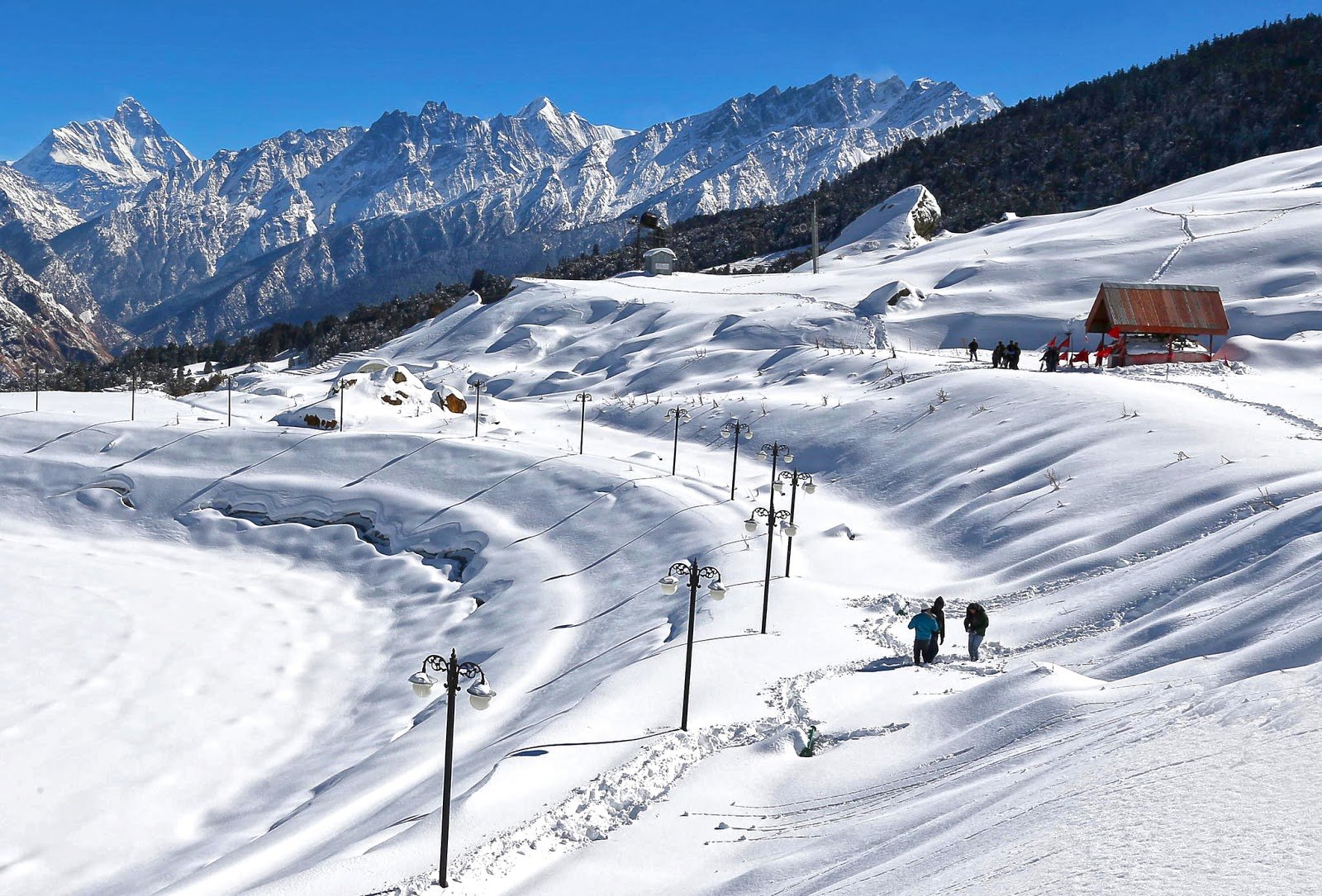
The Winter Char Dham Yatra is a lesser-known but equally profound spiritual journey that takes place from November to April when the main shrines are closed due to heavy snowfall. During this time, the presiding deities of the four Dhams are ceremonially moved to their winter abodes—lower-altitude temples where worship continues uninterrupted throughout the cold months.
This off-season pilgrimage offers a quieter, more intimate, and deeply meditative experience compared to the bustling summer yatra. It is ideal for senior citizens, spiritual seekers, and travellers who prefer peace over crowds. The winter circuit is largely road-based and less physically demanding, making it accessible to a wider range of devotees.
Whether you are a devout pilgrim seeking to continue your spiritual journey year-round, or a traveller looking for a peaceful Himalayan experience away from the summer crowds, the Winter Char Dham Yatra promises a journey of a lifetime.
Key Information at a Glance
What is the Winter Char Dham Yatra?
The Winter Char Dham Yatra is a unique pilgrimage that allows devotees to continue their spiritual journey even when the main Char Dham shrines are closed due to heavy snowfall. When winter blankets the high-altitude temples in snow, the presiding deities are ceremonially moved to lower-altitude winter abodes, where worship continues with the same rituals and devotion.
Why Visit in Winter?
📝 Important Note: The Winter Char Dham Yatra is a state-supported initiative launched by the Uttarakhand government to ensure year-round religious tourism and economic opportunities for local communities.
The Four Winter Seats of the Char Dham
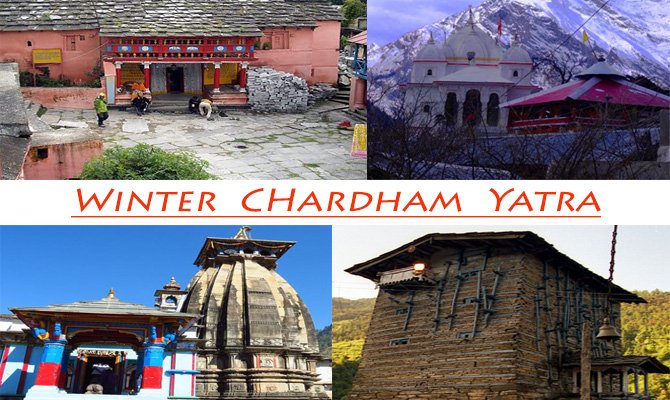
1. Yamunotri → Kharsali (Khushimath)
The Tradition: When the Yamunotri Temple closes during Diwali, the idol of Goddess Yamuna is brought to Kharsali (also known as Khushimath), believed to be the world’s oldest inhabited village. The temple here is built of stone, wood, and a mortar made from lentil, making it architecturally unique. The village also boasts recreational spots, thermal springs, rolling meadows, and forests of oak and conifer.
Winter Worship: The priests from the same family continue daily worship at Kharsali, and the village comes alive with festive devotion as pilgrims visit the winter shrine.
2. Gangotri → Mukhba Village
The Tradition: Due to excessive snowfall in the higher areas during winter, the idol of Goddess Ganga is transported from the Gangotri Temple to the Mukhba hamlet near Harsil. Mukhba is considered the ancestral home of Goddess Ganga and is believed to be where Chaman Rishi rested with Bhima during the Ashwamedha Yagna.
Temple Architecture: The hamlet has two Ganga temples—one modern, constructed of concrete and marble, and the other fashioned entirely of deodar and brass. The move happens amid vibrant celebrations, with locals accompanying the palanquin in traditional attire.
3. Kedarnath → Ukhimath
The Tradition: When the Kedarnath Temple closes, usually in late October or early November, the idol of Lord Shiva in his Kedarnath form is ceremonially transferred to the Omkareshwar Temple in Ukhimath, a beautiful village near Guptkashi in the Rudraprayag district. The head priests of Kedarnath (known as Rawals) also come down to Ukhimath.
Ukhimath as a Spiritual Hub: Ukhimath is not just the winter abode of Lord Kedarnath but is also famous for revered shrines dedicated to several deities of the Hindu pantheon, including Devi Usha, Lord Shiva, Lord Aniruddha, and Devi Parvati. Surrounded by snow-capped peaks including Kedarnath and Neelkantha, Ukhimath is ideal for those seeking peace and spirituality.
4. Badrinath → Joshimath / Pandukeshwar
The Tradition: When Badrinath Dham closes its gates, Lord Badri Vishal is brought to the Narsingh Temple in Joshimath, approximately 45 km away from the original Badrinath temple. This temple houses the idol of Lord Narsingh, one of Vishnu’s incarnations, and becomes the winter home of Badrinath’s deity.
Pandukeshwar Connection: According to local legend, Pandukeshwar is where the Pandava brothers prayed to Vasudeva, and where the Udhava idol, the emissary of Lord Badri, is worshipped during winters. This place is also known as Yogadhyan Badri and is readily accessible, situated between Joshimath and Badrinath.
How to Reach the Winter Char Dham Circuit
By Air — Nearest Airports
| Airport | Distance | Details |
|---|---|---|
| Jolly Grant Airport, Dehradun | ~20 km from city | Connected to Delhi with daily flights |
| Indira Gandhi International Airport, Delhi | ~250 km to Haridwar | Major international hub |
From Dehradun Airport:
- Hire a taxi to Haridwar or directly to the winter circuit destinations
By Train — Nearest Railway Stations
| Station | Details |
|---|---|
| Haridwar Railway Station | Well-connected to Delhi (4–5 hours by train) |
| Rishikesh Railway Station | Alternative station |
From Haridwar/Rishikesh:
- Hire a taxi or take a bus to the winter circuit destinations
By Road (Most Popular)
| Route | Distance | Travel Time |
|---|---|---|
| Delhi → Haridwar/Rishikesh | ~200–230 km | 5–6 hours |
| Haridwar → Ukhimath | ~220 km | 7–8 hours |
| Ukhimath → Joshimath | ~100 km | 3–4 hours |
| Joshimath → Harsil/Mukhba | ~250 km | 7–8 hours |
| Harsil → Kharsali | ~150 km | 5–6 hours |
Route from Delhi:
Delhi → Haridwar → Rishikesh → Devprayag → Rudraprayag → Ukhimath → Joshimath → Uttarkashi → Harsil → Kharsali
Transport Options:
- Private Taxi: Most convenient and flexible
- State Transport Buses: Available from Haridwar and Rishikesh
- Shared Jeep: Available from major towns
Winter Char Dham Circuit Itinerary (4 Nights / 5 Days)
This classic itinerary covers all four winter seats of the Char Dham:
Distance from Major Cities
| City | Distance to Haridwar | Travel Time |
|---|---|---|
| Delhi | ~200–230 km | 5–6 hours |
| Dehradun | ~55 km | 1.5 hours |
| Chandigarh | ~170 km | 4–5 hours |
Weather and Best Time to Visit
Climate Overview
The Winter Char Dham circuit takes place in lower-altitude Himalayan towns that remain accessible during winter. Temperatures are cold but manageable, with occasional snowfall adding to the scenic beauty.
Seasonal Breakdown
| Season | Months | Temperature | Conditions | Suitability |
|---|---|---|---|---|
| Winter (Peak) | November–March | 0°C – 15°C | Cold, occasional snow, clear skies | ⭐ Best |
| Late Winter | March–April | 5°C – 20°C | Pleasant, snow melting | ⭐ Good |
Best Time to Visit
The ideal time for the Winter Char Dham Yatra is from November to March. During these months:
- The winter temples are open and accessible
- Roads remain open and safe
- The crowds are minimal, allowing for peaceful darshan
- The snow-capped Himalayan views are spectacular
Packing Guide
| Category | Items |
|---|---|
| Clothing | Heavy woollens, thermal wear, insulated jacket, gloves, woollen cap, scarf |
| Footwear | Sturdy waterproof shoes, warm socks |
| Essentials | Sunscreen, sunglasses, power bank, personal medication |
| Documents | Valid ID proof |
| Other | Cash (ATMs may be limited in remote areas) |
Religious Beliefs and Significance
The Tradition of Winter Seats
The shifting of deities to lower-altitude temples is more than a practical adjustment—it reflects a centuries-old balance between nature and faith. The higher reaches of Uttarakhand experience some of the coldest winters, with treacherous snow-covered routes and extremely low temperatures. By moving the deities to winter abodes, the tradition ensures that worship never stops.
The Winter Seats Are Sacred Extensions
The winter temples are not substitutes but sacred extensions of the original shrines, where daily worship continues throughout winter. The same priests perform the same rituals, ensuring spiritual continuity.
A Game-Changer for Religious Tourism
The Winter Char Dham Yatra has been described by Uttarakhand Chief Minister Pushkar Singh Dhami as a “game changer” for the state. It extends the pilgrimage season, creates new economic opportunities for local communities, and allows devotees to maintain their spiritual connection year-round.
Nearby Places to Visit
| Destination | Highlights |
|---|---|
| Haridwar | Har Ki Pauri, Ganga Aarti, sacred ghats |
| Rishikesh | Laxman Jhula, Ram Jhula, Ganga Aarti, yoga centres |
| Devprayag | Confluence of Alaknanda and Bhagirathi |
| Rudraprayag | Confluence of Alaknanda and Mandakini |
| Guptkashi | Ancient temple, views of Chaukhamba |
| Harsil | Scenic valley, apple orchards, deodar forests |
| Uttarkashi | Vishwanath Temple, spiritual town |
Frequently Asked Questions (FAQs)
General Questions
Q1: What is the Winter Char Dham Yatra?
A: The Winter Char Dham Yatra is a pilgrimage to the winter abodes of the four Char Dham deities—Yamunotri, Gangotri, Kedarnath, and Badrinath—when the main shrines are closed due to heavy snowfall. The deities are ceremonially moved to lower-altitude temples where worship continues.
Q2: When is the Winter Char Dham Yatra held?
A: The Winter Char Dham Yatra takes place from November to April. The main shrines close around Diwali (October–November) and reopen in April–May.
Q3: Where are the winter seats of the Char Dham?
A: The winter seats are:
- Yamunotri → Kharsali (Khushimath)
- Gangotri → Mukhba Village
- Kedarnath → Omkareshwar Temple, Ukhimath
- Badrinath → Narsingh Temple, Joshimath
Q4: Is the Winter Char Dham Yatra difficult?
A: No, the Winter Char Dham Yatra is easier than the summer pilgrimage. It is largely road-based and does not involve high-altitude trekking. The winter seats are located in lower-altitude towns that remain accessible.
Q5: Is the Winter Char Dham Yatra suitable for senior citizens?
A: Yes, the winter circuit is ideal for senior citizens, spiritual seekers, and travellers who prefer peace over crowds.
Q6: What is the best time to visit the Winter Char Dham?
A: The ideal time is from November to March.
Q7: Are the rituals at the winter seats authentic?
A: Yes, the same priests from each original Dham continue the puja at the winter seats with the same rituals.
Q8: Is the Winter Char Dham Yatra open to all?
A: Yes, the Winter Char Dham Yatra is open to all devotees and travellers seeking a peaceful spiritual experience.
Q9: What is the distance between the winter seats?
A: The winter seats are spread across the Garhwal region. A 4–5 day itinerary covers all four destinations.
Q10: How can I book a Winter Char Dham Yatra tour?
A: Tours can be booked through:
- Local tour operators in Haridwar, Rishikesh, and Dehradun
- Discover Uttarakhand for customised pilgrimage packages
Plan Your Winter Char Dham Yatra with Discover Uttarakhand
At Discover Uttarakhand, we’ve been organising unforgettable Himalayan journeys since 1997. As a trusted local operator with deep knowledge of the Garhwal region and its sacred sites, we offer:
✅ Customised Winter Char Dham Yatra packages (4 to 6 days)
✅ Combined itineraries covering all four winter seats
✅ Comfortable transport with experienced hill drivers
✅ Verified accommodations in Ukhimath, Joshimath, Harsil, and Kharsali
✅ Local guides for temple visits and cultural experiences
✅ 24/7 customer support throughout your journey
Recommended Winter Char Dham Packages
📞 Call / WhatsApp: +91-9997187178, 9760222178, 8171977178
📍 Visit Our Office: Himalayan Colony, opposite DSVV, Haripur Kalan, Haridwar, Motichur Range, Uttarakhand 249411
🌐 Website: www.discover-uttarakhand.com
📧 Email: info@discover-uttarakhand.com
Discover Uttarakhand – Your Local Partner for Unforgettable Pilgrimage Journeys Since 1997 🏔️