
Overview: The Sacred Abode of Mahakali
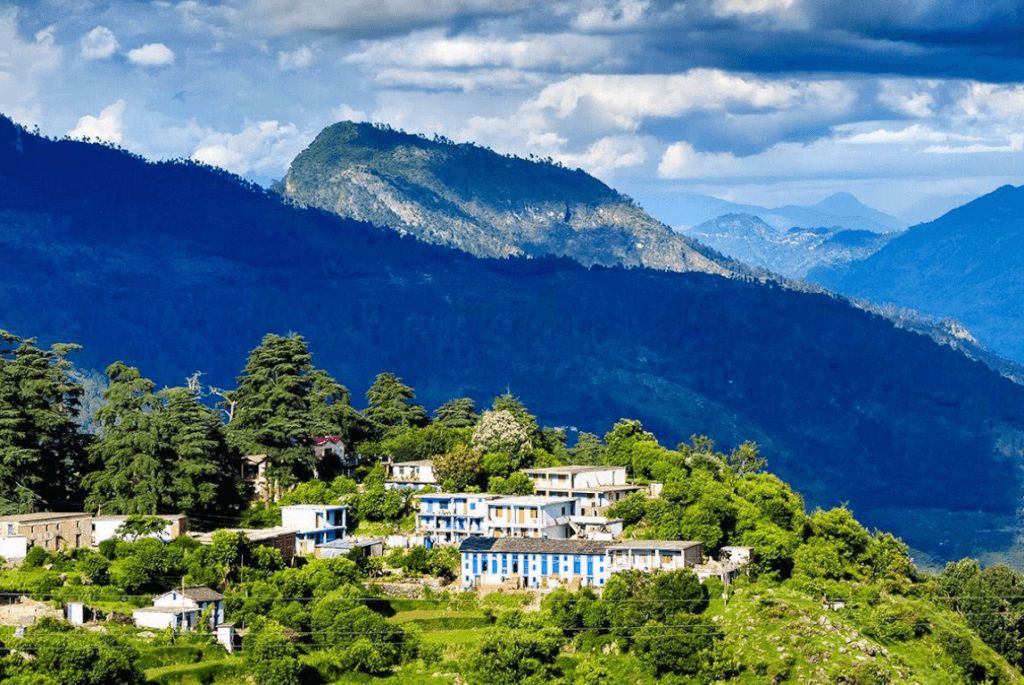
Tucked away in the Pithoragarh district of Uttarakhand, Gangolihat is not just a destination; it is a journey into the spiritual heart of the Kumaon Himalayas and the sacred legacy of the Katyuri and Chand dynasties.
Often referred to as the “Land of the Haat Kalika Shakti Peeth”, this magnificent hill town is a land of unparalleled natural beauty and profound spiritual significance. Located in the Kumaon region of Uttarakhand, Gangolihat is home to one of the most revered Shakti Peethas in India — the Haat Kalika Temple, dedicated to Goddess Kali, which was established by Adi Guru Shankaracharya himself.
What makes Gangolihat truly special is its extraordinary diversity—from the ancient Haat Kalika Temple and the sacred Chamunda Temple to the mystical Patal Bhuvaneshwar Cave just 14 km away, from the serene Vaishnavi Temple with panoramic Himalayan views to the recently discovered Bholeshwar Gufa. The town is a living repository of the Katyuri and Chand dynasty heritage, with temples, naulas (water sources), and ancient monuments that date back to the 8th–11th centuries.
The name “Gangolihat” is derived from “Gang” (river) and “Awali” (garland), referring to the Saryu and Ramganga rivers that garland the region, combined with “Hat”, the ancient marketplaces that made it a thriving trading centre.
The journey to Gangolihat, which begins from the spiritual hubs of Kathgodam or Pithoragarh, is an accessible yet profoundly rewarding adventure through sacred Shakti Peethas, ancient caves, and the majestic Himalayan wilderness. It offers a profound sense of peace, spiritual connection, and a deep appreciation for the rich cultural heritage of Uttarakhand.
Key Information at a Glance
History of Gangolihat
Ancient Roots in the Katyuri Dynasty
Gangolihat has a rich and vibrant history that dates back to the ancient Katyuri dynasty, which ruled the region before the 13th century. The region, originally called Gangavali, was the primary market and main trading centre of the Gangoli region.
The Mankoti Kings and Chand Dynasty
Around the 13th century, Gangolihat came under the rule of the Mankoti kings, who had their capital at Mankot. An inscription found at Janhavi naula in Gangolihat, dating to 1264 A.D., records the names of the Gangoli kings and mentions a possible invasion of Mankot by Delhi Sultan Nasiruddin Mahmud Shah. On a stone piece from 1352 A.D. found in the Baijnath temple, it is written that the kings of Gangoli — Hamirdeo, Lingarajdeo, and Dharaldeo — built the kalash of the temple.
The kingdom of Gangoli was later invaded by the Chand king, Balo Kalyan Chand, in the 16th century. Following its defeat, Mankot was merged into the Kumaon Kingdom. The Chand rulers were great patrons of art and learning, and they built many temples, naulas, and established a centre of learning called Gangavihar for Buddhists following the destruction of Nalanda.
Modern Administrative History
In the nineteenth century, Gangoli was made a pargana of Almora district, and the pargana headquarters were established in Gangolihat town itself. Today, Gangolihat is the headquarters of an eponymous tehsil — one of the 12 revenue subdivisions of the Pithoragarh district.
The Kumaon Regiment Connection
Gangolihat holds a special place in the hearts of the Indian Army, particularly the Kumaon Regiment. The goddess Mahakali is the designated goddess of the Kumaon Regiment, and the regiment has created an Army Rest House near the temple for Army personnel who come to Gangolihat to seek the blessings of the Goddess before deployment to the borders. Posthumous Param Veer Chakra award winner Captain Bikram Batra was a great devotee of the goddess, and he had created an Army Rest House near the temple.
Geography of Gangolihat
Location and Topography
Gangolihat is situated at an elevation of 1,760 metres (5,773 feet) above sea level in the Pithoragarh district of Uttarakhand. The town is perched atop a hill, surrounded by two major rivers — the Saryu Ganga and the Ram Ganga — which meet at the foothills of the region, creating a garland-like formation around the town.
The Saryu and Ramganga Rivers
The two rivers that garland Gangolihat — the Saryu Ganga and the Ram Ganga — are not just geographical features but sacred rivers that add to the spiritual significance of the region. They meet at a ghat at the foothills of the region, and their confluence is considered a holy site. The rivers gave the region its ancient name Gangavali (Gang = river, Awali = garland), which over time became Gangoli.
The Himalayan Panorama
Gangolihat offers spectacular views of the Himalayan mountain peaks of the western Kumaon range. From the Vaishnavi Temple in Gangolihat, one can clearly view the majestic Panchachuli and Nanda Devi peaks, along with other prominent Himalayan summits. The Lamkeshwar peak — the highest in the range — is home to a temple of Lord Shiva and offers memorable views of the lush green valleys of the Kumaon Himalayas.
Major Landmarks and Valleys
Gangolihat is surrounded by several prominent landmarks and scenic valleys:
- Shail Parvat – The mountain on which the Vaishnavi Temple is situated, mentioned in Hindu holy books
- Patal Bhuvaneshwar – A mystical limestone cave temple 14 km from Gangolihat
- Chamunda Temple – Located just 2 km from Gangolihat’s main market on Chamunda Road
- Bhurgottam Peak – Near village Mallagrkha, famous as the place of Bhrigu, one of the seven great sages (Saptarshis)
Flora and Fauna
Flora
Gangolihat is blessed with extraordinary biodiversity, with the Vaishno Devi Sacred Grove — a protected patch of relict virgin forest spanning 30 hectares and over 100 years old — being one of its most significant ecological treasures.
Forest Types:
- Sub-tropical evergreen forests – Primary classification of the sacred grove
- Sub-temperate and temperate plant elements – Mixed within the grove
- Deodar forests – Found in the surrounding regions
- Oak forests – Mid-hill vegetation
Tree Species:
The primary forest canopy is composed of tree species such as Quercus sp. (oak), Cedrus deodara (deodar), Aesculus indica (Indian horse chestnut), Bauhinia variegata (Kachnar), and Rhododendron arboreum (Burans).
Floristic Diversity:
Researchers have identified 112 plant species belonging to 86 genera and 39 families within the Vaishno Devi Sacred Grove, including:
- 56 species of aromatic and medicinal plants
- 14 species of wild edible plants
- 12 species of fodder and forage plants
- 6 species of oil-yielding plants
- 4 species of timber-yielding plants
The grove ensures the survival of several endangered plant taxa, such as Valeriana jatamansi, Delphinium denudatum, and Thalictrum foliolosum. It is also home to various orchids (e.g., Satyrium nepalense, Eulophia herbacea), climbers (e.g., Rubia cordifolia), lianas (Bauhinia vahlii), and succulents (Agave sp., Aloe sp. ).
Fauna
Gangolihat and its surrounding regions are home to a remarkable variety of Himalayan wildlife:
Mammals:
- Leopard – The apex predator of the region
- Barking Deer (Kakar)
- Musk Deer
- Himalayan Black Bear
- Red Fox
- Himalayan Tahr
- Serow
The dense canopy of the Vaishno Devi Sacred Grove supports a thriving microhabitat that includes profuse growths of mosses and other bryophytes, with tree trunks and branches covered in epiphytic angiosperms and pteridophytes.
Birds:
- Himalayan Monal – Uttarakhand’s state bird
- Golden Eagle
- Bearded Vulture
- Western Tragopan
- Various pheasant species
Protected Areas
Religious Beliefs and Significance
The Land of the Haat Kalika Shakti Peeth
Gangolihat is rightly called the “Land of the Haat Kalika Shakti Peeth”. The town is deeply revered in Hindu mythology as the abode of Goddess Kali, who is included in the Ten Mahavidyas and is known as the supreme power of the universe.
The Haat Kalika Temple
The Haat Kalika Temple is the most famous in Gangolihat, dedicated to Goddess Kali in her fierce form as Mahakali. The temple was established by Adi Guru Shankaracharya for the installation of one of the Shakti Peethas. It is believed that when Adi Shankaracharya was travelling from Pashupatinath to Kedarnath, he came to this Shakti Peeth and worshipped Mahakali.
According to legend, during ancient times, after being defeated by the demon Shumbh, the deities came to Shail Parvat and eulogised the goddess to get rid of the vices of the demons. Pleased by their devotion, Goddess Durga took the form of Mahakali and killed the demon Shumbh. The deities worshipped this furious form of Mahakali at this place, and since then, this place has been famous as the Mahakali Shakti Peeth.
It is also believed that the goddess Kalika Mata, who is thought to reside in West Bengal, moved from West Bengal to Gangolihat. A perpetual holy fire burns at the temple site since time immemorial, which is considered to be the power of the goddess.
In modern times, Saint Jangam Baba offered prayers at the temple site for years, and one day the goddess appeared in his dream and asked him to construct a temple here. Therefore, the present temple owes the credit of its formation to Jangam Baba.
The Chamunda Temple
The Chamunda Temple is located just 2 km from Gangolihat’s main market on Chamunda Road. It is dedicated to Goddess Chamunda, a fierce form of Durga, and is an important religious site for local communities.
The Vaishnavi Temple
The Vaishnavi Temple is situated on a mountain called Shail Parvat, which is mentioned in Hindu holy books. The temple is famous because from here, one can witness a clear view of the Himalayas, including the Panchachuli and Nanda Devi peaks.
The Patal Bhuvaneshwar Cave
The Patal Bhuvaneshwar Cave is a mystical limestone cave temple located about 14 km from Gangolihat. The cave is 160 metres long and 90 metres deep, and it is believed to be the abode of 33 crore Gods and Goddesses. According to the Skanda Purana, the Pandavas began their heavenly journey from this cave. The cave was first discovered by Adi Shankaracharya during his sojourn in the Himalayas, who dedicated it to Lord Shiva and enshrined the Shiva lingam.
The Vaishno Devi Sacred Grove
The Vaishno Devi Sacred Grove is a protected patch of relict virgin forest spanning 30 hectares in Jakhani, along the Pithoragarh–Gangolihat roadway. The preservation of the grove is driven entirely by the religious beliefs of the local community, known as the ‘Gangola’ of Gangolihat, who believe that their local deity resides within this forest. It houses a small temple dedicated to Vaishno Devi. The local community strictly prohibits grazing, tree cutting, poaching, and the collection of non-timber forest products within the grove.
Other Caves and Temples
Gangolihat is also home to several other ancient caves and temples:
- Shailashwer Gufa – An ancient underground cave
- Mukteshwar Gufa – Another notable cave
- Bholeshwar Gufa – A recently discovered underground cave
- Ambika Dewaal – An ancient temple in North Gangolihat
Local Festivals and Celebrations
Gangolihat and the surrounding region celebrate several festivals with great enthusiasm:
- Haat Kalika Mela – The famous fair held at the temple, where visitors come from far-flung places to offer prayers to Mahakali. Devotees visit the shrine with drums and flags to pay homage to Goddess Kalika
- Navratri – The temple sees elevated activity during Navratri (March–April and September–October)
- Harela – A festival celebrating the sowing of seeds and the arrival of spring
- Diwali – The festival of lights
- Local Fairs – Traditional fairs that showcase the vibrant culture of the Kumaon region
How to Reach Gangolihat
Gangolihat is well connected by road and can be easily reached from major cities in Uttarakhand and North India.
By Air
The nearest airport is Pantnagar Airport in Nainital, approximately 200 km from Gangolihat. Pantnagar Airport is well connected to Delhi with daily flights. Taxis are available from the airport to Gangolihat.
| Route | Distance | Travel Time |
|---|---|---|
| Pantnagar Airport → Gangolihat | ~200 km | 6–7 hours |
By Train
The nearest railway station is Kathgodam, approximately 185 km from Gangolihat. Kathgodam is well connected by railway networks with major destinations in India, including Delhi and Lucknow. Taxis and buses are available from Kathgodam to Gangolihat.
| Route | Distance | Travel Time |
|---|---|---|
| Kathgodam → Gangolihat | ~185 km | 6–7 hours |
By Road
Gangolihat is well connected by motorable roads with major destinations in Uttarakhand state. The town is easily accessible from Pithoragarh, Almora, and Chaukori.
Bus Services:
- Buses to Kathgodam and Pithoragarh are available from ISBT Kashmiri Gate, New Delhi
- Buses and taxis to Gangolihat are easily available from Kathgodam, Pithoragarh, and Chaukori
Travel Options from Delhi
| Mode | Duration | Cost (Approx.) |
|---|---|---|
| Train + Taxi | 8h 31m | ₹3,500–₹6,000 |
| Bus + Taxi | 11h 33m | ₹5,000–₹6,500 |
| Taxi (Full) | 6h 44m | ₹10,000–₹14,000 |
| Fly + Taxi | 5h 55m | ₹8,000–₹20,000 |
Local Transport
Within Gangolihat and the surrounding areas, local transport options include:
- Taxis and shared jeeps for local travel
- Walking to explore the temple groups and scenic beauty
- Buses connecting major towns and villages
Weather and Best Time to Visit
Climate Overview
Gangolihat experiences a subtropical highland climate with distinct seasons, ranging from pleasant summers to cold winters. The town’s elevation of 1,760 metres ensures comfortable temperatures for most of the year.
Seasonal Breakdown
| Season | Months | Weather | Suitability |
|---|---|---|---|
| Summer | March–June | Pleasant, 15–30°C | ⭐ Best |
| Monsoon | July–September | Heavy rainfall, landslides, lush greenery | Avoid |
| Autumn | October–November | Crisp air, clear views | ⭐ Best |
| Winter | December–February | Cold, 2–16°C | Good for temple visits |
Best Time to Visit
| Season | Months | Highlights |
|---|---|---|
| Autumn | October–November | Post-monsoon clarity, crisp air, best mountain views, temple festivals |
| Summer | March–June | Pleasant weather, clear views, ideal for temple exploration and trekking |
| Winter | December–February | Cold but peaceful, ideal for spiritual retreats |
Note: The best period to visit Gangolihat is from October till March. The weather is refreshingly pleasant and begins to get colder towards the later part of winter, requiring multiple layers of woollens. February, March, and April, as well as September and October, are also excellent months with comfortable temperatures. Avoid visiting during July and August due to heavy rainfall and landslide risk.
Temperature
| Season | Daytime Temperature | Nighttime Temperature |
|---|---|---|
| Summer (April–June) | 15°C to 30°C | 10°C to 15°C |
| Monsoon (July–September) | 15°C to 20°C | 10°C to 15°C |
| Autumn (Oct–Nov) | 10°C to 25°C | 5°C to 10°C |
| Winter (Dec–Feb) | 2°C to 16°C | 2°C to 5°C |
Nearby Places
Distance from Major Cities
Frequently Asked Questions (FAQs)
General Questions
Q1: What is Gangolihat?
A: Gangolihat is a town and tehsil headquarters in the Pithoragarh district of Uttarakhand, famous for the Haat Kalika Shakti Peeth dedicated to Goddess Kali.
Q2: Where is Gangolihat located?
A: Gangolihat is located in the Pithoragarh district of Uttarakhand, in the Kumaon region, at an elevation of 1,760 metres.
Q3: What is the elevation of Gangolihat?
A: Gangolihat is situated at an elevation of 1,760 metres (5,773 feet) above sea level.
Q4: What is Gangolihat famous for?
A: Gangolihat is famous for the Haat Kalika Temple (Shakti Peeth), the Patal Bhuvaneshwar Cave, the Vaishno Devi Sacred Grove, and its deep connection with the Kumaon Regiment of the Indian Army.
Q5: What is the best time to visit Gangolihat?
A: The best time is October–March and March–June. The weather is pleasant and ideal for temple visits and sightseeing.
Q6: What is the nearest airport to Gangolihat?
A: The nearest airport is Pantnagar Airport, approximately 200 km away.
Q7: What is the nearest railway station to Gangolihat?
A: The nearest railway station is Kathgodam, approximately 185 km away.
Q8: How far is Gangolihat from Delhi?
A: Gangolihat is approximately 458 km from Delhi, about a 6h 44m drive.
Q9: What is the vehicle registration code for Gangolihat?
A: The vehicle registration code for Gangolihat is UK-05 (Pithoragarh district).
Q10: What is the population of Gangolihat?
A: According to the 2011 Census, the population of Gangolihat is 7,112.
Q11: What is the literacy rate of Gangolihat?
A: The literacy rate of Gangolihat is 74.11%.
Q12: What are the major rivers near Gangolihat?
A: The major rivers are the Saryu Ganga and the Ram Ganga, which garland the region.
Q13: What is the Haat Kalika Temple?
A: The Haat Kalika Temple is a Shakti Peeth dedicated to Goddess Kali, established by Adi Guru Shankaracharya.
Q14: What is the significance of the Patal Bhuvaneshwar Cave?
A: The Patal Bhuvaneshwar Cave is a mystical limestone cave temple believed to be the abode of 33 crore Gods and Goddesses, and is 160 metres long and 90 metres deep.
Q15: What is the Vaishno Devi Sacred Grove?
A: The Vaishno Devi Sacred Grove is a 30-hectare protected virgin forest over 100 years old, preserved by the Gangola community, and home to 112 plant species.
Q16: What is the connection between Gangolihat and the Kumaon Regiment?
A: Goddess Mahakali is the designated goddess of the Kumaon Regiment, and the regiment has built an Army Rest House near the temple for personnel to seek blessings before deployment.
Q17: What wildlife can be found near Gangolihat?
A: Gangolihat is home to leopards, barking deer, musk deer, Himalayan black bear, red fox, Himalayan tahr, and various bird species including the Himalayan Monal.
Q18: What caves are in Gangolihat?
A: The caves include Patal Bhuvneshwar, Shailashwer Gufa, Mukteshwar Gufa, and the recently discovered Bholeshwar Gufa.
Q19: How do I reach Gangolihat from Kathgodam?
A: Gangolihat is about 185 km from Kathgodam, reachable by road via Pithoragarh. Buses and taxis are readily available.
Q20: What is the mythological significance of Gangolihat?
A: Gangolihat is the site where Goddess Durga took the form of Mahakali and killed the demon Shumbh. It is also where Adi Shankaracharya established the Mahakali Shakti Peeth.
Q21: What is the Haat Kalika Mela?
A: The Haat Kalika Mela is a famous fair held at the temple, where devotees visit with drums and flags to pay homage to Goddess Kalika.
Q22: What is the local language of Gangolihat?
A: The official language is Hindi, and the regional language is Kumaoni.
Q23: Is Gangolihat a good destination for offbeat travellers?
A: Yes, Gangolihat is an offbeat destination perfect for those seeking ancient Shakti Peethas, mystical caves, and Himalayan scenery away from crowded tourist spots.
Q24: What is the significance of the Vaishnavi Temple?
A: The Vaishnavi Temple is situated on Shail Parvat, mentioned in Hindu holy books, and offers clear views of the Himalayas, including Panchachuli and Nanda Devi.
Q25: What are the nearby places to visit from Gangolihat?
A: Nearby places include Patal Bhuvaneshwar (14 km), Chaukori (35 km), Berinag (20 km), Pithoragarh (78 km), and Binsar (100 km).
Q26: What is the best way to explore Gangolihat?
A: The best way is by foot or car — walking allows you to explore the temple groups, naulas, and scenic beauty at your own pace.
Q27: What food is available in Gangolihat?
A: Local Kumaoni dishes such as aloo ke gutke, gahat, chainsoo, and kaapa are available in local eateries.
Q28: What is the significance of the Janhavi Naula?
A: The Janhavi Naula is a historical water source in Gangolihat with an inscription from 1264 A.D. recording the names of the Gangoli kings.
Q29: What is the Gangavihar centre?
A: Gangavihar was a centre of learning established by the Chand rulers for Buddhists following the destruction of Nalanda.
Q30: What is the Bhurgottam Peak?
A: The Bhurgottam Peak near the village of Mallagrkha is famous as the place of Bhrigu, one of the seven great sages (Saptarshis).
Essential Tips for Visitors
- Best Time: Plan your visit between October–March or March–June for pleasant weather
- Footwear: Wear comfortable walking shoes as the terrain is hilly and uneven
- Clothing: Carry light woollens even in summer, as evenings can be cool; heavy woollens in winter
- Monsoon Caution: Avoid visiting during July–August due to heavy rainfall and landslides
- Temple Etiquette: Maintain silence and respect within temple premises; some temples may have photography restrictions
- Cave Visits: Carry a flashlight for cave exploration; wear non-slip footwear
- Local Cuisine: Try local Kumaoni dishes like aloo ke gutke, gahat, chainsoo, and kaapa
- Hydration: Carry water, especially if exploring on foot
- Accommodation: Accommodation is available at Tourist Rest Houses and a few private hotels; KMVN TRH is an option
- Respect Local Culture: Gangolihat is a sacred land; maintain the sanctity of temples and natural sites
- Leave No Trace: Respect the fragile Himalayan ecosystem
- Inform Family: Let someone know your itinerary, especially if trekking in remote areas
- Weather Updates: Check weather forecasts before travelling, especially during monsoon and winter
- Army Connection: Be respectful of the Army Rest House and personnel; follow any instructions from authorities
- Sacred Grove: Do not graze animals, cut trees, or collect forest products within the Vaishno Devi Sacred Grove
Plan Your Gangolihat Adventure with Discover Uttarakhand
At Discover Uttarakhand, we’ve been organising unforgettable Himalayan journeys since 1997. As a trusted local operator with deep knowledge of the Kumaon region, we offer:
✅ Customised Gangolihat tour packages
✅ Combined itineraries with Pithoragarh, Chaukori, Patal Bhuvaneshwar, and Munsiyari
✅ Experienced local guides and temple historians
✅ Comfortable transport with experienced hill drivers
✅ All necessary permits and arrangements
✅ Quality accommodation and nutritious meals
✅ 24/7 customer support throughout your journey
Recommended Gangolihat Packages
| Package | Duration | Starting Point | Highlights |
|---|---|---|---|
| Gangolihat Temple Trail | 3 Days / 2 Nights | Kathgodam | Haat Kalika Temple, Chamunda Temple, Vaishnavi Temple |
| Kumaon Shakti Peeth Expedition | 5 Days / 4 Nights | Kathgodam | Gangolihat, Patal Bhuvaneshwar, Chaukori, Berinag |
| Gangolihat Spiritual Journey | 6 Days / 5 Nights | Delhi | Gangolihat, Patal Bhuvaneshwar, Jageshwar, Almora |
| Gangolihat Complete Exploration | 7 Days / 6 Nights | Delhi | Gangolihat, Pithoragarh, Munsiyari, Chaukori, Almora |
📞 Call / WhatsApp: +91-9997187178, 9760222178, 8171977178
📍 Visit Our Office: Himalayan Colony, opposite DSVV, Haripur Kalan, Haridwar, Motichur Range, Uttarakhand 249411
🌐 Website: www.discover-uttarakhand.com
📧 Email:discoveruttarakhand.mail@gmail.com
Plan your journey to Gangolihat with proper preparation and respect for this sacred land where mythology comes alive. Experience the divine presence of the Himalayas in one of India’s most spiritually significant and naturally breathtaking destinations.
Discover Uttarakhand – Your Local Partner for Unforgettable Himalayan Journeys Since 1997 🏔️