Overview: The Forest of the Gods
Tucked away in the Chakrata region of the Dehradun district, Deoban is not just a destination; it is a journey into the soul of one of the most pristine and sacred forests in the Garhwal Himalayas.
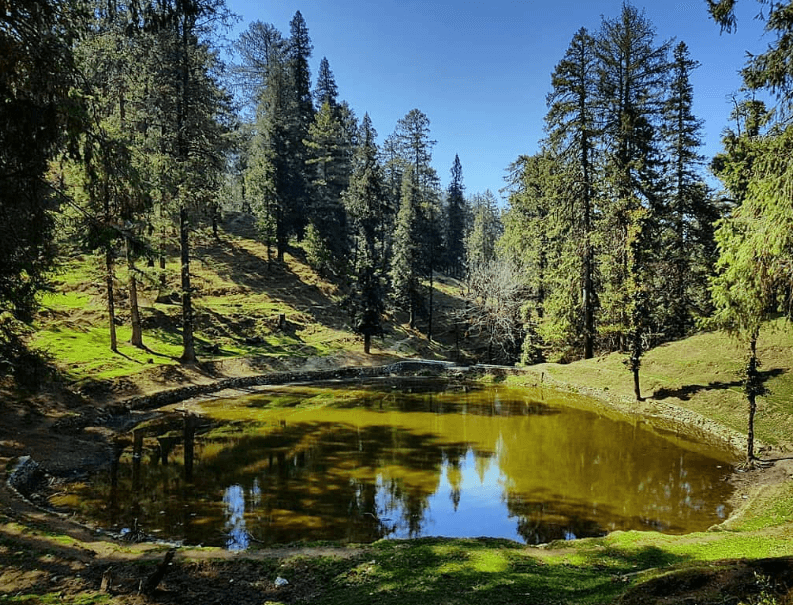
Often referred to as “Devban” or “Deoban” — meaning “Forest of the Gods” — this magnificent high-altitude forest ridge is a land of unparalleled natural beauty and profound spiritual significance. Located just 13 km from Chakrata town in the Dehradun district of Uttarakhand, Deoban is a pristine ridge covered with centuries-old virgin deodar canopies, offering some of the most spectacular Himalayan panoramas in the region.
What makes Deoban truly special is its extraordinary diversity—from the ancient deodar trees, some over 600 years old, to the Vyas Shikhar summit, believed to be the meditation place of sage Vyas and where he wrote the Mahabharata. The forest is a living repository of Hindu mythology, with legends that connect it to the Pandavas, Ved Vyasa, and the ancient sages of the Mahabharata era.
The name “Deoban” is derived from “Deo” (God or Deodar) and “Ban” (Forest), literally translating to “Forest of the Gods” or “Deodar Forest”. The forest is also known as Devban (देववन) in Hindi, reflecting its sacred status among local communities.
The journey to Deoban, which begins from the spiritual hubs of Dehradun or Chakrata, is an accessible yet profoundly rewarding adventure through ancient forests, sacred legends, and the majestic Himalayan wilderness. It offers a profound sense of peace, spiritual connection, and a deep appreciation for the rich cultural heritage of Uttarakhand.
Key Information at a Glance
History of Deoban
Ancient Roots in the Mahabharata Era
Deoban’s history is steeped in the mists of Hindu mythology. The forest is intimately connected to Maharishi Vyasa (Ved Vyasa), the legendary sage who is credited with composing the Mahabharata. According to local tradition, Vyas Shikhar, the highest point of the Deoban ridge, is where the sage meditated and wrote the Mahabharata. The name “Vyas Shikhar” (Peak of Vyasa) commemorates this sacred association.
The forest is also associated with the Pandavas from the Mahabharata, who are believed to have spent time in this region during their exile. The ancient deodar trees of Deoban are said to have witnessed these legendary events, adding a layer of timelessness to the forest.
The British Colonial Era and First Ascent
During the British colonial period, Deoban gained recognition for its exceptional forest resources and strategic location. The first ascent of Deoban was made by a British party led by Frank Smythe on 4 August 1937. The British were drawn to the region for its deodar timber, which was highly prized for construction and shipbuilding. The Indian Military Academy team climbed Deoban in 1968, further establishing the area’s significance for adventure and exploration.
The Deoban Reserve Forest
The Deoban Reserve Forest falls under the forest sub-type 12/C1d Western Mixed Coniferous Forests, covering an area of approximately 3,301 hectares. The forest is protected under the Uttarakhand Forest Department and is part of the Chakrata range, which has historically been a restricted cantonment area, helping preserve its pristine character.
The Cryptogamic Garden
In July 2021, India’s first cryptogamic garden was opened at Deoban, located at an altitude of over 8,850 feet and spread over 3 acres. The garden is dedicated to cryptogams — plants that reproduce via spores, including algae, bryophytes, lichens, and pteridophytes. This initiative highlights Deoban’s ecological importance and its role in conservation.
Geography of Deoban
Location and Topography
Deoban is situated at an elevation of approximately 2,200–2,865 metres (7,218–9,400 feet) above sea level in the Chakrata region of the Dehradun district, Uttarakhand. The forest is located about 13 km from Chakrata town on State Highway 1, on a high-altitude ridge that forms part of the Garhwal Himalaya.
| Feature | Details |
|---|---|
| Location | Chakrata, Dehradun district, Garhwal Himalayas, Uttarakhand |
| Coordinates | 30°31′43″N 79°58′01″E |
| Elevation | 2,200–2,865 m (7,218–9,400 ft) |
| Terrain | High-altitude forested ridge, plateau, meadows |
| Key Water Source | Seasonal streams, watershed for local communities |
| Distance from Chakrata | ~13 km |
| Distance from Dehradun | ~87–90 km |
The Himalayan Panorama
The most spectacular feature of Deoban is the panoramic view of the Himalayan range from Vyas Shikhar, the summit of the ridge. On a clear day, one can see 55 Himalayan peaks, including Mt. Nanda Devi, Mt. Bandarpoonch, Mt. Swargarohini, the Gangotri massif, Kedarnath, Badrinath, Trishul, Nanda Ghunti, Dronagiri, Sri Kantha, and Borasu Pass. The 180° to 270° views from the summit are considered among the best in the entire Dehradun district.
Major Landmarks
- Vyas Shikhar – The highest point of Deoban, believed to be the meditation place of sage Vyasa
- Saraswati Campsite – A beautiful campsite surrounded by Deodar, Oak, and Pine trees
- Lokhandi Village – The starting point of the Deoban trek
- Deoban Ridge – The flat deodar plateau with panoramic views
Flora and Fauna
Flora
Deoban is defined by its ancient deodar (Cedrus deodara) forest, one of the most pristine and undisturbed in the Garhwal Himalayas. The forest is a Reserve Forest under the Uttarakhand Forest Department, and its protected status has helped preserve its unique ecosystem.
Key Tree Species:
- Deodar (Cedrus deodara) – Dominant species, with trees over 600 years old and towering 30–40 metres high
- Abies pindrow (West Himalayan Fir) – In the top canopy
- Picea smithiana (West Himalayan Spruce) – In the top canopy
- Pinus wallichiana (Blue Pine) – In the top canopy
- Quercus semecarpifolia (Kharsu Oak) – In the middle canopy
- Quercus floribunda (Moru Oak) – In the middle canopy
- Aesculus indica (Indian Horse Chestnut) – In the middle canopy
- Rhododendron – Vibrant understory, blooming in spring
The forest is a Western Mixed Coniferous Forest (sub-type 12/C1d) and is part of the Deoban Reserve Forest covering approximately 3,301 hectares.
Fauna
Deoban is a birdwatcher’s paradise, home to a wide variety of Himalayan and sub-Himalayan bird species. The forest’s undisturbed habitats and rich canopy support a remarkable diversity of avian life.
Notable Bird Species:
- Himalayan Woodpecker – A striking species found in the forest
- White-collared Blackbird – Common in the forest
- Green-backed Tit – Frequently spotted
- Himalayan Monal – Uttarakhand’s state bird
- Koklass Pheasant
- Spotted Nutcracker
- Various tits and woodpeckers
Mammals:
- Himalayan Goral – A goat-antelope species found in the ridge forests
- Small deer species – Sightings depend on season and human disturbance
- Leopard – The apex predator of the region
- Himalayan Black Bear
- Barking Deer (Kakar)
- Musk Deer
- Red Fox
The forest’s protected status and dense canopy make it an important habitat for these species.
Protected Areas
| Protected Area | Type | Significance |
|---|---|---|
| Deoban Reserve Forest | Reserve Forest | ~3,301 hectares, ancient deodar ecosystem |
| Kalsi Wildlife Sanctuary | Wildlife Sanctuary | Located in the Dehradun district |
| Govind Wildlife Sanctuary | Wildlife Sanctuary | Accessible from the region |
Religious Beliefs and Significance
The Sacred Forest of the Gods
Deoban is rightly called the “Forest of the Gods” — a name that reflects its deep spiritual significance. The forest is believed to be protected by divine forces, and its preservation is a matter of both ecological and spiritual importance. The local Jaunsari community reveres the forest as a sacred grove, and traditional beliefs prohibit the felling of trees and the disturbance of wildlife.
The Legend of Ved Vyasa
The most significant religious association of Deoban is with Maharishi Vyasa (Ved Vyasa), the legendary sage who composed the Mahabharata. According to local tradition, Vyas Shikhar, the highest point of the Deoban ridge, is where the sage meditated and wrote the Mahabharata. Some accounts also mention that Vyasa wrote the Ramayana here. The summit offers a 270° view of the Himalayas, and it is believed that the sage chose this spot for its divine energy and panoramic beauty.
The Pandava Connection
The forest is also associated with the Pandavas from the Mahabharata, who are believed to have spent time in this region during their exile. The ancient deodar trees of Deoban are said to have witnessed these legendary events, adding a layer of timelessness to the forest.
The Sacred Grove Tradition
The deodar forest functions as a sacred grove, protected by community tradition and religious belief. The villagers believe that the forest is guarded by van devis (forest spirits), and felling trees is strictly prohibited. Only dead trees and fallen branches can be taken, and even then, only from the fringes. This tradition has preserved the forest for centuries and continues to be the primary reason for its protection.
The Vyas Shikhar Temple
A small temple or shrine at Vyas Shikhar commemorates the sage’s meditation and his contribution to Hindu literature. Devotees and trekkers often offer prayers at this sacred spot, seeking blessings and wisdom.
Festivals and Celebrations
- Local Festivals – The Jaunsari community celebrates its festivals with traditional rituals
- Maroj – A festival celebrating harvest and community bonding
- Jagra – A traditional festival involving night-long vigils
- Bissu – A spring festival marking the beginning of the agricultural season
- Budhi Diwali – A unique Diwali celebration held a month after the mainstream festival
How to Reach Deoban
Deoban is well connected by road and can be easily reached from major cities in Uttarakhand and North India.
By Air
The nearest airport is Jolly Grant Airport in Dehradun, approximately 120–125 km from the trek base at Lokhandi. Jolly Grant Airport is well connected to Delhi with daily flights. Taxis are available from the airport to Chakrata and then to Deoban.
| Route | Distance | Travel Time |
|---|---|---|
| Jolly Grant Airport → Lokhandi | ~120–125 km | 4–5 hours |
By Train
The nearest railway station is Dehradun, approximately 100 km from Deoban. Dehradun is well connected by railway networks with major destinations of India. Taxis and buses are available from Dehradun to Chakrata and then to Deoban.
| Route | Distance | Travel Time |
|---|---|---|
| Dehradun Railway Station → Lokhandi | ~100 km | 4 hours |
By Road
Deoban is well connected by motorable roads with major destinations in Uttarakhand. The forest is located on State Highway 1, about 13 km from Chakrata town. A vehicle with good ground clearance is recommended, especially after monsoon rain.
| Route | Distance | Travel Time |
|---|---|---|
| Delhi → Deoban | ~320–330 km | 8–10 hours |
| Dehradun → Deoban | ~87–90 km | 3–4 hours |
| Chakrata → Deoban | ~13 km | 30–40 minutes |
| Lokhandi → Deoban | ~4 km (trek) | 3–4 hours |
The Trek Route:
The Deoban trek starts from Lokhandi Village and passes through Saraswati Campsite before reaching Vyas Shikhar. The total trek distance is approximately 15.45 km, easily completed within 2 days.
- Day 1: Dehradun to Lokhandi (drive); Lokhandi to Saraswati Campsite (trek 4 km, 3–4 hours)
- Day 2: Saraswati Campsite to Vyas Shikhar (trek); return to Lokhandi
Bus Services:
- Buses to Chakrata are available from Dehradun and Mussoorie
- From Chakrata, local buses, taxis, and shared jeeps are available to Deoban
Local Transport
Within Deoban and the surrounding areas, local transport options include:
- Taxis and shared jeeps for local travel
- Walking to explore the forest, viewpoints, and temple
- Local guides – Jaunsari locals offer guided nature walks
Weather and Best Time to Visit
Climate Overview
Deoban experiences a Himalayan climate with distinct seasons, ranging from pleasant summers to cold winters with snowfall. The forest’s elevation of approximately 2,200–2,865 metres ensures cool temperatures for most of the year.
Seasonal Breakdown
Best Time to Visit
Note: The best time to visit Deoban is from April to June and September to November. October is considered the best month, with crisp 8–20°C days, deodar forests in full colour, and 360° Himalayan views from Deoban. Avoid visiting during the monsoon (July–August) due to heavy rainfall and slippery trails.
Temperature
Nearby Places
Distance from Major Cities
| City | Distance (Approx.) | Travel Time |
|---|---|---|
| Delhi | ~320–330 km | 8–10 hours |
| Dehradun | ~87–90 km | 3–4 hours |
| Chakrata | ~13 km | 30–40 minutes |
| Haridwar | ~120 km | 4–5 hours |
| Rishikesh | ~110 km | 4–4.5 hours |
| Chandigarh | ~250 km | 6–7 hours |
Frequently Asked Questions (FAQs)
General Questions
Q1: What is Deoban?
A: Deoban (also spelt Devban) is a high-altitude forest ridge near Chakrata in the Dehradun district of Uttarakhand, known as the “Forest of the Gods” for its ancient deodar forests and sacred associations.
Q2: Where is Deoban located?
A: Deoban is located in the Chakrata region of the Dehradun district, Uttarakhand, on State Highway 1, about 13 km from Chakrata town.
Q3: What is the elevation of Deoban?
A: Deoban is situated at an elevation of approximately 2,200–2,865 metres (7,218–9,400 feet) above sea level.
Q4: What is Deoban famous for?
A: Deoban is famous for its ancient deodar forest, the Vyas Shikhar summit (believed to be where sage Vyasa wrote the Mahabharata), and its 55-peak Himalayan panorama.
Q5: What is the best time to visit Deoban?
A: The best time is April–June and September–November. October is considered the best month.
Q6: What is the nearest airport to Deoban?
A: The nearest airport is Jolly Grant Airport in Dehradun, approximately 120–125 km away.
Q7: What is the nearest railway station to Deoban?
A: The nearest railway station is Dehradun, approximately 100 km away.
Q8: How far is Deoban from Delhi?
A: Deoban is approximately 320–330 km from Delhi, about an 8–10 hour drive.
Q9: What is the vehicle registration code for Deoban?
A: The vehicle registration code is UK-07 (Dehradun district).
Q10: What is the trek difficulty level of Deoban?
A: The Deoban trek is rated easy, suitable for beginners and seasoned trekkers alike.
Q11: What is the trek duration for Deoban?
A: The Deoban trek is typically a 2-day / 1-night trek from Dehradun.
Q12: What is the starting point of the Deoban trek?
A: The trek starts from Lokhandi Village, about 4 km from Deoban.
Q13: What is Vyas Shikhar?
A: Vyas Shikhar is the highest point of the Deoban ridge, believed to be the meditation place of sage Vyasa, where he wrote the Mahabharata.
Q14: What is the legend of Ved Vyasa at Deoban?
A: According to local tradition, Maharishi Vyasa meditated at Vyas Shikhar and composed the Mahabharata here.
Q15: What wildlife can be found in Deoban?
A: Deoban is home to the Himalayan Woodpecker, White-collared Blackbird, Green-backed Tit, Himalayan Goral, small deer species, leopard, and various other Himalayan species.
Q16: How do I reach Deoban from Chakrata?
A: Deoban is about 13 km from Chakrata on State Highway 1. It takes about 30–40 minutes by taxi or local jeep.
Q17: What is the mythological significance of Deoban?
A: Deoban is associated with Ved Vyasa and the Pandavas from the Mahabharata. The forest is considered sacred by the local Jaunsari community.
Q18: What is the local language of Deoban?
A: The official language is Hindi. The regional language is Jaunsari.
Q19: Is Deoban a good destination for offbeat travellers?
A: Yes, Deoban is an offbeat destination perfect for those seeking ancient forests, trekking, birdwatching, and Himalayan scenery away from crowded tourist spots.
Q20: What are the nearby places to visit from Deoban?
A: Nearby places include Chakrata (13 km), Tiger Falls (5 km from Chakrata), Kanasar (25 km), Budher Caves (15 km), and Lakhamandal (65 km).
Q21: What is the Deoban Reserve Forest?
A: The Deoban Reserve Forest is a protected forest area covering approximately 3,301 hectares, classified as Western Mixed Coniferous Forest.
Q22: What food is available in Deoban?
A: There are no shops or eateries in Deoban. Basic food and accommodation are available in Chakrata; Deoban itself is mostly untouched.
Q23: Is photography allowed in Deoban?
A: Yes, photography is allowed and is one of the main activities. The sunrise and sunset views from Vyas Shikhar are particularly spectacular.
Q24: Can I camp in Deoban?
A: Yes, camping is allowed at designated sites like Saraswati Campsite. It is recommended to camp with a guide or organised group.
Q25: What is the distance from Rishikesh to Deoban?
A: The distance from Rishikesh to Deoban is approximately 110 km.
Q26: What is the distance from Haridwar to Deoban?
A: The distance from Haridwar to Deoban is approximately 120 km.
Q27: What is the significance of the Deodar trees in Deoban?
A: The deodar trees in Deoban are over 600 years old and tower 30–40 metres high. The forest is one of the most pristine deodar forests in the Garhwal Himalayas.
Q28: What is the Deoban cryptogamic garden?
A: India’s first cryptogamic garden was opened at Deoban in July 2021, spread over 3 acres at an altitude of over 8,850 feet.
Q29: What is the best way to explore Deoban?
A: The best way is by trekking — the forest is best explored on foot, with trails leading to Vyas Shikhar and other viewpoints.
Q30: What should I carry for a trek to Deoban?
A: Carry layered clothing, a windproof outer layer, sturdy hiking boots, a hat, gloves, rain protection, a headlamp, and a basic first-aid kit. Trekking poles are recommended for uneven trails.
Essential Tips for Visitors
- Best Time: Plan your trek between April–June or September–November for the best weather conditions
- Footwear: Wear sturdy hiking boots with good grip for the rocky and uneven terrain
- Clothing: Carry layered clothing — warm jacket for mornings/evenings, windproof outer layer, and rain protection during the monsoon
- Monsoon Caution: Avoid trekking during July–August due to heavy rainfall and slippery trails
- Trek Preparation: The trek is easy but requires basic fitness; suitable for ages 8 to 65
- Permits: Indian nationals do not need special permits for the main tourist spots, but carry a valid photo ID as army checkpoints verify vehicles
- Foreign Nationals: Foreign nationals face tighter restrictions and may need prior permission to enter the broader Chakrata region
- Local Cuisine: Try local Garhwali dishes in Chakrata; carry your own food for the trek
- Hydration: Carry water purification tablets or a filter, as natural water sources may not be safe
- Accommodation: Accommodation is available in Chakrata (GMVN properties, guesthouses, homestays)
- Respect Local Culture: Deoban is a sacred forest; maintain the sanctity of the temple and natural surroundings
- Leave No Trace: Respect the fragile Himalayan ecosystem — carry back all waste
- Inform Family: Let someone know your itinerary before trekking, as mobile connectivity may be weak
- Weather Updates: Check weather forecasts before travelling, especially during monsoon and winter
- Guided Walks: Local Jaunsari guides offer guided nature walks — a great way to learn about the forest
- Vehicle: A vehicle with good ground clearance is recommended for the road to Deoban, especially after monsoon
Plan Your Deoban Adventure with Discover Uttarakhand
At Discover Uttarakhand, we’ve been organising unforgettable Himalayan journeys since 1997. As a trusted local operator with deep knowledge of the Garhwal region, we offer:
✅ Customised Deoban trek packages
✅ Combined itineraries with Chakrata, Kanasar, Tiger Falls, and Budher Caves
✅ Experienced local guides and naturalists
✅ Comfortable transport with experienced hill drivers
✅ All necessary permits and arrangements
✅ Quality camping equipment and nutritious meals
✅ 24/7 customer support throughout your journey
Recommended Deoban Packages
| Package | Duration | Starting Point | Highlights |
|---|---|---|---|
| Deoban Weekend Trek | 2 Days / 1 Night | Dehradun | Deoban Forest, Vyas Shikhar, Saraswati Campsite |
| Deoban & Chakrata Explorer | 4 Days / 3 Nights | Dehradun | Deoban, Tiger Falls, Kanasar, Budher Caves |
| Deoban Birdwatching Trail | 5 Days / 4 Nights | Dehradun | Deoban, Chakrata, Kanasar, Birdwatching |
| Deoban Complete Exploration | 6 Days / 5 Nights | Delhi | Deoban, Chakrata, Lakhamandal, Mussoorie, Dehradun |
📞 Call / WhatsApp: +91-9997187178, 9760222178, 8171977178
📍 Visit Our Office: Himalayan Colony, opposite DSVV, Haripur Kalan, Haridwar, Motichur Range, Uttarakhand 249411
🌐 Website: www.discover-uttarakhand.com
📧 Email:discoveruttarakhand.mail@gmail.com
Plan your journey to Deoban with proper preparation and respect for this sacred forest where ancient legends come alive. Experience the divine presence of the Himalayas in one of India’s most pristine and naturally breathtaking destinations.
Discover Uttarakhand – Your Local Partner for Unforgettable Himalayan Journeys Since 1997 🏔️