
Overview: The Flag of Faith
Tucked away in the hills of Pithoragarh in Uttarakhand, Dhwaj Temple is not just a destination; it is a journey into the spiritual sky of the Kumaon Himalayas and a pilgrimage to one of its most scenic and revered shrines.
Often referred to as the “Temple on the Highest Peak of Pithoragarh”, this magnificent shrine is a land of unparalleled spiritual energy and breathtaking natural beauty. Located just 10 km from Pithoragarh town, Dhwaj Temple is dedicated to Lord Shiva and Goddess Jayanti, a locally worshipped goddess, and is perched at an elevation of 2,100 metres above sea level.
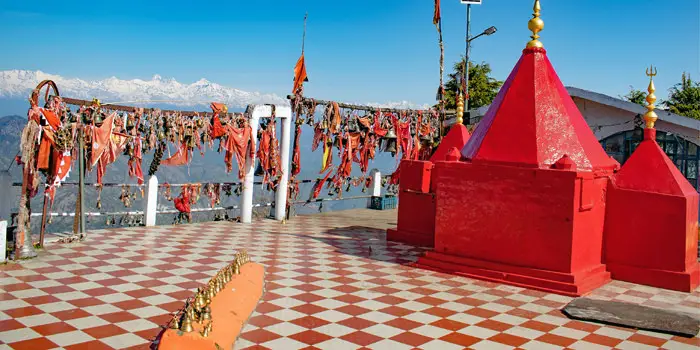
What makes Dhwaj Temple truly special is its extraordinary setting—perched atop the highest hill in Pithoragarh, the temple offers panoramic 360-degree views of the snow-capped Himalayan peaks and the lush green valleys of the Kumaon region. The temple is a living repository of local faith, with legends that connect it to Lord Shiva’s long presence in a 50-foot cave and the Kapdi clan who named the place.
The name “Dhwaj” means “flag” in Hindi, and the hill is so named because it stands like a flag atop the highest peak of Pithoragarh. The temple is also known as Dhwaj Temple Pithoragarh and is an important stop on the pilgrimage routes of the Kumaon region.
The journey to Dhwaj Temple, which begins from the spiritual hubs of Kathgodam or Tanakpur, is an accessible yet profoundly rewarding adventure through sacred forests, ancient shrines, and the majestic Himalayan wilderness. It offers a profound sense of peace, spiritual connection, and a deep appreciation for the rich cultural heritage of Uttarakhand.
Key Information at a Glance
| Aspect | Details |
|---|---|
| Location | Pithoragarh District, Uttarakhand |
| Type | Hindu Temple / Hill Shrine |
| Dedicated To | Lord Shiva and Goddess Jayanti |
| Elevation | 2,100 m (6,890 ft) |
| District | Pithoragarh |
| Address | Pithoragarh, Sarpeta Kela Gaon, Uttarakhand 262540 |
| Coordinates | 29.5833°N, 80.2167°E (approx.) |
| Official Language | Hindi |
| Regional Language | Kumaoni |
| Vehicle Registration Code | UK-05 (Pithoragarh) |
| Nearest Airport | Naini Saini Airport, Pithoragarh (~10 km); Pantnagar Airport (~257 km) |
| Nearest Railway Station | Tanakpur (~138–162 km) |
| Best Time to Visit | March–June & September–October |
| Temple Timings | 6:00 AM – 9:00 PM |
| Trek Distance | 3–4 km from Pithoragarh |
| Famous Festival | Maha Shivaratri |
History of Dhwaj Temple
Ancient Roots in Local Legend
Dhwaj Temple has a history that is deeply intertwined with the spiritual traditions of the Kumaon Himalayas. According to local legend, this place was named ‘Dhwaja’ in the name of Lord Shiva, and it was also named by the ancestors of the ‘Kapdi’ clan. The name “Dhwaj” (flag) reflects the hill’s status as the highest peak in Pithoragarh, standing like a flag over the landscape.
The Khandnath Connection
The place is also associated with ‘Khandnath’, as there was a presence of Lord Shiva in this place for a very long time in a 50-foot cave. This cave is believed to be the site where the Lord meditated and blessed the region with his divine presence, making Dhwaj a site of immense spiritual power.
The Kapdi Clan Legacy
The temple’s association with the Kapdi clan adds a layer of local heritage to its history. The clan ancestors are believed to have named and preserved this sacred site, and their descendants continue to be connected with the temple’s traditions and rituals.
The Temple’s Antiquity
The temple is believed to be ancient, with its architecture featuring intricate carvings and designs that reflect the rich cultural heritage of the region. The temple has been a place of worship for generations of devotees from Pithoragarh and the surrounding areas, and it continues to be a major pilgrimage site for the region.
Geography of Dhwaj Temple
Location and Topography
Dhwaj Temple is situated at an elevation of 2,100 metres (6,890 feet) above sea level in the Pithoragarh district of Uttarakhand. The temple is perched atop the highest hill in Pithoragarh, offering a commanding view of the entire region.
| Feature | Details |
|---|---|
| Location | Pithoragarh district, Kumaon region, Uttarakhand |
| Coordinates | 29.5833°N, 80.2167°E (approx.) |
| Elevation | 2,100 m (6,890 ft) |
| Terrain | Hilltop shrine, forested slopes, meadows |
| Key Water Source | Seasonal streams |
| Distance from Pithoragarh | ~10 km by road |
| Trek Distance | ~3–4 km from Pithoragarh |
The Himalayan Panorama
The most spectacular feature of Dhwaj Temple is its panoramic view of the snow-capped Himalayan peaks. The temple offers spellbinding views of the snow-shrouded Himalayan peaks to the north, and the lush green meadows and forested hills of the Kumaon region spread out below. The sunrise and sunset views from this vantage point are truly mesmerising, with the golden light painting the snow peaks in brilliant colours.
The Hilltop Setting
The temple is situated on a hilltop on the highest mountain of Pithoragarh city. The hill is known as Dhwaj (meaning “flag”), and the temple stands like a flag over the entire region. The hilltop location offers a 360-degree view of the surrounding landscape, including Pithoragarh town, the Chandak hill, and the distant Himalayan ranges.
Major Landmarks
- Dhwaj Hill – The highest peak in Pithoragarh, on which the temple stands
- Pithoragarh Town – The district headquarters, 10 km from the temple
- Chandak Hill – A nearby hill station with views of the Nanda Devi range
- Naini Saini Airport – The nearest airport, 10 km from the temple
Flora and Fauna
Flora
Dhwaj Temple is surrounded by the rich biodiversity typical of the Kumaon Himalayan region. The temple is nestled amidst dense forests and lush green meadows, with the trail passing through beautiful natural surroundings.
Vegetation:
- Oak Forests – Dominant in the surrounding hills
- Pine Forests – Found at lower elevations
- Rhododendron (Burans) – Adding vibrant colour to the trail, especially in spring
- Lush Green Meadows – The hilltop and slopes are covered with alpine and sub-alpine vegetation
The area around Dhwaj Temple is part of the Pithoragarh forest division, known for its rich flora including medicinal herbs and Himalayan wildflowers.
Fauna
Dhwaj Temple is a nature lover’s paradise, home to a remarkable variety of Himalayan wildlife. The area is known to be the home to snow leopards and Himalayan black bears, making it an important wildlife habitat in the region.
Mammals:
- Snow Leopard – The elusive high-altitude predator, known to inhabit the region
- Himalayan Black Bear – Present in the forests
- Leopard – The apex predator of the lower forests
- Barking Deer (Kakar)
- Musk Deer
- Red Fox
Birds:
- Himalayan Monal – Uttarakhand’s state bird
- Golden Eagle
- Bearded Vulture
- Various pheasant species
Protected Areas
| Protected Area | Type | Significance |
|---|---|---|
| Askot Wildlife Sanctuary | Wildlife Sanctuary | Home to musk deer, snow leopard, and Himalayan wildlife |
| Nanda Devi Biosphere Reserve | Biosphere Reserve | UNESCO Site, accessible from the region |
Religious Beliefs and Significance
The Land of Shiva and Jayanti
Dhwaj Temple is rightly called the “Abode of Lord Shiva and Goddess Jayanti”. The temple is deeply revered in local tradition as a place of immense spiritual power, where Lord Shiva is believed to have meditated in a 50-foot cave for a very long time.
The Goddess Jayanti
Goddess Jayanti is a locally worshipped goddess who is revered alongside Lord Shiva at the temple. She is considered a powerful deity who protects the region and blesses her devotees. The temple enshrines both deities, making it a unique site of Shaiva and Shakta worship.
The Khandnath Legend
The temple’s association with Khandnath adds to its spiritual significance. Khandnath is a form of Lord Shiva, and his presence in the 50-foot cave is believed to have sanctified the entire hill. Devotees visit the cave to seek the blessings of the Lord and to meditate in its peaceful environment.
The Kapdi Clan’s Devotion
The Kapdi clan has been associated with the temple for generations. Their ancestors named the place ‘Dhwaja’ in the name of Lord Shiva, and their descendants continue to preserve the temple’s traditions and rituals. This living tradition connects the present generation to the ancient spiritual heritage of the region.
Festivals and Celebrations
- Maha Shivaratri – The most important festival at the temple, celebrated with great devotion and a large gathering of devotees
- Navratri – Celebrated with great fervour at the temple
- Local Fairs – Traditional fairs that showcase the vibrant culture of the Kumaon region
- Harela – A festival celebrating the sowing of seeds and the arrival of spring
How to Reach Dhwaj Temple
Dhwaj Temple is well connected by road, rail, and air and can be easily reached from major cities in Uttarakhand and North India.
By Air
The nearest airport is Naini Saini Airport in Pithoragarh, approximately 10 km from the temple. Pantnagar Airport is another option, approximately 257 km away. Naini Saini Airport is well connected to Dehradun, and Pantnagar Airport is well connected to Delhi with daily flights. Taxis are available from the airports to Pithoragarh and then to the temple.
| Route | Distance | Travel Time |
|---|---|---|
| Naini Saini Airport → Dhwaj Temple | ~10 km | 20–30 minutes |
| Pantnagar Airport → Dhwaj Temple | ~257 km | 8–9 hours |
By Train
The nearest railway station is Tanakpur, approximately 138–162 km from the temple. Tanakpur is well connected by railway networks with major destinations of India. Taxis and buses are available from Tanakpur to Pithoragarh and then to Dhwaj Temple.
| Route | Distance | Travel Time |
|---|---|---|
| Tanakpur Railway Station → Dhwaj Temple | ~138–162 km | 5–6 hours |
By Road
Dhwaj Temple is well connected by motorable roads with major destinations in Uttarakhand state. The temple is 10 km by road from Pithoragarh.
| Route | Distance | Travel Time |
|---|---|---|
| Delhi → Dhwaj Temple | ~480 km | 11–12 hours |
| Pithoragarh → Dhwaj Temple | ~10 km | 20–30 minutes |
| Tanakpur → Dhwaj Temple | ~138–162 km | 5–6 hours |
Road Route from Delhi: Delhi → Haldwani → Tanakpur → Pithoragarh → Dhwaj Temple
Bus Services:
- Buses to Pithoragarh are available from ISBT Anand Vihar, New Delhi
- Buses and taxis to Dhwaj Temple are easily available from Pithoragarh
The Trek Route
The temple can also be reached by trekking about 3–4 km from Pithoragarh through dense forests and beautiful natural surroundings.
| Segment | Distance | Time Required |
|---|---|---|
| Pithoragarh → Dhwaj Temple (trek) | 3–4 km | 2 hours |
| Dhwaj Temple → Pithoragarh (trek) | 3–4 km | 1.5–2 hours |
The trek is not very challenging and offers a chance to experience the natural beauty of the region. The trail passes through dense forests and offers mesmerising views of the Himalayan peaks along the way.
Local Transport
Within Pithoragarh and the surrounding areas, local transport options include:
- Taxis and auto-rickshaws from Pithoragarh to Dhwaj Temple
- Walking – The temple can be reached by a short trek from Pithoragarh
- Local buses connecting major towns and villages
Weather and Best Time to Visit
Climate Overview
Dhwaj Temple experiences a Himalayan climate with distinct seasons, ranging from pleasant summers to cold winters. The temple’s elevation of 2,100 metres ensures cool temperatures for most of the year.
Seasonal Breakdown
| Season | Months | Weather | Suitability |
|---|---|---|---|
| Spring/Summer | March–June | Pleasant, 10–25°C | ⭐ Best |
| Monsoon | July–August | Heavy rainfall, landslides | Avoid |
| Autumn | September–October | Crisp air, clear views | ⭐ Best |
| Winter | November–February | Cold, 0–15°C, snowfall possible | Good for winter visits |
Best Time to Visit
| Season | Months | Highlights |
|---|---|---|
| Spring/Summer | March–June | Pleasant weather, clear views, ideal for trekking and sightseeing |
| Autumn | September–October | Post-monsoon clarity, crisp air, best mountain views |
| Winter | November–February | Cold but peaceful, ideal for spiritual retreats |
Note: The best time to visit Dhwaj Temple is from March to June and September to October. These periods represent the spring and early autumn seasons in Pithoragarh, offering a comfortable climate with moderate temperatures ideal for trekking up to the temple. During these times, the skies are generally clear, providing spectacular panoramic views of the snow-clad Himalayas and lush green valleys. The festival of Maha Shivaratri, which usually falls in February or March, can also be an opportune moment for a visit, allowing one to indulge in the vibrant local celebrations. However, one should avoid planning the trip during the monsoon months from July to August, as the region experiences heavy rainfall, which can make the trek paths slippery and perilous, increasing the risk of landslides. Winters, from November to February, bring extremely cold weather with the possibility of snow, which, while breathtakingly beautiful, can hinder accessibility to the temple due to blocked roads.
Temperature
| Season | Daytime Temperature | Nighttime Temperature |
|---|---|---|
| Spring/Summer (March–June) | 10°C to 25°C | 5°C to 15°C |
| Monsoon (July–August) | 15°C to 22°C | 12°C to 18°C |
| Autumn (September–October) | 10°C to 22°C | 5°C to 12°C |
| Winter (November–February) | 0°C to 15°C | -2°C to 8°C |
Nearby Places
| Destination | Distance from Dhwaj Temple | Highlights |
|---|---|---|
| Pithoragarh | ~10 km | District headquarters, historical sites |
| Chandak Hill | ~5 km | Hill station, views of Nanda Devi range |
| Kapileshwar Mahadev Temple | ~3 km | Ancient Shiva temple, cave shrine |
| Naini Saini Airport | ~10 km | Nearest airport |
| Askot Wildlife Sanctuary | ~50 km | Musk deer, snow leopard, Himalayan wildlife |
| Jauljibi | ~65 km | Indo-Nepal border, Kali-Gori confluence |
| Dharchula | ~80 km | Indo-Nepal border town, gateway to Adi Kailash |
| Munsiyari | ~100 km | Gateway to Milam Glacier, Himalayan views |
| Chaukori | ~80 km | Tea gardens, Himalayan views |
| Patal Bhuvaneshwar | ~90 km | Ancient limestone cave temple |
Distance from Major Cities
| City | Distance (Approx.) | Travel Time |
|---|---|---|
| Delhi | ~480 km | 11–12 hours |
| Pithoragarh | ~10 km | 20–30 minutes |
| Tanakpur | ~138–162 km | 5–6 hours |
| Kathgodam | ~200 km | 7–8 hours |
| Nainital | ~180 km | 6–7 hours |
Frequently Asked Questions (FAQs)
General Questions
Q1: What is Dhwaj Temple?
A: Dhwaj Temple is a Hindu temple dedicated to Lord Shiva and Goddess Jayanti, located near Pithoragarh in Uttarakhand, perched at an elevation of 2,100 metres on the highest hill in Pithoragarh.
Q2: Where is Dhwaj Temple located?
A: Dhwaj Temple is located in the Pithoragarh district of Uttarakhand, about 10 km from Pithoragarh town, atop the highest hill in the region.
Q3: What is the elevation of Dhwaj Temple?
A: The temple is situated at an elevation of 2,100 metres (6,890 feet) above sea level.
Q4: What is Dhwaj Temple famous for?
A: Dhwaj Temple is famous for its panoramic views of the snow-capped Himalayan peaks, its hilltop setting, and its religious significance as a shrine of Lord Shiva and Goddess Jayanti.
Q5: What is the best time to visit Dhwaj Temple?
A: The best time is March–June and September–October. Avoid the monsoon months (July–August).
Q6: What is the nearest airport to Dhwaj Temple?
A: The nearest airport is Naini Saini Airport in Pithoragarh, approximately 10 km away. Pantnagar Airport is another option, approximately 257 km away.
Q7: What is the nearest railway station to Dhwaj Temple?
A: The nearest railway station is Tanakpur, approximately 138–162 km away.
Q8: How far is Dhwaj Temple from Delhi?
A: Dhwaj Temple is approximately 480 km from Delhi, about an 11–12 hour drive.
Q9: What is the vehicle registration code for Pithoragarh?
A: The vehicle registration code is UK-05 (Pithoragarh district).
Q10: What are the temple timings?
A: The temple is open from 6:00 AM to 9:00 PM.
Q11: What is the legend behind Dhwaj Temple?
A: According to local legend, this place was named ‘Dhwaja’ in the name of Lord Shiva and was named by the ancestors of the ‘Kapdi’ clan. The place is also associated with ‘Khandnath’ as Lord Shiva was present here in a 50-foot cave for a very long time.
Q12: Who is Goddess Jayanti?
A: Goddess Jayanti is a locally worshipped goddess who is revered alongside Lord Shiva at Dhwaj Temple.
Q13: What wildlife can be found near Dhwaj Temple?
A: The region is home to snow leopards, Himalayan black bears, leopards, barking deer, musk deer, red fox, and various bird species including the Himalayan Monal.
Q14: How do I reach Dhwaj Temple from Pithoragarh?
A: Dhwaj Temple is about 10 km from Pithoragarh by road, or a 3–4 km trek through dense forests, taking about 2 hours.
Q15: What is the trek difficulty level?
A: The trek is easy, suitable for beginners and families.
Q16: What is the mythological significance of Dhwaj Temple?
A: The temple is associated with Lord Shiva’s long presence in a 50-foot cave and his worship as Khandnath. It is also linked to the Kapdi clan, who named the place ‘Dhwaja’.
Q17: What is the local language of the region?
A: The official language is Hindi, and the regional language is Kumaoni.
Q18: Is Dhwaj Temple a good destination for offbeat travellers?
A: Yes, it is an offbeat destination perfect for those seeking spiritual experiences, trekking, and Himalayan scenery away from crowded tourist spots.
Q19: What are the nearby places to visit from Dhwaj Temple?
A: Nearby places include Pithoragarh (10 km), Chandak Hill (5 km), Kapileshwar Mahadev Temple (3 km), and Askot Wildlife Sanctuary (50 km).
Q20: What food is available near Dhwaj Temple?
A: Basic food is available in Pithoragarh. There are no eateries at the temple itself, so carry water and snacks.
Q21: Is photography allowed at Dhwaj Temple?
A: Yes, photography is allowed and is one of the main activities. The sunrise and sunset views from the temple are particularly spectacular.
Q22: Can I stay near Dhwaj Temple?
A: Yes, accommodation is available in Pithoragarh, which has hotels and guesthouses.
Q23: What should I carry for the trek?
A: Carry comfortable footwear, water, snacks, and a camera. The temple is at a high altitude, so warm clothing is recommended.
Q24: What is the distance from Tanakpur to Dhwaj Temple?
A: The distance from Tanakpur to Dhwaj Temple is approximately 138–162 km.
Q25: What is the distance from Pithoragarh to Dhwaj Temple?
A: The distance from Pithoragarh to Dhwaj Temple is approximately 10 km by road or 3–4 km by trek.
Q26: What is the significance of Maha Shivaratri at Dhwaj Temple?
A: Maha Shivaratri is the most important festival at the temple, celebrated with great devotion and a large gathering of devotees.
Q27: What is the architectural style of Dhwaj Temple?
A: The temple features intricate carvings and designs typical of Hindu temples in the Kumaon region.
Q28: What is the 50-foot cave at Dhwaj Temple?
A: The 50-foot cave is where Lord Shiva is believed to have meditated for a very long time. It is a site of immense spiritual power for devotees.
Q29: What is the best way to explore Dhwaj Temple?
A: The best way is by trekking — the temple is best explored on foot, with trails leading through forests and offering panoramic views.
Q30: What is the contact information for Dhwaj Temple?
A: The temple is located at Pithoragarh, Sarpeta Kela Gaon, Uttarakhand 262540. Visitors are advised to check local timings before visiting.
Essential Tips for Visitors
- Best Time: Plan your visit between March–June or September–October for pleasant weather
- Footwear: Wear comfortable walking shoes as the terrain is hilly and uneven
- Clothing: Carry warm clothing, especially in winter; light woollens even in summer
- Monsoon Caution: Avoid visiting during July–August due to heavy rainfall and landslide risk
- Trek Preparation: The trek is easy but requires basic fitness
- Carry Water: There are no shops or eateries at the temple, so carry water and snacks
- Temple Etiquette: Remove footwear before entering, maintain silence, and respect religious customs
- Local Cuisine: Try local Kumaoni dishes in Pithoragarh
- Hydration: Carry water, especially if exploring on foot
- Accommodation: Book in advance during peak seasons (May–June and September–October)
- Respect Local Culture: Dhwaj Temple is a sacred site; maintain the sanctity of the temple and natural surroundings
- Leave No Trace: Respect the fragile Himalayan ecosystem — carry back all waste
- Inform Family: Let someone know your itinerary, especially if trekking in remote areas
- Weather Updates: Check weather forecasts before travelling, especially during monsoon and winter
- Wildlife Caution: Be cautious of wildlife, especially in the forested areas
Plan Your Dhwaj Temple Adventure with Discover Uttarakhand
At Discover Uttarakhand, we’ve been organising unforgettable Himalayan journeys since 1997. As a trusted local operator with deep knowledge of the Kumaon region, we offer:
✅ Customised Dhwaj Temple tour packages
✅ Combined itineraries with Pithoragarh, Chaukori, and Munsiyari
✅ Experienced local guides and temple historians
✅ Comfortable transport with experienced hill drivers
✅ All necessary permits and arrangements
✅ Quality accommodation and nutritious meals
✅ 24/7 customer support throughout your journey
Recommended Dhwaj Temple Packages
| Package | Duration | Starting Point | Highlights |
|---|---|---|---|
| Dhwaj Temple Darshan | 2 Days / 1 Night | Pithoragarh | Dhwaj Temple, Chandak Hill, Pithoragarh |
| Pithoragarh Spiritual Journey | 4 Days / 3 Nights | Kathgodam | Dhwaj Temple, Pithoragarh, Kapileshwar, Chaukori |
| Dhwaj Temple & Kumaon Explorer | 6 Days / 5 Nights | Delhi | Dhwaj Temple, Pithoragarh, Munsiyari, Chaukori |
| Dhwaj Temple Complete Exploration | 7 Days / 6 Nights | Delhi | Dhwaj Temple, Pithoragarh, Jauljibi, Dharchula, Munsiyari |
📞 Call / WhatsApp: +91-9997187178, 9760222178, 8171977178
📍 Visit Our Office: Himalayan Colony, opposite DSVV, Haripur Kalan, Haridwar, Motichur Range, Uttarakhand 249411
🌐 Website: www.discover-uttarakhand.com
📧 Email: discoveruttarakhand.mail@gmail.com
Plan your journey to Dhwaj Temple with proper preparation and respect for this sacred land where Lord Shiva and Goddess Jayanti reside atop the highest peak of Pithoragarh. Experience the divine presence of the Himalayas in one of India’s most scenic and spiritually significant destinations.
Discover Uttarakhand – Your Local Partner for Unforgettable Himalayan Journeys Since 1997 🏔️