Overview: The Village of the Goddess
Tucked away in the Champawat district of Uttarakhand, Devidhura is not just a destination; it is a journey into the soul of Kumaon’s folk traditions and a pilgrimage to one of its most powerful Shakti shrines.
Often referred to as the “Village of the Stone-Pelting Festival”, this magnificent settlement is a land of unparalleled spiritual energy and profound cultural heritage. Located about 45 km from Champawat and 50 km from Lohagat, Devidhura is home to the revered Maa Barahi Devi Temple, a powerful Shakti shrine set in an unusual flat-topped forest clearing at an elevation of approximately 1,850 metres.
What makes Devidhura truly special is its extraordinary diversity—from the ancient Bagwal festival, where four Kumaoni clans ritually pelt each other with stones until enough blood is shed to satisfy the goddess, to the Barahi Devi Temple that houses the goddess in a locked brass casket; from the sacred Devidhura pool (kund) nearby to the terraced wheat and millet fields that cascade down the hillsides. The village is a living repository of Kumaoni folk heritage, with legends that connect it to Goddess Varahi, the four clans (khams), and the Katyuri regime.
The name “Devidhura” is derived from “Devi” (Goddess) and “Dhura” (ridge or elevated ground), meaning “the ridge of the Goddess” — a fitting name for this sacred hilltop village.
The journey to Devidhura, which begins from the spiritual hubs of Kathgodam or Tanakpur, is an accessible yet profoundly rewarding adventure through sacred forests, ancient shrines, and the majestic Himalayan wilderness. It offers a profound sense of peace, cultural connection, and a deep appreciation for the rich folk traditions of Uttarakhand.
Key Information at a Glance
| Aspect | Details |
|---|---|
| Location | Champawat District, Uttarakhand |
| Type | Village / Pilgrimage Site |
| District | Champawat |
| Coordinates | 29.41315°N 79.86511°E |
| Elevation | ~1,850–1,947 m (6,070–6,388 ft) |
| Area | 91.88 hectares |
| Official Language | Hindi |
| Regional Language | Kumaoni |
| Vehicle Registration Code | UK-03 (Champawat) |
| Nearest Airport | Pantnagar Airport (~180 km) |
| Nearest Railway Station | Kathgodam (~100 km) |
| Best Time to Visit | April–June & September–November |
| Known For | Bagwal Festival, Maa Barahi Devi Temple, Shakti Peeth |
| Famous Festival | Bagwal (Raksha Bandhan, August) |
| Temple Timings | 6:00 AM – 7:00 PM |
History of Devidhura
Ancient Roots in the Katyuri Regime
Devidhura has a history that is deeply intertwined with the ancient Katyuri dynasty, the earliest ruling dynasty of the central Himalayan region. Some consider the Bagwal tradition to be a traditional festival from the Katyuri regime, while others associate it with Kali Kumaon. The village has been a significant settlement in the Champawat district for centuries, serving as a spiritual and cultural centre for the Kumaon region.
The Legend of the Four Clans
The most popular version of Devidhura’s origin is deeply rooted in local mythology. According to legend, Devidhura was once infested with demons. The four clans of Devidhura — the Waliks, Lamgariyas, Chamyals, and Gaherwals (locally known as ‘khams’) — prayed to Goddess Barahi to save their lives. The goddess agreed, but in turn demanded that a human sacrifice be made to her every year. The clans would offer one of their members to the goddess in rotation.
The Grandmother’s Plea and the Birth of Bagwal
One year, it so happened that a kham had to sacrifice its last young man to Barahi. His helpless grandmother prayed to the goddess for mercy. The goddess had a change of heart and declared that, as an alternative, members of the four tribes would hurl stones at one another until the blood spilt was equal to that from a human sacrifice. This would take place on the day of Raksha Bandhan. Thus began the violent tradition called Bagwal that continues to this day.
The Temple and the Brass Casket
The Barahi Devi Temple at Devidhura is the most significant religious site in the village. A unique feature of the temple is the image of the goddess kept in a locked brass casket. During the festival, this casket is taken in a procession to a nearby mountain spring where a blindfolded priest ritually bathes the image and replaces it in the casket. The whole night the Goddess is worshipped, and the next morning the exciting Bagwal fair is celebrated.
The Jim Corbett Connection
The famous hunter and conservationist Jim Corbett’s tale ‘Temple Tiger’ is associated with the Devidhura temples. This connection adds a layer of historical and literary significance to the village, linking it to the legendary stories of the Kumaon region.
Modern Recognition
On July 11, 2022, Uttarakhand Chief Minister Pushkar Singh Dhami declared the famous Devidhura Bagwal Mela as a state fair. The Bagwal is believed to be thousands of years old and has been nominated for inclusion in UNESCO’s Intangible Cultural Heritage list.
Geography of Devidhura
Location and Topography
Devidhura is situated at an elevation of approximately 1,850–1,947 metres (6,070–6,388 feet) above sea level in the Champawat district of Uttarakhand. The village is located on a flat-topped forest clearing at the trijunction of Almora, Pithoragarh, and Nainital districts, offering a unique geographical setting.
| Feature | Details |
|---|---|
| Location | Champawat district, Kumaon region, Uttarakhand |
| Coordinates | 29.41315°N 79.86511°E |
| Elevation | ~1,850–1,947 m (6,070–6,388 ft) |
| Area | 91.88 hectares |
| Terrain | Flat-topped forest clearing, terraced fields, hills |
| Key Water Source | Devidhura pool (kund), Sukhnoi River nearby |
| Distance from Champawat | ~45–70 km |
| Distance from Lohaghat | ~45–50 km |
The Barahi Devi Temple Setting
The Barahi Devi Temple sits in a flat clearing in the forest — an unusual situation for a Shakti shrine, which is typically found on a hilltop or near a river. This flat, forested setting gives the temple a serene and secluded atmosphere, ideal for meditation and worship. The sacred Devidhura pool (kund) nearby adds to the spiritual significance of the site.
The Sukhnoi River
The Sukhnoi River flows near Devidhura, and the village is situated on its banks in the Mukundpur area. The river adds to the scenic and spiritual beauty of the site, and its waters are considered sacred by local communities.
The Himalayan Panorama
Devidhura offers magnificent views of the surrounding Himalayan ranges and the lush green valleys of the Kumaon region. The village is surrounded by tall deodar and oak trees, with beautiful native flora and fauna. The area is a wonderful place for trekking and being one with the mountains.
Major Landmarks
- Maa Barahi Devi Temple – The main shrine, set in a flat forest clearing
- Devidhura Kund – The sacred pool near the temple
- Kholikhand Dubachoura Ground – The ground in front of the temple where Bagwal is played
- Terraced Fields – Traditional Kumaoni agricultural landscapes
- Village Hamlets – Trails through nearby hamlets reveal traditional Kumaoni stone architecture
Flora and Fauna
Flora
Devidhura is blessed with the rich biodiversity typical of the Kumaon Himalayan region. The village is situated amidst tall deodar and oak trees, surrounded by beautiful native flora and fauna.
Key Tree Species:
- Deodar (Cedrus deodara) – Dominant species, forming the main canopy
- Oak (Quercus spp.) – Found throughout the surrounding forests
- Rhododendron (Burans) – Adding vibrant colour to the trail, especially in spring
- Pine (Pinus roxburghii) – Present at lower elevations
- Terraced Crops – Wheat, millet, and other traditional Kumaoni crops grown on the hillsides
Medicinal Plants and Wildflowers:
The region is rich in medicinal herbs and Himalayan wildflowers. The forest trail is dotted with fig trees that attract several birds and colourful butterflies. The dense forests around Devidhura are part of the Champawat forest division, which is known for its rich floral diversity.
Fauna
Devidhura is a nature lover’s paradise, home to a remarkable variety of Himalayan wildlife. The forests around the village support a diverse range of species.
Mammals:
- Leopard – The apex predator of the region
- Himalayan Black Bear – Present in the forested areas
- Barking Deer (Kakar)
- Musk Deer
- Red Fox
- Himalayan Tahr
- Serow
Birds:
- Himalayan Monal – Uttarakhand’s state bird
- Golden Eagle
- Bearded Vulture
- Various pheasant species
- Rare Himalayan birds – The region is rich in avian diversity
Protected Areas
| Protected Area | Type | Significance |
|---|---|---|
| Binsar Wildlife Sanctuary | Wildlife Sanctuary | Home to leopard, barking deer, and Himalayan birds |
| Nanda Devi Biosphere Reserve | Biosphere Reserve | UNESCO Site, accessible from the region |
| Askot Wildlife Sanctuary | Wildlife Sanctuary | Home to musk deer, snow leopard, and Himalayan wildlife |
Religious Beliefs and Significance
The Land of Maa Barahi Devi
Devidhura is rightly called the “Village of the Goddess”. The village is deeply revered in Hindu tradition as the abode of Goddess Barahi Devi (also known as Varahi Devi), one of the Sapta Matrikas (seven mother goddesses). She is the presiding deity at the Devidhura temple and is worshipped as a powerful form of the divine feminine.
The Barahi Devi Temple
The Barahi Devi Temple is the most significant religious site in Devidhura. The temple sits in a flat clearing in the forest, and a major part of the Devi temple is made of huge natural rocks, which is awe-inspiring. The temple enshrines the goddess in a locked brass casket, a unique feature that adds to its mystery and sanctity.
The Bagwal Festival
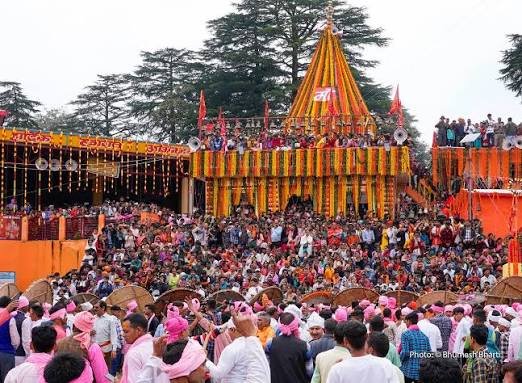
The Bagwal festival is the most important religious event in Devidhura, celebrated annually on Raksha Bandhan (Shravan Purnima, usually in August). During this festival, members of the four clans gather at the temple premises to engage in a ritual stone battle. The participants traditionally divide themselves into two sides: the Gaharwals and Chamyals form one group, while the Waliks and Lamgharias form the other. Each clan is identified by the colour of its turban — orange for Gaharwals, pink for Chamyals, yellow for Lamgharias, and white for Waliks.
In its traditional form, Bagwal involved participants hurling stones at one another while protecting themselves with bamboo shields. The ritual would continue until the temple priest determined that enough blood had been shed, bringing the battle to an end. Local belief also considers rain during Bagwal an auspicious sign.
The 2013 High Court Intervention
In 2013, worried by the number of injuries, the High Court of Uttarakhand banned the use of stones and advised the district administration and temple committee to consider using rubber balls and fruits instead. The clans protested, refusing to obey the order. The district administration managed to convince the villagers to fight with fruits and flowers for a while, but most people continue to use stones. Today, the event remains associated with the distinctive cultural traditions of Kumaon.
The Five-Day Bagwal Celebration
The Bagwal celebrations at Devidhura are not only an ancient depiction of the hill tradition but are also rich in cultural expressions. During the five days of Bagwal, villagers from interior parts gather at the temple, and the fair is well known for its enchanting folk songs and dances. The whole night the Goddess is worshipped, and the next morning the exciting Bagwal fair is celebrated.
The Barahi Devi as a Shakti Peeth
Devidhura is considered a Shaktipeeth on the banks of the Sukhnoi River, dedicated to Goddess Varahi, among the Sapta Matrikas. The temple is revered across Champawat district and beyond, and it is a significant pilgrimage site for Kumaon’s goddess-worship tradition.
Other Festivals and Celebrations
- Navratri – Celebrated with great fervour at the temple
- Local Fairs – Traditional fairs that showcase the vibrant culture of the Kumaon region
- Harela – A festival celebrating the sowing of seeds and the arrival of spring
How to Reach Devidhura
Devidhura is well connected by road and can be easily reached from major cities in Uttarakhand and North India.
By Air
The nearest airport is Pantnagar Airport, approximately 180 km from Devidhura. Pantnagar Airport is well connected to Delhi with daily flights. Taxis are available from the airport to Devidhura.
| Route | Distance | Travel Time |
|---|---|---|
| Pantnagar Airport → Devidhura | ~180 km | 5–6 hours |
By Train
The nearest railway station is Kathgodam, approximately 100 km from Devidhura. Kathgodam is well connected by railway networks with major destinations in India, including Delhi. Taxis and buses are available from Kathgodam to Devidhura, and the journey takes about 4–5 hours.
| Route | Distance | Travel Time |
|---|---|---|
| Kathgodam → Devidhura | ~100 km | 4–5 hours |
By Road
Devidhura is well connected by motorable roads with major destinations in Uttarakhand state. A paved road is available right up to the temple premises from Kathgodam and Tanakpur.
| Route | Distance | Travel Time |
|---|---|---|
| Delhi → Devidhura | ~368–384 km | 5–6 hours |
| Kathgodam → Devidhura | ~100 km | 4–5 hours |
| Champawat → Devidhura | ~45–70 km | 1.5–2 hours |
| Lohaghat → Devidhura | ~45–50 km | 1.5–2 hours |
| Almora → Devidhura | ~80 km | 2.5–3 hours |
Bus Services:
- Buses to Champawat and Lohaghat are available from ISBT Anand Vihar, New Delhi
- Buses and taxis to Devidhura are easily available from Champawat, Lohaghat, and Almora
Local Transport
Within Devidhura and the surrounding areas, local transport options include:
- Taxis and shared jeeps for local travel
- Walking to explore the temple, kund, and village trails
- Local buses connecting major towns and villages
Weather and Best Time to Visit
Climate Overview
Devidhura experiences a temperate climate with distinct seasons, ranging from pleasant summers to cold winters. The village’s elevation of approximately 1,850–1,947 metres ensures cool temperatures for most of the year.
Seasonal Breakdown
| Season | Months | Weather | Suitability |
|---|---|---|---|
| Summer | April–June | Pleasant, 7–20°C | ⭐ Best |
| Monsoon | July–August | Heavy rainfall, lush greenery | Good for Bagwal festival |
| Autumn | September–November | Crisp air, clear views, 10–15°C | ⭐ Best |
| Winter | December–March | Cold, 0–15°C | Good for offbeat travel |
Best Time to Visit
| Season | Months | Highlights |
|---|---|---|
| Summer | April–June | Pleasant weather, clear views, ideal for sightseeing and trekking |
| Autumn | September–November | Post-monsoon clarity, crisp air, best mountain views |
| Bagwal Festival | August (Raksha Bandhan) | The unique stone-pelting festival, thousands of spectators |
Note: The best time to visit Devidhura is between the months of April and June, as well as from September to November. The summer months offer respite from the heat in the plains, with temperatures ranging between 7°C and 20°C. It is the perfect time for sightseeing and to enjoy outdoor activities. For those who prefer the serene tranquillity post-monsoon, the months of September to November are ideal, when the monsoon rains have left the landscape vibrant, and the temperature usually hovers between 10°C and 15°C. The famous Bagwal Fair takes place at the Devidhura temple during the month of August (Raksha Bandhan). However, if you are planning to visit during this event, be prepared for crowded conditions and plan your accommodations well in advance.
Temperature
| Season | Daytime Temperature | Nighttime Temperature |
|---|---|---|
| Summer (April–June) | 7°C to 20°C | 5°C to 12°C |
| Monsoon (July–August) | 15°C to 25°C | 12°C to 18°C |
| Autumn (September–November) | 10°C to 22°C | 5°C to 12°C |
| Winter (December–March) | 0°C to 15°C | -2°C to 8°C |
Nearby Places
| Destination | Distance from Devidhura | Highlights |
|---|---|---|
| Lohaghat | ~25–50 km | Loha river town, Mayawati Ashram, Banasur Fort ruins |
| Champawat | ~45–70 km | Chand dynasty capital, Baleshwar Temple (11th century) |
| Abbott Mount | ~36 km | Colonial hill station, church, oak forests, Nepal views |
| Purnagiri Temple | ~65 km | 51st Shakti Peetha on a cliff above the Sharda River |
| Almora | ~80 km | Historic Kumaoni market town, regional cultural hub |
| Pancheshwar | ~85 km | Confluence of Saryu and Mahakali rivers |
| Mayawati Ashram | ~25 km | Ramakrishna Mission ashram, spiritual retreat |
| Baleshwar Temple | ~70 km | Ancient Shiva temple, Chand dynasty architecture |
| Nagnath Temple | ~50 km | Ancient Hindu temple |
| Vanasur Ka Kila | ~60 km | Mythical fort of the thousand-armed demon king |
Distance from Major Cities
| City | Distance (Approx.) | Travel Time |
|---|---|---|
| Delhi | ~368–384 km | 5–6 hours |
| Kathgodam | ~100 km | 4–5 hours |
| Champawat | ~45–70 km | 1.5–2 hours |
| Lohaghat | ~45–50 km | 1.5–2 hours |
| Almora | ~80 km | 2.5–3 hours |
| Pithoragarh | ~100 km | 3–4 hours |
| Nainital | ~120 km | 4–5 hours |
Frequently Asked Questions (FAQs)
General Questions
Q1: What is Devidhura?
A: Devidhura is a village in the Champawat district of Uttarakhand, famous for the Maa Barahi Devi Temple and the Bagwal festival, a unique stone-pelting ritual held on Raksha Bandhan.
Q2: Where is Devidhura located?
A: Devidhura is located in the Champawat district of Uttarakhand, at the trijunction of Almora, Pithoragarh, and Nainital districts, about 45–70 km from Champawat town.
Q3: What is the elevation of Devidhura?
A: Devidhura is situated at an elevation of approximately 1,850–1,947 metres (6,070–6,388 feet) above sea level.
Q4: What is Devidhura famous for?
A: Devidhura is famous for the Bagwal festival, a unique stone-pelting ritual held on Raksha Bandhan, and the Maa Barahi Devi Temple, a powerful Shakti shrine.
Q5: What is the best time to visit Devidhura?
A: The best time is April–June and September–November. For the Bagwal festival, visit in August (Raksha Bandhan).
Q6: What is the nearest airport to Devidhura?
A: The nearest airport is Pantnagar Airport, approximately 180 km away.
Q7: What is the nearest railway station to Devidhura?
A: The nearest railway station is Kathgodam, approximately 100 km away.
Q8: How far is Devidhura from Delhi?
A: Devidhura is approximately 368–384 km from Delhi, about a 5–6 hour drive.
Q9: What is the vehicle registration code for Champawat?
A: The vehicle registration code is UK-03 (Champawat district).
Q10: What is the legend behind Devidhura?
A: According to legend, Devidhura was infested with demons, and the four clans prayed to Goddess Barahi. She agreed to save them but demanded a human sacrifice every year. Later, she showed mercy and allowed them to throw stones at each other to spill blood equivalent to a human sacrifice.
Q11: What is the Bagwal festival?
A: Bagwal is an ancient religious practice where two groups of devotees pelt stones at each other during the Devidhura fair on Raksha Bandhan, until enough blood is shed to please the goddess.
Q12: What is the Maa Barahi Devi Temple?
A: The Maa Barahi Devi Temple is a powerful Shakti shrine in Devidhura, dedicated to Goddess Barahi (Varahi), one of the Sapta Matrikas. The temple houses the goddess in a locked brass casket.
Q13: What wildlife can be found near Devidhura?
A: The region is home to leopards, Himalayan black bears, barking deer, musk deer, red foxes, Himalayan tahr, and various bird species including the Himalayan Monal.
Q14: How do I reach Devidhura from Kathgodam?
A: Devidhura is about 100 km from Kathgodam, reachable by road in 4–5 hours. Buses and taxis are readily available.
Q15: What is the mythological significance of Devidhura?
A: Devidhura is associated with Goddess Barahi (Varahi) and the four clans (khams) who were saved by the goddess from demons. The Bagwal festival re-enacts this ancient myth.
Q16: What is the local language of Devidhura?
A: The official language is Hindi, and the regional language is Kumaoni.
Q17: Is Devidhura a good destination for offbeat travellers?
A: Yes, Devidhura is an offbeat destination perfect for those seeking authentic Kumaoni culture, temple visits, and Himalayan scenery away from crowded tourist spots.
Q18: What are the nearby places to visit from Devidhura?
A: Nearby places include Lohaghat (25 km), Champawat (45 km), Abbott Mount (36 km), Purnagiri Temple (65 km), and Almora (80 km).
Q19: What is the significance of the brass casket at the temple?
A: The image of the goddess is kept in a locked brass casket, which is taken in a procession to a nearby mountain spring where a blindfolded priest ritually bathes the image during the Bagwal festival.
Q20: What food is available in Devidhura?
A: Basic food is available in local dhabas and homestays. There are limited options, so carry essential supplies.
Q21: Is photography allowed at Devidhura?
A: Yes, photography is allowed, but respect local traditions and seek permission where required, especially during the Bagwal festival.
Q22: Can I stay in Devidhura?
A: Yes, basic accommodation is available in Devidhura. Better options are available in Champawat and Lohaghat.
Q23: What is the distance from Champawat to Devidhura?
A: The distance from Champawat to Devidhura is approximately 45–70 km.
Q24: What is the distance from Lohaghat to Devidhura?
A: The distance from Lohaghat to Devidhura is approximately 45–50 km.
Q25: What is the significance of the five-day Bagwal celebration?
A: The five days of Bagwal are rich in cultural expressions, with folk songs, dances, and night-long worship of the Goddess.
Q26: What is the Devidhura Kund?
A: The Devidhura Kund is a sacred pool near the Barahi Devi Temple, adding to the spiritual significance of the site.
Q27: What is the Kholikhand Dubachoura Ground?
A: The Kholikhand Dubachoura Ground is the ground in front of the temple where the Bagwal stone-pelting ritual is performed.
Q28: What is the connection between Devidhura and Jim Corbett?
A: Jim Corbett’s tale ‘Temple Tiger’ is associated with the Devidhura temples, adding literary significance to the village.
Q29: What is the best way to explore Devidhura?
A: The best way is by walking — explore the temple, kund, and village trails at your own pace to experience the authentic Kumaoni culture.
Q30: What should I carry for a visit to Devidhura?
A: Carry comfortable footwear, warm clothing, water, and a camera. The weather can be cool, especially in the evenings and during winter.
Essential Tips for Visitors
- Best Time: Plan your visit between April–June or September–November for pleasant weather
- Bagwal Festival: Visit in August (Raksha Bandhan) for the unique stone-pelting festival, but book accommodation in advance
- Footwear: Wear comfortable walking shoes as the terrain is hilly and uneven
- Clothing: Carry warm clothing, especially in winter; light woollens even in summer
- Monsoon Caution: Be prepared for heavy rainfall during July–August
- Temple Etiquette: Remove footwear before entering, maintain silence, and respect religious customs
- Local Cuisine: Try local Kumaoni dishes in nearby eateries
- Hydration: Carry water, especially if exploring on foot
- Accommodation: Book in advance during the Bagwal festival season (August)
- Respect Local Culture: Devidhura is a sacred village; maintain the sanctity of the temple and natural surroundings
- Leave No Trace: Respect the fragile Himalayan ecosystem — carry back all waste
- Inform Family: Let someone know your itinerary, especially if travelling to remote areas
- Weather Updates: Check weather forecasts before travelling, especially during monsoon
- Local Guides: Hire local guides to understand the mythology and history of the site
Plan Your Devidhura Adventure with Discover Uttarakhand
At Discover Uttarakhand, we’ve been organising unforgettable Himalayan journeys since 1997. As a trusted local operator with deep knowledge of the Kumaon region, we offer:
✅ Customised Devidhura tour packages
✅ Combined itineraries with Champawat, Lohaghat, and Abbott Mount
✅ Experienced local guides and culture experts
✅ Comfortable transport with experienced hill drivers
✅ All necessary permits and arrangements
✅ Quality accommodation and nutritious meals
✅ 24/7 customer support throughout your journey
Recommended Devidhura Packages
| Package | Duration | Starting Point | Highlights |
|---|---|---|---|
| Devidhura Darshan | 2 Days / 1 Night | Kathgodam | Barahi Devi Temple, Devidhura Kund, Village Walk |
| Champawat Cultural Expedition | 4 Days / 3 Nights | Kathgodam | Devidhura, Champawat, Baleshwar Temple, Lohaghat |
| Devidhura Bagwal Festival Tour | 5 Days / 4 Nights | Delhi | Bagwal Festival, Barahi Devi Temple, Champawat |
| Devidhura Complete Exploration | 6 Days / 5 Nights | Delhi | Devidhura, Champawat, Abbott Mount, Almora, Lohaghat |
📞 Call / WhatsApp: +91-9997187178, 9760222178, 8171977178
📍 Visit Our Office: Himalayan Colony, opposite DSVV, Haripur Kalan, Haridwar, Motichur Range, Uttarakhand 249411
🌐 Website: www.discover-uttarakhand.com
📧 Email: discoveruttarakhand.mail@gmail.com
Plan your journey to Devidhura with proper preparation and respect for this sacred land where the goddess’s fierce devotion comes alive. Experience the divine presence of the Himalayas in one of India’s most culturally rich and naturally breathtaking destinations.
Discover Uttarakhand – Your Local Partner for Unforgettable Himalayan Journeys Since 1997 🏔️