Overview: The Sacred Lake of Lord Ganesha
Tucked away in the deep forests of the Assi Ganga Valley in the Uttarkashi district of Uttarakhand, Dodital is not just a destination; it is a journey into the soul of the mountains and the heart of Hindu mythology.
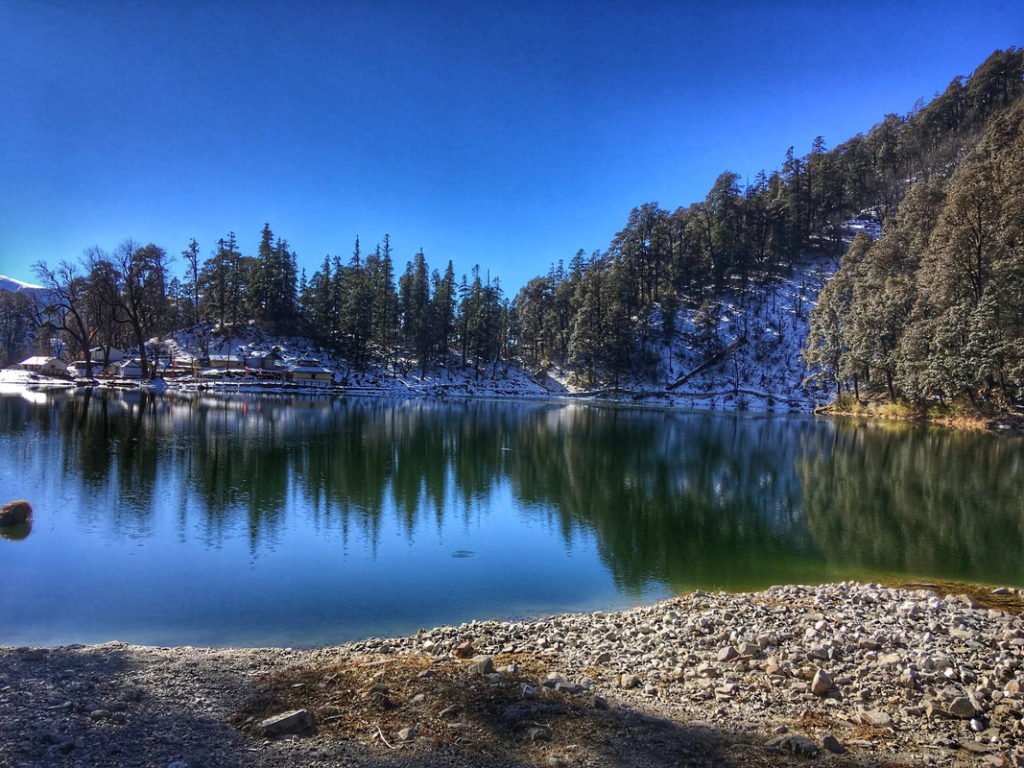
Often referred to as the “Birthplace of Lord Ganesha”, this mystical freshwater lake sits at an altitude of approximately 3,024 to 3,657 metres above sea level. The name “Dodital” is derived from the Dodi — the Himalayan trout that populate its crystal-clear waters — and the lake is also known as Dhundhital (Dhundhi being another name for Ganesha in Garhwali tradition).
What makes Dodital truly special is its extraordinary spiritual significance combined with raw, untouched natural beauty. Unlike the more commercialised Himalayan treks, Dodital offers a gentle, forested trail through oak, deodar, and rhododendron forests, passing through traditional Garhwali villages and open clearings. It is far quieter than the better-known treks, and the forest is rich in birdlife.
A small Ganesha temple sits at the edge of the lake, tended by a pujari who considers the lake itself a living deity. The lake is also the source of the Assi Ganga River, which emerges from Dodital and joins the Bhagirathi near Uttarkashi, adding a layer of sacred geography to this already spectacular alpine setting.
The trek to Dodital, which begins from Sangamchatti or Agoda village (a short drive from Uttarkashi), is rated easy to moderate, making it accessible to reasonably fit beginners while still offering a genuine multi-day Himalayan experience.
Key Information at a Glance
| Aspect | Details |
|---|---|
| Location | Uttarkashi District, Garhwal Himalaya, Uttarakhand |
| Also Known As | Dhundhital, Dhundi Tal, Ganesha-katal |
| Altitude (Lake) | ~3,024–3,657 m (9,921–11,998 ft) |
| Altitude (Darwa Pass) | ~4,150 m (13,612 ft) |
| Trek Start Point | Agoda village (road now reaches Agoda; previously Sangamchatti) |
| Trek Distance (One Way) | ~11 km from Agoda |
| Total Trek Distance | ~22 km round trip |
| Trek Duration | 4–5 Days (standard); 6–7 Days (with Dayara Bugyal extension) |
| Difficulty | Easy to Moderate |
| Best Time to Visit | April–June & September–November |
| Nearest Town | Uttarkashi (~30 km) |
| Nearest Airport | Jolly Grant Airport, Dehradun (~160 km) |
| Nearest Railway Station | Dehradun (~160 km) |
| Distance from Delhi | ~400+ km |
History of Dodital
The Legend of Lord Ganesha’s Birth
The history of Dodital is inseparable from its most famous legend — the birth of Lord Ganesha.
According to Hindu mythology, Goddess Parvati, the consort of Lord Shiva, created Ganesha from sandalwood paste (or turmeric and sandalwood paste) that she used before bathing. She shaped the paste into a little boy and breathed life into him, stationing him at the door to guard her while she bathed.
When Lord Shiva attempted to enter, the young Ganesha — unaware of who Shiva was — stopped him. In a fit of anger, Shiva cut off Ganesha’s head. Seeing this, Parvati was overcome with fury and grief, and demanded that Shiva bring her child back to life. To appease her, Shiva revived Ganesha with the head of an elephant.
The local belief is rooted in the Manaskhand and Kedarkhand scriptures, which state that Parvati gave life to Ganesha near this very lake. The place is so revered that after festivities, the idol of Ganesha is not immersed in the lake, as it is believed to be his permanent abode.
The Ganesha Temple
A small temple dedicated to Lord Ganesha stands on the bank of the lake. It remains an active shrine, tended by a pujari who receives devotees arriving from Uttarkashi and the surrounding villages. The pujari describes the lake as the confluence of two underground rivers that flow around a natural Shivlinga at the bottom.
Local Names and Traditions
In the Garhwali tradition, Dhundhi is one of the names of Ganesha, and the lake is locally known as Ganesha-katal (Ganesha’s lake). The region’s residents, particularly those from the Kailasu region in Uttarkashi district, have long believed that Lord Ganesha was born at Dodital, a belief reinforced by the fact that Ganesha is known as “Dodi King” in the area.
The Trail’s Historical Use
The trail to Dodital has been traditionally used by herdsmen for cattle grazing and by holy men walking between the holy towns of Yamunotri and Gangotri. This ancient route continues to be part of the living cultural landscape of the region.
Geography of Dodital
Location and Topography
Dodital is located in the Assi Ganga Valley of Uttarkashi district, in the Garhwal Himalayas of Uttarakhand.
| Feature | Details |
|---|---|
| Location | Assi Ganga Valley, Uttarkashi district |
| Altitude | ~3,024–3,657 m (sources vary; most operators cite ~3,024 m) |
| Type | Freshwater alpine lake |
| Terrain | Dense oak, deodar, and rhododendron forests; alpine meadows; rocky trail |
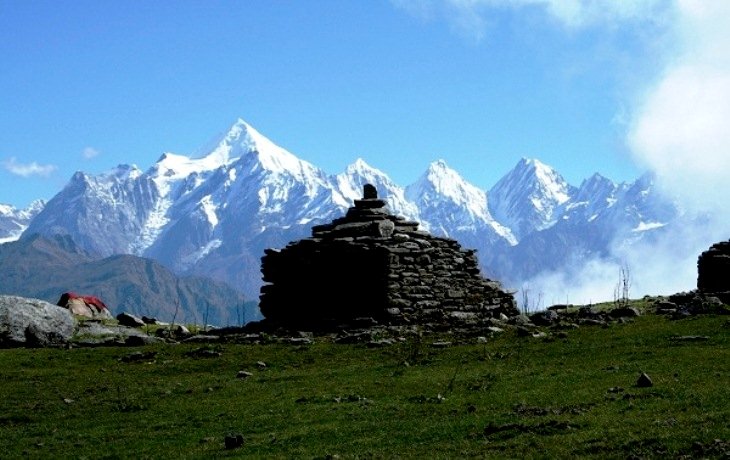
| Key Peaks Visible | Bandarpunch, Swargarohini, Srikanth, Gangotri ranges (from Darwa Top) |
| River System | Source of the Assi Ganga River, which joins the Bhagirathi at Gangori near Uttarkashi |
| Nearby Pass | Darwa Pass (~4,150 m) |
The Assi Ganga River
The Assi Ganga River emerges from Dodital Lake and flows down the valley, eventually joining the Bhagirathi River at Gangori near Uttarkashi. The trek trail follows the Assi Ganga for much of its course, with the river providing a constant companion through the forest.
The Darwa Pass Circuit
For fitter trekkers, the trek can be extended to Darwa Pass (Darwa Top) at an altitude of approximately 4,150 metres. From this high point, trekkers are rewarded with panoramic views of the Bandarpunch, Swargarohini, Srikanth, and Gangotri ranges. Beyond Darwa, the trail can be extended to the rolling meadows of Dayara Bugyal.
The Trail
The trek passes through dense, dark forests of the Assi Ganga Valley — oak, deodar, and rhododendron — with streams tumbling down from the ridges above and the gradual opening of the valley into the lake clearing. The trail also passes through Garhwali villages and open clearings, offering glimpses of traditional mountain life.
Flora and Fauna
Flora
The region surrounding Dodital is blessed with rich Himalayan biodiversity, characterised by dense, undisturbed forests.
Forest Types:
- Oak forests (Quercus spp.) — a dominant species along the trail
- Deodar cedar (Cedrus deodara)
- Rhododendron forests (Rhododendron arboreum) — vibrant blooms in spring
- Pine and fir trees
- Alpine meadows around the lake and higher altitudes
The lake is surrounded by oak, deodar, and rhododendron forests and the Himalayas, creating a spectacular natural amphitheatre.
Fauna
The Dodital region is a haven for Himalayan wildlife, particularly birdlife.
Fish:
- Himalayan Golden Trout (Dodi) — the lake’s namesake, found abundantly in its clear waters
- Snow Trout, Mirror Carp, Brown Trout
- The lake is a paradise for anglers
Birds:
- Himalayan Monal (Uttarakhand’s state bird)
- Koklas Pheasant
- Red-billed Blue Magpie
- Himalayan Whistling Thrush
- Bush Robin, Pink Finch
- The forest is a birdwatcher’s delight
Mammals:
- The dense forests support various Himalayan mammal species, though sightings are less common due to the thick forest cover
Conservation Status
The region is ecologically sensitive. The forests around Dodital are thick and undisturbed, and trekkers are expected to follow Leave No Trace principles and respect the fragile Himalayan ecosystem.
Religious Beliefs and Significance
The Birthplace of Lord Ganesha
Dodital is one of the most significant Ganesha-associated sacred sites in the Garhwal Himalayas. Hindu tradition holds that Lord Ganesha was born here, created by Goddess Parvati from sandalwood paste and brought to life by her divine love.
The Manaskhand and Kedarkhand scriptures support this belief, stating that Parvati gave life to Ganesha near the lake.
The Ganesha Temple
The small Ganesha temple at the lake’s edge is an active place of worship. Devotees arrive from Uttarkashi and surrounding villages to offer prayers at what they believe is Ganesha’s legendary birthplace.
Ganesh Chaturthi Celebrations
The lake holds special significance during Ganesh Chaturthi. Villagers and tourists throng Dodital for immersion ceremonies, though the idol is not immersed in the lake itself — it is believed to be Ganesha’s permanent abode.
During the reopening of the trek route after winter, devotees take a holy dip in the lake and offer prayers to Lord Ganesha and Goddess Annapurna (considered an avatar of Parvati).
The Sacred Geography
The Assi Ganga River, which emerges from Dodital, is itself considered sacred, adding to the spiritual significance of the entire valley. The pujari at the temple describes the lake as the confluence of two underground rivers flowing around a natural Shivlinga at the bottom — a belief that deepens the lake’s sacred character.
How to Reach Dodital
The journey to Dodital requires a combination of road travel and trekking.
By Air
The nearest airport is Jolly Grant Airport in Dehradun, approximately 160 km from the trek base. Taxis are available from the airport to Uttarkashi.
By Train
The nearest railway station is Dehradun, approximately 160 km away. Dehradun is well-connected to Delhi and other major cities.
By Road
| Route | Distance | Travel Time |
|---|---|---|
| Delhi → Uttarkashi | ~400+ km | 9–10 hours (via Rishikesh) |
| Dehradun → Uttarkashi | ~140 km | 5–6 hours |
| Uttarkashi → Sangamchatti | ~5 km | 15–20 min |
| Sangamchatti → Agoda | ~5 km (trek) | 2–3 hours |
Note: The road now reaches Agoda village, which has become the new trek start point, reducing the trek distance. Previously, the trek started from Sangamchatti.
Bus Services:
- Overnight buses run from Delhi to Uttarkashi (approximately 12 hours, ~₹600 per person)
- Buses are available from ISBT Kashmere Gate, Delhi and Dehradun
The Trek Route
| Segment | Distance | Highlights |
|---|---|---|
| Agoda → Manjhi | ~8 km | Forest trail along the Assi Ganga, gradual climb |
| Manjhi → Dodital Lake | ~6 km | Continued forest climb, lake appears gradually |
| Dodital → Darwa Top (Optional) | ~5 km | Steep climb, panoramic views of Bandarpunch and Gangotri ranges |
⚠️ Important:
- The total trek distance is approximately 22 km round trip.
- The trek is rated easy to moderate — the climbs are steady rather than steep, and the altitude gain is gradual over several days.
- A side excursion to Darwa Top (over 11,500 feet) adds panoramic views of the Bandarpunch and Gangotri ranges before the return descent.
Sample Itinerary (5 Days)
Permits Required
- Forest entry permits are required for trekking in the region
- Permits can be obtained from the forest department office in Uttarkashi
- Registered operators typically arrange permits as part of the tour package
Weather and Best Time to Visit
Climate Overview
Dodital experiences a high-altitude alpine climate. Days are cool and pleasant, but nights can drop well below freezing, even during the open season. Sudden weather changes are common.
Seasonal Breakdown
| Season | Months | Weather | Trekking Suitability |
|---|---|---|---|
| Spring/Summer (Peak) | April–June | Pleasant, clear skies, blooming rhododendrons | ⭐ Best |
| Monsoon | July–August | Heavy rainfall, leech-prone, slippery trails | ❌ Not Recommended |
| Autumn | September–November | Crisp air, clear views, golden forests | ⭐ Best |
| Winter | December–March | Heavy snow, frozen lakes, snow trekking | ⭐ For Experienced Only |
Best Time to Visit
| Season | Months | Highlights |
|---|---|---|
| Summer | April–June | Pleasant weather, clear trails, rhododendrons in bloom |
| Autumn | September–November | Post-monsoon clarity, crisp air, golden forests |
Note: The best time for the Dodital Trek is April to June and September to November, when the weather is clear and the trail is accessible. The monsoon months (July–August) should be avoided due to heavy rainfall, leeches, and slippery trails. In winter, the trail and lake are under snow, and it becomes a snow trek suitable for experienced trekkers.
Temperature
| Season | Daytime Temperature | Nighttime Temperature |
|---|---|---|
| Summer (April–June) | 10°C to 20°C | 0°C to 5°C |
| Autumn (Sept–Nov) | 5°C to 15°C | -5°C to 5°C |
| Winter (Dec–March) | Near freezing or below | Well below freezing |
Nearby Places
| Destination | Distance | Highlights |
|---|---|---|
| Uttarkashi | ~30 km | Kashi Vishwanath Temple, Nehru Institute of Mountaineering, Bhagirathi River |
| Sangamchatti | ~5 km from Uttarkashi | Trek start point (historical), Assi Ganga River |
| Agoda Village | On trek route | New trek start point, road access |
| Manjhi | On trek route | Campsite with Bandarpunch massif views |
| Darwa Top | ~5 km from Dodital | Panoramic views of Bandarpunch, Swargarohini, Srikanth, Gangotri ranges |
| Dayara Bugyal | Beyond Darwa | Rolling alpine meadows, extension trek |
| Yamunotri | ~50 km | Char Dham pilgrimage site |
| Gangotri | ~50 km | Char Dham pilgrimage site |
| Assi Ganga Valley | Adjacent | Scenic river valley, traditional villages |
Distance from Major Cities
| City | Distance (Approx.) | Travel Time |
|---|---|---|
| Delhi | ~400+ km | 9–10 hours (to Uttarkashi) |
| Dehradun | ~140 km (to Uttarkashi) | 5–6 hours |
| Rishikesh | ~170 km (to Uttarkashi) | 6–7 hours |
| Haridwar | ~190 km (to Uttarkashi) | 7–8 hours |
Frequently Asked Questions (FAQs)
General Questions
Q1: What is Dodital?
A: Dodital is a freshwater alpine lake in the Uttarkashi district of Uttarakhand, believed to be the birthplace of Lord Ganesha and the source of the Assi Ganga River.
Q2: Where is Dodital located?
A: It is located in the Assi Ganga Valley of Uttarkashi district, Uttarakhand, in the Garhwal Himalayas.
Q3: What is the altitude of Dodital Lake?
A: The lake is at an altitude of approximately 3,024 to 3,657 metres. Most operators cite ~3,024 m, though Wikipedia lists 3,657 m — sources conflict, so plan for the higher range.
Q4: Why is Dodital famous?
A: Dodital is famous as the birthplace of Lord Ganesha and for its Himalayan Golden Trout population, dense oak and rhododendron forests, and the Ganesha temple at the lake’s edge.
Q5: What is the legend of Dodital?
A: According to Hindu mythology, Goddess Parvati created Ganesha from sandalwood paste at this site and breathed life into him. When Lord Shiva cut off his head in anger, Parvati demanded he be revived, and Shiva gave him an elephant’s head.
Q6: What is the best time to visit Dodital?
A: The best time is April to June and September to November.
Q7: How long is the Dodital trek?
A: The trek is approximately 22 km round trip from Agoda, taking 4–5 days including travel to and from Uttarkashi.
Q8: Is the Dodital trek difficult?
A: The trek is rated easy to moderate. The climbs are steady rather than steep, and it suits beginners with basic fitness.
Q9: Where does the Dodital trek start?
A: The trek now starts from Agoda village, where the road ends. Previously, it started from Sangamchatti.
Q10: Do I need a permit for the Dodital trek?
A: Yes, forest entry permits are required and can be obtained from the forest department in Uttarkashi.
Q11: What is the nearest airport to Dodital?
A: The nearest airport is Jolly Grant Airport in Dehradun, approximately 160 km away.
Q12: What is the nearest railway station to Dodital?
A: The nearest railway station is Dehradun, approximately 160 km away.
Q13: How far is Dodital from Delhi?
A: Dodital is approximately 400+ km from Delhi, with a 9–10 hour drive to Uttarkashi via Rishikesh.
Q14: What wildlife can I see on the Dodital trek?
A: The region is home to Himalayan Golden Trout, Himalayan Monal, Koklas Pheasant, Red-billed Blue Magpie, and Himalayan Whistling Thrush, among other species.
Q15: What is the Ganesha Temple at Dodital?
A: A small temple dedicated to Lord Ganesha stands at the lake’s edge. It is an active shrine tended by a pujari and draws pilgrims who believe the lake is Ganesha’s birthplace.
Q16: Is Dodital the birthplace of Lord Ganesha?
A: Yes, local tradition and Hindu scriptures hold that Goddess Parvati created Ganesha at Dodital.
Q17: Can I extend the trek to Darwa Top?
A: Yes, fit trekkers can climb to Darwa Top (~4,150 m) for panoramic views of the Bandarpunch, Swargarohini, Srikanth, and Gangotri ranges.
Q18: What should I pack for the Dodital trek?
A: Carry good trekking shoes with grip, warm layers, a rain jacket, a water bottle, a sun cap, sunscreen, a small first-aid kit, a head torch, and cash (no ATMs on the trail).
Q19: Is there mobile connectivity on the Dodital trek?
A: Mobile connectivity is limited or non-existent on the trail. Inform your family of your itinerary before starting.
Q20: Can I do the Dodital trek in winter?
A: Yes, but it becomes a snow trek with the trail and lake under snow. It is recommended only for experienced trekkers.
Q21: What is the Assi Ganga River?
A: The Assi Ganga is the river that emerges from Dodital Lake and flows down the valley, joining the Bhagirathi at Gangori near Uttarkashi.
Q22: What is the Dayara Bugyal extension?
A: Beyond Darwa Pass, the trail can be extended to Dayara Bugyal, a rolling alpine meadow, adding 2–3 days to the trek.
Q23: What is the local name for Dodital?
A: Dodital is also known as Dhundhital or Dhundi Tal, and locally as Ganesha-katal (Ganesha’s lake).
Q24: Are there fish in Dodital Lake?
A: Yes, the lake is abundant in Himalayan Golden Trout (Dodi), Snow Trout, Mirror Carp, and Brown Trout, making it a paradise for anglers.
Q25: What is the significance of Ganesh Chaturthi at Dodital?
A: During Ganesh Chaturthi, villagers and tourists throng Dodital, but the idol is not immersed in the lake — it is believed to be Ganesha’s permanent abode.
Essential Tips for Trekkers
- Acclimatisation: Spend a day in Uttarkashi to acclimatise before starting the trek
- Physical Fitness: Build basic cardiovascular fitness over a few weeks of regular walking, jogging, or stair climbing
- Permits: Obtain forest entry permits from the Uttarkashi forest department in advance
- Guide: Hire an experienced local guide familiar with the trail
- Gear: Carry good trekking shoes with grip (the forest trail can be wet), warm layers, and a rain jacket in every season
- Cash: Carry sufficient cash — there are no ATMs on the trail
- Weather: Check weather forecasts before starting; avoid monsoon (leeches and slippery trails)
- Hydration: Stay well-hydrated; carry water purification tablets
- Leave No Trace: Respect the fragile Himalayan ecosystem and the sacred lake
- Insurance: Consider travel insurance covering high-altitude trekking
- Inform Family: Let someone know your itinerary, as there is limited or no mobile signal
- Respect the Sacred Site: Dodital is a place of worship — maintain silence and sanctity at the Ganesha Temple
Plan Your Dodital Trek with Discover Uttarakhand
At Discover Uttarakhand, we’ve been organising unforgettable Himalayan journeys since 1997. As a trusted local operator with deep knowledge of the Garhwal region, we offer:
✅ Customised Dodital trek packages (4 to 5 days)
✅ Extended itineraries with Darwa Top and Dayara Bugyal
✅ Experienced local guides and porters
✅ Comfortable transport with experienced hill drivers
✅ All necessary permits and arrangements
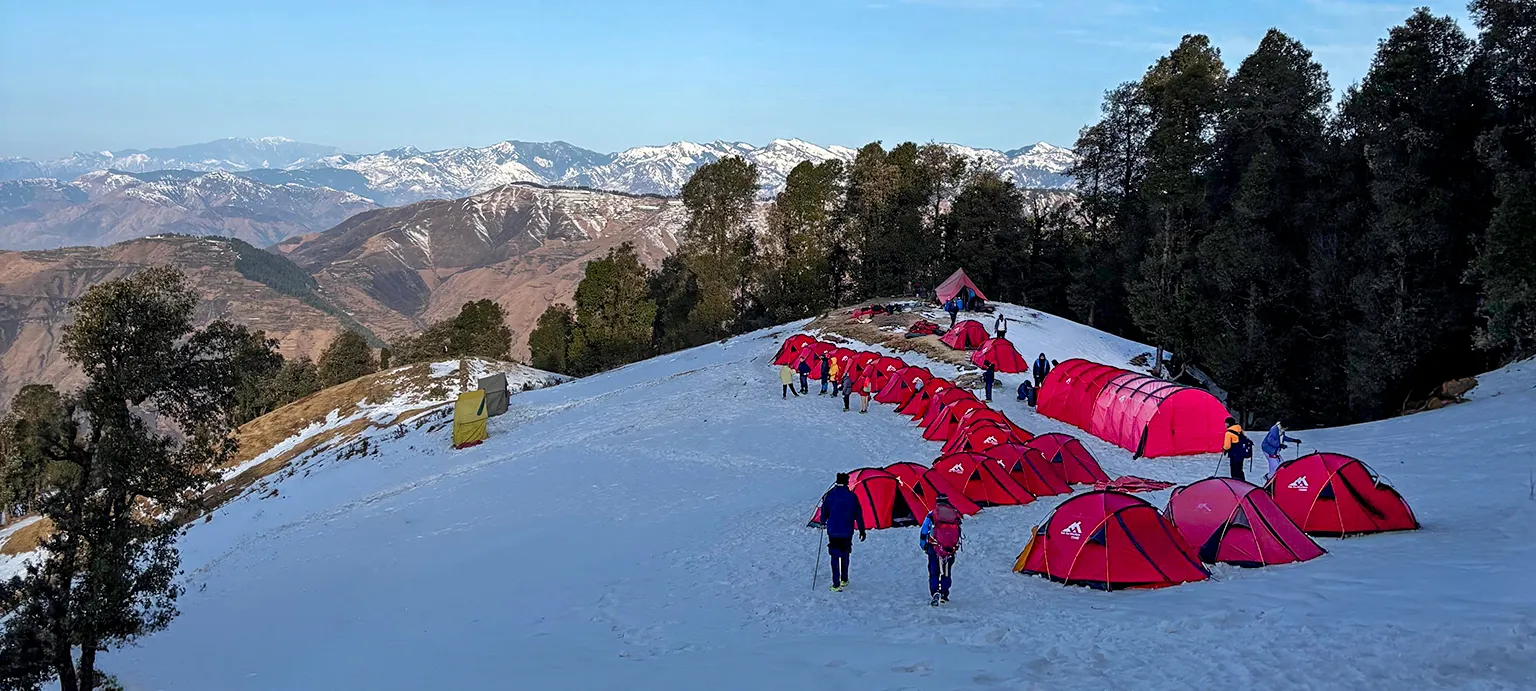
✅ Quality camping equipment and nutritious meals
✅ 24/7 customer support throughout your journey
Recommended Dodital Trek Packages
| Package | Duration | Starting Point | Highlights |
|---|---|---|---|
| Dodital Lake Trek | 4 Days / 3 Nights | Dehradun | Uttarkashi, Agoda, Dodital Lake, Ganesha Temple |
| Dodital & Darwa Top Trek | 5 Days / 4 Nights | Dehradun | Dodital, Darwa Pass, Bandarpunch views |
| Dodital & Dayara Bugyal Expedition | 7 Days / 6 Nights | Dehradun | Dodital, Darwa Top, Dayara Bugyal meadows |
📞 Call / WhatsApp: +91-9997187178, 9760222178, 8171977178
📍 Visit Our Office: Himalayan Colony, opposite DSVV, Haripur Kalan, Haridwar, Motichur Range, Uttarakhand 249411
🌐 Website: www.discover-uttarakhand.com
📧 Email:discoveruttarakhand.mail@gmail.com
Plan your expedition to Dodital with proper preparation, permits, and respect for this sacred Himalayan lake. Walk in the footsteps of mythology to the birthplace of Lord Ganesha and experience an unforgettable journey into one of India’s most spiritually significant and naturally beautiful landscapes.
Discover Uttarakhand – Your Local Partner for Unforgettable Himalayan Journeys Since 1997 🏔️