Introduction: The Hidden Kashi in the Himalayas
Nestled in the Garhwal Himalayas of Uttarakhand’s Rudraprayag district at an altitude of 1,319 meters (4,327 feet), Guptkashi is a sacred town that holds a unique place in Hindu spirituality. Known as the “Hidden Kashi” (Gupt means “hidden”), this temple town is revered as the northern counterpart of the holy city of Varanasi (Kashi) and is considered just as sacred.
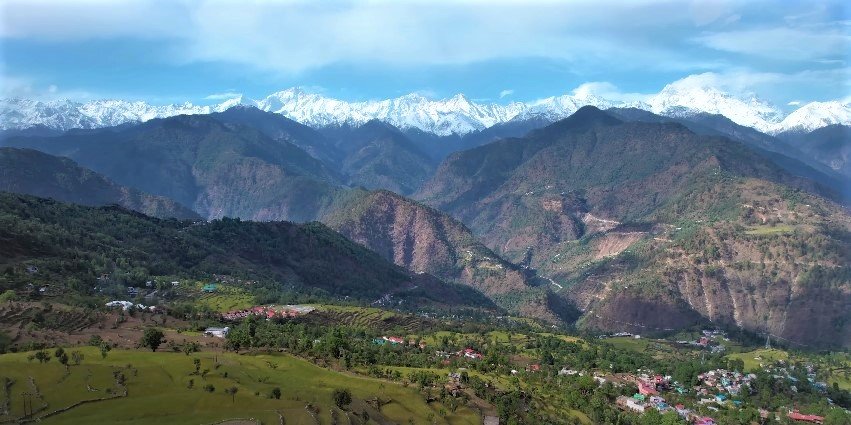
The name “Guptkashi” itself reveals its spiritual character—it is the place where Lord Shiva chose to hide from the Pandavas, making it a site of profound mythological importance. Situated on the banks of the Mandakini River with the majestic snow-capped Chaukhamba peaks as its backdrop, Guptkashi offers a perfect blend of spiritual energy and natural beauty.
While most travellers treat Guptkashi merely as a night halt before the Kedarnath trek or a helipad hub, those who take the time to explore discover a town rich in ancient temples, unique legends, and a peaceful atmosphere that lingers long after you leave. The town is also the winter home of the priests of Kedarnath, who reside here when the high-altitude shrine is closed due to snow.
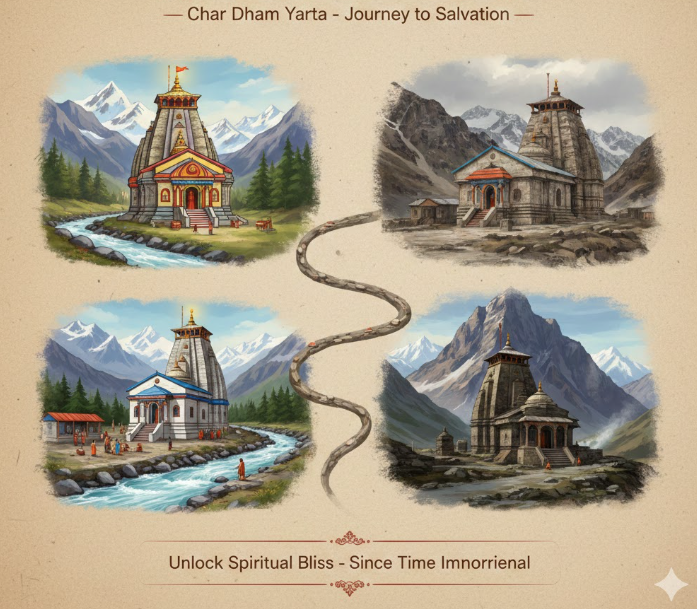
Whether you are a pilgrim on the Char Dham Yatra, a history enthusiast tracing the footsteps of the Pandavas, or a traveller seeking serenity amidst the Himalayas, Guptkashi welcomes you with its timeless charm and divine energy.
Key Information at a Glance:
History and Mythology: The Hidden Kashi
The Legend of the Pandavas and Lord Shiva
The most famous legend associated with Guptkashi dates back to the Mahabharata era. After the bloody Kurukshetra war, the Pandavas were burdened by guilt for the sins of fratricide and the killing of their kinsmen. On the advice of Lord Krishna and other sages, they sought to atone for their sins by seeking the blessings of Lord Shiva.
However, Lord Shiva was not willing to meet them. Still angered by the unjust events of the war, he avoided them at Kashi (Varanasi) and went incognito to the Himalayas, disguising himself as a bull (Nandi). The Pandavas pursued him to this very location in Uttarakhand.
When Bhima, the second Pandava brother, recognised the bull as Lord Shiva, he tried to hold it by its tail and hind legs. But Nandi vanished into the ground, disappearing from sight. This “vanishing act” (gupt) gave the place its name—Guptakashi, the “Hidden Kashi”.
Lord Shiva later reappeared in five different forms at five locations, which became the Panch Kedar shrines:
| Body Part | Temple | Location |
|---|---|---|
| Hump (Kubja) | Kedarnath | Kedarnath |
| Face | Rudranath | Chamoli district |
| Arms | Tungnath | Near Chopta |
| Navel and Stomach | Madhyamaheshwar | Near Ukhimath |
| Hair Locks (Jata) | Kalpeshwar | Urgam Valley |
The Proposal of Lord Shiva
Mythology also states that it was at Guptakashi that Lord Shiva proposed to Goddess Parvati before they got married at the small village of Triyuginarayan, located at the confluence of the Mandakini and Son-Ganga rivers. This adds another layer of romantic and spiritual significance to this sacred town.
The Six Kashis of India
According to Puranic literature, Kashi (Varanasi) and Kanchipuram are considered the two eyes of Lord Shiva. Keeping this in mind, six other “Kashis” have been prescribed as equally sacred pilgrimage sites for devotees who cannot make the long journey to Varanasi. These include:
- Uttarkashi (North Kashi) – Uttarakhand
- Guptakashi (Hidden Kashi) – Uttarakhand
- Dakshinkashi – Southern India
- Guptakashi at Bhubaneswar – Eastern India
- Kashi at Nashik (Paithan) – Western India
- Kashi in Mandi – Himachal Pradesh
The Puranas state that all these Kashis have the same degree of sanctity and reverence as the main Kashi, Varanasi.
The Aurangzeb Legend
Another local legend declares that when the Mughal emperor Aurangzeb demolished the Kashi Vishwanath Temple in Varanasi in 1669 and constructed the Gyanvapi Mosque, the sacred Shiva Linga was shifted to Guptakashi for safekeeping. The original linga of Kashi Vishwanath is believed to have remained here ever since.
Geography and Location
Topography
Guptkashi is situated in the Mandakini River valley, surrounded by lush green forests of deodar, pine, and oak. A number of streams and rivulets drain into the main Mandakini River, creating a landscape of extraordinary beauty. The town is located on a mountain slope directly facing the sacred town of Ukhimath on the opposite bank of the river.
The Chaukhamba Peak
The most stunning natural feature of Guptkashi is the view of the Chaukhamba peak—a majestic snow-covered mountain that dominates the skyline. The peak is particularly breathtaking in the early morning hours when the first rays of sunlight paint it in shades of gold and pink.
Magnolia Trees (Champa)
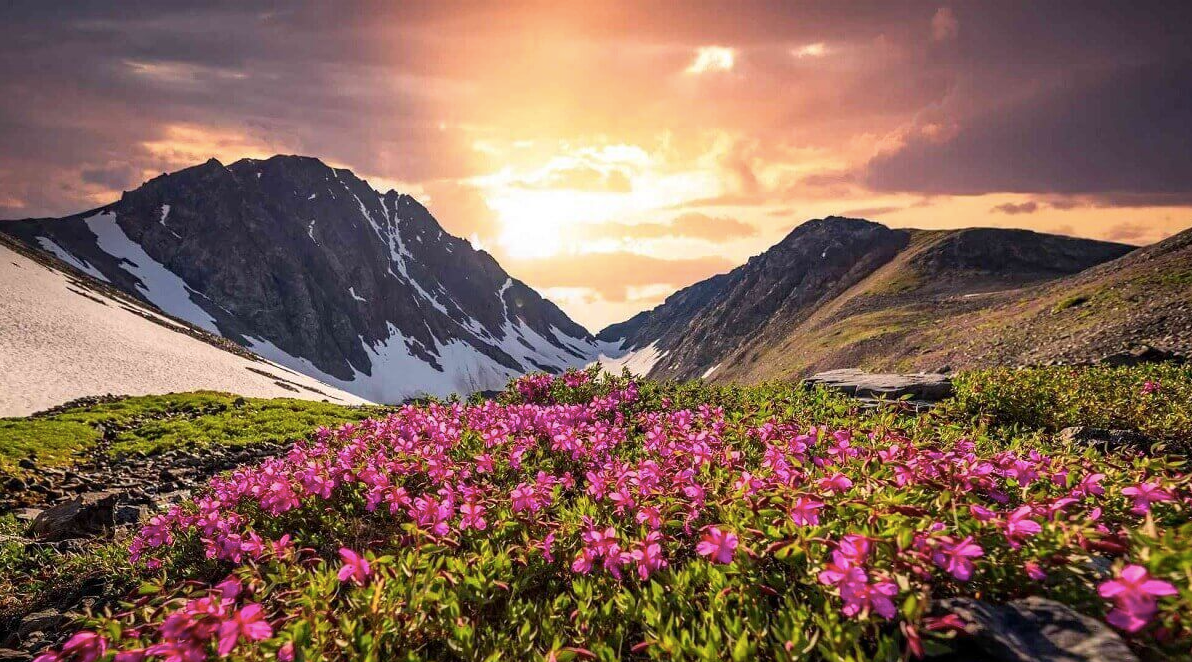
The valley is known for its large magnolia trees, locally called Champa, which provide a sweet-scented atmosphere to the place, especially during the blooming season.
Guptkashi at a Glance
Religious Beliefs and Significance
The Spiritual Importance of Guptkashi
Guptkashi’s religious importance is considered next only to that of Varanasi, believed to be the most pious of all Hindu pilgrimage places. The town is considered a “Tirtha” (holy crossing) where devotees can attain spiritual merit equivalent to visiting the main Kashi.
The Panch Kedar Connection
Guptkashi serves as the gateway to the Panch Kedar circuit—the five sacred shrines of Lord Shiva in the Garhwal Himalayas. The town is the base for pilgrims visiting Kedarnath, and its temples are intrinsically linked to the Panch Kedar legend.
The Sapta Kashi Concept
The belief in “Sapta Kashi” (Seven Kashi) means that a pilgrimage to any of the six alternative Kashis is considered as meritorious as visiting the original Kashi. Guptkashi holds the second position among these sacred towns.
Kedarnath’s Winter Connection
During the winter months (November to April), when the Kedarnath temple is closed due to heavy snowfall, the symbolic deity of Kedarnath is shifted via Guptkashi to Ukhimath, where worship continues uninterrupted. The temple priests of Kedarnath also stay in Guptkashi during this period.
Top Attractions and Places to Visit
1. Vishwanath Temple – The Main Shrine
The Vishwanath Temple is the most important landmark in Guptkashi and the primary reason pilgrims visit this town. Dedicated to Lord Shiva as Vishwanath (“Lord of the Universe”), this ancient temple is believed to be as holy as the famous Kashi Vishwanath Temple in Varanasi.
What to Expect:
- Architecture: Built in the traditional Himalayan style with stone and a high tower (shikhara) over the sanctum, topped with a wooden frame and sloping roof
- Dwarpalakas: Two entrance guards (dwarpalakas) flank the doorway
- Bhairava Image: At the top of the entrance door is an image of Bhairava, the fierce form of Shiva who guards the temple
- Spiritual Atmosphere: Even when the market outside is noisy, the inside of the temple feels silent and divine
Legend: It is believed that this is the very place where Lord Shiva proposed to Goddess Parvati.
Timings: 5:00 AM – 9:00 PM (daily)
Entry Fee: Free
Location: Heart of Guptkashi town
2. Ardhanarishwar Temple – The Half-Man Half-Woman Form
Right next to the Vishwanath Temple, in the same complex, stands the unique Ardhanarishwar Temple. “Ardhanarishwar” means a form of God that is half man and half woman, representing Lord Shiva and Goddess Parvati together in one body.
What to Expect:
- A grand statue of the Ardhanarishwar form—half Shiva, half Parvati
- The idol symbolises that male and female energies are equal and inseparable
- A metallic statue of Nandi faces the Shiva image, with a Swastika painted on its side—a typical Hindu symbol aligned clockwise, considered auspicious
Significance: Devotees, especially couples, pray here for a happy married life. The temple is believed to be the place where Lord Shiva revealed this form to Sage Bhringi to teach him that Shiv-Shakti (Shiva and Parvati) are one and cannot exist without the other.
3. Manikarnika Kund – The Sacred Pond
In front of the Vishwanath Temple lies a small water tank called Manikarnika Kund. This is not just a regular pond—it holds immense spiritual significance.
What Makes It Special:
- Two underground springs, representing the holy rivers Ganga (Bhagirathi) and Yamuna, meet here
- The Yamuna spring water emanates from a goumukh (spout in the shape of a cow’s mouth)
- The Bhagirathi spring flows through the trunks of two elephants strategically placed above a Shiva Linga
- The water is considered extremely pure
Tradition: Pilgrims wash their hands and face here before entering the main Vishwanath Temple.
4. Ukhimath – The Winter Seat of Kedarnath
Located on the opposite bank of the Mandakini River, approximately 14 km from Guptkashi, Ukhimath is the winter home of Lord Kedarnath.
What to Expect:
- Omkareshwar Temple: The main temple where the Utsav Murti (festival idol) of Lord Kedarnath is brought during the winter months (November to April)
- Peaceful Atmosphere: Ukhimath is quieter and less crowded than Guptkashi
- Stunning Views: The town offers spectacular views of the surrounding Himalayan peaks
Significance: If you are visiting during winter (when Kedarnath is closed), Ukhimath is the place for darshan. The temple priests of Kedarnath also reside here during the winter.
Distance: 14 km from Guptkashi
Travel Time: 30 minutes by road
5. Triyuginarayan Temple – The Divine Wedding Site
Triyuginarayan is one of the most famous spiritual destinations near Guptkashi. It is believed to be the exact place where Lord Shiva and Goddess Parvati got married.
What to Expect:
- The Eternal Flame: The temple is famous for an eternal fire that is said to have been burning since the time of the divine wedding, for three yugas (ages)
- Pond of Haldi: A nearby pond where, according to legend, turmeric paste was prepared for the wedding
- Peaceful Setting: The temple is located in a serene forest setting
Distance: 30 km from Guptkashi
Travel Time: 1 hour by road
Best Time: Year-round; especially auspicious for couples and those seeking marriage blessings
6. Kalimath Temple – The Powerful Shakti Peeth
Kalimath is a very powerful temple dedicated to Goddess Kali, located approximately 12 km from Guptkashi. It is considered one of the Siddha Peeths—places where wishes are believed to be fulfilled instantly.
What to Expect:
- No Idol: Unlike most temples, there is no idol here. Instead, devotees worship a silver plate that covers a sacred pit
- Raw Spiritual Energy: The temple has a very raw, powerful atmosphere
- Riverside Location: The temple is situated near the river, adding to its scenic beauty
Distance: 12 km from Guptkashi
Best Time: Year-round
7. Chopta – The Mini Switzerland of India
Chopta is a picturesque hill station located approximately 45 km from Guptkashi. Often called the “Mini Switzerland of India,” it offers stunning meadows, dense forests, and spectacular Himalayan views.
What to Expect:
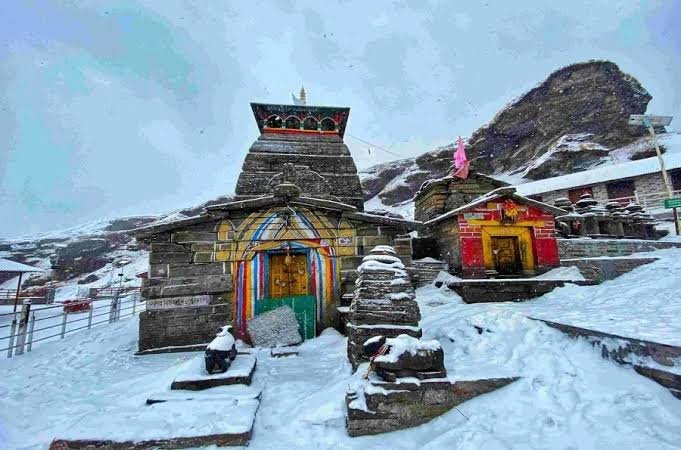
- Tungnath Temple: The highest Shiva temple in the world (3,680 m), accessible by a 3.5 km trek from Chopta
- Chandrashila Peak: A 1.5 km trek beyond Tungnath offering 360-degree Himalayan views
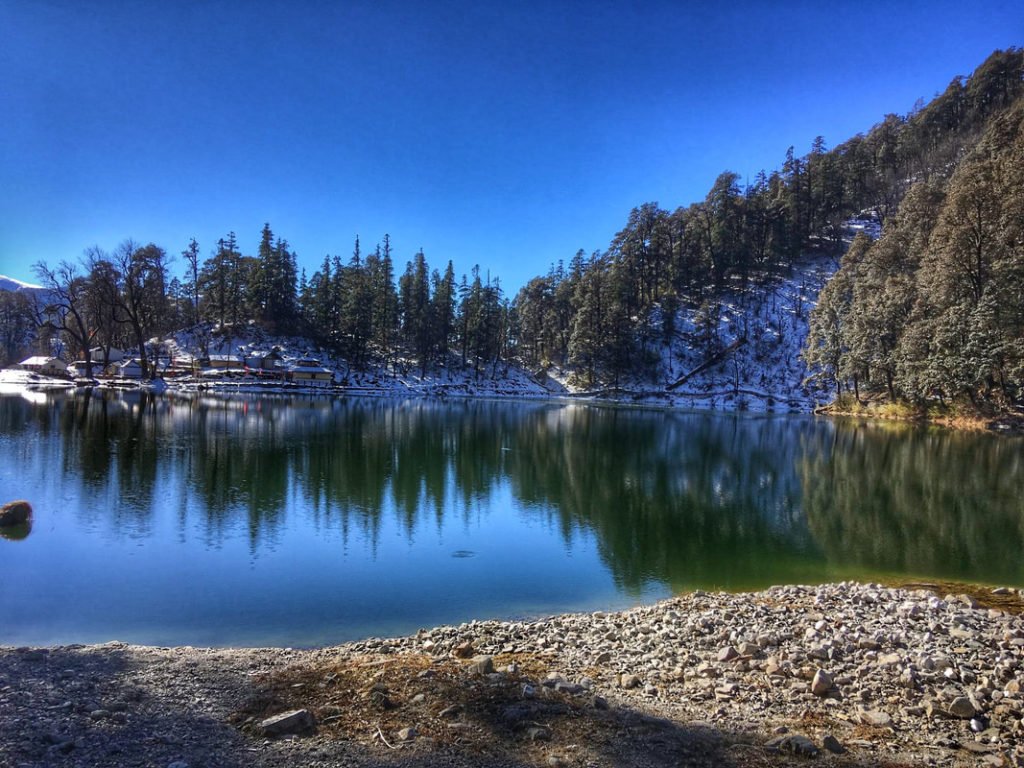
- Deoria Tal: A beautiful lake with reflections of the Chaukhamba peaks
- Camping: Several campsites offer overnight stays under the stars
Distance: 45 km from Guptkashi
Travel Time: 1.5 hours by road
Best Time: April–June & September–November
8. Kedarnath – The Jyotirlinga
Guptkashi is the primary base camp for the Kedarnath Yatra. Located approximately 50 km from Guptkashi, Kedarnath is one of the twelve Jyotirlingas and a crucial part of the Char Dham pilgrimage.
How to Reach from Guptkashi:
- By Road: Drive to Gaurikund (~30 km), then trek 16 km (6-8 hours)
- By Helicopter: Helipad in Guptkashi offers direct flights to Kedarnath (12-15 minutes)
Distance: ~50 km from Guptkashi
Best Time: May–October (temple open seasonally)
9. Gandhi Sarovar – The Lake of Ashes
Located approximately 2 km from Guptkashi, Gandhi Sarovar is a small but beautiful lake where the ashes of Mahatma Gandhi were immersed.
What to Expect:
- A serene lake surrounded by pine forests
- A short trek from the main road (about 1.5 km)
- Peaceful atmosphere, perfect for meditation
10. Vasukital – The High-Altitude Lake
Vasukital is a stunning lake located approximately 8 km from Kedarnath (accessible from Guptkashi as a day trip). It is known for its floating ice and sparkling water.
What to Expect:
- A beautiful high-altitude lake at approximately 4,135 meters
- Views of the surrounding Himalayan peaks
- A challenging trek suitable for adventure enthusiasts
Best Time: June–September
Wildlife and Nature
Kedarnath Wildlife Sanctuary
Guptkashi serves as a gateway to the Kedarnath Wildlife Sanctuary (also known as the Kedarnath Musk Deer Sanctuary), one of the largest protected areas in the western Himalayas.
Quick Facts:
| Aspect | Details |
|---|---|
| Area | 975 sq km |
| Established | January 21, 1972 |
| Nearest Access | Guptkashi (47 km) |
| Best Season | May to June & September to November |
Wildlife Highlights:
Bird Species: Koklass Pheasant, Western Tragopan, Cheer Pheasant, Golden Eagle, Bearded Vulture, and Himalayan Snowcock.
Flora: The sanctuary features dense forests of oak, chir pine, birch, alpine, and rhododendron meadows, with numerous flowering plants of the Himalayas.
Nearby National Parks
How to Reach Guptkashi
By Air
Nearest Airport: Jolly Grant Airport, Dehradun
| Details | Information |
|---|---|
| Distance | ~190 km |
| Travel Time | 6–7 hours by taxi |
| Airlines | Regular flights from Delhi to Dehradun (approx. 1 hour) |
| Onward Travel | Taxis and buses available from the airport to Guptkashi |
By Train
Nearest Railway Stations:
| Station | Distance | Travel Time |
|---|---|---|
| Rishikesh | 165–168 km | 6–7 hours by road |
| Haridwar | 200 km | 7–8 hours by road |
| Dehradun | 190 km | 6–7 hours by road |
Popular Trains from Delhi to Rishikesh/Haridwar:
| Train Name | From Delhi | Departure | Arrival | Destination |
|---|---|---|---|---|
| Shatabdi Express | Delhi | 6:00 AM | 11:40 AM | Haridwar |
| Jan Shatabdi | Delhi | 3:20 PM | 9:00 PM | Haridwar |
| Mussoorie Express | Delhi | 10:05 PM | 5:30 AM | Haridwar |
From the railway station, taxis and buses are available for Guptkashi.
By Road
Guptkashi is well-connected by road to major cities in North India :
Road Conditions: The route follows the Alaknanda and Mandakini river valleys. Roads are generally good but winding, especially after Devprayag. Caution is advised during the monsoon (July–August) when landslides can occur.
Bus Services: Regular state transport and private buses operate from Rishikesh, Haridwar, and Dehradun to Guptkashi. During the Char Dham Yatra season (April–October), bus frequency increases significantly.
Distances from Major Cities
| City | Distance (km) |
|---|---|
| Delhi | 410 |
| Haridwar | 200 |
| Rishikesh | 165 |
| Dehradun | 190 |
| Rudraprayag | 39 |
| Kedarnath | ~50 |
| Chopta | 45 |
| Ukhimath | 14 |
| Triyuginarayan | 30 |
Weather and Best Time to Visit
Climate Overview
Guptkashi experiences a pleasant climate with distinct seasons. The town’s moderate elevation ensures comfortable temperatures for most of the year.
Month-by-Month Temperature Guide
| Month | Day Temperature | Night Temperature | Conditions | Travel Suitability |
|---|---|---|---|---|
| January–February | 5°C – 15°C | -2°C – 5°C | Very cold, possible snow | ⚠️ Avoid (Kedarnath closed) |
| March | 10°C – 18°C | 3°C – 8°C | Pleasant, spring begins | ⭐ Good |
| April | 15°C – 22°C | 8°C – 12°C | Pleasant, clear skies | ⭐ Excellent |
| May | 18°C – 25°C | 10°C – 15°C | Warm, ideal for yatra | ⭐ Best |
| June | 20°C – 28°C | 12°C – 18°C | Warm, pre-monsoon | ⭐ Excellent |
| July–August | 18°C – 24°C | 12°C – 18°C | Monsoon, heavy rain, landslides | ❌ Avoid |
| September | 16°C – 22°C | 10°C – 14°C | Post-monsoon, clear | ⭐ Excellent |
| October | 12°C – 20°C | 6°C – 10°C | Clear skies, pleasant | ⭐ Excellent |
| November | 8°C – 16°C | 3°C – 8°C | Crisp, cool | ⭐ Good |
| December | 5°C – 12°C | 0°C – 5°C | Cold, possible snow | ⚠️ Avoid (Kedarnath closed) |
Best Time to Visit by Season
Why Avoid Monsoon
Travelling to Guptkashi during the monsoon months (July–August) is not advised since the entire region remains prone to unpredictable landslides and sudden weather changes.
Winter Visit Note
During winter (December–March), the Kedarnath temple is closed, but Guptkashi remains accessible. Devotees can visit Ukhimath (14 km away), where the Utsav Murti of Kedarnath is worshipped during the winter months.
Helicopter Services to Kedarnath
Guptkashi is one of the most important hubs for helicopter services to Kedarnath. The Guptkashi helipad is a major departure point for pilgrims who are short on time, cannot trek, or are senior citizens.
Key Information
Advantages of Helicopter from Guptkashi
- Time-saving: Complete the darshan in a few hours instead of a 2-day trek
- Senior-friendly: Ideal for elderly pilgrims and those with health concerns
- VIP Darshan: Some packages include priority darshan at Kedarnath
Important Notes
- Book well in advance (2–3 months) as seats fill up quickly
- Carry ID proof for boarding
- Strict baggage limits apply (usually 2–5 kg per person)
- Flights are weather-dependent; cancellations are possible
Local Cuisine: What to Eat in Guptkashi
Guptkashi offers authentic Garhwali cuisine that reflects the simplicity and richness of mountain life.
Must-Try Garhwali Dishes
Where to Eat
- Hotel Restaurants: Most mid-range hotels have restaurants serving North Indian and Garhwali food
- Local Dhabas: Small eateries serving simple, authentic meals
- Ashrams: Some ashrams offer simple vegetarian meals (typically included with stay)
Dining Tips
- Most hotels offer meal packages
- Pure vegetarian options are widely available
- Carry packaged snacks for treks and day trips
- Try the local chai (tea) at small stalls
Accommodation Options
Guptkashi offers a range of accommodation options, from budget guesthouses to comfortable hotels and ashrams.
Types of Accommodation
Where to Stay
| Area | Best For | Features |
|---|---|---|
| Near Main Market | Convenience | Close to Vishwanath Temple, shops, and restaurants |
| Near Helipad | Kedarnath helicopter pilgrims | Easy access to helipad |
| Outskirts | Peace seekers | Quieter, better views of the mountains |
Booking Tips
- Advance booking is essential during the Char Dham Yatra season (April–June and September–October)
- Weekend rates may be higher
- Carry a valid ID proof (Aadhar Card) for check-in
- For budget stays, dharamshalas and ashrams offer the most affordable options
Sample Itineraries
2-Day Guptkashi & Kedarnath Pilgrimage
Day 1: Arrival and Temple Visit
- Morning: Depart from Rishikesh/Haridwar early (by 6:00 AM)
- Afternoon: Arrive in Guptkashi (6–7 hours drive), check into the hotel
- Evening: Visit Vishwanath Temple, Ardhanarishwar Temple, Manikarnika Kund
- Night: Dinner, overnight stay
Day 2: Kedarnath Excursion and Return
- Early Morning: Drive to Gaurikund or Helipad
- Morning: Kedarnath darshan (trek or helicopter)
- Afternoon: Return to Guptkashi
- Evening: Depart for Rishikesh/Haridwar
3-Day Guptkashi & Triyuginarayan Explorer
Day 1: Arrival and Guptkashi Exploration
- Arrive in Guptkashi, check into the hotel
- Visit Vishwanath Temple, Ardhanarishwar Temple
- Explore the local market
- Overnight in Guptkashi
Day 2: Triyuginarayan and Kalimath
- Morning: Drive to Triyuginarayan Temple (30 km, 1 hour) – witness the eternal flame
- Afternoon: Visit Kalimath Temple (12 km from Guptkashi)
- Evening: Return to Guptkashi
- Overnight in Guptkashi
Day 3: Ukhimath and Departure
- Morning: Visit Ukhimath (14 km) – Omkareshwar Temple
- Afternoon: Depart for Rishikesh/Haridwar
4-Day Complete Guptkashi & Chopta Adventure
Day 1: Rishikesh → Guptkashi, evening temple visit
Day 2: Guptkashi → Chopta (45 km), explore meadows, overnight in Chopta
Day 3: Chopta → Tungnath trek (3.5 km) → Chandrashila Peak (1.5 km) → return to Guptkashi
Day 4: Guptkashi → Ukhimath → Triyuginarayan → Rishikesh
Travel Tips and Important Information
Before You Go
- Carry Cash: ATMs are limited in Guptkashi; bring sufficient cash from Rishikesh or Haridwar
- Check Weather: Avoid monsoon (July–August) due to landslide risk
- Advance Booking: Essential for Char Dham Yatra season (April–June and September–October)
- Pack Appropriately: Even in summer, evenings are cool; winter requires heavy woollens
- Acclimatisation: Guptkashi’s altitude (1,319 m) is moderate, but take it easy if you plan to trek to Kedarnath
During Your Stay
- Dress Modestly: Guptkashi is a sacred town; dress appropriately when visiting temples
- Start Early: For Kedarnath excursions, start early to avoid afternoon weather changes
- Stay Hydrated: Carry water for treks and day trips
- Respect Local Customs: Remove shoes before entering temples
- Hire Local Guides: For treks like Tungnath, hiring local guides is recommended
Health and Safety
- Altitude Awareness: Kedarnath is at 3,583 m; acclimatise properly in Guptkashi
- Carry Medicines: Basic first-aid and personal medications
- Oxygen Support: Available at helipads and medical shops in Guptkashi
- Travel Insurance: Recommended for treks and helicopter yatra
Packing Checklist
| Season | Essentials |
|---|---|
| All Year | Comfortable walking shoes, sunscreen, hat, reusable water bottle, power bank, camera, cash |
| Summer (Apr-Jun) | Light cotton clothes, a light sweater for evenings, a hat |
| Monsoon (Jul-Aug) | Raincoat, waterproof footwear, umbrella (avoid travel if possible) |
| Winter (Oct-Mar) | Light cotton clothes, a light sweater for evenings, and a hat |
Photography Tips
- Best Spots: Vishwanath Temple complex, Chaukhamba peak views, Manikarnika Kund
- Best Time: Early morning for clear mountain views; golden hour (4:00–5:30 PM) for landscapes
- Camera Gear: Carry extra batteries—cold drains them quickly
Nearby Places to Visit
Frequently Asked Questions (FAQs)
Q1: Why is Guptkashi famous?
A: Guptkashi is famous for its ancient Vishwanath Temple (considered as holy as Varanasi), the unique Ardhanarishwar Temple, its role as a base camp for Kedarnath Yatra, and its association with the Pandavas and Lord Shiva.
Q2: What is the best time to visit Guptkashi?
A: The best time to visit is April to June (summer) and September to November (autumn). The weather is pleasant, and the skies are clear.
Q3: How far is Guptkashi from Delhi?
A: The distance from Delhi to Guptkashi is approximately 410 km, with a travel time of 11–12 hours by road.
Q4: How do I reach Guptkashi?
A: By road from Rishikesh (165 km), by train to Rishikesh followed by taxi/bus, or by flight to Jolly Grant Airport, Dehradun (190 km) followed by taxi.
Q5: What is the altitude of Guptkashi?
A: Guptkashi is situated at an altitude of approximately 1,319 meters (4,327 feet) above sea level.
Q6: What are the must-visit places in Guptkashi?
A: Top attractions include Vishwanath Temple, Ardhanarishwar Temple, Manikarnika Kund, and nearby Ukhimath, Triyuginarayan, Kalimath, and Chopta.
Q7: Is Guptkashi safe for solo travellers?
A: Yes, Guptkashi is generally safe for solo travellers. However, for treks like Kedarnath or Tungnath, it is recommended to join group tours or hire local guides.
Q8: What is the distance from Guptkashi to Kedarnath?
A: The distance from Guptkashi to Kedarnath is approximately 50 km, followed by a 16 km trek from Gaurikund (or a helicopter ride).
Q9: Are there helicopter services from Guptkashi to Kedarnath?
A: Yes, Guptkashi has a helipad with regular helicopter services to Kedarnath. The flight takes 12–15 minutes.
Q10: What is the winter connection between Guptkashi and Kedarnath?
A: During winter (November–April), when Kedarnath is closed, the Utsav Murti (festival idol) of Lord Kedarnath is shifted to Ukhimath (14 km from Guptkashi), and the temple priests reside in Guptkashi.
Q11: What is the significance of the Ardhanarishwar Temple?
A: The Ardhanarishwar Temple is dedicated to Lord Shiva’s half-male, half-female form, symbolising the union of Shiva and Parvati. It is a unique temple where couples pray for a happy married life.
Q12: Is there a mobile network in Guptkashi?
A: Yes, mobile networks (BSNL, Jio, Airtel) work reasonably well in Guptkashi. Coverage may be patchy in remote areas.
Q13: What is the distance from Guptkashi to Chopta?
A: Chopta is approximately 45 km from Guptkashi, with a travel time of 1.5 hours by road.
Q14: How many days are enough for Guptkashi?
A: 1–2 days are sufficient for temple visits. For including Kedarnath, allow 3–4 days. For including Chopta and Tungnath, allow 4–5 days.
Q15: What local food should I try in Guptkashi?
A: Must-try Garhwali dishes include Aloo Ke Gutke, Kafuli, Gahat Ki Dal, Chainsoo, Jhangora Kheer, and Mandua Roti.
Plan Your Guptkashi Journey with Discover Uttarakhand
At Discover Uttarakhand, we’ve been organising unforgettable journeys across Devbhoomi since 1997. As a trusted local operator with deep knowledge of Guptkashi, Kedarnath, and the Garhwal region, we offer:
- ✅ Customised Guptkashi tour packages (2 to 7 days)
- ✅ Complete Kedarnath Yatra packages with trek or helicopter options
- ✅ Combined itineraries covering Guptkashi, Chopta, Tungnath, and Ukhimath
- ✅ Comfortable transport with experienced hill drivers
- ✅ Verified accommodations in Guptkashi (budget to mid-range)
- ✅ Helicopter booking assistance for Kedarnath
- ✅ 24/7 customer support throughout your journey
Recommended Guptkashi Packages
| Package | Duration | Starting Point | Highlights |
|---|---|---|---|
| Guptkashi Pilgrimage | 2 Nights / 3 Days | Rishikesh | Vishwanath Temple, Kedarnath (trek/helicopter) |
| Guptkashi & Chopta Explorer | 3 Nights / 4 Days | Rishikesh | Guptkashi temples, Chopta meadows, Tungnath trek |
| Complete Kedarnath Yatra | 4 Nights / 5 Days | Haridwar | Guptkashi, Kedarnath, Ukhimath |
| Garhwal Spiritual Circuit | 5 Nights / 6 Days | Delhi | Guptkashi, Chopta, Tungnath, Ukhimath, Triyuginarayan |
Book your Guptkashi journey today and experience the divine energy of the Hidden Kashi.
📞 Call / WhatsApp: +91-9997187178, 9760222178, 8171977178
📍 Visit Our Office: Himalayan Colony, opposite DSVV, Haripur Kalan, Haridwar, Motichur Range, Uttarakhand 249411
🌐 Website: www.discover-uttarakhand.com
📧 Email: info@discover-uttarakhand.com
Om Namah Shivaya! Har Har Mahadev! 🙏🏔️
Discover Uttarakhand – Your Local Partner for Unforgettable Himalayan Journeys Since 1997