Introduction: The Mini Switzerland of Uttarakhand
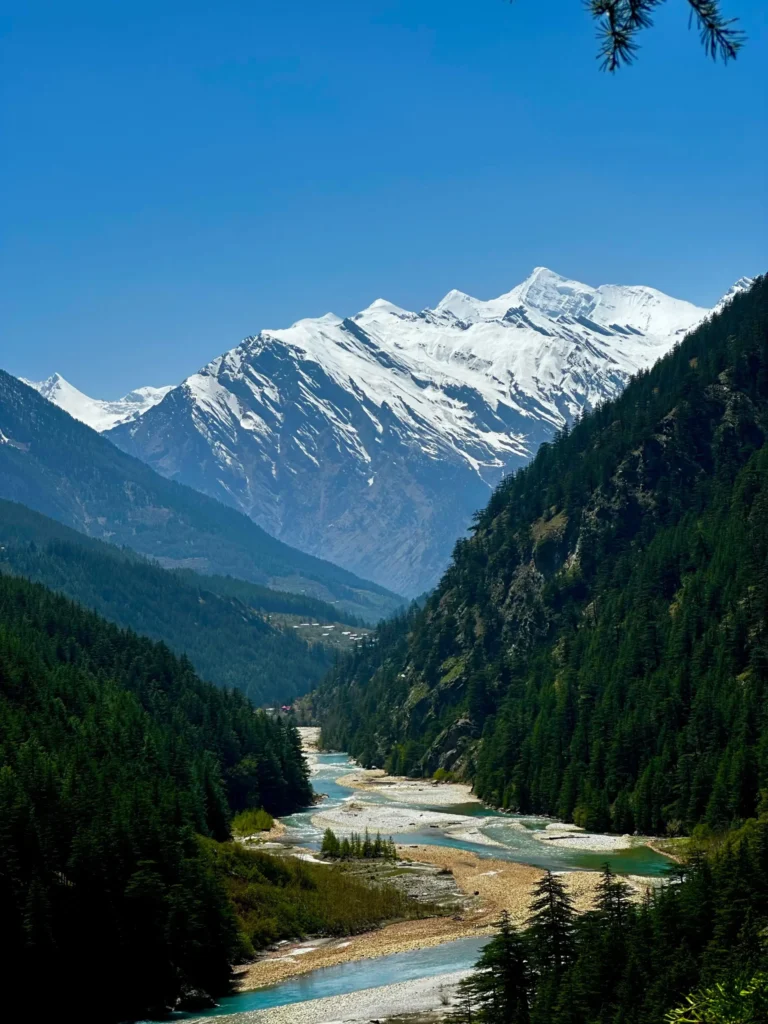
Tucked away in the Uttarkashi district of Uttarakhand at an altitude of approximately 2,745 meters (9,006 feet), Harsil is a breathtakingly beautiful village that has earned the nickname “Mini Switzerland of India”. Nestled on the banks of the Bhagirathi River—the source stream of the holy Ganges—this serene Himalayan hamlet is surrounded by dense deodar forests, sprawling apple orchards, and snow-capped peaks.
Unlike the crowded hill stations of Mussoorie or Nainital, Harsil remains refreshingly untouched by commercialisation. It is a place where the air smells of pine and apples, where the Bhagirathi River hums a constant melody, and where the views of peaks like Shivling, Thalay Sagar, and the Bhagirathi Massif leave you speechless.
Harsil shot to fame as the shooting location for Raj Kapoor’s blockbuster movie Ram Teri Ganga Maili. Today, it serves as a peaceful stopover on the route to Gangotri Temple (one of the Char Dhams) and has become a favourite among travellers seeking offbeat destinations, adventure treks, and authentic mountain culture.
Whether you are a pilgrim on the Char Dham Yatra, a trekker looking for high-altitude adventures, a nature lover drawn to alpine meadows and apple blossoms, or simply a traveller wanting to escape the chaos of city life, Harsil promises an unforgettable Himalayan experience.
Key Information at a Glance:
History: The Legend of Hari-Shila and the Raja of Harsil
The Mythological Origin
The name “Harsil” is derived from two Sanskrit words: “Hari” (Lord Vishnu) and “Shila” (stone). According to local legend, the rivers Bhagirathi and Jalandhari once had a fierce argument over their significance. The gods, worried about the destruction their turbulence would cause, sought help from Lord Vishnu. He transformed himself into a great stone, absorbing their anger. Even today, after “Hari-Shila,” the waters of the two rivers have become a little less turbulent.
The Ancient Trade Route
Harsil lies on the old caravan trail between India and Tibet, where trade and marriages once flourished. Before the 1962 Sino-Indian War, the valley was a vital corridor for merchants carrying wool, salt, spices, and other goods across the high Himalayan passes. This exchange fostered a unique blend of cultural influences in the region.
Frederick “Pahari” Wilson – The Raja of Harsil
The most fascinating chapter in Harsil’s history is the story of Frederick “Pahari” Wilson, a 25-year-old Englishman who deserted the East India Company’s army in 1842 and fled to remote Harsil. Here, he made a fortune by logging deodar trees and selling the timber to the British for railway construction. He was nicknamed “Raja of Harsil” by locals and even issued his own coins.
Wilson introduced apple and rajma (kidney bean) cultivation to the valley, which remains the region’s main cash crop today. He was a friend of A.O. Hume and Rudyard Kipling; Kipling’s novel The Man Who Would Be King was inspired by Wilson’s story.
However, his legacy is controversial. A local deity’s priest cursed him for destroying forests and ecology. After he died in 1883, his three sons squandered the inheritance, and his last known descendant died in an air crash after World War II. Environmentalist Sunderlal Bahuguna, founder of the Chipko Movement, blamed Wilson for Garhwal’s ecological destruction.
The Harsil Apple Festival
The Harsil Apple Festival was launched in 2018 by DM Ashish Chauhan to promote tourism and boost apple farming in Harsil. The festival celebrates the ruby-red apples grown in the terrace fields of Harsil, offering visitors a chance to taste fresh apples while enjoying the natural beauty of the region. It has become a platform for local farmers to network and sell their produce directly to visitors.
Modern Military Significance
Given its proximity to the India-China border, Harsil is an important military area, serving as a base camp for the Garhwal Scouts and Indo-Tibetan Border Police (ITBP) . On November 6, 2018, Prime Minister Narendra Modi visited Harsil to celebrate Diwali with ITBP soldiers.
Geography and Location
Geographic Coordinates
Location
Harsil is situated in the Uttarkashi district of Uttarakhand, in the Garhwal region of the Himalayas. The village lies approximately:
Topography
Harsil sits on a ridge overlooking the Bhagirathi River, surrounded by towering Himalayan peaks. The valley has a cluster of around eight villages near the India-China border. The upper reaches of Harsil are connected to the Nelang Valley. The region is also connected to the Baspa Valley in Himachal Pradesh by several high passes, including the Lamkhaga Pass.
The Bhagirathi River
The Bhagirathi River is one of the two headstreams of the holy Ganges. At Harsil, it flows as a gushing, turquoise river, carving deep gorges through the ancient mountains. The river is a constant companion throughout the valley, adding to its serene charm.
Flora and Fauna
Forests and Vegetation
Harsil is blessed with rich Himalayan vegetation:
Apple Orchards
Harsil is world-famous for its apple orchards—the valley produces some of the finest apples in India. The apple trees bloom with beautiful white and pink blossoms in March to May, and the apples are harvested when they ripen in October. The Harsil Apple Festival is held around this time.
Gangotri National Park
Harsil is the gateway to Gangotri National Park, which is spread across 1,553 square kilometres and located about 30 km from the village. The park is known for its diverse flora and fauna.
Wildlife
The region supports a variety of Himalayan wildlife:
Birdwatching
Harsil is a haven for birdwatchers, with sightings of Himalayan monals, pheasants, vultures, and various migratory birds.
How to Reach Harsil
By Air
Nearest Airport: Jolly Grant Airport, Dehradun (approximately 245 km from Harsil)
By Train
Nearest Railway Stations:
| Station | Distance | Travel Time | Connectivity |
|---|---|---|---|
| Rishikesh | 244 km | 7–8 hours by road | Most preferred |
| Haridwar | 245 km | 7–8 hours by road | Major station, well-connected |
Popular Trains from Delhi to Haridwar/Rishikesh:
| Train Name | From Delhi | Departure | Arrival | Destination |
|---|---|---|---|---|
| Shatabdi Express | Delhi | 6:00 AM | 11:40 AM | Haridwar |
| Jan Shatabdi | Delhi | 3:20 PM | 9:00 PM | Haridwar |
| Mussoorie Express | Delhi | 10:05 PM | 5:30 AM | Haridwar |
From the railway station, you can take:
- Shared taxi to Uttarkashi (₹400–500) and then another shared taxi to Harsil (₹150–200)
- Direct taxi (more expensive but convenient)
By Road
Harsil is well-connected by road to major cities in North India via NH-34 :
Road Conditions: The roads are generally good but winding. Important tip: From Chamba, you must take the New Tehri Road. If you mistakenly land on Old Tehri Road, you may face severe road repair and bad road conditions.
Bus Services:
- During the Char Dham Yatra season (April–October), buses run from Rishikesh and Haridwar to Gangotri, passing through Harsil. Ticket price: approximately ₹800
- Outside the yatra season, bus frequency is much lower
Important Driving Tips:
- The 3-hour drive from Uttarkashi to Harsil is on steep mountain roads with sharp bends. Risk it only if you are an expert in mountain driving
- The last petrol pump before Harsil is at Ganeshpur, about 70 km away. Fill your tank to full capacity
Distances from Major Cities
Weather and Best Time to Visit
Climate Overview
Harsil experiences a pleasant alpine climate with distinct seasons. The village’s elevation ensures cool temperatures even in summer, while winter brings cold weather and heavy snowfall.
Month-by-Month Guide
Best Time to Visit by Season
Apple Blossom vs. Apple Harvest
| Season | What to See | Best Time |
|---|---|---|
| Apple Blossoms | White and pink flowers blooming | March–May |
| Apple Harvest | Fresh apples ready for picking | October |
| Apple Festival | Cultural celebration, local produce | October |
When to See Snow
Harsil witnesses snowfall from November to March, transforming the region into a winter wonderland. Snowfall peaks in January and February, which can sometimes lead to road closures.
Top Attractions and Places to Visit
1. Gartang Gali – The Historic Wooden Bridge
Gartang Gali is a 150-year-old, 136-meter-long wooden staircase built on a cliffside trail that once served as a vital trade route between India and Tibet. After being closed for 59 years following the 1962 Sino-Indian War, this adventurous trail reopened to visitors in 2021.
Quick Facts:
| Aspect | Details |
|---|---|
| Distance from Harsil | ~25 minute drive from Harsil market |
| Trek Duration | 1–2 hours round trip |
| Difficulty | Easy to Moderate |
What to Expect:
- A narrow walkway along a steep cliff
- Breathtaking views of the deep gorge below
- Stunning photo opportunities
- The wooden bridge with crossed railing feels like “Stairs to Heaven.”
- Reach early in the morning before crowds arrive
Entry: Requires a permit (arranged through tour operators or local authorities)
2. Mukhba Village – The Winter Home of Goddess Ganga
Mukhba Village is a picturesque settlement located just 1 km from Harsil. It holds immense spiritual significance as the winter abode of Goddess Ganga when the Gangotri Temple is closed due to heavy snowfall (November–April).
What to Expect:
- Traditional wooden houses with intricate carvings
- The Ganga Temple, where the deity is worshipped during winter
- Beautiful views of snow-capped mountains
- The locals call Mukhba “Ganga Ka Maika” (the maternal home of the Ganges)
Best Time: May–October (when the deity is at Gangotri) or winter (to witness worship at Mukhba)
3. Dharali Village – Apple Orchards and Local Life
Dharali is a charming village located 3 km from Harsil. It is renowned for its apple orchards and potato farms.
What to Expect:
- Stunning apple orchards (especially beautiful during bloom and harvest seasons)
- A small Shiva Temple
- Warm, friendly locals
- Authentic village experience
Kalp Kedar Temple: Located at Dharali, this ancient Shiva shrine is partly submerged in water, making it a unique and must-visit attraction.
4. Gangotri Temple – The Char Dham Shrine
Located 26 km from Harsil, Gangotri Temple is one of the four sacred Char Dham pilgrimage sites. Dedicated to Goddess Ganga, this temple is where the holy Ganges River originates from the Gangotri Glacier.
Quick Facts:
| Aspect | Details |
|---|---|
| Distance | 26 km |
| Travel Time | 1 hour by road |
| Altitude | 3,048 meters |
| Opening Dates | Akshaya Tritiya (April/May) – Diwali (October/November) |
What to Expect:
- The sacred temple where Goddess Ganga is worshipped
- The scenic drive from Harsil to Gangotri offers stunning Himalayan views
- The Bhagirathi Shila (sacred rock where King Bhagirath meditated)
5. Wilson Cottage – The British Legacy
Wilson Cottage is a historical site named after Frederick E. Wilson, the British army officer-turned “Raja of Harsil”. The cottage, surrounded by apple orchards and deodar forests, offers a peek into the history and development of Harsil.
Location: Near Harsil market
Best For: History enthusiasts, photography
6. Bagori Village – Tibetan Influence and Handicrafts
Bagori Village is a traditional settlement near Harsil known for its Bhotia tribe culture, beautiful wooden houses, and a Buddhist Stupa that indicates Tibetan habitation.
What to Expect:
- Traditional Garhwali wooden houses
- A Buddhist Stupa with colourful prayer flags
- Hand-woven woollen shawls, sweaters, hats, and caps made from natural wool
- Sheep rearing is a common livelihood here
Note: Bagori village is very windy—keep your caps in place.
7. Harsil Market – Art and Local Delights
The Harsil Market is a vibrant hub where local stories are skillfully painted on bright yellow walls. From oversized faces to yaks and apples, the wall art gives the market a unique character.
What to Find:
- Vegetable momos served with delicious peanut chutney
- Stylish woollens knit in nearby Bagori Village
- A spot near the parking lot offers stunning river views with pine trees
8. Sattal – The Seven Lakes
Sattal (meaning “seven lakes”) is a group of seven interconnected freshwater lakes located near Harsil.
What to Expect:
- A 3 km easy trek from Dharali
- Clear, reflective waters surrounded by deodar forests
- A tranquil setting for picnics, birdwatching, and nature walks
- A mysterious combination of natural lakes
Best Time: May–June and September–October
9. Gangnani Hot Springs
Located approximately 20–25 km from Harsil on the way to Gangotri, Gangnani is famous for its natural hot water springs.
What to Expect:
- Therapeutic thermal springs believed to have healing properties
- A refreshing dip in the hot springs amidst cool mountain air
- A popular stop for pilgrims on the Gangotri route
Best Time: Year-round; particularly refreshing in winter
10. Nelong Valley – The Cold Desert
Nelong Valley is a hidden gem situated high in the Himalayas near the Tibet border. With its untouched beauty and wild, cold desert-like scenery, it offers a unique off-the-beaten-path experience.
What to Expect:
- Stark, dramatic landscapes
- A special permit is required to visit
- Best visited as part of an organised tour
11. Sukkhi Top – Panoramic Viewpoint
A scenic viewpoint near Harsil, Sukkhi Top, offers panoramic views of the surrounding mountains and valleys.
Best For: Photography, nature enthusiasts
12. Jhala Village – Rustic Charm
A small, traditional village near Harsil, Jhala is known for its rustic charm and beautiful surroundings.
Best For: Cultural exploration, walking tours
Trekking Adventures from Harsil
Harsil is a premier base for trekkers, offering routes for various skill levels.
Trek Comparison Table
Dayara Bugyal Trek
One of the most beautiful alpine meadows in India, Dayara Bugyal sits at an altitude of approximately 3,408 meters.
Quick Facts:
| Aspect | Details |
|---|---|
| Altitude | 3,408 m (11,181 ft) |
| Difficulty | Easy to Moderate |
| Best Time | May–June & September–October |
What to Expect:
- Lush green grass and wildflowers in summer
- Snow-covered paradise in winter
- Stunning views of the surrounding Himalayan peaks
- Perfect for camping and photography
Gangotri Glacier Trek
A thrilling journey to the source of the Ganges, this trek offers breathtaking views of the Himalayas and takes you through picturesque landscapes and dense forests.
Local Cuisine: What to Eat in Harsil
Must-Try Garhwali Dishes
Where to Eat
Dining Tips
- Most homestays offer meal packages
- Pure vegetarian options are widely available
- Carry packaged snacks for treks
- Try the local honey and apple-based desserts
Shopping in Harsil
What to Buy
Markets to Explore
| Market | Best For |
|---|---|
| Harsil Market | Wollens, momos, wall art photography, river views |
| Bagori Village | Traditional Bhotia handicrafts, woolen garments |
Shopping Tips:
- Harsil is known for beautiful hand-woven and hand-knitted items made from natural wool
- Prices are reasonable, and you’re supporting local artisans
- Cash is preferred; cards may not be accepted
Accommodation Options
Harsil offers a range of accommodation options, from comfortable hotels to homestays and guesthouses.
Types of Accommodation
Recommended Properties
Booking Tips
- Book well in advance for peak seasons (April–June, September–October)
- Prakriti Retreat is seasonal—they open after Holi (March) and operate till Diwali (October/November)
- Carry cash—card facilities may be limited
Sample Itineraries
4-Day Harsil Valley Explorer (From Delhi)
Day 1: Delhi to Harsil
- Morning: Depart from Delhi early (by 5:00–6:00 AM) for a 12–14-hour drive
- En route: Pass through Haridwar, Rishikesh, Chamba, and Uttarkashi
- Evening: Arrive in Harsil, check into the hotel
- Night: Dinner, overnight in Harsil
Day 2: Harsil Local Exploration
- Morning: Visit Mukhba Village (1 km) – explore Ganga Temple, wooden houses
- Late Morning: Visit Dharali Village (3 km) – apple orchards, Kalp Kedar Temple
- Afternoon: Lunch at Harsil Market, explore local shops
- Evening: Walk along the Bhagirathi River
- Night: Overnight in Harsil
Day 3: Gartang Gali & Nelong Valley
- Morning: Drive to Gartang Gali (25 min), trek to the historic wooden bridge
- Afternoon: Visit Nelong Valley (permit required) or explore Bagori Village
- Evening: Return to Harsil
- Night: Overnight in Harsil
Day 4: Departure
- Morning: Visit Gangotri Temple (26 km, 1 hour) if time permits
- Afternoon: Depart for Delhi
5-Day Harsil with Gangotri & Dayara Bugyal
Day 1: Delhi → Harsil (drive)
Day 2: Harsil local exploration (Mukhba, Dharali, Kalp Kedar)
Day 3: Gartang Gali, Nelong Valley, Bagori Village
Day 4: Harsil → Gangotri (darshan) → return to Harsil
Day 5: Dayara Bugyal trek (half day) → depart for Delhi
7-Day Complete Harsil & Trekking Adventure
Day 1: Delhi → Harsil
Day 2: Harsil local exploration
Day 3: Gartang Gali, Nelong Valley
Day 4: Dayara Bugyal trek (full day)
Day 5: Harsil → Gangotri → Harsil
Day 6: Harsil → Uttarkashi, explore Vishwanath Temple
Day 7: Uttarkashi → Delhi
Travel Tips and Important Information
Before You Go
- Carry Cash: ATMs are limited in Harsil; bring sufficient cash from Uttarkashi or Dehradun
- Fill Fuel: The last petrol pump before Harsil is at Ganeshpur, about 70 km away. Fill your tank to full capacity
- Check Weather: Avoid monsoon (July–August) due to landslide risk
- Advance Booking: Essential for peak seasons (April–June, September–October)
- Carry Valid ID: Harsil is near the Indo-Tibet border; carry identification for checkposts
- Mobile Network: BSNL works in some pockets; inform family of your travel plans
During Your Stay
- Dress in Layers: Even in summer, evenings are cool; winter requires heavy woollens
- Stay Hydrated: Carry water for treks and day trips
- Respect Local Customs: Harsil is a traditional village; dress modestly and ask permission before photographing people
- Start Early: Begin sightseeing early to avoid afternoon weather changes
- Hire Local Guides: For treks, hiring local guides supports the community and ensures safety
Road Safety Tips
- Expert drivers only: The 3-hour drive from Uttarkashi to Harsil has steep mountain roads with sharp bends. Risk it only if you are an expert in mountain driving
- Avoid night driving: Mountain roads are winding and can be dangerous after dark
- Check road conditions: During winter, snow may cause road closures
- From Chamba: Take the New Tehri Road. If you mistakenly land on Old Tehri Road, you may face severe road repair
Health and Safety
- Altitude: At 2,745 m, altitude sickness is rare but possible; stay hydrated and take it easy
- Medical Facilities: Basic facilities available in Harsil; for serious emergencies, go to Uttarkashi or Dehradun
- Wildlife: The area is part of Gangotri National Park; do not feed animals
Packing Checklist
| Season | Essentials |
|---|---|
| All Year | Comfortable walking shoes, sunscreen, sunglasses, hat, reusable water bottle, power bank, camera, cash, ID proof |
| Summer (Apr-Jun) | Light woollens for evenings, cotton clothes for daytime, a hat, raincoat (pre-monsoon) |
| Monsoon (Jul-Aug) | Raincoat, waterproof footwear, umbrella (avoid travel if possible) |
| Winter (Oct-Mar) | Light woollens for evenings, cotton clothes for daytime, a hat, a raincoat (pre-monsoon) |
Photography Tips
- Best Spots: Gartang Gali (cliffside views), Mukhba Village (wooden architecture), Harsil Market (wall art), Sattal (lake reflections), Bagori Village (prayer flags)
- Best Time: Early morning for clear mountain views; golden hour (4:00–5:30 PM) for landscapes
- Camera Gear: Carry extra batteries—cold drains them quickly
- Note: Ask permission before photographing locals
Nearby Places to Visit
Frequently Asked Questions (FAQs)
Q1: Why is Harsil famous?
A: Harsil is famous for its apple orchards (introduced by British settler Frederick Wilson), the historic Gartang Gali wooden bridge, being the shooting location for Raj Kapoor’s Ram Teri Ganga Maili, and as the winter abode of Goddess Ganga at Mukhba Village.
Q2: What is the best time to visit Harsil?
A: The best time to visit is April to June (summer) for pleasant weather and blooming orchards, and September to October (autumn) for clear skies and the Apple Festival.
Q3: How far is Harsil from Delhi?
A: The distance from Delhi to Harsil is approximately 450–500 km, with a travel time of 12–14 hours by road.
Q4: How do I reach Harsil?
A: By road from Dehradun (245 km) or Haridwar (245 km), by train to Rishikesh (244 km) followed by taxi/bus, or by flight to Jolly Grant Airport, Dehradun (245 km) followed by taxi.
Q5: What is the altitude of Harsil?
A: Harsil is situated at an altitude of approximately 2,745 meters (9,006 feet) above sea level.
Q6: Does Harsil have snowfall?
A: Yes, Harsil experiences snowfall from November to March, transforming the valley into a winter wonderland. Snowfall peaks in January and February.
Q7: What is Gartang Gali?
A: Gartang Gali is a 150-year-old, 136-meter-long wooden staircase built on a cliffside that was once a trade route between India and Tibet. It reopened to visitors in 2021 after 59 years.
Q8: What is Mukhba Village known for?
A: Mukhba Village is known as the winter abode of Goddess Ganga. When Gangotri Temple closes due to snow (November–April), the deity is brought here for worship.
Q9: What is the Harsil Apple Festival?
A: The Harsil Apple Festival is an annual event launched in 2018 to celebrate the valley’s apple harvest. It takes place in October and offers visitors a chance to taste fresh apples and experience local culture.
Q10: Is there a mobile network in Harsil?
A: Mobile connectivity is limited. BSNL works in some pockets. It’s best to inform your family of your travel plans in advance.
Q11: Are there ATMs in Harsil?
A: ATMs are limited in Harsil. Carry sufficient cash from Uttarkashi or Dehradun.
Q12: Is Harsil suitable for senior citizens?
A: Yes, Harsil is accessible and suitable for senior citizens. The main attractions are easily reachable by road, and the village itself requires minimal walking.
Q13: How many days are enough for Harsil?
A: 3–4 days are sufficient to explore Harsil and nearby attractions like Mukhba, Dharali, Gartang Gali, and Gangotri.
Q14: What is the nearest petrol pump to Harsil?
A: The last petrol pump before Harsil is at Ganeshpur, about 70 km away. Fill your tank to full capacity.
Q15: Is Harsil a good destination for photography?
A: Yes, Harsil is a photographer’s paradise. From the dramatic Gartang Gali to the colourful wall art at Harsil Market, the reflective lakes of Sattal to the prayer flags at Bagori Village, every corner offers a stunning shot.
Plan Your Harsil Journey with Discover Uttarakhand
At Discover Uttarakhand, we’ve been organising unforgettable journeys across Devbhoomi since 1997. As a trusted local operator with deep knowledge of Harsil, Gangotri, and the Garhwal region, we offer:
- ✅ Customised Harsil tour packages (4 to 7 days)
- ✅ Combined itineraries covering Harsil, Gangotri, Uttarkashi, and Mussoorie
- ✅ Comfortable transport with experienced hill drivers
- ✅ Verified accommodations in Harsil (hotels and homestays)
- ✅ Permit assistance for restricted areas (Nelong Valley, Gartang Gali)
- ✅ Trekking arrangements with local guides
- ✅ 24/7 customer support throughout your journey
Recommended Harsil Packages
| Package | Duration | Starting Point | Highlights |
|---|---|---|---|
| Harsil Weekend Getaway | 3 Nights / 4 Days | Dehradun | Mukhba, Dharali, Kalp Kedar, Harsil Market |
| Harsil & Gartang Gali Explorer | 4 Nights / 5 Days | Dehradun | Gartang Gali, Nelong Valley, Bagori Village |
| Harsil with Gangotri Yatra | 5 Nights / 6 Days | Haridwar | Harsil, Gangotri Temple, Gangnani Hot Springs |
| Complete Harsil Adventure | 6 Nights / 7 Days | Delhi | Harsil, Gangotri, Dayara Bugyal trek |
Book your Harsil journey today and discover one of Uttarakhand’s most beautiful valleys.
📞 Call / WhatsApp: +91-9997187178, 9760222178, 8171977178
📍 Visit Our Office: Himalayan Colony, opposite DSVV, Haripur Kalan, Haridwar, Motichur Range, Uttarakhand 249411
🌐 Website: www.discover-uttarakhand.com
📧 Email: info@discover-uttarakhand.com
Jai Ganga Maiya! Har Har Gange! 🙏
Discover Uttarakhand – Your Local Partner for Unforgettable Himalayan Journeys Since 1997