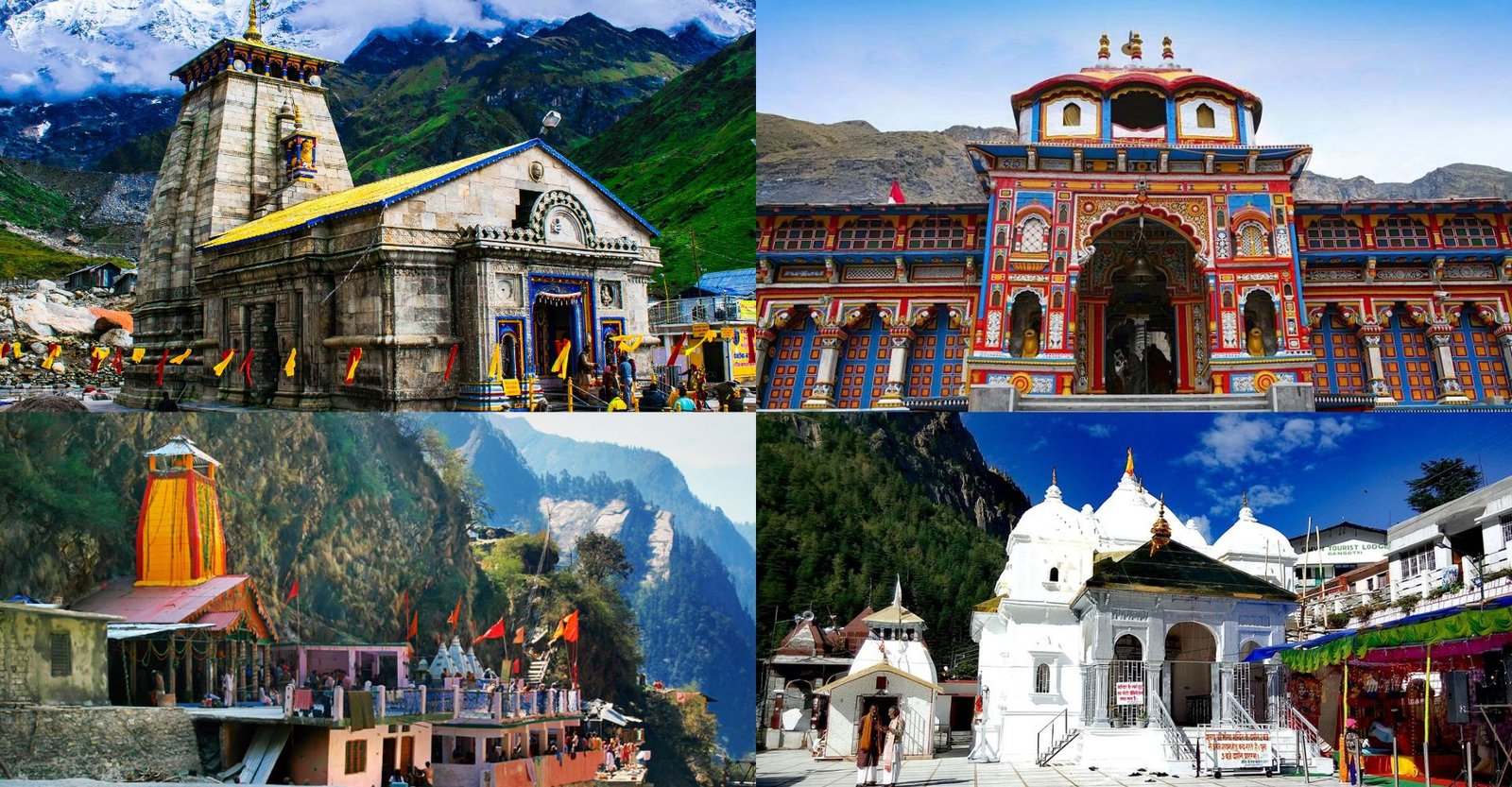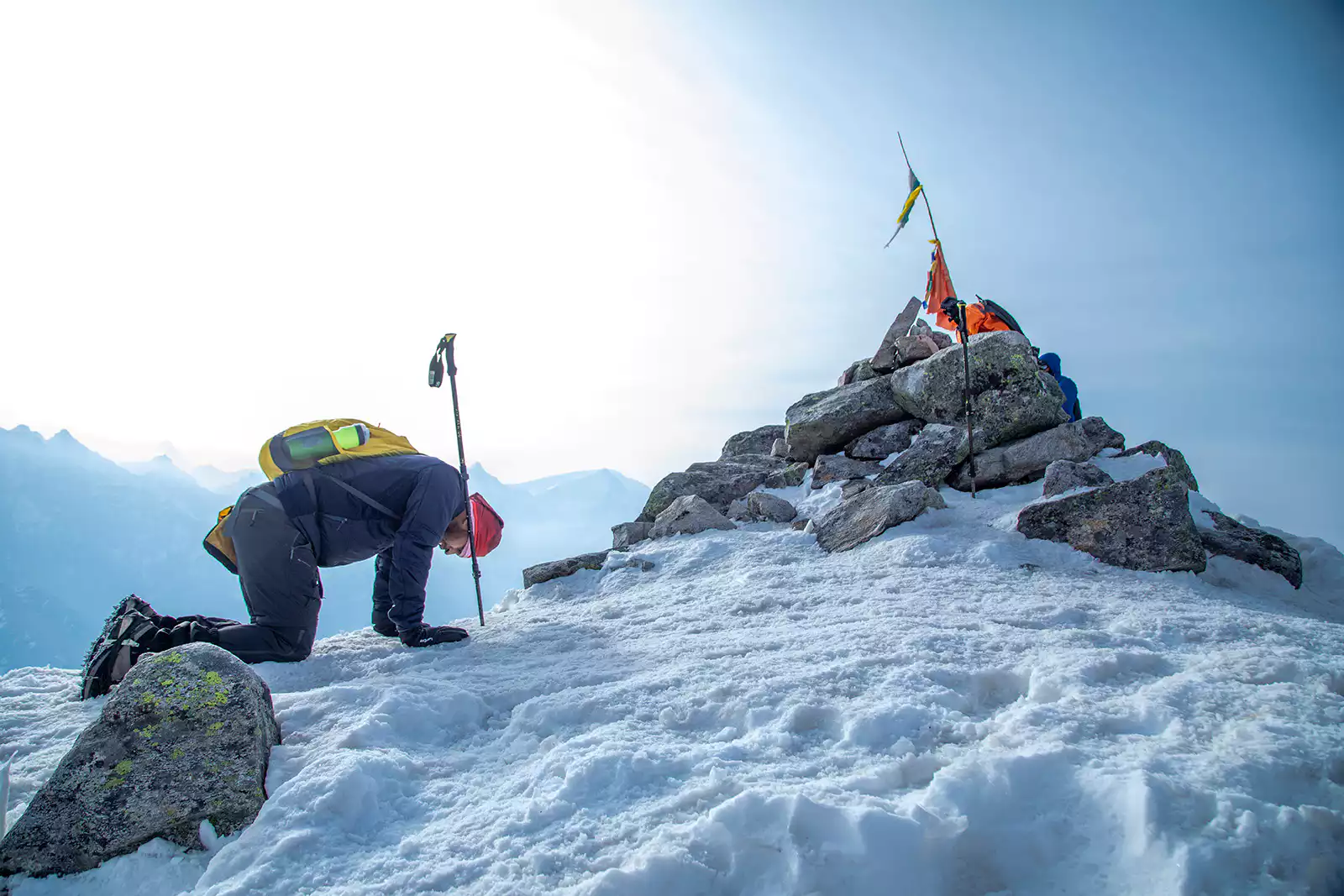
Introduction: The Only Year-Round Panch Kedar Shrine
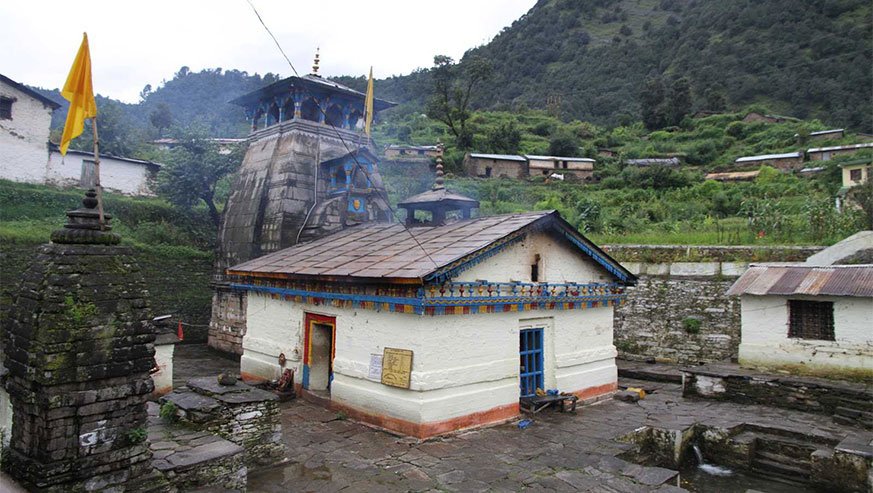
Nestled in the picturesque Urgam Valley of Uttarakhand’s Chamoli district, at an altitude of 2,200 metres (7,218 feet), the Kalpeshwar Temple is one of the most unique and accessible shrines in the Panch Kedar pilgrimage circuit. Dedicated to Lord Shiva, this ancient temple is the place where the matted hair (jata) of Lord Shiva is worshipped—earning Shiva the names Jatadhar or Jateshwar.
What makes Kalpeshwar Temple truly extraordinary is its year-round accessibility—it is the only Panch Kedar temple that remains open throughout all seasons . Unlike Kedarnath, which closes for six months due to heavy snowfall, or Rudranath, which requires a challenging 20 km trek, Kalpeshwar welcomes devotees even in winter, making it a vital destination for pilgrims who wish to complete the Panch Kedar circuit outside the summer season.
The temple is approached through a cave passage, and the sanctum houses the sacred Jata (matted locks) of Lord Shiva. According to Hindu mythology, this is the fifth and final temple of the Panch Kedar circuit, where the hair of Lord Shiva appeared when the bull-formed deity disappeared into the ground to evade the Pandavas. Pilgrims traditionally complete their Panch Kedar Yatra here, and it is an unwritten religious rite to worship Vishnu at the Badrinath Temple after finishing the Panch Kedar circuit.
Whether you are a devout pilgrim seeking to complete the Panch Kedar circuit, a devotee wanting to worship Lord Shiva’s Jata, a nature lover drawn to the pristine Urgam Valley, or a traveller looking for a spiritual destination accessible even in winter, Kalpeshwar Temple promises an experience that is both spiritually profound and naturally beautiful.
Key Information at a Glance:
History and Mythology: The Legend of Shiva’s Hair
The Panch Kedar Legend
The most profound legend associated with Kalpeshwar Temple is rooted in the Mahabharata and the Panch Kedar mythology .
After the bloody Kurukshetra war, the five Pandava brothers were burdened by the sin of “Gotra Hatya” (killing of their own kinsmen) and “Brahmahatya” (killing of Brahmins). Seeking atonement, they renounced their kingdom and set out in search of Lord Shiva to seek his blessings.
However, Lord Shiva, still incensed by the death and dishonesty of the war, was unwilling to meet them easily. He assumed the form of a bull (Nandi) and hid in the Garhwal region.
The Divine Disappearance
Not finding Shiva in Varanasi, the Pandavas went to the Garhwal Himalayas. Bhima, the second Pandava brother, standing astride two mountains, spotted a bull grazing near Guptakashi (“hidden Kashi” – named after Shiva’s hiding act). Bhima immediately recognised the bull as Shiva and caught hold of it by its tail and hind legs.
But the bull-formed Shiva disappeared into the ground, reappearing in five different parts across the Garhwal Himalayas :
| Temple | Body Part | Location |
|---|---|---|
| Kedarnath | Hump (Kubja) | Kedarnath |
| Tungnath | Arms (Bahubhuja) | Near Chopta |
| Rudranath | Face | Near Gopeshwar |
| Madhyamaheshwar | Navel and Stomach | Near Ukhimath |
| Kalpeshwar | Hair (Jata) | Urgam Valley |
The Pandavas, pleased with this reappearance, built temples at these five locations to venerate and worship Lord Shiva. Kalpeshwar is the fifth and final temple in the mythological sequence of the Panch Kedar.
The Jata – Shiva’s Matted Hair
At Kalpeshwar, the matted tresses (jata) of Lord Shiva are worshipped. This is why Lord Shiva is also called Jatadhar or Jateshwar (the one who wears matted hair).
In Hindu iconography, Shiva’s matted hair (jata) is a powerful symbol. It represents:
- The Ganges: The river Ganga is believed to flow from Shiva’s matted locks
- Renunciation: The unkempt hair symbolises detachment from worldly attachments
- Cosmic Energy: The matted hair contains the power of the universe
The Panch Kedar Order of Worship
The mythological order of the Panch Kedar temples, as per the sequence of body parts that appeared, is :
| Order | Temple | Body Part |
|---|---|---|
| 1st | Kedarnath | Hump |
| 2nd | Tungnath | Arms |
| 3rd | Rudranath | Face |
| 4th | Madhyamaheshwar | Navel & Stomach |
| 5th | Kalpeshwar | Hair (Jata) |
Kalpeshwar is considered the completion point of the Panch Kedar Yatra. After visiting all five temples, it is an unwritten religious rite to worship Vishnu at the Badrinath Temple.
The Unique Cave Approach
The temple is approached through a cave passage, adding to its mystique. Inside the cave, the Shivaling is seated, and here the hair of Lord Shankar is worshipped. The temple is also famous as Anadinath Kalpeshwar Mahadev.
The Sacred Kalwar Kund
Near the temple is Kalwar Kund, a sacred pool. The water of this pool is always clean, and it is claimed that devotees get rid of many diseases by drinking this holy water. Sages use this holy water as an offering to Lord Shiva.
The Pandava Connection in the Urgam Valley
The Urgam Valley, where Kalpeshwar is located, is also associated with the Pandavas. According to local tradition, the Pandavas spent time in this valley during their exile. The region is also connected to the legend of Dhyan Badri – one of the Sapta Badri temples – located nearby.
The Priests of Kalpeshwar
Following the tradition established by Adi Shankaracharya, the temple priests at Kalpeshwar are Dasnamis and Gossains (disciples of Adi Shankara). This is similar to other Panch Kedar temples, where priests hail from South India, continuing a tradition that blends North and South Indian cultures.
Temple Architecture and Features
Traditional Himalayan Architecture
The Kalpeshwar Temple is built in the traditional North Indian Himalayan architectural style, using local stone and wood. Unlike the grand structures of Kedarnath or Badrinath, Kalpeshwar is a small, modest stone temple that blends harmoniously with its natural surroundings.
The Cave Passage
The temple is approached through a cave passage, which creates a mystical atmosphere. To reach the temple, one has to walk about a kilometre inside the cave. This unique feature distinguishes Kalpeshwar from all other Panch Kedar temples.
The Sanctum – Worshipping the Jata
Inside the sanctum, the matted hair (jata) of Lord Shiva is worshipped. There is an ancient cave in Kalpeshwar where a Shivaling is seated, dedicated to Lord Shiva. The temple is also known as Anadinath Kalpeshwar Mahadev.
Kalwar Kund – The Sacred Pool
Near the temple lies Kalwar Kund, a sacred pool. Key features include :
| Feature | Description |
|---|---|
| Water Quality | Always clean |
| Belief | Drinking this holy water cures many diseases |
| Ritual Use | Sages use this holy water as an offering to Lord Shiva |
Dhyan Badri Temple (Nearby)
On the banks of the Kalpaganga River (called Hiranyavati in ancient times), there is a temple of Dhyan Badri – one of the Sapta Badri temples. The land situated on the right of the river is called Durbasa Bhoomi .
Panch Kedar: The Five Temples of Shiva
Kalpeshwar is the fifth and final temple in the Panch Kedar circuit. The Panch Kedar consists of five sacred Shiva temples in the Garhwal Himalayas.
Panch Kedar Temples Overview
| Order | Temple | Body Part | Altitude | Best Time |
|---|---|---|---|---|
| 1st | Kedarnath | Hump | 3,583 m | May–Oct |
| 2nd | Tungnath | Arms | 3,680 m | May–Oct |
| 3rd | Rudranath | Face | 3,600 m | May–Oct |
| 4th | Madhyamaheshwar | Navel | 3,497 m | May–Oct |
| 5th | Kalpeshwar | Hair | 2,200 m | Year-round |
Panch Kedar Opening Dates 2026
According to recent announcements, the tentative opening dates for Panch Kedar temples in 2026 are :
| Temple | Opening Date 2026 | Closing Date 2026 |
|---|---|---|
| Kedarnath | 22 April 2026 | 11 November 2026 |
| Tungnath | 2 May 2026 | 4 November 2026 |
| Rudranath | 18 May 2026 | November 2026 |
| Madhyamaheshwar | 21 May 2026 | 20 November 2026 |
| Kalpeshwar | Open All Year | Open All Year |
Note: All dates for Panch Kedar are traditionally announced on Mahashivratri (February 15, 2026) .
Why Kalpeshwar is Unique
Kalpeshwar stands out among the Panch Kedar for several reasons :
- Year-round accessibility – The only Panch Kedar temple open in winter
- Easiest to reach – Shortest trek (300-500 metres) among all five
- Lower altitude – At 2,200 m, no altitude sickness concerns
- Winter destination – Can be visited when other Kedars are closed
- Completion point – Marks the end of the Panch Kedar Yatra
How to Reach Kalpeshwar Temple
By Air
Nearest Airport: Jolly Grant Airport, Dehradun
By Train
Nearest Railway Station: Rishikesh
| Details | Information |
|---|---|
| Distance | ~250 km to Helang |
| Travel Time | 8–9 hours by taxi |
| Connectivity | Well-connected from Delhi |
Popular Trains from Delhi to Rishikesh/Haridwar:
| Train Name | From Delhi | Departure | Arrival | Destination |
|---|---|---|---|---|
| Shatabdi Express | Delhi | 6:00 AM | 11:40 AM | Haridwar |
| Jan Shatabdi | Delhi | 3:20 PM | 9:00 PM | Haridwar |
| Mussoorie Express | Delhi | 10:05 PM | 5:30 AM | Haridwar |
By Road
Step-by-Step Route to Kalpeshwar:
Route Details:
Rishikesh → Devprayag → Srinagar → Rudraprayag → Karnaprayag → Chamoli → Joshimath → Helang → Urgam → Kalpeshwar
Road Conditions:
- The road from Helang to Urgam is extremely rough – it feels like complete off-roading
- Accessible to bicycles and small cars, except in monsoons
- The final trek is easy and suitable for beginners
The Short Trek – 300-500 metres
Earlier, Kalpeshwar was approachable only by a 12 km trek from Helang. Now, with road connectivity up to Devgram/Urgam village, the trek distance has been reduced to just 300-500 metres.
| Aspect | Details |
|---|---|
| Starting Point | Urgam/Devgram village |
| Trek Distance | 300–500 metres |
| Trek Duration | 10–15 minutes |
| Difficulty | Easy |
| Trail | Through the Urgam Valley, crossing the Kalpganga River |
Distances from Major Cities
| City | Distance (km) |
|---|---|
| Delhi | ~500-520 |
| Dehradun | ~265 |
| Rishikesh | ~250 |
| Haridwar | ~270 |
| Joshimath | ~15-20 |
| Helang | 0 (road head) |
| Urgam | ~12 km from Helang |
| Kalpeshwar Temple | 300-500 m trek |
Weather and Best Time to Visit
Climate Overview
Kalpeshwar is situated at a moderate altitude of 2,200 metres, making it more accessible than other Panch Kedar temples. The temple is open throughout the year, but the experience varies by season.
Month-by-Month Guide
| Month | Season | Day Temp (°C) | Night Temp (°C) | Conditions | Suitability |
|---|---|---|---|---|---|
| March | Spring | 10–18 | 2–8 | Pleasant, spring blooms | ⭐ Excellent |
| April | Summer | 15–22 | 5–10 | Pleasant, ideal | ⭐ Best |
| May | Summer | 18–25 | 8–12 | Warm, ideal | ⭐ Best |
| June | Summer | 20–28 | 10–15 | Warm, pre-monsoon | ⭐ Best |
| July | Monsoon | 18–24 | 12–18 | Heavy rain, rough roads | ⚠️ Moderate |
| August | Monsoon | 18–24 | 12–18 | Heavy rain, rough roads | ⚠️ Moderate |
| September | Autumn | 15–22 | 8–12 | Post-monsoon, clear | ⭐ Excellent |
| October | Autumn | 12–18 | 5–10 | Crisp, clear skies | ⭐ Excellent |
| November | Autumn | 8–15 | 2–8 | Cool, pleasant | ⭐ Good |
| December–February | Winter | 0–10 | -5–5 | Cold, possible snow | ⭐ Good (snow lovers) |
Best Time to Visit by Season
| Season | Months | Suitability | Conditions | Best For |
|---|---|---|---|---|
| Spring-Summer | March–June | ⭐ Best | 10°C–28°C, clear skies, pleasant | Temple visit, Urgam Valley exploration |
| Autumn | September–October | ⭐ Excellent | 12°C–22°C, crisp air, clear views | Photography, peaceful visit |
| Monsoon | July–August | ⚠️ Moderate | 18°C–24°C, heavy rain, rough roads | Only for those comfortable with rain |
| Winter | December–February | ⭐ Good | -5°C–10°C, cold, possible snow | Snow lovers, off-season peace |
Why Kalpeshwar is Special – Year-Round Accessibility
Kalpeshwar is the only Panch Kedar temple accessible throughout the year. This makes it a unique destination for:
- Winter pilgrims: When Kedarnath and other Kedars are closed
- Off-season travellers: Avoiding summer crowds
- Snow lovers: Visiting during December–February snowfall
- Flexible itineraries: No need to plan around opening/closing dates
Why Visit in Spring-Summer (March–June)
This is the most popular time to visit Kalpeshwar:
- Pleasant weather with temperatures ranging from 10°C to 28°C
- Clear skies and comfortable for exploring the Urgam Valley
- Rhododendrons in bloom – the forests are vibrant
- Ideal for combining with other Panch Kedar temples (which are open in summer)
Why Visit in Autumn (September–October)
Autumn is another excellent time to visit:
- Post-monsoon freshness brings out the lush greenery
- Crisp, invigorating air with clear, cloudless skies
- Perfect for photography
- Fewer crowds compared to the summer peak season
Winter Visit (December–February)
Kalpeshwar is the only Panch Kedar temple open in winter:
- You can experience chilly weather and occasional snowfall
- The temple remains accessible when Kedarnath and others are closed
- This is the best time for a quiet, less-crowded spiritual experience
- Carry heavy woollens – temperatures can drop to -5°C
Monsoon Visit (July–August)
The monsoon months are challenging but possible:
- The road from Helang to Urgam becomes extremely rough
- Landslides are possible
- However, the valley is at its greenest
- Not recommended for first-time visitors
Temple Timings
| Period | Timings |
|---|---|
| Morning | 6:00 AM – 12:00 PM |
| Afternoon Break | 12:00 PM – 2:00 PM |
| Evening | 2:00 PM – 7:00 PM |
| Morning Aarti | 6:30 AM |
| Evening Aarti | 6:30 PM |
Timings may vary during festivals.
Urgam Valley: The Gateway to Kalpeshwar
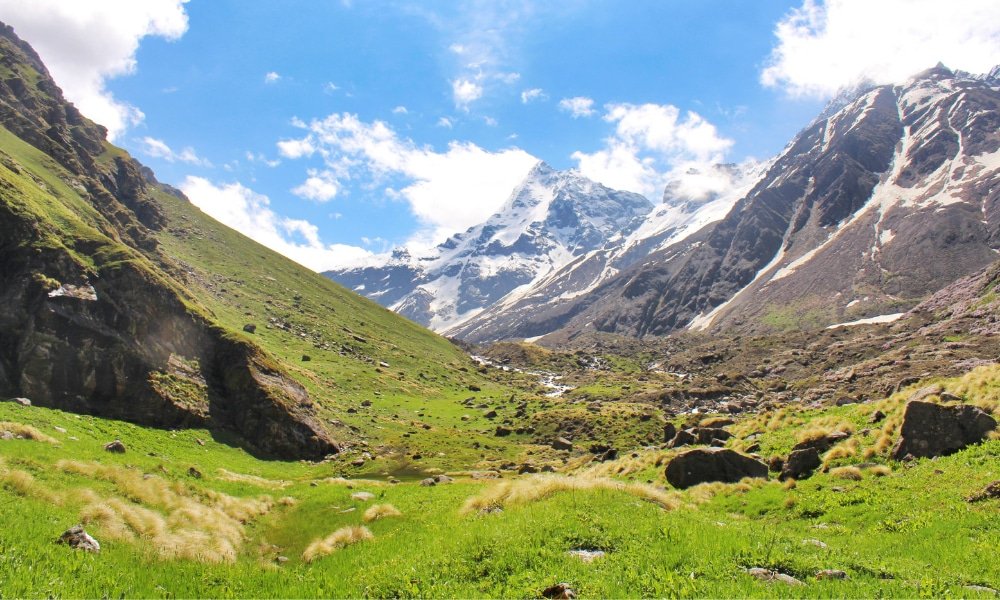
The Urgam Valley is the picturesque valley where the Kalpeshwar Temple is located. It is known for its lush greenery, terraced fields, and serene environment.
| Aspect | Details |
|---|---|
| Location | Chamoli district, Uttarakhand |
| Altitude | ~1,800-2,200 m |
| Known For | Apple orchards, terraced fields, traditional villages |
| Trek Base | Starting point for Kalpeshwar Temple |
Kalpaganga River
The Kalpaganga River (also known as Kalp Ganga) flows through the Urgam Valley. It is a tributary of the Alaknanda River. The river was called Hiranyavati in ancient times.
Dhyan Badri Temple
On the banks of the Kalpaganga River, there is a temple of Dhyan Badri – one of the Sapta Badri (seven Badri) temples. The land on its right is called Durbasa Bhoomi .
Things to Do in Urgam Valley
Nearby Places to Visit
Joshimath – The Base Town
Joshimath is the nearest major town and serves as the gateway to Kalpeshwar. Key attractions include :
- Narasimha Temple – Ancient temple with a 1,200-year-old idol
- Shankaracharya Math – One of the four cardinal mathas
- Kalpavriksha – A 1,200-year-old mulberry tree, considered wish-fulfilling
Auli – The Skiing Capital of India
Auli is a popular hill station known for its skiing slopes, the second-longest ropeway in Asia, and panoramic views of Nanda Devi, Trishul, and other Himalayan peaks. It is approximately 35 km from Joshimath.
Badrinath Temple – The Char Dham Shrine
Located approximately 50 km from Joshimath, Badrinath is one of the Char Dham temples and the primary shrine of the Badri circuit. According to tradition, after completing the Panch Kedar pilgrimage, it is an unwritten religious rite to worship Vishnu at the Badrinath Temple.
Adi Badri – The Ancient Temple Complex
Adi Badri is a cluster of ancient temples dedicated to Lord Vishnu, located on the banks of the Pindar River. The temples date back to the Gupta period and are known for their architectural splendor.
Where to Stay: Accommodation Options
In Urgam Valley (Near Temple)
| Accommodation | Features | Price Range |
|---|---|---|
| Homestays | Basic, authentic Garhwali experience | ₹800–1,500 |
| Guesthouses | Simple rooms | ₹1,000–2,000 |
In Joshimath (Best Base – 15-20 km from Helang)
| Category | Price Range | Examples | Features |
|---|---|---|---|
| Mid-Range Hotels | ₹2,500–5,000 | Aryam Resort, Panchvati Inn | Comfortable rooms, hot water |
| Budget Hotels | ₹800–2,000 | Local guesthouses | Basic amenities |
| Homestays | ₹1,500–3,500 | Various properties | Authentic Garhwali experience |
In Auli (For Extended Stay)
| Category | Price Range | Features |
|---|---|---|
| Luxury Resorts | ₹8,000–15,000+ | Mountain views, premium amenities |
| Mid-Range Hotels | ₹3,000–6,000 | Comfortable rooms |
Booking Tips
- Kalpeshwar is the only Panch Kedar open year-round – no seasonal rush
- However, book in advance for the summer season (April–June)
- Joshimath is the recommended base for visiting Kalpeshwar
- For stays in Urgam Valley, ask local contacts or tour operators
- Carry cash – card facilities may be limited in Urgam
Local Cuisine: What to Eat
In Joshimath
| Dish | Description |
|---|---|
| Aloo Ke Gutke | Spiced fried potatoes, a Garhwali speciality |
| Chainsoo | Protein-rich black gram curry |
| Kafuli | Spinach and fenugreek curry |
| Mandua Roti | Finger millet flatbread |
| Gahat Ki Dal | Horse gram lentil soup |
| Jhangora Kheer | Barnyard millet sweet pudding |
In Urgam Valley (Homestays)
| Food | Description |
|---|---|
| Simple Vegetarian Meals | Dal, rice, chapati, sabzi |
| Local Garhwali Food | Authentic, home-cooked |
| Chai | Hot tea available |
Dining Tips
- Most hotels in Joshimath offer meal packages
- Pure vegetarian options are widely available
- Carry packaged snacks for the journey
- Homestays in Urgam offer authentic home-cooked meals
Travel Tips and Important Information
Before You Go
- Check Road Conditions: The road from Helang to Urgam is extremely rough. Use a sturdy vehicle (SUV recommended).
- Kalpeshwar is Open Year-Round: Unlike other Panch Kedar temples, Kalpeshwar is accessible throughout the year.
- Carry Cash: ATMs are limited in Urgam; bring sufficient cash from Joshimath.
- Dress Modestly: Kalpeshwar is a sacred site; dress appropriately.
- Best Time for Road Access: Avoid the monsoon (July–August) for the rough road stretch.
During Your Visit
- The Cave Passage: The temple is approached through a cave passage – be prepared for a unique experience.
- Remove Shoes: Before entering the temple premises.
- Offer Prayers: Worship the Jata (matted hair) of Lord Shiva.
- Visit Kalwar Kund: Take the holy water from the sacred pool near the temple.
- Explore Urgam Valley: Take time to walk through the picturesque valley.
Road Condition Warning
The road from Helang to Urgam is extremely rough and feels like complete off-roading :
- Accessible to small cars and SUVs
- Not recommended during monsoon (July–August)
- Drive slowly and carefully
Safety Tips
- Road Safety: The Helang-Urgam road is rough; drive slowly
- Monsoon Travel: Avoid July–August due to road conditions
- Winter Travel: Carry heavy woollens; roads may be icy
- Trek Safety: The short trek is easy, but watch your step
Packing Checklist
| Season | Essentials |
|---|---|
| All Year | Comfortable walking shoes, sunscreen, hat, reusable water bottle, camera, cash |
| Summer (Mar–Jun) | Light cotton clothes, a light sweater for evenings, a hat |
| Monsoon (Jul–Aug) | Raincoat, waterproof footwear (roads may be rough) |
| Winter (Oct–Feb) | Light cotton clothes, a light sweater for evenings, and a hat |
Photography Tips
- Best Spots: The cave passage, the temple exterior, Urgam Valley views, Kalpaganga River
- Best Time: Morning for soft light; golden hour for landscapes
- Note: Ask permission before photographing inside the sanctum
Frequently Asked Questions (FAQs)
Q1: What is Kalpeshwar Temple famous for?
A: Kalpeshwar Temple is famous for being the place where the matted hair (jata) of Lord Shiva is worshipped. It is the fifth and final temple of the Panch Kedar circuit, where Lord Shiva is worshipped as Jatadhar or Jateshwar.
Q2: Where is Kalpeshwar Temple located?
A: Kalpeshwar Temple is located in the Urgam Valley of the Chamoli district, Uttarakhand, at an altitude of 2,200 metres.
Q3: Is Kalpeshwar Temple open throughout the year?
A: Yes, Kalpeshwar is the only Panch Kedar temple that remains open throughout the year. Unlike Kedarnath, which closes in winter, Kalpeshwar is accessible even in December and February.
Q4: What is the best time to visit Kalpeshwar Temple?
A: The best time to visit is March to June (spring-summer) and September to October (autumn). However, the temple is open year-round, so winter visits are also possible.
Q5: How far is Kalpeshwar Temple from Delhi?
A: The distance from Delhi is approximately 500-520 km, with a travel time of 14–16 hours by road.
Q6: How do I reach Kalpeshwar Temple?
A: By road to Joshimath, then to Helang, followed by a 12 km drive to Urgam, and finally a 300-500 metre trek. The nearest airport is Dehradun (~265 km), and the nearest railway station is Rishikesh (~250 km).
Q7: Is there a trek to reach Kalpeshwar Temple?
A: Yes, there is a short trek of 300-500 metres from Urgam/Devgram village. The trek is easy and suitable for beginners.
Q8: What is the altitude of Kalpeshwar Temple?
A: The temple is situated at an altitude of approximately 2,200 metres (7,218 feet) above sea level.
Q9: What is the significance of the cave passage?
A: The temple is approached through a cave passage, and the sanctum houses an ancient cave where the Shivaling is seated. This makes the temple unique among the Panch Kedar.
Q10: What is Kalwar Kund?
A: Kalwar Kund is a sacred pool near the temple. The water is always clean, and it is believed that drinking this holy water cures many diseases.
Q11: What is the Panch Kedar order of worship?
A: The mythological order is: Kedarnath (hump), Tungnath (arms), Rudranath (face), Madhyamaheshwar (navel), and Kalpeshwar (hair).
Q12: What is the road condition to Kalpeshwar?
A: The road from Helang to Urgam is extremely rough – it feels like complete off-roading. It is accessible to small cars and SUVs, except in monsoons .
Q13: Are there accommodation options near Kalpeshwar Temple?
A: Yes, basic homestays are available in Urgam Valley. For more comfortable stays, Joshimath (15-20 km away) offers a range of hotels and guesthouses.
Q14: What is the Urgam Valley known for?
A: The Urgam Valley is known for its lush greenery, terraced fields, apple orchards, and the Kalpaganga River. It also houses the Dhyan Badri Temple (Sapta Badri).
Q15: What should I wear when visiting Kalpeshwar Temple?
A: Dress modestly out of respect for the temple’s religious significance. Wear comfortable walking shoes for the short trek and cave passage.
Plan Your Kalpeshwar Temple Journey with Discover Uttarakhand
At Discover Uttarakhand, we’ve been organising unforgettable spiritual journeys across Devbhoomi since 1997. As a trusted local operator with deep knowledge of the Garhwal Himalayas and the Panch Kedar circuit, we offer:
- ✅ Customised Kalpeshwar Temple tour packages (2 to 4 days)
- ✅ Combined Panch Kedar itineraries (all five temples)
- ✅ Char Dham Yatra packages including Kalpeshwar
- ✅ Comfortable transport with experienced hill drivers
- ✅ Verified accommodations in Joshimath and Urgam Valley
- ✅ Local guides for the temple and valley exploration
- ✅ 24/7 customer support throughout your journey
Recommended Kalpeshwar Packages
| Package | Duration | Starting Point | Highlights |
|---|---|---|---|
| Kalpeshwar Darshan Day Trip | 1 Day | Joshimath | Temple via cave passage, Kalwar Kund, Urgam Valley |
| Kalpeshwar & Joshimath | 2 Nights / 3 Days | Haridwar | Kalpeshwar Temple, Narasimha Temple, Auli views |
| Panch Kedar Yatra (Full Circuit) | 14 Nights / 15 Days | Haridwar | All 5 Kedars, complete pilgrimage |
| Winter Panch Kedar Special | 5 Nights / 6 Days | Haridwar | Kalpeshwar (only open Kedar in winter) + Badrinath |
Book your Kalpeshwar Temple journey today and seek the blessings of Lord Shiva’s sacred hair – the only Panch Kedar shrine open all year round.
📞 Call / WhatsApp: +91-9997187178, 9760222178, 8171977178
📍 Visit Our Office: Himalayan Colony, opposite DSVV, Haripur Kalan, Haridwar, Motichur Range, Uttarakhand 249411
🌐 Website: www.discover-uttarakhand.com
📧 Email: info@discover-uttarakhand.com
Om Namah Shivaya! Jai Kalpeshwar! 🙏
Discover Uttarakhand – Your Local Partner for Sacred Himalayan Journeys Since 1997 🏔️