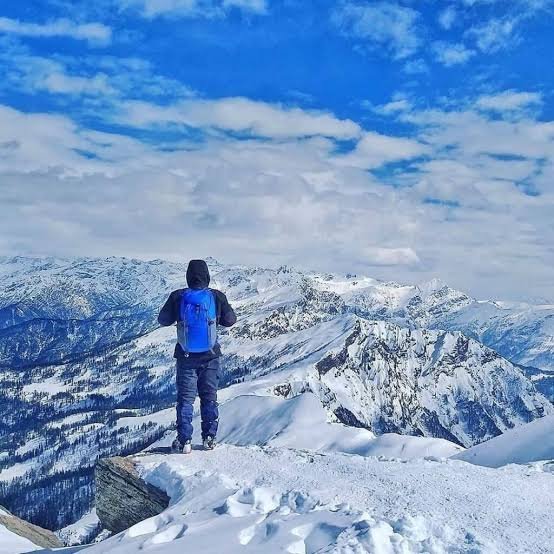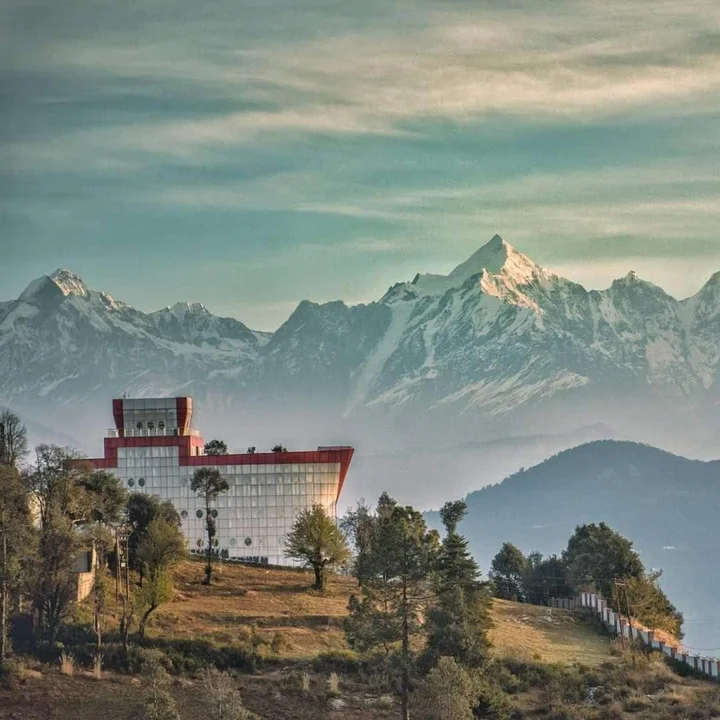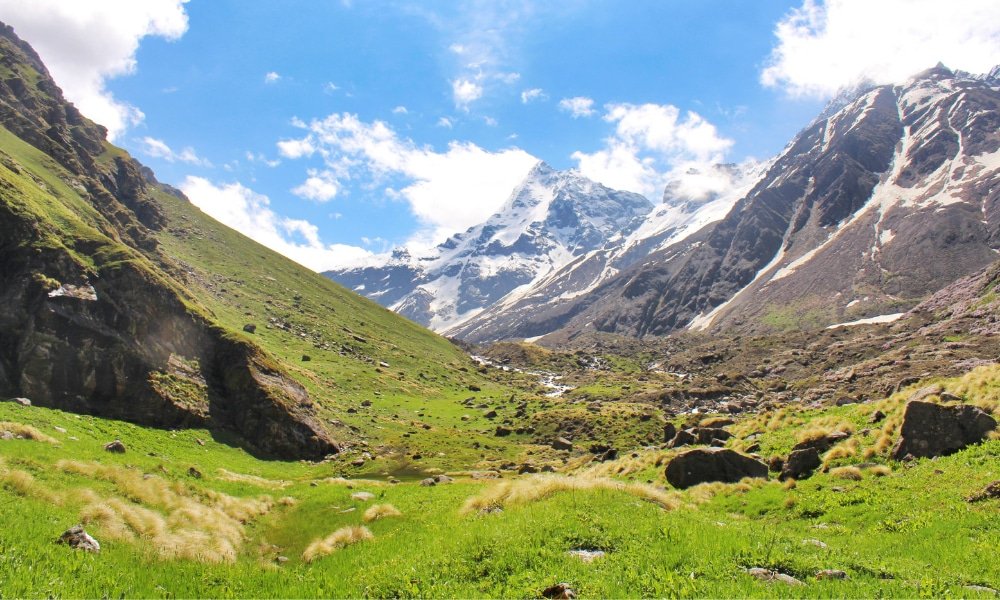

Introduction: The Primordial Abode of Lord Shiva
Nestled in the pristine Kumaon Himalayas of Uttarakhand’s Pithoragarh district, near the trijunction of India, Nepal, and Tibet, lies one of Hinduism’s most sacred pilgrimage destinations—Adi Kailash. Revered as the “Primordial Kailash” and also known as Chhota Kailash or Little Kailash, this majestic peak is believed to be the first earthly residence of Lord Shiva and Goddess Parvati.
Standing at an impressive altitude of approximately 5,945 meters (19,505 feet), Adi Kailash bears a striking resemblance to its more famous counterpart, Mount Kailash in Tibet. Its pyramid-shaped peak, dramatic rock bands, and the emerald Parvati Sarovar (Jolingkong Lake) at its base create a landscape of extraordinary spiritual and natural beauty.
Unlike the Kailash Mansarovar Yatra, which requires a passport and crossing international borders, Adi Kailash is accessible within Indian territory, making it a more attainable pilgrimage for devotees seeking the blessings of Lord Shiva. The region remained largely unexplored for decades due to security restrictions after the 1962 Indo-China war, but in recent years, improved road connectivity has opened this hidden gem to pilgrims and travellers.
Whether you are a devout pilgrim seeking to walk in the footsteps of the gods, a trekker chasing the challenge of high-altitude terrain, or a nature lover drawn to the raw beauty of the Himalayas, Adi Kailash offers an experience that is both spiritually transformative and visually breathtaking.
Key Information at a Glance:
History and Mythology: The Legend of Adi Kailash
The Primordial Kailash
According to Hindu scriptures such as the Skanda Purana, Adi Kailash is considered the first earthly residence of Lord Shiva. The name “Adi” means “primordial” or “first,” signifying that this sacred peak was the original abode from which Shiva’s divine presence spread across the Himalayas. Legend holds that Lord Shiva and Goddess Parvati rested here during their celestial journeys, blessing the mountain with their eternal presence.
The Panch Kailash
Adi Kailash is one of the five sacred Kailash peaks collectively known as Panch Kailash. These five mountains are believed to represent different aspects of Lord Shiva’s divine personality:
| Kailash Peak | Location | Significance |
|---|---|---|
| Adi Kailash | Uttarakhand | Primordial Kailash, first earthly residence |
| Kinnaur Kailash | Himachal Pradesh | 79-foot natural Shivling |
| Srikhand Kailash | Himachal Pradesh | Natural Shivling untouched by snow |
| Manimahesh Kailash | Himachal Pradesh | Jewel-like radiance |
| Mount Kailash | Tibet | Eternal abode, cosmic center |
The Legend of the Pandavas
The region is also associated with the Pandavas from the Mahabharata. The village of Kuthi, located along the yatra route, is said to derive its name from the Hindi word “kutia” meaning hut. According to local belief, the sage Vyasa lived here while collecting stories and scenes for the Mahabharata. The village’s fort (kot or quilla) is believed to have been built and occupied by the Pandava brothers during their exile.
The Story of Parvati Sarovar
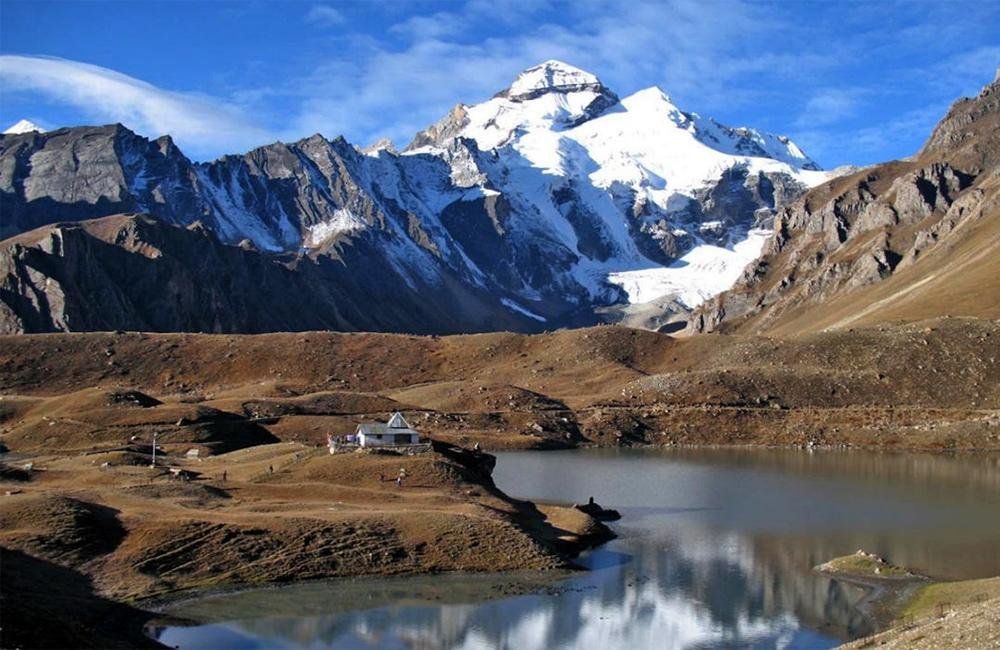
At the base of Adi Kailash lies Parvati Sarovar, also known as Jolingkong Lake or Gauri Kund. This emerald-green glacial lake is sacred to Goddess Parvati, the consort of Lord Shiva. It is believed that Parvati meditated here and blessed the lake, making it a miniature version of the holy Mansarovar Lake in Tibet. A small temple dedicated to Lord Shiva and Goddess Parvati stands on the lake’s shore, serving as the focal point of pilgrimage.
The Sacred Om Parvat
Adjacent to the Adi Kailash region is the enigmatic Om Parvat, a mountain where snow naturally forms the shape of the sacred “ॐ” symbol throughout the year. This natural phenomenon is considered a divine sign and holds immense spiritual significance for devotees. The Om symbol is most clearly visible from the Indian side, and pilgrims often combine the Adi Kailash Yatra with a visit to this sacred mountain.
The Shauka and Bhotia Heritage
The region is home to the Shauka (also known as Bhotia) community, who have inhabited these valleys for centuries. Before the 1962 border closure, they were active traders across the Lipulekh Pass into Tibet. Their cultural traditions, architecture, and warm hospitality remain integral to the Adi Kailash experience.
Geography and Location
Geographic Coordinates
Location
Adi Kailash is situated in the Pithoragarh district of Uttarakhand, in the Kumaon region of the Himalayas. The peak lies in the easternmost mountain wedge of Uttarakhand, squeezed between the borders of Tibet and Nepal. The massif is bound on the west by the Darma valley and on the east by the Kuthi Yankti-Kali Ganga rivers.
Topography
The Adi Kailash range occupies an area of some 80 square kilometres, consisting of substantial 6000-meter peaks that have been largely unexplored by mountaineers due to security restrictions. The peaks are surprisingly impressive and dramatic in outline, formed of vertically folded crushed sediments, including bands of limestone rich in fossils (mainly ammonites).
The Kuthi Yankti Valley
The approach to Adi Kailash follows the Kuthi Yankti River, a tributary of the Kali Ganga. The valley opens up dramatically as you ascend, with views of the giant snow dome of Api (7,100 m) in Nepal visible on clear days. The landscape transitions from lush forests at lower elevations to stark, high-altitude terrain near the base of the sacred peak.
Flora and Fauna
Forests and Vegetation
The Adi Kailash region, nestled in the Darma and Byas valleys, is renowned for its diverse flora and fauna. Scientists from the Wildlife Institute of India have surveyed the area for its potential as a UNESCO World Heritage site due to its rich biodiversity.
| Altitude Zone | Vegetation Type | Characteristics |
|---|---|---|
| Lower valleys (1,500–2,500 m) | Temperate forests | Oak, pine, rhododendron, deodar |
| Mid altitudes (2,500–3,500 m) | Coniferous forests | Fir, spruce, birch |
| High altitudes (3,500–4,500 m) | Alpine meadows | Grasses, shrubs, wildflowers |
| Above 4,500 m | Alpine desert | Sparse vegetation, mosses, lichens |
The Narayan Ashram along the route is known for its wildflowers and rare varieties of fruits, adding to the region’s natural beauty.
Wildlife
The remote and protected nature of the region has preserved its wildlife. Notable species include:
- Snow Leopard: The elusive apex predator of the high Himalayas
- Himalayan Black Bear: Found in forested areas
- Musk Deer: Known for its prized musk
- Blue Sheep (Bharal): Common in alpine meadows
- Himalayan Thar: Large mountain goat
- Himalayan Monal: The state bird of Uttarakhand
Fossils
The limestone bands on Adi Kailash contain abundant fossils, primarily ammonites, which have been found at elevations up to 5,500 meters. These marine fossils are evidence that this region was once submerged under the Tethys Sea millions of years ago—a fascinating geological fact that adds to the mountain’s mystique.
How to Reach Adi Kailash
By Air
Nearest Airport: Pantnagar Airport (approximately 306 km from Dharchula)
- Airlines: Regular flights from Delhi to Pantnagar (approx. 1 hour)
- Travel Time: 8–9 hours by taxi from the airport to Dharchula
- Onward Travel: From the airport, hire a taxi to Kathgodam or directly to Dharchula
By Train
Nearest Railway Stations:
| Station | Distance to Dharchula | Connectivity |
|---|---|---|
| Kathgodam | 272 km | Most preferred, well-connected from Delhi |
| Tanakpur | 238 km | Alternative option |
| Lal Kuan | 300 km | Additional alternative |
Popular Trains from Delhi to Kathgodam:
| Train Name | Departure (Delhi) | Arrival (Kathgodam) | Duration |
|---|---|---|---|
| Ranikhet Express | 10:05 PM | 5:05 AM | 7 hours |
| Shatabdi Express | 6:00 AM | 11:40 AM | 5h 40m |
From Kathgodam station, taxis are available for the 9–10 hour drive to Dharchula.
By Road
Adi Kailash is accessible via a well-defined road route, though the final stretch requires 4×4 vehicles and permits.
Route Overview:
Total Distance from Delhi: Approximately 760 km
Distances from Major Cities
| City | Distance (km) |
|---|---|
| Delhi | 760 |
| Kathgodam | 272 |
| Pithoragarh | 100–110 |
| Dharchula | 0 (starting point for permits) |
| Gunji | 71 |
| Jolingkong (Adi Kailash base) | 105 from Dharchula |
Inner Line Permit (ILP) – Mandatory Documentation
Adi Kailash is located in a restricted border area near the India–China–Nepal trijunction. Therefore, an Inner Line Permit (ILP) is mandatory for all Indian citizens undertaking the yatra.
Where to Obtain the Permit
- Issuing Authority: SDM Office, Dharchula
- Timing: During the yatra season (May–October)
- Processing Time: Usually 1–2 days; tour operators often handle this in advance
Documents Required
- ✅ Aadhaar Card (mandatory for Indian citizens)
- ✅ Voter ID / Passport (additional ID proof)
- ✅ 4–5 passport-size photographs
- ✅ Medical fitness certificate from a registered doctor
Age Limit
Important Notes
- Foreign nationals are not permitted on the Adi Kailash Yatra at present
- Tour operators typically handle the entire permit process for their clients
- The permit is checked at multiple checkpoints along the route
Weather and Best Time to Visit
Climate Overview
Adi Kailash experiences extreme weather conditions due to its high altitude and proximity to the Tibetan plateau. The yatra is only possible during the summer and early autumn months.
Month-by-Month Temperature Guide
Best Time to Visit by Season
| Season | Months | Suitability | Conditions | Best For |
|---|---|---|---|---|
| Summer | May–June | ⭐ Excellent | Pleasant days, freezing nights, clear skies | First-time pilgrims, families, clear darshan |
| Post-Monsoon | September–October | ⭐ Excellent | Budget travellers (with caution) | Photography, peaceful darshan, Om Parvat clarity |
| Monsoon | July–August | ⚠️ Moderate | Lush landscapes, frequent rain, landslide risk | Budget travelers (with caution) |
| Winter | November–April | ❌ Closed | Heavy snowfall, roads blocked, villages evacuated | Not accessible |
Important Weather Notes
- Temperature Swings: A sunny afternoon at 14°C can become -3°C within hours after sunset. Never judge the weather only by daytime comfort.
- Best Om Parvat Views: The Om symbol on Om Parvat appears clearest during September–October when fresh snow settles on the rock face.
- Acclimatisation: Due to the high altitude, proper acclimatisation is essential. The itinerary typically includes rest days at intermediate altitudes.
Top Attractions and Places to Visit
1. Adi Kailash Peak – The Primordial Abode
The centrepiece of the pilgrimage, Adi Kailash (also known as Chhota Kailash), is a striking pyramid-shaped peak that mirrors the holy Mount Kailash in Tibet. The peak is best viewed from the shores of Parvati Sarovar (Jolingkong Lake), where its reflection shimmers in the emerald waters.
Altitude: 5,945 meters
Best Viewpoint: Jolingkong Lake shore
Best Time: Early morning for clear views and reflection photography
2. Parvati Sarovar (Jolingkong Lake)
Parvati Sarovar, also known as Jolingkong Lake or Gauri Kund, is a stunning emerald-green glacial lake situated at the foothills of Adi Kailash. The lake is named after Goddess Parvati, who is believed to have meditated here. A small temple dedicated to Lord Shiva and Goddess Parvati stands on its shore.
Significance: Believed to be a miniature version of Mansarovar Lake
Activities: Photography, meditation, short trek around the lake
Best Time: May–June, September–October
3. Om Parvat – The Divine Symbol
Located near Nabhidhang on the Kailash-Mansarovar route, Om Parvat is a mountain where snow naturally forms the sacred “ॐ” symbol throughout the year. This natural phenomenon is considered a divine sign and holds immense spiritual significance.
Best Viewpoint: Nabhidhang camp
Best Time: September–October for the clearest Om symbol
Distance from Dharchula: 82 km
4. Gunji Village
Gunji is a traditional Bhotia village at an altitude of approximately 3,200 meters, serving as the last major halt before Adi Kailash. The village offers stunning views of the surrounding peaks and is a cultural highlight of the yatra.
Altitude: ~3,200 m
Accommodation: Homestays and basic guesthouses
Best For: Acclimatisation, cultural immersion
5. Kuthi Village
Kuthi village is historically significant as the place where the sage Vyasa is said to have lived while composing the Mahabharata. The village’s name derives from “kutia” meaning hut. The ruined fort (kot) is believed to have been built by the Pandava brothers.
Altitude: 3,850 m
Best For: History enthusiasts, cultural exploration
6. Narayan Ashram
Located approximately 40 km from Gunji, Narayan Ashram is a peaceful spiritual retreat established by Narayan Swami in 1936. It is surrounded by wildflowers and offers a serene environment for meditation.
Best Time: May–October
Features: Spiritual library, peaceful gardens, meditation spaces
7. Kali Temple, Dharchula
Located in the border town of Dharchula, the Kali Temple is an important spiritual site for pilgrims beginning their journey. The temple overlooks the Kali River, which forms the India-Nepal border.
8. Nabhidhang – Om Parvat Viewpoint
This high-altitude camp serves as the viewpoint for Om Parvat. The site is also associated with the legend of Ved Vyas and offers panoramic Himalayan views.
Altitude: Above 4,200 m
Best Time: Early morning for clear views of the Om symbol
9. Vyas Gufa (Ved Vyas Cave)
A meditation cave near Nabhidhang is associated with the sage Ved Vyas, who is credited with composing the Mahabharata.
10. Patal Bhuvaneshwar
Located approximately 50 km from Chaukori, Patal Bhuvaneshwar is a mystical underground cave temple with naturally formed limestone Shivlings. It is believed to be the abode of Lord Shiva, Goddess Parvati, and other deities.
Best Time: Year-round (except monsoon)
Activities: Cave exploration, photography
Nearby Places to Visit
Pithoragarh – The Little Kashmir
Pithoragarh, the district headquarters, is often called “Little Kashmir” for its stunning Himalayan views. Key attractions include Pithoragarh Fort, Kapileshwar Mahadev Temple, and Chandak Hill, offering panoramic vistas of Panchachuli and Nanda Devi peaks.
Chaukori – A Scenic Himalayan Retreat
Famous for its sunrise and sunset views over Nanda Devi and Panchachuli peaks, Chaukori is also known for its lush tea gardens. It is an ideal stop for acclimatisation before proceeding to higher altitudes.
Jageshwar Dham – The Valley of Temples
One of the 12 Jyotirlingas in India, Jageshwar features 124 ancient stone temples dedicated to Lord Shiva, surrounded by dense deodar forests. The Jageshwar Monsoon Festival (July–August) is a unique cultural experience.
Trekking and Travel Experience
Road vs. Trek
Historically, the Adi Kailash Yatra involved a long trek of up to 18 days. However, with the construction of new roads, particularly the Gunji-Lampiya Dhura Pass Road (GLDPR), the yatra is now largely motorable.
| Aspect | Past | Present |
|---|---|---|
| Mode of travel | Trekking | 4×4 vehicles |
| Duration | 15–18 days | 7–9 days |
| Trekking required | 75 km | Minimal (2–4 km optional) |
Short Treks Still Required
Despite road improvements, short treks remain part of the experience:
| Trek | Distance | Difficulty | Duration |
|---|---|---|---|
| Jolingkong to Parvati Sarovar | 2–3 km | Easy | 1–2 hours |
| Jolingkong to Gauri Kund | 3–4 km | Easy-Moderate | 2–3 hours |
Travel Tips for the Yatra
- Acclimatisation: Spend at least one night at Dharchula and Gunji before proceeding to higher altitudes
- 4×4 Vehicles Mandatory: Only local 4×4 vehicles are permitted beyond Dharchula
- Start Early: Begin daily travel early to avoid afternoon weather deterioration
- Stay Hydrated: Drink plenty of water to prevent altitude sickness
- Carry Essentials: Pack warm clothing, personal medicines, and snacks
- Listen to Guides: Local guides are essential for navigation and safety
Local Cuisine: What to Eat
Food along the Adi Kailash route is simple, vegetarian, and nourishing—essential for high-altitude travel.
During the Yatra
| Food Item | Description | When Available |
|---|---|---|
| Dal-Chawal-Roti | Staple meal, provided at all stops | Daily |
| Vegetable Curry | Seasonal vegetables | Daily |
| Parathas | Stuffed flatbreads | Breakfast |
| Maggi Noodles | Popular comfort food | Snacks |
| Chai (Tea) | Hot beverage, served multiple times | Throughout the day |
| Soup | Warm soup at higher altitudes | Evenings |
Local Kumaoni Specialities (Before/After Yatra)
| Dish | Description | Where to Find |
|---|---|---|
| Aloo Ke Gutke | Spiced fried potatoes | Pithoragarh, Almora |
| Bhatt ki Churkani | Black soybean curry | Kumaon region |
| Gahat Ki Dal | Horse gram lentil soup | Local restaurants |
| Mandua Roti | Finger millet flatbread | Local eateries |
| Bal Mithai | Famous Kumaoni sweet | Sweet shops |
Important Notes
- All food provided during the yatra is pure vegetarian
- Carry packaged snacks (energy bars, dry fruits) for the journey
- Avoid raw salads and unfiltered water
Accommodation Options
Accommodation along the Adi Kailash route ranges from basic homestays to comfortable hotels, depending on the altitude.
Types of Accommodation
What to Expect at Higher Altitudes
- Gunji/Nabi: Homestays offer simple rooms with common toilets. Blankets and basic bedding are provided
- Jolingkong: Tented camps with sleeping bags; eco-toilets available
- Hot Water: Limited availability at higher altitudes
- Heating: No room heating; pack adequate warm clothing
Booking Tips
- Most tour operators include accommodation in their packages
- For independent travel, book homestays in Gunji through local contacts
- The yatra has limited accommodation capacity; early booking is essential
Sample Itinerary (8 Days / 7 Nights from Kathgodam)
This is a typical itinerary for the Adi Kailash Yatra by road :
Alternative: Extended Itinerary (9 Days)
For those seeking a more relaxed pace, an additional day can be added for:
- Extra acclimatisation at Gunji
- Deeper exploration of Parvati Sarovar
- Visit to Narayan Ashram
Travel Tips and Important Information
Before You Go
- Medical Check-up: Consult your doctor before the yatra, especially if you have heart or respiratory conditions
- Physical Preparation: Regular walking, light jogging, or yoga for 4–6 weeks before the yatra is recommended
- Advance Booking: Essential for May–June and September–October
- Carry Cash: ATMs are extremely limited beyond Dharchula
- Inform Family: Mobile networks are limited; inform family of your itinerary
During the Yatra
- Acclimatise Properly: Take rest at intermediate altitudes; do not rush
- Dress in Layers: Temperatures swing dramatically between day and night
- Stay Hydrated: Drink plenty of water to prevent altitude sickness
- Eat Light: Avoid heavy, oily meals; stick to simple vegetarian food
- Respect Local Customs: Adi Kailash is a sacred site for Hindus
Health and Safety
- Altitude Sickness: Symptoms include headache, nausea, and dizziness. If symptoms worsen, descend immediately
- Oxygen Support: Tour operators carry portable oxygen cylinders for emergencies
- Medical Facilities: Basic facilities are available in Dharchula and Gunji; advanced hospitals are far away
- Emergency Numbers: Keep local contacts and tour operator numbers handy
Who Should Avoid This Yatra
The following individuals are advised not to attempt the yatra :
- Those with serious heart or lung conditions
- Pregnant women
- People with uncontrolled blood pressure or diabetes
- Anyone recently recovering from surgery or severe illness
Packing Checklist
| Category | Items |
|---|---|
| Clothing | Reusable water bottle, energy bars/dry fruits, toiletries, wet wipes, hand sanitiser |
| Health | Personal medications, first-aid kit, altitude sickness medication (consult doctor), portable oxygen can (if prescribed) |
| Accessories | Sunglasses with UV protection, sunscreen, lip balm, trekking pole, headlamp/torch, power bank |
| Documents | Aadhaar Card, medical fitness certificate, passport-size photos, yatra permit copy |
| Other | Reusable water bottle, energy bars/dry fruits, toiletries, wet wipes, hand sanitizer |
Frequently Asked Questions (FAQs)
Q1: Why is Adi Kailash famous?
A: Adi Kailash is famous as the “Primordial Kailash”—believed to be the first earthly abode of Lord Shiva. It is considered a sacred pilgrimage site and an alternative to the Kailash Mansarovar Yatra, as it is accessible within Indian territory.
Q2: What is the best time to visit Adi Kailash?
A: The best time to visit is May to June (summer) for pleasant weather and September to October (post-monsoon) for crystal-clear mountain views.
Q3: How far is Adi Kailash from Delhi?
A: The total distance from Delhi is approximately 760 km, with a travel time of 8–10 days recommended for the complete yatra.
Q4: Is a permit required for Adi Kailash Yatra?
A: Yes, an Inner Line Permit (ILP) is mandatory as the region is near the India–China–Nepal border. It is issued at the SDM Office in Dharchula.
Q5: What is the altitude of Adi Kailash?
A: Adi Kailash stands at approximately 5,945 meters (19,505 feet) above sea level.
Q6: Is trekking required for the Adi Kailash Yatra?
A: Most of the yatra is now motorable. Short treks of 2–4 km are required for Parvati Sarovar and Gauri Kund.
Q7: What is the age limit for the yatra?
A: The minimum age is 9 years, and the maximum is 70 years for most tour packages.
Q8: Can foreign nationals visit Adi Kailash?
A: Currently, the Adi Kailash Yatra is allowed only for Indian nationals.
Q9: Is there a mobile network available?
A: Mobile connectivity is extremely limited beyond Dharchula. BSNL works in some pockets. Tour operators carry satellite communication for emergencies.
Q10: What is the difference between Adi Kailash and Om Parvat?
A: Adi Kailash is a sacred pyramid-shaped peak believed to be Lord Shiva’s abode. Om Parvat is a separate mountain where snow naturally forms the “ॐ” symbol. Both are in the same region and are often visited together.
Q11: What is Parvati Sarovar?
A: Parvati Sarovar (also called Jolingkong Lake) is an emerald-green glacial lake at the base of Adi Kailash. It is considered sacred to Goddess Parvati.
Q12: Is the yatra safe for senior citizens?
A: Yes, with proper medical clearance and precautions. May–June is the best time for senior citizens due to stable weather. However, high altitude (15,500+ ft) should be considered.
Q13: What is the cost of Adi Kailash Yatra?
A: A typical 8–10 day yatra package ranges from ₹45,000 to ₹70,000 per person, including transport, accommodation, meals, permits, and guide services.
Q14: What documents are required for the permit?
A: Aadhaar Card, passport-size photographs, and a medical fitness certificate are required.
Q15: Is the yatra open during winter?
A: No, the yatra is closed from November to April due to heavy snowfall and road blockages.
Plan Your Adi Kailash Yatra with Discover Uttarakhand
At Discover Uttarakhand, we’ve been organising sacred Himalayan journeys across Devbhoomi since 1997. As a trusted local operator with deep knowledge of the Adi Kailash region, we offer:
- ✅ Customised Adi Kailash Yatra packages (8 to 12 days)
- ✅ Complete permit assistance (Inner Line Permit processing)
- ✅ Experienced local drivers with 4×4 vehicles for mountain terrain
- ✅ Comfortable transport from Kathgodam to Adi Kailash
- ✅ Verified accommodations, including homestays in Gunji and tented camps at Jolingkong
- ✅ Medical support with portable oxygen cylinders
- ✅ 24/7 customer support throughout your journey
Recommended Adi Kailash Packages
| Package | Duration | Starting Point | Highlights |
|---|---|---|---|
| Adi Kailash Yatra (Standard) | 8 Days / 7 Nights | Kathgodam | Full circuit, Parvati Sarovar, Om Parvat |
| Adi Kailash with Helicopter | 5 Days / 4 Nights | Dehradun/Pithoragarh | Helicopter transfers for high-altitude segments |
| Adi Kailash & Om Parvat Special | 9 Days / 8 Nights | Kathgodam | Extended stay at Om Parvat viewpoint |
| Kumaon Explorer with Adi Kailash | 12 Days / 11 Nights | Delhi | Adi Kailash + Jageshwar + Chaukori + Almora |
Book your Adi Kailash Yatra today and seek the blessings of Lord Shiva at his primordial abode.
📞 Call / WhatsApp: +91-9997187178, 9760222178, 8171977178
📍 Visit Our Office: Himalayan Colony, opposite DSVV, Haripur Kalan, Haridwar, Motichur Range, Uttarakhand 249411
🌐 Website: www.discover-uttarakhand.com
📧 Email: info@discover-uttarakhand.com
Om Namah Shivaya! Jai Adi Kailash! 🙏🏔️
Discover Uttarakhand – Your Local Partner for Sacred Himalayan Journeys Since 1997