
Overview: The Abode of the Chaste Goddess
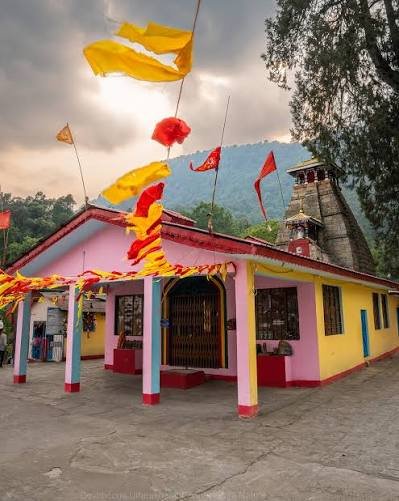
Tucked away in the Chamoli district of Uttarakhand, Anusuya Devi Temple is not just a destination; it is a journey into the soul of the Garhwal Himalayas and a pilgrimage to one of its most revered spiritual sites.
Often referred to as “Devi Sati” or the “Chaste Goddess”, this magnificent temple is a land of unparalleled spiritual energy and profound mythological significance. Located near Mandal village, about 13 km from Gopeshwar and 30 km from Chopta, the temple is dedicated to Goddess Anusuya, the devoted wife of Atri Muni, one of the Sapta Rishis (seven great sages) of Hindu tradition.
What makes Anusuya Devi Temple truly special is its extraordinary diversity—from the ancient temple that enshrines a magnificent stone idol of the goddess to the Atri Muni Ashram (a cave temple) just 2 km away, from the dense oak and rhododendron forests that surround the shrine to the sacred Amrit Ganga stream and its beautiful waterfall. The temple is a living repository of Hindu mythology, with legends that connect it to the Trimurti (Brahma, Vishnu, and Mahesh), the birth of Lord Dattatreya, and the spiritual power of a devoted woman.
The name “Anusuya” means “free from envy” or “one who is not jealous”, reflecting the goddess’s pure and selfless nature. The temple is also known as Anusuya Devi Mandir and is an important stop on the Garhwal pilgrimage routes.
The journey to Anusuya Devi Temple, which begins from the spiritual hubs of Rishikesh or Dehradun, is an accessible yet profoundly rewarding adventure through sacred forests, ancient temples, and the majestic Himalayan wilderness. It offers a profound sense of peace, spiritual connection, and a deep appreciation for the rich cultural heritage of Uttarakhand.
Key Information at a Glance
| Aspect | Details |
|---|---|
| Location | Chamoli District, Uttarakhand |
| Type | Hindu Temple / Siddha Peeth |
| Dedicated To | Goddess Anusuya (wife of Atri Muni) |
| Elevation | 2,000–2,300 m (6,560–7,546 ft) |
| District | Chamoli |
| Coordinates | 30.47993°N 79.28358°E (approx.) |
| Official Language | Hindi |
| Regional Language | Garhwali |
| Vehicle Registration Code | UK-11 (Chamoli) |
| Nearest Airport | Jolly Grant Airport, Dehradun (~255 km) |
| Nearest Railway Station | Rishikesh (~234 km) |
| Best Time to Visit | March–June & September–December |
| Known For | Sanctity, Child Blessings, Dattatreya Jayanti Fair, Trek |
| Trek Distance | 5–6 km from Mandal Village |
| Trek Difficulty | Easy to Moderate |
| Famous Festival | Dattatreya Jayanti (December) |
History of Anusuya Devi Temple
Ancient Roots in the Sapta Rishis Tradition
Anusuya Devi Temple has a history that is deeply intertwined with the ancient Sapta Rishis tradition of Hindu mythology. The temple is dedicated to Goddess Anusuya, the wife of Atri Muni, a great sage and one of the seven great sages (Sapta Rishis) of Hindu tradition. She is revered as the epitome of chastity, devotion, purity, patience, and marital faith in Indian culture.
The Legend of the Trimurti’s Test
According to Hindu mythology, the Trimurti — Brahma, Vishnu, and Mahesh (Shiva) — once decided to test the chastity and purity of Mata Anusuya. They visited her ashram as sages and asked for alms, placing an unusual condition: she must serve them food without wearing any clothes.
Using her spiritual power and purity, Mata Anusuya transformed the Trimurti into infants, thus fulfilling their condition without breaking her dignity. She placed them in a cradle and cared for them as her children. Later, pleased by her devotion, the gods returned to their original forms. From this divine event was born Dattatreya, the combined incarnation of Brahma, Vishnu, and Shiva.
Another version of the legend states that the three goddesses — Parvati, Lakshmi, and Saraswati — sent their husbands to test Devi Anusuya’s strength. When the gods did not return, the goddesses apologised to Anusuya and requested her to release their husbands.
The Birth of Dattatreya
Because of this miraculous event, the mother received the blessings of Lord Dattatreya — the combined incarnation of the Tridevas. Dattatreya is considered an incarnation of Lord Vishnu and is worshipped as a powerful deity in the region.
The Temple’s Antiquity
The temple is believed to be ancient, with the current structure built in the Katyuri style of architecture. The temple’s sanctity has been preserved for centuries, and it continues to be a major pilgrimage site for devotees from across India.
The Dattatreya Jayanti Fair
Every year in December, on the occasion of Dattatreya Jayanti, a large fair is organised at the temple, which is attended by many devotees and tourists. Throughout the night, they worship the Goddess Sati through Bhajans with lighted lamps in their hands. The fair is locally known as Anusuya Mela or Naudi Mela.
Geography of Anusuya Devi Temple
Location and Topography
Anusuya Devi Temple is situated at an elevation of approximately 2,000–2,300 metres above sea level in the Chamoli district of Uttarakhand. The temple is nestled in the lap of the Himalayas, surrounded by dense forests, quiet valleys, and the sacred Amrit Ganga stream.
| Feature | Details |
|---|---|
| Location | Chamoli district, Garhwal Himalayas, Uttarakhand |
| Elevation | 2,000–2,300 m (6,560–7,546 ft) |
| Terrain | Forested hills, river valley, cave temple |
| Key Water Source | Amrit Ganga stream, waterfall |
| Base Village | Mandal Village (~13 km from Gopeshwar) |
| Distance from Chopta | ~30 km |
| Distance from Gopeshwar | ~13–19 km |
The Amrit Ganga River
The Amrit Ganga stream flows near the temple, and the trail to the temple and the Atri Muni Ashram follows this sacred river. The stream is known for its unique parikrama — devotees circumambulate around the river as a mark of reverence. A massive waterfall is located near the Atri Muni Ashram, and its sweet sound and cold showers refresh the soul of every visitor.
The Himalayan Panorama
The temple is surrounded by the Garhwal Himalayas, and there is a gigantic ancient tree on the temple premises, which is revered by the devotees. The area offers stunning views of the surrounding mountain ranges and valleys.
Major Landmarks
- Anusuya Devi Temple – The main shrine, surrounded by dense oak and rhododendron forests
- Atri Muni Ashram – A cave temple 2 km further uphill from the main temple
- Amrit Ganga Waterfall – A scenic waterfall en route to the ashram
- Mandal Village – The base village for the trek, about 13 km from Gopeshwar
- Gopeshwar – The nearest town, with the ancient Gopinath Temple
Flora and Fauna
Flora
Anusuya Devi Temple is surrounded by extraordinary biodiversity, with the shrine located within the Kedarnath Wildlife Sanctuary. The temple is surrounded by oak and rhododendron forests, and the trek passes through lush green forests and bubbling streams.
Key Tree Species:
- Oak (Quercus spp.) – Dominant species in the surrounding forests
- Rhododendron (Burans) – Adding vibrant colour to the trail, especially in spring
- Ban Oak – Found in the forest sections
- Deodar (Cedrus deodara) – Present in the higher reaches
Medicinal Plants and Wildflowers:
The region is rich in medicinal herbs and Himalayan wildflowers. The forest trail is dotted with fig trees that attract several birds and colourful butterflies. The dense forests around the temple are part of the Kedarnath Wildlife Sanctuary, which is known for its rich floral diversity.
Fauna
Anusuya Devi Temple is a nature lover’s paradise, home to a remarkable variety of Himalayan wildlife. The temple is located within the Kedarnath Wildlife Sanctuary, which is renowned for its biodiversity.
Mammals:
- Himalayan Black Bear
- Leopard
- Barking Deer (Kakar)
- Musk Deer
- Red Fox
- Himalayan Tahr
- Serow
Birds:
- Himalayan Monal – Uttarakhand’s state bird
- Golden Eagle
- Bearded Vulture
- Various pheasant species
- Rare Himalayan birds – The region is rich in avian diversity
Protected Areas
| Protected Area | Type | Significance |
|---|---|---|
| Kedarnath Wildlife Sanctuary | Wildlife Sanctuary | Home to musk deer, leopard, and Himalayan monal |
| Nanda Devi Biosphere Reserve | Biosphere Reserve | UNESCO Site, accessible from the region |
Religious Beliefs and Significance
The Land of the Chaste Goddess
Anusuya Devi Temple is rightly called the “Abode of the Chaste Goddess”. The temple is deeply revered in Hindu mythology as the site where Goddess Anusuya demonstrated the power of her chastity and devotion, transforming the Trimurti into infants and giving birth to Lord Dattatreya.
The Goddess Anusuya
Mata Anusuya is worshipped as an ideal symbol of devotion, purity, patience, and marital faith. Because of her unwavering dedication to her husband, Anusuya Devi is believed to have attained divine powers. Her life is often cited as an example of the spiritual strength of women in Sanatan Dharma.
The Atri Muni Ashram
The Atri Muni Ashram, also known as the Cave Temple, is located 2 km further uphill from the Anusuya Devi Temple. Carved naturally into the mountain, this ashram is where Rishi Atri is believed to have meditated for years. The ashram is said to be the only holy place in the world where devotees circumambulate around a river as a mark of reverence.
The Sanctity of the Temple
The temple’s garbhagriha enshrines a magnificent stone idol of Devi Anusuya, with a silver canopy placed above it. It is believed that night-long jagran, meditation, and chanting in the temple’s sanctum can fulfil the wish of a woman desiring a child. It is said that if the goddess appears in a dream, it means the mother has heard the devotee’s prayer. This tradition of night vigil has been continuing for centuries, and thousands of couples have been blessed with children after visiting this temple.
The Dattatreya Jayanti Fair
Dattatreya Jayanti, celebrated in December, is the most important festival at the temple. On this night, devotees worship the Goddess through Bhajans with lighted lamps in their hands. The atmosphere becomes completely spiritual with programs like Jagran, Bhajan-Kirtan, Deepdaan, and Annadaan. The fair is locally known as Anusuya Mela or Naudi Mela.
Other Festivals and Celebrations
- Navratri – Celebrated with great fervour at the temple
- Local Fairs – Traditional fairs that showcase the vibrant culture of the Garhwal region
- Harela – A festival celebrating the sowing of seeds and the arrival of spring
How to Reach Anusuya Devi Temple
Anusuya Devi Temple is well connected by road, rail, and air and can be easily reached from major cities in Uttarakhand and North India.
By Air
The nearest airport is Jolly Grant Airport in Dehradun, approximately 255 km from the temple. Jolly Grant Airport is well connected to Delhi with daily flights. Taxis are available from the airport to Gopeshwar and then to Mandal.
| Route | Distance | Travel Time |
|---|---|---|
| Jolly Grant Airport → Mandal | ~255 km | 8–9 hours |
By Train
The nearest railway station is Rishikesh, approximately 234 km from the temple. Rishikesh is well connected by railway networks with major destinations in India. Taxis and buses are available from Rishikesh to Gopeshwar and then to Mandal.
| Route | Distance | Travel Time |
|---|---|---|
| Rishikesh Railway Station → Mandal | ~234 km | 8–9 hours |
By Road
Anusuya Devi Temple is well connected by motorable roads with major destinations of Uttarakhand state. The temple is located at a distance of 19 km from Gopeshwar and 29 km from Chamoli.
| Route | Distance | Travel Time |
|---|---|---|
| Delhi → Mandal | ~450 km | 11–12 hours |
| Gopeshwar → Mandal | ~13 km | 30 minutes |
| Chopta → Mandal | ~30 km | 1–1.5 hours |
| Rishikesh → Mandal | ~234 km | 8–9 hours |
Road Route from Delhi: Delhi → Rishikesh → Devprayag → Rudraprayag → Karnaprayag → Gopeshwar → Mandal
Bus Services:
- Buses to Gopeshwar are available from ISBT Kashmiri Gate, New Delhi
- Buses and taxis to Mandal are easily available from Gopeshwar and Chopta
The Trek Route
The trek to Anusuya Devi Temple starts from Mandal Village and passes through Siroli Village before entering the forest section.
| Segment | Distance | Time Required |
|---|---|---|
| Mandal Village → Anusuya Devi Temple | 5–6 km | 3–4 hours |
| Anusuya Devi Temple → Atri Muni Ashram | 2 km | 1.5 hours |
The trek is easy to moderate and is suitable for beginners, making it popular among families and elderly pilgrims. The trail is well-marked and lets you experience a trek through lush forests and bubbling streams to reach the shrine. The trek alongside the Amrit Ganga River is very scenic.
Local Transport
Within the region, local transport options include:
- Taxis and shared jeeps from Gopeshwar to Mandal
- Walking – The only way to reach the temple is by trekking from Mandal
- Local guides – Available from Mandal village
Weather and Best Time to Visit
Climate Overview
Anusuya Devi Temple experiences a Himalayan climate with distinct seasons, ranging from pleasant summers to cold winters. The temple’s elevation of approximately 2,000–2,300 metres ensures cool temperatures for most of the year.
Seasonal Breakdown
| Season | Months | Weather | Suitability |
|---|---|---|---|
| Summer | March–June | Pleasant, 15–30°C | ⭐ Best |
| Monsoon | July–September | Heavy rainfall, landslides | Avoid |
| Autumn | September–December | Crisp air, clear views | ⭐ Best |
| Winter | December–February | Cold, 5–15°C | Good for winter visits |
Best Time to Visit
| Season | Months | Highlights |
|---|---|---|
| Summer | March–June | Pleasant weather, clear views, ideal for trekking |
| Autumn | September–December | Post-monsoon clarity, crisp air, Dattatreya Jayanti fair |
| Winter | December–February | Cold but peaceful, ideal for spiritual retreats |
Note: The best time to visit Anusuya Devi Temple is throughout the year except for the heavy rainfall months from July to September. For most travellers, April to June and September to November are the best months. The temple is particularly vibrant during Dattatreya Jayanti in December, when a large fair is organised.
Temperature
| Season | Daytime Temperature | Nighttime Temperature |
|---|---|---|
| Summer (March–June) | 15°C to 30°C | 10°C to 15°C |
| Monsoon (July–September) | 15°C to 25°C | 12°C to 18°C |
| Autumn (Sept–Dec) | 10°C to 22°C | 5°C to 12°C |
| Winter (Dec–Feb) | 5°C to 15°C | 0°C to 8°C |
Nearby Places
| Destination | Distance from Anusuya Devi Temple | Highlights |
|---|---|---|
| Atri Muni Ashram | ~2 km (trek) | Cave temple, meditation site, waterfall |
| Mandal Village | ~5–6 km (trek) | Base village, homestays |
| Gopeshwar | ~13–19 km | Gopinath Temple, Vaitarni Kund |
| Chopta | ~30 km | “Mini Switzerland,” Tungnath trek base |
| Deoria Tal | ~35 km | High-altitude lake, mirror of the Himalayas |
| Tungnath Temple | ~40 km | World’s highest Shiva temple |
| Rudranath Temple | ~50 km (trek) | Panch Kedar, face of Lord Shiva |
| Chamoli | ~29 km | District headquarters |
| Kedarnath | ~100 km | Jyotirlinga, Char Dham temple |
Distance from Major Cities
| City | Distance (Approx.) | Travel Time |
|---|---|---|
| Delhi | ~450 km | 11–12 hours |
| Rishikesh | ~234 km | 8–9 hours |
| Dehradun | ~255 km | 8–9 hours |
| Gopeshwar | ~13–19 km | 30 minutes |
| Chopta | ~30 km | 1–1.5 hours |
Frequently Asked Questions (FAQs)
General Questions
Q1: What is Anusuya Devi Temple?
A: Anusuya Devi Temple is a Hindu temple dedicated to Goddess Anusuya, the wife of Atri Muni (one of the Sapta Rishis), located in the Chamoli district of Uttarakhand.
Q2: Where is Anusuya Devi Temple located?
A: The temple is located in the Chamoli district of Uttarakhand, near Mandal village, about 13–19 km from Gopeshwar and 30 km from Chopta.
Q3: What is the elevation of Anusuya Devi Temple?
A: The temple is situated at an elevation of approximately 2,000–2,300 metres above sea level.
Q4: What is Anusuya Devi Temple famous for?
A: The temple is famous for its sanctity, child blessings, the Dattatreya Jayanti fair, and its connection to the legend of the Trimurti and the birth of Lord Dattatreya.
Q5: What is the best time to visit Anusuya Devi Temple?
A: The best time is March–June and September–December. Avoid the monsoon months (July–September).
Q6: What is the nearest airport to Anusuya Devi Temple?
A: The nearest airport is Jolly Grant Airport in Dehradun, approximately 255 km away.
Q7: What is the nearest railway station to Anusuya Devi Temple?
A: The nearest railway station is Rishikesh, approximately 234 km away.
Q8: How far is Anusuya Devi Temple from Delhi?
A: The temple is approximately 450 km from Delhi, about an 11–12 hour drive.
Q9: What is the vehicle registration code for the region?
A: The vehicle registration code is UK-11 (Chamoli district).
Q10: What is the legend behind Anusuya Devi Temple?
A: According to Hindu mythology, the Trimurti (Brahma, Vishnu, and Mahesh) tested Goddess Anusuya’s chastity. Using her spiritual power, she transformed them into infants and cared for them as her children, giving birth to Lord Dattatreya.
Q11: Who was Atri Muni?
A: Atri Muni was a great sage and one of the Sapta Rishis (seven great sages) of Hindu tradition, and the husband of Goddess Anusuya.
Q12: What is the Atri Muni Ashram?
A: The Atri Muni Ashram is a cave temple located 2 km uphill from the Anusuya Devi Temple, where Rishi Atri is believed to have meditated for years.
Q13: What is the significance of the Amrit Ganga?
A: The Amrit Ganga is a sacred stream near the temple and ashram. Devotees perform parikrama (circumambulation) around the river as a mark of reverence, a unique ritual found only at this holy site.
Q14: What wildlife can be found near Anusuya Devi Temple?
A: The region is home to Himalayan black bear, leopard, barking deer, musk deer, red fox, Himalayan tahr, and various bird species including the Himalayan Monal.
Q15: How do I reach Anusuya Devi Temple from Gopeshwar?
A: From Gopeshwar, drive to Mandal Village (13 km), and then trek about 5–6 km to reach the temple.
Q16: What is the trek difficulty level?
A: The trek is rated easy to moderate, suitable for beginners and families.
Q17: What is the trek duration?
A: The trek from Mandal to Anusuya Devi Temple takes 3–4 hours one way.
Q18: What is the Dattatreya Jayanti fair?
A: Dattatreya Jayanti is celebrated in December with a large fair at the temple, attended by many devotees who worship the Goddess through Bhajans and night-long vigils.
Q19: What is the local language of the region?
A: The official language is Hindi, and the regional language is Garhwali.
Q20: Is Anusuya Devi Temple a good destination for offbeat travellers?
A: Yes, it is an offbeat destination perfect for those seeking spiritual experiences, trekking, and Himalayan scenery away from crowded tourist spots.
Q21: What are the nearby places to visit from Anusuya Devi Temple?
A: Nearby places include Atri Muni Ashram (2 km), Mandal Village (5–6 km), Gopeshwar (13–19 km), Chopta (30 km), and Deoria Tal (35 km).
Q22: What food is available near the temple?
A: Basic food is available in Mandal Village and Gopeshwar. There are no eateries at the temple itself.
Q23: Is photography allowed at Anusuya Devi Temple?
A: Yes, photography is allowed, but respect local traditions and avoid disturbing the sanctity of the temple.
Q24: Can I stay near Anusuya Devi Temple?
A: Yes, accommodation is available in Mandal Village (homestays) and Gopeshwar (hotels and guesthouses).
Q25: What should I carry for the trek?
A: Carry comfortable footwear, water, snacks, and a camera. The temple is at a high altitude, so warm clothing is recommended.
Q26: What is the significance of the temple for childless couples?
A: It is believed that night-long jagran, meditation, and chanting in the temple’s sanctum can fulfil the wish of a woman desiring a child.
Q27: What is the architectural style of the temple?
A: The temple is built in the Katyuri style of architecture.
Q28: What is the distance from Chopta to Anusuya Devi Temple?
A: The distance from Chopta to Anusuya Devi Temple is approximately 30 km.
Q29: What is the distance from Gopeshwar to Anusuya Devi Temple?
A: The distance from Gopeshwar to Anusuya Devi Temple is approximately 13–19 km.
Q30: What is the best way to explore Anusuya Devi Temple?
A: The best way is by trekking — the temple is best explored on foot, with trails leading through forests and along the sacred Amrit Ganga stream.
Essential Tips for Visitors
- Best Time: Plan your visit between March–June or September–December for pleasant weather
- Footwear: Wear comfortable walking shoes as the terrain is hilly and uneven
- Clothing: Carry warm clothing, especially in winter; light woollens even in summer
- Monsoon Caution: Avoid visiting during July–September due to heavy rainfall and landslide risk
- Trek Preparation: The trek is easy to moderate but requires basic fitness
- Carry Water: There are no shops or eateries at the temple, so carry water and snacks
- Temple Etiquette: Remove footwear before entering, maintain silence, and respect religious customs
- Local Cuisine: Try local Garhwali dishes in Mandal Village and Gopeshwar
- Hydration: Carry water, especially if exploring on foot
- Accommodation: Book in advance during peak seasons (May–June and September–October)
- Respect Local Culture: Anusuya Devi is a sacred site; maintain the sanctity of the temple and natural surroundings
- Leave No Trace: Respect the fragile Himalayan ecosystem — carry back all waste
- Inform Family: Let someone know your itinerary, especially if trekking in remote areas
- Weather Updates: Check weather forecasts before travelling, especially during monsoon and winter
- Local Guides: Hire local guides from Mandal Village to understand the mythology and history of the site
Plan Your Anusuya Devi Temple Adventure with Discover Uttarakhand
At Discover Uttarakhand, we’ve been organising unforgettable Himalayan journeys since 1997. As a trusted local operator with deep knowledge of the Garhwal region, we offer:
✅ Customised Anusuya Devi Temple tour packages
✅ Combined itineraries with Gopeshwar, Chopta, Tungnath, and Deoria Tal
✅ Experienced local guides and temple historians
✅ Comfortable transport with experienced hill drivers
✅ All necessary permits and arrangements
✅ Quality accommodation and nutritious meals
✅ 24/7 customer support throughout your journey
Recommended Anusuya Devi Temple Packages
| Package | Duration | Starting Point | Highlights |
|---|---|---|---|
| Anusuya Devi Darshan | 3 Days / 2 Nights | Rishikesh | Anusuya Devi Temple, Atri Muni Ashram, Mandal Village |
| Anusuya Devi & Chopta Expedition | 5 Days / 4 Nights | Rishikesh | Anusuya Devi, Chopta, Tungnath, Deoria Tal |
| Anusuya Devi Spiritual Journey | 6 Days / 5 Nights | Delhi | Anusuya Devi, Gopeshwar, Rudranath, Chopta |
| Anusuya Devi Complete Exploration | 7 Days / 6 Nights | Delhi | Anusuya Devi, Gopeshwar, Chopta, Kedarnath, Badrinath |
📞 Call / WhatsApp: +91-9997187178, 9760222178, 8171977178
📍 Visit Our Office: Himalayan Colony, opposite DSVV, Haripur Kalan, Haridwar, Motichur Range, Uttarakhand 249411
🌐 Website: www.discover-uttarakhand.com
📧 Email: discoveruttarakhand.mail@gmail.com
Plan your journey to Anusuya Devi Temple with proper preparation and respect for this sacred land where mythology comes alive. Experience the divine presence of the Himalayas in one of India’s most spiritually significant and naturally breathtaking destinations.
Discover Uttarakhand – Your Local Partner for Unforgettable Himalayan Journeys Since 1997 🏔️