
Overview: The Vaidyanath of the Kumaon Himalayas
Tucked away in the Garur Valley of the Bageshwar district, Baijnath Temple is not just a destination; it is a journey into the soul of the Kumaon Himalayas and the architectural brilliance of the Katyuri dynasty.
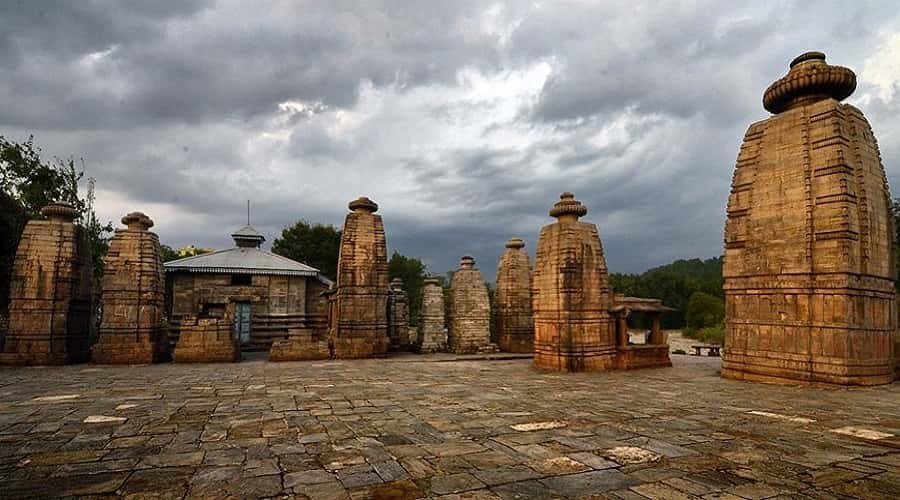
Often referred to as the “Vaidyanath Temple” or the “Heart of Kumaon”, this magnificent temple complex is a land of unparalleled historical significance and profound spiritual heritage. Located on the banks of the Gomati River at an elevation of 1,125 metres, Baijnath is home to a cluster of 18 Hindu temples built between the 9th and 12th centuries CE.
What makes Baijnath truly special is its extraordinary diversity—from the main shrine dedicated to Lord Shiva as Vaidyanath to the 17 subsidiary shrines that house deities including Parvati, Nritya Ganapati, Kartikeya, Narasimha, Brahma, Mahishasurmardini, Sapta Nartikas, Surya, Garuda, and Kubera. The temple complex is renowned for possibly being one of the very few temples in the world where Parvati is depicted with her husband Shiva. The complex is a protected monument under the Archaeological Survey of India and forms part of the Shiva Heritage Circuit in Kumaon.
The name “Baijnath” is derived from “Vaidyanath”, meaning “Lord of Physicians” — a reference to Lord Shiva in his healing aspect. The town was historically known as Kartikeypura and served as the capital of the Katyuri dynasty from the 9th to 12th centuries AD.
The journey to Baijnath Temple, which begins from the spiritual hubs of Kathgodam or Almora, is an accessible yet profoundly rewarding adventure through sacred rivers, ancient temples, and the majestic Himalayan wilderness. It offers a profound sense of peace, spiritual connection, and a deep appreciation for the rich cultural heritage of Uttarakhand.
Key Information at a Glance
| Aspect | Details |
|---|---|
| Location | Baijnath, Bageshwar District, Uttarakhand |
| Type | Hindu Temple Complex |
| Dedicated To | Lord Shiva (Vaidyanath) |
| Established By | Katyuri Kings |
| Completed | 12th century CE (main temple: 1204 CE) |
| Coordinates | 29°55′12″N 79°37′30″E / 29.92°N 79.625°E |
| Elevation | 1,125 m (3,691 ft) |
| Number of Temples | 18 |
| Architecture | Nagara Style |
| Official Language | Hindi |
| Regional Language | Kumaoni |
| Vehicle Registration Code | UK-02 (Almora) / UK-03 (Champawat) |
| Nearest Airport | Pantnagar Airport (~170 km) |
| Nearest Railway Station | Kathgodam (~100 km) |
| Best Time to Visit | March–June & September–November |
| Temple Timings | 6:00 AM – 7:00 PM (Summer); 6:00 AM – 6:00 PM (Winter) |
| Entry Fee | Free |
History of Baijnath Temple
Ancient Roots in the Katyuri Dynasty
Baijnath Temple has a history that dates back to the ancient Katyuri dynasty, the earliest ruling dynasty of the central Himalayan region, who had shifted their capital from Joshimath to this place sometime in the 8th century AD. The town was identified as ancient Kartikeypura and served as the seat of the Katyuri kings.
The temple complex was constructed between the 9th and 12th centuries CE by the Katyuri rulers. Inscriptions dating back to 1202 CE have been found in the temple complex. According to the ASI Board, these temples can be assigned to 800–1299 CE during the time of the Kumaon Katyuri kings, rulers of ancient Kartikeypura.
The Construction by Ahuka and Manyuka
The main Vaidyanath Temple was built in 1204 A.D. by two local merchants named Ahuka and Manyuka. The temple has been continuously under worship ever since its construction. Two long inscriptions in the porch of the temple provide details about its construction.
The Chand Dynasty Restoration
The temple complex was restored and rebuilt during the reign of King Gyan Chand of the Chand dynasty. The queens of the Chand dynasty restored the temple complex in the 16th century.
The Rohilla Invasion
The temple complex was plundered by the Rohillas in 1743–1744 CE, which led to the destruction of the Shikhar of the main shrine. Despite this destruction, the temple complex has survived and continues to be an important pilgrimage site.
The Legend of Baijnath
Baijnath is believed to have gotten its name from Kilmora, a kind of sorrel, a short plant commonly found here, which was said to be used for washing the utensils of the sun temple at Katarmal. The town has attracted several eminent people through the ages, including Swami Vivekananda, Rabindranath Tagore, Uday Shankar, and Ravi Shankar. Govind Ballabh Pant, a noted freedom fighter and first Chief Minister of Uttar Pradesh, was born in Baijnath.
Geography of Baijnath Temple
Location and Topography
Baijnath Temple is situated at an elevation of 1,125 metres (3,691 feet) above sea level in the Bageshwar district of Uttarakhand. The temple complex is located in the Garur Valley on the banks of the Gomati River.
| Feature | Details |
|---|---|
| Location | Garur Valley, Bageshwar district, Kumaon region, Uttarakhand |
| Coordinates | 29°55′12″N 79°37′30″E |
| Elevation | 1,125 m (3,691 ft) |
| Terrain | River valley, Himalayan foothills |
| Key River | Gomati River |
| Distance from Kausani | ~16–19 km |
| Distance from Bageshwar | ~26 km |
The Gomati River
The Gomati River is the lifeline of Baijnath. The temple complex sits beautifully along its banks, and the riverside setting adds to the spiritual and scenic beauty of the site. The river is considered sacred, and pilgrims often perform bathing rituals in its waters.
The Himalayan Panorama
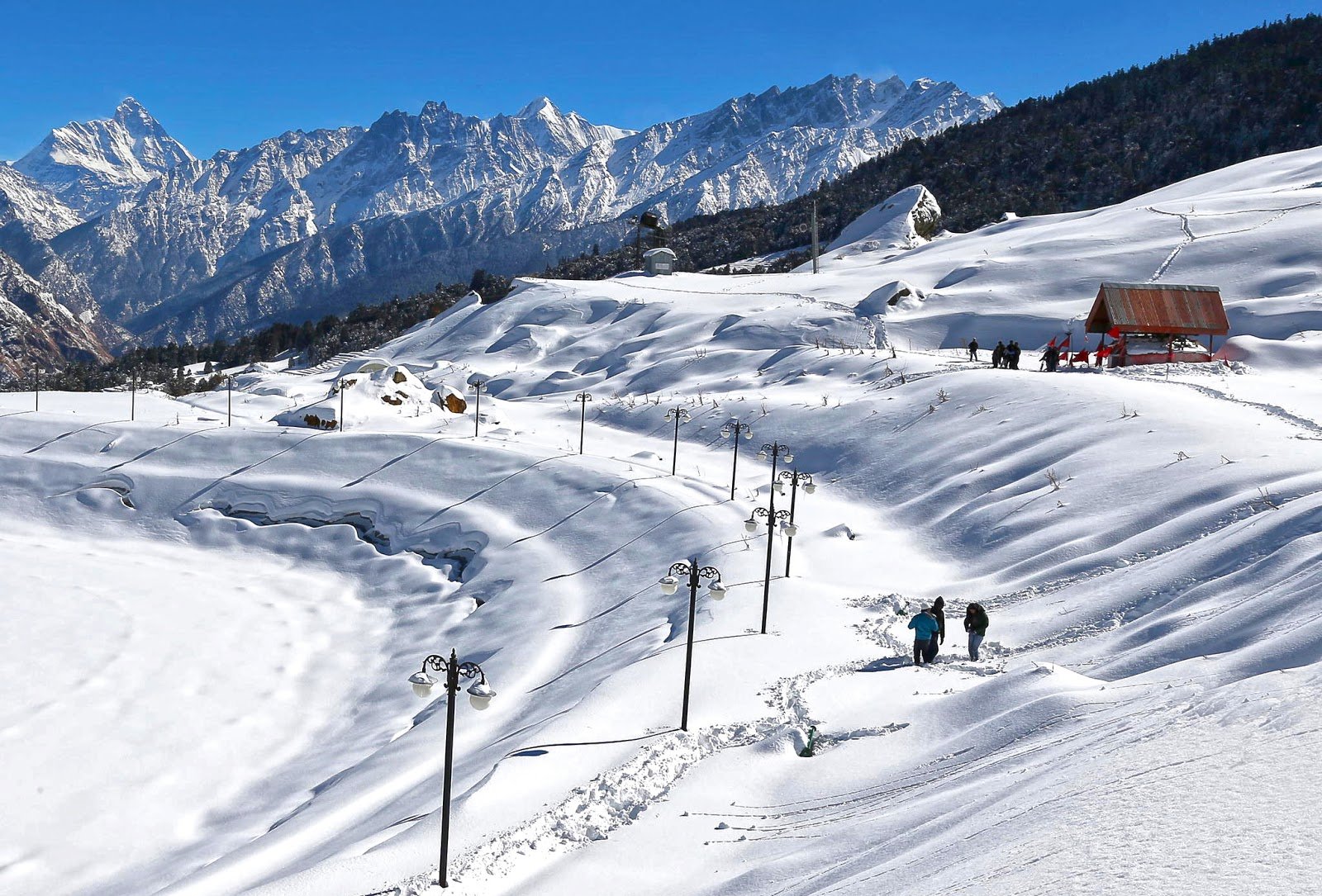
Baijnath is situated on a 5-km-long ridge at the southern edge of the Kashyap Hills in the shape of a horse saddle, with the snow-capped Himalayas forming a spectacular backdrop. The town offers breathtaking views of the Trishul, Nanda Devi, and Nanda Kot peaks.
Major Landmarks and Valleys
- Garur Valley – The biodiversity-rich valley that surrounds Baijnath
- Kashyap Hills – The ridge on which the town is situated
- Lal Mandi Fort – An easy trek from Baijnath offering 360-degree views
- Gomati River – The sacred river on whose banks the temple stands
Flora and Fauna
Flora
Baijnath is blessed with the rich biodiversity typical of the Kumaon Himalayan region. The temple is surrounded by lush forests and fruit orchards, offering exceptional nature trails and opportunities to spot rare species of flowers.
Vegetation:
- Kilmora (Sorrel) – A short plant commonly found here, from which Baijnath is believed to have gotten its name
- Pine and Oak Forests – Dominant in the surrounding hills
- Fruit Orchards – Apple and other fruit orchards are common in the region
- Rare Flora – The Garur Valley is biodiversity-rich with rare flora along nature trails
Fauna
Baijnath is a birdwatcher’s paradise, offering a wonderful opportunity to spot rare species of birds and butterflies.
Birds:
- Himalayan Monal – Uttarakhand’s state bird
- Various Himalayan bird species – The region is rich in avian diversity
- Butterflies – Rare species of butterflies are found in the surrounding forests
Mammals:
- Leopard – The apex predator of the region
- Barking Deer (Kakar)
- Musk Deer
- Himalayan Black Bear
- Red Fox
The Garur Valley is described as biodiversity-rich with rare flora and fauna along nature trails.
Protected Areas
| Protected Area | Type | Significance |
|---|---|---|
| Binsar Wildlife Sanctuary | Wildlife Sanctuary | Home to leopard, barking deer, and Himalayan birds |
| Nanda Devi Biosphere Reserve | Biosphere Reserve | UNESCO Site, accessible from the region |
Religious Beliefs and Significance
The Land of Vaidyanath
Baijnath Temple is rightly called the “Abode of Vaidyanath” — Lord Shiva in his aspect as the “Lord of Physicians”. The temple complex is dedicated primarily to Lord Shiva as Vaidyanath, who is represented in the cella as a Shiva lingam.
The Main Vaidyanath Temple
The main Vaidyanath Temple exemplifies North Indian Nagara-style architecture with a Pancharatha plan, featuring intricate stone carvings, a sacred Shiva lingam, a life-size statue of Kal Bhairava, and depictions of deities such as Nritya Ganapati, Kartikeya, and Narasimha, alongside a notable standing statue of Goddess Parvati in grey schist.
The Parvati Connection
The Baijnath Temple Complex is renowned for possibly being one of the very few temples in the world where Parvati is depicted with her husband Shiva. This unique feature makes the temple especially significant for devotees of the divine feminine.
Other Deities Worshipped
Other deities worshipped at the complex include Parvati, Nritya Ganapati, Karttikeya, Narsimha, Brahma, Mahishasurmardini, Sapta Nartikas, Surya, Garuda, and Kubera.
The Architecture
The temples are built in the curvilinear (Nagara) style. Most of the temples are unichambered temple (mulaprasada) structures, and a few have the pavilion-type hall (mandapa), with pillars on the corners to support the terraced roof. The main temple has a five-storeyed shikhara, a Garbh Griha, and a mandapam. The mandapam has beautiful carvings depicting scenes from the Ramayana, Mahabharata, and other Hindu mythology.
Festivals and Celebrations
Baijnath Temple is a site of vibrant festivals and celebrations:
- Maha Shivratri – The most important festival, attracting thousands of pilgrims
- Makar Sankranti – Pilgrims arrive here on this occasion
- Bhairav Fair – Organised at the temple during the month of Shravan
- Local Fairs – Held in Kartik/Magh, attracting pilgrims and festivities
Worship Method
Worship at Baijnath Temple is carried out according to traditional Hindu customs. Priests offer pooja twice a day, in the morning and evening. The pooja includes offerings of flowers, fruits, incense, and holy water to appease the Lord. Followers of Hinduism also perform bathing rituals in the nearby river, meditate in the peaceful surroundings, and chant mantras dedicated to Lord Shiva.
How to Reach Baijnath Temple
Baijnath Temple is well connected by road and can be easily reached from major cities in Uttarakhand and North India.
By Air
The nearest airport is Pantnagar Airport, approximately 170 km from Baijnath Temple. Pantnagar Airport is well connected to Delhi with daily flights. Taxis are available from the airport to Baijnath.
| Route | Distance | Travel Time |
|---|---|---|
| Pantnagar Airport → Baijnath | ~170 km | 5–6 hours |
By Train
The nearest railway station is Kathgodam, approximately 100 km from Baijnath Temple. Kathgodam is well connected by railway networks with major destinations in India, including Delhi, Lucknow, Kolkata, and Dehradun. Taxis and buses are available from Kathgodam to Baijnath.
| Route | Distance | Travel Time |
|---|---|---|
| Kathgodam → Baijnath | ~100 km | 3–4 hours |
By Road
Baijnath Temple is well connected by motorable roads with major destinations of Uttarakhand state. Buses are available from major cities like Dehradun, Rishikesh, Haridwar, and Delhi.
| Route | Distance | Travel Time |
|---|---|---|
| Delhi → Baijnath | ~445 km | 10–12 hours |
| Kathgodam → Baijnath | ~100 km | 3–4 hours |
| Almora → Baijnath | ~60 km | 2–3 hours |
| Bageshwar → Baijnath | ~26 km | 1 hour |
| Kausani → Baijnath | ~16–19 km | 45 minutes |
Bus Services:
- Buses to Baijnath are available from ISBT Kashmiri Gate, New Delhi
- Buses and taxis to Baijnath are easily available from Kathgodam, Almora, Bageshwar, and Kausani
Local Transport
Within Baijnath and the surrounding areas, local transport options include:
- Taxis and shared jeeps for local travel
- Walking to explore the temple complex, riverside, and local market
- Buses connecting major towns and villages
- Local guides – Available at the site or from Bageshwar to understand the history and carvings
Weather and Best Time to Visit
Climate Overview
Baijnath experiences a subtropical highland climate with distinct seasons, ranging from pleasant summers to cold winters. The town’s elevation of 1,125 metres ensures comfortable temperatures for most of the year.
Seasonal Breakdown
| Season | Months | Weather | Suitability |
|---|---|---|---|
| Summer | April–June | Pleasant, 10–30°C | ⭐ Best |
| Monsoon | July–August | Heavy rainfall, slippery paths | Avoid |
| Autumn | September–November | Crisp air, clear views | ⭐ Best |
| Winter | December–March | Cold, 2–15°C, occasional snowfall | Good for winter scenery |
Best Time to Visit
| Season | Months | Highlights |
|---|---|---|
| Summer | March–June | Pleasant weather, clear views, ideal for temple visits and sightseeing |
| Autumn | September–November | Post-monsoon clarity, crisp air, best mountain views |
| Winter | October–March | Cold but pleasant, occasional snowfall, peaceful atmosphere |
Note: The best time to visit Baijnath Temple is from March to June and September to November. According to Uttarakhand Tourism, the summer season (April–June) is the best time to visit Baijnath, but if you travel in winter (October–March), you can enjoy snowfall. The best time to visit Baijnath is from March to May and mid-September to December. Avoid visiting during the heavy monsoon (July–August) due to slippery paths and possible road disruptions.
Temperature
| Season | Daytime Temperature | Nighttime Temperature |
|---|---|---|
| Summer (March–May) | 11°C to 25°C | 8°C to 15°C |
| Monsoon (June–August) | 15°C to 25°C | 12°C to 18°C |
| Autumn (Sept–Nov) | 10°C to 22°C | 5°C to 12°C |
| Winter (Dec–Feb) | 2°C to 15°C | 0°C to 8°C |
Nearby Places
| Destination | Distance from Baijnath | Highlights |
|---|---|---|
| Kausani | ~16–22 km | “Switzerland of India,” Anasakti Ashram |
| Bageshwar | ~26 km | Bagnath Temple, confluence of rivers |
| Almora | ~60 km | Cultural capital of Kumaon |
| Ranikhet | ~75 km | Hill station, apple orchards, pine forests |
| Jageshwar | ~90 km | Ancient Shiva temples, UNESCO tentative list |
| Chitai Golu Devta Temple | ~65 km | Famous temple of justice, wish-fulfilling deity |
| Binsar | ~70 km | Wildlife sanctuary, Himalayan views |
| Chaukori | ~80 km | Tea gardens, Himalayan views |
| Munsiyari | ~150 km | Gateway to Milam Glacier |
| Pindari Glacier | ~90 km (trek) | High-altitude glacier, trekking destination |
Distance from Major Cities
| City | Distance (Approx.) | Travel Time |
|---|---|---|
| Delhi | ~445 km | 10–12 hours |
| Kathgodam | ~100 km | 3–4 hours |
| Almora | ~60 km | 2–3 hours |
| Bageshwar | ~26 km | 1 hour |
| Kausani | ~16–19 km | 45 minutes |
| Nainital | ~120 km | 4–5 hours |
| Dehradun | ~350 km | 9–10 hours |
Frequently Asked Questions (FAQs)
General Questions
Q1: What is Baijnath Temple?
A: Baijnath Temple is a cluster of 18 ancient Hindu temples in the Bageshwar district of Uttarakhand, dedicated primarily to Lord Shiva in his form as Vaidyanath.
Q2: Where is Baijnath Temple located?
A: Baijnath Temple is located in the Garur Valley of the Bageshwar district, Uttarakhand, on the banks of the Gomati River, at an elevation of 1,125 metres.
Q3: What is the elevation of Baijnath Temple?
A: Baijnath Temple is situated at an elevation of 1,125 metres (3,691 feet) above sea level.
Q4: What is Baijnath Temple famous for?
A: Baijnath Temple is famous for its ancient Katyuri-era stone temples, Nagara-style architecture, and being one of the few temples where Parvati is depicted with Shiva.
Q5: Who built Baijnath Temple?
A: The temple complex was built by the Katyuri kings between the 9th and 12th centuries CE. The main temple was constructed in 1204 A.D. by two local merchants named Ahuka and Manyuka.
Q6: What is the best time to visit Baijnath Temple?
A: The best time is March–June and September–November.
Q7: What is the nearest airport to Baijnath Temple?
A: The nearest airport is Pantnagar Airport, approximately 170 km away.
Q8: What is the nearest railway station to Baijnath Temple?
A: The nearest railway station is Kathgodam, approximately 100 km away.
Q9: How far is Baijnath Temple from Delhi?
A: Baijnath Temple is approximately 445 km from Delhi, about a 10–12 hour drive.
Q10: What is the vehicle registration code for Baijnath?
A: The vehicle registration code is UK-02 (Almora district) or UK-03 (Champawat district).
Q11: What are the temple timings?
A: The temple is open from 6:00 AM to 7:00 PM in summer and 6:00 AM to 6:00 PM in winter.
Q12: What is the entry fee for Baijnath Temple?
A: There is no entry fee to visit the temple complex.
Q13: How many temples are in the Baijnath Temple Complex?
A: There are 18 Hindu temples in the Baijnath Temple Complex.
Q14: What deities are worshipped at Baijnath Temple?
A: The main deity is Lord Shiva as Vaidyanath. Other deities include Parvati, Nritya Ganapati, Kartikeya, Narsimha, Brahma, Mahishasurmardini, Sapta Nartikas, Surya, Garuda, and Kubera.
Q15: What is the architectural style of Baijnath Temple?
A: The temples are built in the Nagara (curvilinear) style with intricate stone carvings.
Q16: What is the significance of the Parvati statue at Baijnath?
A: Baijnath is one of the very few temples in the world where Parvati is depicted with her husband Shiva.
Q17: What festivals are celebrated at Baijnath Temple?
A: Maha Shivratri, Makar Sankranti, and the Bhairav Fair (during Shravan) are the main festivals.
Q18: What is the legend behind Baijnath’s name?
A: Baijnath is believed to have gotten its name from Kilmora, a kind of sorrel plant found here that was used for washing the utensils of the sun temple at Katarmal.
Q19: What wildlife can be found near Baijnath Temple?
A: The region is home to leopard, barking deer, musk deer, Himalayan black bear, red fox, and various bird species including the Himalayan Monal.
Q20: How do I reach Baijnath Temple from Kathgodam?
A: Baijnath is about 100 km from Kathgodam, reachable by road via Almora. Buses and taxis are readily available.
Q21: What is the mythological significance of Baijnath Temple?
A: The temple is dedicated to Lord Shiva as Vaidyanath (Lord of Physicians), and the complex is part of the Shiva Heritage Circuit in Kumaon.
Q22: What is the local language of Baijnath?
A: The official language is Hindi, and the regional language is Kumaoni.
Q23: Is Baijnath a good destination for offbeat travellers?
A: Yes, Baijnath is an offbeat destination perfect for those seeking ancient temple architecture, Himalayan scenery, and spiritual experiences away from crowded tourist spots.
Q24: What is the distance from Kausani to Baijnath?
A: The distance from Kausani to Baijnath is approximately 16–22 km.
Q25: What is the distance from Bageshwar to Baijnath?
A: The distance from Bageshwar to Baijnath is approximately 26 km.
Q26: What is the significance of the Gomati River?
A: The Gomati River is considered sacred, and the temple complex sits on its banks. Pilgrims perform bathing rituals in its waters.
Q27: What food is available near Baijnath Temple?
A: Local Kumaoni dishes are available in nearby eateries in Baijnath town and Bageshwar.
Q28: Is photography allowed in Baijnath Temple?
A: Photography may be restricted inside the temple. It is advisable to check with the temple authorities.
Q29: Can I stay near Baijnath Temple?
A: Yes, accommodation is available in Baijnath, Kausani, and Bageshwar.
Q30: What is the best way to explore Baijnath Temple?
A: The best way is by walking — explore the temple complex, riverside, and local market at your own pace. A local guide can enhance the experience.
Essential Tips for Visitors
- Best Time: Plan your visit between March–June or September–November for pleasant weather
- Footwear: Wear comfortable, non-slip footwear as stone steps can be uneven and slippery when wet
- Clothing: Carry light woollens even in summer; heavy woollens in winter
- Monsoon Caution: Avoid visiting during July–August due to heavy rainfall and slippery paths
- Temple Etiquette: Remove shoes where required, dress modestly, and follow instructions on photography
- Local Cuisine: Try local Kumaoni dishes like aloo ke gutke, gahat, chainsoo, and mandua roti
- Hydration: Carry water, especially if exploring on foot
- Accommodation: Book in advance during peak seasons (May–June and September–October)
- Respect Local Culture: Baijnath is a sacred site; maintain the sanctity of temples and natural surroundings
- Leave No Trace: Respect the fragile Himalayan ecosystem
- Inform Family: Let someone know your itinerary, especially if trekking in remote areas
- Weather Updates: Check weather forecasts before travelling, especially during monsoon and winter
- Guided Tours: Hire a local guide to understand the iconography and history of the temples
- Photography: Respectful photography is allowed; avoid flash inside the sanctum
Plan Your Baijnath Temple Adventure with Discover Uttarakhand
At Discover Uttarakhand, we’ve been organising unforgettable Himalayan journeys since 1997. As a trusted local operator with deep knowledge of the Kumaon region, we offer:
✅ Customised Baijnath Temple tour packages
✅ Combined itineraries with Kausani, Bageshwar, Almora, and Jageshwar
✅ Experienced local guides and temple historians
✅ Comfortable transport with experienced hill drivers
✅ All necessary permits and arrangements
✅ Quality accommodation and nutritious meals
✅ 24/7 customer support throughout your journey
Recommended Baijnath Temple Packages
| Package | Duration | Starting Point | Highlights |
|---|---|---|---|
| Baijnath Temple Darshan | 3 Days / 2 Nights | Kathgodam | Baijnath Temple, Kausani, Bageshwar |
| Kumaon Heritage Expedition | 5 Days / 4 Nights | Kathgodam | Baijnath, Jageshwar, Almora, Binsar |
| Baijnath Spiritual Journey | 6 Days / 5 Nights | Delhi | Baijnath, Bageshwar, Kausani, Chitai Golu Devta |
| Baijnath Complete Exploration | 7 Days / 6 Nights | Delhi | Baijnath, Kausani, Ranikhet, Almora, Jageshwar |
📞 Call / WhatsApp: +91-9997187178, 9760222178, 8171977178
📍 Visit Our Office: Himalayan Colony, opposite DSVV, Haripur Kalan, Haridwar, Motichur Range, Uttarakhand 249411
🌐 Website: www.discover-uttarakhand.com
📧 Email: discoveruttarakhand.mail@gmail.com
Plan your journey to Baijnath Temple with proper preparation and respect for this sacred land where ancient architecture and spirituality come alive. Experience the divine presence of the Himalayas in one of India’s most historically significant and naturally breathtaking destinations.
Discover Uttarakhand – Your Local Partner for Unforgettable Himalayan Journeys Since 1997 🏔️