Overview: The Roaring Wonder of Kumaon
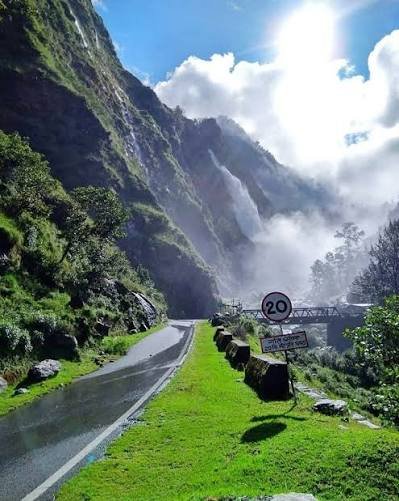
Tucked away in the lush green landscapes of the Pithoragarh district, Birthi Waterfall is one of Kumaon’s most spectacular and offbeat natural wonders. Often described as a “hidden gem” of the Kumaon Himalayas, this majestic waterfall is a forceful, thunderous plunge that cascades from a height of over 400 feet (126–148 metres) down a sheer rock face.
Located approximately 33 kilometres from Munsiyari on the Thal–Munsiyari road, Birthi Waterfall is not a gentle, misty veil of water — it’s a full-throated spectacle, a torrent of water that sends a fine mist across the landscape and fills the valley with its powerful roar. You often hear it long before you see it.
Unlike commercial waterfalls hemmed in by concrete viewing platforms and souvenir shops, Birthi feels raw and untamed. There is no grand entrance gate, no long lines, no fighting for a photo op. Its relative remoteness filters out casual crowds, leaving the falls for those who truly appreciate the reward at the end of a long, scenic drive.
Whether you are a nature lover, a photography enthusiast, a trekker, or a traveller seeking a peaceful escape, Birthi Waterfall promises an experience that stays with you forever.
Key Information at a Glance
History and Cultural Significance of Birthi
The Origin of the Name
The name “Birthi” is derived from the village of the same name, whose daily life is based around this powerful water source. The name is speculated to be connected with words in the local language that mean “purity” or “freshness” — words that perfectly describe its crystal-clear waters.
A Living Water Shrine
Long before it became a traveller stop on the Munsiyari road, Birthi was simply a known forest cascade on local walking and grazing routes — a place where shepherds paused, and where people drew water or rested during long hill crossings.
In Kumaon, waterfalls are often looked at as living water shrines rather than “tourist points”. Locals treat Birthi as a fresh, sacred flow that keeps the forest alive and signals the health of the mountain season.
Seasonal Rhythms
During the monsoon, when the fall roars in full force, villagers read it as the valley “waking up,” and during drier months the steady ribbon is seen as a sign of balance in the hills.
A Timeless Stop
Birthi has long been part of the everyday landscape for villages in the Johar and Darma valley approach belt. Before it became a recognised tourist spot, it served as a halt where travellers and merchants met as they journeyed into the mountains. Even today, many families visiting Munsiyari consider a Birthi stop a small but meaningful part of the route — a cool breath of forest and water before the higher Himalayan climb.
Geography of Birthi Waterfall
Location and Topography
Birthi Waterfall is located in the Birthi village of the Pithoragarh district in the Kumaon region of Uttarakhand. The waterfall is situated in the Munsiyari Tehsil, approximately 33 kilometres from Munsiyari town.
| Feature | Details |
|---|---|
| Coordinates | Approx. 29.8°N, 80.2°E |
| Elevation | ~400 m (1,312 ft) above sea level |
| Height | 126–148 m (approx. 400–484 ft) |
| District | Pithoragarh, Uttarakhand |
| Tehsil | Munsiyari |
| Nearest Town | Tejam (14 km), Munsiyari (33 km) |
The Birthi River System
The waterfall is fed by the Birthi River system and plunges from a steep rocky wall into a narrow gorge surrounded by pine and mixed Himalayan forest. The falls sit close to the main road, so even a short stop gives you a solid nature hit without demanding a full-day hike.
The Trek to the Base
A 2–3 km trek from the main road leads you to the base of the waterfall. The path is a trekker’s delight, winding through trees and hills, with stunning views of the surrounding landscape. The trail is of moderate difficulty, making it suitable for both beginners and experienced trekkers. The trek offers stunning panoramic views of the surrounding landscapes, including the Panchchuli range and the Dhauliganga valley.
Flora and Fauna of Birthi
Flora — A Botanical Paradise
The area around Birthi Waterfall is lush with diverse Himalayan flora:
Dominant Vegetation:
- Pine and mixed Himalayan forests — surrounding the waterfall
- Rhododendrons — vibrant blooms in spring
- Oak and Deodar trees — adding to the rich biodiversity
- Alpine flora — found in the higher elevations
The region’s dense forests and lush green mountains make it a perfect spot for nature lovers. The trek to the waterfall passes through green nature where you can trek through trees, rivers, and hills.
Fauna — Wildlife in the Region
The Birthi area falls within the rich biodiversity zone of the Kumaon Himalayas. The region is home to:
Birds:
- Himalayan Monal — the colourful state bird of Uttarakhand
- Various resident and migratory bird species
Mammals:
- Langurs — commonly seen in the surrounding forests
- Small mammals typical of the Kumaon region
Nearby Askot Wildlife Sanctuary:
Located approximately 50 km from Birthi, the Askot Wildlife Sanctuary is a haven for nature and wildlife lovers.
Religious Beliefs and Sacred Sites
A Sacred Spot in Hindu Mythology
According to Hindu mythology, the waterfall is believed to be a sacred spot where Lord Shiva and Goddess Parvati took a bath. This mythological connection adds a profound spiritual dimension to the site.
The Healing Properties
Birthi Waterfall is considered a sacred spot by locals, who believe that the waterfall has healing properties. The waterfall is believed to have a high spiritual energy, making it an ideal spot for meditation and yoga.
Shiva Temple
There is a small Shiva temple near the waterfall, which is worshipped by locals and tourists alike.
Local Beliefs
In Kumaon, waterfalls are often looked at as living water shrines rather than “tourist points”. Locals treat Birthi as a fresh, sacred flow that keeps the forest alive and signals the health of the mountain season.
How to Reach Birthi Waterfall
By Air — Nearest Airports
| Airport | Distance | Details |
|---|---|---|
| Pantnagar Airport | ~232 km | Nearest airport; connected to Delhi |
| Indira Gandhi International Airport, Delhi | ~500 km | Major international hub |
From Pantnagar Airport:
- Hire a taxi to Munsiyari or directly to Birthi (approx. 7–8 hours)
By Train — Nearest Railway Stations
| Station | Distance | Details |
|---|---|---|
| Kathgodam Railway Station | ~196 km | Nearest major railway station |
| Tanakpur Railway Station | ~274 km | Alternative station |
From Kathgodam to Birthi:
- Hire a taxi or take a bus to Munsiyari (approx. 8–9 hours)
- From Munsiyari, continue to Birthi (33 km)
By Road (Most Popular)
| Route | Distance | Travel Time |
|---|---|---|
| Delhi → Birthi | ~500–550 km | 12–14 hours |
| Kathgodam → Birthi | ~196 km | 8–9 hours |
| Munsiyari → Birthi | ~33 km | 1 hour |
| Tejam → Birthi | ~14 km | 30 minutes |
| Chaukori → Birthi | ~65 km | 2 hours |
Route from Delhi:
Delhi → Moradabad → Rampur → Haldwani → Kathgodam → Almora → Bageshwar → Tejam → Birthi
Transport Options:
- Private Taxi: Most convenient and flexible
- State Transport Buses: Available from Kathgodam and Haldwani to Munsiyari
- Self-Drive: Scenic but challenging mountain roads; drive cautiously
Last Mile Connectivity:
From the main Thal–Munsiyari road, a short 2–3 km trek leads to the waterfall. The trek takes approximately 45 minutes to an hour.
Distance from Major Cities
| City | Distance to Birthi | Travel Time |
|---|---|---|
| Delhi | ~500–550 km | 12–14 hours |
| Kathgodam | ~196 km | 8–9 hours |
| Haldwani | ~200 km | 8–9 hours |
| Pithoragarh | 94 km | 3–4 hours |
| Munsiyari | ~33 km | 1 hour |
| Tejam | ~14 km | 30 minutes |
| Chaukori | ~65 km | 2 hours |
Weather and Best Time to Visit
Climate Overview
Birthi Waterfall experiences a temperate highland climate with distinct seasons. The best time to visit depends on what you want to experience.
Seasonal Breakdown
Best Time to Visit by Season
| Season | Months | Suitability | Best For |
|---|---|---|---|
| Summer | March–June | ⭐ Best | Pleasant weather, clear views, comfortable trekking |
| Autumn | September–November | ⭐ Best | Post-monsoon clarity, lush greenery, photography |
| Monsoon | July–September | ⭐ Good | Waterfall at its peak flow, dramatic views |
| Winter | December–February | ⭐ Moderate | Fewer crowds, but cold weather |
Why Visit in Summer (March–June)
- Pleasant weather with clear skies
- Comfortable trekking conditions
- Ideal for photography and sightseeing
Why Visit in Autumn (September–November)
- Post-monsoon clarity with lush greenery
- Waterfall still has good flow
- Perfect for photography
Why Visit in Monsoon (July–September)
- The waterfall is at its peak flow — a dramatic, thunderous spectacle
- Lush greenery and vibrant landscapes
- Note: The trail can be slippery; caution is advised
Why to Avoid Peak Winter (December–February)
Packing Guide
| Category | Items |
|---|---|
| Clothing | Light cotton clothes (summer), light woolens (autumn), comfortable walking shoes |
| Essentials | Sunscreen, sunglasses, hat, power bank, camera |
| Documents | Valid ID proof (Aadhaar, Passport) |
| Seasonal | Raincoat (monsoon), heavy woollens (winter) |
Nearby Places to Visit
Things to Do at Birthi Waterfall
1. Witness the Thunderous Waterfall
The highlight of any visit is experiencing the sheer power of Birthi Waterfall. Standing at its base, close enough to feel the immense power of the water as it crashes into the plunge pool, is a humbling experience.
2. The 2–3 km Trek
The trek to the waterfall is a trekker’s delight — a moderate 2–3 km hike through lush forests and hills. The trail offers stunning panoramic views of the surrounding landscape, including the Panchchuli range and the Dhauliganga valley.
3. Photography
Birthi Waterfall offers endless photography opportunities:
- The waterfall in all its thundering glory
- The mist and rainbows created by the spray
- The lush green surroundings and Himalayan vistas
- Sunrise and sunset when sunlight hits the falling water
4. Picnic by the Waterfall
The area around the base of the waterfall is perfect for a picnic. The natural swimming pool and cool mist create a refreshing atmosphere.
5. Birdwatching
The dense forests around Birthi are home to various Himalayan bird species.
6. Visit the Shiva Temple
Pay respects at the small Shiva temple near the waterfall.
7. Explore Nearby Villages
Visit the charming village of Birthi and experience traditional Kumaoni hospitality.
Accommodation Options
Discover Uttarakhand Recommendation: For the most convenient access, stay at the KMVN Tourist Resthouse in Birthi. For more options, consider staying in Munsiyari (33 km away) and visiting Birthi as a day trip.
Local Cuisine — A Taste of Kumaon
Birthi and the surrounding region offer authentic Kumaoni cuisine.
Must-Try Kumaoni Dishes
| Dish | Description |
|---|---|
| Aloo Ke Gutke | Spiced fried potatoes, a Kumaoni speciality |
| Bhatt Ki Churkani | Black soybean curry |
| Chainsoo | Protein-rich black gram curry |
| Mandua Roti | Finger millet flatbread |
| Gahat Ki Dal | Horse gram lentil soup |
| Bal Mithai | Famous chocolate-like sweet from Kumaon |
Where to Eat
- Local eateries — simple, authentic Kumaoni meals
- KMVN Tourist Rest House — offers meals to guests
- Munsiyari — wider range of restaurants (33 km away)
Frequently Asked Questions (FAQs)
General Questions
Q1: Where is Birthi Waterfall located?
Birthi Waterfall is located in Birthi village in the Munsiyari Tehsil of Pithoragarh district, Uttarakhand. It is approximately 33 km from Munsiyari.
Q2: What is the height of Birthi Waterfall?
Birthi Waterfall cascades from a height of approximately 126–148 metres (400–484 feet).
Q3: What is the best time to visit Birthi Waterfall?
The best time to visit is from March to June (summer) and September to November (autumn), when the weather is pleasant and the views are clear.
Q4: Is there an entry fee for Birthi Waterfall?
Entry is usually free. Occasionally, a small local Panchayat ticket (around ₹20) may be collected.
Q5: How long is the trek to Birthi Waterfall?
The trek from the main road to the waterfall is approximately 2–3 km and takes about 45 minutes to an hour.
Q6: Is the trek difficult?
The trek is of moderate difficulty, making it suitable for both beginners and experienced trekkers.
Q7: Is Birthi Waterfall safe during the monsoon?
During heavy rain, the trail can become slippery. It is advisable to skip the trail if rain is heavy.
Q8: Is Birthi Waterfall accessible in winter?
The waterfall may freeze in winter, and the weather can be very cold. It is accessible but not recommended for the faint-hearted.
Travel Logistics
Q9: How can I reach Birthi Waterfall from Delhi?
You can reach Birthi Waterfall by:
- Road: Via Kathgodam → Almora → Bageshwar → Tejam → Birthi (~500–550 km, 12–14 hours)
- Train: Take a train to Kathgodam (196 km) and then a taxi/bus
- Air: Fly to Pantnagar (232 km) and then a taxi/bus
Q10: What is the distance between Delhi and Birthi Waterfall?
The distance from Delhi to Birthi Waterfall is approximately 500–550 km.
Q11: What is the nearest railway station to Birthi Waterfall?
The nearest railway station is Kathgodam Railway Station, approximately 196 km away.
Q12: What is the nearest airport to Birthi Waterfall?
The nearest airport is Pantnagar Airport, approximately 232 km away.
Q13: Is there accommodation available at Birthi?
Yes, the KMVN Tourist Resthouse offers basic accommodation in Birthi. Homestays and guesthouses are also available.
Q14: What are the nearby places to visit?
Nearby places include Munsiyari (33 km), Kalamuni Top (20 km), Askot Wildlife Sanctuary (50 km), and Dharchula (90 km).
Practical Information
Q15: What should I pack for a visit to Birthi Waterfall?
Pack comfortable walking shoes, layered clothing, sunscreen, a camera, and valid ID proof. For the monsoon, carry a raincoat. For winter, bring warm clothes.
Q16: What is the local language spoken in Birthi?
The official language is Hindi. The regional language is Kumaoni. English is understood in tourist areas.
Q17: Is Birthi Waterfall suitable for families?
Yes, Birthi Waterfall is suitable for families. However, the moderate trek may not be suitable for elderly visitors or very young children. The area around the base of the waterfall is perfect for a picnic.
Q18: Can I swim in the waterfall?
There is a natural swimming pool at the base of the waterfall. However, caution is advised as the water is very cold, and currents can be strong.
Q19: Is there mobile connectivity at Birthi?
Mobile connectivity can be patchy in the area. BSNL tends to have the best coverage.
Q20: How can I book a tour to Birthi Waterfall?
Tours can be booked through:
- Local tour operators in Munsiyari and Pithoragarh
- Discover Uttarakhand for customised travel packages
Plan Your Birthi Waterfall Visit with Discover Uttarakhand
At Discover Uttarakhand, we’ve been organising unforgettable Himalayan journeys since 1997. As a trusted local operator with deep knowledge of the Kumaon region and its hidden gems, we offer:
✅ Customised Kumaon tour packages (3 to 7 days)
✅ Combined itineraries covering Birthi Waterfall, Munsiyari, Kalamuni Top, and Askot Wildlife Sanctuary
✅ Comfortable transport with experienced hill drivers
✅ Verified accommodations in Munsiyari and Birthi (budget to luxury)
✅ Local guides for waterfall treks and sightseeing
✅ 24/7 customer support throughout your journey
Recommended Kumaon Packages
| Package | Duration | Starting Point | Highlights |
|---|---|---|---|
| Birthi Waterfall & Munsiyari Escape | 3 Nights / 4 Days | Kathgodam | Birthi Waterfall, Munsiyari, Panchachuli views |
| Kumaon Hidden Gems | 4 Nights / 5 Days | Kathgodam | Birthi, Munsiyari, Kalamuni Top, Askot Sanctuary |
| Kumaon & Johar Valley | 6 Nights / 7 Days | Kathgodam | Birthi, Munsiyari, Milam Valley, Panchachuli |
📞 Call / WhatsApp: +91-9997187178, 9760222178, 8171977178
📍 Visit Our Office: Himalayan Colony, opposite DSVV, Haripur Kalan, Haridwar, Motichur Range, Uttarakhand 249411
🌐 Website: www.discover-uttarakhand.com
📧 Email: info@discover-uttarakhand.com
Discover Uttarakhand – Your Local Partner for Unforgettable Himalayan Journeys Since 1997 🏔️