Introduction: The Unique Temple of Justice in the Kumaon Hills
Perched amidst the dense forests of chir pine and mimosa in the Kumaon Himalayas, approximately 10 km from Almora and 4 km from the main gate of Binsar Wildlife Sanctuary, the Chitai Golu Devta Temple is one of the most unique and revered spiritual destinations in Uttarakhand. Dedicated to Golu Devta (also known as Goljyu or Golu Devata)—the legendary God of Justice of the Kumaon region—this ancient temple stands out from any other shrine in India.
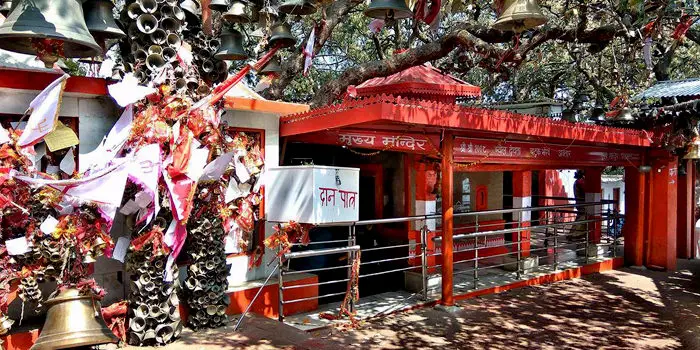
What makes Chitai Golu Devta Temple truly extraordinary is the sight that greets you as you approach: thousands upon thousands of brass bells of every size, hanging from every conceivable surface, covering the temple premises in a shimmering cascade of metal. Each bell represents a devotee whose wish was fulfilled by the deity—a powerful, living testament to the faith of millions.
But the uniqueness doesn’t end there. Unlike most temples where devotees pray silently, at Chitai Golu Devta Temple, people come armed with written petitions—handwritten applications addressed to the “God of Justice,” requesting everything from resolving land disputes and seeking revenge against wrongdoers to passing exams and recovering from illness. These petitions are submitted to the temple priest, read aloud to Golu Devta, and then hung on the temple walls alongside the bells.
Devotees believe that Golu Devta dispenses quick justice, and once justice is served, they return to offer a bell as a token of gratitude. The temple, built in the 12th century by a commander of the Chand dynasty, remains one of the most visited shrines in the Kumaon region, attracting lakhs of devotees from across India and abroad every year.
Whether you are a devotee seeking justice and wish fulfilment, a curious traveller drawn to the thousands of bells and written petitions, a history enthusiast tracing the legacy of the Chand dynasty, or a photographer captivated by the unique visual spectacle, Chitai Golu Devta Temple promises an experience unlike any other.
Key Information at a Glance:
History and Mythology: The Legend of the God of Justice
Who is Golu Devta?
Golu Devta (also known as Goljyu, Golu Devata, or Goril Devta) is one of the most revered deities in the Kumaon region of Uttarakhand. He is considered an incarnation of Gaur Bhairav (Lord Shiva) and is worshipped as the dispenser of justice. Devotees have extreme faith in his ability to deliver justice quickly and fairly.
Golu Devta is also revered as a key deity (Ishta/Kula Devta) in many villages across the Kumaon and Garhwal regions of Uttarakhand. His mantra is: “Jai Nyay Devta Goljyu Tumar Jai ho. Sabuk lije dain haije” (Hail the God of justice: Goljyu! Blessings for everyone!).
The Historical Golu Devta
Historically, Golu Devta is believed to have been the brave son and general of the Katyuri king, Jhal Rai and his wife Kalinka. His grandfather was Hal Rai, and his great-grandfather was also Hal Rai. Historically, Champawat is accepted as the origin of Golu Devta.
His mother, Kalinka, is believed to be the sister of two other local deities: Harishchand Devjyun (the divine spirit of Raja Harish of the Chands) and Sem Devjyun, both of whom are regarded as uncles of Lord Golu.
Another legend suggests that he was a general in the army of the Chand king, Baz Bahadur (1638–78), and died displaying exemplary valour in war. The temple at Chitai was erected in his honour.
The Legend of King Jhalrai and Queen Kalinka
The most popular and complete version of the Golu Devta legend speaks of King Jhalrai of Champawat.
The Childless King and the Eighth Queen
King Jhalrai of Champawat had seven queens but no sons. An astrologer from Varanasi predicted that his eighth queen would bear him a famous son. However, the ageing king felt ashamed to ask for the hand of a young maid from the city.
One day, while out on a hunt, the king saw two buffalo fighting, their horns locked and limbs dangerously kicking around. While he and his soldiers were afraid to approach and separate the fighting pair, a young maid walked up and separated the two buffaloes, sending them running in opposite directions.
The king was mesmerised and resolved to marry her. After offering service to her ailing uncle as a bride price, he brought home the young queen, who was called Kalinka.
The Jealousy of the Seven Queens
The seven elder queens were jealous of Kalinka. They ganged up against her, tortured her in subtle ways, and carried tales against her to the king.
When Kalinka gave birth to a son, they took away the child and substituted a bloodied slab-mortar and pestle (Sil-Batta) in its place. The innocent young queen, unaware of the realities of the world, believed she had birthed stones and began to treat them as her children, giving them the names Harua and Kalua.
King Jhalrai believed his elder queens’ tales about the birth of stones instead of a child and, without enquiry, confined Kalinka to solitude as a madwoman.
The Miraculous Survival of the Child
The elder queens tried different ways of killing the newborn child—throwing him into a cattle shed, putting him into a salt pile—but the divine child miraculously survived. Finally, in desperation, they locked him in a set of seven trunks, each inside the other, and tossed him into the river Gori.
The river bore the trunk upwards to a settlement called Gorighat, where a poor fisherman named Bhana pulled it out, hoping to find treasure. Instead, he found a beautiful baby boy. The childless fisherman and his wife adopted the child and brought him up with love, calling him “Goriya” after the river he was found in.
The Wooden Horse and the Journey to Champawat
This child displayed signs of divinity and soon was able to speak. He told his foster father Bhana that he was the grandson of Halrai, a king. He asked his father for a horse. His father, being not so affluent, could not buy him a real horse, so he brought Goriya a wooden horse. The child sat on the wooden horse, and it began to move. He galloped around the settlement, astonishing everyone.
He blessed his foster parents and left the village to claim his rightful place as a prince. With his wooden horse, he reached the place where the seven queens of King Jhalrai would come to fill water in their pots.
The Revelation of the Truth
He asked them to move aside so that his horse could drink water, but they blocked his way with their pots, asking how a wooden horse could drink water. He broke those pots, raising a dispute that was brought to the king’s notice.
When the king asked him how a wooden horse could drink water, he replied: “Just as a woman can birth a slab-mortar and pestle, so also my wooden horse can drink water.”
The king suspected something was amiss and questioned Goriya about the conspiracy. Goriya asked for his mother, Kalinka, to be brought into court. Legend has it that milk flowed out in a spring from the pious lady’s breast, straight to her child’s lips, and his identity was established.
With his father’s support, the seven queens were punished, his mother’s respect was restored, and justice was executed. The slab, mortar, and pestle became human children, and Goriya soon became king of the land. As he knew what injustice was, he swore to establish justice in the land and travelled across his territory with his now-human brothers, Harua and Kalua, holding courts in all the local villages.
Golu Darbar: The Divine Court
Golu Devta used to travel far distances on his horse and meet people of his kingdom in a practice called Golu Darbar. He would hear the problems of the people and help them in any way possible.
Due to his complete dedication to his people, he led a very simple life, following the principles of brahmacharya. He always had a special place in his heart for his white horse, and it is believed that he still rides his white horse to travel around.
In many villages, the practice of Golu Darbar is still prevalent, where Golu Devta appears in front of people, listens to their problems, and helps them in every way possible. In present times, the most common form of Golu Darbar is Jagar.
The Temple’s Construction
According to devotees and temple records, the Chitai Golu Devta Temple was built in the 12th century by a commander of the Chand dynasty. It is said that the temple was built after a Pant Brahmin had a dream in which Golu asked him to build a temple for him in Chitai, because the capital of the then Chand Dynasty kings had shifted from Champawat to Almora.
The Unique Worship: Written Petitions and Bells
The “Court of God” – Where Justice Is Served
What makes Chitai Golu Devta Temple unique among all Hindu temples is that the deity is regarded as a living judge, and the temple functions as a divine court. Devotees use terms such as “court,” “judge,” “District Court,” “Supreme Court,” “FIR,” “hajri” (summons) , and other juridical terms in both Hindi and English when talking about this temple.
The head priest at Chitai claims that the temple is like the Supreme Court and Golu Devta is its main judge, with the shrine of Ghorakhal serving as a high court and all local shrines as panchayats.
The Written Petition (Arji) Tradition
Unlike most temples where devotees pray silently, at Chitai Golu Devta Temple, devotees submit written petitions (arji) addressed to the “God of Justice”.
The priest reads this application and narrates it to Golu Devta, after which the application is hung on the temple premises. Many people send their applications by post as well.
Categories of Petitions:
According to C M Agarwal’s book “Golu Devta: the God of Justice of Kumaun Himalayas,” petitions fall into around 23 unique categories. These include:
- Land disputes
- Seeking revenge against wrongdoers
- Business disputes
- Family conflicts
- Examination success
- Job appointments
- Health and medical issues
- Marriage problems
- Property disputes
The Bells – Tokens of Gratitude
The most visually striking feature of the temple is the thousands of brass bells of every size hanging over the temple premises.
Devotees, in turn, offer bells after the fulfilment of their wishes. Every year, lakhs of devotees from across the country and abroad visit the sacred temple, and the sight of thousands of wonderful bells is a clear sign of God fulfilling the wishes of many devotees.
Offerings to the Deity
Golu Devta is offered various items:
The sacrificed goat is received as prasada of the pooja.
The Iconography of Golu Devta
Golu Devta’s iconography is relatively recent and is usually a marble bas-relief of a king on a horse. Some images seem to be modelled on a generic aniconic warrior on a horse. The deity can be seen sitting on a horse holding his weapon.
The older icons of worship were the dhuni (sacred fire pit) surrounded by weapons cast in iron, including spears and tridents. It is said that Golu Devta, as a mendicant, would sit by the fire with his trident in the manner of the Nath tradition and advise his people of the right way to live.
Temple Architecture
Traditional Kumaoni Style
The Chitai Golu Devta Temple features traditional Kumaoni architecture, characterised by its wooden and stone structures with intricate carvings and a pagoda-like roof. The temple is built in a style that reflects the rich cultural heritage of the Kumaon region.
The Temple Complex
Sub-shrines
The temple also has sub-shrines for local deities Harishchand Devjyun and Sem Devjyun, who are considered to be the uncles of Lord Golu Devta.
How to Reach Chitai Golu Devta Temple
By Air
Nearest Airport: Pantnagar Airport
| Details | Information |
|---|---|
| Distance | 120–150 km |
| Travel Time | 4–5 hours by taxi |
| Airlines | Limited flights from Delhi to Pantnagar |
| Onward Travel | Taxis available to Almora, then to Chitai |
By Train
Nearest Railway Station: Kathgodam Railway Station
| Details | Information |
|---|---|
| Distance | 90–120 km |
| Travel Time | 3–4 hours by taxi |
| Connectivity | Well-connected from Delhi, Lucknow |
Popular Trains from Delhi to Kathgodam:
| Train Name | From Delhi | Departure | Arrival (Kathgodam) | Duration |
|---|---|---|---|---|
| Ranikhet Express | Delhi | 10:05 PM | 5:05 AM | 7 hours |
| Sampark Kranti Express | Delhi | 4:45 PM | 10:35 PM | ~6 hours |
From Kathgodam station, take a taxi to Almora and then to Chitai.
By Road
Route from Delhi to Almora:
Delhi → Ghaziabad → Hapur → Moradabad → Rampur → Haldwani → Kathgodam → Bhowali → Khairna → Almora
Local Transport
| Option | Details |
|---|---|
| Taxi from Almora | ₹500–800 (approx.) |
| Local Bus from Almora | Regular service to Chitai |
| Shared Jeep | Available from Almora |
Distances from Major Cities
| City | Distance (km) |
|---|---|
| Delhi | 385–404 |
| Dehradun | ~350 |
| Nainital | 70 |
| Almora | 10 |
| Kathgodam | 90–120 |
| Pantnagar Airport | 120–150 |
| Binsar Main Gate | 4 |
Weather and Best Time to Visit
Climate Overview
Chitai Golu Devta Temple experiences a pleasant high-altitude climate. The temple is situated at approximately 1,700–2,000 metres, making it significantly cooler than the plains.
Month-by-Month Guide
| Month | Season | Day Temp (°C) | Night Temp (°C) | Conditions | Suitability |
|---|---|---|---|---|---|
| March | Spring | 15–22 | 5–10 | Pleasant, spring blooms | ⭐ Excellent |
| April | Summer | 18–25 | 8–12 | Pleasant, clear skies | ⭐ Best |
| May | Summer | 20–28 | 10–15 | Warm, ideal | ⭐ Best |
| June | Summer | 22–28 | 12–18 | Warm, pre-monsoon | ⭐ Best |
| July | Monsoon | 18–24 | 15–20 | Heavy rain, slippery roads | ❌ Avoid |
| August | Monsoon | 18–24 | 15–20 | Heavy rain, landslides | ❌ Avoid |
| September | Autumn | 16–22 | 10–15 | Post-monsoon, clearing | ⭐ Good |
| October | Autumn | 14–20 | 8–12 | Crisp, clear skies | ⭐ Excellent |
| November | Autumn | 10–16 | 4–8 | Cool, pleasant | ⭐ Excellent |
| December–February | Winter | 2–12 | -2–5 | Cold, possible snow | ⭐ Good |
Best Time to Visit by Season
Festivals to Experience
Best Time of Day for Visit
| Time | Activity | Tips |
|---|---|---|
| Morning (6:00–10:00 AM) | Temple darshan, petition submission | Cooler, fewer crowds |
| Late Morning (10:00 AM–12:00 PM) | Bell offering, photography | Good light for photography |
| Afternoon | Temple closed (12:00–5:00 PM) | Plan accordingly |
| Evening (5:00–8:00 PM) | Evening aarti, peaceful visit | Beautiful sunset views |
Temple Timings
Timings may vary during festivals.
Nearby Places to Visit
Binsar Wildlife Sanctuary
Just 4 km from the temple lies the Binsar Wildlife Sanctuary, famous for Zero Point—offering 360-degree panoramic views of Himalayan peaks including Nanda Devi, Trishul, and Panchachuli. The sanctuary is also home to over 200 species of birds and various wildlife.
Almora – The Cultural Capital
Almora is the district headquarters and a cultural hub of the Kumaon region. Key attractions include:
- Nanda Devi Temple – Dedicated to the patron goddess of Kumaon
- Bright End Corner – Stunning sunrise and sunset views
- Lala Bazar – Traditional market with Kumaoni handicrafts
- Chitai Temple – The Golu Devta temple itself
Kasar Devi Temple – The Van Allen Belt Temple
Kasar Devi Temple is famous for being located on the Earth’s Van Allen Belt—a zone of highly charged geomagnetic particles. Swami Vivekananda meditated here in 1890, and the area became a popular destination during the Hippie movement of the 1960s.
Jageshwar Dham – The Valley of Temples
Jageshwar Dham is a group of 124 ancient stone temples dedicated to Lord Shiva, dating back to the 7th–14th centuries CE. It is considered one of the 12 Jyotirlingas and is a major pilgrimage site in Uttarakhand.
Where to Stay: Accommodation Options
In Almora (Best Base – 10 km from Temple)
| Category | Price Range | Examples | Features |
|---|---|---|---|
| Mid-Range Hotels | ₹2,000–5,000 | Hotel Shikhar, Hotel Suman Royal | Comfortable rooms, hot water |
| Budget Hotels | ₹800–1,800 | Local guesthouses | Basic amenities |
| Homestays | ₹1,200–3,000 | Various family-run properties | Authentic Kumaoni experience |
Near Binsar Wildlife Sanctuary
| Property | Rating | Features |
|---|---|---|
| KMVN Tourist Rest House | 4.4/5 | Government-run, budget-friendly |
| Mary Budden Estate | 4.6/5 | Restored colonial home, heritage experience |
| Binsar Eco Resort | 4.3/5 | Eco-friendly, nature-focused |
In Nainital (70 km from Temple)
| Category | Price Range | Features |
|---|---|---|
| Luxury Resorts | ₹8,000–20,000+ | Premium amenities, lake views |
| Mid-Range Hotels | ₹2,000–5,000 | Comfortable, convenient |
| Budget Hotels | ₹800–2,000 | Basic amenities |
Booking Tips
- Book well in advance for peak seasons (April–June, October–November)
- For stays near Binsar, book heritage properties early
- Almora offers the widest range of accommodation options
- Carry cash—card facilities may be limited in smaller properties
Local Cuisine: What to Eat
Must-Try Kumaoni Dishes
| Dish | Description |
|---|---|
| Aloo Ke Gutke | Spiced fried potatoes, a Kumaoni speciality |
| Bhatt ki Churkani | Black soybean curry |
| Chainsoo | Protein-rich black gram curry |
| Mandua Roti | Finger millet flatbread |
| Gahat Ki Dal | Horse gram lentil soup |
| Jhangora Kheer | Barnyard millet sweet pudding |
| Bal Mithai | Famous chocolate-like sweet from Kumaon |
Where to Eat
| Location | Options |
|---|---|
| Almora | Lala Bazar, local restaurants, hotels |
| Binsar Area | Resort and homestay dining |
| Near Temple | Small local shops, snacks |
Dining Tips
- Most hotels and homestays offer meal packages
- Pure vegetarian options are widely available
- Try the rhododendron squash (buransh) – a local beverage
- Carry packaged snacks for the journey
Travel Tips and Important Information
Before You Go
- Prepare Your Petition: If you have a specific wish or grievance, write it down on paper before you go.
- Carry Cash: ATMs are limited in Chitai; bring sufficient cash from Almora.
- Check Weather: Avoid monsoon (July–August) due to heavy rainfall and slippery roads.
- Dress Modestly: Chitai is a sacred site; dress appropriately.
- Visit Early: The best time is morning (6:00–10:00 AM) to avoid crowds and experience the peaceful atmosphere.
During Your Visit
- Remove Shoes: Before entering the temple premises.
- Submit Your Petition: Give your written application to the temple priest, who will read it aloud to Golu Devta.
- Promise a Bell: If your wish is fulfilled, promise to return and offer a bell.
- Respect the Bells: Do not touch or remove any bells—each represents a fulfilled wish.
- Maintain Silence: The temple is a place of prayer and petition.
The Petition Process
Note: You can also send petitions by post.
What to Bring for Worship
| Item | Purpose |
|---|---|
| Written petition | To submit your request |
| Bell | To offer (if wish already fulfilled) |
| White cloth | Traditional offering |
| Offerings | Ghee, milk, curd, halwa, poori (optional) |
Safety Tips
- Road Safety: The roads from Almora to Chitai are winding; avoid night driving
- Monsoon Travel: Avoid July–August due to landslide risk
- Weather Awareness: Winters can be cold; carry warm clothing
- Emergency Numbers: Keep local contacts handy
Packing Checklist
| Category | Items |
|---|---|
| Clothing | Light layers for summer; heavy woolens for winter; jacket for evenings |
| Footwear | Comfortable walking shoes |
| Accessories | Hat, sunscreen, sunglasses |
| Health | Personal medications, water bottle |
| Documents | ID proof (Aadhaar/Passport) |
| Other | Cash, camera, written petition, offerings |
Photography Tips
- Best Spots: The canopy of bells, the temple exterior, the petition walls
- Best Time: Morning for soft light; golden hour for warm tones
- Note: Ask permission before photographing inside the temple
Frequently Asked Questions (FAQs)
Q1: What is Chitai Golu Devta Temple famous for?
A: The temple is famous for being dedicated to Golu Devta, the God of Justice. It is known for the thousands of bells hung by devotees whose wishes were fulfilled, and the unique practice of submitting written petitions to the deity.
Q2: Where is the Chitai Golu Devta Temple located?
A: The temple is located in Chitai village, approximately 10 km from Almora and 4 km from the main gate of Binsar Wildlife Sanctuary in the Almora district of Uttarakhand.
Q3: What is the best time to visit Chitai Golu Devta Temple?
A: The best time to visit is April to June (summer) and October to November (autumn). The weather is pleasant, and the skies are clear. Monsoon (July–August) is best avoided.
Q4: How far is Chitai Golu Devta Temple from Delhi?
A: The distance from Delhi is approximately 385–404 km, with a travel time of 9–10 hours by road.
Q5: How do I reach Chitai Golu Devta Temple?
A: By road from Almora (10 km), by train to Kathgodam (90–120 km) followed by taxi, or by flight to Pantnagar Airport (120–150 km) followed by taxi.
Q6: What is the unique practice at Chitai Golu Devta Temple?
A: Devotees submit written petitions (arji) addressed to the “God of Justice,” which are read aloud by the priest and hung on the temple premises. After wishes are fulfilled, devotees return to offer bells.
Q7: What are the temple timings?
A: The temple is open from 6:00 AM – 12:00 PM and from 5:00 PM to 10:00 PM.
Q8: Who is Golu Devta?
A: Golu Devta is the God of Justice worshipped in the Kumaon region. He is considered an incarnation of Gaur Bhairav (Lord Shiva) and is believed to dispense quick justice to devotees.
Q9: Why are there so many bells at the temple?
A: Devotees offer bells to Golu Devta after their wishes are fulfilled or justice is served. Each bell represents a fulfilled prayer.
Q10: Can I send my petition by post?
A: Yes, many devotees send their written petitions by post. The temple priest reads them and hangs them on the temple premises.
Q11: What are the nearby places to visit?
A: Nearby attractions include Binsar Wildlife Sanctuary (4 km), Almora (10 km), Kasar Devi Temple (~15 km), and Jageshwar Dham (~50 km).
Q12: Is there an entry fee for the temple?
A: No, entry to the temple is free.
Q13: Are there accommodation options near the temple?
A: Limited options are available in Chitai. Most visitors stay in Almora (10 km), which offers a range of hotels and homestays.
Q14: Is the temple open during winter?
A: Yes, the temple is open year-round. However, winters (December–February) can be very cold, and occasional snowfall may occur.
Q15: What is Golu Darbar?
A: Golu Darbar is the practice where Golu Devta would hear the problems of his people and help them. In present times, the most common form is Jagar.
Plan Your Chitai Golu Devta Temple Journey with Discover Uttarakhand
At Discover Uttarakhand, we’ve been organising unforgettable spiritual journeys across Devbhoomi since 1997. As a trusted local operator with deep knowledge of the Kumaon region and its sacred sites, we offer:
- ✅ Customised Chitai Golu Devta Temple tour packages (1 to 3 days)
- ✅ Combined itineraries covering Chitai, Binsar, Kasar Devi, and Almora
- ✅ Comfortable transport with experienced hill drivers
- ✅ Verified accommodations in Almora and Binsar
- ✅ Local guides for temple visits
- ✅ 24/7 customer support throughout your journey
Recommended Chitai Golu Devta Temple Packages
| Package | Duration | Starting Point | Highlights |
|---|---|---|---|
| Chitai Darshan Day Trip | 1 Day | Almora | Chitai Temple, bell canopy, petition tradition |
| Chitai & Binsar Weekend | 2 Nights / 3 Days | Kathgodam | Chitai Temple, Binsar Sanctuary, Zero Point |
| Kumaon Spiritual Circuit | 3 Nights / 4 Days | Kathgodam | Chitai, Kasar Devi, Almora, Jageshwar |
Book your Chitai Golu Devta Temple journey today and seek justice from the God of Justice in the serene hills of Kumaon.
📞 Call / WhatsApp: +91-9997187178, 9760222178, 8171977178
📍 Visit Our Office: Himalayan Colony, opposite DSVV, Haripur Kalan, Haridwar, Motichur Range, Uttarakhand 249411
🌐 Website: www.discover-uttarakhand.com
📧 Email: info@discover-uttarakhand.com
Jai Nyay Devta Goljyu! Jai Golu Devta! 🙏
Discover Uttarakhand – Your Local Partner for Sacred Himalayan Journeys Since 1997 🔔