Introduction: The Mini Switzerland of India
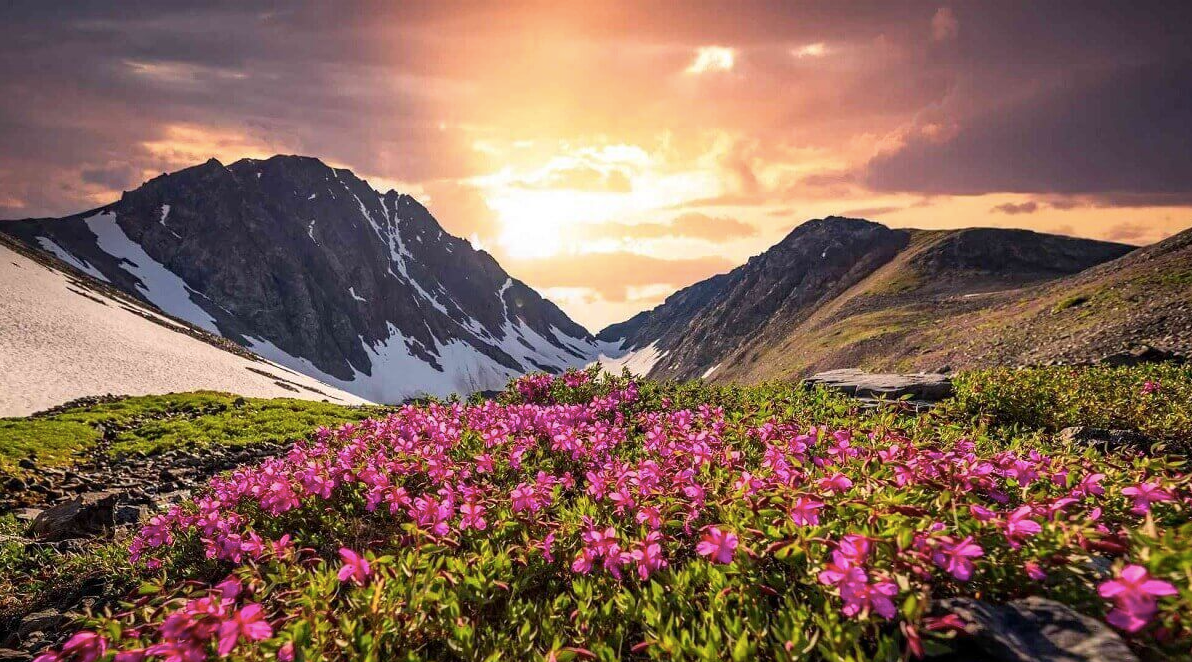
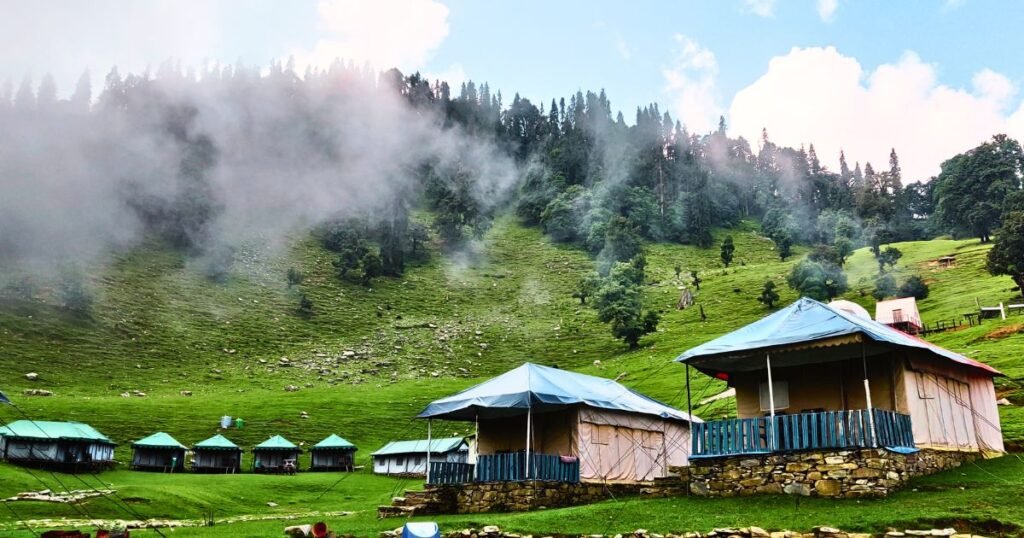
Nestled in the Garhwal Himalayas of Uttarakhand’s Rudraprayag district at an altitude of 2,608 meters (8,556 feet), Chopta is a breathtaking hill station that has earned the nickname “Mini Switzerland of India”. This unspoiled natural paradise is surrounded by dense forests of pine, deodar, and rhododendron, offering panoramic views of some of the highest Himalayan peaks, including Trishul, Nanda Devi, and Chaukhamba.
Unlike the crowded hill stations of Mussoorie or Nainital, Chopta remains refreshingly untouched by commercialisation. There are no neon signs here, no discotheques, no chaotically crowded malls. What you will find are vast alpine meadows (bugyals), the sound of birds chirping as your morning alarm, and the kind of silence that makes you realise how beautiful the mountains truly are.
Chopta is best known as the base camp for the famous trek to Tungnath Temple—the highest Shiva temple in the world—and Chandrashila Peak, which offers 360-degree panoramic views of the Himalayas. The region is also part of the Kedarnath Wildlife Sanctuary, making it a haven for wildlife enthusiasts and bird watchers.
Whether you are a pilgrim seeking to visit one of the Panch Kedar shrines, a trekker chasing high-altitude adventures, a nature lover drawn to alpine meadows and rhododendron forests, or a photographer looking to capture the perfect sunrise over Nanda Devi, Chopta promises an unforgettable Himalayan experience.
Key Information at a Glance:
History and Mythology: The Panch Kedar Legend
The Legend of the Pandavas
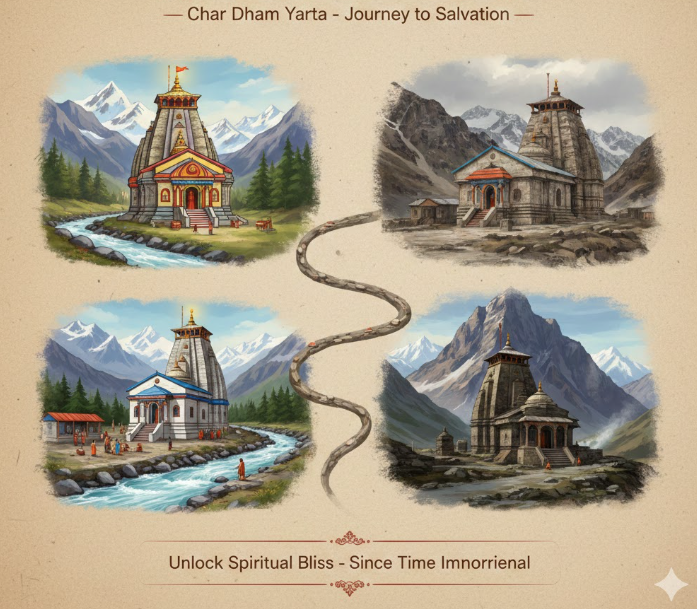
The most significant mythological connection of Chopta is through the Tungnath Temple, one of the five Panch Kedar shrines. According to the Mahabharata, after the bloody Kurukshetra war, the Pandavas were burdened by guilt for the sins of fratricide and the killing of their kinsmen. They sought the blessings of Lord Shiva to atone for their sins.
However, Lord Shiva was not willing to forgive them easily. Still angered by the unjust events of the war, he turned into a bull (Nandi) and disappeared into the ground at Guptakashi.
When Bhima, the second Pandava brother, recognised the bull and tried to hold it by its tail and hind legs, Shiva split into five parts that appeared at five different locations:
| Body Part | Temple | Location |
|---|---|---|
| Hump | Kedarnath | Kedarnath |
| Arms | Tungnath | Near Chopta |
| Face | Rudranath | Chamoli district |
| Navel and Stomach | Madhyamaheshwar | Near Ukhimath |
| Hair Locks | Kalpeshwar | Urgam Valley |
The Pandavas built temples at these spots, creating the Panch Kedar circuit, and Tungnath—where the arms of Lord Shiva appeared—became the third temple in this sacred circuit.
The Legend of Chandrashila – The Moon Rock
The name “Chandrashila” literally means “Moon Rock”. According to mythology:
- Lord Rama meditated here after killing Ravana to atone for the sin of killing a Brahmin
- The Moon God (Chandra) came here to regain his lost glow; when Lord Rama touched the rock, it started glowing—hence the name “Chandrashila”
- Ravana also meditated here; a small cave called “Ravana Shila” exists near the peak
The Temple History
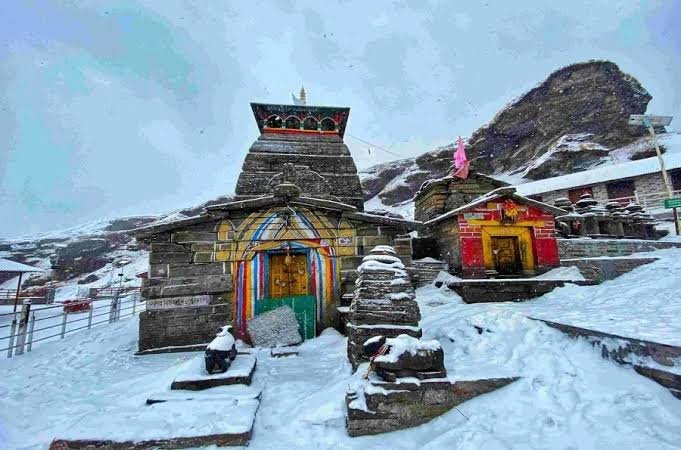
The Tungnath Temple was built in the 8th century CE by the Katyuri kings (the same dynasty that built Jageshwar). The temple features North Indian Nagara-style architecture, is only 5–6 feet high, and is made of black stone. The Swayambhu (self-manifested) lingam is shaped like raised arms, representing the arms of Lord Shiva.
The Winter Miracle – Gods’ “Walk” to Makkumath
From November to April, the Tungnath temple closes due to heavy snowfall. During this period:
- The deities are carried in palanquins 22 km down to Makkumath (near Ukhimath)
- Daily puja continues for 6 months at the winter abode
- In May, a grand return procession brings the deities back when the temple reopens
2026 Tentative Dates:
Geography and Location
Geographic Coordinates
- Latitude: Approximately 30.48° N
- Longitude: Approximately 79.00° E
- Elevation: 2,608–2,800 meters (8,556–9,200 ft) above sea level
Location
Chopta is situated in the Rudraprayag district of Uttarakhand, in the Garhwal region of the Himalayas. It lies exactly in the middle of the Kedarnath and Badrinath pilgrimage routes. The village is located approximately:
Topography
Chopta is a small region of meadows and evergreen forest, part of the Kedarnath Wildlife Sanctuary. The landscape features:
- Alpine meadows (Bugyals): Vast grasslands that are lush green in summer and snow-covered in winter
- Dense forests: Oak, pine, deodar, and rhododendron trees
- Panoramic Himalayan views: 41 Himalayan peaks are visible from the region, including Nanda Devi (7,816 m), Trishul, Chaukhamba, Kedarnath peak, Bandarpoonch, and the Gangotri range
Flora and Fauna
Forests and Vegetation
Chopta is blessed with rich Himalayan vegetation that changes with the seasons:
Kedarnath Wildlife Sanctuary
Chopta is part of the Kedarnath Wildlife Sanctuary (also known as the Kedarnath Musk Deer Sanctuary), one of the largest protected areas in the western Himalayas.
Wildlife Highlights:
Birdwatching Paradise
Because of an abundance of birds, Chopta is popular among birdwatchers. The region attracts numerous migratory birds, especially during the winter months.
How to Reach Chopta
By Air
Nearest Airport: Jolly Grant Airport, Dehradun (approximately 226 km from Chopta)
By Train
Nearest Railway Stations:
| Station | Distance | Travel Time | Connectivity |
|---|---|---|---|
| Rishikesh | 170–202 km | 6–8 hours by road | Most preferred |
| Haridwar | 198–225 km | 7–9 hours by road | Major station |
| Dehradun | 240 km | 8–9 hours by road | Well-connected |
Popular Trains from Delhi to Haridwar/Rishikesh:
| Train Name | From Delhi | Departure | Arrival | Destination |
|---|---|---|---|---|
| Shatabdi Express | Delhi | 6:00 AM | 11:40 AM | Haridwar |
| Jan Shatabdi | Delhi | 3:20 PM | 9:00 PM | Haridwar |
| Mussoorie Express | Delhi | 10:05 PM | 5:30 AM | Haridwar |
From the railway station, taxis and buses are available for Chopta. A train ticket from Delhi costs approximately ₹10–20.
By Road
Chopta is well-connected by road to major cities in North India :
Road Conditions: The last 30 km (Duggalbitta → Chopta) is narrow but now fully black-topped. The route is scenic but winding. Caution is advised during the monsoon when landslides can occur.
Bus Services:
- Regular state transport and private buses operate from Rishikesh, Haridwar, and Dehradun to Ukhimath
- From Ukhimath, shared taxis (jeeps) are available to Chopta
- Bus cost: Approximately ₹800–1,200 from Delhi
- Shared taxi cost: ₹400–600 per person
Distances from Major Cities
| City | Distance (km) |
|---|---|
| Delhi | 410–450 |
| Dehradun | 208–240 |
| Rishikesh | 170–210 |
| Haridwar | 198–225 |
| Ukhimath | 45–60 |
| Rudraprayag | ~80 |
| Guptkashi | ~60 |
| Kedarnath | ~84 |
| Badrinath | ~150 |
Weather and Best Time to Visit
Climate Overview
Chopta experiences a pleasant climate with distinct seasons. Summers are mild and comfortable, while winters are extremely cold with heavy snowfall.
Month-by-Month Temperature Guide
Best Time to Visit by Season
When to See Rhododendrons
The rhododendron forests around Chopta are in full bloom from late March to April, transforming the hillsides into a vibrant sea of red and pink flowers.
When to See Snow
Chopta experiences heavy snowfall from December to February, with snow layers reaching 4–7 feet by January. The Tungnath temple and Chandrashila are covered with snow from December to March.
Top Attractions and Places to Visit
1. Tungnath Temple – The Highest Shiva Temple in the World
The Tungnath Temple is the crown jewel of Chopta and the primary reason most pilgrims and trekkers visit this region. Dedicated to Lord Shiva, this ancient temple sits at an altitude of 3,680 meters (12,073 feet), making it the highest Shiva temple in the world.
Key Information:
What to Expect:
- The temple is only 5–6 feet high, made of black stone
- The Swayambhu (self-manifested) lingam is shaped like raised arms, representing the arms of Lord Shiva (one of the Panch Kedar)
- The temple has a slightly tilted angle after the 2013 Kedarnath disaster but remains structurally safe
- Photography is strictly prohibited inside the temple
Trek Details:
The trek from Chopta to Tungnath passes through dense forests of rhododendron and oak, with stunning views of the Himalayas throughout. The ascent is gradual, making it suitable for beginners and experienced trekkers alike.
2. Chandrashila Peak – The Moon Rock Summit
Chandrashila Peak is the summit located 1.5 km beyond Tungnath Temple at an altitude of approximately 4,000 meters (13,000 feet). The name means “Moon Rock,” derived from the legend that the Moon God regained his lost glow here after meditating.
Key Information:
| Aspect | Details |
|---|---|
| Altitude | 4,000 m (13,000 ft) |
| Trek Distance from Tungnath | 1.5 km |
| Additional Trek Duration | 1 hour (one way) |
| Total Trek from Chopta | 5.5 km one way |
| Difficulty | Moderate (steep final stretch) |
What to Expect:
- 360-degree panoramic views of the Himalayas, including Nanda Devi (7,816 m), Trishul, Chaukhamba, Kedarnath peak, Bandarpoonch, and the Gangotri range
- Sunrise views: Watching the first rays hit Nanda Devi while the entire Himalaya turns golden is a life-changing experience
- Ravana Shila: A small cave near the peak where Ravana is believed to have meditated
Tips:
- Start the trek early in the morning (around 4:00 AM) to reach the summit by sunrise
- The last 2 km between Tungnath temple and Chandrashila is highly steep and difficult; carry trekking equipment
- Wear good hiking boots, as you may find snow and icicles at the top
3. Deoria Tal – The Reflection Lake
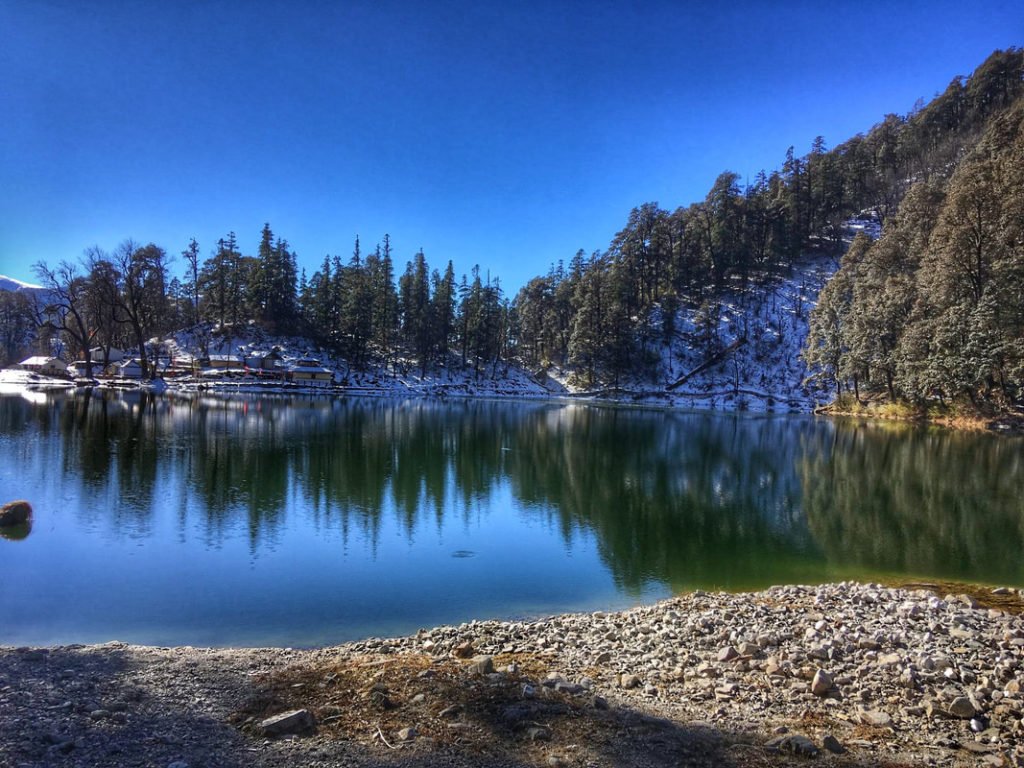
Deoria Tal (also spelt Deoriatal) is a stunning high-altitude lake located at an altitude of 2,438 meters (8,000 feet), approximately 28–30 km from Chopta. The lake is famous for its crystal-clear waters that perfectly reflect the Chaukhamba peaks.
Key Information:
| Aspect | Details |
|---|---|
| Altitude | 2,438 m (8,000 ft) |
| Trek Distance | 2.5 km from Sari Village |
| Trek Duration | 1–2 hours |
| Difficulty | Easy |
What to Expect:
- The lake is mentioned in ancient texts as a place where sages used to meditate
- The reflection of the Chaukhamba peaks in the crystal-clear water is a photographer’s dream
- The area is rich in wildlife, offering excellent opportunities for birdwatching
- Perfect spot for camping under the stars
How to Reach:
- Drive from Chopta to Sari Village (approximately 28–30 km)
- Trek 2.5 km from Sari Village to the lake
Best Time: March to June and September to November
4. Rohini Bugyal – The Alpine Meadow
Rohini Bugyal is a beautiful alpine meadow located on the trek route between Chopta and Deoria Tal. It offers stunning views of the surrounding peaks and is a great spot for a picnic or camping.
What to Expect:
- Vast grassy meadows with panoramic Himalayan views
- A peaceful, less-crowded alternative to other viewpoints
- Ideal for nature walks and photography
5. Kanchula Korak Musk Deer Sanctuary
Located near Chopta, this sanctuary is known for its population of musk deer and other wildlife species. It offers opportunities for wildlife viewing and birdwatching amidst pristine natural surroundings.
Best Time: March–June and September–November
6. Kartik Swami Temple – Offbeat Sunset Point
Located about 35 km from Chopta (followed by a 3 km trek), the Kartik Swami Temple is dedicated to Lord Kartikeya, the son of Lord Shiva. The temple is known for its spectacular sunset views over the Himalayas.
What to Expect:
- A short trek through forests and meadows
- Stunning sunset views with golden hues over the peaks
- A peaceful, offbeat destination away from crowds
7. Ukhimath – The Winter Seat of Kedarnath
Located approximately 45–60 km from Chopta, Ukhimath is the winter home of Lord Kedarnath. During winter (November to April), when the Kedarnath temple is closed, the Utsav Murti (festival idol) is brought here and worshipped at the Omkareshwar Temple.
What to Expect:
- Ancient temples with intricate carvings
- Peaceful atmosphere
- Insights into Garhwali culture
8. Triyuginarayan Temple – The Divine Wedding Site
Located a short drive from Chopta, Triyuginarayan Temple is believed to be the exact place where Lord Shiva and Goddess Parvati got married. The temple is famous for an eternal flame that is said to have been burning since the time of the divine wedding.
What to Expect:
- The eternal flame (Akhand Jyoti) that never extinguishes
- A nearby pond where turmeric paste was prepared for the wedding
- A peaceful forest setting
Trekking in Chopta: Complete Guide
Chopta is a premier trekking destination, offering routes for all skill levels—from beginners to experienced trekkers.
Trek Comparison Table
Tungnath – Chandrashila Trek Details
The classic Chopta trek is the Chopta → Tungnath → Chandrashila route :
| Segment | Distance | Time | Difficulty |
|---|---|---|---|
| Chopta to Tungnath | 3.5–4 km | 2–3 hours | Easy-Moderate |
| Tungnath to Chandrashila | 1.5 km | 1 hour | Moderate (steep) |
| Total (one way) | 5.5 km | 3–4 hours | Moderate |
Tips for the Trek:
- Start early morning (around 4:00 AM) to reach Chandrashila by sunrise
- The best time to start a trek for Chandrashila peak is in the morning, as in the afternoon, clouds and rain can smudge the beautiful 360-degree view
- Carry trekking poles for stability, especially on the steep final stretch
- Wear good hiking boots; you may encounter snow and icicles at the top
- The last 2 km between the Tungnath temple and the Chandrashila is highly steep and difficult
Ropeway Update (2026)
- Phase-1: Duggalbitta → 500 m below Tungnath (₹650 round trip)
- Phase-2 (direct to temple): Expected 2026–27
Camping in Chopta
Chopta offers a range of camping options, from budget camps to luxury glamping experiences.
Types of Camping Accommodation
Popular Campsites
- Magpie Jungle Camp: Budget camps with bonfire and meals
- Snow Pod / Himalayan Glamping: Luxury heated pods with glass roofs for stargazing
- Camping near Deoria Tal: Unique experience with lake reflections
Best Time for Camping: April–June and September–November
Local Cuisine: What to Eat in Chopta
Dining options in Chopta are limited but charming, with small dhabas and restaurants serving authentic local food.
Must-Try Garhwali Dishes
Popular Restaurants and Eateries
Dining Tips
- Most hotels and camps offer meal packages
- Carry packaged snacks for treks
- Pure vegetarian options are widely available
- Try the local chai (tea) at small stalls
Accommodation Options
Chopta offers a range of accommodation options, from budget camps to comfortable guesthouses.
Types of Accommodation
Where to Stay
GMVN Tourist Rest House
The government-run GMVN property offers clean, basic accommodation at reasonable prices (₹2,000–3,500 per room) and is a reliable option for budget travellers.
Booking Tips:
- Book well in advance for peak seasons (April–June, September–November)
- Weekend rates may be higher
- Carry a valid ID proof for check-in
Sample Itineraries
2-Day Chopta & Tungnath Weekend Escape (From Rishikesh)
Day 1: Rishikesh to Chopta
- Morning: Depart from Rishikesh early (by 6:00 AM)
- Afternoon: Arrive in Chopta (7–8 hours drive), check into camp/hotel
- Evening: Rest, acclimatisation, enjoy the mountain views
- Night: Dinner, overnight stay
Day 2: Tungnath & Chandrashila Trek and Return
- Early Morning: Start trek at 4:00 AM to reach Chandrashila by sunrise
- Morning: Trek to Tungnath (2–3 hours), then to Chandrashila (1 hour)
- Late Morning: Explore the temple, enjoy panoramic views, and return to Chopta
- Afternoon: Depart for Rishikesh
3-Day Chopta & Deoria Tal Explorer
Day 1: Rishikesh to Sari Village (Deoria Tal base)
- Depart from Rishikesh, drive to Sari Village (7–8 hours)
- Trek to Deoria Tal (2.5 km, 1–2 hours)
- Camp overnight at Deoria Tal
Day 2: Deoria Tal to Chopta
- Morning: Sunrise views, lake photography
- Trek back to Sari Village, drive to Chopta (1 hour)
- Afternoon: Rest, explore Chopta meadows
- Overnight in Chopta
Day 3: Tungnath & Chandrashila Trek and Return
- Early morning trek to Tungnath and Chandrashila
- Return to Chopta by afternoon
- Depart for Rishikesh
4-Day Complete Chopta Adventure
Day 1: Rishikesh → Chopta, evening rest
Day 2: Chopta → Tungnath → Chandrashila trek → Chopta
Day 3: Chopta → Sari Village → Deoria Tal trek → overnight camping
Day 4: Deoria Tal → Rishikesh
Travel Tips and Important Information
Before You Go
- Physical Fitness: The trek to Tungnath (3.5 km) is moderate, but the final stretch to Chandrashila is steep. Prepare with regular walking 2–4 weeks before
- Altitude Awareness: Chandrashila is at 4,000 m; acute mountain sickness (AMS) is possible. Carry medication, stay hydrated
- Carry Cash: ATMs are extremely limited in Chopta; bring sufficient cash from Rishikesh or Ukhimath
- Check Weather: Avoid monsoon (July–August) due to landslide risk
- Advance Booking: Essential for peak seasons (April–June, September–November) and for camping accommodations
During Your Stay
- Dress in Layers: Even in summer, mornings and evenings are cool; winter requires heavy woollens
- Start Early: Begin the Tungnath trek by 5:00–6:00 AM to avoid afternoon clouds
- Stay Hydrated: Carry water for the trek; dehydration worsens altitude effects
- Respect Nature: Follow “Leave-No-Trace” principles to preserve the natural beauty of Chopta
- Hire Local Guides: For safety and enhanced experience, hiring a local guide is recommended
Trekking Safety Tips
- Check the weather forecast before embarking on treks to avoid sudden changes
- Carry trekking poles for stability, especially on the steep final stretch to Chandrashila
- Wear good hiking boots, as you may find snow and icicles at the top
- Don’t bring young children, as altitude sickness can be an issue
- Invest in good trekking shoes and carry essentials like water bottles, snacks, and a first aid kit
Packing Checklist
Photography Tips
- Best Spots: Chandrashila Peak (sunrise), Deoria Tal (reflections), Tungnath Temple (architecture), Rhododendron Valley (spring blooms)
- Best Time: Early morning (5:00–6:00 AM) for clear mountain views; golden hour (4:00–5:30 PM) for landscapes
- Camera Gear: Carry extra batteries—cold drains them quickly
- Photography is strictly prohibited inside the Tungnath Temple
Frequently Asked Questions (FAQs)
Q1: Why is Chopta famous?
A: Chopta is famous as the “Mini Switzerland of India” for its stunning alpine meadows, dense forests, and panoramic Himalayan views. It is the base camp for the Tungnath Temple (the highest Shiva temple in the world) and Chandrashila Peak treks.
Q2: What is the best time to visit Chopta?
A: The best time to visit is April to June (summer) for pleasant weather and clear views, and September to November (autumn) for post-monsoon clarity. Winter (December–February) is ideal for snow lovers.
Q3: How far is Chopta from Delhi?
A: The distance from Delhi to Chopta is approximately 410–450 km, with a travel time of 12–14 hours by road.
Q4: How do I reach Chopta?
A: By road from Rishikesh (170–210 km, 7–8 hours), by train to Rishikesh followed by taxi/bus, or by flight to Jolly Grant Airport, Dehradun (226 km) followed by taxi.
Q5: What is the altitude of Chopta?
A: Chopta is situated at an altitude of approximately 2,608–2,800 meters (8,556–9,200 feet) above sea level.
Q6: What is the Tungnath Temple trek distance?
A: The trek from Chopta to Tungnath Temple is 3.5–4 km (one way), taking 2–3 hours. To Chandrashila Peak, add 1.5 km and 1 hour.
Q7: Is the Chandrashila trek difficult?
A: The trek is moderate. The final 2 km between the Tungnath temple and Chandrashila is highly steep and difficult. Good fitness and trekking equipment are recommended.
Q8: Can beginners do the Tungnath trek?
A: Yes, the Chopta to Tungnath section is easy to moderate and suitable for beginners. The ascent is gradual, and the path is well-defined.
Q9: How many days are enough for Chopta?
A: 2–3 days are sufficient for the main attractions (Tungnath, Chandrashila, Deoria Tal). For a more relaxed pace, including camping, allow 4–5 days.
Q10: Is Chopta safe for solo travellers?
A: Yes, Chopta is generally safe for solo travellers. However, for treks, it is recommended to join group tours or hire local guides, especially for the Chandrashila summit.
Q11: What is the Deoria Tal trek?
A: Deoria Tal is a 2.5 km trek from Sari Village to a beautiful high-altitude lake known for its crystal-clear waters reflecting the Chaukhamba peaks.
Q12: What is the entry fee for Tungnath Temple?
A: There is no entry fee to visit the Tungnath Temple.
Q13: Are there ATMs in Chopta?
A: ATMs are extremely limited in Chopta. It is advisable to carry sufficient cash from Rishikesh or Ukhimath.
Q14: What should I pack for the Chopta trek?
A: Pack comfortable trekking shoes, warm clothing (even in summer), rain gear, a first aid kit, sunscreen, sunglasses, and trekking poles.
Q15: What is the Tungnath Temple winter closing date for 2026?
A: The temple tentatively closes in early November 2026 (around November 3–4) and reopens in late April 2027 (around April 26–28, Akshaya Tritiya).
Plan Your Chopta Journey with Discover Uttarakhand
At Discover Uttarakhand, we’ve been organising unforgettable journeys across Devbhoomi since 1997. As a trusted local operator with deep knowledge of Chopta, Tungnath, and the Garhwal region, we offer:
- ✅ Customised Chopta tour packages (2 to 6 days)
- ✅ Trekking packages for Tungnath, Chandrashila, and Deoria Tal
- ✅ Combined itineraries covering Chopta, Ukhimath, and Guptkashi
- ✅ Comfortable transport with experienced hill drivers
- ✅ Verified accommodations and camping options
- ✅ Certified trek guides for all skill levels
- ✅ 24/7 customer support throughout your journey
Recommended Chopta Packages
| Package | Duration | Starting Point | Highlights |
|---|---|---|---|
| Chopta Weekend Trek | 2 Nights / 3 Days | Rishikesh | Tungnath, Chandrashila trek |
| Chopta & Deoria Tal Explorer | 3 Nights / 4 Days | Rishikesh | Tungnath, Chandrashila, Deoria Tal camping |
| Garhwal Himalayan Trek | 4 Nights / 5 Days | Haridwar | Chopta, Tungnath, Chandrashila, Ukhimath |
| Complete Chopta Adventure | 5 Nights / 6 Days | Delhi | Chopta, Deoria Tal, Kartik Swami, Ukhimath |
Book your Chopta journey today and discover the Mini Switzerland of India.
📞 Call / WhatsApp: +91-9997187178, 9760222178, 8171977178
📍 Visit Our Office: Himalayan Colony, opposite DSVV, Haripur Kalan, Haridwar, Motichur Range, Uttarakhand 249411
🌐 Website: www.discover-uttarakhand.com
📧 Email: info@discover-uttarakhand.com
Jai Tungnath Mahadev! Jai Chandrashila! Har Har Mahadev! 🏔️🙏
Discover Uttarakhand – Your Local Partner for Unforgettable Himalayan Journeys Since 1997