Introduction: The Fierce Guardian of the Garhwal Himalayas
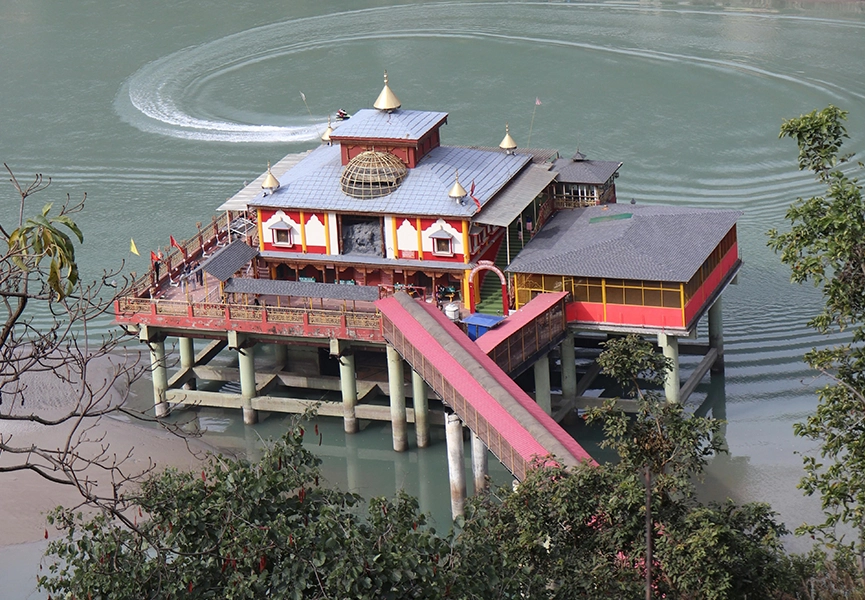
Perched on the banks of the sacred Alaknanda River between Srinagar and Rudraprayag, the Dhari Devi Temple is one of the most revered and mysterious shrines in Uttarakhand. Dedicated to Goddess Dhari Devi—a fierce manifestation of Goddess Kali—this ancient temple is regarded as the protector deity of the Garhwal region and holds a special place in the spiritual map of the Himalayas.
What makes Dhari Devi Temple truly extraordinary is not just its dramatic location on a raised platform in the middle of the Alaknanda River, but the profound legends that surround it. According to local belief, the idol of the goddess changes its form three times a day—appearing as a girl in the morning, a woman in the afternoon, and an elderly lady in the evening—symbolising the stages of life.
The temple is also deeply connected to the 2013 Kedarnath floods, one of India’s worst natural disasters. Many locals believe that the catastrophe was a direct result of the goddess’s displeasure when her idol was temporarily moved from its original location to make way for a hydroelectric project. This incident reinforced the deep spiritual belief that the divine energy of Dhari Devi must remain undisturbed.
Whether you are a pilgrim on the Char Dham Yatra seeking the goddess’s blessings for a safe journey, a devotee of Shakti worship wanting to experience one of the 108 Shakti Peethas, or a traveller drawn to the mystical legends and scenic beauty of the Garhwal Himalayas, Dhari Devi Temple promises an experience that is both spiritually profound and visually breathtaking.
Key Information at a Glance:
History and Mythology: The Legend of the Guardian Goddess
The Origin of Dhari Devi
The name “Dhari Devi” comes from the local belief that the goddess “stays at one place” or “supports” the region. According to mythology, during a severe flood, an idol of the goddess was carried away by the strong current of the Alaknanda River. The idol got stuck against a rock, and a divine voice instructed the villagers to enshrine it there, giving the goddess her name.
The temple is counted among the 108 Shakti Peethas of Goddess Shakti, as numbered by the Srimad Devi Bhagwat. It is also considered the oldest Shaktipath of the Dwapara Yuga.
The Split Idol: Upper Half at Dhari Devi, Lower Half at Kalimath
One of the most unique aspects of the Dhari Devi Temple is that it houses only the upper half of the goddess’s idol, while the lower half is worshipped at Kalimath Temple, another Shakti Peetha in Uttarakhand. This symbolises the balance of divine energy in its fierce and benevolent forms.
According to local tradition, the deity is worshipped as a living Shakti, not just a symbolic form, representing cosmic balance and protection.
The Pandavas and Adi Shankaracharya Connection
The temple has ancient origins dating back to the Dwapara Yuga. According to the temple priest, the idol was installed during the Dwapara Yuga and was worshipped by the Pandavas. The Goddess is also believed to have been worshipped by Adi Guru Shankaracharya, the great 8th-century philosopher-saint who revived Hinduism across India.
In ancient times, the route to Badrinath and Kedarnath used to pass through this temple. Pilgrims would stop here to pray for a “Raksha Kawach” (protective shield), and their wishes were believed to be fulfilled. This is why she is revered as the “Protector of Char Dham”.
The Mysterious 3 Roop (Three Forms) of Dhari Devi
One of the most fascinating aspects of the Dhari Devi Temple is the belief that the idol changes its appearance three times a day :
| Time of Day | Form | Symbolism |
|---|---|---|
| Morning | Bal Roop (Child/Girl Form) | Innocence, protection, beginnings, nurturing energy |
| Afternoon | Yuva Roop (Young Woman/Warrior Form) | Power, courage, destruction of evil, most intense form |
| Evening | Vriddha Roop (Old Lady/Elder Form) | Wisdom, completion, divine control over natural balance |
This belief makes the Dhari Devi Temple spiritually unique in India, as few temples have such a dynamic and living connection to their deity.
The 2013 Kedarnath Floods – Divine Wrath or Coincidence?
The most compelling modern legend associated with the Dhari Devi Temple dates back to June 2013.
Many devotees and locals believe the catastrophe was a direct result of the goddess’s displeasure at being moved from her original abode. They believe that Uttarakhand had to face the goddess’s ire as she was shifted to make way for an infrastructural project that was left in ruins after the flood.
A similar attempt in 1882 by a local king had reportedly resulted in a landslide that flattened Kedarnath.
The Temple Priest’s Clarification
However, the temple priest offers a more nuanced perspective, stating that it is a misconception to link the flood directly to the temple’s relocation :
“It is a misconception. People believe that water rise in Alaknanda river is due to the displacement of the temple. But the fact is by the time we removed the idols from the temple after the flood accompanied by a landslide had already hit the village. The ancient temple was inundated.”
“This is the temple of Devi who is worshipped in a calm form. She is the goddess who herself is the protector of the four dhams, so how can she take the lives of so many people?” – Temple Priest Manish Pandey
Regardless of the interpretation, the incident reinforced the deep spiritual belief that the divine energy of Dhari Devi must remain undisturbed, and the temple holds a special place in the hearts of the local people.
The Open-Air Temple Tradition
The original Dhari Devi Temple was an open-air shrine without a roof. This was intentional, as it is believed the goddess does not like to be confined under a structure. Even today, although a platform and canopy exist, the upper part of the idol remains uncovered, preserving ancient traditions and beliefs.
Geography and Location
Location and Setting
Dhari Devi Temple is located in Kalyasaur village along the Srinagar–Badrinath Highway (NH-7), between Srinagar and Rudraprayag in the Pauri Garhwal district of Uttarakhand.
The temple stands on a raised concrete platform in the middle of the Alaknanda River, accessible through a short cemented walkway from the highway. Its hilltop position provides stunning views of the surrounding Himalayan valleys and river plains, making it both a spiritual and scenic destination.
| Location Detail | Information |
|---|---|
| State | Uttarakhand |
| District | Pauri Garhwal / Rudraprayag (border area) |
| Village | Kalyasaur |
| River | Alaknanda |
| Coordinates | 30°12′50″N 78°46′33″E |
| Altitude | 560 m (1,837 ft) |
Strategic Location on Char Dham Route
The temple’s strategic location between Srinagar and Rudraprayag makes it an essential spiritual checkpoint for pilgrims undertaking the Char Dham Yatra. Before setting out for Kedarnath or Badrinath, devotees traditionally stop at Dhari Devi Temple to seek blessings for a safe journey, believing that offering prayers here helps them overcome obstacles on the treacherous mountain paths and protects them from natural disasters such as landslides and floods.
Temple Architecture and Unique Features
Architectural Style
The Dhari Devi Temple is built in the traditional Himalayan hill temple style, combining North Indian and Garhwal architectural influences. Made with locally available stones and rocks, the intricate artwork highlights the craftsmanship of the artisans.
The sanctum sanctorum is adorned by several beautifully crafted shikharas (mountain peaks), each depicting characters from Hindu mythology and celestial creatures. The main entrance is adorned with carved sculptures and intricate motifs.
The Unique Idol
The sanctum sanctorum houses a stone-carved idol of Dhari Devi. Unlike most temples, the idol is not sheltered under a permanent roof, as devotees believe the goddess must remain under the open sky.
| Idol Feature | Description |
|---|---|
| Upper Half | At Dhari Devi Temple |
| Lower Half | At Kalimath Temple, worshipped as Kali |
| Form | Rock idol, surrounded by flowers, incense sticks, and oil lamps |
The Temple Complex
The temple complex also includes smaller shrines and prayer spaces for devotees who wish to perform additional rituals. Its elevated location provides a panoramic view of the Alaknanda and Mandakini rivers, enhancing the spiritual experience with the serene natural beauty of the Himalayas.
Spiritual Beliefs and Significance
The Guardian Goddess of Uttarakhand
Dhari Devi is considered the guardian deity of Uttarakhand and the protector of the Char Dham Yatra circuit. Locals believe that:
- The goddess safeguards the region and its inhabitants from natural calamities, especially floods and landslides
- Whenever the goddess is disturbed or displaced, natural calamities strike the region
- The deity is worshipped as a living Shakti, not just a symbolic form, representing cosmic balance and protection
Shakti Peetha Status
The shrine is one of 108 Shakti Peethas in India, as numbered by the Srimad Devi Bhagwat. It is also considered the oldest Shaktipath of the Dwapara Yuga.
Connection to Kalimath
The temple shares a unique spiritual connection with Kalimath Temple, where the lower half of the goddess’s idol is worshipped. This pairing symbolises the balance of divine energy in its fierce and benevolent forms.
Role in Char Dham Yatra
Dhari Devi Temple holds a special place in the Char Dham Yatra, as it is considered the guardian deity of pilgrims journeying to Kedarnath, Badrinath, and other sacred sites in Uttarakhand. Before embarking on the rigorous Himalayan pilgrimage, devotees often stop at the Dhari Devi Temple to seek blessings for a safe and smooth journey.
Pilgrims believe that offering prayers here helps them overcome obstacles on the treacherous mountain paths and protects them from natural disasters such as landslides and floods.
Festivals and Rituals
Navratri Celebrations
Navratri is the most important festival celebrated at the Dhari Devi Temple. The festival takes place twice a year—first in March–April (Chaitra Navratri) and again in September–October (Sharad Navratri).
During these nine days:
- Devotees perform special prayers, aartis, and rituals
- The temple attracts thousands of pilgrims from across India
- The spiritual ambience is at its peak
Dhari Mela (May)
The Dhari Mela is another important festival celebrated at the temple, taking place annually in the month of May. During this festival, devotees gather to seek blessings from Goddess Dhari Devi and participate in cultural programs.
Daily Rituals and Practices
Char Dham Preparatory Blessings
Many devotees stop at the Dhari Devi Temple before starting the Char Dham Yatra. Special blessings are offered to ensure a safe journey to Kedarnath, Badrinath, and other Himalayan temples.
How to Reach Dhari Devi Temple
By Air
Nearest Airport: Jolly Grant Airport, Dehradun (approximately 150–170 km from the temple)
| Details | Information |
|---|---|
| Flight Duration (Delhi–Dehradun) | 1 hour |
| Drive from the airport to the temple | 5–6 hours by taxi |
| Airlines | IndiGo, other domestic carriers |
From the airport, you can hire a taxi or take a bus to Srinagar, then proceed to the temple.
By Train
Nearest Railway Station: Rishikesh (approximately 120–140 km from the temple)
| Details | Information |
|---|---|
| Drive from Station to Temple | 4–5 hours by taxi |
| Alternatives | Haridwar (~160 km), Dehradun (~155 km) |
Popular Trains from Delhi to Haridwar/Rishikesh:
| Train Name | From Delhi | Departure | Arrival | Destination |
|---|---|---|---|---|
| Shatabdi Express | Delhi | 6:00 AM | 11:40 AM | Haridwar |
| Jan Shatabdi | Delhi | 3:20 PM | 9:00 PM | Haridwar |
| Mussoorie Express | Delhi | 10:05 PM | 5:30 AM | Haridwar |
From the railway station, take a taxi or bus to Srinagar, then proceed to the temple.
By Road
Dhari Devi Temple is well-connected by road and located on the Srinagar–Badrinath Highway (NH-7).
Road Conditions: The route follows the Ganga and Alaknanda rivers and is scenic but winding. The drive offers picturesque views of rivers, forests, and mountains. Caution is advised during the monsoon when landslides can occur.
From Srinagar to Dhari Devi Temple: The temple is approximately 10–16 km from Srinagar. You can hire a taxi or take a local bus to reach the temple.
Distances from Major Cities
| City | Distance (km) |
|---|---|
| Delhi | ~360 |
| Dehradun | 155 |
| Rishikesh | 115–140 |
| Haridwar | 135–160 |
| Srinagar (Garhwal) | 10–16 |
| Rudraprayag | ~20 |
| Kedarnath | ~150 |
| Badrinath | ~200 |
Weather and Best Time to Visit
Climate Overview
Dhari Devi Temple experiences a pleasant climate with distinct seasons. The temple’s elevation of 560 metres ensures comfortable temperatures for most of the year.
Month-by-Month Temperature Guide
| Month | Season | Day Temp (°C) | Night Temp (°C) | Conditions | Suitability |
|---|---|---|---|---|---|
| March | Spring | 12–20 | 5–10 | Pleasant, spring blooms | ⭐ Good |
| April | Spring | 15–25 | 8–12 | Pleasant, clear skies | ⭐ Best |
| May | Summer | 18–28 | 10–15 | Warm, ideal | ⭐ Best |
| June | Summer | 20–30 | 12–18 | Warm, pre-monsoon | ⭐ Best |
| July | Monsoon | 18–25 | 15–20 | Heavy rain, landslides | ❌ Avoid |
| August | Monsoon | 18–25 | 15–20 | Heavy rain, slippery roads | ❌ Avoid |
| September | Autumn | 15–22 | 10–15 | Post-monsoon, clear | ⭐ Excellent |
| October | Autumn | 12–20 | 8–12 | Crisp, clear skies | ⭐ Excellent |
| November | Autumn | 8–15 | 5–10 | Cool, pleasant | ⭐ Good |
| December–February | Winter | 5–12 | 0–5 | Cold, foggy mornings | ⭐ Moderate |
Best Time to Visit by Season
Why Visit in Summer (March–June)
This is the most popular time to visit the Dhari Devi Temple:
- Pleasant weather with temperatures ranging from 20°C to 30°C
- Clear skies offering spectacular views of the Himalayan landscapes
- Ideal conditions for combining the temple visit with nearby attractions
- Lush greenery and blooming flowers
Why Visit in Autumn (September–November)
Autumn is another excellent time to visit:
- Post-monsoon freshness brings out the lush greenery
- Crisp, invigorating air with clear, cloudless skies
- Coincides with the Navratri festival, when the temple is at its most vibrant
- Perfect for photography with clear mountain views
Why Avoid Monsoon (July–August)
The monsoon months are not recommended for visiting due to:
- Heavy rainfall is making roads slippery and dangerous
- High risk of landslides on mountain roads
- The Alaknanda River swells, making the temple platform more exposed
- Travel is generally not recommended, though the landscape is lush and green
Best Time of Day for Visit
Temple Timings
Timings may vary slightly during festivals and winters.
Nearby Places to Visit
Srinagar (Garhwal) – The Base Town
Srinagar is the nearest town and the best base for visiting the Dhari Devi Temple. It offers local markets, riverside views, and traditional Garhwali culture. The town is approximately 10–16 km from the temple.
Rudraprayag – The Confluence Town
Rudraprayag is one of the Panch Prayags—the sacred confluence of the Alaknanda and Mandakini rivers. It is an important stop on the Char Dham Yatra route and is approximately 20 km from the temple.
Kalimath Temple – The Connected Shrine
Kalimath Temple is another powerful Shakti Peetha where the lower half of Dhari Devi’s idol is worshipped. It is approximately 50 km from the Dhari Devi Temple and is often visited by pilgrims as part of the same spiritual circuit.
Chopta – The Mini Switzerland of India
Chopta is a picturesque hill station known for its lush meadows, trekking trails, and panoramic Himalayan views. It serves as a base for treks to Tungnath and Chandrashila.
Where to Stay: Accommodation Options
In Srinagar (Best Base – 10–16 km from Temple)
In Rudraprayag (~20 km from Temple)
| Category | Price Range (per night) | Features |
|---|---|---|
| Mid-Range Hotels | ₹2,000–4,000 | Comfortable rooms, hot water, good food |
| Budget Hotels | ₹800–1,800 | Basic amenities |
| Dharamshalas | ₹400–1,000 | Simple, spiritual atmosphere |
In Rishikesh/Haridwar (For Longer Stays)
| Category | Price Range (per night) | Features |
|---|---|---|
| Luxury Resorts | ₹8,000–20,000+ | Premium amenities, spa, river views |
| Mid-Range Hotels | ₹2,000–6,000 | Comfortable rooms |
| Budget Hotels | ₹800–2,000 | Basic amenities |
| Ashrams | ₹500–1,500 | Spiritual atmosphere |
Booking Tips
- Srinagar is the best base due to its proximity (10–16 km) to the temple
- Book well in advance for the Navratri festival season (March–April & September–October)
- For budget travellers, GMVN guest houses and dharamshalas are reliable options
- Carry cash—card facilities may be limited in smaller towns
Travel Tips and Important Information
Before You Go
- Check Weather: Avoid monsoon (July–August) due to heavy rainfall and landslide risk.
- Carry Cash: ATMs are limited in Srinagar and Rudraprayag; bring sufficient cash from Rishikesh or Haridwar.
- Dress Modestly: Dhari Devi Temple is a sacred site; dress appropriately when visiting.
- Best Time for Darshan: Visit early morning to witness the Bal Roop (girl form) and avoid crowds.
- Plan for the 12-2 PM Closure: The temple closes for 2 hours in the afternoon (12:00 PM – 2:00 PM).
During Your Visit
- Take a Holy Dip: Many pilgrims take a dip in the holy Alaknanda River nearby before offering prayers.
- Respect Temple Rituals: Follow temple protocols; photography may be restricted inside the sanctum.
- Offer Prayers: Offer flowers, coconuts, and light oil lamps as part of your worship.
- Witness the 3 Roop: Plan your visit to witness the goddess in her three different forms throughout the day.
- Allow 1-2 Hours: A complete visit typically takes 1-2 hours, including darshan and riverside meditation.
Safety Tips
- Road Safety: The mountain roads require patience; avoid night driving
- Monsoon Travel: Avoid July–August due to landslide risk
- River Safety: During the monsoon, the Alaknanda River swells; exercise caution near the riverbank
- Emergency Numbers: Keep local contacts handy
Packing Checklist
| Season | Essentials |
|---|---|
| All Year | Comfortable walking shoes, sunscreen, hat, reusable water bottle, camera, cash |
| Summer (Mar-Jun) | Heavy woollens, jacket, gloves, woolen cap |
| Monsoon (Jul-Aug) | Raincoat, waterproof footwear, umbrella (avoid travel if possible) |
| Winter (Oct-Feb) | Heavy woollens, jacket, gloves, woollen cap |
Photography Tips
- Best Spots: Temple exterior with river backdrop, Alaknanda River views, sunset over the temple
- Best Time: Early morning for soft light; golden hour for river reflections
- Note: Photography inside the sanctum may be restricted—ask for permission
Etiquette and Customs
- Remove shoes before entering the temple premises
- Dress modestly—shoulders and knees should be covered
- Maintain silence inside the sanctum
- Ask permission before photographing the deity or inside the temple
- Offerings: Flowers, coconuts, and oil lamps are common offerings
Frequently Asked Questions (FAQs)
Q1: Where is the Dhari Devi Temple located?
A: Dhari Devi Temple is located in Kalyasaur village on the banks of the Alaknanda River, between Srinagar and Rudraprayag in the Pauri Garhwal district of Uttarakhand.
Q2: What is the best time to visit the Dhari Devi Temple?
A: The best time to visit is March to June (summer) and September to November (autumn). The weather is pleasant, and the skies are clear.
Q3: How far is the Dhari Devi Temple from Delhi?
A: The distance from Delhi is approximately 360 km, with a travel time of 9–10 hours by road.
Q4: How do I reach the Dhari Devi Temple?
A: By road from Rishikesh (115–140 km), by train to Rishikesh (120 km) followed by taxi, or by flight to Jolly Grant Airport, Dehradun (150 km) followed by taxi.
Q5: What is the altitude of Dhari Devi Temple?
A: The temple is situated at an altitude of approximately 560 metres (1,837 feet) above sea level.
Q6: What are the temple timings?
A: The temple is open from 6:00 AM – 12:00 PM and from 2:00 PM to 7:00 PM.
Q7: Is there an entry fee?
A: No, entry to the temple is free for all devotees.
Q8: What is the Dhari Devi 3 Roop?
A: The idol is believed to change its form three times a day—as a girl (Bal Roop) in the morning, a young woman (Yuva Roop) in the afternoon, and an old lady (Vriddha Roop) in the evening.
Q9: What is the significance of the split idol?
A: The temple houses only the upper half of the goddess’s idol, while the lower half is worshipped at Kalimath Temple.
Q10: Is Dhari Devi Temple a Shakti Peetha?
A: Yes, the temple is counted among the 108 Shakti Peethas of Goddess Shakti, as numbered by the Srimad Devi Bhagwat.
Q11: What is the connection between Dhari Devi and the 2013 floods?
A: Many locals believe that the goddess’s displeasure at being moved from her original location caused the 2013 Kedarnath floods, though the temple priest calls this a misconception.
Q12: What festivals are celebrated at Dhari Devi Temple?
A: The main festivals are Navratri (March–April & September–October) and Dhari Mela (May).
Q13: Is the Dhari Devi Temple on the Char Dham route?
A: Yes, the temple is located on the Srinagar–Badrinath Highway and is considered the protector deity of the Char Dham Yatra.
Q14: Are there accommodation options near the temple?
A: Yes, accommodation is available in Srinagar (10–16 km) and Rudraprayag (~20 km), ranging from budget guesthouses to mid-range hotels.
Q15: What is the distance from Srinagar to Dhari Devi Temple?
A: Srinagar is approximately 10–16 km from the temple, with a travel time of 30–40 minutes.
Plan Your Dhari Devi Temple Journey with Discover Uttarakhand
At Discover Uttarakhand, we’ve been organising unforgettable spiritual journeys across Devbhoomi since 1997. As a trusted local operator with deep knowledge of the Garhwal Himalayas, we offer:
- ✅ Customised Dhari Devi Temple tour packages (1 to 3 days)
- ✅ Combined itineraries covering Dhari Devi, Kalimath, and Rudraprayag
- ✅ Char Dham Yatra packages including the guardian deity’s blessings
- ✅ Comfortable transport with experienced hill drivers
- ✅ Verified accommodations in Srinagar and Rudraprayag
- ✅ 24/7 customer support throughout your journey
Recommended Dhari Devi Packages
| Package | Duration | Starting Point | Highlights |
|---|---|---|---|
| Dhari Devi Darshan Day Trip | 1 Day | Rishikesh | Dhari Devi Temple, Alaknanda River views |
| Dhari Devi & Kalimath Pilgrimage | 2 Nights / 3 Days | Rishikesh | Both Shakti Peethas, Rudraprayag sangam |
| Garhwal Shakti Circuit | 3 Nights / 4 Days | Haridwar | Dhari Devi, Kalimath, Rudraprayag, Devprayag |
Book your Dhari Devi Temple journey today and seek the blessings of the Guardian Goddess of Uttarakhand.
📞 Call / WhatsApp: +91-9997187178, 9760222178, 8171977178
📍 Visit Our Office: Himalayan Colony, opposite DSVV, Haripur Kalan, Haridwar, Motichur Range, Uttarakhand 249411
🌐 Website: www.discover-uttarakhand.com
📧 Email: info@discover-uttarakhand.com
Jai Dhari Devi! Jai Maa Kali! 🙏
Discover Uttarakhand – Your Local Partner for Sacred Himalayan Journeys Since 1997 🏔️🌊