Overview: The Town of Temples
Tucked away in the Kumaon hills of the Almora district, Dwarahat is not just a destination; it is a journey into the soul of ancient India and the architectural legacy of the Katyuri dynasty.
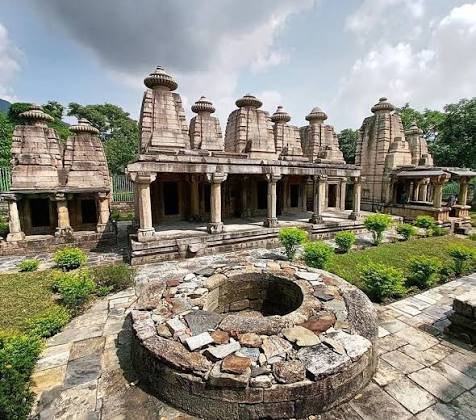
Often referred to as the “Town of Temples” and “Sanskritik Nagari” (Cultural Heritage Town), this magnificent settlement is a land of unparalleled historical significance and natural beauty. Located in the Kumaon region of Uttarakhand, Dwarahat is home to one of the densest concentrations of ancient temple architecture in the Himalayas, with approximately 55 temples built between the 7th and 12th centuries CE.
What makes Dwarahat truly special is its extraordinary diversity—from the intricately carved stone shikharas of the Maniyan and Badrinath temple groups to the mystical Dunagiri Temple just 8 km away, from the serene Pandukholi caves to the panoramic views of the Kumaon hills. The town is a living repository of the Katyuri dynasty’s architectural brilliance, with temples dedicated to Shiva, Vishnu, Devi, Surya, and Vedic deities, covering all major Hindu traditions.
The name “Dwarahat” is derived from “Dwar” and “Hari”, which implies “Way to Heaven” — a fitting name for this sacred land nestled in the ravishing Kumaon hills of Uttarakhand.
The journey to Dwarahat, which begins from the spiritual hubs of Kathgodam or Almora, is an accessible yet profoundly rewarding adventure through ancient temples, sacred caves, and the majestic Himalayan wilderness. It offers a profound sense of peace, spiritual connection, and a deep appreciation for the rich cultural heritage of Uttarakhand.
Key Information at a Glance
| Aspect | Details |
|---|---|
| Location | Almora District, Uttarakhand |
| Type | Town / Nagar Panchayat |
| District | Almora |
| Coordinates | 29°47′N 79°26′E / 29.78°N 79.43°E |
| Elevation | 1,510 m (4,950 ft) |
| Population (2011) | 2,749 |
| Literacy Rate | 92.82% |
| Official Language | Hindi |
| Regional Language | Kumaoni |
| PIN Code | 263653 |
| Vehicle Registration Code | UK-01 (Almora) |
| Nearest Airport | Pantnagar Airport (~97 km) |
| Nearest Railway Station | Kathgodam (~90 km) |
| Best Time to Visit | March–June & September–November |
| Known For | Katyuri Temples, Dunagiri Temple, Pandukholi Caves, Sanskritik Nagari |
History of Dwarahat
Ancient Roots in the Katyuri Dynasty
Dwarahat has a rich and vibrant history that dates back to the ancient Katyuri dynasty, which ruled the region from the 7th to the 11th century. The town was the capital of the Katyuri kings, who were great patrons of art and architecture. They constructed as many as 55 ancient temples in Dwarahat, earning it the title of “Sanskritik Nagari” (Cultural Heritage Town).
The Katyuri Temple Architecture
The temples of Dwarahat are a testament to the architectural brilliance of the Katyuri dynasty. The architecture is similar to that of the Gurjari School of Art, and the temples are notable as central Himalayan temples with connections to distant parts of India. For example, the Gujardeo group illustrates Maru-Gurjara architecture found in and near Gujarat — a testament to the flow of ideas across long distances in medieval India.
The temple groups in Dwarahat include the Badrinath group, Gujjardev group, Maniyan temples, Ratandev group, Mrityunjay group, Katchery Deval, and Vandev temples. The temples are dedicated to Shiva, Vishnu, Devi, Surya, and Vedic deities, covering all the major Hindu traditions.
The Decline and Restoration
The Dwarahat temples were reduced to ruins by the Delhi Sultanate and later the Mughals. Dwarahat was again subject to pillage and desecration by Hafiz Khan and Bakshi Khan in the mid-18th century. Some temples were restored after the 15th century, and more recently in the 21st century by the regional Hindu community and the Archaeological Survey of India (ASI).
The Legend of the Pandavas
Dwarahat lies on the ancient central Himalayan devotional trail referred to in the Skanda Purana as the Manasakhanda, leading up to Manasarovar. Dwarahat was also said to have been visited by the exiled Pandavas. Local legends speak of the Pandukholi caves, believed to be where the Pandavas took refuge during their exile.
Modern Administrative History
Dwarahat is a town and Nagar Panchayat in the Almora district of Uttarakhand. It is about 37 km from Ranikhet and is an important cultural, historic, educational, and trade centre of Uttarakhand. The town is home to the Bipin Tripathi Kumaon Institute of Technology, a government engineering college established in 1991.
Geography of Dwarahat
Location and Topography
Dwarahat is situated at an elevation of 1,510 metres (4,950 feet) above sea level in the Kumaon region of the Himalayas. The town is nestled in the ravishing Kumaon hills and is surrounded by lush green forests and panoramic views of the Himalayan range.
| Feature | Details |
|---|---|
| Location | Almora district, Kumaon region, Uttarakhand |
| Coordinates | 29°47′N 79°26′E |
| Elevation | 1,510 m (4,950 ft) |
| Terrain | Himalayan ridges, forests, and meadows |
| Key Rivers | Kosi, Ramganga |
| Borders | Ranikhet (south), Almora (east), Kausani (north) |
The Himalayan Panorama
Dwarahat offers spectacular views of the Himalayan mountain peaks of the western Kumaon range. The most prominent peaks visible from the town include:
- Nanda Devi (7,816 m) – The highest peak entirely within India
- Trishul (7,120 m) – A majestic three-peaked mountain
- Panchachuli (6,904 m) – The “five cooking hearths” peaks
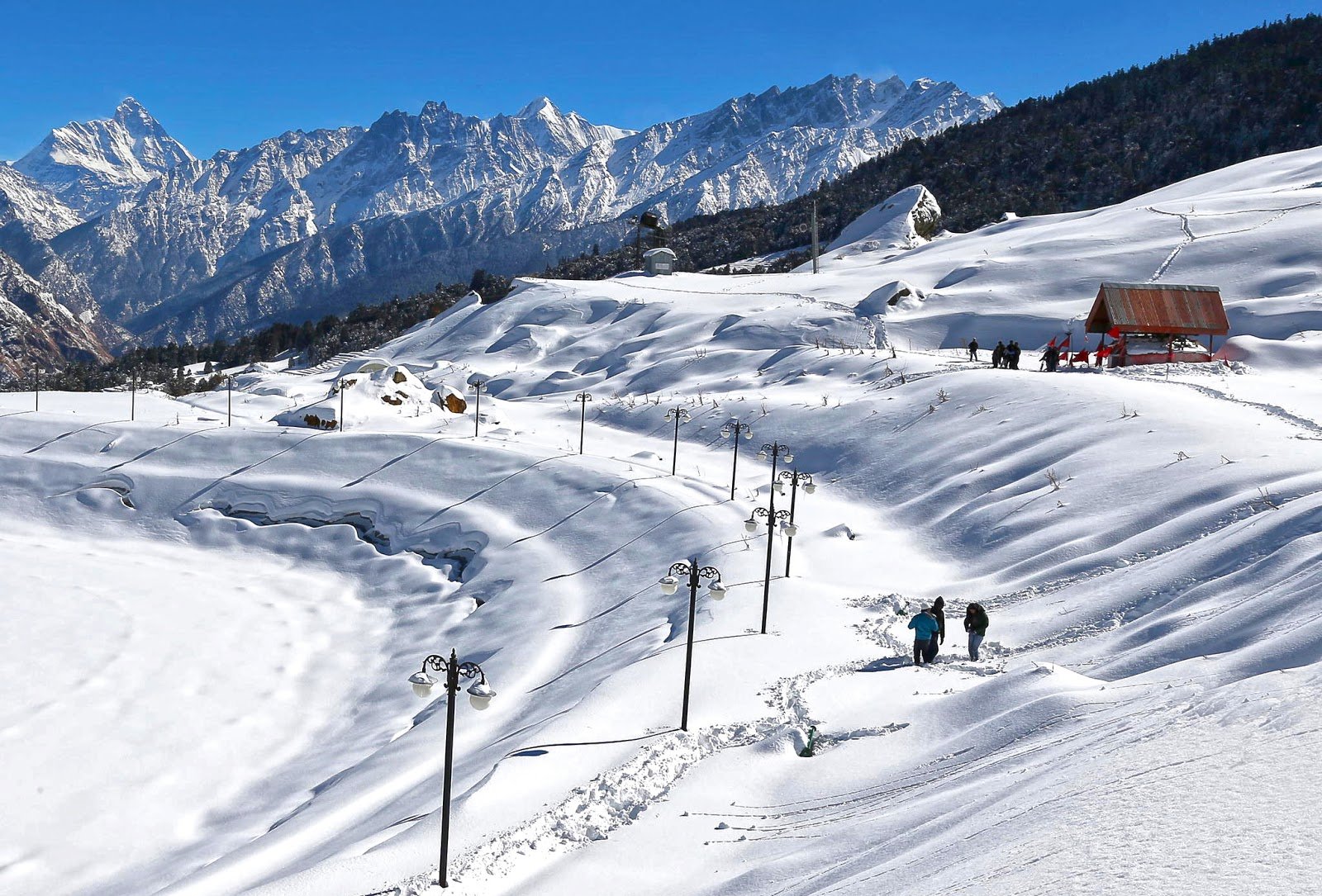
These snow-capped peaks glow in golden colours during sunrise and sunset, creating a mesmerising spectacle for visitors.
Major Landmarks and Valleys
Dwarahat is surrounded by several prominent landmarks and scenic valleys:
- Dunagiri Hill – A prominent hill 8 km from Dwarahat, home to the famous Dunagiri Temple
- Pandukholi Caves – Ancient caves 27 km from Dwarahat, associated with the Pandavas
- Katarmal Sun Temple – A 9th-century sun temple 17 km from Dwarahat
Flora and Fauna
Flora
Dwarahat is blessed with extraordinary biodiversity, with forests that form a beautiful canopy of pine, oak, and deodar trees. The region’s forest types include:
- Pine Forests – Dominant at lower elevations, with Pinus roxburghii being common
- Oak Forests – Found in the mid-hills, with Quercus spp. common in high-altitude areas
- Deodar Forests – Higher elevations
- Medicinal Plants – Including rare and endangered species of shrubs and herbs
The area is rich in biodiversity, with various opportunities for wildlife spotting and eco-tourism. Ranikhet, a short drive from Dwarahat, is famous for its apple orchards and lush pine forests.
Fauna
Dwarahat and its surrounding regions are home to a remarkable variety of Himalayan wildlife:
Mammals:
- Leopard – The apex predator of the region
- Barking Deer (Kakar)
- Musk Deer
- Himalayan Black Bear
- Red Fox
- Himalayan Tahr
- Serow
Birds:
- Himalayan Monal – Uttarakhand’s state bird
- Golden Eagle
- Bearded Vulture
- Western Tragopan
- Various pheasant species
The region is also home to rare species of butterflies, insects, frogs, toads, and leeches, making it a biodiversity hotspot in the Kumaon region.
Protected Areas
| Protected Area | Type | Significance |
|---|---|---|
| Binsar Wildlife Sanctuary | Wildlife Sanctuary | Home to leopards, barking deer, and Himalayan birds |
| Nanda Devi Biosphere Reserve | Biosphere Reserve | UNESCO Site, accessible from the region |
Religious Beliefs and Significance
The Land of Temples
Dwarahat is rightly called the “Town of Temples” and “Sanskritik Nagari”. The town is mentioned in ancient scriptures and is deeply revered in Hindu mythology. It is believed that the Katyuri kings constructed as many as 55 temples here, dedicated to various Hindu deities.
The Dunagiri Temple
The Dunagiri Temple is the most famous in the Dwarahat region, located 8 km from the town. It is a major Shakti site dedicated to Goddess Durga, situated on a forested ridge with views of the Almora hills. The temple is adorned by locals and is associated with many myths, including the legend that Hanuman visited the area while searching for the Sanjeevani Booti.
The Mrityunjay Temple
The Mrityunjay Temple is another significant temple in Dwarahat, dedicated to Lord Shiva in his form as the conqueror of death. The temple is part of the Mrityunjay group of temples and is believed to have been constructed by the Katyuri kings.
The Badrinath Temple
There is also a Badrinath Temple in Dwarahat, dedicated to Lord Vishnu. It is a beautiful example of imported Gahadavala-style architecture, which was prevalent in the regions of Uttar Pradesh. The temple was constructed by the Katyuri kings and is one of the most important temples in the town.
The Mahavatar Babaji Cave
The Mahavatar Babaji Cave in Dwarahat is a sacred meditation site linked to Kriya Yoga. It is believed that Mahavatar Babaji, the legendary yogi who revived Kriya Yoga in the modern era, meditated in this cave. The cave offers peace, trekking, and spiritual energy, making it a must-visit for spiritual seekers.
The Katarmal Sun Temple
The Katarmal Sun Temple, located 17 km from Dwarahat, is a 9th-century sun temple dedicated to Lord Surya. It is one of the most important sun temples in India and is a fine example of Katyuri architecture.
Local Festivals and Celebrations
Dwarahat and the surrounding region celebrate several festivals with great enthusiasm:
- Harela – A festival celebrating the sowing of seeds and the arrival of spring
- Bikhot – A festival marking the beginning of the agricultural year
- Uttarayani – A harvest festival celebrated with great fervour
- Diwali – The festival of lights
- Local Fairs – Traditional fairs that showcase the vibrant culture of the Kumaon region
How to Reach Dwarahat
Dwarahat is well connected by road and can be easily reached from major cities in Uttarakhand and North India.
By Air
The nearest airport is Pantnagar Airport in Nainital, approximately 97 km from Dwarahat. Pantnagar Airport is well connected to Delhi with daily flights. Taxis are available from the airport to Dwarahat.
| Route | Distance | Travel Time |
|---|---|---|
| Pantnagar Airport → Dwarahat | ~97 km | 3–4 hours |
By Train
The nearest railway station is Kathgodam, approximately 90 km from Dwarahat. Kathgodam is well connected by railway networks with major destinations in India, including Lucknow and Delhi. Taxis and buses are available from Kathgodam to Dwarahat.
| Route | Distance | Travel Time |
|---|---|---|
| Kathgodam → Dwarahat | ~90 km | 3–4 hours |
By Road
Dwarahat is well connected by motorable roads with major destinations in Uttarakhand. The town is situated on the Ranikhet–Chaukhutia road and is easily accessible from Almora, Ranikhet, and Kausani.
| Route | Distance | Travel Time |
|---|---|---|
| Delhi → Dwarahat | ~401–424 km | 10–12 hours |
| Dehradun → Dwarahat | ~450–484 km | 12–13 hours |
| Kathgodam → Dwarahat | ~90 km | 3–4 hours |
| Almora → Dwarahat | ~49–65 km | 2–3 hours |
| Ranikhet → Dwarahat | ~37–47 km | 1.5–2 hours |
| Kausani → Dwarahat | ~18 km | 1 hour |
Bus Services:
- Buses to Kathgodam and Almora are available from ISBT Kashmiri Gate, New Delhi
- Buses and taxis to Dwarahat are easily available from Kathgodam, Almora, Ranikhet, and Kausani
Local Transport
Within Dwarahat and the surrounding areas, local transport options include:
- Taxis and shared jeeps for local travel
- Walking to explore the temple groups and scenic beauty
- Buses connecting major towns and villages
Weather and Best Time to Visit
Climate Overview
Dwarahat experiences a subtropical highland climate with distinct seasons, ranging from pleasant summers to cold winters. The town’s elevation of 1,510 metres ensures comfortable temperatures for most of the year.
Seasonal Breakdown
| Season | Months | Weather | Suitability |
|---|---|---|---|
| Summer | April–June | Pleasant, 15–30°C | ⭐ Best |
| Monsoon | July–August | Heavy rainfall, landslides, lush greenery | Avoid |
| Autumn | September–November | Crisp air, clear views | ⭐ Best |
| Winter | December–March | Cold, occasional snowfall | Good for offbeat travel |
Best Time to Visit
| Season | Months | Highlights |
|---|---|---|
| Summer | March–June | Pleasant weather, clear views, ideal for temple exploration and trekking |
| Autumn | September–November | Post-monsoon clarity, crisp air, best mountain views |
| Winter | December–March | Snowfall in higher areas, peaceful atmosphere |
Note: The best time to visit Dwarahat is from mid-April to mid-June and mid-September to late October for warm-weather activities. Avoid visiting during July and August due to heavy rainfall and landslide risk.
Temperature
| Season | Daytime Temperature | Nighttime Temperature |
|---|---|---|
| Summer (April–June) | 20°C to 30°C | 15°C to 20°C |
| Monsoon (July–August) | 15°C to 25°C | 15°C to 20°C |
| Autumn (Sept–Nov) | 15°C to 25°C | 10°C to 15°C |
| Winter (Dec–March) | 5°C to 15°C | 5°C to 8°C |
The temperature typically varies from 41°F to 83°F over the course of the year and is rarely below 36°F or above 89°F. The hottest month is June, with an average high of 81°F, and the coldest month is January, with an average low of 41°F.
Nearby Places
| Destination | Distance from Dwarahat | Highlights |
|---|---|---|
| Dunagiri Temple | ~8 km | Major Shakti site, forested ridge, Himalayan views |
| Pandukholi Caves | ~27 km | Ancient caves associated with the Pandavas, trekking |
| Katarmal Sun Temple | ~17 km | 9th-century sun temple, Katyuri architecture |
| Ranikhet | ~37–47 km | Hill station, apple orchards, pine forests |
| Almora | ~49–65 km | Cultural capital of Kumaon |
| Kausani | ~18 km | “Switzerland of India,” Anasakti Ashram |
| Nainital | ~97 km | Famous lake hill station |
| Binsar | ~30 km | Wildlife sanctuary, Himalayan views |
| Jageshwar | ~60 km | Ancient Shiva temples, UNESCO tentative list |
| Chitai Golu Devta Temple | ~50 km | Famous temple of justice, wish-fulfilling deity |
Distance from Major Cities
| City | Distance (Approx.) | Travel Time |
|---|---|---|
| Delhi | ~401–424 km | 10–12 hours |
| Dehradun | ~450–484 km | 12–13 hours |
| Kathgodam | ~90 km | 3–4 hours |
| Almora | ~49–65 km | 2–3 hours |
| Ranikhet | ~37–47 km | 1.5–2 hours |
| Nainital | ~97 km | 3–4 hours |
| Haridwar | ~375–407 km | 10–11 hours |
| Lucknow | ~475–491 km | 11–12 hours |
Frequently Asked Questions (FAQs)
General Questions
Q1: What is Dwarahat?
A: Dwarahat is a town and Nagar Panchayat in the Almora district of Uttarakhand, known as the “Town of Temples” for its 55 ancient Katyuri-dynasty temples.
Q2: Where is Dwarahat located?
A: Dwarahat is located in the Almora district of Uttarakhand, in the Kumaon region of the Himalayas, at an elevation of 1,510 metres.
Q3: What is the elevation of Dwarahat?
A: Dwarahat is situated at an elevation of 1,510 metres (4,950 feet) above sea level.
Q4: What is Dwarahat famous for?
A: Dwarahat is famous for its 55 ancient Katyuri-dynasty temples, the Dunagiri Temple, the Pandukholi Caves, and the Mahavatar Babaji Cave.
Q5: What is the best time to visit Dwarahat?
A: The best time is mid-April to mid-June and mid-September to late October. Avoid July–August due to heavy rainfall.
Q6: What is the nearest airport to Dwarahat?
A: The nearest airport is Pantnagar Airport in Nainital, approximately 97 km away.
Q7: What is the nearest railway station to Dwarahat?
A: The nearest railway station is Kathgodam, approximately 90 km away.
Q8: How far is Dwarahat from Delhi?
A: Dwarahat is approximately 401–424 km from Delhi, about a 10–12 hour drive.
Q9: What is the vehicle registration code for Dwarahat?
A: The vehicle registration code for Dwarahat is UK-01 (Almora district).
Q10: What is the PIN code of Dwarahat?
A: The PIN code of Dwarahat is 263653.
Q11: What is the population of Dwarahat?
A: According to the 2011 Census, the population of Dwarahat is 2,749.
Q12: What is the literacy rate of Dwarahat?
A: The literacy rate of Dwarahat is 92.82%, which is higher than the state average of 78.82%.
Q13: What is the name “Dwarahat” derived from?
A: The name “Dwarahat” is derived from “Dwar” and “Hari”, which implies “Way to Heaven.”
Q14: What are the major temple groups in Dwarahat?
A: The major temple groups are the Badrinath group, Gujjardev group, Maniyan temples, Ratandev group, Mrityunjay group, Katchery Deval, and Vandev temples.
Q15: What is the significance of the Dunagiri Temple?
A: The Dunagiri Temple is a major Shakti site dedicated to Goddess Durga, located 8 km from Dwarahat on a forested ridge.
Q16: What is the Mahavatar Babaji Cave?
A: The Mahavatar Babaji Cave is a sacred meditation site linked to Kriya Yoga, believed to be where Mahavatar Babaji meditated.
Q17: What is the Katarmal Sun Temple?
A: The Katarmal Sun Temple is a 9th-century sun temple dedicated to Lord Surya, located 17 km from Dwarahat.
Q18: What wildlife can be found near Dwarahat?
A: Dwarahat is home to leopards, barking deer, musk deer, Himalayan black bear, red fox, Himalayan tahr, and various bird species including the Himalayan Monal.
Q19: What is the Pandukholi trek?
A: The Pandukholi trek leads to ancient caves 27 km from Dwarahat, associated with the Pandavas from the Mahabharata.
Q20: How do I reach Dwarahat from Kathgodam?
A: Dwarahat is about 90 km from Kathgodam, reachable by road via Almora. Buses and taxis are readily available.
Q21: What is the mythological significance of Dwarahat?
A: Dwarahat lies on the ancient central Himalayan devotional trail referred to in the Skanda Purana as the Manasakhanda. It was also visited by the exiled Pandavas.
Q22: What is the local language of Dwarahat?
A: The official language is Hindi, and the regional language is Kumaoni.
Q23: Is Dwarahat a good destination for offbeat travellers?
A: Yes, Dwarahat is an offbeat destination perfect for those seeking ancient temple architecture, Himalayan scenery, and spiritual experiences away from crowded tourist spots.
Q24: What is the significance of the Katyuri dynasty in Dwarahat?
A: The Katyuri dynasty ruled the region from the 7th to the 11th century and constructed the 55 ancient temples that Dwarahat is famous for.
Q25: What is the best way to explore the temples of Dwarahat?
A: Hire a local guide in Dwarahat town to identify the different temple groups and explain the iconography. Allow 2–3 hours for a thorough visit to all accessible shrines.
Essential Tips for Visitors
- Best Time: Plan your visit between mid-April and mid-June or mid-September and late October for pleasant weather
- Footwear: Wear comfortable walking shoes as the terrain is hilly and uneven
- Clothing: Carry light woollens even in summer, as evenings can be cool; heavy woollens in winter
- Monsoon Caution: Avoid visiting during July–August due to heavy rainfall and landslides
- Temple Exploration: Hire a local guide to understand the iconography and history of the temples
- Photography: Photography is generally permitted; some temple trusts request a small photography fee
- Local Cuisine: Try local Kumaoni dishes like bhatt ki churkani, aloo ke gutke, and bal mithai
- Hydration: Carry water, especially if exploring on foot
- Accommodation: Book in advance during peak seasons (May–June and September–October)
- Respect Local Culture: Dwarahat is a sacred land; maintain the sanctity of temples and natural sites
- Leave No Trace: Respect the fragile Himalayan ecosystem
- Inform Family: Let someone know your itinerary, especially if trekking in remote areas
- Altitude Sickness: Be aware of symptoms if visiting high-altitude areas
- Weather Updates: Check weather forecasts before travelling, especially during monsoon and winter
- Guided Tours: Independent exploration without context misses most of the significance; consider hiring a local guide
Plan Your Dwarahat Adventure with Discover Uttarakhand
At Discover Uttarakhand, we’ve been organising unforgettable Himalayan journeys since 1997. As a trusted local operator with deep knowledge of the Kumaon region, we offer:
✅ Customised Dwarahat tour packages
✅ Combined itineraries with Almora, Ranikhet, Kausani, and Nainital
✅ Experienced local guides and temple historians
✅ Comfortable transport with experienced hill drivers
✅ All necessary permits and arrangements
✅ Quality accommodation and nutritious meals
✅ 24/7 customer support throughout your journey
Recommended Dwarahat Packages
| Package | Duration | Starting Point | Highlights |
|---|---|---|---|
| Dwarahat Temple Trail | 3 Days / 2 Nights | Kathgodam | Dwarahat temples, Dunagiri Temple, Katarmal Sun Temple |
| Kumaon Heritage Expedition | 5 Days / 4 Nights | Kathgodam | Dwarahat, Jageshwar, Almora, Binsar |
| Dwarahat Spiritual Journey | 6 Days / 5 Nights | Delhi | Dwarahat, Mahavatar Babaji Cave, Dunagiri, Katarmal |
| Dwarahat Complete Exploration | 7 Days / 6 Nights | Delhi | Dwarahat, Ranikhet, Kausani, Nainital, Almora |
📞 Call / WhatsApp: +91-9997187178, 9760222178, 8171977178
📍 Visit Our Office: Himalayan Colony, opposite DSVV, Haripur Kalan, Haridwar, Motichur Range, Uttarakhand 249411
🌐 Website: www.discover-uttarakhand.com
📧 Email: discoveruttarakhand.mail@gmail.com
Plan your journey to Dwarahat with proper preparation and respect for this sacred land where mythology comes alive. Experience the divine presence of the Himalayas in one of India’s most spiritually significant and architecturally rich destinations.
Discover Uttarakhand – Your Local Partner for Unforgettable Himalayan Journeys Since 1997 🏔️