
Overview
Har Ki Dun, translating to the “Valley of Gods,” is not merely a trekking destination; it is a journey through time, mythology, and breathtaking natural beauty. Often referred to as the “Stairway to Heaven,” this ancient trail in the Garhwal Himalayas is believed to be the very path the Pandavas from the Mahabharata took on their final ascent to the heavens.
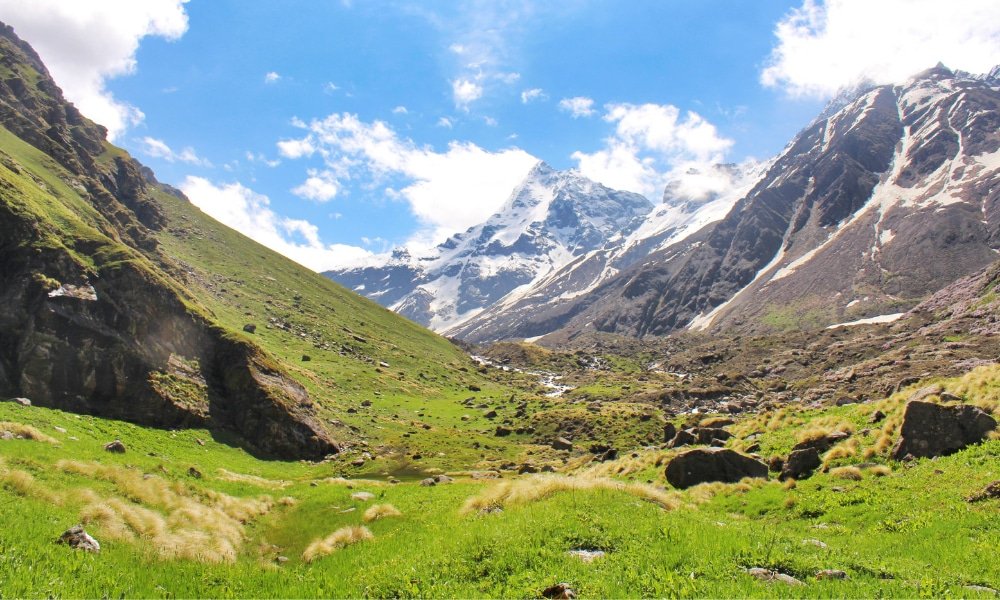
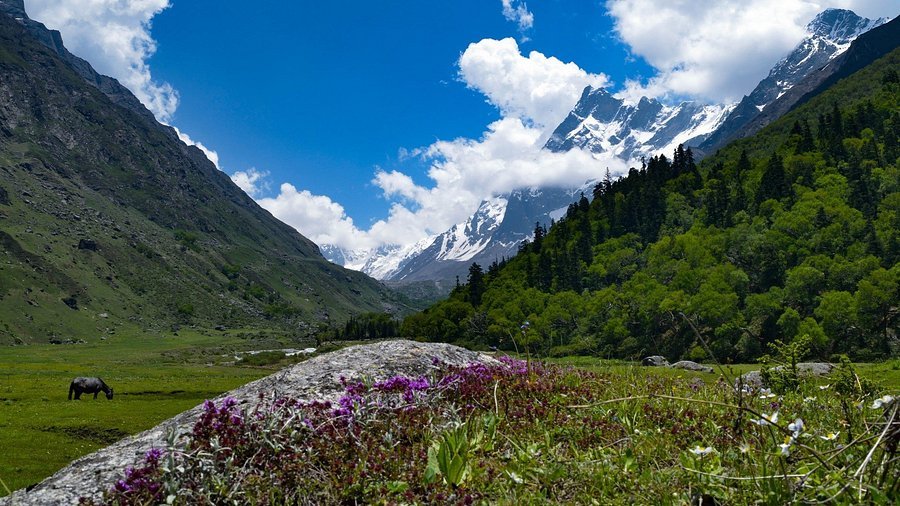
Nestled in the core area of the Govind Wildlife Sanctuary and National Park at an elevation of approximately 11,700 feet (3,566 metres), this cradle-shaped hanging valley is a paradise for trekkers, nature lovers, and spiritual seekers alike. The trail winds along the crystal-clear Thamsa River, flanked by dense forests and high-altitude meadows (bugyals), and offers awe-inspiring views of legendary peaks like Swargarohini, Bandarpoonch, and Kalanag (Black Peak).
Unlike the crowded trails of more commercial treks, Har Ki Dun remains an unspoiled gem. It’s an easy-to-moderate trek, making it a perfect choice for first-time trekkers as well as seasoned adventurers. Whether you are drawn by its mythological significance, its rich biodiversity, or the simple desire to walk through a living piece of Himalayan history, Har Ki Dun promises an experience that stays with you forever.
Key Information at a Glance
History and Mythology
The Pandavas’ Final Journey
The story of Har Ki Dun is inextricably woven with the epic conclusion of the Mahabharata. After the Kurukshetra war and years of righteous rule, the five Pandava brothers and their wife Draupadi renounced their earthly kingdom to embark on their final journey to heaven.
According to legend, they walked through this very valley, ascending towards the majestic Swargarohini Peak, which translates to “Ascent to Heaven”. The mythology describes how, one by one, Draupadi and four of the Pandavas fell along the way, unable to complete the divine journey. Only Yudhishthira, the eldest and most righteous brother, accompanied by a loyal dog (believed to be Dharma in disguise), reached the summit and ascended to heaven in his mortal body.
The Name “Har Ki Dun”
The name itself, translating to “Valley of Gods,” signifies its deep spiritual importance. Due to its mythological connection with the Pandavas and Lord Shiva, it is also called the Valley of Shiva (Shiv Ghati). The Someshwar Mahadev Temple exists here, adding to its sacred aura.
An Ancient Trail
Har Ki Dun is one of the oldest and most revered trekking routes in India. It has been known for centuries, long before modern trekking guides existed, and you can feel that ancient connection as you walk through villages like Taluka and Osla, where traditions have been passed down for generations. A local legend speaks of a drummer who got lost in the valley while searching for Lord Someshwara, further highlighting the area’s mystical heritage.
Geography of Har Ki Dun
Location and Topography
Har Ki Dun is a stunning cradle-shaped hanging valley located in the western part of Garhwal, in the Uttarkashi district of Uttarakhand. It is carved by the Thamsa River and is situated within the Govind Wildlife Sanctuary and National Park, which is the prime source of the Yamuna River basin system. The valley is linked to the Baspa Valley of Himachal Pradesh via the Borasu Pass.
| Feature | Details |
|---|---|
| Coordinates | Approx. 31.1°N, 78.3°E |
| Average Altitude | 3,566 m (11,700 ft) |
| River | Thamsa River |
| Notable Peaks | Swargarohini, Bandarpoonch, Kalanag |
The Trail and Terrain
The trek covers approximately 44 to 57 kilometres over 6-7 days, depending on the route and side excursions. The terrain is diverse, taking trekkers through:
- Dense Forests: Rhododendron, deodar, oak, chestnut, walnut, and chinar trees.
- Alpine Meadows (Bugyals): Vast, green pastures that burst into colourful wildflowers in spring.
- Glacial Streams: The trail follows the Thamsa River with numerous water crossings.
Key Points on the Route
- Base Camp: Sankri Village (6,400 ft).
- Taluka: The road head and the start of the trek, 12 km from Sankri.
- Seema/Osla: A scenic village at 14 km from Taluka, known for its ancient wooden houses and temples.
- Har Ki Dun Valley: The final destination, 12 km from Seema/Osla.
Flora and Fauna
Trekking through the Har Ki Dun valley is a journey through one of India’s most pristine national parks, offering a rich tapestry of biodiversity.
Flora
The valley is a paradise for botany lovers. The forests are a mix of broad-leaved and coniferous trees. The changing seasons paint the landscape in a spectrum of colours:
- Trees: Deodar, oak, rhododendron, pine, chestnut, walnut, and chinar.
- Spring Blooms: The valley is famous for its vibrant rhododendrons and a myriad of colourful wildflowers that carpet the green meadows.
- Autumn Hues: In autumn, the forests transform into a canvas of gold and red.
Fauna
The region is a sanctuary for a wide variety of Himalayan wildlife. Lucky trekkers might spot some of these incredible creatures:
| Mammals | Birds |
|---|---|
| Snow Leopard | Himalayan Monal (State Bird of Uttarakhand) |
| Himalayan Black & Brown Bear | Golden Eagle |
| Musk Deer | Bearded Vulture |
| Serow | Snowcock |
| Bharal (Blue Sheep) | Koklas & Kaleej Pheasants |
| Tahr | Chukor |
Religious Beliefs and Sacred Sites
The Someshwar Mahadev Temple
At the heart of the valley lies the Someshwar Mahadev Temple, dedicated to Lord Shiva. This temple is a testament to the valley’s spiritual significance and its connection to the Pandavas. The name “Valley of Shiva” (Shiv Ghati) is derived from this deep-rooted association.
The “Stairway to Heaven”
The entire valley is considered sacred, as it is believed to be the path taken by the Pandavas on their ascent to heaven. The view of the Swargarohini peak from the valley is a powerful reminder of this mythological journey, transforming the trek into a spiritual odyssey.
Traditional Villages
The villages along the route, such as Osla and Seema, are not just places to rest but are living museums of ancient Garhwali culture. They are home to traditional wooden houses, age-old water mills, and local customs that have remained unchanged for centuries.
How to Reach Har Ki Dun
By Air — Nearest Airports
| Detail | Information |
|---|---|
| Nearest Airport | Jolly Grant Airport, Dehradun |
| Distance to Base | ~210 km to Sankri |
| Travel Time | 10–12 hours by road |
From Dehradun Airport to Sankri:
- Hire a private taxi or take a bus to Sankri. The drive passes through Mussoorie and Kempty Falls.
By Train — Nearest Railway Stations
| Detail | Information |
|---|---|
| Nearest Station | Dehradun Railway Station |
| Distance to Base | ~210 km to Sankri |
| Travel Time | 10–12 hours by road |
From Dehradun to Sankri:
- Take a taxi or a bus from the railway station to Sankri.
By Road (Most Popular)
| Route | Distance | Travel Time |
|---|---|---|
| Delhi to Sankri | ~400 km | 10–12 hours (drive) |
| Dehradun to Sankri | ~210 km | 8–10 hours |
| Sankri to Taluka | 12 km | ~1 hour |
Route from Delhi:
- Option 1 (Direct Drive): Delhi → Dehradun → Mussoorie → Sankri (10–12 hours).
- Option 2 (Train to Dehradun): Delhi → Dehradun (5–6 hours by train) → Sankri (8–10 hours by taxi/bus).
Transport Options:
- Private Taxi: The most convenient and flexible option.
- State Transport Buses: Buses are available from Dehradun and Rishikesh to Sankri.
- Shared Taxis: Available from Dehradun and major towns.
Distance from Major Cities
| City | Approx. Distance to Sankri | Approx. Travel Time |
|---|---|---|
| Delhi | 400 km | 10–12 hours |
| Dehradun | 210 km | 8–10 hours |
| Rishikesh | 220 km | 8–9 hours |
| Haridwar | 236 km | 8–9 hours |
Note: The total distance from Delhi to the Har Ki Dun valley, including the trek from Sankri, is approximately 489 km.
Weather and Best Time to Visit
The Har Ki Dun trek offers a unique experience in every season, but the best times are during the pre-monsoon and post-monsoon months.
Seasonal Breakdown
Best Time to Visit by Season
| Season | Months | Suitability | Best For |
|---|---|---|---|
| Summer | April–June | ⭐ Best | Pleasant weather, lush green landscapes, vibrant wildflowers |
| Autumn | September–November | ⭐ Best | Crystal clear views of peaks, golden forests, comfortable trekking |
Why Visit in Summer (April–June)
- This is one of the most popular times to visit.
- The weather is pleasant with clear skies and vibrant green landscapes.
- The valley is full of blooming flowers.
Why Visit in Autumn (September–November)
- Known as the “Crystal Season,” the skies are absolutely clear, offering the best views of the mountains.
- The forests turn a stunning shade of gold and red.
- The weather remains dry, preventing leeches.
Why to Avoid Monsoon (July–August)
- Trekking is generally not recommended due to heavy rainfall, which makes trails slippery and dangerous.
- There is a high risk of landslides and leeches.
Why to Avoid Winter (December–February)
Trek Itinerary (7 Days / 6 Nights)
This is a classic 7-day itinerary for the Har Ki Dun trek.
Day 1: Dehradun to Sankri (Base Camp)
- Distance: ~210 km
- Travel Time: 10–12 hours
- Route: Dehradun → Mussoorie → Kempty Falls → Sankri
- Altitude: 1,950 m (6,400 ft)
- Overnight: Guesthouse or hotel in Sankri.
Day 2: Sankri to Taluka (Drive) & Trek to Seema/Osla
- Drive (Sankri to Taluka): 12 km / ~1 hour.
- Trek (Taluka to Seema/Osla): 14 km / 6–7 hours.
- Highlights: Trek along the Supin River, cross small bridges, walk through dense forests of rhododendron, deodar, and oak.
- Altitude: Seema/Osla (~2,600 m)
- Overnight: Camp or guesthouse at Seema/Osla.
Day 3: Seema/Osla to Har Ki Dun Valley
- Trek Distance: 12 km / 6 hours.
- Highlights: The most scenic stretch of the entire trek, winding through the Govind National Park. The trail opens into a wide meadow surrounded by snow peaks.
- Altitude: 3,566 m (11,700 ft).
- Overnight: Camp at Har Ki Dun.
Day 4: Explore Har Ki Dun & Morinda Tal / Jaundhar Glacier (Optional)
- Activities: Explore the stunning valley, trek to Morinda Tal (4 km) or the Jaundhar Glacier (7 km).
- Highlights: 360-degree views of Swargarohini, Bandarpoonch, and Kalanag peaks.
- Overnight: Camp at Har Ki Dun.
Day 5: Har Ki Dun to Seema/Osla
- Trek Distance: 12 km / 5–6 hours.
- Route: Descend back through the Thamsa River valley.
- Overnight: Camp or guesthouse at Seema/Osla.
Day 6: Seema/Osla to Taluka (Trek) & Drive to Sankri
- Trek (Seema to Taluka): 14 km / 5–6 hours.
- Drive (Taluka to Sankri): 12 km / ~1 hour.
- Overnight: Guesthouse or hotel in Sankri.
Day 7: Sankri to Dehradun
- Distance: ~210 km
- Travel Time: 10–12 hours
- Departure: Transfer to Dehradun Railway Station/Airport.
Nearby Places to Visit
Things to Do on the Har Ki Dun Trek
1. Trek Through the “Valley of Gods”
The primary activity is the trek itself. Walk through an ancient trail that is both a historical and spiritual journey.
2. Witness the Swargarohini Peaks
Stand in awe of the legendary peaks, a constant presence throughout the trek. The view from the valley is said to be one of the most rewarding experiences.
3. Explore Traditional Villages
Spend time in villages like Osla and Seema. Interact with the locals and learn about their preserved Garhwali culture, traditional wooden houses, and age-old customs.
4. Camp Under the Stars
One of the most magical experiences is camping in the valley under a canopy of stars.
5. Wildlife Spotting
Keep an eye out for the diverse wildlife, including the colourful Himalayan Monal and other rare Himalayan birds and animals.
6. Photography
From the golden autumn forests to the spring wildflowers, the valley offers postcard-perfect moments at every step.
Accommodation Options
| Type | Location | Features | Price Range |
|---|---|---|---|
| Hotels/Guesthouses | Sankri | Basic amenities, attached bathrooms | ₹1,000 – ₹3,000 |
| Camps | Seema, Osla, Har Ki Dun | Tents with basic facilities | Included in trek package |
| Homestays | Osla, Seema | Authentic local experience | ₹800 – ₹2,000 |
| Forest Rest Houses | Govind Sanctuary | Basic, booked via forest department | ₹500 – ₹1,500 |
Travel With Monk Recommendation: For a hassle-free experience, it is best to book a comprehensive trek package that includes all accommodation, meals, and a guide.
Local Cuisine
The food on the trek is simple, nutritious, and mostly vegetarian. You’ll get a taste of authentic Garhwali cuisine, especially if you stay in homestays or village guesthouses.
| Dish | Description |
|---|---|
| Kafuli | A traditional dish made from spinach and fenugreek leaves |
| Phanu | A lentil-based dish, a Garhwali speciality |
| Gahat ka Shorba | A nutritious soup made from horse gram |
| Chains | Deep-fried bread, similar to puri |
| Jhangora Kheer | Sweet pudding made from barnyard millet |
| Roti-Sabzi | The staple meal of dal, rice, and vegetables provided by trek operators |
Where to Eat:
- Trek Packages: Most packages include all meals during the trek.
- Local Dhabas: Simple meals are available in Sankri and other villages.
- Homestays: Enjoy authentic home-cooked Garhwali meals.
Frequently Asked Questions (FAQs)
General Questions
Q1: Why is Har Ki Dun called the “Valley of Gods”?
Har Ki Dun is called the “Valley of Gods” because it is believed to be the path that the Pandavas took on their final journey to heaven. The valley is also associated with Lord Shiva, and the Swargarohini peak is considered the “Ascent to Heaven”.
Q2: What is the altitude of Har Ki Dun?
The Har Ki Dun valley sits at an altitude of approximately 3,566 metres (11,700 feet) above sea level.
Q3: What is the difficulty level of the Har Ki Dun trek?
The Har Ki Dun trek is considered easy to moderate, making it suitable for first-time trekkers as well as experienced adventurers.
Q4: How long is the Har Ki Dun trek?
The total trek distance is approximately 44 to 57 kilometres round trip, typically completed in 6 to 7 days.
Q5: What is the best time to visit Har Ki Dun?
The best time to visit is from April to June (summer) and September to November (autumn). During these periods, the weather is stable, and the views are spectacular.
Travel Logistics
Q6: How can I reach the base camp for the Har Ki Dun trek?
The base camp is Sankri Village. You can reach it by:
- Road: Drive from Dehradun (~210 km, 10–12 hours).
- Train: Take a train to Dehradun, then a taxi/bus to Sankri.
- Air: Fly to Jolly Grant Airport, Dehradun, then a taxi/bus to Sankri.
Q7: What is the distance from Delhi to the Har Ki Dun base camp?
The distance from Delhi to Sankri is approximately 400 km. The total journey, including the trek, covers about 489 km.
Q8: Do I need a permit for the Har Ki Dun trek?
Yes. Since the trek passes through the Govind Wildlife Sanctuary and National Park, an entry permit is required. Most trek operators arrange this on your behalf.
Q9: Is mobile connectivity available on the trek?
Mobile connectivity is extremely limited on the trek and is mostly non-existent beyond Sankri. It is advisable to inform your family of your itinerary and rely on your trek operator for communication.
Q10: Are there ATMs near the trek?
ATMs are available in Dehradun and Sankri. It is advisable to carry sufficient cash for the entire trip, as ATMs may not be reliable in remote areas.
Practical Information
Q11: What should I pack for the Har Ki Dun trek?
Pack sturdy waterproof trekking shoes, warm layers (fleece, down jacket), thermal wear, a raincoat, a sun hat, sunscreen, sunglasses, a headlamp, a sleeping bag, and personal medication.
Q12: What is the local language spoken in the region?
The official language is Hindi. The regional language is Garhwali. English is understood in tourist areas.
Q13: Is the Har Ki Dun trek safe for solo trekkers?
It is recommended to join a group or hire a local guide for safety, as the trail is remote and weather can change rapidly. Trekking with a reputable operator is the safest option.
Plan Your Har Ki Dun Trek with Discover Uttarakhand
At Discover Uttarakhand, we’ve been organising unforgettable Himalayan journeys since 1997. As a trusted local operator with deep knowledge of the Garhwal region and its ancient trails, we offer:
✅ Customised Har Ki Dun trek packages (6 to 9 days)
✅ Combined itineraries with Ruinsara Tal, Bali Pass, and Kedarkantha
✅ Experienced local guides and porters
✅ Comfortable transport with experienced hill drivers
✅ All necessary permits and forest entry arrangements
✅ Quality camping equipment and nutritious meals
✅ 24/7 customer support throughout your journey
Recommended Har Ki Dun Packages
| Package | Duration | Starting Point | Highlights |
|---|---|---|---|
| Har Ki Dun Valley Trek | 6 Nights / 7 Days | Dehradun | Sankri, Seema/Osla, Har Ki Dun Valley, Swargarohini views |
| Har Ki Dun & Ruinsara Tal | 8 Nights / 9 Days | Dehradun | Har Ki Dun, Ruinsara Tal, Bali Pass approach |
| Govind Wildlife Sanctuary Explorer | 7 Nights / 8 Days | Dehradun | Har Ki Dun, Kedarkantha, Sankri |
📞 Call / WhatsApp: +91-9997187178, 9760222178, 8171977178
📍 Visit Our Office: Himalayan Colony, opposite DSVV, Haripur Kalan, Haridwar, Motichur Range, Uttarakhand 249411
🌐 Website: www.discover-uttarakhand.com
📧 Email: info@discover-uttarakhand.com
Discover Uttarakhand – Your Local Partner for Unforgettable Himalayan Journeys Since 1997 🏔️