
Overview: The Abode of the Bountiful Goddess
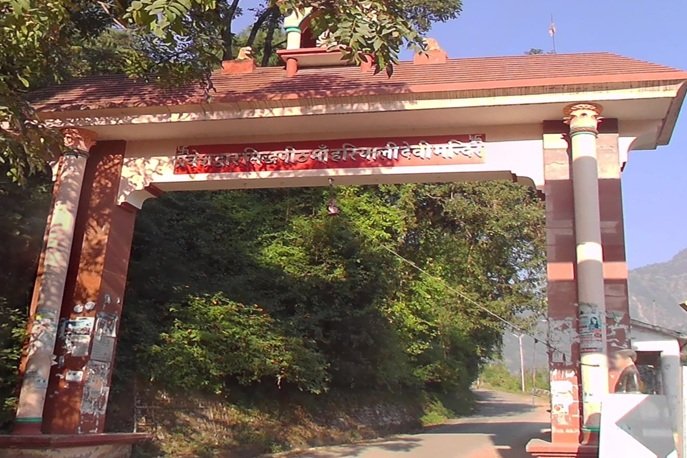
Tucked away in the Rudraprayag district of Uttarakhand, Hariyali Devi Temple is not just a destination; it is a journey into the spiritual heart of the Garhwal Himalayas and the sacred legacy of one of India’s 58 Siddha Peeths.
Often referred to as the “Sacred Grove of the Bountiful Goddess”, this magnificent temple is a land of unparalleled spiritual energy and profound ecological significance. Located in Jasoli village in the Rudraprayag district, the temple is dedicated to Maa Hariyali Devi, who is also worshipped as Bala Devi, Sitla Mata, and Vaishno Devi.
What makes Hariyali Devi Temple truly special is its extraordinary diversity—from the ancient Siddha Peeth status to the 5.5 sq km sacred grove that surrounds it, one of the largest in India. The temple houses a regally bejewelled idol of Maa Hariyali Devi astride a lion, along with idols of Kshatrapal and Heet Devi. The sacred grove is a community-conserved biodiversity hotspot, rich in oak forests, medicinal herbs, and wildlife, protected by strict customary taboos to preserve its ecological and spiritual integrity.
The name “Hariyali” means “greenery” or “bountiful”, and the legend behind it is deeply connected to the sacred grove. According to local lore, a cow belonging to Phabo village used to drain her milk on a linga hidden in a bush on the mountain. When locals followed it and spread jawar seeds on the spot, they found the seeds had germinated the next day. Since then, the goddess was given the name of Hariyali Devi (bountiful goddess).
The journey to Hariyali Devi Temple, which begins from the spiritual hubs of Rishikesh or Haridwar, is an accessible yet profoundly rewarding adventure through sacred groves, ancient temples, and the majestic Himalayan wilderness. It offers a profound sense of peace, spiritual connection, and a deep appreciation for the rich cultural heritage of Uttarakhand.
Key Information at a Glance
| Aspect | Details |
|---|---|
| Location | Jasoli Village, Rudraprayag District, Uttarakhand |
| Type | Siddha Peeth / Hindu Temple |
| Dedicated To | Maa Hariyali Devi (Bala Devi / Vaishno Devi / Sitla Mata) |
| Elevation | ~1,371–1,400 m (4,498–4,593 ft) |
| Coordinates | 30°19′48.0″N 79°00′24.6″E / 30.330000°N 79.006833°E |
| Official Language | Hindi |
| Regional Language | Garhwali |
| Vehicle Registration Code | UK-13 (Rudraprayag) |
| Nearest Airport | Jolly Grant Airport, Dehradun (~175–179 km) |
| Nearest Railway Station | Rishikesh (~160–182 km) |
| Best Time to Visit | March–June & September–November |
| Known For | Siddha Peeth, Sacred Grove, Hariyali Kantha Yatra |
| Temple Timings | 6:00 AM – 7:00 PM |
History of Hariyali Devi Temple
Ancient Roots in Hindu Mythology
Hariyali Devi Temple has a history deeply rooted in Hindu mythology. According to the Bhagavata Purana and local legends, when Devi Mahamaya was conceived as the seventh child of Devaki, Kansa, the cruel king of Mathura, threw her violently on the ground. Mahamaya’s body split into multiple parts, which were scattered all over the earth. It is believed that one of those parts—the hand—fell at Hariyali Kantha, making this place a revered Siddha Peeth.
Another version of the legend states that Yogmaya, the sister of Lord Krishna, replaced him in the cell of his parents during his birth. When Kansa threw her against the wall, she turned into lightning and came to Hariyali Parvat to make her abode. Since then, the adjoining forest is known as “Hariyali” and is worshipped by people.
The Siddha Peeth Legacy
Hariyali Devi Temple is counted among the 58 Siddha Peeths in India. A Siddha Peeth is a place where the divine feminine energy is believed to be especially powerful, and where devotees can attain spiritual fulfilment. The temple enshrines a bejewelled idol of Maa Hariyali Devi mounted on a lion, along with idols of Kshatrapal (the protector) and Heet Devi.
The Sacred Grove of Hariyali Devi
The temple is surrounded by a 5.5 sq km sacred grove (approximately 550 hectares), which is considered one of the largest sacred groves in India. Though classified as a reserved forest, local communities consider it a sacred grove—an enchanted place ruled by divinity. The grove is protected by strict customary taboos: entry is forbidden for those who have consumed non-vegetarian food, onion, and garlic; women are not allowed inside the grove; gathering fuel and fodder is strictly limited to the fringe area; and felling trees is prohibited. These rules are believed to please the goddess and preserve the purity of the sacred forest.
The Hariyali Kantha Yatra
The Hariyali Kantha Yatra is an annual pilgrimage that commences on the auspicious day of Dhanteras. During this occasion, the palanquin (doli) carrying the adorned deity Hariyali Devi embarks on a journey from the Jasoli temple to the ancestral abode of the goddess, believed to be situated in the Hariyal mountain. The palanquin is adorned with garlands, and a silver statue of the deity enhances its divine presence. The Yatra symbolises a pilgrimage to the parental home of Hariyali Devi, and it holds special significance as it occurs once a year during the festive time of Diwali. Devotees accompany the idol, covering a distance of 6–7 km to reach Hariyali Kantha.
Geography of Hariyali Devi Temple
Location and Topography
Hariyali Devi Temple is situated at an elevation of approximately 1,371–1,400 metres (4,498–4,593 feet) above sea level in the Rudraprayag district of Uttarakhand. The temple is located on top of a hillock in Jasoli village, surrounded by Himalayan peaks and thick forests.
| Feature | Details |
|---|---|
| Location | Jasoli Village, Rudraprayag district, Garhwal Himalayas, Uttarakhand |
| Coordinates | 30°19′48.0″N 79°00′24.6″E |
| Elevation | ~1,371–1,400 m (4,498–4,593 ft) |
| Terrain | Hilltop temple, surrounded by dense Himalayan forests |
| Key Rivers | Alaknanda, Mandakini (nearby) |
| Distance from Rudraprayag | ~38 km |
The Himalayan Panorama
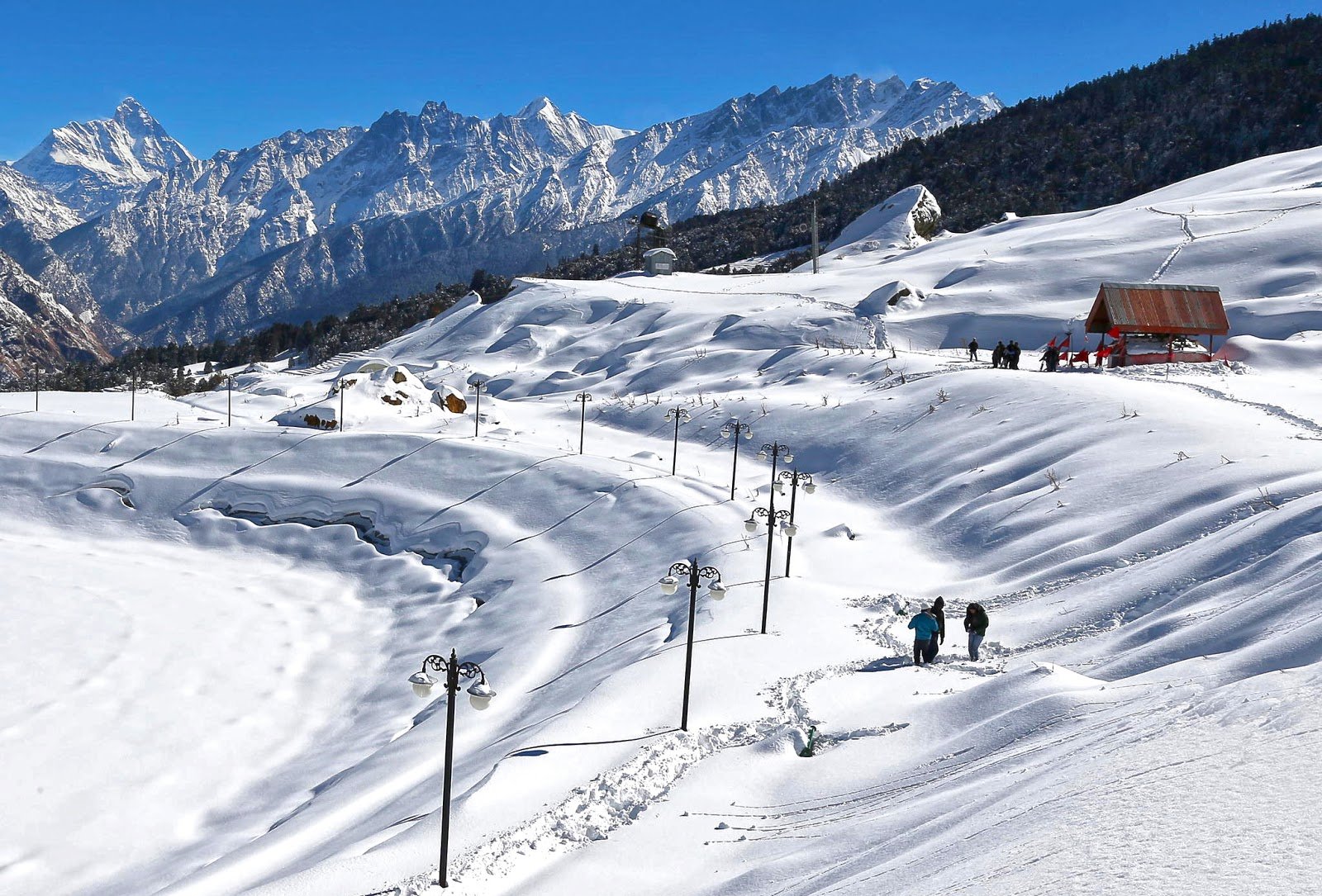
From Hariyali Kantha, one can see the mountain range in a semi-lunar spread. The splendour of the range is sure to fill one’s heart with awe. The temple offers panoramic views of the surrounding Himalayan peaks, including the majestic Nanda Devi, Trishul, and Panchachuli ranges.
The Sacred Landscape
The Hariyali landscape in the Garhwal region of the Central Himalaya is sacred to local communities for socio-cultural and religious reasons. This landscape, with a variety of natural and human-managed ecosystems, covers three villages (Jasholi, Kodima, and Pavo) with a land area of 21.5 km², lying within an altitude range of 1,500–2,800 metres. The landscape has a total population of approximately 1,200 people, and its influence extends to 15 other villages, influencing over 6,000 individuals. Inhabitants are primarily farmers, growing traditional crops—chiefly grains, millets, and pulses. The Thakurs are the dominant caste, and the priests are either Maithani Brahmans or Chamoli Brahmans.
The Seepage Tank
The Hariyali Devi sacred grove acts as a seepage tank for the region. During the monsoon, water flows out of the grove in the form of six streams, which take care of the water needs of nearby villages.
Flora and Fauna
Flora
Hariyali Devi Temple is surrounded by extraordinary biodiversity, with the sacred grove being a community-conserved biodiversity hotspot. The forest is dominated by oak species, particularly Quercus semecarpifolia (Kharsu oak) and Quercus leucotrichophora (Banj oak).
Tree Species:
The forest is a thick canopy of banj oak, burans (Rhododendron arboreum), kharsu (Quercus semecarpifolia), moru, kafal, and dozens of other local shrubs and bushes. One can find rare trees like kharso (Quercus semecarpifolia) and morinda raga (Abres spectabilis), along with Lyonia ovalifolia (anyar).
Herbaceous Layer:
The herbaceous layer underneath mainly comprises herbs like Thalictrum foliolosum (leafy meadow-rue), Hedychium spicatum (kapur kachri), Geranium walichianum (lal jari), Reinwardtia indica (pyoli), and Swertia chiraita (chiraita).
Medicinal Plants:
A study recorded 98 plant species in the Hariyali Devi sacred landscape, with most plant species having ethnomedicinal importance. The grove is home to rare, endangered, and threatened (RET) species including:
- Benthamidia capitata (Rare)
- Desmodium gangeticum (Rare)
- Desmodium podocarpum (Rare)
- Strobilanthes wallichii (Rare)
- Indigofera hamiltonii (Endangered)
- Berberis aristata (Endangered)
- Polygonatum verticillatum (Endangered)
- Swertia angustifolia (Endangered)
- Thalictrum foliolosum (Vulnerable)
- Hedychium spicatum (Vulnerable)
- Bergenia ligulata (Vulnerable)
- Roylea cinerea (Vulnerable)
Fauna
The Hariyali Devi forest harbours many sacred animal and butterfly species. The grove provides a thriving habitat for a remarkable variety of Himalayan wildlife.
Mammals:
- Leopard (Panthera pardus) – Endangered
- Himalayan Black Bear (Selenarctos thibetanus) – Endangered
- Serow (Capricornis sumatraensis) – Near Threatened
- Sambar (Cervus unicolour)
- Leopard Cat (Felis bengalensis)
- Yellow-throated Marten (Martes flavigula) – Rare
Birds:
- Himalayan Monal – Uttarakhand’s state bird
- Golden Eagle
- Bearded Vulture
- Western Tragopan
- Various pheasant species
The dense canopy of the sacred grove supports a thriving microhabitat that includes profuse growths of mosses and other bryophytes, with tree trunks and branches covered in epiphytic angiosperms and pteridophytes.
Protected Areas
| Protected Area | Type | Significance |
|---|---|---|
| Hariyali Devi Sacred Grove | Sacred Grove / Reserve Forest | 550 hectares, 98+ plant species, community-protected |
| Kedarnath Wildlife Sanctuary | Wildlife Sanctuary | Accessible from the region |
| Nanda Devi Biosphere Reserve | Biosphere Reserve | UNESCO Site, accessible from the region |
Religious Beliefs and Significance
The Land of the Siddha Peeth
Hariyali Devi Temple is rightly called the “Siddha Peeth of the Bountiful Goddess”. The temple is deeply revered in Hindu mythology as a place of immense spiritual power, where the hand of Devi Mahamaya fell, making it a sacred Siddha Peeth. The temple enshrines a regally bejewelled idol of Maa Hariyali Devi astride a lion, along with idols of Kshatrapal and Heet Devi.
The Guardian Deities
There are three other gods associated with the Devi, referred to as hits (and named differently as Latto Devata and so forth), for whom temples have been constructed on the three different hilltops surrounding the Hariyali Devi. These gods are said to be the guards of the Devi. The principal structure dedicated to the goddess is the sacred rock piece.
The Van Devis (Forest Spirits)
The sacred grove is believed to be home to van devis (forest spirits) who live in trees. Owing to this belief, felling trees is prohibited in the grove. Only dead trees and fallen branches can be taken outside. Local communities believe that following these rules pleases the goddess, whose temple is located on the mountain peak.
The Legend of the Cow and the Linga
A cow belonging to Phabo village used to drain her milk on a linga hidden in a bush on the mountain. One day, locals followed it and spread a handful of jawar seeds on the spot for identification. The next day, they found the seeds had germinated. Since then, the goddess was given the name of Hariyali Devi (bountiful goddess).
Tales of the Goddess’s Power
Tales narrating the goddess’s magical powers abound. There is a tale about how one Kamal Kant Arora from Chandigarh was brought back to life from the jaws of death as a result of the Devi’s blessings. Another story says a local woman fell ill after she felled a tree. The van devi came to her in dreams and asked her to do penance. It is believed that Hariyali Devi protects her devotees in all the 15 villages of Chamoli inhabited by around 6,000 people.
Festivals and Celebrations
Hariyali Devi Temple is open throughout the year but is more festive at the time of:
- Dhanteras – The Hariyali Kantha Yatra commences on this day
- Janmashtami – Thousands of devotees visit during this festival
- Navratri – Celebrated with great fervour in April and October
- Rakshabandhan – The temple is decorated and visited by devotees
- Deepavali (Diwali) – A major festival, with devotees accompanying the idol to Hariyali Kantha
At these melas (festivals), the local communities reaffirm their commitment to the forest and the deity. The heads of the communities supervise the utilisation and maintenance of the sacred groves to ensure that there is no deviation from the village-appointed rules.
How to Reach Hariyali Devi Temple
Hariyali Devi Temple is well connected by road and can be easily reached from major cities in Uttarakhand and North India.
By Air
The nearest airport is Jolly Grant Airport in Dehradun, approximately 175–179 km from the temple. Jolly Grant Airport is well connected to Delhi with daily flights. Taxis are available from the airport to the temple.
| Route | Distance | Travel Time |
|---|---|---|
| Jolly Grant Airport → Hariyali Devi Temple | ~175–179 km | 6–7 hours |
By Train
The nearest railway station is Rishikesh Railway Station, approximately 160–182 km from the temple. Rishikesh is well connected by railway networks with major destinations in India. Taxis and buses are available from Rishikesh to the temple.
| Route | Distance | Travel Time |
|---|---|---|
| Rishikesh → Hariyali Devi Temple | ~160–182 km | 6–7 hours |
| Haridwar → Hariyali Devi Temple | ~209 km | 7–8 hours |
By Road
Hariyali Devi Temple is well connected by motorable roads with major destinations in Uttarakhand state. The temple is located on the Rudraprayag–Karnaprayag route. A route diverting from Nagrasu, 18 km from Rudraprayag towards Gauchar on NH58, leads to the Siddha Peeth of Hariyali Devi, 22 km away. The temple is approximately 38 km from the main town of Rudraprayag.
| Route | Distance | Travel Time |
|---|---|---|
| Delhi → Hariyali Devi Temple | ~385 km | 9–10 hours |
| Dehradun → Hariyali Devi Temple | ~175 km | 6–7 hours |
| Rishikesh → Hariyali Devi Temple | ~160 km | 6–7 hours |
| Haridwar → Hariyali Devi Temple | ~180–209 km | 7–8 hours |
| Rudraprayag → Hariyali Devi Temple | ~38 km | 1.5–2 hours |
| Nagrasu → Hariyali Devi Temple | ~22 km | 1 hour |
Bus Services:
- Buses to Rudraprayag are available from ISBT Kashmiri Gate, New Delhi
- Buses and taxis to Hariyali Devi Temple are easily available from Rishikesh, Haridwar, and Rudraprayag
Local Transport
Within the region, local transport options include:
- Taxis and shared jeeps for local travel
- Walking – Devotees often walk barefoot from Kodima village to the main temple, a distance of about 9 km
- Buses connecting major towns and villages
Weather and Best Time to Visit
Climate Overview
The Hariyali Devi region experiences a subtropical highland climate with three distinct seasons. According to data from the sacred grove, the climate is characterised as follows:
- Summer (March–June): Maximum temperature of 32.3°C and minimum of 18.3°C
- Rainy Season (July–October): Maximum temperature of 29.3°C and minimum of 20.8°C
- Winter (November–February): Maximum temperature of 24.9°C and minimum of 13.2°C
Seasonal Breakdown
| Season | Months | Weather | Suitability |
|---|---|---|---|
| Summer | March–June | Pleasant, 18–32°C | ⭐ Best |
| Monsoon | July–October | Heavy rainfall, landslides, lush greenery | Avoid |
| Autumn | September–November | Crisp air, clear views | ⭐ Best |
| Winter | November–February | Cold, 13–25°C | Good for temple visits |
Best Time to Visit
| Season | Months | Highlights |
|---|---|---|
| Summer | March–June | Pleasant weather, clear views, ideal for temple visits and trekking |
| Autumn | September–November | Post-monsoon clarity, crisp air, best mountain views |
| Winter | November–February | Cold but peaceful, ideal for spiritual retreats |
Note: The best time to visit Hariyali Devi Temple is between the months of October and May. Travelling here in these months is the best and most enjoyable. During the winter season, the weather is cold, and due to snowfall on the surrounding hills, the temperature goes down a lot. Due to heavy rains in the rainy season, it is a bit difficult to travel here because heavy rains threaten landslides.
Temperature
| Season | Daytime Temperature | Nighttime Temperature |
|---|---|---|
| Summer (March–June) | 18°C to 32°C | 15°C to 20°C |
| Monsoon (July–October) | 20°C to 29°C | 18°C to 22°C |
| Autumn (Sept–Nov) | 15°C to 28°C | 10°C to 15°C |
| Winter (Nov–Feb) | 13°C to 25°C | 8°C to 13°C |
Nearby Places
| Destination | Distance from Hariyali Devi Temple | Highlights |
|---|---|---|
| Rudraprayag | ~38 km | Confluence of Alaknanda and Mandakini, Koteshwar Temple |
| Koteshwar Temple | ~40 km | Ancient Shiva temple on the banks of Alaknanda |
| Tungnath | ~27 km | World’s highest Shiva temple, Chandrashila trek |
| Gaurikund | ~36 km | Base for Kedarnath trek, hot springs |
| Ukhimath | ~43 km | Omkareshwar Temple, winter seat of Kedarnath |
| Guptkashi | ~50 km | Vishwanath Temple, gateway to Kedarnath |
| Kedarnath | ~70 km (trek from Gaurikund) | Jyotirlinga, Char Dham temple |
| Triyuginarayan Temple | ~55 km | Ancient Vishnu temple, believed site of Shiva-Parvati wedding |
| Agastyamuni | ~30 km | Ancient temple, scenic village |
| Chopta | ~50 km | “Mini Switzerland,” Tungnath base |
Distance from Major Cities
| City | Distance (Approx.) | Travel Time |
|---|---|---|
| Delhi | ~385 km | 9–10 hours |
| Dehradun | ~175 km | 6–7 hours |
| Rishikesh | ~160 km | 6–7 hours |
| Haridwar | ~180–209 km | 7–8 hours |
| Rudraprayag | ~38 km | 1.5–2 hours |
| Nagrasu | ~22 km | 1 hour |
| New Tehri | ~112 km | 4–5 hours |
| Pauri | ~62 km | 2–3 hours |
| Gopeshwar | ~70 km | 3–4 hours |
Frequently Asked Questions (FAQs)
General Questions
Q1: What is Hariyali Devi Temple?
A: Hariyali Devi Temple is a Hindu temple dedicated to Maa Hariyali Devi, located in Jasoli village in the Rudraprayag district of Uttarakhand. It is one of the 58 Siddha Peeths in India.
Q2: Where is Hariyali Devi Temple located?
A: Hariyali Devi Temple is located in Jasoli village, Rudraprayag district, Uttarakhand, at an elevation of approximately 1,371–1,400 metres.
Q3: What is the elevation of Hariyali Devi Temple?
A: The temple is situated at an elevation of approximately 1,371–1,400 metres (4,498–4,593 feet) above sea level.
Q4: What is Hariyali Devi Temple famous for?
A: The temple is famous for being a Siddha Peeth, for its ancient sacred grove (one of the largest in India), and for the Hariyali Kantha Yatra held annually on Dhanteras.
Q5: What is the best time to visit Hariyali Devi Temple?
A: The best time is March–June and September–November. The temple is open throughout the year but more festive during Dhanteras, Janmashtami, Navratri, and Diwali.
Q6: What is the nearest airport to Hariyali Devi Temple?
A: The nearest airport is Jolly Grant Airport in Dehradun, approximately 175–179 km away.
Q7: What is the nearest railway station to Hariyali Devi Temple?
A: The nearest railway station is Rishikesh, approximately 160–182 km away.
Q8: How far is Hariyali Devi Temple from Delhi?
A: Hariyali Devi Temple is approximately 385 km from Delhi, about a 9–10 hour drive.
Q9: What is the vehicle registration code for Rudraprayag?
A: The vehicle registration code for Rudraprayag is UK-13.
Q10: What are the temple timings?
A: The temple is open from 6:00 AM to 7:00 PM.
Q11: What are the major rivers near Hariyali Devi Temple?
A: The major rivers are the Alaknanda and Mandakini, which meet at Rudraprayag.
Q12: What is a Siddha Peeth?
A: A Siddha Peeth is a place where the divine feminine energy is believed to be especially powerful, and where devotees can attain spiritual fulfilment. Hariyali Devi Temple is one of the 58 Siddha Peeths in India.
Q13: What is the legend behind Hariyali Devi Temple?
A: According to Hindu mythology, when Devi Mahamaya was conceived as the seventh child of Devaki, Kansa threw her on the ground. Her body parts were scattered, and the hand fell at Hariyali Kantha, making it a Siddha Peeth.
Q14: What is the Hariyali Kantha Yatra?
A: The Hariyali Kantha Yatra is an annual pilgrimage that commences on Dhanteras. The palanquin carrying the deity Hariyali Devi embarks on a journey from the Jasoli temple to Hariyali Kantha, covering a distance of 6–7 km.
Q15: What is the sacred grove of Hariyali Devi?
A: The temple is surrounded by a 5.5 sq km sacred grove, considered one of the largest in India. It is a community-conserved biodiversity hotspot rich in oak forests, medicinal herbs, and wildlife.
Q16: What wildlife can be found near Hariyali Devi Temple?
A: The region is home to leopards, Himalayan black bears, serow, sambar, leopard cat, and various bird species, including the Himalayan Monal.
Q17: What are the taboos associated with the sacred grove?
A: Entry is forbidden for those who have consumed non-vegetarian food, onion, and garlic. Women are not allowed inside the grove. Gathering fuel and fodder is strictly limited to the fringe area, and felling trees is prohibited.
Q18: How do I reach Hariyali Devi Temple from Rudraprayag?
A: The temple is about 38 km from Rudraprayag. Take a diversion at Nagrasu (18 km from Rudraprayag) and travel about 22 km to reach the temple.
Q19: What is the mythological significance of Hariyali Devi Temple?
A: The temple is the site where the hand of Devi Mahamaya fell, making it a Siddha Peeth. It is also associated with the legend of Yogmaya, who turned into lightning and came to Hariyali Parvat.
Q20: What is the name “Hariyali” derived from?
A: The name “Hariyali” means “greenery” or “bountiful,” derived from the legend of the cow whose milk caused jawar seeds to germinate, leading to the goddess being named Hariyali Devi.
Q21: What is the local language of the region?
A: The official language is Hindi, and the regional language is Garhwali.
Q22: Is Hariyali Devi Temple a good destination for offbeat travellers?
A: Yes, it is an offbeat destination perfect for those seeking ancient Siddha Peeths, sacred groves, and Himalayan scenery away from crowded tourist spots.
Q23: What are the nearby places to visit from Hariyali Devi Temple?
A: Nearby places include Rudraprayag (38 km), Tungnath (27 km), Gaurikund (36 km), Ukhimath (43 km), Guptkashi (50 km), and Kedarnath (70 km via trek).
Q24: What is the significance of the Van Devis?
A: Van devis are forest spirits believed to live in the trees of the sacred grove. Felling trees is prohibited because of their presence.
Q25: What food is available near the temple?
A: Local Garhwali dishes such as aloo ke gutke, gahat, chainsoo, and mandua roti are available in nearby eateries.
Q26: Is photography allowed inside the temple?
A: Photography may have restrictions inside the temple premises. It is advisable to check with local authorities.
Q27: What is the dress code for visiting the temple?
A: Traditional and modest clothing is recommended. Avoid leather items inside the temple premises.
Q28: Can I stay near the temple?
A: Accommodation is available in Rudraprayag, Ukhimath, and Guptkashi. Basic guest houses may be available in Jasoli village.
Q29: What is the distance from Rishikesh to Hariyali Devi Temple?
A: The distance from Rishikesh to Hariyali Devi Temple is approximately 160 km.
Q30: What is the distance from Haridwar to Hariyali Devi Temple?
A: The distance from Haridwar to Hariyali Devi Temple is approximately 180–209 km.
Essential Tips for Visitors
- Best Time: Plan your visit between March–June or September–November for pleasant weather
- Footwear: Wear comfortable walking shoes as the terrain is hilly and uneven
- Clothing: Carry light woollens even in summer, as evenings can be cool; heavy woollens in winter
- Monsoon Caution: Avoid visiting during July–August due to heavy rainfall and landslides
- Sacred Grove Rules: Respect the taboos of the sacred grove — do not consume non-vegetarian food, onion, or garlic before entering the forest area
- Barefoot Tradition: Devotees often walk barefoot from Kodima village to the main temple (9 km); carry footwear for the journey
- Local Cuisine: Try local Garhwali dishes like aloo ke gutke, gahat, chainsoo, and mandua roti
- Hydration: Carry water, especially if exploring on foot
- Accommodation: Book in advance during peak seasons (May–June and September–October)
- Respect Local Culture: Hariyali Devi is a sacred land; maintain the sanctity of temples and natural sites
- Leave No Trace: Respect the fragile Himalayan ecosystem
- Inform Family: Let someone know your itinerary, especially if trekking in remote areas
- Weather Updates: Check weather forecasts before travelling, especially during monsoon and winter
- Temple Etiquette: Maintain silence and respect within temple premises; some areas may have photography restrictions
- Sacred Grove: Do not graze animals, cut trees, or collect forest products within the sacred grove
Plan Your Hariyali Devi Temple Adventure with Discover Uttarakhand
At Discover Uttarakhand, we’ve been organising unforgettable Himalayan journeys since 1997. As a trusted local operator with deep knowledge of the Garhwal region, we offer:
✅ Customised Hariyali Devi Temple tour packages
✅ Combined itineraries with Rudraprayag, Kedarnath, Tungnath, and Chopta
✅ Experienced local guides and temple historians
✅ Comfortable transport with experienced hill drivers
✅ All necessary permits and arrangements
✅ Quality accommodation and nutritious meals
✅ 24/7 customer support throughout your journey
Recommended Hariyali Devi Temple Packages
| Package | Duration | Starting Point | Highlights |
|---|---|---|---|
| Hariyali Devi Darshan | 3 Days / 2 Nights | Rishikesh | Hariyali Devi Temple, Rudraprayag, Koteshwar Temple |
| Siddha Peeth Expedition | 5 Days / 4 Nights | Rishikesh | Hariyali Devi, Tungnath, Chopta, Ukhimath |
| Hariyali Devi Spiritual Journey | 6 Days / 5 Nights | Delhi | Hariyali Devi, Kedarnath, Guptkashi, Triyuginarayan |
| Hariyali Devi Complete Exploration | 7 Days / 6 Nights | Delhi | Hariyali Devi, Kedarnath, Tungnath, Rudraprayag, Chopta |
📞 Call / WhatsApp: +91-9997187178, 9760222178, 8171977178
📍 Visit Our Office: Himalayan Colony, opposite DSVV, Haripur Kalan, Haridwar, Motichur Range, Uttarakhand 249411
🌐 Website: www.discover-uttarakhand.com
📧 Email: info@discover-uttarakhand.com
Plan your journey to Hariyali Devi Temple with proper preparation and respect for this sacred land where mythology comes alive. Experience the divine presence of the Himalayas in one of India’s most spiritually significant and naturally breathtaking destinations.
Discover Uttarakhand – Your Local Partner for Unforgettable Himalayan Journeys Since 1997 🏔️