Introduction: The Hidden Gem of the Tons Valley
Tucked away in the remote Tons Valley of Uttarakhand’s Uttarkashi district, Jakhol Village is a pristine Himalayan destination that has quietly earned its place as one of India’s most remarkable offbeat travel spots. In 2024, this picturesque village was honoured with the “Best Tourism Village Award for Adventure Tourism” by the Union Ministry of Tourism, Government of India.
Nestled at an altitude of approximately 2,200 meters (7,200 feet) and surrounded by dense pine forests, snow-capped peaks, and crystal-clear rivers, Jakhol offers a perfect retreat for travellers seeking authentic village life, untouched nature, and spiritual tranquillity. The village is part of the scenic Har-ki-Dun Valley and serves as a gateway to Govind Pashu Vihar National Park, making it a must-visit destination for trekking enthusiasts.
With its unique wooden architecture, traditional festivals, warm hospitality, and award-winning sustainable tourism practices, Jakhol is quickly becoming a top choice for eco-conscious travellers, adventure seekers, and anyone looking to experience real Himalayan village life.
Key Information at a Glance:
History: A Village Rooted in Tradition
The Bohora Community
Jakhol is one of the oldest and largest villages in the Tons Valley, with a rich cultural history spanning generations. Approximately 300 families call this village home, with most residents belonging to the Bohora community. The villagers are primarily farmers and shepherds, cultivating crops like red rice, rajma (kidney beans), and millet, while also keeping cows, goats, and sheep.
The Legend of Lord Someshwar
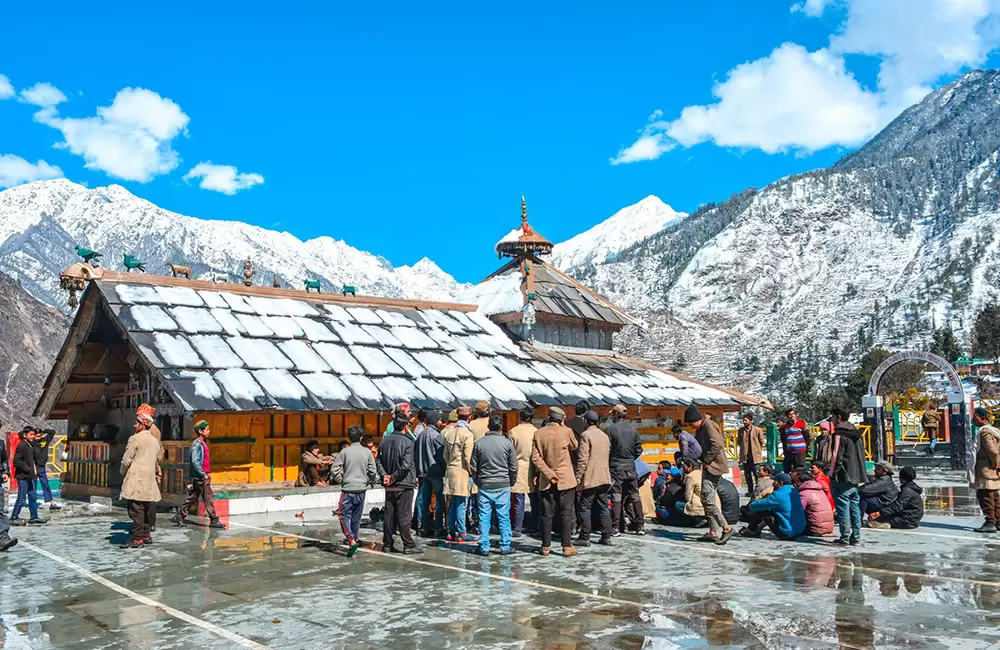
According to a popular village legend, Lord Shiva once visited this land in the form of Someshwar Mahadev. Many years ago, a saint was meditating near the forest. Pleased with his devotion, Lord Shiva appeared and promised to protect the valley and its people. To honour this divine visit, the villagers built a wooden temple in the heart of Jakhol, known today as the Someshwar Mahadev Temple. This temple is not only a place of worship but also a vital part of the village’s identity. Many believe that the blessings of Lord Someshwar still protect Jakhol from harm.
The Someshwar Mahadev Temple
The Someshwar Mahadev Temple is the central and most important temple of the region, serving as the spiritual hub for 22 surrounding villages. The deity Someshwar Mahadev resides here for most of the year. The temple is built in the traditional Koti-Banal style of architecture, using earthquake-safe construction methods with stone and wood. Some houses in the village are over 200 years old and still in use, showcasing the durability of this ancient building technique.
Award-Winning Recognition
In 2024, Jakhol received national recognition when it was awarded the “Best Tourism Village Award for Adventure Tourism” by the Union Ministry of Tourism, Government of India. The award was presented at the Travel for Life Tourism Awards ceremony, held at Bharat Mandapam, New Delhi, on 27th September 2024, which also marked World Tourism Day.
Jakhol received this award for its:
- Conservation of ancient wooden temples
- Use of solar-powered street lights
- Ban on single-use plastic
- Involvement of local youth as trained trek guides
This recognition has made Jakhol a top choice for eco-conscious travellers and adventure seekers looking to explore authentic village life in the Himalayas.
Geography and Location
Geographic Coordinates
- Latitude: Approximately 31.065° N
- Longitude: Approximately 78.256° E
- Elevation: 2,200 meters (7,200 feet) above sea level
Regional Setting
Jakhol is nestled amidst dense coniferous forests, alpine meadows, and snow-clad peaks, forming part of the Upper Tons Valley — a sub-basin of the larger Yamuna River basin. The village sits near the confluence of mountain streams that feed into the Tons River, one of the major tributaries of the Yamuna.
Topography
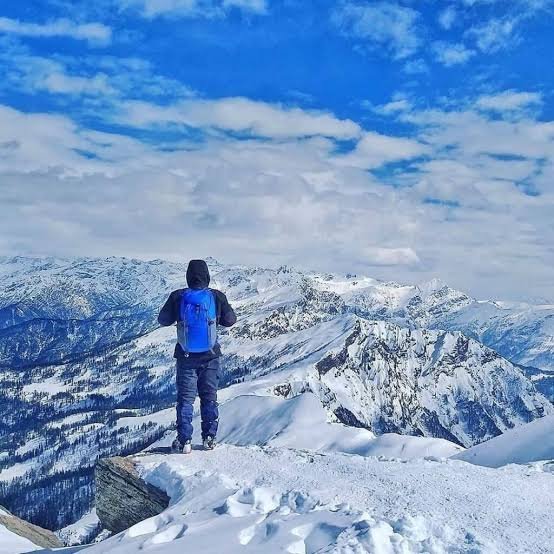
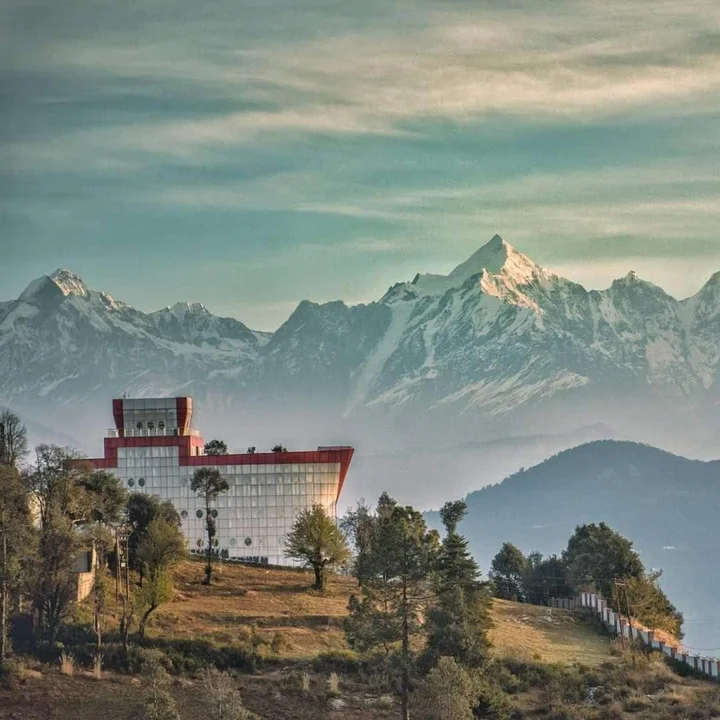
The terrain is rugged and mountainous, characterised by terraced agricultural fields, steep ridges, and forested slopes . The village is surrounded by peaks that remain snow-covered for most of the year, with Swargarohini, Bandarpunch, and Kala Nag peaks visible from various points near the village.
Ecological Zone
Jakhol lies within the Western Himalayan Subalpine and Temperate Forest Zone and is located within the buffer zone of the Govind Pashu Vihar National Park. This makes it an ecologically significant area and a key part of Uttarakhand’s natural heritage.
Flora and Fauna
Forests and Vegetation
The region around Jakhol is rich in native Himalayan trees:
| Forest Type | Dominant Species | Characteristics |
|---|---|---|
| Pine Forests | Chir, Blue Pine | Scented air, carpeted with needles |
| Deodar | Cedrus deodara | Fragrant, tall evergreen trees |
| Oak | Quercus species | Dense canopies, autumn colors |
| Rhododendron | Rhododendron arboreum | Spring blooms (March-April), vibrant red/pink flowers |
These forests are rich in biodiversity and are part of the larger Govind Pashu Vihar National Park and Wildlife Sanctuary ecosystem.
Wildlife
The region supports a variety of Himalayan wildlife, including:
- Himalayan Black Bear – Found in forested areas
- Musk Deer – Endangered species, known for its prized musk
- Himalayan Monal – State bird of Uttarakhand, known for its vibrant plumage
- Leopard – Present in the sanctuary
- Snow Leopard – The elusive “ghost of the mountains” inhabits higher altitudes
Birdlife
The forests around Jakhol are excellent for birdwatching, with numerous Himalayan bird species, including:
- Woodpeckers
- Barbets
- Parakeets
- Forktails
- Pheasants
- Kalij (migratory birds arrive from early November)
Local Culture and Traditions
Wooden Architecture
Homes in Jakhol are built using local deodar wood and stone, featuring intricate carvings and multi-tiered designs that reflect the classic Himalayan style. The architecture isn’t just aesthetic—it’s designed to withstand harsh weather, making it both beautiful and functional.
Traditional Way of Life
Villagers lead a self-sufficient lifestyle, depending on farming, cattle rearing, and forest produce. Their daily life reflects simplicity, harmony with nature, and deep-rooted family values. The main crops include potato, manduwa, wheat, rajma (Chami), and choulie, with potatoes being their main cash crop.
Festivals and Celebrations
Jakhol celebrates a wide range of Garhwali and seasonal festivals, many of which are unique to the Rawain Valley.
Bishu Mela
Bishu Mela is a traditional harvest festival celebrated in the Jaunsar-Bawar region, including Jakhol village. Held every year in mid-April, it marks the arrival of spring and expresses gratitude for a good harvest. Villagers gather to enjoy folk music, Garhwali dances, traditional rituals, and community feasts.
Devgoti Mela
Devgoti Mela is a traditional religious and cultural festival held in Jakhol village. Held during spring, it honours Someshwar Mahadev, the village deity, with rituals, folk music, Garhwali dances, and community feasts. The festival marks the seasonal transition and reflects the village’s deep connection with Garhwali culture.
Sawan Jatra
Sawan Jatra is one of the most famous festivals in Jakhol village, held during the month of Sawan (July). During this festival, the deity Someshwar Mahadev arrives in Jakhol from another village, with a huge crowd accompanying him. The highlight of this festival is “The Kafua” — a ritual in which Lord Someshwar Mahadev incarnates in the priest and connects with people, giving speeches and promising to maintain peace and prosperity. Night celebrations include cultural and traditional folk dances and songs, with “Ras” being a famous dance form.
Fagunay (Holi)
Fagunay is a festival generally held during Holi. When Holi starts on that night, a small program is scheduled by the villagers, which is both cultural and ritualistic. Some specific people disguise themselves as ancient forms by wearing unique dresses along with masks on their faces, then perform dramas in the temple playground.
Folk Songs, Instruments, and Dances
Tandi and Ras
Tandi and Ras are the main folk dance forms of the villagers, performed during festivals and celebrations.
- Tandi: A folk dance in which people form a round circle by holding each other’s hands and perform the folk dance
- Ras: People hold a weapon called “Dangri” in their hands and perform the folk dance with a double-headed drum called Dhol
Folk Songs
Villagers have folk songs that are totally in their native tone, of different types like Chhode, Laman, Chopati, etc.. These folk songs were created by ancestors and are still performed today, with new ones being added over time.
Traditional Musical Instruments
- Dhol – Dhamau – The main traditional music instruments, famous all over Uttarakhand and Himachal Pradesh
- Flute – Used in festivals and celebrations
- Ranasingha – Traditional wind instrument
- These instruments are specially for festivals and celebrations, and their sounds are much loved by the public
How to Reach Jakhol Village
By Air
Nearest Airport: Jolly Grant Airport, Dehradun (approximately 223 km from Jakhol)
| Details | Information |
|---|---|
| Distance | ~223 km |
| Travel Time | 8–9 hours by taxi |
| Airlines | Regular flights from Delhi to Dehradun (approx. 1 hour) |
| Onward Travel | Taxis available from the airport to Sankri via Purola and Mori |
By Train
Nearest Railway Stations:
| Station | Distance | Travel Time | Connectivity |
|---|---|---|---|
| Dehradun | 199 km | 8–9 hours by road | Most preferred |
| Haridwar | 249 km | 9–10 hours by road | Major station, well-connected |
Popular Trains from Delhi to Dehradun/Haridwar:
| Train Name | From Delhi | Departure | Arrival | Destination |
|---|---|---|---|---|
| Shatabdi Express | Delhi | 6:00 AM | 11:40 AM | Haridwar |
| Jan Shatabdi | Delhi | 3:20 PM | 9:00 PM | Haridwar |
| Mussoorie Express | Delhi | 10:05 PM | 5:30 AM | Haridwar |
From the railway station, taxis and buses are available for Sankri via Purola and Mori.
By Road
Jakhol is well-connected by road via the Sankri route:
| Starting Point | Distance to Sankri | Travel Time |
|---|---|---|
| Delhi | ~470 km | 12–14 hours |
| Dehradun | 187 km | 6–7 hours |
| Rishikesh | ~200 km | 7–8 hours |
| Haridwar | ~210 km | 7–8 hours |
Step-by-Step Route to Jakhol
Step 1: Reach Sankri
Sankri is a small village that acts as the main starting point for reaching Jakhol. It is about 187 km from Dehradun and well-connected by road. You can reach Sankri by:
Step 2: Sankri to Jakhol (Approach)
Once you are near Sankri, take a left turn about 3.5 km before the village. This narrow side road leads directly to Jakhol village. Local taxis are available, or you can walk if needed.
Route: Dehradun → Purola → Mori → Sankri → Jakhol
Road Conditions: The route passes through lush pine forests and later runs alongside the Tons River, offering a scenic journey through the valley. The road is generally good but winding.
Distances from Major Cities
| City | Distance (km) |
|---|---|
| Delhi | ~470 |
| Dehradun | ~199–223 |
| Rishikesh | ~210 |
| Haridwar | ~249 |
| Purola | 66 km |
| Mori | 36 km |
| Sankri | ~17 km |
| Uttarkashi | ~176–190 km |
Weather and Best Time to Visit
Climate Overview
Jakhol experiences a cool mountain climate throughout the year. The village is located at approximately 2,200 meters, making it pleasant in summer and cold in winter.
Month-by-Month Guide
| Season | Months | Day Temp (°C) | Night Temp (°C) | Conditions | Travel Suitability |
|---|---|---|---|---|---|
| Spring | March–May | 10–20 | 3–10 | Pleasant, apple blossoms, clear skies | ⭐ Excellent |
| Summer | June–mid July | 15–25 | 8–15 | Warm, clear skies, green fields | ⭐ Best |
| Monsoon | mid July–August | 8–20 | 8–15 | Heavy rain, lush greenery, slippery roads | ⚠️ Avoid |
| Autumn | September–November | 5–18 | 2–8 | Crisp, clear skies, dry air | ⭐ Excellent |
| Winter | December–February | 0–12 | -5–2 | Cold, snowfall, limited access | ⭐ Good (for snow lovers) |
Best Time to Visit by Season
| Season | Months | Suitability | Conditions | Best For |
|---|---|---|---|---|
| Spring | March–May | ⭐ Excellent | 10°C–20°C, apple blossoms, pleasant | Photography, short treks, village walks |
| Summer | June–mid July | ⭐ Best | 15°C–25°C, clear skies, warm days | Family trips, trekking, Devkyara Bugyal trek |
| Autumn | September–November | ⭐ Excellent | 5°C–18°C, clear skies, crisp air | Best treks, local festivals, photography |
| Monsoon | July–August | ❌ Avoid | 8°C–20°C, heavy rainfall, slippery trails | Not recommended (landslide risk) |
| Winter | December–February | ⭐ Good | -5°C–12°C, snowfall, beautiful white views | Snow lovers, quiet village life |
When to See Apple Blossoms
The apple orchards around Jakhol are in full bloom from March to May, transforming the landscape into a beautiful display of white and pink blossoms.
When to See Snow
Jakhol experiences snowfall from December to February. During these months, the village transforms into a white wonderland, though road access may be limited.
Top Attractions in and Around Jakhol
1. Someshwar Mahadev Temple – The Spiritual Heart
The Someshwar Mahadev Temple is the central and most important temple in the region, serving as the spiritual hub for 22 surrounding villages. The temple is built in the traditional Koti-Banal style of architecture, featuring intricate wooden carvings and earthquake-safe construction. It is dedicated to Lord Shiva in the form of Someshwar Mahadev.
What to Expect:
- Ancient wooden architecture with intricate carvings
- A peaceful, spiritual atmosphere
- The temple serves as the venue for major village festivals like Devgoti Mela and Sawan Jatra
- Many believe the deity’s blessings protect the valley
Location: Centre of Jakhol village
Timings: Sunrise to sunset
Entry Fee: Free
Best Time: Morning for peaceful darshan; during festivals for cultural experience
2. Jakhol Village Walk – The Stone-Paved Lanes
Simply walking through Jakhol is an attraction in itself. The village is built on a slope, with narrow stone-paved lanes winding between traditional wooden cottages with mud-plastered walls and slate-tiled sloping roofs.
What to See:
- Traditional Koti-Banal style wooden architecture
- Apple orchards surrounding the village
- Local women weaving woollen shawls on traditional looms
- Stunning views of the Swargarohini and Bandarpunch peaks
- The famous “Best Tourism Village” recognition sign
3. Devkyara Bugyal Trek – The Crown Jewel
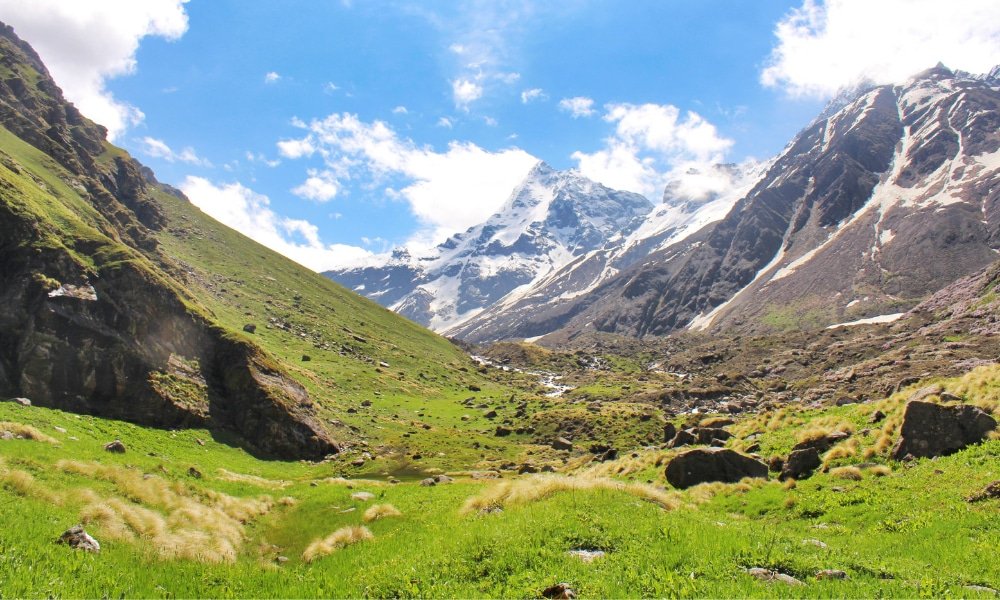
The Devkyara Bugyal trek is the most popular adventure trail starting from Jakhol. It takes you through pine forests, glacier streams, and alpine valleys before opening up to a vast meadow surrounded by snow-covered peaks like Swargarohini, Black Peak, and Bali Pass.
| Aspect | Details |
|---|---|
| Altitude | ~3,600 meters |
| Duration | 5–6 days (round trip) |
| Difficulty | Easy to Moderate |
| Best Time | May–June & September–October |
What to Expect:
- High-altitude camping under the stars
- Stunning mountain views
- Wildflowers bloom during the summer
- A less-crowded alternative to more popular treks
4. Har Ki Dun Trek – The Valley of Gods
Har Ki Dun is one of the most famous and scenic treks in Uttarakhand, and Jakhol serves as a starting point for this iconic route.
What to Expect:
- Pine forests, ancient wooden villages, and open meadows
- Views of the Swargarohini peak
- Experience local life in the Himalayas
- The trail passes through Osla village with its unique Duryodhana Temple
5. Obra Gad Exploration
For those looking for a raw, offbeat experience, Obra Gad is a beautiful forest and river valley that can be explored over a short trek.
| Aspect | Details |
|---|---|
| Duration | 1–2 days |
| Difficulty | Moderate |
| Best For | Nature lovers, small groups, beginner trekkers |
What to Expect:
- Forest trails through dense forests
- Riverbank crossings
- Wildlife spotting opportunities
- Peaceful campsites by the river
6. Bali Pass Trek
Bali Pass is a challenging high-altitude trek connecting the Har Ki Dun Valley to the Yamunotri region.
What to Expect:
7. Kedarkantha Trek
Kedarkantha is a popular winter trek perfect for beginners and snow lovers.
| Aspect | Details |
|---|---|
| Duration | 4–5 days |
| Difficulty | Easy to Moderate |
| Best Time | December–April |
What to Expect:
8. Ridge Walks and Forest Hikes
Jakhol is surrounded by scenic ridgelines and thick forests. With the help of a local guide, you can take short ridge walks that offer views of the Supin Valley, nearby villages, and distant Himalayan peaks.
| Aspect | Details |
|---|---|
| Duration | 2–4 hours |
| Difficulty | Easy |
| Activities | Nature walks, birdwatching, landscape photography |
| Best For | Nature walks, birdwatching, and landscape photography |
9. Panchgai Camp
Located at an altitude of 2,200 meters, Panchgai Camp is situated 1.5 km uphill from Jakhol Village and offers stunning views of several snow-capped peaks.
What to Expect:
- Camping in the foothills of Govind Wildlife Sanctuary
- Trek starting from the Jakhol village
- Beautiful gardens surrounded by green trees
- Stunning flora and fauna
10. Ruinsara Tal Trek
Ruinsara Tal is a high-altitude lake trek that starts from the Tons Valley region.
| Aspect | Details |
|---|---|
| Difficulty | Moderate |
| Best Time | May–June & September–October |
What to Expect:
- Alpine lake with crystal-clear waters
- Views of snow-capped peaks
- Camping by the lake
Nearby Places to Visit
Adventure Activities in Jakhol
Jakhol is an emerging destination for soft adventure tourism, which is one of the key reasons why it was honoured with the Best Tourism Village Award for Adventure Tourism in 2024.
Trekking
Camping
Thanks to its elevation and low light pollution, Jakhol is a great place for camping under the stars. Most multi-day treks from the village involve at least one night of high-altitude camping.
Activities: Tent stays, bonfires, Milky Way photography
Best Time: October to early December and late March to June
Ridge Walks and Nature Hikes
| Activity | Duration | Difficulty | Best For |
|---|---|---|---|
| Ridge Walks | 2–4 hours | Easy | Families, solo travelers, beginners |
| Forest Hikes | 2–3 hours | Easy | Nature lovers, birdwatching |
| Village Walks | 1–2 hours | Easy | Cultural exploration |
Rafting in Tons River (Nearby)
While rafting is not available directly in Jakhol, the Tons River near Mori offers some of the best white-water rafting in India, with rapids ranging from Class III to IV. The rafting season starts in March and runs until early July, then again post-monsoon.
Guided Trail Runs
Jakhol’s youth have been trained as certified local trek guides under tourism and sustainability programs. Many of them now lead:
- Guided trail runs and nature walks
- Small group trekking lessons
- Adventure safety sessions and awareness activities
Local Cuisine: What to Eat
Jakhol offers authentic Garhwali cuisine made from locally sourced ingredients.
Must-Try Garhwali Dishes
Where to Eat
| Name | Type | Known For |
|---|---|---|
| The Alpine Homestay | Homestay | Authentic local food, home-cooked meals |
| Local Dhabas | Street food | Simple Indian meals, chai, snacks |
| Homestays | Family-run | Freshly cooked meals as per guest choice |
Dining Tips
- Most homestays offer meal packages (breakfast, lunch, dinner)
- Pure vegetarian options are widely available
- Non-vegetarian meals are available on prior notice at some homestays
- Carry packaged snacks for treks
- Try the local chai (tea) at small stalls
Accommodation Options
Jakhol offers a range of accommodation options, from eco-friendly homestays to basic guesthouses.
Homestays (Recommended)
Homestays are the best way to experience Jakhol’s culture and hospitality. Visitors often say that staying in Jakhol feels like living with a second family.
The Alpine Homestay Details:
- Location: 750 m from Someshwar Temple, Jakhol
- Total Capacity: 35 people
- Facilities: Parking, Internet, Running Hot Water, Open Seating Areas, Bonfire, Pick and Drop Service (Paid)
- Food: Freshly cooked meals with local delicacies
- Activities: Bird Watching, Hiking, Village Walk, Forest Walk, Yoga and Meditation, Adventure Sport, Trekking
Guesthouses
| Type | Price Range | Features |
|---|---|---|
| Basic Guesthouses | ₹500–1,000 | Simple rooms, basic amenities |
Camping
| Type | Price Range | Features |
|---|---|---|
| Panchgai Camp | Part of trek packages | 1.5 km uphill from Jakhol, stunning peak views |
| Trekker Camps | Varies | Along trekking routes (Devkyara, Har Ki Dun) |
Booking Tips
- Book well in advance for peak seasons (May–June, September–October)
- Homestays are the most authentic experience and support the local economy directly
- Most treks include camping arrangements
- Carry cash—card facilities are limited
- The village has solar-powered street lights and a ban on single-use plastic, so be an eco-conscious traveller
Sample Itineraries
4-Day Jakhol Village & Devkyara Trek
Day 1: Dehradun to Jakhol
- Morning: Depart from Dehradun early (by 6:00 AM)
- Afternoon: Drive via Purola, Mori, and Sankri (6–7 hours)
- Evening: Arrive in Jakhol, check into homestay
- Night: Explore the village, dinner, and overnight in Jakhol
Day 2: Jakhol Village Exploration
- Morning: Visit Someshwar Mahadev Temple
- Morning: Village walk, interact with locals
- Afternoon: Short ridge walk or forest hike
- Evening: Enjoy sunset views, local dinner
- Night: Overnight in Jakhol
Day 3: Devkyara Bugyal Trek Start
- Morning: Early start for Devkyara Bugyal trek
- Full day: Trek through forests and streams
- Evening: Camp at high altitude
- Night: Overnight in camps
Day 4: Return to Jakhol/Dehradun
- Morning: Complete trek, return to Jakhol
- Afternoon: Depart for Dehradun
3-Day Jakhol Cultural & Nature Getaway
Day 1: Dehradun to Jakhol
- Drive to Jakhol via Purola, Mori, Sankri
- Check into a homestay
- Evening village walk, sunset views
- Overnight in Jakhol
Day 2: Temples and Local Life
- Morning: Someshwar Mahadev Temple darshan
- Morning: Explore apple orchards (spring season)
- Afternoon: Forest hike or birdwatching
- Evening: Cultural interaction with locals
- Overnight in Jakhol
Day 3: Return to Dehradun
- Morning: Final village walk, photography
- Afternoon: Depart for Dehradun
5-Day Complete Tons Valley Explorer
Day 1: Dehradun → Purola → Mori → Jakhol (drive), overnight Jakhol
Day 2: Jakhol village exploration, Someshwar Temple, forest hikes, overnight in Jakhol
Day 3: Jakhol → Sankri → Har Ki Dun trek start, overnight at base camp
Day 4: Har Ki Dun exploration, return to Sankri, overnight in Sankri
Day 5: Sankri → Dehradun → Delhi
Travel Tips and Important Information
Before You Go
- Physical Fitness: Treks like Devkyara Bugyal and Har Ki Dun require moderate fitness. Prepare with regular walking 2–4 weeks before
- Carry Cash: ATMs are limited in Jakhol; bring sufficient cash from Dehradun or Purola
- Check Weather: Avoid monsoon (July–August) due to landslide risk
- Advance Booking: Essential for homestays during peak seasons (May–June, September–October)
- Pack Appropriately: Even in summer, evenings are cool; winter requires heavy woollens
- 4×4 Vehicle Recommended: The road from Sankri to Jakhol is narrow and requires a sturdy vehicle
During Your Stay
- Dress Modestly: Jakhol is a traditional village; dress respectfully
- Respect Local Customs: The Bohora community follows unique traditions; ask permission before photographing people
- Eco-Friendly Practices: Jakhol has a ban on single-use plastic; carry reusable bottles and bags
- Stay Hydrated: Carry water for walks and treks
- Hire Local Guides: For treks, hiring local guides supports the community and ensures safety
Safety Tips
- Road Safety: Mountain roads require patience; avoid night driving
- Monsoon Travel: Avoid July–August due to landslide risk
- Altitude Awareness: At 2,200 m, altitude sickness is rare but possible; stay hydrated
- Trekking Safety: Always trek with a guide or in groups; carry adequate supplies
- Wildlife: The area is part of the Govind Wildlife Sanctuary; do not feed animals
Packing Checklist
| Season | Essentials |
|---|---|
| All Year | Light woolens for evenings, cotton clothes for daytime, a hat, and a raincoat (pre-monsoon) |
| Summer (Mar-Jun) | Light woolens for evenings, cotton clothes for daytime, a hat, a raincoat (pre-monsoon) |
| Monsoon (Jul-Aug) | Raincoat, waterproof footwear, umbrella (avoid travel if possible) |
| Winter (Oct-Feb) | Comfortable walking shoes, sunscreen, sunglasses, hat, reusable water bottle, power bank, camera, cash, first aid kit |
Photography Tips
- Best Spots: Someshwar Mahadev Temple (wooden architecture), apple orchards (spring), Devkyara Bugyal meadows, sunset over Swargarohini peak
- Best Time: Early morning for clear mountain views; golden hour (4:00–5:30 PM) for landscapes
- Camera Gear: Carry extra batteries—cold drains them quickly
- Note: Ask permission before photographing locals
Frequently Asked Questions (FAQs)
Q1: Why is Jakhol Village famous?
A: Jakhol is famous for being awarded the “Best Tourism Village Award for Adventure Tourism” by the Union Ministry of Tourism in 2024. It is known for its traditional wooden architecture, the ancient Someshwar Mahadev Temple, and as a base camp for treks like Devkyara Bugyal and Har Ki Dun.
Q2: What is the best time to visit Jakhol Village?
A: The best time to visit is March to June (spring/summer) and September to November (autumn). Spring offers apple blossoms, summer is ideal for trekking, and autumn provides clear skies.
Q3: How far is Jakhol from Delhi?
A: The distance from Delhi is approximately 470 km, with a travel time of 12–14 hours by road.
Q4: How do I reach Jakhol Village?
A: By road via Dehradun (187 km) to Sankri, then 3.5 km to Jakhol; by train to Dehradun/Haridwar followed by taxi; or by flight to Jolly Grant Airport, Dehradun.
Q5: What is the altitude of Jakhol Village?
A: Jakhol is situated at an altitude of approximately 2,200 meters (7,200 feet) above sea level.
Q6: What is the Devkyara Bugyal trek?
A: Devkyara Bugyal is a 5–6 day trek from Jakhol (easy to moderate difficulty) to a high-altitude meadow at ~3,600 meters offering stunning views of Swargarohini, Black Peak, and Bali Pass.
Q7: Is Jakhol suitable for solo travellers?
A: Yes, Jakhol is safe and welcoming for solo travellers. The village is known for its hospitality and safety . Hiring local guides is recommended for treks.
Q8: Are there homestays in Jakhol?
A: Yes, homestays are the primary accommodation option. The Alpine Homestay offers comfortable rooms with attached bathrooms, running hot water, and local meals. Prices range from ₹1,000 to ₹ 1,600 per person.
Q9: What festivals are celebrated in Jakhol?
A: Major festivals include Bishu Mela (April), Devgoti Mela (spring), Sawan Jatra (July), and Fagunay (Holi).
Q10: What is the Someshwar Mahadev Temple?
A: The Someshwar Mahadev Temple is a 300-year-old wooden temple dedicated to Lord Shiva, built in the Koti-Banal style. It is the spiritual centre of Jakhol and 22 surrounding villages.
Q11: Is there a mobile network in Jakhol?
A: Mobile connectivity is limited. BSNL works in some pockets. It’s best to inform your family of your travel plans in advance.
Q12: Are there ATMs in Jakhol?
A: No, there are no ATMs in Jakhol. Bring sufficient cash from Dehradun or Purola.
Q13: Is Jakhol accessible during winter?
A: Yes, the village remains accessible but may experience snowfall from December to February, which can affect road access.
Q14: What is the local community like?
A: Most residents belong to the Bohora community and are farmers and shepherds. They are known for their honesty, simplicity, and warm hospitality.
Q15: What is the award received by Jakhol?
A: Jakhol received the “Best Tourism Village Award for Adventure Tourism” from the Union Ministry of Tourism, Government of India, presented on 27th September 2024 (World Tourism Day).
Plan Your Jakhol Journey with Discover Uttarakhand
At Discover Uttarakhand, we’ve been organising unforgettable journeys across Devbhoomi since 1997. As a trusted local operator with deep knowledge of Jakhol, the Tons Valley, and the Garhwal region, we offer:
- ✅ Customised Jakhol tour packages (3 to 7 days)
- ✅ Trekking packages for Devkyara Bugyal, Har Ki Dun, and Kedarkantha
- ✅ Comfortable transport with experienced hill drivers
- ✅ Eco-friendly homestay bookings in Jakhol
- ✅ Certified local trek guides
- ✅ 24/7 customer support throughout your journey
Recommended Jakhol Packages
| Package | Duration | Starting Point | Highlights |
|---|---|---|---|
| Jakhol Cultural Getaway | 2 Nights / 3 Days | Dehradun | Someshwar Temple, village walk, ridge hike |
| Jakhol & Devkyara Trek | 4 Nights / 5 Days | Dehradun | Village exploration, Devkyara Bugyal trek |
| Tons Valley Explorer | 5 Nights / 6 Days | Dehradun | Jakhol, Sankri, Har Ki Dun base |
| Complete Adventure Package | 6 Nights / 7 Days | Delhi | Jakhol, Devkyara Trek, Har Ki Dun |
Book your Jakhol journey today and discover one of India’s best-kept Himalayan secrets.
📞 Call / WhatsApp: +91-9997187178, 9760222178, 8171977178
📍 Visit Our Office: Himalayan Colony, opposite DSVV, Haripur Kalan, Haridwar, Motichur Range, Uttarakhand 249411
🌐 Website: www.discover-uttarakhand.com
📧 Email: info@discover-uttarakhand.com
Jai Jakhol! Har Har Mahadev! 🙏
Discover Uttarakhand – Your Local Partner for Unforgettable Himalayan Journeys Since 1997