Overview: Where Rivers and Cultures Meet
Tucked away in the Pithoragarh district of Uttarakhand, Jauljibi is not just a destination; it is a living example of cross-border harmony and centuries-old trade heritage.
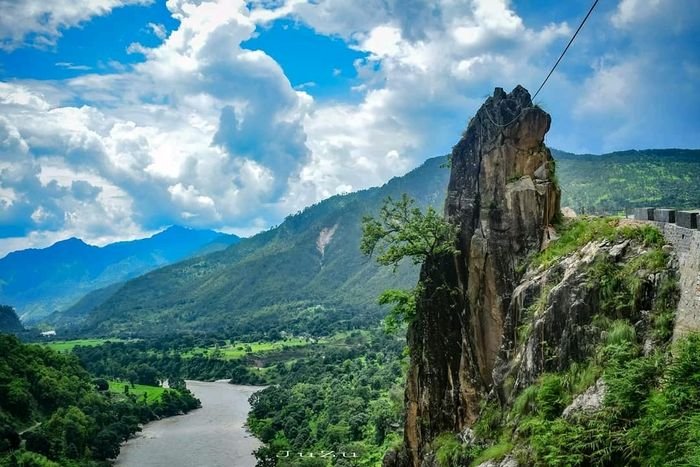
Often referred to as the “Town Where Cultures Converge”, this unique settlement is a land of remarkable natural beauty and profound cultural significance. Located on the Indo-Nepal border, Jauljibi is situated at the scenic confluence of the Kali and Gori rivers — a meeting point that has facilitated trade, friendship, and cultural exchange for generations.
What makes Jauljibi truly special is its extraordinary character — from the Jauljibi Mela, a historic trade fair that has connected traders from India, Nepal, and Tibet for over a century, to the suspended footbridge that links the bazaars of two nations, from the panoramic views of the Himalayan peaks to the unique blend of Kumaoni and Nepali cultures.
The name “Jauljibi” refers to the villages and bazaars that exist on both sides of the river — the Indian side in Uttarakhand and the Nepali side in the Sudurpashchim Province. The journey to Jauljibi, which begins from the spiritual hubs of Kathgodam or Pithoragarh, is an accessible yet profoundly rewarding adventure through sacred confluences, ancient temples, and the majestic Himalayan wilderness. It offers a profound sense of peace, cultural connection, and a deep appreciation for the rich heritage of the Kumaon Himalayas.
Key Information at a Glance
| Aspect | Details |
|---|---|
| Location | Pithoragarh District, Uttarakhand, India |
| Type | Border Town / Market Town |
| District | Pithoragarh (India) / Darchula (Nepal) |
| Coordinates | 29°45′7″N 80°22′40″E |
| Elevation | ~750 m (2,460 ft) |
| Official Language | Hindi |
| Regional Language | Kumaoni |
| PIN Code | 262544 |
| Vehicle Registration Code | UK-05 (Pithoragarh) |
| Nearest Airport | Pantnagar Airport (~335 km) |
| Nearest Railway Station | Tanakpur (~239 km) |
| Best Time to Visit | March–June & September–December |
| Known For | Jauljibi Mela, Kali-Gori Confluence, Indo-Nepal Border Trade |
| Nearest City | Dharchula (28 km north) |
History of Jauljibi
Ancient Roots and Trade Heritage
Jauljibi has a rich and vibrant trading history that dates back centuries. In the 20th century, it was a point of confluence for traders from three countries — India, Nepal, and then Tibet. Even merchants from Kolkata and other regions of West Bengal used to come here for trading, making it a significant commercial hub in the Himalayan region.
The Establishment of the Jauljibi Fair
According to historical records of the erstwhile princely state of Askot, Pushar Singh Pal, the late Rajbar of Askot, started the fair of Jauljibi at the beginning of the 20th century. He first established a temple of Jwaleshwar Mahadev at Jauljibi and then announced the start of a trade fair for the traders of India, Nepal, and then Tibet on Sankranti day of the Hindu calendar month of Margshees.
The fair was started to facilitate the sale of woollen goods produced by craftsmen of the Darma, Vyans, and Chaudans valleys of Pithoragarh district. The fair also established long-time emotional friendships with Tibetan and Nepalese traders, and that trade friendship remained forever.
The Golden Era of Trade
During its peak, Tibetan traders used to sell salt, borax, yak tail, woollen garments, and dried meat, while Nepalese traders used to sell ghee, honey, and wooden crafts, mostly in exchange for grains brought by lower valley farmers. After the Indo-China war of 1962, trade from Tibet came to a halt, changing the nature of the fair forever.
Modern Significance
Today, Jauljibi Mela continues to be held annually on Makar Sankranti for 10 to 15 days, attracting traders and visitors from both sides of the border. The fair has evolved into a vibrant cultural celebration that showcases the unique blend of Indian and Nepali traditions.
Geography of Jauljibi
Location and Topography
Jauljibi is situated at an elevation of approximately 750 metres (2,460 feet) above sea level, at the scenic confluence of the Kali and Gori rivers on the Indo-Nepal border. The town is located in the Pithoragarh district of Uttarakhand, about 65 km from the district headquarters and 28 km south of Dharchula.
| Feature | Details |
|---|---|
| Location | Pithoragarh district, Uttarakhand, on the Indo-Nepal border |
| Coordinates | 29°45′7″N 80°22′40″E |
| Elevation | ~750 m |
| Terrain | River confluence, Himalayan foothills |
| Key Rivers | Kali River, Gori River |
| Borders | Nepal to the east, Askot to the west |
The Kali and Gori Rivers
The Kali River forms the natural boundary between India and Nepal, while the Gori River flows from the Milam Glacier region and joins the Kali at Jauljibi. The confluence of these two rivers creates a stunning scenic beauty that leaves visitors spellbound. The Gori Ganga valley, where Jauljibi is located, has its lowest point at this confluence (750 m) and its highest point at Trisuli and Hardeol peaks (~7,000 m).
The Suspension Bridge
A suspension bridge across the Kali River has joined the bazaars and the people of both countries for over a hundred years. The bridge, rebuilt several times, serves as a vital link between the Indian and Nepali sides of Jauljibi. One doesn’t need a passport or visa to cross the Indo-Nepal border because of the good relations between both countries, though there are necessary customs checks on both sides of the bridge for goods being transported.
Administrative Boundaries
Jauljibi is bounded by:
- East: Nepal (Darchula District)
- West: Askot (4 km west)
- North: Dharchula (28 km north)
- South: Pithoragarh (65 km south)
Flora and Fauna
Flora
Jauljibi and its surrounding regions are blessed with rich biodiversity typical of the Kumaon Himalayan region. The area around Jauljibi, being at a lower elevation, features a mix of subtropical and temperate vegetation.
Forest Types:
- Subtropical Pine Forests – Dominant at lower elevations around Jauljibi
- Oak Forests – Found in the mid-hills
- Rhododendron Forests – Higher elevations
- Medicinal Herbs – The region is rich in high Himalayan herbs that have been traditionally traded at the Jauljibi fair
Fauna
The forests around Jauljibi are home to a variety of Himalayan wildlife. The region, being part of the Kumaon Himalayas, supports diverse fauna:
Mammals:
- Leopard – The apex predator of the region
- Barking Deer (Kakar)
- Musk Deer – Found in the higher reaches
- Himalayan Black Bear
- Red Fox
- Himalayan Tahr
- Serow
The nearby Askot Musk Deer Sanctuary is a protected area known for its population of musk deer and other Himalayan wildlife. Reports of forest fires in the Jauljibi area have highlighted the presence of diverse plants, herbs, shrubs, insects, mammals, and reptiles in the region.
Birds:
- Himalayan Monal – Uttarakhand’s state bird
- Golden Eagle
- Bearded Vulture
- Western Tragopan
- Various pheasant species
Protected Areas
| Protected Area | Type | Significance |
|---|---|---|
| Askot Musk Deer Sanctuary | Wildlife Sanctuary | Home to musk deer, leopard, and Himalayan wildlife |
| Nanda Devi Biosphere Reserve | Biosphere Reserve | UNESCO Site, accessible from the region |
Religious Beliefs and Significance
The Land of Jwaleshwar Mahadev
Jauljibi is deeply connected to the worship of Lord Shiva, with the ancient Jwaleshwar Mahadev Temple being the most significant religious site in the town. The temple was established by Pushar Singh Pal, the Rajbar of Askot, at the beginning of the 20th century, and it was around this temple that the famous Jauljibi fair was started.
The Jwaleshwar Mahadev Temple
The Jwaleshwar Mahadev Temple is dedicated to Lord Shiva and is located at Jauljibi. It holds deep religious significance for the local communities on both sides of the border. The temple is believed to be a place of spiritual power, and pilgrims from both India and Nepal visit it throughout the year.
The Spiritual Significance of the Confluence
The confluence of the Kali and Gori rivers is considered sacred by the local communities. The meeting point of these two rivers is not just a geographical feature but a spiritual site where devotees perform rituals and offer prayers. The sound of the flowing rivers and the panoramic views of the Himalayas create an atmosphere of divine serenity.
Cross-Border Harmony
Jauljibi is a living example of Hindu-Muslim and Indo-Nepal harmony. The town’s bazaars on both sides of the border coexist peacefully, and the annual fair brings together people from different backgrounds in a celebration of shared culture and traditions. The suspension bridge that connects the two nations is a symbol of this enduring friendship.
Local Festivals and Celebrations
Jauljibi and the surrounding region celebrate several festivals with great enthusiasm:
- Jauljibi Mela – The annual trade fair held on Makar Sankranti for 10-15 days
- Makar Sankranti – The festival marking the beginning of the fair
- Harela – A festival celebrating the sowing of seeds and the arrival of spring
- Diwali – The festival of lights
- Local Fairs – Traditional fairs that showcase the vibrant culture of the Kumaon region
How to Reach Jauljibi
Jauljibi is well connected by road and can be easily reached from major cities in Uttarakhand and North India.
By Air
The nearest airport is Pantnagar Airport, approximately 335 km from Dharchula and about 300 km from Jauljibi. Pantnagar Airport is well connected to Delhi with daily flights. Taxis are available from the airport to Jauljibi.
| Route | Distance | Travel Time |
|---|---|---|
| Pantnagar Airport → Jauljibi | ~300–335 km | 10–11 hours |
By Train
The nearest railway station is Tanakpur, approximately 239 km from Dharchula and about 200 km from Jauljibi. Tanakpur is well connected by railway networks with major destinations in India. Taxis and buses are available from Tanakpur to Jauljibi.
| Route | Distance | Travel Time |
|---|---|---|
| Tanakpur → Jauljibi | ~200 km | 7–8 hours |
| Kathgodam → Jauljibi | ~220 km | 8–9 hours |
By Road
Jauljibi is well connected by motorable roads to major destinations in Uttarakhand. The town is situated on the Delhi-Dharchula highway and is easily accessible from Pithoragarh, Dharchula, and Munsiyari.
| Route | Distance | Travel Time |
|---|---|---|
| Delhi → Jauljibi | ~512 km | 11–12 hours |
| Pithoragarh → Jauljibi | ~65 km | 2–3 hours |
| Dharchula → Jauljibi | ~28 km | 1 hour |
| Askot → Jauljibi | ~4 km | 15 minutes |
| Munsiyari → Jauljibi | ~100 km | 4–5 hours |
Bus Services:
- Buses to Pithoragarh and Dharchula are available from ISBT Anand Vihar, New Delhi
- Buses and taxis to Jauljibi are easily available from Pithoragarh, Dharchula, and Tanakpur
Local Transport
Within Jauljibi and the surrounding areas, local transport options include:
- Taxis and shared jeeps for local travel
- Walking to explore the bazaars and confluence
- Buses connecting major towns and villages
- Suspension bridge to cross over to the Nepal side
Weather and Best Time to Visit
Climate Overview
Jauljibi experiences a subtropical highland climate with distinct seasons, ranging from pleasant summers to cold winters. The town’s elevation of approximately 750 metres ensures comfortable temperatures for most of the year.
Seasonal Breakdown
| Season | Months | Weather | Suitability |
|---|---|---|---|
| Summer | March–June | Pleasant, 15–30°C | ⭐ Best |
| Monsoon | July–August | Heavy rainfall, landslides, lush greenery | Avoid |
| Autumn | September–November | Crisp air, clear views | ⭐ Best |
| Winter | December–February | Cold, 5–15°C | Good for fair season |
Best Time to Visit
| Season | Months | Highlights |
|---|---|---|
| Summer | March–June | Pleasant weather, clear views, ideal for sightseeing |
| Autumn | September–November | Post-monsoon clarity, crisp air, best mountain views |
| Winter | November–December | Jauljibi Mela season, cultural celebrations |
Note: The best time to visit Jauljibi is from October to December (Jauljibi Mela season) and March to June. The Jauljibi Mela is held annually in November, making this the most vibrant time to visit. Avoid visiting during July and August due to heavy rainfall and landslide risk.
Temperature
| Season | Daytime Temperature | Nighttime Temperature |
|---|---|---|
| Summer (April–June) | 15°C to 30°C | 10°C to 15°C |
| Monsoon (July–August) | 15°C to 20°C | 10°C to 15°C |
| Autumn (Sept–Nov) | 10°C to 25°C | 5°C to 10°C |
| Winter (Dec–Feb) | 5°C to 15°C | 0°C to 5°C |
Nearby Places
| Destination | Distance from Jauljibi | Highlights |
|---|---|---|
| Askot | ~4 km | Askot Musk Deer Sanctuary, ancient town |
| Dharchula | ~28 km | Indo-Nepal border town, gateway to Adi Kailash |
| Pithoragarh | ~65 km | District headquarters, historical sites |
| Munsiyari | ~100 km | Gateway to Milam Glacier, Himalayan views |
| Chaukori | ~80 km | Tea gardens, Himalayan views |
| Patal Bhuvaneshwar | ~90 km | Ancient limestone cave temple |
| Gangolihat | ~70 km | Haat Kalika Temple, religious site |
| Berinag | ~60 km | Tea gardens, Nag Devta Temple |
| Om Parvat & Adi Kailash | Accessible via trek | Sacred Himalayan peaks |
| Narayan Ashram | ~40 km | Spiritual retreat with mountain views |
| Birthi Waterfall | ~50 km | Scenic waterfall on Munsiyari road |
| Abbott Mount | ~90 km | Hill station, Himalayan views |
Distance from Major Cities
| City | Distance (Approx.) | Travel Time |
|---|---|---|
| Delhi | ~512 km | 11–12 hours |
| Kathgodam | ~220 km | 8–9 hours |
| Pithoragarh | ~65 km | 2–3 hours |
| Almora | ~150 km | 5–6 hours |
| Nainital | ~180 km | 6–7 hours |
| Tanakpur | ~200 km | 7–8 hours |
| Lucknow | ~450 km | 12–13 hours |
| Dehradun | ~450 km | 12–13 hours |
Frequently Asked Questions (FAQs)
General Questions
Q1: What is Jauljibi?
A: Jauljibi (Jaul Jibi) is a small market town on the Indo-Nepal border, situated at the confluence of the Kali and Gori rivers in the Pithoragarh district of Uttarakhand.
Q2: Where is Jauljibi located?
A: Jauljibi is located in the Pithoragarh district of Uttarakhand, India, on the border with Nepal (Darchula District). It is about 65 km from Pithoragarh and 28 km south of Dharchula.
Q3: What is the elevation of Jauljibi?
A: Jauljibi is situated at an elevation of approximately 750 metres (2,460 feet) above sea level.
Q4: What is Jauljibi famous for?
A: Jauljibi is most famous for its annual Jauljibi Mela, a historic trade and cultural fair held at the confluence of the Kali and Gori rivers, connecting India and Nepal.
Q5: What is the best time to visit Jauljibi?
A: The best time is October–December (Jauljibi Mela season) and March–June. Avoid July–August due to heavy rainfall.
Q6: What is the nearest airport to Jauljibi?
A: The nearest airport is Pantnagar Airport, approximately 300–335 km away.
Q7: What is the nearest railway station to Jauljibi?
A: The nearest railway station is Tanakpur, approximately 200 km away.
Q8: How far is Jauljibi from Delhi?
A: Jauljibi is approximately 512 km from Delhi, about an 11–12 hour drive.
Q9: What is the vehicle registration code for Jauljibi?
A: The vehicle registration code for Jauljibi is UK-05 (Pithoragarh district).
Q10: What is the PIN code of Jauljibi?
A: The PIN code of Jauljibi is 262544.
Q11: What are the major rivers in Jauljibi?
A: The major rivers are the Kali River (which forms the India-Nepal border) and the Gori River.
Q12: What is the Jauljibi Mela?
A: The Jauljibi Mela is an annual trade and cultural fair held on Makar Sankranti for 10–15 days at the confluence of the Kali and Gori rivers. It connects traders from India, Nepal, and historically Tibet.
Q13: Who started the Jauljibi Mela?
A: The fair was started by Pushar Singh Pal, the Rajbar of Askot, at the beginning of the 20th century.
Q14: Do I need a passport to cross the border?
A: No, you don’t need a passport or visa to cross the Indo-Nepal border at Jauljibi due to the good relations between both countries. However, there are necessary customs checks for goods being transported.
Q15: What can I buy at Jauljibi Mela?
A: You can buy woollens, handicrafts, carpets, horses, ghee, utensils, showpiece items, and local produce. Food stalls serve Nepalese momos, chowmein, thuppa, and other local dishes.
Q16: What is the Jwaleshwar Mahadev Temple?
A: The Jwaleshwar Mahadev Temple is an ancient temple dedicated to Lord Shiva, established by the Rajbar of Askot at Jauljibi. It was around this temple that the famous Jauljibi fair was started.
Q17: What wildlife can be found near Jauljibi?
A: The region is home to leopards, barking deer, musk deer, Himalayan black bear, red fox, Himalayan tahr, and various bird species including the Himalayan Monal.
Q18: What is the Askot Musk Deer Sanctuary?
A: The Askot Musk Deer Sanctuary is a protected area located just 4 km from Jauljibi, known for its population of musk deer and other Himalayan wildlife.
Q19: How do I reach Jauljibi from Pithoragarh?
A: Jauljibi is about 65 km from Pithoragarh, reachable by road via Askot. Buses and taxis are readily available.
Q20: What is the mythological significance of Jauljibi?
A: The confluence of the Kali and Gori rivers is considered sacred by local communities. The Jwaleshwar Mahadev Temple adds to the spiritual significance of the town.
Q21: What are the nearby places to visit from Jauljibi?
A: Nearby places include Askot (4 km), Dharchula (28 km), Pithoragarh (65 km), Munsiyari (100 km), and Patal Bhuvaneshwar (90 km).
Q22: What is the local language of Jauljibi?
A: The official language is Hindi, and the regional language is Kumaoni.
Q23: Is Jauljibi a good destination for offbeat travellers?
A: Yes, Jauljibi is an offbeat destination perfect for those seeking unique cultural experiences, border town vibes, and Himalayan scenery away from crowded tourist spots.
Q24: What is the significance of the suspension bridge at Jauljibi?
A: The suspension bridge across the Kali River has joined the bazaars and the people of both countries for over a hundred years, serving as a symbol of Indo-Nepal friendship.
Q25: What food is available at Jauljibi Mela?
A: Food stalls serve a wide range of fast food and typical Nepalese and North Indian food, including Nepalese momos, chowmein, thuppa, fish-rice, chicken-rice, and mutton-rice.
Essential Tips for Visitors
- Best Time: Plan your visit between October–December (Jauljibi Mela season) or March–June for pleasant weather
- Border Crossing: You don’t need a passport to cross to the Nepal side, but carry a valid ID proof
- Footwear: Wear comfortable walking shoes as the terrain is hilly and uneven
- Clothing: Carry light woollens even in summer; heavy woollens in winter
- Monsoon Caution: Avoid visiting during July–August due to heavy rainfall and landslides
- Local Cuisine: Try local Kumaoni and Nepali dishes at the fair and local eateries
- Hydration: Carry water, especially if exploring on foot
- Accommodation: Book in advance during the Jauljibi Mela season (November)
- Respect Local Culture: Jauljibi is a border town with a unique cultural mix; respect local traditions
- Leave No Trace: Respect the fragile Himalayan ecosystem
- Inform Family: Let someone know your itinerary, especially if travelling to remote areas
- Weather Updates: Check weather forecasts before travelling, especially during monsoon and winter
- Currency: Indian Rupees are accepted on the Indian side; Nepali Rupees may be needed on the Nepali side
- Customs: Be aware of customs regulations when crossing the border with goods
Plan Your Jauljibi Adventure with Discover Uttarakhand
At Discover Uttarakhand, we’ve been organising unforgettable Himalayan journeys since 1997. As a trusted local operator with deep knowledge of the Kumaon region, we offer:
✅ Customised Jauljibi tour packages
✅ Combined itineraries with Pithoragarh, Munsiyari, and Dharchula
✅ Experienced local guides and porters
✅ Comfortable transport with experienced hill drivers
✅ All necessary permits and arrangements
✅ Quality accommodation and nutritious meals
✅ 24/7 customer support throughout your journey
Recommended Jauljibi Packages
| Package | Duration | Starting Point | Highlights |
|---|---|---|---|
| Jauljibi Weekend Getaway | 3 Days / 2 Nights | Pithoragarh | Jauljibi Mela, Kali-Gori Confluence, Jwaleshwar Temple |
| Kumaon Border Expedition | 5 Days / 4 Nights | Kathgodam | Jauljibi, Dharchula, Askot, Munsiyari |
| Jauljibi Cultural Tour | 6 Days / 5 Nights | Delhi | Jauljibi Mela, Pithoragarh, Chaukori, Patal Bhuvaneshwar |
| Jauljibi Complete Exploration | 8 Days / 7 Nights | Delhi | Jauljibi, Munsiyari, Dharchula, Adi Kailash Trek |
📞 Call / WhatsApp: +91-9997187178, 9760222178, 8171977178
📍 Visit Our Office: Himalayan Colony, opposite DSVV, Haripur Kalan, Haridwar, Motichur Range, Uttarakhand 249411
🌐 Website: www.discover-uttarakhand.com
📧 Email: discoveruttarakhand.mail@gmail.com
Plan your journey to Jauljibi with proper preparation and respect for this unique border town where cultures converge. Experience the divine presence of the Himalayas in one of India’s most culturally rich and naturally breathtaking destinations.
Discover Uttarakhand – Your Local Partner for Unforgettable Himalayan Journeys Since 1997 🏔️