Introduction: The Mystical Abode of Goddess Kali
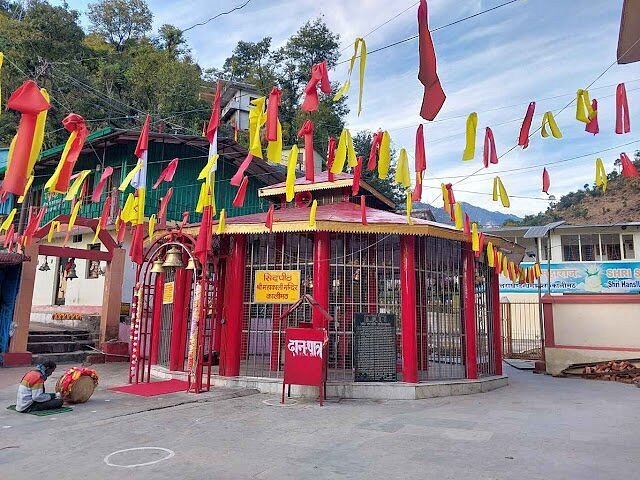
Tucked away in the serene Garhwal Himalayas of Uttarakhand’s Rudraprayag district, Kalimath is one of the most powerful and spiritually charged pilgrimage destinations in the region. Located at an altitude of approximately 1,460–1,800 meters (4,800–6,000 feet), this sacred village on the banks of the Saraswati River is revered as one of the 108 Shakti Peethas in Hindu mythology.
Unlike typical temples, Kalimath has no idol of Goddess Kali. Instead, a sacred Sri Yantra is the object of devotion—a mystical geometric diagram representing the divine feminine energy. The goddess is believed to reside here in her astral form, and the Sri Yantra is opened for worship only once a year, on the Ashtami of Navratri at midnight, with only the chief priest present.
Kalimath holds a unique place in the Kedarnath Valley. According to legend, this is the very spot where Goddess Kali slayed the demon Raktavija (or Raktabeej). After her victory, she disappeared underground, and that sacred point is worshipped today. The temple is also associated with the great Sanskrit poet Kalidas, who is believed to have received his inspiration and blessings from Goddess Kali at this very place.
What makes Kalimath even more special is that it is the only place where Goddess Kali is worshipped along with her sisters—Goddess Lakshmi and Goddess Saraswati—making it a unique Tridevi shrine. Whether you are a devout pilgrim seeking the blessings of the Divine Mother, a history enthusiast tracing the footsteps of Kalidas, or a traveller looking for a serene Himalayan retreat away from crowded circuits, Kalimath offers an experience that is both spiritually transformative and deeply peaceful.
Key Information at a Glance:
History and Mythology: The Legend of Raktavija
The Slaying of Demon Raktavija
The most powerful legend associated with Kalimath is the story of the demon Raktavija (or Raktabeej). According to Hindu mythology, Raktavija was a fearsome demon who possessed a unique and terrifying boon: every time a drop of his blood fell on the ground, a thousand clones of him would arise.
This made him virtually invincible. Countless gods and warriors tried to defeat him, but failed. Finally, Goddess Kali was called upon to vanquish this menace. In her fierce form, she fought Raktavija and, using her divine powers, drank his blood before it could touch the ground, preventing the multiplication of his clones.
After the demon was slain, the goddess is believed to have disappeared underground at the very spot where the Kalimath Temple now stands. That sacred point is worshipped today as the place where the divine energy of Goddess Kali resides.
The Shakti Peetha Connection
Kalimath is recognised as one of the 108 Shakti Peethas according to the Srimad Devi Bhagwat Mahapuran. According to another legend, when Lord Shiva was performing his Tandav (the dance of destruction), carrying the body of his consort, Goddess Sati, her heart is believed to have fallen at the place where Kalimath Temple now stands, making it a powerful Shakti Peetha.
The Upper and Lower Goddess: Kalimath and Dhari Devi
An interesting belief associated with Kalimath is that the lower part of Goddess Kali is worshipped at Kalimath, while the upper part is worshipped at the Dhari Devi Temple, located between Rudraprayag and Srinagar (approximately 52 km away). This connection creates a spiritual bond between the two temples, and many pilgrims visit both shrines.
The Unique Tridevi Shrine
Kalimath is the only place where Goddess Kali is worshipped along with her sisters—Goddess Lakshmi and Goddess Saraswati. This makes it a unique Tridevi shrine, where the three principal goddesses of Hinduism are revered together. Near the main temple, there are other ancient temples dedicated to Lakshmi, Saraswati, Gauri Shankar, as well as many antique Shivlings, idols of Nandi, and Ganesh.
An eternal holy flame always burns in the temple of Lakshmi, adding to the divine atmosphere.
The Legend of Kalidas
Kalimath is also historically significant as the birthplace of the great Sanskrit poet and playwright Kalidas. According to belief, it was at this very place that Kalidas received his inspiration and blessings from Goddess Kali, which transformed him into one of the greatest literary figures in Indian history. His works, including Abhijnanashakuntalam, Meghadutam, and Raghuvamsam, continue to be celebrated worldwide.
The Siddha Peetha
Kalimath is considered one of the most powerful divine places in the Kedarnath Valley. It is referred to as a Siddha Peetha—a place where spiritual seekers can attain siddhis (divine powers) through intense devotion and meditation. The peaceful, serene atmosphere makes it an ideal spot for meditation and spiritual practice.
The Barti Baba Connection
Local lore speaks of Barti Baba, a saint who is credited with preserving the sanctity of this holy shrine. It is said that all who met him and the locals believed that he had a direct connection with Maa Kali. His presence added to the spiritual legacy of Kalimath.
Vehicle Worship Tradition
There is a unique tradition in the Kedarnath valley associated with Kalimath. It is strongly believed that if one purchases any vehicle (either two or a four-wheeler), it is necessary to have it worshipped at Kalimath. After the worship, the owner places a photo of the Kalimath temple in the vehicle or ties a string with the name of Goddess Kali Mata, seeking her protection on the roads.
The Unique Worship: Sri Yantra Instead of an Idol
No Idol, Only Sri Yantra
What makes Kalimath truly unique among Hindu temples is that there is no idol of Goddess Kali in the sanctum. Instead, a sacred Sri Yantra (also called Shakti Yantra) is the object of devotion. The Sri Yantra is a mystical geometric diagram composed of nine interlocking triangles that represent the divine feminine energy in its totality.
The temple houses a silver Sri Yantra that marks the sacred spot where Goddess Kali is believed to reside after disappearing underground.
The Secret Annual Ritual
The Sri Yantra is opened for worship only once a year—on the Ashtami (eighth day) of Navratri at midnight. During this sacred ritual:
- Only the chief priest is present inside the sanctum
- The doors of the temple are closed to all other devotees
- Special prayers and offerings are made to the Sri Yantra
- The ritual is conducted in complete secrecy
This annual event draws the attention of devotees from far and wide, though none except the priest can witness the actual ceremony.
Worship of the Tridevi
Alongside Goddess Kali, devotees also worship:
- Goddess Lakshmi – The goddess of wealth and prosperity
- Goddess Saraswati – The goddess of knowledge, music, and arts
The presence of all three goddesses in one temple complex makes Kalimath a uniquely powerful spiritual destination.
Geography and Location
Geographic Coordinates
- Latitude: 30°33′50″ N
- Longitude: 79°05′06″ E
- Elevation: 1,460–1,800 meters (4,800–6,000 ft) above sea level
Location
Kalimath is situated in the Rudraprayag district of Uttarakhand, in the Garhwal region of the Himalayas. The village lies on the banks of the Saraswati River, surrounded by the peaks of Kedarnath. It is located approximately:
- 15 km from Ukhimath
- 20 km from Rudraprayag
- 24 km from Guptkashi
- 46 km from Kedarnath (including trek)
- 165 km from Rishikesh
- 430 km from Delhi
Topography
Kalimath is nestled in a valley surrounded by dense forests of deodar, pine, and rhododendron. The village sits at a comfortable elevation—high enough for cool mountain air and stunning views but not so high as to cause altitude discomfort for most visitors. The Saraswati River flows alongside the village, adding to its serene charm.
How to Reach Kalimath
By Air
Nearest Airport: Jolly Grant Airport, Dehradun (approximately 190 km from Kalimath)
| Details | Information |
|---|---|
| Distance | ~190 km |
| Travel Time | 7–8 hours by taxi |
| Airlines | Regular flights from Delhi to Dehradun (approx. 1 hour) |
| Onward Travel | Taxis available from the airport; take a taxi to Rudraprayag or Guptkashi, then proceed to Kalimath |
By Train
Nearest Railway Station: Rishikesh (approximately 165 km from Kalimath)
| Station | Distance | Travel Time | Connectivity |
|---|---|---|---|
| Rishikesh | 165 km | 6–7 hours by road | Most preferred |
| Haridwar | 190 km | 7–8 hours by road | Major station |
| Dehradun | 200 km | 7–8 hours by road | Well-connected |
Popular Trains from Delhi to Haridwar/Rishikesh:
| Train Name | From Delhi | Departure | Arrival | Destination |
|---|---|---|---|---|
| Shatabdi Express | Delhi | 6:00 AM | 11:40 AM | Haridwar |
| Jan Shatabdi | Delhi | 3:20 PM | 9:00 PM | Haridwar |
| Mussoorie Express | Delhi | 10:05 PM | 5:30 AM | Haridwar |
From the railway station, taxis and buses are available for Rudraprayag and Guptkashi.
By Road
Kalimath is well-connected by road to major cities in North India :
Road Conditions: The roads are generally good but winding, especially after Rudraprayag. Caution is advised during the monsoon (July–August) when landslides can occur. The last stretch to Kalimath involves narrow mountain roads.
Bus Services: Regular state transport and private buses operate from Rishikesh and Haridwar to Rudraprayag. From Rudraprayag, local buses and shared taxis are available to Kalimath.
Distances from Major Cities
| City | Distance (km) |
|---|---|
| Delhi | ~430 |
| Dehradun | ~200 |
| Rishikesh | 165 |
| Haridwar | 190 |
| Rudraprayag | 20 |
| Guptkashi | 24 |
| Ukhimath | 15 |
| Kedarnath | 46 (including trek) |
Weather and Best Time to Visit
Climate Overview
Kalimath experiences a pleasant climate with distinct seasons. The village’s moderate elevation ensures comfortable temperatures for most of the year.
Month-by-Month Temperature Guide
| Month | Day Temp (°C) | Night Temp (°C) | Conditions | Travel Suitability |
|---|---|---|---|---|
| January–February | 5–15 | -2–5 | Very cold, possible snow | Moderate |
| March | 10–18 | 3–8 | Pleasant, spring begins | ⭐ Good |
| April | 15–22 | 8–12 | Pleasant, clear skies | ⭐ Excellent |
| May | 18–25 | 10–15 | Warm, ideal | ⭐ Best |
| June | 20–28 | 12–18 | Warm, pre-monsoon | ⭐ Best |
| July–August | 18–24 | 12–18 | Monsoon, heavy rain, landslide risk | ❌ Avoid |
| September | 16–22 | 10–14 | Post-monsoon, clear | ⭐ Excellent |
| October | 12–20 | 6–10 | Clear skies, pleasant | ⭐ Excellent |
| November | 8–16 | 3–8 | Crisp, cool | ⭐ Good |
| December | 5–12 | 0–5 | Cold, possible snow | Moderate |
Best Time to Visit by Season
Why Visit During Navratri
The most spiritually significant time to visit Kalimath is during Navratri (March–April and September–October). The temple celebrates this festival with great enthusiasm, and the entire area comes alive with:
- Colorful decorations
- Special rituals, pujas, and havans
- The annual midnight ritual on Ashtami, when the Sri Yantra is opened
- Local fairs, music, and dance performances
Best Time of Day for Visit
- Morning (4:00 AM – 8:00 AM): Best time for peaceful darshan; witness the morning aarti
- Evening (6:00 PM – 8:00 PM): Serene atmosphere; evening aarti
Things to Do in Kalimath
1. Seek Blessings at the Main Temple
The primary activity is offering prayers at the main Kalimath Temple. Instead of an idol, devotees worship the sacred Sri Yantra, which represents the divine feminine energy. Participate in the daily aarti rituals and feel the powerful spiritual vibrations of this Siddha Peetha.
2. Attend Navratri Celebrations
If your visit coincides with Navratri (March–April or September–October), you can witness:
- Special rituals and pujas
- The unique midnight ritual on Ashtami
- Local fairs and cultural performances
3. Visit the Tridevi Temples
Explore the adjacent temples dedicated to:
- Goddess Lakshmi – Note the eternal flame that always burns here
- Goddess Saraswati
- Gauri Shankar (Lord Shiva with Goddess Parvati)
4. Meditation and Nature Walks
The peaceful atmosphere and serene surroundings make Kalimath an ideal spot for:
5. Photography
Capture the stunning natural beauty:
- Panoramic views of the Kedarnath peaks
- The serene Saraswati River
- Ancient temple architecture
- Dense forests and valleys
6. Visit Nearby Spiritual Sites
Combine your visit with trips to nearby attractions like Ukhimath, Guptkashi, and Triyuginarayan (detailed in the “Nearby Places” section).
7. Participate in Vehicle Worship
If you have purchased a new vehicle, you can participate in the unique local tradition of having it worshipped at Kalimath for protection on the roads.
Nearby Places to Visit
Guptkashi – The Hidden Kashi
Located approximately 24 km from Kalimath, Guptkashi is a sacred town known for its ancient Vishwanath Temple and Ardhanarishwar Temple. It serves as the base camp for the Kedarnath Yatra and offers beautiful views of the Chaukhamba peaks.
Ukhimath – The Winter Seat of Kedarnath
Just 15 km from Kalimath, Ukhimath is where the Utsav Murti (festival idol) of Lord Kedarnath is brought during the winter months (November to April) when the high-altitude shrine is closed due to snow. The Omkareshwar Temple here is a must-visit.
Triyuginarayan – The Divine Wedding Site
Approximately 30 km from Kalimath, Triyuginarayan Temple is believed to be the exact place where Lord Shiva and Goddess Parvati got married. The temple is famous for an eternal flame that is said to have been burning since the time of the divine wedding.
Rudraprayag – The Confluence of Rivers
Located 20 km from Kalimath, Rudraprayag is one of the Panch Prayags—the sacred confluence of the Alaknanda and Mandakini rivers. It is an important stop on the Char Dham Yatra route.
Dhari Devi Temple – The Upper Goddess
Approximately 52 km from Kalimath, the Dhari Devi Temple is where the upper part of Goddess Kali is worshipped. According to belief, the lower part is worshipped at Kalimath, and the upper part at Dhari Devi, creating a spiritual connection between the two shrines.
Local Cuisine: What to Eat
Dining options in Kalimath are limited, as it is a small village. Most visitors eat at their accommodations or at small local eateries.
Must-Try Garhwali Dishes
| Dish | Description |
|---|---|
| Aloo Ke Gutke | Finger millet flatbread is healthy and filling |
| Gahat Ki Dal | Horse gram lentil soup, warming and nutritious |
| Mandua Roti | Finger millet flatbread, healthy and filling |
| Chainsoo | Protein-rich black gram curry |
| Kafuli | Nutritious spinach and fenugreek curry |
| Jhangora Kheer | Barnyard millet sweet pudding |
Where to Eat
- Dharamshala near the temple: Simple vegetarian meals
- Small local eateries: Basic Indian meals, chai, snacks
- Homestays: Home-cooked Garhwali food (if staying overnight)
Dining Tips
- Most visitors prefer to stay in Guptkashi or Rudraprayag, which have more dining options
- Carry packaged snacks for the journey
- Pure vegetarian options are widely available
Accommodation Options
Kalimath itself has limited accommodation, but nearby towns offer a range of options.
In Kalimath
| Accommodation Type | Features |
|---|---|
| Dharamshala | Basic rooms, simple facilities, run by Satpal Maharaj’s organization |
| Temple-run Guesthouse | Basic accommodation for pilgrims |
In Nearby Towns
Recommended Places to Stay
| Property | Location | Features |
|---|---|---|
| Hotel Devbhumi | Guptkashi | Comfortable rooms, good food |
| Shivalik River Retreat | Guptkashi | Riverside location, mountain views |
| GMVN Tourist Rest House | Rudraprayag | Government-run, reliable |
| Various Homestays | Guptkashi/Ukhimath | Authentic Garhwali experience |
Booking Tips
- Book well in advance for the Navratri season (March–April and September–October)
- For stays in Kalimath, contact the temple authorities directly
- Carry warm clothing—even in summer, evenings can be cool
- Carry a valid ID proof for hotel check-in
Travel Tips and Important Information
Before You Go
- Carry Cash: ATMs are limited in Kalimath; bring sufficient cash from Rudraprayag or Guptkashi
- Check Weather: Avoid monsoon (July–August) due to landslide risk
- Dress Modestly: Kalimath is a sacred site; dress appropriately when visiting the temple
- Carry Warm Clothing: Even in summer, mornings and evenings are cool; winter requires heavy woollens
- Wear Comfortable Shoes: Some walking is required on uneven terrain
During Your Visit
- Respect Temple Rituals: The Sri Yantra is opened only once a year on Navratri Ashtami at midnight; photography may be restricted
- Follow Dress Code: Modest religious attire is recommended
- Remove Shoes: Before entering the temple premises
- Maintain Silence: Respect the sanctity of the site
- Plan for the Annual Ritual: If you wish to be present during the midnight ritual on Navratri Ashtami, note that only the chief priest enters the sanctum; devotees worship from outside
Safety Tips
- Road Safety: Mountain roads require patience; avoid night driving
- Monsoon Travel: Avoid July–August due to landslide risk
- Wildlife: Be aware of your surroundings in forested areas
- Emergency Numbers: Keep local contacts handy
Packing Checklist
| Season | Essentials |
|---|---|
| All Year | Comfortable walking shoes, sunscreen, hat, reusable water bottle, power bank, camera, cash |
| Summer (Mar-Jun) | Heavy woolens, thermals, jacket, gloves, muffler, woollen cap |
| Monsoon (Jul-Aug) | Raincoat, waterproof footwear, umbrella (avoid travel if possible) |
| Winter (Oct-Mar) | Heavy woollens, thermals, jacket, gloves, muffler, woollen cap |
Photography Tips
- Best Spots: Main temple complex, Saraswati River views, surrounding mountain vistas
- Best Time: Morning for soft light; late afternoon for golden hour shots
- Note: Photography inside the main sanctum may be restricted—ask for permission
Frequently Asked Questions (FAQs)
Q1: Why is Kalimath Temple famous?
A: Kalimath Temple is famous for being one of the 108 Shakti Peethas where Goddess Kali is believed to have slain the demon Raktavija and disappeared underground. It is unique because there is no idol—a sacred Sri Yantra is worshipped instead. It is also the only temple where Goddess Kali is worshipped alongside Goddess Lakshmi and Goddess Saraswati (Tridevi).
Q2: What is the best time to visit Kalimath?
A: The best time to visit is March to June (summer) and September to November (post-monsoon). Navratri (March–April and September–October) is the most spiritually significant time, with special rituals and the annual midnight opening of the Sri Yantra.
Q3: How far is Kalimath from Delhi?
A: The distance from Delhi to Kalimath is approximately 430 km, with a travel time of 12–14 hours by road.
Q4: How do I reach Kalimath?
A: By road from Rishikesh (165 km) or Rudraprayag (20 km), by train to Rishikesh followed by taxi/bus, or by flight to Jolly Grant Airport, Dehradun (190 km) followed by taxi.
Q5: What is the altitude of Kalimath?
A: Kalimath is situated at an altitude of approximately 1,460–1,800 meters (4,800–6,000 feet) above sea level.
Q6: What are the temple timings?
A: The temple is open daily from 4:00 AM to 9:00 PM.
Q7: Is there an entry fee?
A: No, entry to the temple is free.
Q8: Is there an idol of Goddess Kali in the temple?
A: No, there is no idol. The object of devotion is a sacred Sri Yantra (also called Shakti Yantra).
Q9: When is the Sri Yantra opened for worship?
A: The Sri Yantra is opened for worship only once a year—on the Ashtami of Navratri at midnight. Only the chief priest is present during this ritual.
Q10: What is the significance of the eternal flame at Kalimath?
A: An eternal holy flame always burns in the temple of Goddess Lakshmi at the Kalimath complex.
Q11: Is Kalimath associated with Kalidas?
A: Yes, Kalimath is believed to be the birthplace of the great Sanskrit poet Kalidas, who received his inspiration and blessings from Goddess Kali here.
Q12: What are the nearby places to visit?
A: Nearby attractions include Guptkashi (24 km), Ukhimath (15 km), Triyuginarayan Temple (30 km), Rudraprayag (20 km), and Kedarnath Temple (46 km, including trek).
Q13: Is Kalimath suitable for senior citizens?
A: Yes, Kalimath is accessible and suitable for senior citizens. The temple is located in a village with minimal walking required. However, the narrow mountain roads require careful driving.
Q14: Are there accommodation options in Kalimath?
A: Kalimath has a dharamshala and a temple-run guesthouse with basic facilities. For more comfortable stays, Guptkashi (24 km) and Rudraprayag (20 km) offer better options.
Q15: What is the vehicle worship tradition at Kalimath?
A: It is a local belief that any new vehicle (two or four-wheeler) should be worshipped at Kalimath for protection. After worship, owners place a photo of the Kalimath temple or tie a string with the goddess’s name in the vehicle.
Plan Your Kalimath Journey with Discover Uttarakhand
At Discover Uttarakhand, we’ve been organising unforgettable spiritual journeys across Devbhoomi since 1997. As a trusted local operator with deep knowledge of Kalimath, Guptkashi, and the Garhwal region, we offer:
- ✅ Customised Kalimath tour packages (1 to 3 days)
- ✅ Combined itineraries covering Kalimath, Guptkashi, Ukhimath, and Triyuginarayan
- ✅ Comfortable transport with experienced hill drivers
- ✅ Verified accommodations in Guptkashi and Rudraprayag
- ✅ Guidance on Navratri festival visits and special rituals
- ✅ 24/7 customer support throughout your journey
Recommended Kalimath Packages
| Package | Duration | Starting Point | Highlights |
|---|---|---|---|
| Kalimath Darshan Day Trip | 1 Day | Rudraprayag/Guptkashi | Kalimath Temple, Sri Yantra darshan |
| Kalimath & Ukhimath Spiritual Tour | 2 Nights / 3 Days | Rishikesh | Kalimath, Ukhimath, Triyuginarayan |
| Garhwal Tridevi Pilgrimage | 3 Nights / 4 Days | Rishikesh | Kalimath, Dhari Devi, Guptkashi |
| Navratri Special Package | 3 Nights / 4 Days | Rishikesh | Kalimath during Navratri, special rituals |
Book your Kalimath journey today and experience the divine energy of the Goddess at this sacred Siddha Peetha.
📞 Call / WhatsApp: +91-9997187178, 9760222178, 8171977178
📍 Visit Our Office: Himalayan Colony, opposite DSVV, Haripur Kalan, Haridwar, Motichur Range, Uttarakhand 249411
🌐 Website: www.discover-uttarakhand.com
📧 Email: info@discover-uttarakhand.com
Jai Maa Kali! Jai Maa Lakshmi! Jai Maa Saraswati! 🙏🌺
Discover Uttarakhand – Your Local Partner for Unforgettable Himalayan Journeys Since 1997