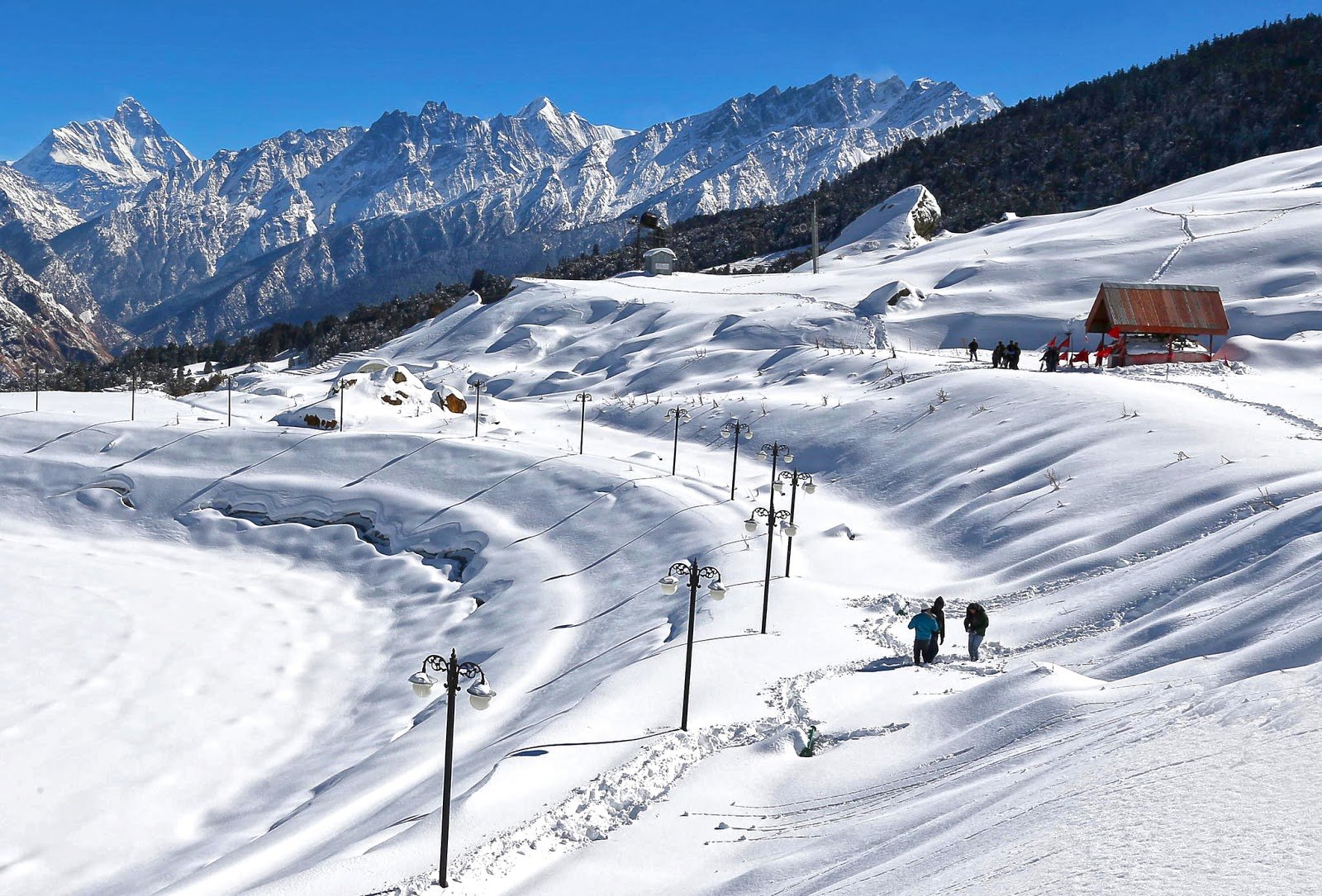

Introduction: The Celestial Sunrise Point of Garhwal
Perched at an elevation of approximately 1,676 metres (5,500 feet) on the Kunjapuri Hill in the Tehri Garhwal district, Kunjapuri Temple is one of the most revered Shakti Peethas in the Garhwal Himalayas . This ancient temple, dedicated to Goddess Durga, forms one-third of the divine triangle of Shakti Peethas in Tehri district—the other two being Surkanda Devi and Chandrabadni .
What makes Kunjapuri Temple truly extraordinary is its breathtaking panoramic views. To the north, one can see the majestic snow-capped peaks of Swargarohini, Gangotri, Bandarpoonch, and Chaukhamba . To the south, the sprawling vistas of Rishikesh, Haridwar, and the Doon Valley unfold like a living map . The temple is particularly famous for its spectacular sunrise view, when the first rays of the sun paint the Himalayan peaks in shades of gold and crimson .
Whether you are a pilgrim seeking the blessings of Goddess Durga, a trekker wanting to experience the Kunjapuri sunrise trek, a nature lover drawn to the dense forests of oak, pine, and rhododendron, or a photographer chasing the perfect shot of the Himalayas, Kunjapuri Temple promises an experience that is both spiritually uplifting and visually breathtaking .
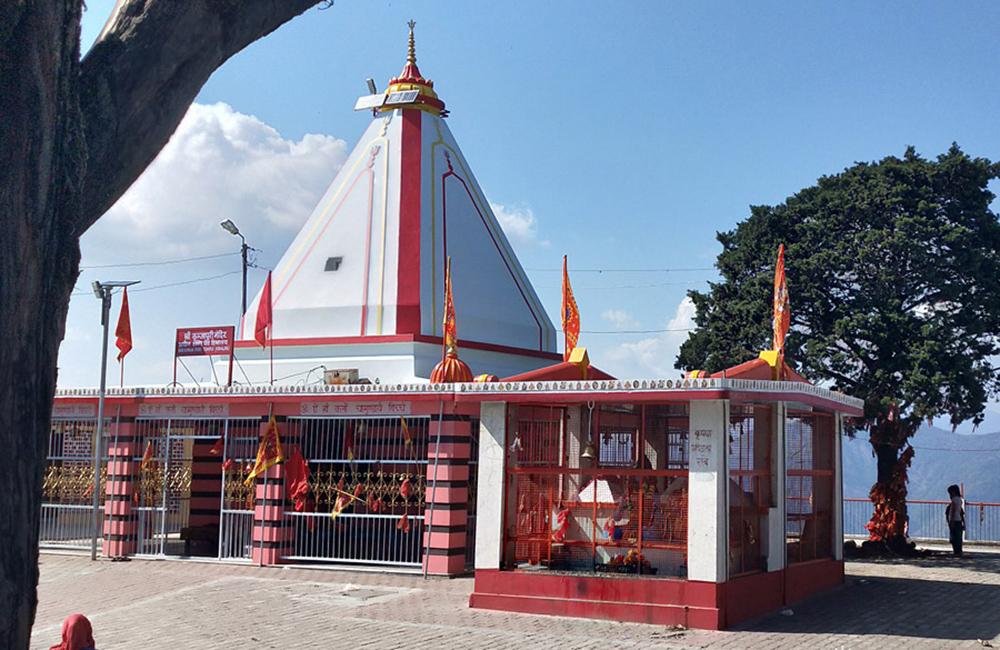
Key Information at a Glance:
History and Mythology: The Sacred Shakti Peetha
The Legend of Sati and the Shakti Peethas
Kunjapuri Temple holds profound significance in Hindu mythology as one of the 52 Shakti Peethas—the sacred sites where parts of Goddess Sati’s body fell after Lord Vishnu used his Sudarshana Chakra to sever her body into pieces .
According to the Puranas, Goddess Parvati was known as Sati in her previous birth. She had married Lord Shiva, but her father, King Daksha, disapproved of the match. Daksha organised a grand Yagna (fire sacrifice) but deliberately did not invite Lord Shiva or Sati to show his displeasure .
When Sati learned of this, she was furious and decided to attend the Yagna uninvited despite Lord Shiva’s protests. At the Yagna, King Daksha publicly humiliated Lord Shiva, insulting him in front of all the assembled gods. Unable to bear the disgrace to her husband, Sati jumped into the sacrificial fire and ended her life.
Lord Shiva’s Tandava and the Creation of Shakti Peethas
Upon learning of Sati’s death, Lord Shiva was shattered with grief and rage. He carried Sati’s body on his shoulder and began the Tandava—the dance of cosmic destruction—which threatened to annihilate the entire universe.
The gods, terrified of annihilation, implored Lord Vishnu to intervene. Vishnu, using his Sudarshana Chakra, cut Sati’s body into pieces. As Lord Shiva wandered across the subcontinent, parts of her body fell at various locations—each becoming a Shakti Peetha, where the Goddess is worshipped in a different form.
The Upper Body Falls at Kunjapuri
At Kunjapuri, the upper part of Sati’s body (referred to as “Kuja” in local parlance) is believed to have fallen. This is how the temple got its name—Kunjapuri—derived from the Sanskrit words “Kuja” (upper body) and “Puri” (place). According to the temple priest, a silver plate covers the sacred pit where the body part fell, and this spot is worshipped as the embodiment of the Goddess.
The Divine Triangle of Tehri
Kunjapuri, along with Surkanda Devi (where Sati’s head fell) and Chandrabadni (where Sati’s torso fell), forms a divine triangle of Shakti Peethas in the Tehri Garhwal district. These three temples were established by Jagadguru Adi Shankaracharya, who revitalised the pilgrimage circuit in the 8th century.
The Legend of the Name
The name “Kunjapuri” is derived from the local belief that the Goddess resides here in the form of a Kunja (bower) —a sacred space protected by nature. According to tradition, it was here that the gods first worshipped the Goddess after the creation of the Shakti Peethas.
Temple Architecture and Unique Features
The Temple Structure
The Kunjapuri Temple is built in the traditional Himalayan hill temple style, using local stone and materials. The main sanctum houses the sacred spot—a silver plate covering the pit where the Goddess’s body part is believed to have fallen. Unlike many Shakti Peethas, there is no traditional Pindi (stone idol) here; instead, the silver plate and the sacred pit are the objects of worship.
The Sacred Flame
Inside the temple, a continuously burning lamp (Akhand Jyoti) represents the eternal presence of the Goddess. This lamp is tended by the temple priests and symbolises the undying divine energy of the Shakti Peetha.
The 3,000 Steps
To reach the main shrine, devotees must climb approximately 3,000 stone steps from the base of the hill. This climb, while challenging, is considered an act of devotion and penance. For those unable to climb, vehicles can reach up to the temple parking area, which is still a short walk from the shrine.
The Sunrise Point
The temple’s location on the highest point of Kunjapuri Hill makes it an unparalleled sunrise viewpoint. Early morning visitors can witness:
| Direction | View |
|---|---|
| North | Snow-capped Himalayan peaks: Swargarohini, Gangotri, Bandarpoonch, Chaukhamba |
| South | Doon Valley, Rishikesh, Haridwar, and the Ganges River |
The sun rises behind the Himalayan peaks, casting a golden glow that transforms the entire landscape. This spectacle is considered a spiritual experience as much as a visual one .
The Temple Complex
The temple complex also includes:
- A Shiva temple adjacent to the main shrine
- Benches for meditation and contemplation behind the temple
- Small shops selling prasad (offerings) and refreshments
- A parking area at the base of the steps
Spiritual Beliefs and Religious Significance
One of the 52 Shakti Peethas
Kunjapuri is counted among the 52 Shakti Peethas of Goddess Shakti, as described in the Hindu scriptures. Devotees believe that worshipping here brings the blessings of the Divine Mother and helps fulfil wishes.
Part of the Divine Triangle
The three Shakti Peethas of Tehri district—Kunjapuri, Surkanda Devi, and Chandrabadni—form a sacred triangle. Many devotees undertake a pilgrimage covering all three temples, believing that completing this circuit multiplies the spiritual benefits.
Protector of the Char Dham Yatra
Kunjapuri Temple is considered an important stopover for pilgrims on the Char Dham Yatra. Buses going towards Gangotri and Kedarnath pass through the Kunjapuri Hill area, and many pilgrims stop here to seek the Goddess’s blessings for a safe journey.
Navratri and Dussehra Celebrations
During Navratri, the temple sees a huge influx of devotees, and the atmosphere is charged with devotional energy.
The Temple Priest’s Role
The temple is managed by a family of priests who have served here for generations. According to the priest at the temple, the sacred spot is covered by a silver plate, and beneath it lies the pit where the Goddess’s body part fell. Devotees offer prasad (coconuts, flowers, and sweets) and receive blessings from the priest.
The Kunjapuri Sunrise Trek: A Complete Guide
Trek Overview
The Kunjapuri sunrise trek is one of the most popular half-day treks near Rishikesh, suitable for beginners and experienced trekkers alike.
| Aspect | Details |
|---|---|
| Starting Point | Rishikesh / Hindolakhal |
| Trek Distance from Hindolakhal | ~5 km |
| Trek Duration | 2–3 hours |
| Difficulty | Easy to Moderate |
| Best Time | Pre-dawn (to catch sunrise) |
Full Day-by-Day Itinerary (From Rishikesh)
Option 1: Sunrise Trek with Guide (Most Popular)
Option 2: Self-Driven Trek
| Time | Activity |
|---|---|
| 4:30 AM | Depart from Rishikesh by private vehicle |
| 5:30 AM | Arrive at Hindolakhal (parking area) |
| 5:30 AM – 7:00 AM | Trek back to the parking |
| 7:00 AM – 8:30 AM | Sunrise viewing and darshan |
| 8:30 AM – 10:00 AM | Trek back to parking |
| 10:00 AM | Return to Rishikesh |
What to Expect on the Trek
- The Trail: The path winds through dense forests of oak, pine, and rhododendron. In spring (March–April), the rhododendrons are in full bloom, painting the hillsides in vibrant red.
- Wildlife: You may spot various Himalayan birds, and occasionally langurs and monkeys. Leopards are present in the area but rarely seen by trekkers.
- The Climb: The trek involves a steady ascent of approximately 3000 steps from the base to the temple.
- The Reward: The sunrise view from the summit is nothing short of spectacular—the first rays of the sun hitting Nanda Devi, Chaukhamba, and other peaks create a scene of transcendent beauty.
Trekking Tips
| Tip | Details |
|---|---|
| Start Early | Begin the trek by 5:00 AM to reach the summit before sunrise |
| Carry a Flashlight | It will be dark during the early morning trek |
| Warm Clothing | Temperatures at the summit can be significantly colder than in Rishikesh |
| Sturdy Shoes | The path involves stone steps and uneven terrain |
| Water & Snacks | Carry water, though shops are available at the temple |
| Camera | The sunrise views are unforgettable—capture them! |
Tour Packages
Several operators offer guided sunrise treks to Kunjapuri Temple. A typical package includes:
| Inclusions | Details |
|---|---|
| Pickup and drop off from the Rishikesh hotel | |
| Professional English-speaking guide | |
| Breakfast after the trek | |
| Forest entry fees |
Price Range: Approximately ₹1,500 – ₹3,000 per person (varies by operator).
Flora and Fauna
Forests and Vegetation
The Kunjapuri Hill is covered with dense forests of:
The trail is particularly beautiful during spring when the rhododendrons are in full bloom, and during the monsoon when the forests are lush and green.
Wildlife
The area is home to various Himalayan wildlife species :
| Species | Description |
|---|---|
| Leopards | Present in the area, rarely seen |
| Monkeys | Frequently seen near the temple |
| Langurs | Common in forested areas |
| Himalayan Birds | Various species can be spotted during the trek |
Note: Be cautious with food and belongings around monkeys, as they can be mischievous.
How to Reach Kunjapuri Temple
By Air
Nearest Airport: Jolly Grant Airport, Dehradun (approximately 43 km from Kunjapuri)
| Details | Information |
|---|---|
| Flight Duration (Delhi–Dehradun) | 1 hour |
| Drive from the airport to the temple | 1–1.5 hours by taxi |
| Airlines | IndiGo, other domestic carriers |
From the airport, you can hire a taxi directly to Kunjapuri Temple.
By Train
Nearest Railway Stations:
| Station | Distance | Travel Time |
|---|---|---|
| Rishikesh | 27 km | 1 hour by taxi |
| Haridwar | ~40 km | 1.5 hours by taxi |
| Dehradun | ~43 km | 1–1.5 hours by taxi |
Popular Trains from Delhi to Haridwar/Rishikesh:
| Train Name | From Delhi | Departure | Arrival | Destination |
|---|---|---|---|---|
| Shatabdi Express | Delhi | 6:00 AM | 11:40 AM | Haridwar |
| Jan Shatabdi | Delhi | 3:20 PM | 9:00 PM | Haridwar |
| Mussoorie Express | Delhi | 10:05 PM | 5:30 AM | Haridwar |
From the railway station, take a taxi or bus to Kunjapuri.
By Road
Kunjapuri Temple is well-connected by road and located on the Rishikesh–Tehri Road (NH94).
From Narendra Nagar
Narendra Nagar is the nearest town to Kunjapuri, located approximately 7 km from the temple. From here, you can:
- Drive to Hindolakhal and then trek (~5 km)
- Drive directly to the temple parking (the road goes up to the temple)
From Hindolakhal (Trek Starting Point)
The road divides at Hindolakhal, located approximately 6 km from Narendra Nagar. From Hindolakhal:
| Option | Details |
|---|---|
| Trek | 5 km trek through forest to the temple |
| Vehicle | You can drive up to the temple parking from Hindolakhal |
Distances from Major Cities
| City | Distance (km) |
|---|---|
| Delhi | ~300 |
| Dehradun | 43 |
| Rishikesh | 25-27 |
| Haridwar | ~40 |
| Narendra Nagar | 7 |
| Hindolakhal | ~5 from temple |
Weather and Best Time to Visit
Climate Overview
Kunjapuri Temple experiences a pleasant high-altitude climate. The temple is situated at 1,676 metres, making it significantly cooler than Rishikesh.
Month-by-Month Guide
Best Time to Visit by Season
| Season | Months | Suitability | Conditions | Best For |
|---|---|---|---|---|
| Winter | October–March | ⭐ Best | Clear skies, cold mornings | Unobstructed Himalayan views, sunrise photography |
| Summer | April–June | ⭐ Excellent | 15°C–28°C, pleasant | Trekking, comfortable weather |
| Monsoon | July–September | ❌ Avoid | Heavy rainfall, cloudy | Not recommended (poor visibility) |
Why Visit in Winter (October–March)
This is the best time for unobstructed views of the Himalayas. The skies are clear, and the snow-capped peaks are visible in their full glory. However, mornings are cold—carry heavy woollens.
Why Visit in Summer (April–June)
Summer offers pleasant temperatures ranging from 15°C to 28°C, making it ideal for the trek. The rhododendrons bloom in April, adding vibrant colours to the landscape.
Why Avoid Monsoon (July–September)
The monsoon brings heavy rainfall and cloud cover, which obscures the mountain views. The trekking trail can become slippery and dangerous.
Best Time of Day for Visit
| Time | Activity | Tips |
|---|---|---|
| Sunrise (5:30–7:00 AM) | Sunrise viewing, temple darshan | Best experience; arrive early |
| Morning (8:00–10:00 AM) | Temple visit, photography | Clear views, pleasant temperatures |
| Evening (4:00–5:30 PM) | Sunset viewing | Golden light over the Doon Valley |
Temple Timings
| Season | Timings |
|---|---|
| Summer | 6:00 AM – 8:00 PM (approx.) |
| Winter | 7:00 AM – 6:00 PM (approx.) |
Note: The temple opens early for morning aarti. The opening time is approximately 6:00 AM, but the exact timing may vary.
Festivals to Experience
Nearby Places to Visit
Rishikesh – The Yoga Capital of the World
Just 25 km from Kunjapuri, Rishikesh offers:
- Laxman Jhula and Ram Jhula – Iconic suspension bridges
- Triveni Ghat – Evening Ganga Aarti
- River rafting on the Ganges
- Yoga and meditation centres
- Adventure activities like bungee jumping and zip-lining
Haridwar – The Gateway to God
Approximately 40 km away, Haridwar is known for:
- Har Ki Pauri – The most sacred ghat
- Ganga Aarti – Spectacular evening ceremony
- Mansa Devi and Chandi Devi Temples – Shakti Peethas
Narendra Nagar – The Royal Retreat
Located just 7 km from Kunjapuri, Narendra Nagar is known for:
- Ananda in the Himalayas – World-renowned luxury spa resort
- Palace Estate – Former royal residence
- Views of the Ganges and Himalayan foothills
Surkanda Devi Temple – The Divine Triangle
Part of the same divine triangle of Shakti Peethas, Surkanda Devi Temple is located near Dhanaulti. It is dedicated to the goddess where Sati’s head is believed to have fallen.
Tehri Dam – The Engineering Marvel
The Tehri Dam is one of the highest dams in the world and a major attraction. Located approximately 50 km from Kunjapuri, it offers:
- Stunning views of the Tehri Lake
- Water sports activities (boating, jet skiing)
- Scenic drive along the reservoir
Where to Stay: Accommodation Options
Near Kunjapuri Temple (Limited Options)
| Accommodation | Features | Price Range |
|---|---|---|
| Hotel Kunjapuri | At the temple base, basic rooms | ₹1,500–3,000 |
| Local Homestays | Limited availability | ₹1,000–2,000 |
In Narendra Nagar (7 km from Temple)
| Accommodation | Features | Price Range |
|---|---|---|
| Ananda in the Himalayas | Luxury spa resort, palace estate | ₹30,000+ |
| Kamay The Grand Alova | Mid-range, good amenities | ₹3,000–6,000 |
| Local Guesthouses | Basic amenities | ₹800–2,000 |
In Rishikesh (25 km from the temple)
| Category | Price Range | Examples |
|---|---|---|
| Luxury Resorts | ₹8,000–20,000+ | Aloha On The Ganges |
| Mid-Range Hotels | ₹2,000–5,000 | Lemon Tree Premier |
| Budget Hotels | ₹800–2,000 | Raj Resort |
| Ashrams | ₹500–1,500 | Various ashrams |
Booking Tips
- For the sunrise trek, staying in Rishikesh is most convenient
- For a peaceful retreat, Narendra Nagar offers excellent options
- Book well in advance for the Navratri season
- Ananda in the Himalayas requires advance booking (weeks to months)
Local Cuisine: What to Eat
At the Temple (Prasad)
| Item | Description |
|---|---|
| Prasad | Offerings made to the Goddess |
| Chai | Hot tea available at small stalls |
In Rishikesh/Haridwar
| Dish | Description |
|---|---|
| Aloo Ke Gutke | Thick, creamy yoghurt drink |
| Kachori Sabzi | Popular breakfast item |
| Chole Bhature | Punjabi-style chickpea curry with fried bread |
| Lassi | Thick, creamy yogurt drink |
| Jalebis | Sweet, crispy spirals |
Dining Tips
- Pure vegetarian food is the norm in Rishikesh and Haridwar
- Carry packed snacks for the trek
- Most hotels offer meal packages
- Stay hydrated—carry water for the trek
Travel Tips and Important Information
Before You Go
- Start Early: The best experience is the sunrise view—start from Rishikesh by 4:00 AM.
- Check Weather: Avoid monsoon (July–September) due to cloud cover and poor visibility.
- Carry Cash: ATMs are limited near the temple; bring sufficient cash from Rishikesh.
- Dress Modestly: Kunjapuri is a sacred site; dress appropriately.
- Physical Fitness: The trek involves a steep climb of approximately 3,000 steps.
During Your Visit
- Remove Shoes: Before entering the temple premises.
- Be Cautious of Monkeys: They can be mischievous—keep food and belongings secure.
- Carry Warm Clothing: Even in summer, early mornings are cool; winter requires heavy woollens.
- Stay Hydrated: Carry water for the trek.
- Respect Temple Rituals: Follow the instructions of the temple priests.
Safety Tips
- Road Safety: The roads from Rishikesh to Kunjapuri are winding; avoid night driving.
- Monsoon Travel: Avoid July–August due to slippery roads and potential landslides.
- Trekking Safety: The path can be steep; wear appropriate footwear.
- Wildlife: Leopards are present in the area; do not trek alone in the dark.
Packing Checklist
| Season | Essentials |
|---|---|
| All Year | Comfortable trekking shoes, sunscreen, hat, reusable water bottle, camera, cash |
| Winter (Oct–Mar) | Light cotton clothes, a light sweater for early morning |
| Summer (Apr–Jun) | Light cotton clothes, a light sweater for the early morning |
| Monsoon (Jul–Sep) | Raincoat, waterproof footwear (avoid travel if possible) |
Photography Tips
- Best Spots: From the temple facing north (Himalayan peaks), facing south (Doon Valley)
- Best Time: Sunrise (5:30–6:30 AM) for golden light on peaks
- Camera Gear: Wide-angle lens for landscapes; telephoto lens for mountain close-ups
- Note: Photography is generally allowed, but ask permission before photographing the deity
Frequently Asked Questions (FAQs)
Q1: What is Kunjapuri Temple famous for?
A: Kunjapuri Temple is famous for being one of the 52 Shakti Peethas and part of the divine triangle with Surkanda Devi and Chandrabadni. It is renowned for its spectacular sunrise view over the Himalayas, offering panoramic views of peaks like Swargarohini, Gangotri, Bandarpoonch, and Chaukhamba to the north, and Rishikesh, Haridwar, and the Doon Valley to the south.
Q2: What is the best time to visit Kunjapuri Temple?
A: The best time to visit is October to March (winter) for clear skies and unobstructed Himalayan views, and April to June (summer) for pleasant trekking weather. Monsoon (July–September) is best avoided due to heavy rainfall and cloud cover.
Q3: How far is Kunjapuri Temple from Rishikesh?
A: Kunjapuri Temple is approximately 25-27 km from Rishikesh, with a travel time of about 1 hour by road.
Q4: How do I reach Kunjapuri Temple?
A: By road from Rishikesh (25 km), by train to Rishikesh (27 km) followed by taxi, or by flight to Jolly Grant Airport, Dehradun (43 km) followed by taxi.
Q5: What is the altitude of Kunjapuri Temple?
A: Kunjapuri Temple is situated at an altitude of approximately 1,676 metres (5,500 feet) above sea level.
Q6: Is trekking required to reach Kunjapuri Temple?
A: You can drive directly to the temple parking area. However, from Hindolakhal, there is a 5 km trek through dense forests that many visitors enjoy. The temple also has approximately 3,000 steps from the base.
Q7: What is the Kunjapuri sunrise trek?
A: The Kunjapuri sunrise trek is a half-day trek starting from Rishikesh at 4:00 AM, driving to the base, then trekking to the summit to witness the sunrise over the Himalayas. It is one of the most popular treks near Rishikesh.
Q8: What are the temple timings?
A: The temple is open from approximately 6:00 AM to 8:00 PM (timings may vary by season). For the sunrise view, arrive by 6:00 AM.
Q9: Is there an entry fee for Kunjapuri Temple?
A: No, entry to the temple is free .
Q10: What is the significance of Navratri at Kunjapuri?
A: Navratri (both Chaitra in March–April and Sharad in September–October) are the most important festivals at Kunjapuri Temple. Thousands of devotees visit during this time, and special rituals and celebrations are held.
Q11: Is Kunjapuri Temple a Shakti Peetha?
A: Yes, Kunjapuri Temple is one of the 52 Shakti Peethas of Goddess Shakti, established by Jagadguru Adi Shankaracharya.
Q12: What is the divine triangle of Tehri?
A: The divine triangle consists of Kunjapuri, Surkanda Devi, and Chandrabadni—three Shakti Peethas in the Tehri Garhwal district, where different parts of Goddess Sati’s body fell.
Q13: Can I visit Kunjapuri Temple during the monsoon?
A: Monsoon (July–September) is not recommended due to heavy rainfall, cloud cover that obscures mountain views, and slippery trekking conditions.
Q14: What should I wear when visiting Kunjapuri Temple?
A: Dress modestly out of respect for the temple’s religious significance. Wear comfortable trekking shoes for the stairs. Carry warm clothing for early mornings.
Q15: Is photography allowed at Kunjapuri Temple?
A: Photography is generally allowed in the temple premises, but it is respectful to ask for permission before taking pictures of the deity or during religious ceremonies.
Plan Your Kunjapuri Temple Journey with Discover Uttarakhand
At Discover Uttarakhand, we’ve been organising unforgettable spiritual journeys across Devbhoomi since 1997. As a trusted local operator with deep knowledge of the Garhwal Himalayas, we offer:
- ✅ Kunjapuri Sunrise Trek packages (half-day to 2 days)
- ✅ Combined itineraries covering Kunjapuri, Surkanda Devi, and Chandrabadni
- ✅ Char Dham Yatra packages including this sacred Shakti Peetha
- ✅ Comfortable transport with experienced hill drivers
- ✅ Verified accommodations in Rishikesh and Narendra Nagar
- ✅ Local guides for the sunrise trek
- ✅ 24/7 customer support throughout your journey
Recommended Kunjapuri Packages
| Package | Duration | Starting Point | Highlights |
|---|---|---|---|
| Kunjapuri Sunrise Trek | Half Day | Rishikesh | Sunrise view, temple darshan, breakfast |
| Kunjapuri & Divine Triangle | 2 Nights / 3 Days | Rishikesh | Kunjapuri, Surkanda Devi, Chandrabadni |
| Kunjapuri with Rishikesh | 2 Nights / 3 Days | Haridwar | Kunjapuri sunrise, Rishikesh sightseeing |
Book your Kunjapuri Temple journey today and witness the divine sunrise over the Himalayas.
📞 Call / WhatsApp: +91-9997187178, 9760222178, 8171977178
📍 Visit Our Office: Himalayan Colony, opposite DSVV, Haripur Kalan, Haridwar, Motichur Range, Uttarakhand 249411
🌐 Website: www.discover-uttarakhand.com
📧 Email: info@discover-uttarakhand.com
Jai Maa Kunjapuri! Jai Maa Durga! 🙏
Discover Uttarakhand – Your Local Partner for Sacred Himalayan Journeys Since 1997 🌄