Introduction: Where Mythology Meets History
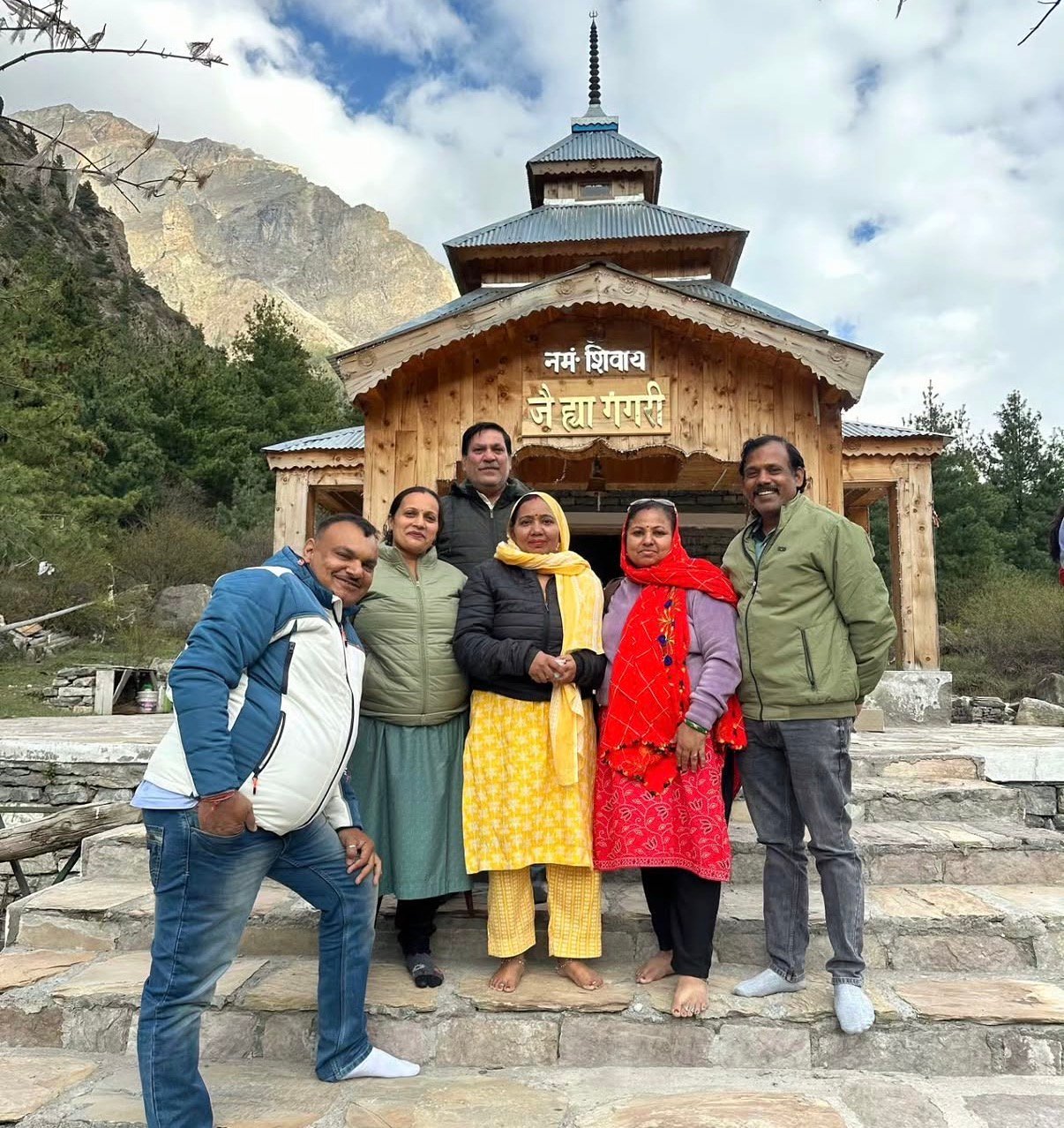
Hidden in the serene folds of the Jaunsar-Bawar region of Uttarakhand’s Dehradun district, Lakhamandal is one of India’s most mysterious and spiritually powerful destinations. Often referred to as the “Valley of Clouds,” this ancient temple complex is deeply rooted in Mahabharata mythology, archaeological significance, and devotion to Lord Shiva . Far from crowded tourist circuits, Lakhamandal offers a rare blend of history, faith, and untouched mountain beauty.
The name “Lakhamandal” derives from two words: ‘Lakha’ meaning “many” and ‘Mandal’ meaning “temples” or “lingams”. This is no exaggeration—the temple complex features hundreds of Shiva Lingas scattered across its premises, each radiating a profound spiritual energy. The most remarkable among them is a unique graphite Shivling that shines like a mirror when water is poured over it, allowing devotees to see their own reflection—a phenomenon believed to absolve one of sins .
But Lakhamandal’s true claim to fame lies in its connection to the Mahabharata. This is the very place where Duryodhana conspired to burn the Pandavas alive in the Lakshagriha—the infamous “House of Wax”. The remains of this palace, along with the secret cave through which the Pandavas escaped, can still be seen here, making Lakhamandal a living testament to one of Hinduism’s greatest epics.
Whether you are a devout pilgrim seeking blessings, a history enthusiast tracing the footsteps of the Pandavas, or a traveller looking for an offbeat spiritual retreat away from commercial tourism, Lakhamandal promises an experience that is both transformative and unforgettable.
Quick Facts – Lakhamandal
History and Mythology: The Mahabharata Connection
The Legend of Lakshagriha – The House of Wax
Lakhamandal holds a powerful place in the Mahabharata legends. According to the epic, this is the very place where Duryodhana, the jealous cousin of the Pandavas, conspired to kill them. He built a magnificent palace called the Lakshagriha (House of Wax) at this location and invited the Pandavas to stay there, hoping to burn them alive.
The palace was constructed using shellac (a flammable resin), oil, ghee, and other combustible materials, designed to catch fire easily. Duryodhana’s plan was to set the palace ablaze while the Pandavas were asleep inside.
However, the Pandavas, warned by their uncle Vidura, discovered the plot. They dug a secret tunnel—known locally as Dhundhi Odaari—that led out of the palace. On a stormy night, they set fire to the palace themselves and escaped through the tunnel, leaving behind a woman and her five sons who perished in the fire, leading their enemies to believe that the Pandavas had died .
The Dhundhi Odaari Cave – The Escape Route
The secret escape tunnel is called Dhundhi Odaari in the local Jaunsari language. ‘Dhund’ means “misty” or “foggy,” and ‘Odaari’ means “cave” or “hidden place” . Local tradition holds that the Pandavas took refuge in this cave to save themselves from Duryodhana.
The remains of the tunnel and the cave are still visible near the temple precincts, allowing visitors to walk in the footsteps of the Pandavas and experience a tangible connection to one of India’s greatest epics .
The Pandavas and the Creation of the Lingas
According to local legend, the Pandavas created lakhs of Shiva Lingas (hence the name Lakhamandal) during their time here. These lingas, in various sizes and shapes, are scattered throughout the temple complex and are still being excavated by the Archaeological Survey of India.
Yudhishtira, the eldest Pandava, consecrated the main linga in the temple . Around it are four smaller seats that once held the lingas belonging to Bhima, Arjuna, Nakula, and Sahadeva—a beautiful representation of the five brothers united in devotion to Lord Shiva.
The Twin Guardians – Manav and Danav
At the entrance of the main temple stand two disfigured statues known as Manav (Human) and Danav (Demon). These twin figures serve as the dwarpalas (door guardians) of the shrine .
According to local belief, these statues possess extraordinary powers. It is said that anyone who dies in these parts, when placed in front of these two statues, would come back to life momentarily. Manav would purify the soul, while Danav would assist the soul’s departure to Lord Vishnu’s heavenly abode of Vaikuntha.
Some believe these statues represent the Pandava brothers Bhima and Arjuna, while others see them as Jai and Vijay—the celestial doormen of Lord Vishnu .
The Legend of the Miracle Cow
A popular local legend tells of a Gaaymatha (a cow) that visited the temple every day to perform puja for the lingas. Her footprints are said to be visible on every stone and on the surrounding mountains, serving as a reminder of the divine grace that permeates this sacred place .
The Graphite Shivling – The Mirror of Sins
The main attraction of the temple is a Shivling made of graphite . When water is poured over it, the lingam shines and reflects its surroundings like a mirror. Devotees believe that seeing one’s own face in this reflective Shivling absolves them of all sins and ends their misfortunes.
This graphite lingam was excavated in 2007 and has since become the focal point of devotion at Lakhamandal .
A Stone Inscription – Historical Evidence
A stone inscription from the 6th century CE found at the site records the construction of a Shiva temple at Lakhamandal by Princess Ishwara, who belonged to the royal race of Singhpura. She built the temple for the spiritual welfare of her late husband, Chandragupta, the son of the king of Jalandhar.
This inscription provides historical evidence that Lakhamandal has been a center of Shiva worship for at least 1,500 years, long before the medieval period.
Geography and Location
Geographic Coordinates
- Latitude: 30.71° N (approximately)
- Longitude: 78.10° E (approximately)
- Elevation: ~2,118 meters (6,950 feet) above sea level
Location
Lakhamandal is situated in the Jaunsar-Bawar region of the Dehradun district, in the Garhwal Himalayas of Uttarakhand. The village of Lakhamandal lies on the banks of the Yamuna River, which flows alongside the temple complex .
The temple is located approximately:
Topography
Lakhamandal is nestled in a valley surrounded by dense forests of deodar, pine, and oak. The Tons Valley, in which it lies, is known for its dramatic landscapes and pristine natural beauty . The Yamuna River separates two distinct cultural regions—the Jaunpur and the Jaunsar—on either side of its banks.
Temple Architecture
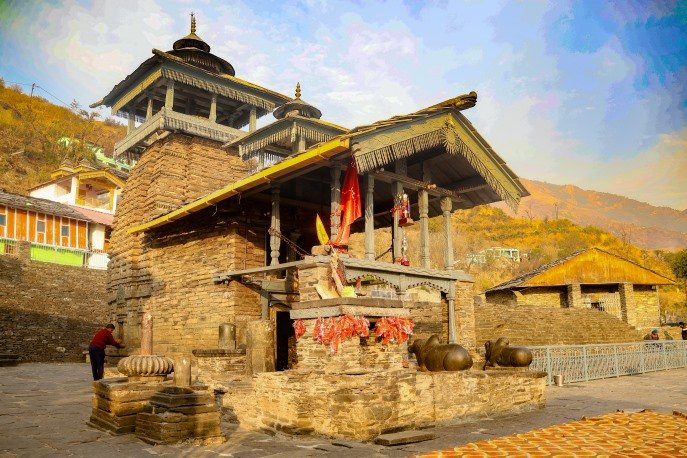
The main temple was built around the 12th–13th Century in the Nagara Style of Architecture (North Indian style), common in the hilly regions of Garhwal, Jaunsar, and Himachal. The structure is protected by the Archaeological Survey of India (ASI) .
The Sacred Sites of Lakhamandal
1. The Main Lakhamandal Temple
The main shrine is dedicated to Lord Shiva and faces the West, where the Yamuna River flows below. The temple is built in the traditional Nagara style with a distinct shikhara (tower). Inside, the main graphite Shivling is the focal point of worship.
Significance: The main linga was consecrated by Yudhishtira, the eldest Pandava.
2. The Graphite Shivling – The Mirror Lingam
This is the most unique feature of Lakhamandal. The graphite Shivling shines like a mirror when water is poured over it, reflecting the face of the devotee. It is believed that seeing your reflection in this lingam washes away all sins.
Spiritual Practice: Devotees pour water over the lingam and look at their reflection, praying for forgiveness and blessings.
3. The Hundreds of Shiva Lingas
Scattered across the temple complex are hundreds of Shiva Lingas in various sizes and shapes . Some are small and smooth, while others are large and intricately carved. Archaeological excavations have unearthed many more, and the site is still yielding discoveries.
4. The Lakshagriha Remains – The House of Wax
The remains of the foundation of the Lakshagriha (House of Wax) are still visible near the temple . This is the palace where Duryodhana attempted to burn the Pandavas alive. Standing at this spot, one can almost hear the echoes of one of the Mahabharata’s most dramatic episodes.
5. Dhundhi Odaari – The Pandava Escape Cave
This misty cave near the temple is believed to be the secret tunnel through which the Pandavas escaped the burning Lakshagriha . The name translates to “misty cave” or “hidden place,” reflecting the secrecy of their escape.
Experience: Walking into this cave is an unforgettable experience—a tangible connection to the Pandavas and their resilience.
6. The Twin Statues – Manav and Danav
At the entrance of the main shrine stand two disfigured statues of Manav and Danav, the dwarpalas (door guardians) of the temple . These statues are believed to have the power to briefly return the dead to life.
7. The Four Seats – Bhima, Arjuna, Nakula, and Sahadeva
Around the main linga are four seats that once held the lingas belonging to Bhima, Arjuna, Nakula, and Sahadeva. These are preserved in the temple office, representing the devotion of all five Pandava brothers.
8. The Temple Office – Preserved Artefacts
The temple office houses several artefacts excavated from the site, including the smaller Pandava lingas and other archaeological finds. Visitors can request to see these preserved treasures.
How to Reach Lakhamandal
By Air
Nearest Airport: Jolly Grant Airport, Dehradun (approximately 130 km from Lakhamandal)
- Airlines: Regular flights from Delhi to Dehradun (approx. 1 hour)
- Travel Time: 3–4 hours by taxi from the airport to Lakhamandal
- Flight Cost: Approximately ₹4,000–₹12,000 (from Delhi)
By Train
Nearest Railway Station: Dehradun Railway Station (approximately 107 km from Lakhamandal)
| Train Name | From Delhi | Departure | Arrival (Dehradun) | Duration |
|---|---|---|---|---|
| Shatabdi Express | Delhi | 6:00 AM | 11:40 AM | 5h 40m |
| Jan Shatabdi | Delhi | 3:20 PM | 9:00 PM | 5h 40m |
| Mussoorie Express | Delhi | 10:05 PM | 5:30 AM | 7h 25m |
Ticket Cost: ₹110–₹210 (Sleeper to AC classes)
From Dehradun station, taxis are available for the 3–4 hour drive to Lakhamandal.
By Road
Lakhamandal is well-connected by road to major cities in North India:
Route Details:
The scenic drive from Dehradun to Lakhamandal passes through:
- Mussoorie Road – winding mountain roads with valley views
- Kempty Falls – a famous waterfall en route
- Dense forests of deodar, pine, and oak
Road Conditions: The roads are generally good but winding, especially after Kempty Falls. Caution is advised during the monsoon when landslides can occur.
Distances from Major Cities
| City | Distance (km) |
|---|---|
| Delhi | 323 |
| Dehradun | 107–128 |
| Mussoorie | ~60 |
| Chakrata | 35 |
| Haridwar | ~150 |
| Rishikesh | ~160 |
| Chandigarh | ~200 |
Weather and Best Time to Visit
Climate Overview
Lakhamandal experiences a pleasant climate with distinct seasons. The region is known for its dense deodar forests and green meadows, which change character dramatically with the seasons.
Month-by-Month Temperature Guide
| Month | Day Temperature | Night Temperature | Conditions | Travel Suitability |
|---|---|---|---|---|
| January | 5°C – 12°C | -2°C – 3°C | Cold, foggy mornings | Moderate |
| February | 7°C – 15°C | 0°C – 5°C | Cool, occasional rain | Moderate |
| March | 10°C – 18°C | 3°C – 8°C | Pleasant, spring blooms | ⭐ Excellent |
| April | 15°C – 22°C | 8°C – 12°C | Warm, clear skies | ⭐ Excellent |
| May | 18°C – 26°C | 10°C – 15°C | Warm, ideal for sightseeing | ⭐ Excellent |
| June | 20°C – 28°C | 12°C – 18°C | Warm, pre-monsoon showers | Good |
| July | 18°C – 24°C | 12°C – 16°C | Monsoon, heavy rainfall | ⚠️ Avoid |
| August | 18°C – 24°C | 12°C – 16°C | Monsoon, landslide risk | ⚠️ Avoid |
| September | 16°C – 22°C | 10°C – 14°C | Post-monsoon, lush greenery | ⭐ Excellent |
| October | 12°C – 20°C | 6°C – 10°C | Clear skies, pleasant | ⭐ Excellent |
| November | 8°C – 16°C | 3°C – 8°C | Crisp, cool | Good |
| December | 5°C – 12°C | -1°C – 4°C | Cold, foggy | Moderate |
Best Time to Visit by Season
Festival Celebrations
Mahashivratri is the main festival celebrated at Lakhamandal Temple. During this festival, devotees gather to honour Lord Shiva through fasting, chanting prayers, and making offerings to the deity. Navratri is also celebrated with enthusiasm.
Best Time of Day for Visit
- Morning (7:00 AM – 10:00 AM): Best time for darshan; fewer crowds, pleasant light for photography
- Late Afternoon (3:00 PM – 6:00 PM): Good light for exploring the temple complex
Things to Do in Lakhamandal
1. Spiritual Exploration
- Visit the Main Temple: Offer prayers at the graphite Shivling and experience the unique mirror phenomenon
- Meditate Among Ancient Lingas: The hundreds of Shiva Lingas scattered across the complex create a profoundly peaceful atmosphere
- Explore Mythological Caves and Ruins: Walk through Dhundhi Odaari and the remains of the Lakshagriha
- Seek Blessings at the Twin Statues: Pay respects at the Manav and Danav statues
2. Historical Discovery
- Archaeological Exploration: The site is an ASI-protected monument with ongoing excavations
- Photography of Ancient Architecture: Capture the Nagara-style temple and ancient ruins
- Learn Local Folklore: Interact with locals to learn the legends associated with the Pandavas
3. Nature and Adventure
- Forest Walks: The area around Lakhamandal is amid dense deodar forests and green meadows, perfect for peaceful walks
- Short Treks: Explore the surrounding hills and forest trails
- Birdwatching: The dense forests attract a variety of Himalayan birds
- Yamuna River View: The river flows alongside the village, offering scenic spots for relaxation
4. Photography
- Best Subjects: Graphite Shivling, temple architecture, surrounding deodar forests, and Yamuna River views
- Best Time: Early morning for soft light; late afternoon for golden hour shots
Nearby Places to Visit
Chakrata – The Cantonment Town
Chakrata is a quiet hill station and military cantonment that served as the base for visiting Lakhamandal. It offers stunning Himalayan views, dense forests, and a peaceful atmosphere away from tourist crowds.
Tiger Falls
One of the highest direct waterfalls in India, Tiger Falls is a spectacular sight, especially after the monsoon season .
Mahasu Devta Temple (Hanol)
Located approximately 50 km from Lakhamandal, this ancient temple is dedicated to Mahasu Devta, a regional form of Lord Shiva worshipped as the “God of Justice”.
Local Cuisine: What to Eat
Lakhamandal is a small village with limited dining options. Most visitors eat at their accommodations or at small local dhabas.
Must-Try Garhwali/Jaunsari Dishes
Dining Tips
- Most guesthouses and homestays offer meal packages
- Carry packaged snacks for day trips
- Pure vegetarian options are widely available
- Restaurants are limited; plan meals accordingly
Accommodation Options
Lakhamandal is a small village with limited accommodation options. Most visitors stay in nearby Chakrata or Dehradun and make a day trip to Lakhamandal.
Where to Stay
Accommodation in Nearby Chakrata
| Category | Examples | Features |
|---|---|---|
| Comfort Hotels | Hotel Chakrata | Clean rooms, good food |
| Budget Hotels | Local guesthouses | Basic amenities, affordable |
| Homestays | Various family-run properties | Authentic experience, home-cooked food |
Accommodation in Dehradun (for longer stays)
Booking Tips
- Advance booking is recommended for weekends and holiday periods
- Carry a valid ID proof (Aadhar Card) for hotel check-in
- For stays in Chakrata, book through local travel agents or online platforms
Sample Itineraries
1-Day Lakhamandal Day Trip from Dehradun
Morning (7:00 AM – 9:00 AM):
- Depart from Dehradun early (by 7:00 AM)
- Drive via Mussoorie Road and Kempty Falls (3–4 hours)
Late Morning (10:30 AM – 1:00 PM):
- Arrive at Lakhamandal
- Visit the main temple, offer prayers at the graphite Shivling
- Explore the temple complex and hundreds of lingas
Afternoon (1:00 PM – 2:30 PM):
- Lunch at a local dhaba (packed lunch recommended)
Afternoon (2:30 PM – 4:00 PM):
- Explore the Dhundhi Odaari cave
- See the remains of the Lakshagriha
- Visit the twin statues of Manav and Danav
Evening (4:00 PM onwards):
- Depart for Dehradun (3–4 hours drive)
- Arrive by evening
2-Day Lakhamandal & Chakrata Weekend Getaway
Day 1: Arrival and Lakhamandal Exploration
- Morning: Depart from Delhi/Dehradun
- Afternoon: Arrive in Chakrata, check into hotel
- Late Afternoon: Drive to Lakhamandal (35 km, 1.5 hours)
- Evening: Explore Lakhamandal temple complex, sunset views
- Night: Return to Chakrata, dinner, overnight stay
Day 2: Chakrata Exploration and Departure
- Morning: Visit Tiger Falls or Deoban forest near Chakrata
- Afternoon: Explore Chakrata town, local market
- Evening: Depart for the return journey
3-Day Dehradun – Lakhamandal – Hanol Tour
Day 1: Dehradun to Lakhamandal
- Depart from Dehradun to Lakhamandal (120 km, 4–5 hours)
- Visit Lakhamandal Temple, explore caves
- Overnight stay in Lakhamandal
Day 2: Lakhamandal to Hanol
- Travel to Hanol (approx. 50 km, 2 hours)
- Visit the revered Mahasu Devta Temple
- Explore scenic trails and surroundings
- Overnight stay in Hanol
Day 3: Return to Dehradun
Travel Tips and Important Information
Before You Go
- Carry Cash: ATMs are limited in Chakrata and non-existent in Lakhamandal; bring sufficient cash from Dehradun
- Fill Fuel: The nearest fuel station is in Chakrata or on the way; fill up before entering the area
- Check Weather: Mountain weather can change rapidly; check forecasts before departure
- Advance Booking: Essential for weekends and peak seasons (March–June, September–November)
- Mobile Network: The network may be weak in Lakhamandal; plan accordingly
During Your Visit
- Dress Modestly: Lakhamandal is a sacred site; dress appropriately when visiting the temple
- Wear Comfortable Shoes: The terrain is uneven; sturdy walking shoes are recommended
- Respect Local Customs: Follow temple protocols; photography may be restricted in certain areas
- Start Early: Begin your day trip early to make the most of your time
- Carry Water: Bring water for the journey; shops are limited at the site
Safety Tips
- Road Safety: Mountain roads require patience; avoid night driving
- Monsoon Travel: Avoid July-August due to landslide risk
- Walking Safety: The temple complex has uneven surfaces; watch your step
- Wildlife: Be aware of surroundings; avoid feeding animals
Packing Checklist
| Season | Essentials |
|---|---|
| All Year | Comfortable walking shoes, sunscreen, hat, reusable water bottle, power bank, camera, cash |
| Summer (Mar-Jun) | Light cotton clothes, light sweater for evenings, hat, sunscreen |
| Monsoon (Jul-Aug) | Raincoat, waterproof footwear, umbrella (avoid travel if possible) |
| Winter (Oct-Feb) | Heavy woolens, jacket, gloves, muffler, woolen cap |
Photography Tips
- Best Spots: Graphite Shivling (ask permission), temple architecture, surrounding deodar forests, and Yamuna River views
- Best Time: Early morning for soft light; late afternoon for golden hour shots
- Camera Gear: Wide-angle lens for temple interiors; macro lens for detailed carvings
Frequently Asked Questions (FAQs)
Q1: Why is Lakhamandal famous?
A: Lakhamandal is famous for its Mahabharata connection—it is believed to be the site of the Lakshagriha (House of Wax) where Duryodhana tried to burn the Pandavas alive. It is also known for its unique graphite Shivling that reflects light and shines when water is poured over it.
Q2: What is the graphite Shivling?
A: The graphite Shivling is a unique lingam made of graphite that shines like a mirror when water is poured over it, allowing devotees to see their reflection. It is believed that seeing your face in this Shivling absolves you of sins.
Q3: What is the best time to visit Lakhamandal?
A: The best time to visit is March to June (spring and summer) and September to November (autumn), when the weather is pleasant, and the skies are clear.
Q4: How far is Lakhamandal from Delhi?
A: The distance is approximately 323 km, with a travel time of 5–7 hours by road.
Q5: How do I reach Lakhamandal?
A: By road from Dehradun (107–128 km), by train to Dehradun followed by taxi, or by flight to Jolly Grant Airport, Dehradun (130 km) followed by taxi .
Q6: What is the altitude of Lakhamandal?
A: Lakhamandal is situated at an altitude of approximately 2,118 meters (6,950 feet) above sea level.
Q7: What are the temple timings?
A: The temple is open daily from 7:00 AM to 6:00 PM.
Q8: Is there an entry fee?
A: No, entry to the temple is free.
Q9: What is the Dhundhi Odaari cave?
A: Dhundhi Odaari is a misty cave near the temple believed to be the secret tunnel through which the Pandavas escaped the burning Lakshagriha .
Q10: Is Lakhamandal a day trip or an overnight destination?
A: It can be visited as a day trip from Dehradun (3–4 hours each way), but an overnight stay in Chakrata allows for a more relaxed experience.
Q11: Are there places to stay in Lakhamandal?
A: Accommodation options are very limited; most visitors stay in Chakrata (35 km away) or Dehradun .
Q12: What are the twin statues of Manav and Danav?
A: These are the dwarpalas (door guardians) of the main temple. According to local belief, they have the power to briefly return the dead to life—Manav purifying the soul and Danav assisting it to Vaikuntha.
Q13: Is Lakhamandal suitable for senior citizens?
A: Yes, the main temple area is accessible. However, the terrain is uneven, and comfortable walking shoes are recommended.
Q14: What festivals are celebrated at Lakhamandal?
A: Mahashivratri is the main festival, along with Navratri.
Q15: Are there any restrictions at the temple?
A: The temple is an ASI-protected monument. Photography may be restricted inside the main shrine. Modest attire is recommended.
Plan Your Lakhamandal Journey with Discover Uttarakhand
At Discover Uttarakhand, we’ve been organising unforgettable journeys across Devbhoomi since 1997. As a trusted local operator with deep knowledge of Lakhamandal and the Garhwal region, we offer:
- ✅ Customised Lakhamandal tour packages (1 to 3 days)
- ✅ Combined itineraries covering Lakhamandal, Chakrata, and Hanol
- ✅ Comfortable transport with experienced hill drivers
- ✅ Verified accommodations in Chakrata and Dehradun
- ✅ Guided tours with local experts
- ✅ 24/7 customer support throughout your journey
Recommended Lakhamandal Packages
| Package | Duration | Highlights |
|---|---|---|
| Lakhamandal Day Trip | 1 Day | Lakhamandal Temple, graphite Shivling, Dhundhi Odaari cave |
| Lakhamandal & Chakrata Weekend | 2 Nights / 3 Days | Lakhamandal + Tiger Falls + Deoban forest |
| Mythological Trail | 3 Nights / 4 Days | Lakhamandal, Hanol (Mahasu Devta Temple), Chakrata |
Book your Lakhamandal journey today and walk in the footsteps of the Pandavas.
📞 Call / WhatsApp: +91-9997187178, 9760222178, 8171977178
📍 Visit Our Office: Himalayan Colony, opposite DSVV, Haripur Kalan, Haridwar, Motichur Range, Uttarakhand 249411
🌐 Website: www.discover-uttarakhand.com
📧 Email: info@discover-uttarakhand.com
Om Namah Shivaya! Har Har Mahadev! 🙏🏔️
Discover Uttarakhand – Your Local Partner for Unforgettable Himalayan Journeys Since 1997