Introduction: The Seat of the God of Justice
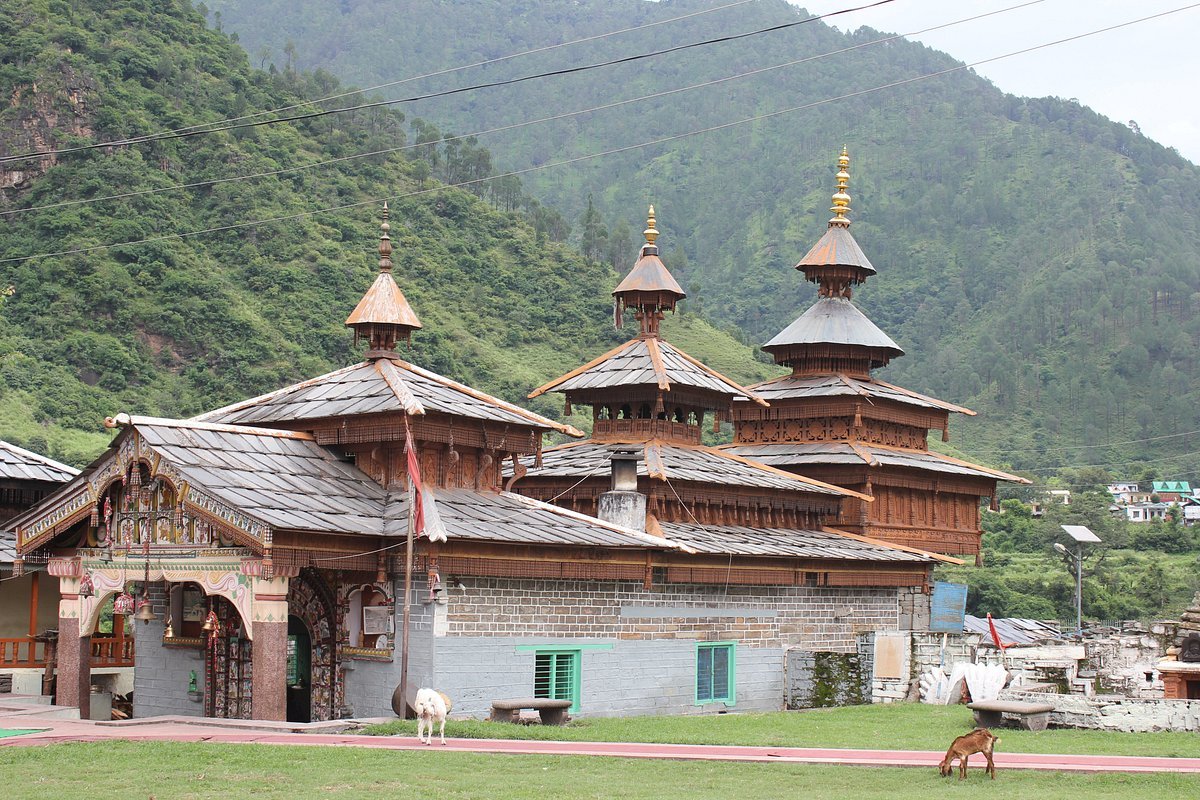
Nestled on the left bank of the Tons River in the picturesque Hanol village of Dehradun district, Uttarakhand, the Mahasu Devta Temple stands as a powerful symbol of ancient faith, mythology, and cultural heritage. Dedicated to Mahasu Devta—the presiding deity of the Jaunsar-Bawar region—this temple is not just a place of worship but a living testament to the unique traditions and beliefs of the Pahadi communities.
Unlike typical Hindu temples, Mahasu Devta is revered as the “God of Justice” who reigns supreme over mortals and countless indigenous gods and goddesses. For centuries, people from Uttarakhand and Himachal Pradesh have journeyed to this sacred site to seek fair judgment, protection, and blessings. The deity’s authority extends beyond religious matters into secular affairs—disputes are even settled through a unique ritual called Lota Pani, where the guilty party is believed to suffer upon drinking water blessed in the deity’s name.
Whether you’re a devout pilgrim seeking blessings, a history enthusiast tracing ancient legends, or a traveller looking for an offbeat spiritual retreat, the Mahasu Devta Temple in Hanol offers an experience that is both deeply moving and culturally enriching.
Quick Facts – Mahasu Devta Temple
History and Mythology: The Legend of the Four Mahasu Brothers
The Story of Huna Bhatt and the Demon Kirmir
The most famous legend associated with the Mahasu Devta Temple dates back to the beginning of the Kali Yuga. According to the Skanda Purana, at the start of Kali Yuga, demons wandered over Uttarakhand, devouring people and devastating villages. The greatest demon was Kirmir, who had devoured all seven sons of a pious Brahmin named Huna Bhatt.
Demon Kirmir then cast an evil eye on Huna Bhatt’s wife, Kirtika. She prayed to Lord Shiva to protect her chastity, and Lord Shiva blinded Kirmir, allowing her to escape. The couple then prayed to Hatkeshwari Devi of Hatkoti (a form of Ashtbhuja Durga), who advised them to go to the Kashmir mountains and offer prayers to Lord Shiva.
Lord Shiva appeared and granted them a boon: all evils would soon be killed. Huna Bhatt was instructed to return home and perform specific rituals. Following the goddess’s guidance, Huna Bhatt ploughed his field every Sunday with a plough of solid silver and a shoe of pure gold, yoking a pair of bullocks that had never been used before.
The Emergence of the Four Mahasu Brothers
On the sixth Sunday, as Huna Bhatt ploughed the field, remarkable events unfolded:
| Furrow | Deity that Emerged |
|---|---|
| First | Botha Mahasu |
| Second | Pavasi Mahasu |
| Third | Vasik Mahasu |
| Fourth | Chalda Mahasu |
From the fifth furrow appeared their heavenly mother, Devladli Devi, along with their ministers and countless army. These four Dev brothers, collectively known as Char Mahasu, led the battle against the demons.
The demon Kirmir was taken by Chalda Devta to Mount Khanda, where Chalda killed him. The marks of his sword on the rock can still be seen today. During the Mahasu brothers’ absence, another demon named Keshi took control of Hanol, but Chalda Devta and his warriors eventually killed him as well.
The Division of the Kingdom
After defeating the demons, the four Mahasu brothers divided the region among themselves:
Botha Mahasu and Vasik Mahasu are considered the most powerful deities of the Bawar area, while Chalda Mahasu is known as the “travelling deity” who moves between Uttarakhand and Himachal Pradesh.
The Wound of Botha Mahasu
There is a poignant detail in the legend: the Mahasu brothers had promised Huna Bhatt that they would appear on the seventh Sunday. However, they emerged a week earlier. As a result, Botha Mahasu was hurt in the knee by Huna Bhatt’s plough and became unable to walk. This is why Botha Mahasu remains settled in Hanol, while Chalda, being unharmed, roams the entire dominion in Botha’s name.
The Pandava Connection
The legend also connects to the Mahabharata. When Lord Krishna disappeared at the end of the Dvapara Yuga, the Pandavas followed him. They crossed the Tons River, and Yudhishtra was so fascinated by the beauty of the place that he asked Vishwakarma to build a temple here, staying with Draupadi for nine days. The place subsequently came to be known as Hanol, after the name of Huna Bhatt.
The Mahasu Devta: God of Justice
The Unique Role of the Deity
In the deitydom, Mahasu Devta is not only the sole arbiter over mortals; he also reigns supreme over the innumerable indigenous gods and goddesses. He exercises his authority over both the religious dispensation of people and secular matters.
The Lota Pani Adjuration
Disputes among the people are settled through a unique ritual called Lota Pani :
- Water is ritually filled in a metallic goblet in the name of Mahasu Devta by a neutral person
- The disputants are asked to drink that water in the name of Mahasu Devta
- The party that has given the false statement is believed to suffer upon drinking the water
The deity’s decision is always regarded as final and irrevocable.
The Gold and Silver Taboo
Mahasu Devta is very protective of gold and gold ornaments. If any subject sells or gives gold to outsiders, the person involved may suffer loss of property, a serious disease, or even life until the gold is recovered. The bullion in the Mahasudom, even if in the possession of people, is believed to belong to the deity.
British Intervention
The age-old theocratic governance of Mahasu Devta, although acceptable to people and local rulers, was not taken kindly by the British authority. Major Young found the authority of Mahasu Devta “a great nuisance”. During land settlement in 1827 AD, he felt that the traditional twelve-year sojourning of Chalda Mahasu with his large entourage was extremely burdensome and exploitative to common people. He passed an order banishing Chalda Mahasu from Jaunsar and Bawar—an order that did not have a lasting effect, as the people continued to regard the deity’s verdict as final.
Temple Architecture: A Masterpiece of Kath-Kuni Style
Age and Construction
The Mahasu Devta Temple was built in the 9th century CE, making it over 1,200 years old. The original structure (of which only the sanctum has survived) features a curvilinear Shikhara in the Nagara style. The mandapa and mukhamandapa were added later and have undergone many changes over the centuries.
Kath-Kuni/Koti-Banal Architecture
The temple is one of the rare examples of a harmonious blend of stone and wood forming a single, grand composite edifice. Built in the Kath-Kuni (also known as Koti-Banal) style of architecture, the temple showcases:
- Intricate wooden carvings reflecting the region’s artistic traditions
- Stone walls provide durability against harsh weather
- A design that allows the structure to withstand seismic activity
- Traditional craftsmanship passed down through generations
The temple is included in the Archaeological Survey of India’s (ASI) list of ancient temples under the Dehradun Circle.
The Main Sanctum
The original Mulaprasada (main shrine) is much older and is assigned to the 9th–10th century CE. The sanctum houses the idols of the four Mahasu brothers, with Botha Mahasu as the primary deity. Only the head priest is permitted to enter the inner sanctum—a strict tradition observed to this day.
Unique Features
Spherical Rocks
Among the most striking features are two spherical rocks, approximately one foot in diameter. Visitors engage in a distinctive ritual of lifting these rocks onto their shoulders and heads before gently tossing them to the ground. It is believed that only those with a pure heart can successfully lift these rocks—an act intertwined with spiritual significance and purity of intent.
Trophy Wall
A fascinating tradition unfolds within the temple premises: matches between teams representing local gods. The victorious team receives a trophy, an emblem of honour that finds its place adorning the temple’s interior walls. This practice adds a touch of folklore and celebration, showcasing the reverence and camaraderie among the divine entities.
Festivals and Celebrations
Mahasu Devta Fair (August)
The annual Mahasu Devta Fair is the most significant religious event at the temple, held every year in August. This vibrant fair is a cornerstone of religious reverence and communal harmony among the local tribes, prominently the Jaunsari tribe, alongside other communities.
Festival Highlights:
- The idol of Chalta Mahasu is ceremoniously taken out in a grand procession
- Prayers continue for three days and nights
- Accompanied by melodious music and traditional folk dances performed by locals
- Artists from Dehradun and neighboring districts join the festivities
- The Government of India provides materials for rituals like havan
The fair attracts attendees from nearby districts such as Uttarkashi, Tehri, Saharanpur, Sirmour, Shimla, Kullu, and more, creating a diverse congregation of devotees and spectators.
Jagara Festival (August)
The Jagara celebrated for Lord Mahasu is quintessential to his cult and is unheard of outside his domain. Held in the month of Bhadon (August–September) on the eve of Naga Chauth (the fourth day of the bright half), this day is very important because the lord appeared from the ground on that day.
Rituals:
- During the day, the mohras (images) are ritually bathed and carried ceremoniously
- As night falls, a tall, straight pole cut from a kail (blue pine) tree is planted firmly on the ground
- A flag of the deity is hoisted on it
- Men and women dance in a circle around a chira (fire structure) throughout the night
- Dancing and singing continue on the beat of Nagaras and other instruments
Shaant Festival
The Shaant Festival is one of the unique festivals dedicated to Mahasu Devta. There are three main types of ceremonies:
| Ceremony Type | Description |
|---|---|
| Khura shau | One hundred heads of animals were sacrificed |
| Munda shau | One hundred heads of animals sacrificed |
| Singhaan shau | One head of a lion (or at least a cat as representative) |
The Shaant festival at Hanol was arranged after about one hundred years, with about fifty-two village gods (Gram Devatas) attending.
Other Festivals
Other festivals celebrated at the temple include Bissu, Basant Panchami, Diwali, Paush ki Dhaal, and Holi.
How to Reach Mahasu Devta Temple
By Air
Nearest Airport: Jolly Grant Airport, Dehradun (approximately 190 km from Hanol)
- Airlines: Regular flights from Delhi to Dehradun (approx. 1 hour)
- Travel Time: 7–8 hours by taxi from the airport to Hanol
- Taxi Fare: Approximately ₹4,000–5,000
By Train
Nearest Railway Station: Dehradun Railway Station (approximately 120 km from Hanol)
| Train Name | From Delhi | Departure | Arrival (Dehradun) | Duration |
|---|---|---|---|---|
| Shatabdi Express | Delhi | 6:00 AM | 11:40 AM | 5h 40m |
| Jan Shatabdi | Delhi | 3:20 PM | 9:00 PM | 5h 40m |
| Mussoorie Express | Delhi | 10:05 PM | 5:30 AM | 7h 25m |
From Dehradun station, taxis are available for the 4–5 hour drive to Hanol.
By Road
Hanol is approachable from Tiuni, a well-known trijunction of roads on the Pabbar River, after covering a distance of 15 km on an all-weather motorable road.
Distances from Major Cities
Weather and Best Time to Visit
Climate Overview
Hanol experiences a pleasant climate with distinct seasons. The temple sits at 1,050 meters, making it comfortable for most of the year.
Month-by-Month Guide
Best Time to Visit
Best Time for the Fair
The Mahasu Devta Fair is held in August, which coincides with the monsoon season. If you wish to attend the fair, be prepared for rain and potential road challenges. The Jagara festival is also held in August–September.
Nearby Places to Visit
Chakrata
The nearest town of significance, Chakrata, is a quiet cantonment hill station offering stunning Himalayan views, dense forests, and attractions like Tiger Falls and Deoban. It’s an excellent base for exploring the region.
Tiger Falls
One of the highest direct waterfalls in India, Tiger Falls is located about 20 km from Chakrata amidst lush deodar forests—a must-visit for nature lovers.
Tiuni
A well-known trijunction of roads on the Pabbar River, Tiuni is the gateway to Hanol, just 15 km away.
Accommodation Options
In Hanol
| Accommodation | Features |
|---|---|
| GMVN Guest House | Reasonable and comfortable, 5 rooms and a dormitory |
| Temple Premises | Basic accommodation available |
In Nearby Towns
| Location | Accommodation Type | Notes |
|---|---|---|
| Chakrata | Hotels, guesthouses, homestays | More options, comfortable stays |
| Dehradun | All categories (budget to luxury) | Widest range of options |
| Mussoorie | Luxury resorts, hotels | Premium amenities |
| Barkot | Guesthouses, lodges | Basic to moderate facilities |
Booking Tips
- Advance booking is recommended, especially during the fair season (August)
- GMVN guest houses offer reliable, budget-friendly stays
- Homestays provide authentic local experiences
Local Cuisine: What to Eat
Dining options in Hanol are quite basic, with local eateries serving traditional Indian meals made from fresh, local ingredients.
Must-Try Local Dishes
| Dish | Description |
|---|---|
| Aloo Ke Gutke | Spiced fried potatoes with local Garhwali flavors |
| Mandua Roti | Spiced fried potatoes with local Garhwali flavours |
| Gahat Ki Dal | Horse gram lentil soup, warming and nutritious |
| Jhangora Kheer | Barnyard millet sweet pudding |
Dining Tips
- Most guesthouses offer meal packages
- For a wider variety of options, nearby towns like Chakrata and Dehradun have several restaurants and cafes
- Carry packaged snacks for the journey
- Pure vegetarian options are widely available
Travel Tips and Important Information
Before You Go
- Check Weather: Monsoon brings heavy rainfall and landslide risk; avoid travel during July–August
- Carry Cash: ATMs are limited in Hanol; bring sufficient cash from Dehradun or Chakrata
- Fill Fuel: The nearest fuel station is in Chakrata or Tiuni; fill up before entering the area
- Road Conditions: The road is narrow and can be difficult during the rainy season
- Advance Booking: Essential during the fair season (August)
During Your Visit
- Dress Modestly: As a religious site, visitors are encouraged to dress modestly
- Respect Local Customs: Sanctum entry is restricted to priests only
- Stay Hydrated: The altitude can lead to dehydration; drink plenty of water
- Photography: Ask for permission before taking photos inside the temple
- Wear Comfortable Shoes: The terrain around the temple can be uneven
Safety Tips
- Road Safety: Mountain roads require patience; avoid night driving
- Monsoon Travel: Avoid July-August due to landslide risk
- Wildlife: The area is forested; be aware of your surroundings
- Emergency Numbers: Keep local contacts handy
Packing Checklist
| Season | Essentials |
|---|---|
| All Year | Comfortable walking shoes, sunscreen, hat, reusable water bottle, camera, cash |
| Summer (Mar-Jun) | Light cotton clothes, light sweater for evenings |
| Monsoon (Jul-Aug) | Raincoat, waterproof footwear, umbrella (avoid travel if possible) |
| Winter (Oct-Feb) | Light cotton clothes, a light sweater for evenings |
Photography Tips
- Best Spots: Temple exterior with Tons River backdrop, surrounding forest views
- Best Time: Morning for soft light; late afternoon for golden hour shots
- Camera Gear: Wide-angle lens for architecture shots
Frequently Asked Questions (FAQs)
Q1: Why is the Mahasu Devta Temple famous?
A: Mahasu Devta Temple is famous for being the principal seat of Mahasu Devta, the “God of Justice” worshipped in the Jaunsar-Bawar region. The temple is known for its unique Kath-Kuni architecture, the legend of the four Mahasu brothers, and the annual fair held in August.
Q2: What is the best time to visit the Mahasu Devta Temple?
A: The best time to visit is March to June (summer) and September to November (autumn). The weather is pleasant, and the roads are in good condition.
Q3: How far is the Mahasu Devta Temple from Delhi?
A: The distance from Delhi is approximately 400 km, with a travel time of 9–10 hours by road.
Q4: How do I reach the Mahasu Devta Temple?
A: By road via Dehradun (120 km) or Chakrata (94 km), by train to Dehradun followed by taxi, or by flight to Jolly Grant Airport, Dehradun (190 km) followed by taxi.
Q5: What is the altitude of Hanol?
A: Hanol is situated at an altitude of approximately 1,050 meters (3,445 feet) above sea level.
Q6: What are the temple timings?
A: The temple is open daily from 6:00 AM to 12:00 PM and 4:00 PM to 9:00 PM.
Q7: Is there an entry fee?
A: No, entry to the temple is free.
Q8: What is the Mahasu Devta Fair?
A: The Mahasu Devta Fair is an annual celebration held in August, featuring a grand procession of the deity, three days of prayers, folk music and dance, and community gatherings.
Q9: Who are the four Mahasu brothers?
A: The four Mahasu brothers are Botha, Pavasi, Vasik, and Chalda—collectively known as Char Mahasu. They emerged from the earth to defeat the demon Kirmir and save the region.
Q10: Is the Mahasu Devta Temple accessible during winter?
A: The temple is open year-round, but winter months (December to February) can be cold, and occasional snowfall may cause roadblocks. Check road conditions before travelling.
Q11: What is the Lota Pani ritual?
A: Lota Pani is a unique form of trial by ordeal where disputants drink water blessed in the name of Mahasu Devta. The guilty party is believed to suffer upon drinking the water.
Q12: Can I stay in Hanol?
A: Yes, Hanol has a GMVN guest house with 5 rooms and a dormitory. Basic accommodation is also available on the temple premises.
Q13: Is the Mahasu Devta Temple an ASI-protected monument?
A: Yes, the temple is included in the Archaeological Survey of India’s list of ancient temples under the Dehradun Circle, Uttarakhand.
Q14: What are the spherical rocks at the temple?
A: Two spherical rocks, about one foot in diameter, are present at the temple. It is believed that only those with a pure heart can successfully lift them.
Q15: Can non-Hindus visit the temple?
A: The temple is open to all visitors. However, entry to the inner sanctum is restricted to priests only.
Plan Your Visit to Mahasu Devta Temple
The Mahasu Devta Temple in Hanol is more than just a pilgrimage site—it is a living repository of ancient legends, unique traditions, and the deep-rooted faith of the Pahadi communities. Whether you come seeking spiritual solace, historical insight, or simply the peace of a remote Himalayan village, the temple offers an experience that lingers long after you leave.
The journey to Hanol is as rewarding as the destination itself—winding through pine-clad mountain slopes, alongside the pristine Tons River, with the majestic Himalayas as your constant companion.
Plan your journey to the abode of the God of Justice today and experience the divine energy of Mahasu Devta.
📞 For travel assistance and custom packages, contact Discover Uttarakhand:
Call / WhatsApp: +91-9997187178, 9760222178, 8171977178
Visit Our Office: Himalayan Colony, opposite DSVV, Haripur Kalan, Haridwar, Uttarakhand 249411
Website: www.discover-uttarakhand.com
Email: info@discover-uttarakhand.com
Jai Mahasu Devta! Har Har Mahadev! 🙏🏔️
Discover Uttarakhand – Your Local Partner for Unforgettable Himalayan Journeys Since 1997