Introduction: Where Myth Meets the Himalayas
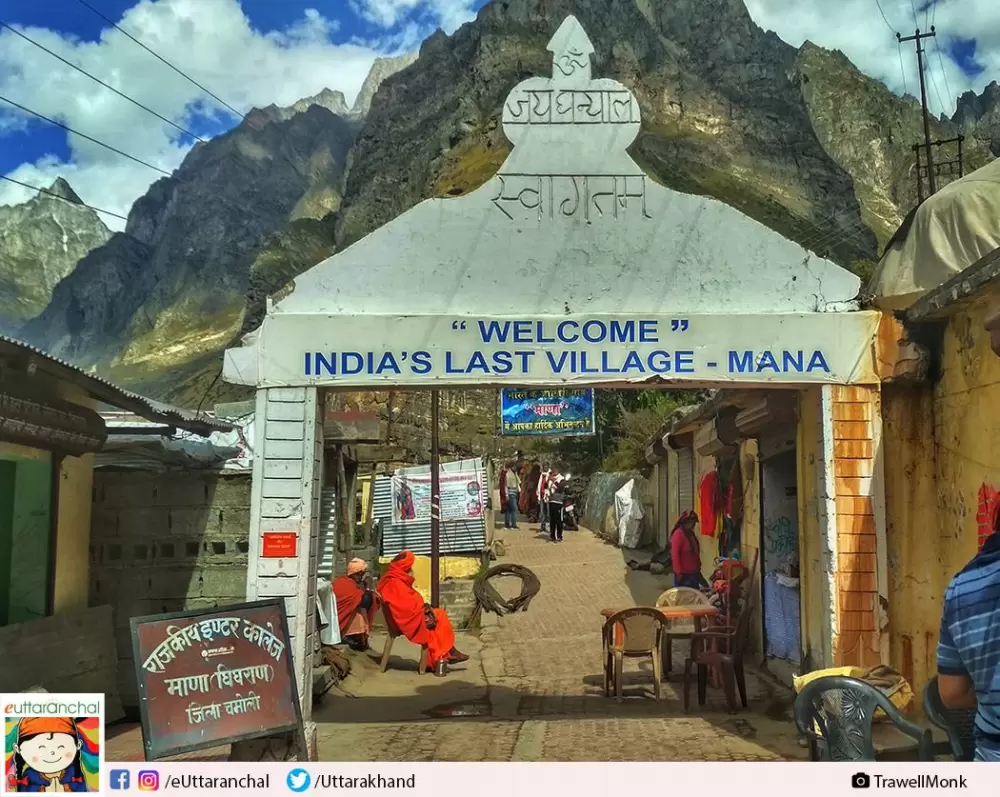
Nestled in the Chamoli district of Uttarakhand at an altitude of approximately 3,200 meters (10,500 feet), Mana Village is proudly known as India’s Last Village before the Indo-Tibetan border. Located just 3-4 kilometres north of the sacred Badrinath Temple, this picturesque hamlet sits on the banks of the Saraswati River—a mythical river that flows visibly only for a short stretch before disappearing underground.
But Mana is far more than a geographical endpoint. This is the village where the Mahabharata was written. According to Hindu tradition, it is here that Sage Ved Vyas dictated the epic, while Lord Ganesha penned it down inside the famous caves that still stand today. This is also where the Pandavas are believed to have passed through on their final journey to heaven (Swargarohini), with the massive rock bridge Bheem Pul serving as a testament to their presence.
What makes Mana truly special is its authenticity. Unlike commercialised hill stations, Mana remains a living village. The Bhotiya tribe—semi-nomadic people of Mongol origin—still lives in traditional stone cottages with mud-plastered walls and slate-tiled roofs. The women still weave woollen shawls and carpets on traditional looms, and the famous “Last Tea Stall of India” still serves masala chai to every traveller who makes the journey.
Whether you are a pilgrim seeking to complete your Badrinath Yatra, a history enthusiast walking in the footsteps of Vyasa and the Pandavas, a trekker looking for high-altitude adventures, or simply a traveller wanting to stand at the very edge of India, Mana Village promises an experience that stays with you forever.
Key Information at a Glance:
History and Mythology: Where the Mahabharata Was Written
Mana Village is not just a place—it is a living chapter of the Mahabharata. Every cave, every rock, and every rushing stream has a story older than most civilisations.
The Story of Ved Vyas and Lord Ganesha
The most significant legend associated with Mana is that of the composition of the Mahabharata. According to Hindu tradition, the great sage Ved Vyas—author of the Mahabharata and compiler of the four Vedas—lived in a cave in Mana and conceived the epic here.
As the story goes, Vyas wanted to write down the epic as he envisioned it, but he needed a scribe who could write as fast as he could dictate. Lord Brahma suggested Lord Ganesha, the elephant-headed god of wisdom. Ganesha agreed but set a condition: Vyas would have to dictate without pause. Vyas agreed, setting his own condition: Ganesha would have to understand each verse before writing it down.
Thus, in the Ganesh Gufa (a small cave near Vyas Gufa), Lord Ganesha wrote the entire Mahabharata—all 100,000 verses—as Vyas dictated. The caves where this monumental event took place are still preserved and visited by thousands of pilgrims each year.
Vyas Gufa (Vyasa Cave) is where the sage is believed to have meditated and composed the epic. The cave houses a small shrine dedicated to Ved Vyas and is considered over 5,000 years old in religious significance.
Ganesh Gufa is a short walk away, where the actual writing is believed to have occurred. The cave is compact, quiet, and holds a Ganesh idol inside. It is less crowded than Vyas Gufa and, according to visitors, more peaceful.
The Pandavas and the Journey to Heaven
Mana is also deeply connected to the Pandavas, the heroes of the Mahabharata. After the bloody Kurukshetra war, the Pandavas—burdened by guilt—renounced their kingdom and began their final journey toward heaven (Swargarohini). According to legend, they passed through Mana village on this journey.
The most visible reminder of their presence is Bheem Pul (Bheem’s Bridge)—a massive natural rock formation spanning the Saraswati River. According to legend, Bheema, the strongest of the five Pandava brothers, placed enormous boulders over the river so that Draupadi could cross the turbulent waters during their final journey.
The sheer scale of the rocks and the force of the water below is genuinely awe-inspiring. Whether you believe the mythology or not, standing on Bheem Pul and watching the Saraswati River thunder beneath you is an unforgettable experience.
The Saraswati River: A Mythical Appearance
The Saraswati River holds a special place in Hindu mythology. One of the three major rivers of the sacred Triveni Sangam (along with Ganga and Yamuna), the Saraswati is believed to be a subterranean river that flows invisibly for most of its course.
In Mana, however, the Saraswati emerges above ground for a short stretch before disappearing underground near Keshav Prayag, where it is believed to merge with the Alaknanda River. The sight of this mythical river flowing visibly—gushing, almost aggressive in its sound—through the narrow stone lanes of Mana is a powerful spiritual experience.
The Swargarohini Yatra
The village also marks the believed starting point of the Pandavas’ Swargarohini Yatra—their final journey to heaven. The Swargarohini peak visible from the region is named after this legend. Trekking routes in the area still follow what is believed to be the path the Pandavas took.
King Muchukund and Lord Krishna
Another fascinating legend associated with Mana is that of King Muchukund and Lord Krishna. According to the Bhagavata Purana, King Muchukund—a brave warrior who fought alongside the gods—was granted a long, undisturbed sleep by Lord Indra. Anyone who disturbed his sleep would be burnt to ashes by his gaze.
Later, Lord Krishna, during his fight with the demon Kalayavana, led the demon into the cave where Muchukund was sleeping. Kalayavana unknowingly disturbed the sleeping king, and Muchukund opened his eyes, turning Kalayavana into ashes instantly. Impressed by Lord Krishna’s divine presence, Muchukund decided to spend the rest of his life in devotion and meditation inside this cave.
This cave, known as Muchukund Gufa, is located on a hilly path in Mana village, near the Saraswati River, and is open to visitors from 6:00 AM to 6:00 PM.
The Bhotiya Community: People Who Call This Edge Home
The residents of Mana belong to the Bhotiya tribe—specifically the Marchha and Jad clans. Their origin traces back to Mongol tribes, and their culture is a distinct blend of Tibetan and Indian traditions.
Traditional Lifestyle and Architecture
Their stone cottages with mud-plastered walls, slate-tiled sloping roofs, and intricately carved wooden windows are built into the hillside. Most homes have a small kitchen garden growing potatoes, spinach, and cauliflower—which they sell to hotels and guesthouses in nearby Badrinath.
The Bhotiya lifestyle is semi-nomadic. During the brutal winter months (November to April), when the region disappears under heavy snow and temperatures plunge well below zero, the entire community descends to lower areas of Chamoli district.
Handicrafts and Wool Weaving
The women of the Bhotiya community are extraordinary craftspeople. Using locally sourced sheep wool, they practice:
- Wool weaving – Traditional patterns passed down through generations
- Carpet making – Hand-knotted carpets are unique to the region
- Basket weaving – Functional and decorative items
- Pankhi – Thin wool blankets, perfect for the mountain climate
You can buy shawls, caps, mufflers, pankhi, and hand-knotted carpets directly from village shops. The prices are fair, and you’re buying something made by hand at 3,200 meters elevation.
Cultural Traditions
One Bhotiya tradition worth knowing: just before Badrinath Dham closes for winter, villagers participate in a special ritual where girls of the village offer a handmade shawl to Lord Badrinarayan. It’s not a performance for tourists—it’s a living, breathing cultural practice.
Geography and Location
Geographic Coordinates
Location
Mana Village is situated in the Chamoli district of Uttarakhand, in the Garhwal region of the Himalayas. The village lies approximately:
- 3–4 km from Badrinath Dham
- 24–26 km from the India-Tibet border
- 47 km from Joshimath
- 300 km from Rishikesh
- 550 km from Delhi
Topography
Mana sits on the banks of the Saraswati River, surrounded by towering Himalayan peaks. The village is built on a slope, with narrow stone-paved lanes winding between traditional stone cottages. The landscape is characterised by:
- Rugged mountain terrain
- Alpine meadows used for grazing
- Glacial rivers (Saraswati and Alaknanda)
- Dense forests of deodar, pine, and rhododendron at lower elevations
How to Reach Mana Village
By Air
Nearest Airport: Jolly Grant Airport, Dehradun (approximately 320 km from Mana)
| Details | Information |
|---|---|
| Distance | ~320 km |
| Travel Time | 10–12 hours by taxi |
| Airlines | Regular flights from Delhi to Dehradun (approx. 1 hour) |
| Onward Travel | Taxis available from the airport to Badrinath via Rishikesh and Joshimath |
By Train
Nearest Railway Stations:
| Station | Distance | Travel Time | Connectivity |
|---|---|---|---|
| Rishikesh | ~300 km | 9–10 hours by road | Most preferred |
| Haridwar | ~275 km | 9–10 hours by road | Major station, well-connected |
Popular Trains from Delhi to Haridwar/Rishikesh:
| Train Name | From Delhi | Departure | Arrival | Destination |
|---|---|---|---|---|
| Shatabdi Express | Delhi | 6:00 AM | 11:40 AM | Haridwar |
| Jan Shatabdi | Delhi | 3:20 PM | 9:00 PM | Haridwar |
| Mussoorie Express | Delhi | 10:05 PM | 5:30 AM | Haridwar |
From the railway station, taxis and buses are available for Badrinath. Daily buses from Rishikesh run to Badrinath during the pilgrimage season (May–October) .
By Road
Mana is well-connected by road via Badrinath:
Road Conditions: The route from Rishikesh to Badrinath follows the Alaknanda River valley. Roads are generally good but winding, especially after Joshimath. Caution is advised during the monsoon (July–August) when landslides can occur.
Important: Once at Badrinath, vehicles must park at the village border. You walk into Mana—and that ten-minute walk on foot is how it should be.
From Badrinath to Mana
From Badrinath Temple, Mana Village is just 3–4 km away. You can reach it by:
- Walking: A scenic 30–40 minute walk along the Saraswati River
- Shared jeep: ₹20–50 per person
- Private taxi: ₹200–300
Note: Foreign nationals may need to carry valid identification as the village is close to the international border.
Distances from Major Cities
| City | Distance (km) |
|---|---|
| Delhi | 550 |
| Dehradun | 320 |
| Rishikesh | 300 |
| Haridwar | 275 |
| Joshimath | 47 |
| Badrinath | 3–4 |
| Indo-Tibet Border | 24–26 |
Weather and Best Time to Visit
Climate Overview
Mana Village experiences a harsh alpine climate. The village is located at 3,200 meters, and winters are extremely cold with heavy snowfall. The village remains open for tourists only from May to October.
Month-by-Month Guide
| Month | Day Temp (°C) | Night Temp (°C) | Conditions | Travel Suitability |
|---|---|---|---|---|
| May | 15–20 | 5–10 | Pleasant, clear skies | ⭐ Best |
| June | 15–20 | 5–10 | Pleasant, pre-monsoon | ⭐ Best |
| July | 10–18 | 8–12 | Monsoon, heavy rain, landslide risk | ⚠️ Avoid |
| August | 10–18 | 8–12 | Monsoon, heavy rain, slippery trails | ⚠️ Avoid |
| September | 8–15 | 5–8 | Post-monsoon, clear skies | ⭐ Best |
| October | 5–12 | 0–5 | Crisp, clear, cold nights | ⭐ Good |
| November–April | -10–5 | -15–-5 | Heavy snow, roads closed | ❌ Closed |
Best Time to Visit by Season
| Season | Months | Suitability | Conditions | Best For |
|---|---|---|---|---|
| Summer | May–June | ⭐ Best | 15°C–20°C, clear skies, pleasant | Pilgrimage, sightseeing, trekking, photography |
| Post-Monsoon | September–October | ⭐ Excellent | 5°C–15°C, clear skies, crisp air | Trekking, photography, peaceful visit |
| Monsoon | July–August | ❌ Avoid | 10°C–18°C, heavy rainfall, landslide risk | Not recommended |
| Winter | November–April | ❌ Closed | -10°C–5°C, heavy snowfall | Village inaccessible |
Important Note on Accessibility
From November to April, the region remains inaccessible due to heavy snowfall. Badrinath Dham itself is closed during these months, and Mana is effectively off-limits.
Top Attractions in Mana Village
1. Vyas Gufa – Where the Mahabharata Was Conceived
Vyas Gufa is arguably the most sacred spot in the village. This is the cave where Maharishi Ved Vyas—the author of the Mahabharata and compiler of the four Vedas—is believed to have lived and composed the epic.
What to Expect:
- A small cave with a shrine dedicated to Ved Vyas
- Stone carvings depicting scenes from the Mahabharata
- A peaceful, contemplative atmosphere despite being a pilgrimage site
- The cave is believed to be over 5,000 years old in religious significance
Location: Within Mana village
Timings: 6:00 AM – 6:00 PM
Entry Fee: Free
2. Ganesh Gufa – Where the Mahabharata Was Written
Just a short walk from Vyas Gufa lies Ganesh Gufa—the cave where Lord Ganesha is believed to have written the Mahabharata as Vyas dictated it .
What to Expect:
- A compact, quiet cave with a Ganesh idol inside
- A more peaceful and less crowded experience than Vyas Gufa
- Beautiful natural light filtering through the cave opening
Location: Near Vyas Gufa, Mana village
Timings: 6:00 AM – 6:00 PM
Entry Fee: Free
3. Bheem Pul – The Natural Rock Bridge
Bheem Pul is one of those places you have to see to believe. This massive natural rock formation spans the Saraswati River, creating a natural bridge that has stood for millennia.
The Legend: According to the Mahabharata, Bheema—the strongest of the five Pandava brothers—placed enormous boulders over the river so that Draupadi could cross the turbulent waters during their final journey toward heaven.
What to Expect:
- A spectacular natural rock formation
- The Saraswati River thundering beneath you
- Stunning photo opportunities
- The sheer scale of the rocks is genuinely awe-inspiring
Location: Over the Saraswati River, Mana village
Best Time: Early morning for fewer crowds and best light
4. Saraswati River – The Mythical River
The Saraswati River is one of the three major rivers of Hindu mythology (along with the Ganga and Yamuna). It is believed to be a subterranean river that flows invisibly for most of its course.
What Makes Mana Special:
- In Mana, the Saraswati emerges above ground for a short stretch
- The river is gushing, almost aggressive in sound—it fills the narrow stone lanes
- Near Keshav Prayag, it disappears underground, believed to merge with the Alaknanda
Best Viewpoints: Along the walk from Badrinath to Mana, and from Bheem Pul
5. Last Tea Stall of India – A Beloved Pit Stop
The “Last Tea Stall of India” is a quirky, beloved institution in Mana. For decades, this small tea stall has been serving masala chai and local snacks to every traveller who makes the journey to India’s last village.
What to Expect:
- Hot masala chai served in small clay cups
- Local snacks and biscuits
- A sign proudly proclaiming “India’s Last Tea Stall”
- Friendly locals are happy to share stories
Tip: Don’t miss the experience of sipping chai at India’s last tea stall—it’s a simple pleasure that stays with you.
6. Muchukund Gufa – The Cave of the Sleeping King
Muchukund Gufa is a sacred cave located on a hilly path in Mana village, near the Saraswati River. It is associated with the legend of King Muchukund and Lord Krishna.
The Legend: King Muchukund was granted a long, undisturbed sleep by Lord Indra. Anyone who disturbed his sleep would be burnt to ashes by his gaze. Lord Krishna later led the demon Kalayavana into the cave, where he disturbed the sleeping king and was turned to ashes.
What to Expect:
- A peaceful cave with stunning mountain views
- A small shrine inside
- The path to the cave passes through other mythological sites
Location: Mana village (short walk from the main village)
Timings: 6:00 AM – 6:00 PM
Entry Fee: Free
7. Mana Village Walk – The Stone-Paved Lanes
Simply walking through Mana is an attraction in itself. The village is built on a slope, with narrow stone-paved lanes winding between traditional stone cottages with mud-plastered walls and slate-tiled sloping roofs .
What to See:
- Traditional Bhotiya architecture
- Local women weaving woollen shawls on traditional looms
- Small shops selling handmade crafts and local produce
- The famous “Last Village” sign at the entrance
8. The Origin of the Saraswati River
The actual origin of the Saraswati River is a short trek from Mana. This is where the mythical river first emerges from the ground, considered highly sacred by pilgrims.
Location: Short trek from Mana village
Best Time: Early morning for a peaceful experience
Nearby Places to Visit
Badrinath Temple – The Sacred Destination
Located just 3–4 km from Mana, Badrinath Temple is one of the most important Hindu pilgrimage sites—one of the 12 Jyotirlingas and part of the Char Dham circuit.
Timings: 4:00 AM – 9:00 PM (during yatra season)
Best Time: May–October
Vasudhara Falls – The 400-Foot Waterfall
Vasudhara Falls is a spectacular 400-foot (122-meter) waterfall located approximately 8–9 km from Mana.
The Legend: It is believed that the water falls only on those with pure hearts; for those with impure intentions, the water is said to turn away.
Trek: A 2.8 km drive followed by a 5–6 km trek from Mana
Best Time: Post-monsoon (September–October) for maximum flow
Trekking from Mana Village
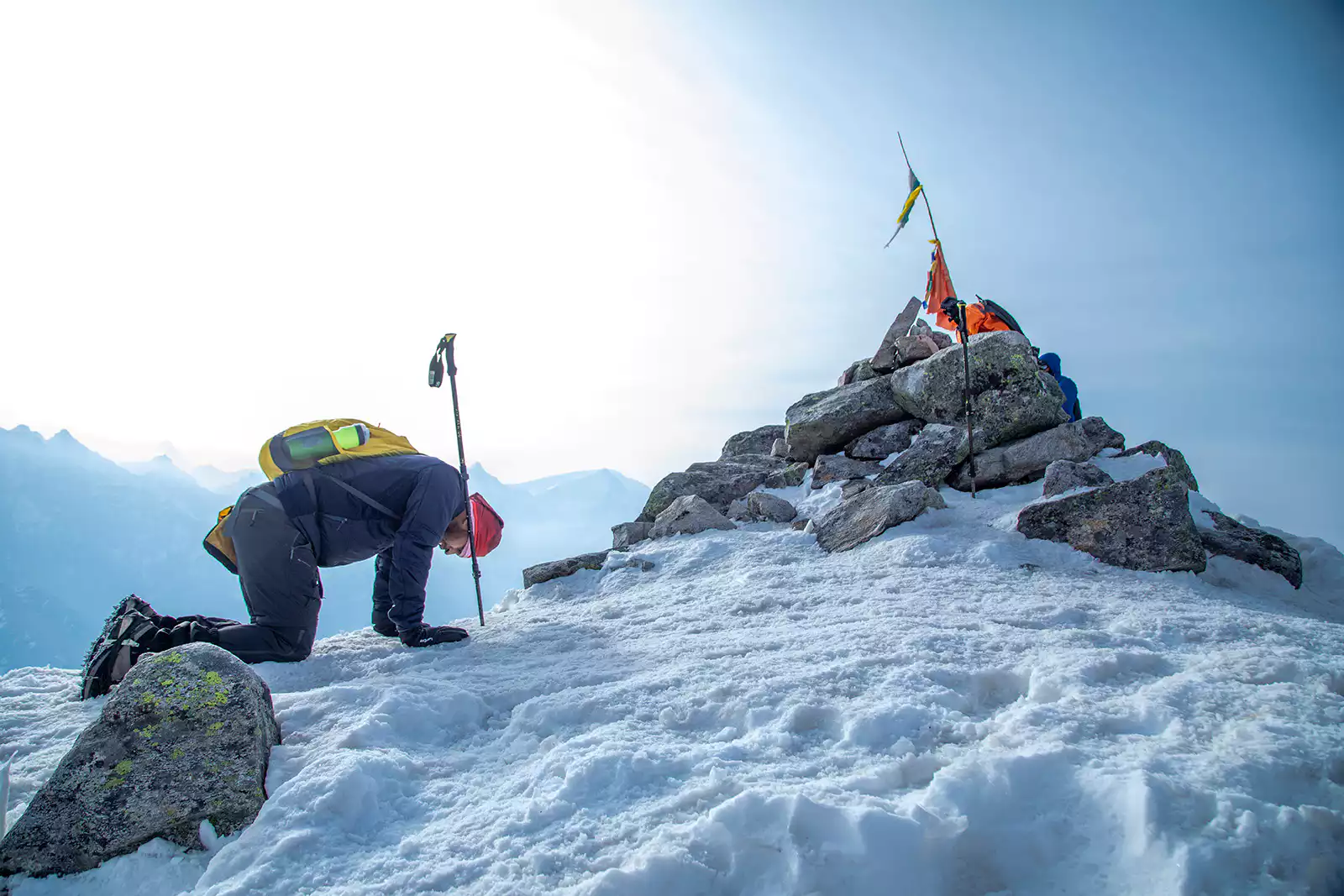
Mana is a serious trekking base. The routes range from easy half-day walks to multi-day high-altitude expeditions.
Trek Comparison Table
Vasudhara Falls Trek – The Most Popular
The trek to Vasudhara Falls is perfect for first-timers at altitude.
| Aspect | Details |
|---|---|
| Starting Point | Mana village |
| Distance | 6 km (one way) |
| Duration | 2–3 hours one way |
| Difficulty | Easy to Moderate |
| Best Time | May–June, September–October |
What to Expect:
- A scenic trail through alpine meadows and forested paths
- Stunning views of the surrounding peaks
- The 400-foot waterfall at the end is a spectacular reward
Note: Mana Pass is not open to civilians. Only the Army and the ITBP use it. Do not attempt it without proper administration permits.
Local Cuisine: What to Eat
Dining options in Mana are simple but satisfying. The food here is honest, local, and perfect for the mountain climate.
Must-Try Local Items
Dining Tips
- Most visitors eat at small dhabas in Mana or return to Badrinath for meals
- Expect to spend ₹150–₹300 per meal at local dhabas
- The “Last Tea Stall” charges normal dhaba prices—no tourist premium
- Carry packaged snacks for treks
Shopping in Mana Village
What to Buy
Shopping Tips
- Prices are fair—you’re buying directly from the artisans
- The women of Mana are extraordinary craftspeople; buying from them supports the local economy
- Cash is preferred; cards are not accepted
Accommodation Options
Mana Village itself has no proper hotels. Most travellers base themselves in Badrinath (3–4 km away) and make a day trip to Mana.
In Badrinath (3–4 km from Mana)
In Mana (Limited Options)
| Accommodation Type | Price Range | Features |
|---|---|---|
| Homestays | ₹500 – ₹1,200 | Basic, authentic Bhotiya experience |
| Small Guesthouses | ₹500 – ₹1,000 | Very limited availability |
Booking Tips
- Advance booking is essential during the yatra season (May–October)
- Most visitors prefer staying in Badrinath and making a day trip to Mana
- Carry a valid ID proof for check-in
- Carry cash—card facilities are limited
Sample Itineraries
1-Day Mana Village Day Trip (From Badrinath)
| Time | Activity |
|---|---|
| 8:00 AM | Depart from Badrinath |
| 8:30 AM | Arrive at Mana Village |
| 9:00 AM | Visit Vyas Gufa |
| 9:30 AM | Visit Ganesh Gufa |
| 10:00 AM | Walk to Bheem Pul, view Saraswati River |
| 11:00 AM | Chai at “Last Tea Stall of India” |
| 12:00 PM | Explore village lanes, interact with locals |
| 1:00 PM | Lunch at local dhaba |
| 2:00 PM | Visit Muchukund Gufa (if time permits) |
| 3:00 PM | Return to Badrinath |
2-Day Mana & Vasudhara Falls Itinerary
Day 1: Mana Village Exploration
- Arrive in Badrinath, check into the hotel
- Drive to Mana Village (3 km)
- Visit Vyas Gufa, Ganesh Gufa, Bheem Pul
- Chai at Last Tea Stall
- Explore the village, shop for handicrafts
- Return to Badrinath, overnight stay
Day 2: Vasudhara Falls Trek
- Early morning: Start trek to Vasudhara Falls (6 km one way)
- Reach falls by late morning, and enjoy the spectacular view
- Return trek, lunch on the trail
- Afternoon: Visit Tapt Kund (hot spring) near Badrinath
- Evening: Badrinath Temple darshan
- Overnight in Badrinath
3-Day Complete Mana & Badrinath Pilgrimage
Day 1: Arrive in Badrinath, check into the hotel, evening Badrinath Temple darshan
Day 2: Mana Village (Vyas Gufa, Ganesh Gufa, Bheem Pul, Last Tea Stall), overnight in Badrinath
Day 3: Vasudhara Falls trek (half day), Tapt Kund, depart
Travel Tips and Important Information
Before You Go
- Acclimatise First: Mana is at 3,200 meters. Spend a night in Badrinath before exploring Mana to adjust to the altitude
- Check Weather: Avoid monsoon (July–August) due to landslide risk
- Carry Cash: There are no ATMs in Mana. Bring sufficient cash from Joshimath or Badrinath
- Advance Booking: Essential for the yatra season (May–October)
- Carry a valid ID: Foreign nationals may need to carry identification as the area is close to the border
During Your Visit
- Start Early: Begin your Mana visit early to avoid afternoon crowds and weather changes
- Dress Modestly: Mana is a sacred village; dress appropriately
- Wear Comfortable Shoes: The village has stone-paved lanes and uneven surfaces
- Stay Hydrated: Carry water for walks and treks
- Respect Local Customs: The Bhotiya community follows strict traditions—be mindful and courteous
- Carry Essentials: Medical supplies, torchlight, and power banks are must-haves
Safety Tips
- Road Safety: Mountain roads require patience; avoid night driving
- Monsoon Travel: Avoid July–August due to landslide risk
- Altitude Awareness: At 3,200 m, altitude sickness is possible; stay hydrated and take it easy
- Trekking Safety: For longer treks (Satopanth Lake), hire a local guide and carry adequate supplies
Packing Checklist
| Season | Essentials |
|---|---|
| All Year | Comfortable walking shoes, sunscreen, sunglasses, hat, reusable water bottle, power bank, camera, cash, ID proof |
| Summer (May-Jun) | Heavy woollens, jacket, gloves, woolen cap |
| Post-Monsoon (Sep-Oct) | Heavy woollens, jacket, gloves, woollen cap |
| Monsoon (Jul-Aug) | Raincoat, waterproof footwear (avoid travel if possible) |
Photography Tips
- Best Spots: Bheem Pul (dramatic river views), Vyas Gufa entrance, Last Tea Stall, village lanes with traditional stone houses
- Best Time: Early morning for clear mountain views; late afternoon for golden hour shots
- Camera Gear: Carry extra batteries—cold drains them quickly
- Note: Ask permission before photographing locals
Frequently Asked Questions (FAQs)
Q1: Why is Mana Village famous?
A: Mana Village is famous as India’s Last Village before the Indo-Tibetan border. It is also known for its Mahabharata connections—Vyas Gufa, where Ved Vyas composed the epic, Ganesh Gufa, where Ganesha wrote it down, and Bheem Pul, a natural rock bridge built by Bhima.
Q2: What is the best time to visit Mana Village?
A: The best time to visit is May to June (summer) and September to October (post-monsoon). The village remains closed from November to April due to heavy snowfall.
Q3: How far is Mana Village from Badrinath?
A: Mana Village is approximately 3–4 kilometres from Badrinath Temple, reachable by taxi, shared jeep, or a scenic 30–40 minute walk.
Q4: How far is Mana Village from Delhi?
A: The distance from Delhi is approximately 550 km, with a travel time of 14–16 hours by road.
Q5: How do I reach Mana Village?
A: By road from Rishikesh (300 km) or Haridwar (275 km) via Joshimath and Badrinath, by train to Haridwar/Rishikesh followed by taxi/bus, or by flight to Jolly Grant Airport, Dehradun (320 km) followed by taxi .
Q6: What is the altitude of Mana Village?
A: Mana Village is situated at an altitude of approximately 3,200 meters (10,500 feet) above sea level.
Q7: Is there accommodation in Mana Village?
A: Mana has limited homestays and small guesthouses. Most visitors prefer to stay in Badrinath (3–4 km away) and make a day trip to Mana.
Q8: What is Vyas Gufa?
A: Vyas Gufa is a cave where Maharishi Ved Vyas is believed to have lived and composed the Mahabharata. The cave is over 5,000 years old in religious significance and houses a small shrine.
Q9: What is Bheem Pul?
A: Bheem Pul is a massive natural rock bridge over the Saraswati River. According to legend, Bhima placed the boulders so Draupadi could cross the river during the Pandavas’ final journey to heaven.
Q10: What is the “Last Tea Stall of India”?
A: The “Last Tea Stall of India” is a famous tea stall in Mana that has been serving masala chai to travellers for decades. It’s a beloved institution and a must-visit spot.
Q11: Is there a mobile network in Mana Village?
A: Mobile connectivity is limited. BSNL typically works in some pockets. It’s best to inform your family of your travel plans in advance.
Q12: Are there ATMs in Mana Village?
A: No, there are no ATMs in Mana. Carry sufficient cash from Joshimath or Badrinath.
Q13: Is Mana Village accessible during winter?
A: No, the village remains closed from November to April due to heavy snowfall. Badrinath Dham itself is closed during these months.
Q14: What is the Vasudhara Falls trek?
A: Vasudhara Falls is a spectacular 400-foot waterfall located 8–9 km from Mana. The trek takes 2–3 hours one way and is suitable for beginners.
Q15: Can I visit Mana Village if I’m a foreign national?
A: Foreign nationals should carry valid identification and may need to check with local authorities, as the village is close to the international border.
Plan Your Mana Village Journey with Discover Uttarakhand
At Discover Uttarakhand, we’ve been organising unforgettable spiritual journeys across Devbhoomi since 1997. As a trusted local operator with deep knowledge of Mana Village, Badrinath, and the Garhwal region, we offer:
- ✅ Customised Mana Village tour packages (2 to 5 days)
- ✅ Combined itineraries covering Mana, Badrinath, and Joshimath
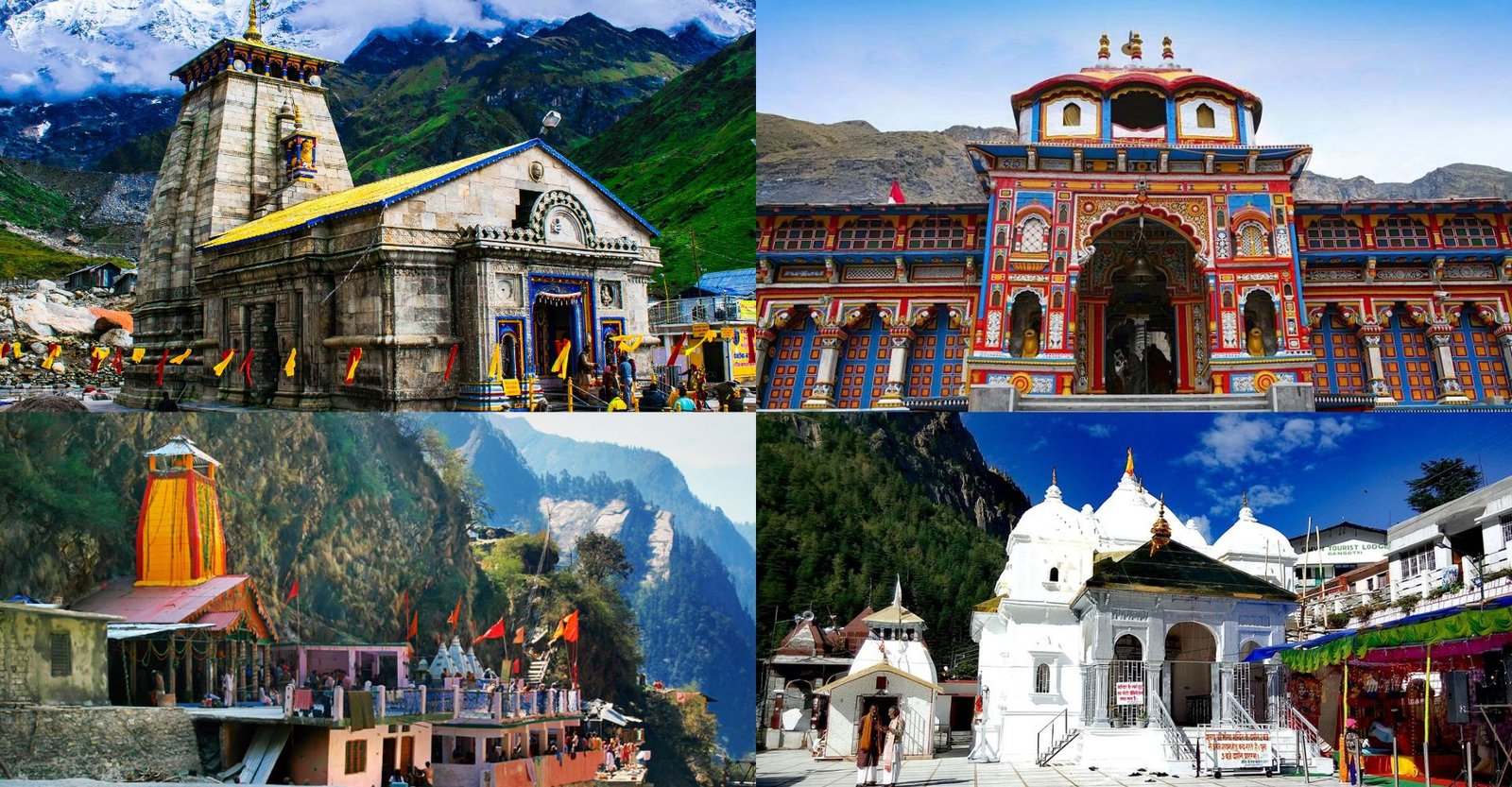
- ✅ Char Dham Yatra packages including Mana as an extension
- ✅ Comfortable transport with experienced hill drivers
- ✅ Verified accommodations in Badrinath
- ✅ Trekking arrangements for Vasudhara Falls and Satopanth Lake
- ✅ 24/7 customer support throughout your journey
Recommended Mana Village Packages
| Package | Duration | Starting Point | Highlights |
|---|---|---|---|
| Mana Day Trip from Badrinath | 1 Day | Badrinath | Vyas Gufa, Ganesh Gufa, Bheem Pul, Last Tea Stall |
| Badrinath & Mana Pilgrimage | 3 Nights / 4 Days | Haridwar | Badrinath Temple, Mana Village, Tapt Kund |
| Mana with Vasudhara Falls | 4 Nights / 5 Days | Haridwar | Badrinath, Mana, Vasudhara Falls trek |
| Complete Char Dham with Mana | 10–12 Days | Haridwar | Yamunotri, Gangotri, Kedarnath, Badrinath, Mana |
Book your Mana Village journey today and stand at the very edge of India, where mythology meets the Himalayas.
📞 Call / WhatsApp: +91-9997187178, 9760222178, 8171977178
📍 Visit Our Office: Himalayan Colony, opposite DSVV, Haripur Kalan, Haridwar, Motichur Range, Uttarakhand 249411
🌐 Website: www.discover-uttarakhand.com
📧 Email: info@discover-uttarakhand.com
Jai Badri Vishal! Har Har Mahadev! 🙏
Discover Uttarakhand – Your Local Partner for Unforgettable Himalayan Journeys Since 1997