Introduction: The Untouched Himalayan Paradise
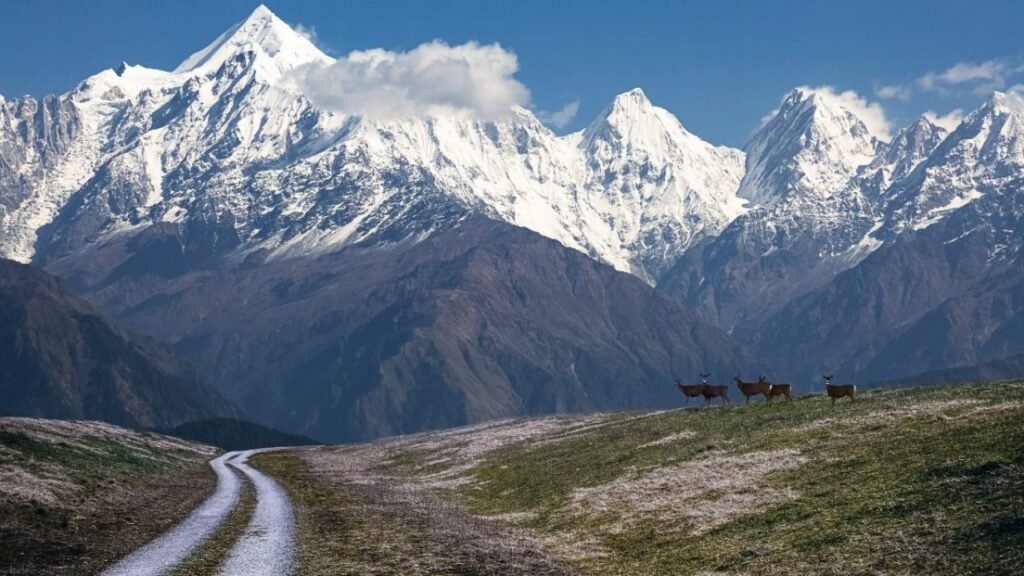
Tucked away in the remote Kumaon Himalayas of Uttarakhand, Munsiyari is a hidden gem that has managed to retain its pristine beauty despite growing tourist interest. At an altitude of approximately 2,200 meters (7,200 feet), this picturesque hill station sits at the base of the great Himalayan mountain range, offering breathtaking views of the iconic Panchachuli Peaks.
Known affectionately as “Little Kashmir,” Munsiyari offers what Kashmir was probably like decades ago—pristine, peaceful, and breathtakingly beautiful without the tourist chaos. The name “Munsiyari” itself refers to a “place with snow” in local parlance, and once you witness the snow-capped peaks reflecting morning sunlight, the emerald meadows rolling endlessly, and the silence so complete you can hear birds from kilometres away, you’ll understand why this place gets under your skin.
Situated on the banks of the Goriganga River, Munsiyari serves as the gateway to the Johar Valley—an ancient trade route between Tibet and India that was used for centuries before the 1962 war. Today, it remains a base camp for mountaineers, glacier enthusiasts, high-altitude trekkers, and nature lovers seeking solitude and Himalayan grandeur.
Whether you are a trekker chasing trails to Milam Glacier, a photographer seeking the perfect shot of Panchachuli at sunrise, a birdwatcher hoping to spot the Himalayan Monal, or simply a traveller looking to escape the crowds and breathe clean mountain air, Munsiyari promises an experience that lingers long after you leave.
History and Culture: Where Tibet Meets Kumaon
The Ancient Trade Route
Munsiyari’s history is deeply intertwined with the ancient trans-Himalayan trade routes that connected India with Tibet and Central Asia. For centuries, the Johar Valley—of which Munsiyari is the gateway—served as a vital corridor for trade, with local communities trading wool, salt, and other goods across the border. This trade came to an abrupt halt after the 1962 Sino-Indian war, leaving behind a rich cultural legacy that survives in the traditions, architecture, and cuisine of the region.
The Shauka and Bhotia Tribes
Munsiyari is home to the Shauka tribe (also called Bhotias), who migrated from Tibet and Central Asia centuries ago and became the dominant trading community in the region. The Shaukas are an ethnonym of the Kumaon Bhotiyas, particularly of the Johari region, which is surrounded by 22 villages mostly inhabited by these communities.
The Shaukas speak the Byangshi language, which has Tibeto-Burmese origins but has been influenced by Sanskrit over centuries of settlement in Kumaon. Today, they write in the Devnagari script, and Hindi is widely spoken.
The Barpatia Tribe (Nagas of Munsiyari)
The Barpatia tribe, also known as the Nagas of Munsiyari, came from Central Asia and belongs to the Khasa clan—a warrior race that migrated across the region from Kashmir to Nepal. They are believed to be the original settlers of this valley. More than 6,000 Barpatias live in the Munsiyari Sub Division today and were granted Scheduled Tribe status in 1967.
Cultural Festivals and Traditions
The Shaukas have preserved their cultural heritage through festivals, music, and dance despite modernisation:
- Nanda Devi Festival: Celebrated with great enthusiasm in mid-September, this festival honours Goddess Nanda Devi, the supreme power in the Himalayas. Devotees offer prayers, dance, and sing while presenting Brahmakamal (locally called Kaul Kamphu) as part of the ritual.
- Jhora Dance: A popular circular dance form in the Kumaon region, performed in spring and breaking caste barriers as communities celebrate together.
- Cholia Dance: Over a thousand years old, this dance form depicts the martial arts tradition of Kumaon, with performers adorning warrior-like dress and engaging in mock sword fights.
- Hurkiyas: During cultural ceremonies, the Shaukas employ the Hurkiyas, a small community of musicians who play the “Hurka” drum. The women dance to the beats of this unique instrument.
Traditional Handicrafts
The women of the Shauka community have mastered the art of carpet-making and weaving. In Johar Valley, they still follow age-old methods using traditional looms to create:
- Hand-woven woollen carpets
- Pashmina shawls
- Blankets made from sheep and rabbit wool
- Wooden artifacts
Darkot Village, near Munsiyari, is particularly famous for its hand-woven Pashmina shawls. Visitors can watch artisans work on traditional looms and purchase authentic products at much better prices than in tourist markets.
Geography and Location
Geographic Coordinates
- Latitude: 30°04′03″ N
- Longitude: 80°14′19″ E
- Elevation: 2,200–2,300 meters (7,200–7,500 feet) above sea level
Location
Munsiyari is situated in the Pithoragarh district of Uttarakhand, in the Kumaon region of the Himalayas. It lies close to the India–Nepal–Tibet trijunction. The town is positioned:
- 128 km from Pithoragarh
- 200 km from Almora
- 260 km from Nainital
- 280 km from Kathgodam Railway Station
- 626 km from Delhi
Topography
Munsiyari sits on the banks of the Goriganga River and serves as the gateway to the Johar Valley, which extends along the river’s path to its source at the Milam Glacier. The town faces east toward the magnificent Panchachuli Himalayan range, offering unobstructed views of five snow-covered peaks rising between 6,334 and 6,904 meters.
The upper part of Munsiyari is called Malla Johar, comprising 14 trans-humant alpine villages that are seasonally occupied from May to early November.
Flora and Fauna
Forests and Vegetation
Munsiyari is blessed with rich Himalayan vegetation typical of the Kumaon region:
| Forest Type | Dominant Species | Characteristics |
|---|---|---|
| Oak Forests | Quercus species | Dense canopies, autumn colors |
| Rhododendron | Rhododendron arboreum | Spring blooms (March-April), vibrant red flowers |
| Pine | Chir, Blue Pine | Scented air, carpeted with needles |
| Deodar | Cedrus deodara | Fragrant, tall evergreen trees |
Lichen Park – India’s First
Munsiyari is home to India’s first Lichen Park, spread over 1.5 acres of forest land where more than 150 species of lichens are preserved. This is a unique attraction for biologists and nature enthusiasts.
Tulip Garden and Eco Park
The Munsiyari Tulip Garden and Nature Education and Eco Park Centre is spread over 30 hectares, with a portion developed as a tulip garden. Tulip bulbs are brought from Holland and typically bloom around April to May, making this the best time to visit. Entry timing is 8 AM to 5 PM with a fee of ₹50 per person.
Birdwatching Paradise
The Gori River basin, of which Munsiyari is a part, has been designated by Birdlife International as an Important Bird Area. As of May 2014, a total of 319 bird species have been recorded here, constituting a quarter of India’s birds. The region harbours many rare, endemic, globally threatened, and endangered bird species.
Notable Birds:
- Himalayan Monal (state bird of Uttarakhand)
- Snow Partridge
- Bearded Vulture (Lammergeier)
- Golden Eagle
- Satyr Tragopan
- Spotted Laughing Thrush
- Great Throated Parrotbill
- Black Throated Parrotbill
- Pied Thrush
- Himalayan Cutia
- Rose Finch
- Green-tailed Sunbird
The best birdwatching spots include Betuli Dhar Forest, Sarmoli Village, and Kalamuni Top.
Wildlife
The forests around Munsiyari support a variety of Himalayan wildlife:
- Mammals: Himalayan black bear, leopard, musk deer, barking deer, Himalayan goral, wild boar, Himalayan fox, and the elusive snow leopard at higher elevations
- Medicinal Plants: The region is rich in medicinal plants, including Yarsa-Gombu (Ophiocordyceps sinensis), locally called Keeda Ghas, which has transformed the local economy
How to Reach Munsiyari
By Air
Nearest Airport: Pantnagar Airport (approximately 249–300 km from Munsiyari)
- Airlines: Regular flights from Delhi to Pantnagar (approx. 1 hour)
- Travel Time: 8–9 hours by taxi from the airport
- Alternative: Naini Saini Airport in Pithoragarh (145 km, limited connectivity)
By Train
Nearest Railway Station: Kathgodam (approximately 245–280 km from Munsiyari)
| Train Name | From Delhi | Departure | Arrival (Kathgodam) |
|---|---|---|---|
| Ranikhet Express | Delhi | 10:05 PM | 5:05 AM |
| Shatabdi Express | Delhi | 6:00 AM | 11:40 AM |
From Kathgodam station, taxis and shared jeeps are available for the 9–10 hour drive to Munsiyari.
Alternative Station: Tanakpur Railway Station (approximately 260 km)
By Road
Munsiyari is well-connected by road to major cities in North India :
| Starting Point | Distance | Travel Time | Route |
|---|---|---|---|
| Delhi | 600–650 km | 15–18 hours | Delhi → Hapur → Moradabad → Rampur → Haldwani → Kathgodam → Bhimtal → Bhowali → Almora → Thal → Birthi Falls → Kalamuni Top → Munsiyari |
| Almora | 150–200 km | 7–8 hours | Almora → Dhaulchina → Sheraghat → Thal → Birthi Falls → Kalamuni Top → Munsiyari |
| Pithoragarh | 128–137 km | 5–6 hours | Pithoragarh → Munsiyari |
| Kathgodam | 250–280 km | 9–10 hours | Kathgodam → Bhimtal → Almora → Thal → Munsiyari |
| Nainital | 260 km | 8–10 hours | Nainital → Bhowali → Almora → Thal → Munsiyari |
Road Conditions: The roads are scenic but winding, especially after Thal. The final stretch includes the Kalamuni Top pass, which can be affected by snow in winter. Avoid night driving in the hills .
Bus Services: Direct buses to Munsiyari are rare; most travellers take a bus to Almora or Pithoragarh and then hire a shared taxi. Shared jeeps cost ₹500–700 per person; private taxis cost ₹3,500–4,500.
Distances from Major Cities
| City | Distance (km) |
|---|---|
| Delhi | 600–650 |
| Dehradun | 450 |
| Haridwar | 470 |
| Rishikesh | 455 |
| Nainital | 260 |
| Almora | 150–200 |
| Pithoragarh | 128–137 |
| Kathgodam | 245–280 |
| Pantnagar Airport | 249–300 |
Weather and Best Time to Visit
Climate Overview
Munsiyari experiences a pleasant climate with distinct seasons. The high altitude ensures cool temperatures year-round, with winter bringing heavy snowfall .
Month-by-Month Temperature Guide
| Month | Min Temp (°C) | Max Temp (°C) | Conditions |
|---|---|---|---|
| January | -5 to 0 | 5–10 | Very cold, heavy snowfall |
| February | -3 to 2 | 8–12 | Cold, snow |
| March | 2–6 | 12–18 | Cool, spring begins |
| April | 6–10 | 18–24 | Pleasant, flowers bloom |
| May | 10–14 | 22–28 | Warm, ideal |
| June | 12–16 | 24–30 | Warm, pre-monsoon |
| July | 12–15 | 20–24 | Monsoon, heavy rainfall |
| August | 12–15 | 20–24 | Monsoon, greenery |
| September | 10–14 | 18–22 | Post-monsoon, clear |
| October | 6–10 | 15–20 | Cool, clear skies |
| November | 2–6 | 10–15 | Cold, crisp |
| December | -3 to 2 | 6–12 | Very cold, heavy snow |
Best Time to Visit by Season
| Season | Months | Suitability | Conditions | Best For |
|---|---|---|---|---|
| Summer | March-June | ⭐ Excellent | 10°C–28°C, clear skies, pleasant days | Trekking, sightseeing, photography, tulip viewing (April-May) |
| Autumn | September-November | ⭐ Excellent | 6°C–22°C, clear skies, crisp air | Photography, peak views, peaceful retreat |
| Winter | December-February | ⭐ Good | -5°C–12°C, heavy snowfall | Snow lovers, winter photography, Khaliya Top skiing |
| Monsoon | July-August | ⚠️ Avoid | 12°C–24°C, heavy rainfall | Not recommended (landslide risk) |
Winter in Munsiyari: A Snow Lover’s Paradise
Winter transforms Munsiyari into a magical white wonderland. By late December, heavy snowfall blankets everything—rooftops, pine trees, frozen waterfalls, and the Panchachuli Peaks become even more dramatic against clear blue skies.
Why Visit in Winter:
- Fewer Crowds: Winter Munsiyari is peaceful; you’ll have trails to yourself
- Clear Skies: The clearest views of mountain peaks—no clouds or haze
- Snow Activities: Skiing at Khaliya Top, snowball fights, snowman building
- Photography: Every corner is picture-perfect
- Authentic Experience: You’ll see how locals actually live in the mountains
Caution: In heavy snow (January-February), roads can occasionally close for a day or two at Kalamuni Top (around 15 km before Munsiyari). Check the weather and road conditions before travelling.
Top Attractions and Places to Visit
1. Panchachuli Peaks – The Crown Jewels
The Panchachuli Peaks are Munsiyari’s signature attraction—five snow-covered mountains rising between 6,334 and 6,904 meters, visible from practically everywhere in town. According to Hindu mythology, the Pandavas cooked their last meal here before ascending to heaven, using five hearths (chulhas), hence the name “Panchachuli”.
What to Experience:
- Sunrise: The first light turns the peaks golden-pink—a genuinely spiritual moment
- Moonrise: If you’re lucky, you’ll see the full moon emerge right behind the same peaks immediately after sunset
- Viewpoints: Best views from Nanda Devi Temple and the main market area
2. Khaliya Top Trek – The Iconic Himalayan Viewpoint
Khaliya Top is Munsiyari’s most popular trek and a must-do for any visitor. This 10 km round-trip trek (approximately 3–4 hours one way) takes you through dense oak and pine forests that open into vast alpine meadows at the top.
Trek Details:
| Factor | Information |
|---|---|
| Distance | 5 km one way (10 km round trip) |
| Duration | 3–4 hours one way |
| Difficulty | Easy to Moderate |
| Altitude | Approximately 3,747 meters (12,290 feet) |
| Best Time | March–June, September–November |
What You’ll See:
- 360-degree views of Panchachuli, Nanda Devi, Rajrambha, and Hardeol peaks
- Alpine meadows (bugyals) are perfect for camping
- In winter: pristine white snow, skiing opportunities
- The meadows at the top are ideal for stargazing overnight
Tip: Start early in the morning to avoid afternoon clouds and enjoy the best views.
3. Birthi Falls – The Dramatic Cascade
Located approximately 35 km from Munsiyari (en route from Thal), Birthi Falls is a spectacular waterfall cascading 60 meters down through dense forest . It’s a popular stop for photography and picnics.
Details:
- Location: 35 km before Munsiyari on the Thal–Munsiyari road
- Best Time: Post-monsoon (September–October) for powerful flow
- Activities: Photography, short hikes, nature walks
4. Thamri Kund – The Sacred Alpine Lake
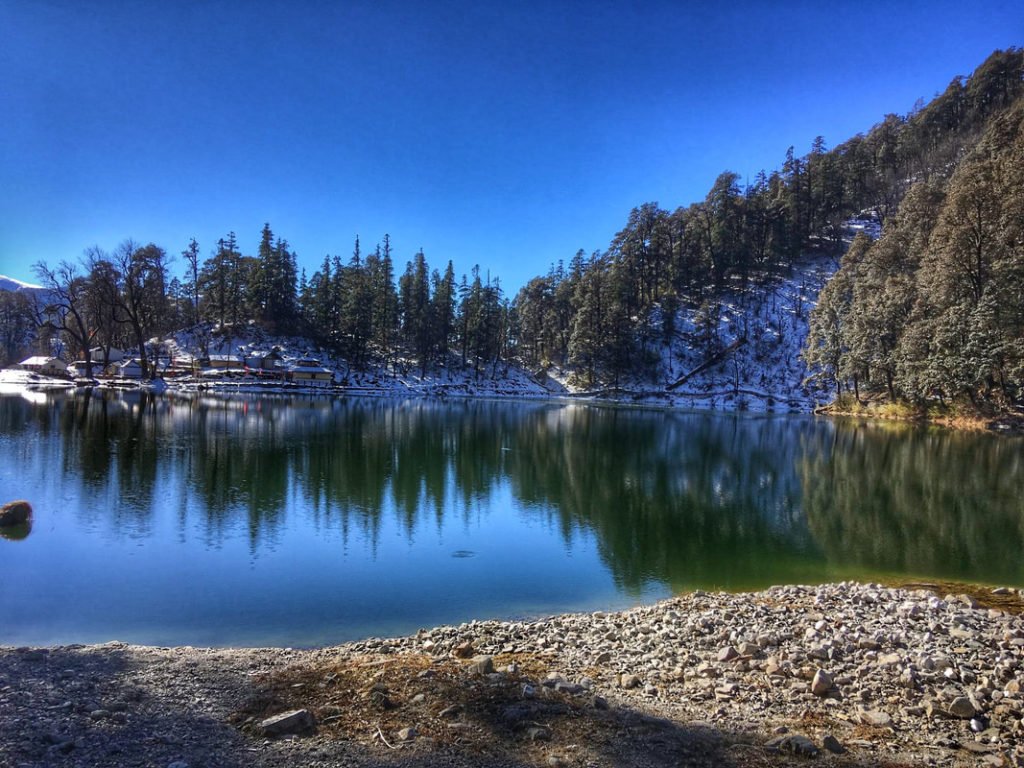
Thamri Kund is a beautiful high-altitude lake located about 5 km from Munsiyari, surrounded by rhododendron forests . The lake freezes in winter, creating an ethereal scene of a frozen lake surrounded by snow-laden trees.
Access: A 3 km trek from the road leads to the lake
Best Time: Year-round; winter for frozen lake views
Activities: Picnics, photography, birdwatching
5. Nanda Devi Temple – Spiritual Heights
Located 3 km from Munsiyari town, this ancient temple is dedicated to Goddess Nanda (Parvati) . The temple offers a peaceful environment and a panoramic view of the Panchachuli Peaks.
Significance: Locals consider this spot highly auspicious. The Nanda Devi Festival in mid-September draws devotees who offer prayers and dance .
Best Time: Morning for aarti and clear views
6. Tribal Heritage Museum – Cultural Insights
Run by Dr. Sher Singh Pangtey, this small private museum in Munsiyari showcases the culture, lifestyle, and traditions of the local Bhotia and Shauka tribes .
What You’ll See:
- Traditional clothing and jewelry
- Handicrafts and tools
- Photographs documenting tribal life
- Information about the ancient trade routes
7. Madkot Hot Springs – Natural Healing Waters
Located about 30 km from Munsiyari, these natural hot springs on the banks of the Goriganga River have high sulphur content and are believed to have healing properties . After trekking in cold weather, soaking in these warm springs while the river rushes by is incredibly relaxing.
Best Time: Winter months for the ultimate experience
Access: Easily accessible by road
8. Darkot Village – The Pashmina Weaving Hub
Darkot is famous for hand-woven Pashmina shawls made by local artisans using traditional looms . Watch these craftspeople work, and purchase authentic Pashmina at much better prices than in tourist markets.
Cultural Experience: The village offers a glimpse into traditional Kumaoni life—stone houses, terraced fields, contented people .
9. Munsiyari Tulip Garden and Eco Park
Spread over 30 hectares, this eco-park features a tulip garden with bulbs imported from Holland . A bird tourism center is being developed where nature lovers can watch more than 130 bird species.
Best Time: April–May (tulip bloom)
Entry Fee: ₹50 per person
Timings: 8:00 AM – 5:00 PM
10. Maheshwari Kund
A peaceful and sacred lake with mythological significance, located in a very pleasant setting .
11. Lichen Park – India’s First
A unique attraction spread over 1.5 acres of forest land, preserving more than 150 species of lichens—a must-visit for biology enthusiasts .
12. Betuli Dhar
A scenic ridge offering beautiful forest walks and excellent birdwatching opportunities .
13. Gori Ganga River
The river that flows through the Johar Valley, offering gentle hikes, riverside picnics, and stunning views of the glacial stream .
Trekking Adventures from Munsiyari
Munsiyari is a premier base camp for trekkers, offering routes for all levels—from beginners to experienced mountaineers .
Trek Comparison Table
| Trek Name | Distance | Difficulty | Duration | Highlights |
|---|---|---|---|---|
| Khaliya Top | 10 km round trip | Easy-Moderate | 6–8 hours | 360° Himalayan views, meadows |
| Milam Glacier | 59 km one way | Moderate-Difficult | 6–8 days | Johar Valley, remote villages, glacier views |
| Ralam Glacier | 45 km one way | Moderate | 5–6 days | Offbeat route, raw beauty |
| Nanda Devi Base Camp | Varies | Difficult | 10–12 days | Rare views of Nanda Devi East |
1. Khaliya Top Trek – The Beginner’s Delight
Details:
- Starting Point: Munsiyari town
- Distance: 5 km one way
- Duration: 3–4 hours ascent
- Difficulty: Easy to Moderate
- Best Time: March–June, September–November
Route: Dense oak and pine forests → Alpine meadows → Khaliya Top summit
Reward: 360-degree views of Panchachuli, Nanda Devi, Rajrambha, Hardeol
2. Milam Glacier Trek – The Classic Himalayan Trek
One of the most ambitious journeys in the region, this trek follows the ancient trade route through the Johar Valley to the source of the Goriganga River .
| Segment | Distance |
|---|---|
| Munsiyari → Lilam | 12 km |
| Lilam → Bagudiyar | 13 km |
| Bagudiyar → Rilkote | 12 km |
| Rilkote → Burfu | 9 km |
| Burfu → Milam | 8 km |
| Milam → Milam Glacier | 5 km |
| Total | 59 km |
Highlights:
- Remote Himalayan villages
- Johar Valley landscapes
- Views of Trishul and Hardeol peaks
- Cultural interaction with Bhotia communities
Best Time: May–June, September–October
3. Ralam Glacier Trek – The Offbeat Alternative
A less-crowded trek offering raw Himalayan beauty .
| Segment | Distance |
|---|---|
| Munsiyari → Lilam Patan Gaon | 15 km |
| Patan Gaon → Sophiya Udiyar | 15 km |
| Sophiya Udiyar → Ralam | 15 km |
| Total | 45 km |
Difficulty: Moderate
Best Time: May–June, September–October
4. Nanda Devi Base Camp Trek – For Experienced Mountaineers
A challenging trek offering rare views of Nanda Devi East and surrounding peaks .
Difficulty: Difficult
Duration: 10–12 days
Best Time: May–June, September–October
Trekking Tips
- Hire a local guide for longer treks
- Carry adequate supplies (food, water, warm clothing)
- Check weather conditions before starting
- Inform someone about your trek plan
- Carry a first-aid kit and basic medicines
Local Cuisine: What to Eat in Munsiyari
Munsiyari isn’t a foodie destination with fancy restaurants—it’s a small mountain town with local dhabas and homestays. But the food is honest, simple, and delicious .
Must-Try Kumaoni Dishes
| Dish | Description | Where to Find |
|---|---|---|
| Bhatt ki Churkani | Black soybean curry, protein-rich and flavorful | Local dhabas, homestays |
| Aloo ke Gutke | Boiled potatoes tempered with cumin and local spices | Everywhere |
| Gahat ki Dal | Horse gram dal, warming and nutritious | Local restaurants |
| Mandua Roti | Finger millet flatbread, healthy and filling | Homestays |
| Jhangora Kheer | Barnyard millet pudding, mildly sweet | Sweet shops |
| Singal | Local greens cooked with minimal spices | Local eateries |
| Chainsoo | Black gram curry | Local restaurants |
Other Options
Most dhabas serve North Indian staples—dal, rice, roti, sabzi, rajma, chole. Some places make momos and noodles .
Local Products to Try
- Organic apples and apricots from local shops
- Walnuts fresh from the region
- Locally made jams and pickles
- Kumaoni tea
Shopping in Munsiyari
What to Buy
| Item | Description | Where to Find |
|---|---|---|
| Pashmina Shawls | Hand-woven, authentic, much better prices than tourist markets | Darkot Village, local shops |
| Woolen Garments | Sweaters, caps, gloves, blankets made from sheep and rabbit wool | Local markets |
| Handmade Carpets | Traditional designs, cottage industry products | Shauka women artisans |
| Wooden Artifacts | Carved items, traditional crafts | Local shops |
| Local Honey | Organic from forest areas | Local markets |
Markets to Explore
- Main Market: Small shops with woolens, pashmina, basic supplies
- Darkot Village: Authentic Pashmina shawls, weaving demonstrations
- Tribal Heritage Museum Shop: Cultural items, books
Shopping Tips:
- Bargain politely
- Authentic Pashmina is an investment—look for quality
- Carry cash (ATMs are limited)
Accommodation Options
Munsiyari offers a range of accommodation options, from homestays to comfortable hotels .
Types of Accommodation
| Category | Price Range (per night) | Examples | Features |
|---|---|---|---|
| Budget Hotels/Guesthouses | ₹800 – ₹1,500 | Milam Inn, KMVN Tourist Rest House | Basic rooms, attached bathrooms |
| Mid-Range Hotels | ₹1,500 – ₹3,000 | Hotel Burans, Himalaya Darshan, Hotel Pratiksha Himalayan Retreat | Comfortable rooms, mountain views |
| Resorts | ₹3,000 – ₹6,000 | The Himalaya, Zara Resort | Modern amenities, scenic locations |
| Homestays | ₹1,200 – ₹2,500 | Various family-run stays | Authentic experience, home-cooked food |
| Eco-Lodges/Camps | ₹2,000 – ₹4,000 | Seasonal camping options | Bonfire, stargazing, rustic experience |
Best Areas to Stay
| Area | Best For | Features |
|---|---|---|
| Main Market | Convenience | Close to shops, transport, Nanda Devi Temple |
| Mountain View Properties | Panoramic views | Direct Panchachuli views, quieter |
| Homestays in Villages | Cultural experience | Authentic Kumaoni hospitality |
Booking Tips: Book well in advance for peak seasons (April–June, September–November). During winter, confirm availability as some properties may close .
Sample Itineraries
2-Day Munsiyari Weekend Escape (From Kathgodam)
Day 1: Arrival and Scenic Drive
- Morning: Depart from Kathgodam early (7:00–8:00 AM)
- Afternoon: Drive via Almora, Thal (scenic stops at Birthi Falls)
- Evening: Arrive in Munsiyari, check into hotel, watch sunset over Panchachuli
- Night: Dinner, early rest
Day 2: Khaliya Top and Departure
- Early Morning: Start trek to Khaliya Top (5 km, 3–4 hours ascent)
- Late Morning: Enjoy panoramic views, photograph Panchachuli
- Afternoon: Return to Munsiyari, visit Nanda Devi Temple
- Evening: Depart for Kathgodam
3-Day Munsiyari Explorer
Day 1: Arrival and Cultural Immersion
- Arrive in Munsiyari, check into hotel
- Evening: Visit Tribal Heritage Museum
- Sunset: Nanda Devi Temple viewpoint
- Night: Local Kumaoni dinner
Day 2: Khaliya Top Trek
- Morning: Khaliya Top trek (full day)
- Packed lunch at the top
- Return by afternoon
- Evening: Relax, stargazing
Day 3: Waterfalls and Departure
- Morning: Visit Thamri Kund (short trek) or Madkot Hot Springs
- Afternoon: Drive to Birthi Falls, photography
- Evening: Depart for Kathgodam
5-Day Munsiyari with Milam Glacier Base
Day 1: Delhi → Kathgodam (overnight train)
Day 2: Kathgodam → Munsiyari (drive), evening orientation
Day 3: Munsiyari → Lilam (trek, 12 km), overnight in Lilam
Day 4: Lilam → Bagudiyar → Munsiyari return
Day 5: Munsiyari → Kathgodam → Delhi
Travel Tips and Important Information
Before You Go
- Check Weather: Mountain weather can change rapidly; check forecasts before departure
- Road Conditions: Monitor road status, especially at Kalamuni Top (snow risk in winter)
- Advance Booking: Essential for peak seasons (April–June, September–November)
- Carry Cash: ATMs are limited; bring sufficient cash from Almora or Kathgodam
- Motion Sickness: The winding roads can cause nausea; carry medication
During Your Stay
- Dress in Layers: Even in summer, mornings and evenings are cool; winter requires heavy woolens
- Stay Hydrated: Carry water for walks and treks
- Start Early: Begin sightseeing early for clear views, especially for Khaliya Top trek
- Respect Local Customs: Munsiyari is a traditional town—dress modestly
- Hire Guides: For longer treks, always hire local guides
Safety Tips
- Road Safety: Mountain roads require patience; avoid night driving
- Monsoon Travel: Avoid July-August due to landslide risk
- Trekking Safety: Always trek with a guide or in groups; carry adequate supplies
- Wildlife: Do not feed animals; maintain safe distance
- Altitude Awareness: Munsiyari is at 2,200 meters; if you feel breathless, rest
Connectivity
- Mobile Network: BSNL works best; other networks may be patchy
- Internet: Limited; inform family in advance
- ATMs: Very limited; carry sufficient cash
Packing Checklist
| Season | Essentials |
|---|---|
| All Year | Comfortable walking shoes, sunscreen, sunglasses, hat, reusable water bottle, power bank, camera, binoculars, cash |
| Summer (Mar-Jun) | Light woolens for evenings, cotton clothes for daytime, hat |
| Monsoon (Jul-Aug) | Raincoat, waterproof footwear, umbrella (avoid travel if possible) |
| Winter (Oct-Feb) | Heavy woolens, thermals, jacket, gloves, muffler, woolen cap, waterproof boots, snow chains for vehicle |
Photography Tips
- Best Spots: Nanda Devi Temple viewpoint, Khaliya Top, Thamri Kund, Birthi Falls
- Best Time: Sunrise and sunset for golden light on Panchachuli
- Camera Gear: Carry extra batteries—cold drains them quickly
- Sunrise: Best views of Panchachuli from 5:30–6:30 AM
Nearby Places to Visit
| Destination | Distance | Travel Time | Highlights |
|---|---|---|---|
| Birthi Falls | 35 km | 1.5 hours | 60-meter waterfall, photography, nature walks |
| Madkot Hot Springs | 30 km | 1.5 hours | Natural sulfur springs, healing waters |
| Darkot Village | 20 km | 1 hour | Pashmina weaving, village culture |
| Thamri Kund | 5 km | 1 hour + trek | Alpine lake, frozen in winter |
| Maheshwari Kund | 8 km | 30 min | Sacred pond, peaceful location |
| Betuli Dhar | 10 km | 45 min | Birdwatching, forest walks |
| Kalamuni Top | 15 km | 1 hour | Scenic viewpoint, birding |
| Pithoragarh | 128 km | 5–6 hours | District headquarters, Soar Valley views |
| Chaukori | 80 km | 3–4 hours | Tea gardens, Himalayan views |
| Bageshwar | 100 km | 4–5 hours | Confluence of Saryu and Gomti rivers |
| Almora | 150–200 km | 7–8 hours | Cultural capital of Kumaon |
| Nainital | 260 km | 8–10 hours | Lake District of Uttarakhand |
Frequently Asked Questions (FAQs)
Q1: Why is Munsiyari famous?
A: Munsiyari is famous for its stunning views of the Panchachuli Peaks, its status as the “Gateway to Johar Valley,” its ancient trade route history, and as a base camp for treks to Milam and Ralam Glaciers. It is often called “Little Kashmir” for its pristine beauty .
Q2: What is the best time to visit Munsiyari?
A: The best time to visit is March to June (summer) for pleasant weather and clear views, and September to November (autumn) for photography and post-monsoon freshness. Winter (December–February) is ideal for snow lovers .
Q3: How far is Munsiyari from Delhi?
A: The distance is approximately 600–650 km, with a travel time of 15–18 hours by road .
Q4: How do I reach Munsiyari?
A: By road from Delhi/Nainital/Almora, by train to Kathgodam (245–280 km) followed by taxi, or by flight to Pantnagar Airport (249–300 km) followed by taxi.
Q5: What is the altitude of Munsiyari?
A: Munsiyari is situated at an altitude of approximately 2,200–2,300 meters (7,200–7,500 feet) above sea level.
Q6: What are the must-visit places in Munsiyari?
A: Top attractions include Panchachuli Peaks, Khaliya Top trek, Birthi Falls, Thamri Kund, Nanda Devi Temple, Tribal Heritage Museum, and Madkot Hot Springs.
Q7: Is the Khaliya Top trek difficult?
A: The Khaliya Top trek is easy to moderate—approximately 5 km one way, taking 3–4 hours. It is suitable for beginners and offers rewarding Himalayan views.
Q8: How many days are enough for Munsiyari?
A: 2–3 days are sufficient for exploring the town and Khaliya Top. For longer treks like Milam Glacier, allow 6–8 days.
Q9: Does Munsiyari have snowfall?
A: Yes, Munsiyari receives heavy snowfall from December to February. January is the peak month for snow.
Q10: Is Munsiyari worth visiting in winter?
A: Yes, winter transforms Munsiyari into a white paradise with clear skies, fewer crowds, and opportunities for skiing at Khaliya Top. However, roads may occasionally close due to snow at Kalamuni Top.
Q11: What is the Tulip Garden in Munsiyari?
A: The Munsiyari Tulip Garden is a 30-hectare eco-park featuring tulips imported from Holland, blooming from April to May. It also has a bird tourism centre with over 130 bird species.
Q12: What is the nearest railway station to Munsiyari?
A: Kathgodam Railway Station is the nearest, approximately 245–280 km away. It is well-connected to Delhi and other major cities .
Q13: Is Munsiyari safe for solo travellers?
A: Yes, Munsiyari is safe for solo travelers. The local community is welcoming, and the town has a peaceful atmosphere. However, avoid night travel in the hills .
Q14: What local food should I try in Munsiyari?
A: Must-try Kumaoni dishes include Bhatt ki Churkani (black soybean curry), Aloo ke Gutke, Gahat ki Dal, Mandua Roti, and Jhangora Kheer .
Q15: What is the cultural significance of Munsiyari?
A: Munsiyari is home to the Shauka (Bhotia) tribe, who migrated from Tibet and Central Asia. The town was a major trading post on the ancient Tibet–India trade route before the 1962 war. Traditional crafts like Pashmina weaving and festivals like Nanda Devi Mela are still celebrated .
Plan Your Munsiyari Journey with Discover Uttarakhand
At Discover Uttarakhand, we’ve been organizing unforgettable journeys across Devbhoomi since 1997. As a trusted local operator with deep knowledge of Munsiyari and the Kumaon region, we offer:
- ✅ Customized Munsiyari tour packages (2 to 7 days)
- ✅ Combined itineraries covering Munsiyari, Chaukori, and Almora
- ✅ Trekking arrangements with local guides for Khaliya Top and Milam Glacier
- ✅ Comfortable transport with experienced hill drivers
- ✅ Verified accommodations ranging from budget to resorts
- ✅ Cultural experiences including village visits and Pashmina workshops
- ✅ 24/7 customer support throughout your journey
Recommended Munsiyari Packages
| Package | Duration | Highlights |
|---|---|---|
| Munsiyari Weekend Escape | 2 Nights / 3 Days | Panchachuli views, Nanda Devi Temple, local market |
| Khaliya Top Adventure | 3 Nights / 4 Days | Khaliya Top trek, Birthi Falls, Thamri Kund |
| Kumaon Explorer | 4 Nights / 5 Days | Munsiyari, Chaukori, Almora, Pithoragarh |
| Milam Glacier Base | 6 Nights / 7 Days | Trek to Lilam, Johar Valley, glacier views |
Book your Munsiyari journey today and experience the untouched beauty of Little Kashmir.
📞 Call / WhatsApp: +91-9997187178, 9760222178, 8171977178
📍 Visit Our Office: Himalayan Colony, opposite DSVV, Haripur Kalan, Haridwar, Motichur Range, Uttarakhand 249411
🌐 Website: www.discover-uttarakhand.com
📧 Email: info@discover-uttarakhand.com
Discover Uttarakhand – Your Local Partner for Unforgettable Himalayan Journeys Since 1997 🏔️