Overview: The Valley That Was Closed for 53 Years
Nelong Valley is not just a destination; it is a story of resilience, history, and breathtaking natural beauty. Often referred to as the “Ladakh of Uttarakhand,” this high-altitude cold desert in the Uttarkashi district was closed to civilians for over 53 years following the 1962 Sino-Indian War.
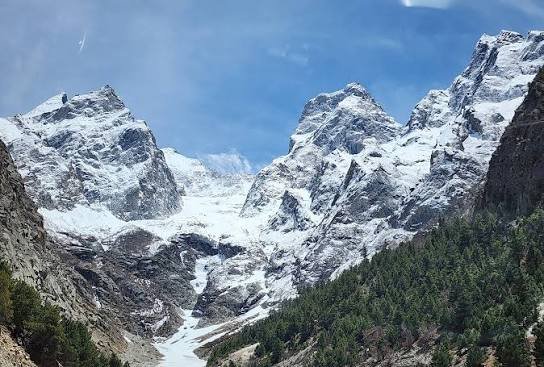
Located at an altitude of approximately 3,800 metres (12,500 feet) and part of the Gangotri National Park, the valley remained inaccessible, shrouded in mystery, until it was reopened for domestic tourism in 2015. Today, it offers intrepid travellers a rare glimpse into a landscape that bears a striking resemblance to Ladakh and Spiti Valley — with stark, rocky mountains, sparse vegetation, and dramatic cold desert terrain.
The valley served as a vital trade route between India and Tibet for centuries. The Bhotiya tribe were the original inhabitants, trading blankets, woollens, carpets, tea, tobacco, rice, and metals through a barter system. The remnants of this ancient route, including the famous Gartang Gali wooden bridge and the Lal Devta temple, still stand as silent witnesses to a bygone era.
Key Information at a Glance
| Aspect | Details |
|---|---|
| Location | Uttarkashi district, Garhwal Himalayas, Uttarakhand |
| Also Known As | Ladakh of Uttarakhand, Nelang Valley |
| Altitude | ~3,800 m (12,500 ft) |
| Part of | Gangotri National Park |
| Best Time to Visit | May–June & September–October |
| Distance from Delhi | ~480 km |
| Distance from Harsil | ~42 km |
| Nearest Town | Harsil, Uttarkashi |
| Nearest Airport | Jolly Grant Airport, Dehradun (~220 km) |
| Nearest Railway Station | Rishikesh / Haridwar |
| Famous For | Cold desert landscape, Gartang Gali, Lal Devta Temple, snow leopard sightings |
| Permit Required | Yes (Inner Line Permit from SDM Uttarkashi) |
| Foreign Nationals | Not permitted |
| Overnight Stay | Not allowed |
| Entry Fee (Indians) | INR 300 per person |
| Entry Fee (Foreigners) | INR 1,200 per person (not permitted) |
History of Nelong Valley
The Ancient Trade Route
For centuries, Nelong Valley served as an essential trade route between Tibet and India. The Bhotiya tribe (also known as Rongpas) were the original inhabitants, trading blankets, carpets, woollens, tea, tobacco, rice, coffee, metals, agricultural equipment, and medicine. A barter system was popular at that time, and the exchange of goods used to take place at a big market known as the Bada Haat.
The travellers used to offer prayers at the Lal Devta temple for a safe journey before crossing over to Tibet. The wooden bridge known as Gartang Galion was a vital link on this ancient trade route.
The 1962 War and Closure
The arduous Nelong Valley, cradled near the India-China border, was closed to civilians after the 1962 Sino-Indian War. The inhabitants of Nelong Valley — the Bhotiyas — were forced to migrate to Bagori village in the Uttarkashi district. The Indo-Tibetan Border Police (ITBP) set up checkpoints in the villages.
Reopening in 2015
In 2015, the government announced the reopening of Nelong Valley for tourists. Since then, it has become a hotspot for adventure buffs seeking to explore the “Ladakh of Uttarakhand”.
A Landmark Decision (2026)
In a landmark decision, the Nelong Valley was opened for year-round tourism in 2026, with strict regulations in place. During winter (November–March), entry is limited to 100 tourists and 20 vehicles per day.
Geography of Nelong Valley
Location and Topography
Nelong Valley is located in the Uttarkashi district of Uttarakhand, near the Indo-Tibetan border. It is part of the Gangotri National Park.
The “Ladakh of Uttarakhand”
Nelong Valley bears a striking resemblance to Ladakh in terms of its geography and climate:
- Cold desert terrain with minimal vegetation
- Wide river valleys and rocky mountains
- Sparse human settlement
- Clear skies and dramatic Himalayan views
The valley offers a 360-degree view of the Tibetan Plateau.
Flora and Fauna of Nelong Valley
Flora
The valley is home to high-altitude alpine flora, including:
- Rhododendron
- Juniper
- Rare medicinal plants
Fauna
Nelong Valley is a haven for wildlife enthusiasts, with endangered species including:
| Species | Status |
|---|---|
| Himalayan Blue Sheep (Bharal) | Endangered |
| Snow Leopard | Endangered |
| Musk Deer | Endangered |
| Himalayan Tahr | Rare |
Note: Winter is actually the best time for snow leopard sightings in the region, as these elusive cats descend to lower altitudes in search of prey.
Religious Beliefs and Sacred Sites
Lal Devta Temple
The Lal Devta temple is one of the most significant religious sites in Nelong Valley. Before crossing over to Tibet, the Bhotiya traders used to offer prayers here for a safe journey. The temple still exists in the area and holds huge stone manuscripts.
Gangotri National Park Connection
Nelong Valley is part of the Gangotri National Park, which is home to some of the most sacred temples in Hinduism, including the Gangotri Temple. Pilgrims visiting Gangotri Dham often combine their visit with a trip to Nelong Valley.
Gartang Gali — The Historic Wooden Bridge
Gartang Gali is a 150-year-old wooden bridge that was built by the Pathans of Peshawar (now in Pakistan) as a vital link on the ancient Indo-Tibetan trade route. It is a 500-metre-long timber-lined stairway at a height of 11,000 feet. Closed after the 1962 war, it was reopened for tourists in 2021.
How to Reach Nelong Valley
Step 1: Reach Harsil (The Base Camp)
Harsil is the base camp for visiting Nelong Valley. It is located 72 km from Uttarkashi and 25 km before Gangotri.
By Air — Nearest Airports
| Airport | Distance | Details |
|---|---|---|
| Jolly Grant Airport, Dehradun | ~220 km to Harsil | Connected to Delhi with daily flights |
By Train — Nearest Railway Stations
| Station | Distance | Details |
|---|---|---|
| Rishikesh Railway Station | ~215 km to Harsil | Well-connected to Delhi |
| Haridwar Railway Station | ~250 km to Harsil | Alternative station |
By Road (Most Popular)
| Route | Distance | Travel Time |
|---|---|---|
| Delhi → Harsil | ~480 km | 12–14 hours |
| Dehradun → Harsil | ~221 km | 8–9 hours |
| Uttarkashi → Harsil | 72 km | 2–3 hours |
Step 2: Reach Nelong Valley from Harsil
Nelong Valley Permits and Entry Fees
Permit Process
Nelong Valley is a restricted area due to its proximity to the Indo-Tibetan border. An Inner Line Permit is required for entry.
Step-by-Step Process:
Important Permit Rules
- ✅ Only Indian citizens are allowed
- ✅ Day visit only; no overnight stay allowed
- ✅ Entry between 8:00 AM and 11:00 AM
- ✅ Exit by 5:00 PM
- ❌ Foreign nationals are not permitted
- ❌ Drones are strictly prohibited
- ❌ Photography and videography are restricted near army areas
Nelong Valley Tour Package Itinerary (4 Days / 3 Nights)
This itinerary covers Harsil, Nelong Valley, and Gangotri.
Day 1: Delhi / Dehradun → Harsil
| Detail | Information |
|---|---|
| Drive | 221 km from Dehradun |
| Duration | 8–9 hours |
| Highlights | Scenic drive via Uttarkashi, Gangnani Hot Water Spring, Maneri Waterfall |
| Overnight | Harsil |
Day 2: Explore Harsil Valley
| Detail | Information |
|---|---|
| Highlights | Dharali Village (apple orchards), Mukhba Village (winter home of Goddess Ganga) |
| Overnight | Harsil |
Day 3: Nelong Valley & Gangotri Excursion
| Detail | Information |
|---|---|
| Morning | Drive to Gangotri Temple for darshan |
| Afternoon | Nelong Valley visit (permit required) |
| Highlights | Cold desert landscapes, Gartang Gali, Jadung Village |
| Overnight | Harsil |
Day 4: Harsil → Delhi / Dehradun
| Detail | Information |
|---|---|
| Drive | Return journey |
| End of Tour | — |
Package Cost (2026)
| Package Type | Duration | Price (per person) | Starting Point |
|---|---|---|---|
| Standard Package | 4 Days / 3 Nights | ₹13,999 – ₹14,500 | Delhi / Dehradun / Haridwar |
| Motorcycle Tour | 5 Days | ₹24,999 | Rishikesh |
What’s Included in a Standard Package
- Accommodation in Harsil (hotel/guesthouse)
- All transfers by private vehicle
- Inner Line Permit assistance
- Daily meals (as per itinerary)
- Driver allowance and fuel charges
What’s Excluded
- Personal expenses
- Medical expenses
- Travel insurance
- Entry fees (₹300 per person + ₹250 per vehicle)
- Emergency evacuation charges
Weather and Best Time to Visit
Seasonal Breakdown
| Season | Months | Temperature | Conditions | Suitability |
|---|---|---|---|---|
| Summer (Peak) | May–June | 5°C – 20°C | Pleasant, clear skies | ⭐ Best |
| Monsoon | July–August | 8°C – 18°C | Heavy rainfall, landslides | ❌ Avoid |
| Autumn | September–October | 0°C – 15°C | Clear skies, golden landscapes | ⭐ Best |
| Winter | November–March | -10°C to 5°C | Snow-covered, limited entry | ⭐ Good (with restrictions) |
Best Time to Visit by Season
Packing Guide
Nearby Places to Visit
Frequently Asked Questions (FAQs)
General Questions
Q1: Where is Nelong Valley located?
A: Nelong Valley is located in the Uttarkashi district of Uttarakhand, near the Indo-Tibetan border. It is part of the Gangotri National Park.
Q2: What is the altitude of Nelong Valley?
A: Nelong Valley is situated at an elevation of approximately 3,800 metres (12,500 feet) above sea level.
Q3: Why is Nelong Valley called the “Ladakh of Uttarakhand”?
A: Nelong Valley is called the “Ladakh of Uttarakhand” because of its cold desert terrain, stark mountains, and remote beauty, which bear a striking resemblance to Ladakh and Spiti Valley.
Q4: When was Nelong Valley reopened for tourists?
A: Nelong Valley was reopened for domestic tourists in 2015, after being closed for 53 years following the 1962 Sino-Indian War.
Q5: What is the best time to visit Nelong Valley?
A: The best time to visit is from May to June and September to October. During these months, the weather is pleasant, and the roads are accessible.
Q6: Do I need a permit for Nelong Valley?
A: Yes, an Inner Line Permit is required for all visitors. It can be obtained from the SDM office in Uttarkashi.
Q7: Can foreigners visit Nelong Valley?
A: No, foreign nationals are not permitted to visit Nelong Valley due to security concerns.
Q8: Can I stay overnight in Nelong Valley?
A: No, overnight stays are not allowed in Nelong Valley. Day visits only, with entry between 8 AM and 11 AM and exit by 5 PM.
Q9: What is the entry fee for Nelong Valley?
A: Indians pay ₹300 per person, and foreign nationals pay ₹1,200 per person.
Q10: What is Gartang Gali?
A: Gartang Gali is a 150-year-old wooden bridge built by the Pathans of Peshawar as part of the ancient Indo-Tibetan trade route.
Q11: What wildlife can I see in Nelong Valley?
A: Nelong Valley is home to endangered species including Himalayan Blue Sheep, Snow Leopard, and Musk Deer.
Q12: Is mobile connectivity available in Nelong Valley?
A: Mobile connectivity is limited in the region. Don’t expect signals in Nelong Valley.
Q13: What should I pack for the Nelong Valley trip?
A: Pack warm layers, thermal wear, insulated jacket, waterproof trekking shoes, gloves, a woollen cap, sunscreen, sunglasses, and personal medication.
Q14: Is photography allowed in Nelong Valley?
A: Photography and videography are restricted near army areas. Drones are strictly prohibited.
Q15: How can I book a Nelong Valley tour?
A: Tours can be booked through:
- Local tour operators in Rishikesh, Dehradun, and Uttarkashi
- Trekking agencies specialising in Himalayan tours
- Discover Uttarakhand for customised packages
Why Choose Discover Uttarakhand for Your Nelong Valley Journey?
At Discover Uttarakhand, we’ve been organising unforgettable Himalayan journeys since 1997. As a trusted local operator with deep knowledge of the Garhwal region and its hidden gems, we offer:
✅ Customised Nelong Valley tour packages (3 to 6 days)
✅ Combined itineraries with Harsil, Gangotri, and Gartang Gali
✅ Experienced local drivers comfortable with mountain roads
✅ Verified accommodations in Harsil
✅ Assistance with Nelong Valley Inner Line Permits
✅ 24/7 customer support throughout your journey
Recommended Nelong Valley Packages
| Package | Duration | Starting Point | Price (per person) | Highlights |
|---|---|---|---|---|
| Nelong Valley Explorer | 4 Days / 3 Nights | Dehradun | ₹13,999 – ₹14,500 | Harsil, Nelong Valley, Gartang Gali, Gangotri |
| Harsil & Nelong Valley Tour | 5 Days / 4 Nights | Delhi | ₹18,000 – ₹22,000 | Harsil, Gangotri, Nelong Valley, Jadung Village |
| Nelong Valley Motorcycle Tour | 5 Days | Rishikesh | ₹24,999 | Royal Enfield tour, Gartang Gali, Jadung |
📞 Call / WhatsApp: +91-9997187178, 9760222178, 8171977178
📍 Visit Our Office: Himalayan Colony, opposite DSVV, Haripur Kalan, Haridwar, Motichur Range, Uttarakhand 249411
🌐 Website: www.discover-uttarakhand.com
📧 Email: info@discover-uttarakhand.com
Discover Uttarakhand – Your Local Partner for Unforgettable Himalayan Journeys Since 1997 🏔️