
Overview: The Ridge of the Char Dhams
Tucked away in the Tehri Garhwal and Rudraprayag districts of Uttarakhand, Panwali Kantha is not just a trek; it is a journey into the soul of the Garhwal Himalayas and a pilgrimage along one of the oldest sacred routes in India.
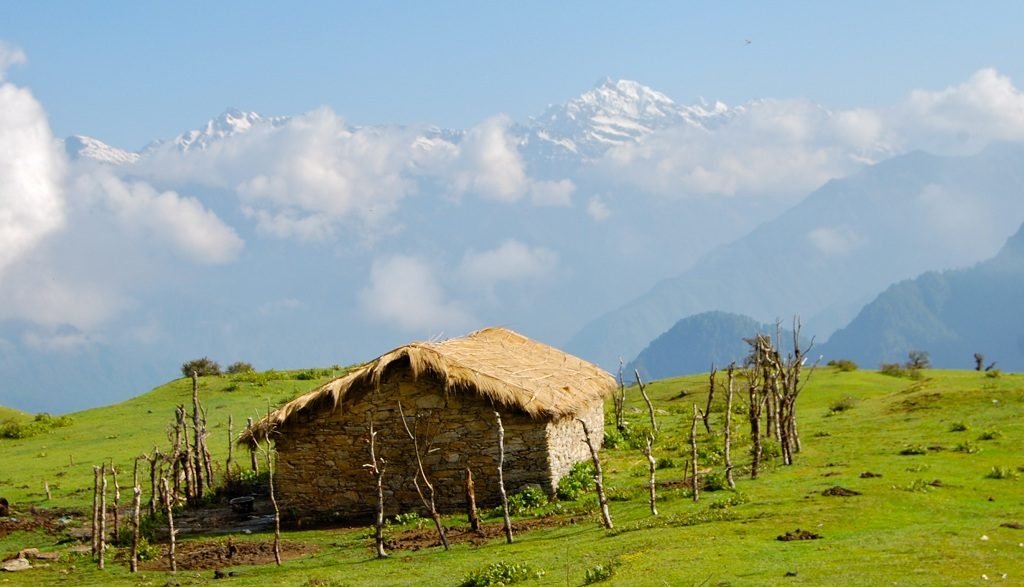
Often referred to as “The Ridge of the Char Dhams”, this magnificent alpine meadow is a land of unparalleled natural beauty and profound spiritual significance. Located between the Shivalik Range and the Great Himalayas, Panwali Kantha is the largest bugyal in Uttarakhand, sitting at an altitude of approximately 3,368 to 3,963 metres.
What makes Panwali Kantha truly special is its extraordinary diversity—from the 360-degree panoramic views of all four Char Dham mountain ranges (Yamunotri, Gangotri, Kedarnath, and Badrinath) to the seven distinct bugyals that comprise the meadow, from the ancient pilgrimage route that once connected Gangotri to Kedarnath to the rich Himalayan wildlife that inhabits the region. The meadow is a living repository of Garhwali heritage, with legends that connect it to the Pandavas, Lord Shiva, and the Vamavrata Yatra tradition.
The name “Panwali Kantha” is derived from the local Garhwali dialect, with “Kantha” referring to a ridge or shoulder of a mountain, and “Panwali” possibly relating to the abundance of “Pan” (betel) or the lush vegetation that characterises the region. The trek is also known as Panwali Kantha Bugyal, reflecting its identity as a high-altitude alpine meadow.
The journey to Panwali Kantha, which begins from the spiritual hubs of Rishikesh or Dehradun, is an accessible yet profoundly rewarding adventure through sacred routes, ancient forests, and the majestic Himalayan wilderness. It offers a profound sense of peace, spiritual connection, and a deep appreciation for the rich cultural heritage of Uttarakhand.
Key Information at a Glance
| Aspect | Details |
|---|---|
| Location | Tehri Garhwal & Rudraprayag Districts, Uttarakhand |
| Type | Alpine Meadow (Bugyal) / Trekking Destination |
| District | Tehri Garhwal (Ghuttu side) / Rudraprayag (Triyuginarayan side) |
| Coordinates | ~30°33′N 78°50′E (approximate) |
| Elevation | 3,368–3,963 m (11,050–13,000 ft) |
| Area | The largest bugyal in Uttarakhand |
| Trek Difficulty | Easy to Moderate |
| Trek Duration | 4–6 Days |
| Trek Distance | ~40 km (full traverse) |
| Base Villages | Ghuttu (Tehri Garhwal) & Triyuginarayan (Rudraprayag) |
| Highest Point | Panwali Kantha Top (~3,963 m) |
| Official Language | Hindi |
| Regional Language | Garhwali |
| Vehicle Registration Code | UK-09 (Tehri Garhwal) / UK-07 (Rudraprayag) |
| Nearest Airport | Jolly Grant Airport, Dehradun (~45 km from Rishikesh) |
| Nearest Railway Station | Rishikesh (~232 km from Delhi) |
| Best Time to Visit | April–June & September–November |
| Known For | Char Dham Panorama, Ancient Pilgrimage Route, Alpine Meadows, Pandava Legend |
| Entry Fee | None |
| Camping | Allowed at designated sites |
History of Panwali Kantha Trek
Ancient Roots in the Pilgrimage Tradition
Panwali Kantha has a history deeply rooted in the ancient pilgrimage traditions of Uttarakhand. The meadows are part of the original path that pilgrims used while travelling between Gangotri and Kedarnath long before motorable roads existed. Those who prayed and sages before the rise of contemporary highways took the route through thick woods, rivers, and meadows, where Panwali Kantha was a very significant stop on their spiritual tour. In this way, the place became historically and religiously important.
The Vamavrta Yatra Tradition
This trek is part of the ancient pilgrim trail from Gangotri to Kedarnath, in the tradition of the Vamavrata Yatra that began from Yamunotri and ended at Badrinath after paying respect at the Kedarnath and Gangotri shrines. The trail follows an old pilgrimage route that connected Gangotri to Kedarnath long before motorable roads existed.
The Pandava Connection
Mythologically speaking, the meadows are associated with the Pandavas from the Mahabharata. It is said that while going heavenward, the Pandavas went through these lofty pastures. The Pandavas are believed to have walked across Panwali Kantha meadows during their final journey towards Swargarohini (the ascent to heaven). Local lore says the meadows witnessed their footprints, making it a spiritually charged landscape. Because of this, Panwali Kantha is considered a sacred route, not just a trekking meadow.
The Triyuginarayan Connection
Triyuginarayan, a village near one of the trekking paths going to Panwali Kantha, is believed to be the place where Lord Shiva and Goddess Parvati were married. At Triyugi Narayan, one can visit the Triyugi Narayan temple, which is of great religious importance, as it is believed that the wedding ceremony was conducted here in the presence of Lord Vishnu. It is one of the few places where the Trimurti (Brahma, Vishnu, Shiva) are all directly associated with a single divine event.
The Shepherd Tradition
In the Middle Ages, for the shepherds who seasonally moved with their flocks, Panwali Kantha was a place where the animals could be grazed. The prosperous meadows gave plenty of grass, and the shepherds often used to camp in the pastures temporarily. Even today, Gujjar and local shepherd communities continue to graze their cattle during the summer months, thus maintaining a pastoral tradition that is hundreds of years old.
Geography of Panwali Kantha Trek
Location and Topography
Panwali Kantha is situated at an elevation of approximately 3,368–3,963 metres above sea level in the Tehri Garhwal district of Uttarakhand, with the trek route extending into the Rudraprayag district. The meadow is located around 90 km from New Tehri and falls under the Ghansali constituency of Tehri district.
| Feature | Details |
|---|---|
| Location | Tehri Garhwal & Rudraprayag districts, Garhwal Himalayas, Uttarakhand |
| Elevation | 3,368–3,963 m (11,050–13,000 ft) |
| Terrain | High-altitude alpine meadow (bugyal), ridge, forests |
| Base Villages | Ghuttu (Tehri Garhwal), Triyuginarayan (Rudraprayag) |
| Distance from Ghuttu | ~18–19 km (steep ascent) |
| Distance from Triyuginarayan | ~14 km (via Maggu Chatti) |
| Key Water Source | Seasonal streams, shepherd huts |
The Char Dham Panorama
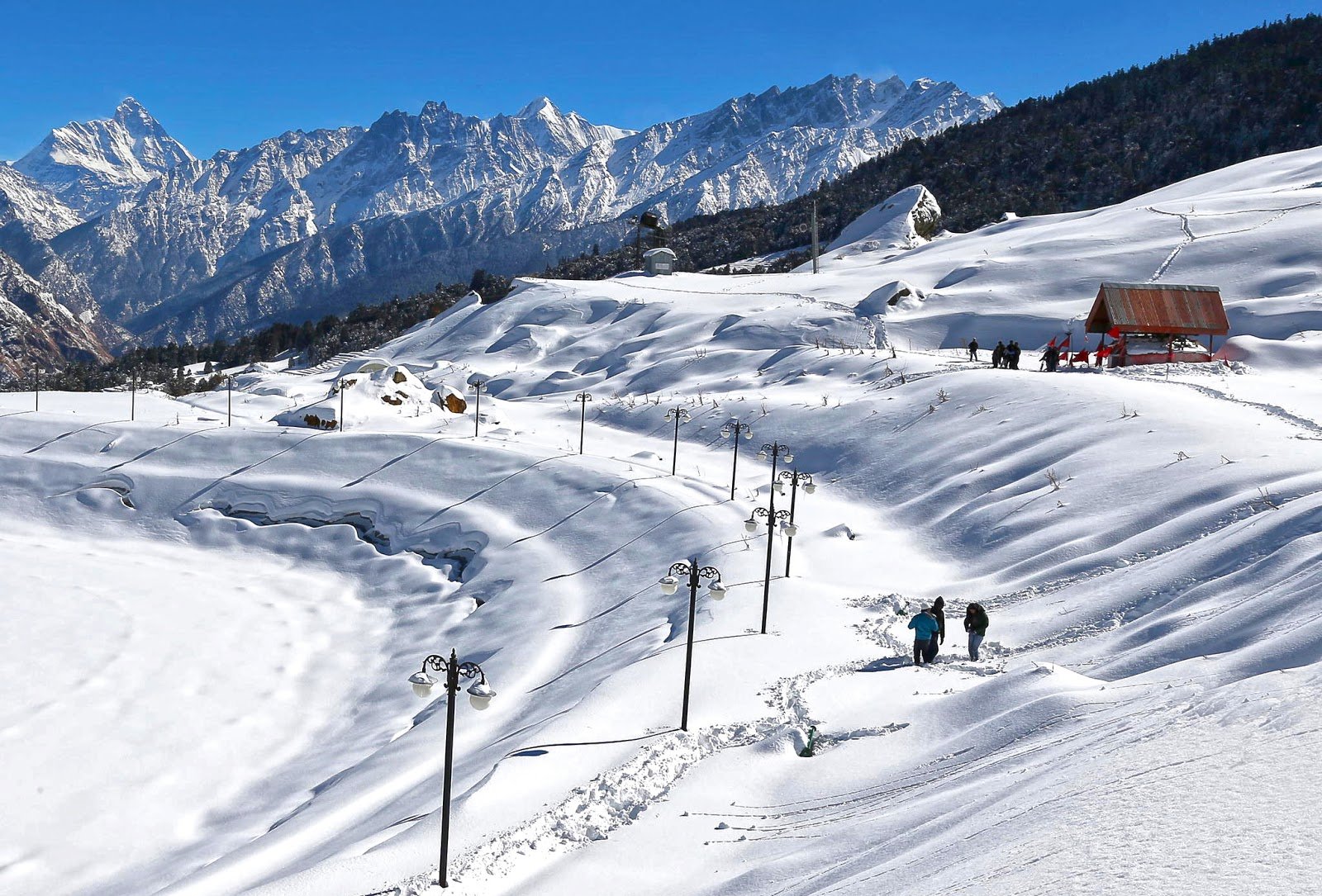
The most spectacular feature of Panwali Kantha is the panoramic view of all four Char Dham mountain ranges from a single vantage point. The Panwali Kantha meadow opens onto an unobstructed view of all four Char Dham mountain ranges: Yamunotri, Gangotri, Kedarnath, and Badrinath, along with Thalay Sagar, Chaukhamba, Kedar Dome, Meru, and Nilkanth. Very few treks in Uttarakhand offer this range from a single vantage point. The sunset from this meadow, when every snowfield on those peaks catches orange light, is truly incredible.
The Seven Bugyals
In the process of trekking to Panwali Kantha, you pass through the seven bugyals of Panwali Kantha, where, if you are lucky, you might catch a glimpse of the blue mountain goat. The bugyals are bedecked with wildflowers in spring, and autumn provides clear vistas of the mountains.
Major Landmarks
- Ghuttu Village – The starting point of the trek from the Tehri Garhwal side, about 30 km from Ghansali
- Triyuginarayan Village – The starting point from the Rudraprayag side, famous for the Shiva-Parvati wedding temple
- Maggu Chatti – A shepherd hut and campsite on the Triyuginarayan route
- Panwali Kantha Top – The highest point of the meadow at ~3,963 m
- Kankhalikhal – A campsite on the ridge descent
Flora and Fauna
Flora
Panwali Kantha is blessed with extraordinary biodiversity, with the trek passing through dense oak, rhododendron, and deodar forests on the way to the grassy pastures. The area is home to various blooming flowers and herbal plants.
Key Tree Species:
- Oak (Quercus spp.) – Dominant species in the forest sections
- Rhododendron (Burans) – In summer (April and May), the bugyal is adorned with red- and pink colored rhododendrons
- Deodar (Cedrus deodara) – Found in the forest sections
- Cedar – Present in the flora of the region
Wildflowers and Herbs:
The vegetation is a mix of grassland scattered with birch trees. The bugyals are bedecked with wildflowers in spring, and the area is home to various blooming flowers and herbal plants. The meadow is full of red and pink rhododendrons in April and May, enhancing the beauty of the region.
Fauna
Panwali Kantha is a nature lover’s paradise, home to a remarkable variety of Himalayan wildlife. The Panwali meadows are home to several wild animals. If you’re lucky, you can spot high-altitude animals like Bharal (blue sheep), Ghoral, Himalayan bears, weasels, and the rare musk deer.
Mammals:
- Bharal (Blue Sheep) – A high-altitude goat-antelope species
- Ghoral – Another goat-antelope species found in the region
- Himalayan Black Bear – Present in the forests
- Musk Deer – A rare and endangered species
- Weasels – Found in the meadow areas
Birds:
- Himalayan Monal – Uttarakhand’s state bird, frequently sighted
- Various Himalayan birds – The region is rich in avian diversity
The trek also offers the joy of seeing many amazing species of Himalayan birds. During the monsoon, you will go through the littered bughyals of Panwali Kantha along with birds and flowers of different colours.
Protected Areas
| Protected Area | Type | Significance |
|---|---|---|
| Panwali Kantha Bugyal | Alpine Meadow | Largest bugyal in Uttarakhand, community-grazed |
| Kedarnath Wildlife Sanctuary | Wildlife Sanctuary | Accessible from the trek route |
| Nanda Devi Biosphere Reserve | Biosphere Reserve | UNESCO Site, accessible from the region |
Religious Beliefs and Significance
The Land of the Pandavas
Panwali Kantha is rightly called the “Pandavas’ Path to Heaven”. The Pandavas are believed to have walked across Panwali Kantha meadows during their final journey towards Swargarohini (the ascent to heaven). Local lore says the meadows witnessed their footprints, making it a spiritually charged landscape. Because of this, Panwali Kantha is considered a sacred route, not just a trekking meadow.
The Triyuginarayan Temple
Triyuginarayan is one of the most significant religious sites on the trek. It is believed that Lord Shiva and Goddess Parvati’s wedding ceremony was conducted here, in the presence of Lord Vishnu. At Triyuginarayan, Lord Vishnu played the role of Parvati’s brother, while Lord Brahma performed the wedding rituals. This makes the temple one of the few places where the Trimurti (Brahma, Vishnu, Shiva) are all directly associated with a single divine event.
The Sacred Pilgrimage Route
The trail from Triyuginarayan through Maggu Chatti to Panwali follows a path that pilgrims once used to travel between the Gangotri and Kedarnath shrines. This trek was the ancient pilgrimage route from Gangotri to Kedarnath but is now a popular trekking route, mostly used by locals as alternative roads have been built between the two holy towns.
The Vamavrta Yatra
This trek is part of the ancient pilgrim trail from Gangotri to Kedarnath, in the tradition of the Vamavrta Yatra that began from Yamunotri and ended at Badrinath after paying respect at the Kedarnath and Gangotri shrines. The sacredness of the journey has made the trek a spiritual path besides being a scenic trail, which was not only the way of the ascetics but also that of the saints for a very long time.
The Shepherd’s Sacred Ground
The Gujjar and local shepherd communities continue to graze their cattle during the summer months, maintaining a pastoral tradition that is hundreds of years old. The meadows are considered sacred by these communities, and the shepherd huts serve as temporary shelters during the grazing season.
Festivals and Celebrations
- Local Festivals – The Garhwali community celebrates its festivals with traditional rituals
- Harela – A festival celebrating the sowing of seeds and the arrival of spring
- Diwali – The festival of lights
- Makar Sankranti – Celebrated with ritual bathing in sacred rivers
How to Reach Panwali Kantha Trek
Panwali Kantha is well connected by road and can be easily reached from major cities in Uttarakhand and North India.
By Air
The nearest airport is Jolly Grant Airport in Dehradun, approximately 45 km from Rishikesh. Jolly Grant Airport is well connected to Delhi with daily flights. Taxis are available from the airport to Rishikesh and then to the trek base.
| Route | Distance | Travel Time |
|---|---|---|
| Jolly Grant Airport → Rishikesh | ~45 km | 1 hour |
| Rishikesh → Ghuttu | ~185–230 km | 7–8 hours |
By Train
The nearest railway station is Rishikesh, approximately 232 km from Delhi. Rishikesh is well connected by railway networks with major destinations in India. Haridwar Railway Station (20 km from Rishikesh) is another option.
| Route | Distance | Travel Time |
|---|---|---|
| Delhi → Rishikesh (by train) | ~232 km | 5–6 hours |
| Rishikesh → Ghuttu | ~185–230 km | 7–8 hours |
By Road
Panwali Kantha is well connected by motorable roads with major destinations in Uttarakhand state. The trek can be approached from Ghuttu or Triyuginarayan.
| Route | Distance | Travel Time |
|---|---|---|
| Delhi → Rishikesh | ~232 km | 5 hours |
| Rishikesh → Ghuttu | ~185–230 km | 7–8 hours |
| Rishikesh → Triyuginarayan | ~180 km | 6–7 hours |
| Ghuttu → Panwali Kantha (trek) | ~18–19 km | 8–9 hours |
Bus Services:
- Buses to Rishikesh are available from ISBT Kashmiri Gate, New Delhi
- Buses and taxis to Ghuttu and Ghansali are available from Rishikesh
Local Transport
Within the region, local transport options include:
- Taxis and shared jeeps for local travel
- Walking – The only way to reach Panwali Kantha is by trekking
- Local guides – Highly recommended for the remote and challenging terrain
The Trek Routes
There are three ways to do the Panwali Kantha trek:
- Out-and-back from Ghuttu – Climb to Panwali Kantha and return the same way
- From Triyuginarayan village – Climb through Maggu Chatti to the meadow and reverse the same path
- Full traverse – Starts at Ghuttu, crosses the Panwali ridge, descends through Maggu Chatti, and exits at Triyuginarayan. This is the recommended route as you do not repeat any section of the trail
Sample Itinerary (Full Traverse):
| Day | Route | Trek Distance |
|---|---|---|
| Day 1 | Rishikesh → Ghuttu (drive) | – |
| Day 2 | Ghuttu → Panwali Kantha (trek) | ~18 km |
| Day 3 | Panwali Kantha → Kankhalikhal (trek) | ~11 km |
| Day 4 | Kankhalikhal → Triyuginarayan → Guptkashi | ~14 km |
| Day 5 | Departure | – |
Weather and Best Time to Visit
Climate Overview
Panwali Kantha experiences a Himalayan climate with distinct seasons, ranging from pleasant summers to cold winters with snowfall. The meadow’s elevation of 3,368–3,963 metres ensures cool temperatures for most of the year.
Seasonal Breakdown
| Season | Months | Weather | Suitability |
|---|---|---|---|
| Summer | April–June | Pleasant, 10–25°C | ⭐ Best |
| Monsoon | July–August | Heavy rainfall, slippery trails | Avoid |
| Autumn | September–November | Crisp air, clear views | ⭐ Best |
| Winter | December–March | Snow-covered, -5–10°C | For experienced trekkers |
Best Time to Visit
| Season | Months | Highlights |
|---|---|---|
| Summer | April–June | Pleasant weather, clear views, blooming rhododendrons |
| Autumn | September–November | Post-monsoon clarity, crisp air, best mountain views |
| Winter | December–March | Snow-covered meadows, adventurous winter trek |
Note: The best time to visit Panwali Kantha is from April to June in summer and September to November in autumn. The rainy season is not considered good for trekking. Snow remains here from November to April. During winter, the meadow becomes more challenging for trekkers to reach the Kyunkhola Pass because bugyals along this trek are covered with snow from December to March. Autumn is the best time due to rains and mostly clear skies.
Temperature
| Season | Daytime Temperature | Nighttime Temperature |
|---|---|---|
| Summer (April–June) | 10°C to 25°C | 5°C to 12°C |
| Monsoon (July–August) | 12°C to 20°C | 8°C to 15°C |
| Autumn (Sept–Nov) | 8°C to 22°C | 3°C to 10°C |
| Winter (Dec–March) | -5°C to 12°C | -10°C to 2°C |
Nearby Places
| Destination | Distance from Panwali Kantha | Highlights |
|---|---|---|
| Triyuginarayan Temple | ~14 km (trek) | Shiva-Parvati wedding site, Trimurti connection |
| Ghuttu Village | ~18 km (trek) | Base village, gateway to other treks |
| Kedarnath | ~30 km | Jyotirlinga, Char Dham temple |
| Guptkashi | ~45 km | Vishwanath Temple, gateway to Kedarnath |
| Khatling Glacier | ~30 km (trek) | Source of Bhilangna River |
| Masartal | ~35 km (trek) | High-altitude glacial lake |
| Sahastratal | ~40 km (trek) | High-altitude lake |
| Uttarkashi | ~100 km | District headquarters, Vishwanath Temple |
| New Tehri | ~90 km | Tehri Lake, dam, water sports |
Distance from Major Cities
| City | Distance (Approx.) | Travel Time |
|---|---|---|
| Delhi | ~232 km (to Rishikesh) | 5–6 hours |
| Rishikesh | ~185–230 km (to Ghuttu) | 7–8 hours |
| Dehradun | ~200 km (to Ghuttu) | 7–8 hours |
| Haridwar | ~210 km (to Ghuttu) | 7–8 hours |
Frequently Asked Questions (FAQs)
General Questions
Q1: What is Panwali Kantha?
A: Panwali Kantha is a high-altitude alpine meadow (bugyal) in the Tehri Garhwal district of Uttarakhand, known for its 360-degree views of the Char Dham mountain ranges and its ancient pilgrimage route.
Q2: Where is Panwali Kantha located?
A: Panwali Kantha is located in the Tehri Garhwal district of Uttarakhand, between the Shivalik Range and the Great Himalayas, about 90 km from New Tehri.
Q3: What is the elevation of Panwali Kantha?
A: Panwali Kantha is situated at an elevation of approximately 3,368–3,963 metres (11,050–13,000 feet) above sea level.
Q4: What is Panwali Kantha famous for?
A: Panwali Kantha is famous for its 360-degree panoramic views of all four Char Dham mountain ranges, its ancient pilgrimage route connecting Gangotri and Kedarnath, and its Pandava legends.
Q5: What is the best time to visit Panwali Kantha?
A: The best time is April–June and September–November.
Q6: What is the nearest airport to Panwali Kantha?
A: The nearest airport is Jolly Grant Airport in Dehradun, approximately 45 km from Rishikesh.
Q7: What is the nearest railway station to Panwali Kantha?
A: The nearest railway station is Rishikesh, approximately 232 km from Delhi.
Q8: How far is Panwali Kantha from Delhi?
A: Panwali Kantha is approximately 232 km from Delhi to Rishikesh, and then a further 185–230 km to the trek base at Ghuttu.
Q9: What is the vehicle registration code for Panwali Kantha?
A: The vehicle registration code is UK-09 (Tehri Garhwal district) or UK-07 (Rudraprayag district).
Q10: What is the trek difficulty level of Panwali Kantha?
A: The Panwali Kantha trek is rated moderate grade.
Q11: What is the trek duration for Panwali Kantha?
A: The Panwali Kantha trek typically takes 4–6 days from Rishikesh.
Q12: What is the trek distance for Panwali Kantha?
A: The full traverse is approximately 40 km, with the Ghuttu to Panwali Kantha section being about 18–19 km.
Q13: What are the base villages for Panwali Kantha?
A: The base villages are Ghuttu (Tehri Garhwal side) and Triyuginarayan (Rudraprayag side).
Q14: What is the Pandava connection to Panwali Kantha?
A: The Pandavas are believed to have walked across Panwali Kantha meadows during their final journey towards Swargarohini (the ascent to heaven).
Q15: What wildlife can be found near Panwali Kantha?
A: The region is home to Bharal (blue sheep), Ghoral, Himalayan black bears, weasels, musk deer, and the Himalayan Monal.
Q16: How do I reach Panwali Kantha from Rishikesh?
A: From Rishikesh, take a taxi or bus to Ghuttu (185–230 km, 7–8 hours), and then trek about 18–19 km to reach Panwali Kantha.
Q17: What is the mythological significance of Panwali Kantha?
A: Panwali Kantha is associated with the Pandavas’ final journey to heaven and the Triyuginarayan Temple, where Lord Shiva and Parvati were married.
Q18: What is the local language of the region?
A: The official language is Hindi, and the regional language is Garhwali.
Q19: Is Panwali Kantha a good destination for beginners?
A: Yes, the Panwali Kantha trek is the perfect trek for beginners to gain some trekking experience.
Q20: What are the nearby places to visit from Panwali Kantha?
A: Nearby places include Triyuginarayan Temple, Ghuttu Village, Kedarnath, Guptkashi, and Khatling Glacier.
Q21: What is the Triyuginarayan Temple?
A: The Triyuginarayan Temple is a significant religious site where Lord Shiva and Goddess Parvati’s wedding ceremony was conducted, in the presence of Lord Vishnu.
Q22: What food is available at Panwali Kantha?
A: There are no shops or eateries at Panwali Kantha. Trekkers must carry all food and supplies. The trek operator typically provides meals during the trek.
Q23: Is photography allowed at Panwali Kantha?
A: Yes, photography is allowed and is one of the main activities. The sunrise and sunset views from the meadow are particularly spectacular.
Q24: Can I camp at Panwali Kantha?
A: Yes, camping is allowed on the Panwali Kantha trek. You have to stay at the camps on the basis of twin sharing or triple sharing.
Q25: What is the distance from Rishikesh to Panwali Kantha?
A: The distance from Rishikesh to the trek base at Ghuttu is approximately 185–230 km.
Q26: What is the significance of the seven bugyals?
A: The seven bugyals are distinct meadow sections that trekkers pass through on the way to Panwali Kantha, each offering unique views and wildlife spotting opportunities.
Q27: What should I carry for the Panwali Kantha trek?
A: Carry layered clothing, sturdy trekking shoes, rain protection, a headlamp, a first-aid kit, and 3 litres of water.
Q28: What is the best way to explore Panwali Kantha?
A: The best way is by trekking — the meadow is best explored on foot, with trails leading through forests and meadows to the summit.
Q29: Is this trek suitable for families?
A: The trek is suitable for families with older children who have some trekking experience, as it is moderate grade and requires basic fitness.
Q30: What is the altitude of Panwali Kantha?
A: Panwali Kantha is perched at a height of 3,368 metres above sea level.
Essential Tips for Visitors
- Best Time: Plan your trek between April–June or September–November for the best weather conditions
- Footwear: Wear sturdy trekking shoes with good grip for the rocky and uneven terrain
- Clothing: Carry layered clothing — warm jacket for mornings/evenings, windproof outer layer, and rain protection
- Monsoon Caution: Avoid trekking during July–August due to slippery trails and poor visibility
- Trek Preparation: The trek is moderate but requires basic fitness; suitable for beginners
- Permits: Indian nationals do not need special permits for the trek, but carry a valid photo ID
- Local Cuisine: Try local Garhwali dishes in Ghuttu; carry your own food for the trek
- Hydration: Carry at least 3 litres of water, especially during summer months
- Accommodation: Accommodation is available in Ghuttu and Triyuginarayan (homestays and guesthouses)
- Respect Local Culture: Panwali Kantha is a sacred route; maintain the sanctity of the temples and natural surroundings
- Leave No Trace: Respect the fragile Himalayan ecosystem — carry back all waste
- Inform Family: Let someone know your itinerary before trekking, as mobile connectivity may be weak
- Weather Updates: Check weather forecasts before travelling, especially during monsoon and winter
- Local Guides: Hire a local guide if travelling without a tour operator, as guides have better knowledge and experience of the route
- The Old Pilgrimage Route: The trail from Triyuginarayan through Maggu Chatti to Panwali follows a path that pilgrims once used to travel between the Gangotri and Kedarnath shrines
Plan Your Panwali Kantha Adventure with Discover Uttarakhand
At Discover Uttarakhand, we’ve been organising unforgettable Himalayan journeys since 1997. As a trusted local operator with deep knowledge of the Garhwal region, we offer:
✅ Customised Panwali Kantha trek packages
✅ Combined itineraries with Kedarnath, Triyuginarayan, and Chopta
✅ Experienced local guides and trek leaders
✅ Comfortable transport with experienced hill drivers
✅ All necessary permits and arrangements
✅ Quality camping equipment and nutritious meals
✅ 24/7 customer support throughout your journey
Recommended Panwali Kantha Packages
| Package | Duration | Starting Point | Highlights |
|---|---|---|---|
| Panwali Kantha Weekend Trek | 4 Days / 3 Nights | Rishikesh | Panwali Kantha, Char Dham Views, Camping |
| Panwali Kantha & Triyuginarayan Trek | 5 Days / 4 Nights | Rishikesh | Panwali Kantha, Triyuginarayan Temple, Maggu Chatti |
| Panwali Kantha Full Traverse | 6 Days / 5 Nights | Rishikesh | Ghuttu, Panwali Kantha, Kankhalikhal, Triyuginarayan |
| Panwali Kantha Complete Exploration | 8 Days / 7 Nights | Delhi | Panwali Kantha, Kedarnath, Guptkashi, Triyuginarayan |
📞 Call / WhatsApp: +91-9997187178, 9760222178, 8171977178
📍 Visit Our Office: Himalayan Colony, opposite DSVV, Haripur Kalan, Haridwar, Motichur Range, Uttarakhand 249411
🌐 Website: www.discover-uttarakhand.com
📧 Email: discoveruttarakhand.mail@gmail.com
Plan your journey to Panwali Kantha with proper preparation and respect for this sacred route where ancient legends come alive. Experience the divine presence of the Himalayas in one of India’s most expansive and naturally breathtaking destinations.
Discover Uttarakhand – Your Local Partner for Unforgettable Himalayan Journeys Since 1997 🏔️