
Introduction: The Underground Abode of Gods
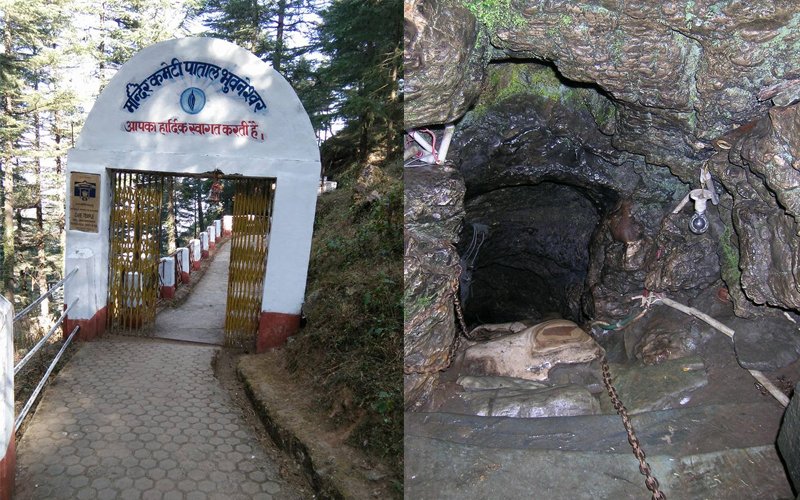
Hidden deep within the Kumaon Himalayas of Uttarakhand’s Pithoragarh district lies one of India’s most mysterious and spiritually powerful destinations—Patal Bhuvaneshwar. Often referred to as the “Underground Temple” or “Cave City,” this magnificent limestone cave is believed to be the abode of Lord Shiva and 33 crore (330 million) deities of the Hindu pantheon.
The name “Patal Bhuvaneshwar” translates to “Lord of the Underworld,” reflecting the belief that this cave is the gateway to Patal Lok—the netherworld mentioned in Hindu scriptures. Unlike any ordinary cave, Patal Bhuvaneshwar is a 160-meter-long natural wonder where stalactites and stalagmites have formed over thousands of years into shapes that strikingly resemble Hindu gods, goddesses, and mythological figures.
The spiritual significance of this site is immense. According to the Skanda Purana, one of Hinduism’s most important scriptures, 800 verses are dedicated to describing the wonders of Patal Bhuvaneshwar. The Manaskhanda declares: “He who wants to feel the presence of eternal power should come to the sacred Bhuvneshwar situated near the confluence of Ramganga, Sarayu and Gupt-Ganga”
Whether you are a devout pilgrim seeking the blessings of Lord Shiva, a history enthusiast tracing the footsteps of Adi Shankaracharya, or a nature lover marvelling at the artistry of geological forces, Patal Bhuvaneshwar offers an experience that is both spiritually transformative and visually breathtaking.
Key Information at a Glance:
Quick Facts – Patal Bhuvaneshwar
History and Mythology: The Legend of Patal Bhuvaneshwar
The Discovery by King Rituparna (Treta Yuga)
The first human to discover this mystical cave was King Rituparna, a ruler of the Surya Dynasty (Sun Dynasty) who was reigning over Ayodhya during the Treta Yuga. According to legend, the story begins with King Rituparna and King Nala. After Nala was defeated by his wife Queen Damayanti, he requested Rituparna to hide him. Rituparna took Nala to the forests of the Himalayas.
On his way back home, Rituparna was fascinated by a deer that ran into the woods. He chased it but could not find it and took a rest under a tree. He had a dream where the deer asked him not to chase it. When he woke up, he went to a cave where a guard was standing. After enquiring about the cave, he was allowed to go inside.
Right at the entrance, Rituparna met Sheshnag, the celestial serpent who holds the Earth on his hood. Sheshnag agreed to take him through the cave, carrying him on his hood. Inside, Rituparna witnessed the marvels of the gods—he saw all the 33 crore (koti) gods and goddesses, including Lord Shiva himself.
It is said that after his visit, the cave was closed for ages, with a prediction in the Skanda Purana that it would be reopened in the Kali Yuga.
The Rediscovery by Adi Shankaracharya (Kali Yuga)
In the Kali Yuga, the great philosopher-saint Adi Shankaracharya, during his visit to the Himalayas, rediscovered this cave. According to historical records, this occurred in 1191 AD (though some sources mention 722 AD) . That was the beginning of the modern pilgrimage history at Patal Bhuvaneshwar.
Adi Shankaracharya consecrated the Shiva Lingam inside the cave and established regular worship practices. The priest family, the Bhandaris, have been performing religious rites at Patal Bhuvaneshwar since the time of Adi Shankaracharya—more than 20 generations in succession. They are considered a treasure house of legends, lore, anecdotes, and information about this holy place.
The Legend of Lord Ganesha’s Head
One of the most powerful legends associated with this cave is that of Lord Ganesha. According to the Puranas, following the wrath of Lord Shiva, the head of Lord Ganesha was severed from his torso and fell in this cave. Later, at the insistence of Mother Parvati, Lord Shiva replaced it with the head of an elephant.
It is believed that Lord Shiva kept the original human head of Ganesha in the Patal Bhuvaneshwar cave. The head is now covered in a layer of limestone, with an 8-petaled lotus-like formation (Brahma-Kamala or “Heavenly Lotus”) on top, from which drops of nectar are said to fall on Lord Ganesha’s head. It is believed that the Brahmakamal was established here by Lord Shiva himself.
The Four Gateways (Dwar)
Inside the cave, there are four entrances (gateways), each with profound spiritual significance :
| Gateway Name | Meaning | Status |
|---|---|---|
| Randwar | Door of War | Closed after Mahabharata War |
| Paapdwar | Door of Sin | Closed after Ravana’s death |
| Dharmdwar | Door of Dharma | Open |
| Mokshadwar | Door of Liberation (Moksha) | Open |
According to the inscription outside the temple, Paapdwar was closed soon after the death of Ravana in the war of Lanka, and Randwar was closed down after the great Mahabharata War at Kurukshetra. At present, only two gateways—Dharmdwar and Mokshadwar—are open for pilgrims.
The Pandava Connection
It is believed that the Pandavas, the heroes of the Mahabharata, proceeded towards their last journey in the Himalayas after meditating here, in front of Lord Shiva. The cave served as a meditation centre for the Pandavas during their exile, where they performed several rituals to appease the gods.
The Connection to Mount Kailash
According to belief, this cave is connected by an underground route to Mount Kailash—the eternal abode of Lord Shiva in Tibet. This is where Shiva rested when he chose to visit these parts from the celestial heights of his abode in Kailash.
The Doomsday Prophecy
Local legend states that the secret about the occurrence of doomsday is hidden or related to the Patal Bhuvaneshwar cave. This adds an element of mystery to the already enigmatic site.
Spiritual Significance: Darshan Equivalent to Char Dham
It is said that the darshan at Patal Bhuvaneshwar yields a thousand times the fruit of tapasya at Kashi, Baidyanath, or Kedarnath. A visit to Patal Bhuvaneshwar is often said to be equivalent to worshipping the Chota Char Dham of Uttarakhand. It is also believed that one can have darshan of Kedarnath, Badrinath, and Amarnath from within the Patal Bhuvaneshwar cave.
Geography and Geology
Location and Altitude
Patal Bhuvaneshwar is situated in the Pithoragarh district of Uttarakhand, in the Kumaon region of the Himalayas. The cave is located at an altitude of 1,350 meters (4,429 feet) above sea level. It lies approximately:
Geological Formation
Patal Bhuvaneshwar is a natural limestone cave that has evolved over thousands of years. The cave was formed by the flow of water, which has cut the rocks in such a fascinating way that it looks as if some divine artist had made those statues within the cave and on its walls.
Stalactite and Stalagmite Formations
The cave is renowned for its spectacular stalactite (hanging from the ceiling) and stalagmite (rising from the floor) formations of various hues and forms. These formations have been naturally carved by water droplets over centuries.
What makes Patal Bhuvaneshwar truly unique is that these geological formations have taken the shapes of various gods, goddesses, saints, and mythological characters from Hindu mythology.
The Cave Structure
The cave is 160 meters long and 90 feet deep from the point of entrance. It has a narrow tunnel-like opening that leads to a number of interconnected caves—it is not just one cave but rather a cave city or a series of caves within caves.
The cave is still geologically active—it continues to be developed due to the crystallisation of minerals dissolved in water. The scientific fact is that it is still being formed, and some openings are believed to close as centuries pass.
Natural Formations and Their Spiritual Significance
Inside the cave, each stone, each stalagmite, in magnificent formation, reveals the story of Hindu mythology. Here are the most significant formations:
The Four Yugas
The four Yugas (ages) are visible as small projections inside the cave :
- Satya Yuga – The golden age of truth
- Treta Yuga – The age when King Rituparna discovered the cave
- Dwapara Yuga – The age when the Pandavas rediscovered the cave
- Kali Yuga – The current age; a sculpture depicting it is present inside
The Living Formations
According to local belief, these formations are not mere rocks but the actual astral forms of the deities residing within the cave. All the deities are believed to be residing in their astral form with Lord Shiva inside the womb of this cave.
Darshan Experience: What to Expect
The Descent
The motorable road ends approximately 500 meters (half a kilometre) away from the cave entrance. From there, you must walk to the entrance and then descend 82 to 100 steps into this narrow cave to reach the sanctum sanctorum. This descent gives an overwhelming feeling that you’re entering the centre of the earth.
Inside the Cave
Once inside the cave, you will experience how the environment is different—dark, cool, and mystically lit. The cave is fully electrically illuminated to enhance the visibility of the natural sculptures. However, the lighting is kept dim to maintain the solemn, spiritual atmosphere.
The journey inside the cave has to be carried out in feeble lights, holding protective iron chains for safety. The path is narrow, slippery in places, and requires caution.
The Guide System
A local guide (mandatory, approx. ₹50) accompanies groups of 10–12 people at a time. The guides explain the mythological significance of each formation, pointing out the shapes of gods, goddesses, saints, and known mythological characters. They are knowledgeable about the legends, lore, and history of this holy place.
Havan (Fire Sacrifice)
‘Havan’ (fire sacrifice) is performed in a dimly lit, solemn atmosphere, under the spell of holy chants. The rhythmic chanting of mantras adds to the mystical ambience of the cave.
Duration of Visit
A complete exploration of the cave, including listening to the guide’s explanations, typically takes 45 minutes to 1.5 hours.
Important Restrictions
- Photography is NOT permitted inside the cave
- Cameras and mobile phones must be left outside or kept away
- The narrow entrance and limited fresh air inside can be challenging for some visitors
- Not recommended for those with respiratory issues, severe arthritis, or mobility problems
Temple Timings and Rituals
| Season | Darshan Timings |
|---|---|
| Summer (March–June) | 8:00 AM – 6:00 PM |
| Winter (October–February) | 9:00 AM – 5:00 PM |
Best Time to Visit the Cave
- Early morning (7:00–8:00 AM) is the best time to avoid crowds, especially on Mondays (considered auspicious for Lord Shiva)
- The cave can get crowded on weekends and during festival seasons
How to Reach Patal Bhuvaneshwar
By Air
Nearest Airport: Pantnagar Airport (approximately 224–271 km from Patal Bhuvaneshwar)
- Airlines: Regular flights from Delhi to Pantnagar (approx. 1 hour)
- Travel Time: 7–8 hours by taxi from the airport
- Onward Travel: From the airport, hire a taxi to Patal Bhuvaneshwar, or take a bus to Almora and then a taxi
By Train
Nearest Railway Stations:
| Station | Distance | Travel Time | Connectivity |
|---|---|---|---|
| Kathgodam | 180–191 km | 6–7 hours | Most preferred; well-connected from Delhi |
| Tanakpur | 164–210 km | 6–7 hours | Alternative option |
Popular Trains from Delhi to Kathgodam:
| Train Name | Departure (Delhi) | Arrival (Kathgodam) | Duration |
|---|---|---|---|
| Ranikhet Express | 10:05 PM | 5:05 AM | 7 hours |
| Shatabdi Express | 6:00 AM | 11:40 AM | 5h 40m |
From Kathgodam station, taxis are available for the 6–7 hour drive to Patal Bhuvaneshwar.
By Road
Patal Bhuvaneshwar is well-connected by road to major cities in North India :
Bus Services
Regular buses and shared taxis from Almora, Pithoragarh, and Berinag to Gangolihat are available. From Gangolihat, shared cabs charge approximately ₹20 per person to the cave.
Distances from Major Cities
| City | Distance (km) |
|---|---|
| Delhi | ~450 |
| Dehradun | ~370 |
| Almora | 110 |
| Nainital | 160 |
| Pithoragarh | 91 |
| Chaukori | 38 |
| Gangolihat | 14 |
| Berinag | 35 |
| Bageshwar | ~90 |
| Kathgodam | 180–191 |
| Pantnagar Airport | 224–271 |
Weather and Best Time to Visit
Climate Overview
Patal Bhuvaneshwar experiences a pleasant climate with distinct seasons. The cave itself maintains a cool temperature year-round, but the external weather affects travel conditions.
Month-by-Month Guide
Best Time to Visit by Season
Why Avoid Monsoon?
Heavy rainfall leads to landslides, and roads become unsafe, and the cave entrance becomes slippery. Travel during this period is not recommended.
Why Avoid Winter?
Winters can be extremely cold with temperatures reaching 0°C, and no room heaters are available in the local hotels, which can be uncomfortable.
Special Note on Cave Temperature
The cave interior remains cool throughout the year. Even in summer, carrying a light jacket is advisable as the cave can be chilly.
Nearby Places to Visit
Haat Kalika Temple (Gangolihat)
Located approximately 13 km from Patal Bhuvaneshwar, this ancient temple of Maa Bhagwati is a significant Shakti Peeth established by Adi Shankaracharya. It is often combined with a visit to Patal Bhuvaneshwar.
Chaukori – The Himalayan Viewpoint
Famous for its sunrise and sunset views over Nanda Devi and Panchachuli peaks, Chaukori is also known for its lush tea gardens. It is an ideal stop for acclimatisation and enjoying panoramic mountain vistas.
Berinag – Tea Gardens and Nag Devta Temple
Berinag is known for its tea gardens and the ancient Nag Devta Temple (serpent deity). The area offers pristine pine forests, perfect for picnics or meditation.
Adventure Activities in the Region
The Patal Bhuvaneshwar region is not just about spirituality—it also offers adventure opportunities:
Local Cuisine: What to Eat
Dining options in Patal Bhuvaneshwar are basic but satisfying. Good Indian food and Kumauni food are available in the vicinity.
Must-Try Kumaoni Dishes
| Dish | Description |
|---|---|
| Aloo Ke Gutke | Black soybean curry, a regional speciality |
| Bhatt ki Churkani | Finger millet flatbread is healthy and filling |
| Gahat Ki Dal | Horse gram lentil soup, warming and nutritious |
| Mandua Roti | Famous chocolate-like sweet from the Kumaon region |
| Jhangora Kheer | Barnyard millet sweet pudding |
| Bal Mithai | Famous chocolate-like sweet from Kumaon region |
Dining Tips
- Most guesthouses offer meal packages
- Carry packaged snacks for the journey
- Pure vegetarian options are widely available
- For a wider variety, nearby towns like Chaukori and Almora have more restaurants
Accommodation Options
In Patal Bhuvaneshwar
| Accommodation Type | Features |
|---|---|
| Budget Hotels/Guesthouses | Basic rooms, essential amenities, limited facilities |
| Small Hotels | Good Indian and Kumauni food available |
Important Note: There are no room heaters available in local hotels, making winter visits uncomfortable.
In Nearby Towns
Booking Tips
- Advance booking is recommended, especially during peak season (April–June)
- For more comfortable stays with modern amenities, consider staying in Chaukori or Almora and making a day trip to the cave
- Carry warm clothing regardless of season—the cave interior is cool
Travel Tips and Important Information
Before You Go
- Physical Fitness: The cave requires descending and climbing 82–100 steps. Not suitable for those with severe arthritis, respiratory issues, or mobility problems.
- Health Precautions: The narrow entrance and limited fresh air inside can be challenging for those with claustrophobia or breathing difficulties.
- Carry Cash: ATMs are limited in the area; bring sufficient cash from Almora or Pithoragarh.
- Fill Fuel: The nearest fuel station is in Gangolihat or Pithoragarh; fill up before proceeding.
- Check Weather: Avoid monsoon (July–August) due to landslide risk.
- Advance Booking: Recommended for peak season (April–June).
During Your Visit
- Hire a Guide: A guide (mandatory, approx. ₹50) is essential to understand the mythological significance of the formations.
- Dress Appropriately: Wear comfortable, non-slippery footwear suitable for damp and uneven surfaces.
- Carry a Flashlight: Although the cave is electrically lit, carrying a personal flashlight can be helpful.
- Leave Cameras Behind: Photography is strictly prohibited inside the cave.
- Maintain Silence: Respect the sacred nature of the site.
- Remove Shoes: It is customary to remove shoes before entering the cave.
- Follow the guide’s Instructions: Cooperate with the guide, as only small groups are allowed at a time.
Health and Safety
- Not Recommended For: Those with heart conditions, severe arthritis, respiratory issues, claustrophobia, or mobility problems.
- Stay Hydrated: Carry water for the walk to the cave entrance.
- Watch Your Step: The steps and pathways can be slippery, especially after rain.
- Emergency Numbers: Keep local contacts handy.
What to Pack
| Season | Essentials |
|---|---|
| All Year | Comfortable non-slippery walking shoes, light jacket (cave is cool), flashlight, cash, water bottle |
| Summer (Apr-Jun) | Light cotton clothes, hat, sunscreen |
| Monsoon (Jul-Aug) | Raincoat, waterproof footwear (avoid travel if possible) |
| Winter (Oct-Feb) | Heavy woollens, jacket, gloves, woollen cap (avoid travel due to extreme cold) |
Photography Tips
- Photography is NOT permitted inside the cave
- Cameras and mobile phones must be left outside or kept away
- You can photograph the exterior and the surrounding landscape
Frequently Asked Questions (FAQs)
Q1: What is Patal Bhuvaneshwar famous for?
A: Patal Bhuvaneshwar is famous for being a mystical limestone cave temple where stalactites and stalagmites have naturally formed into shapes resembling Hindu gods and goddesses. It is believed to be the abode of Lord Shiva and 33 crore deities.
Q2: What is the best time to visit Patal Bhuvaneshwar?
A: The best time to visit is April to June (summer) and September to November (autumn), when the weather is pleasant, and roads are safe.
Q3: How far is Patal Bhuvaneshwar from Delhi?
A: The distance from Delhi is approximately 450 km, with a travel time of 12–14 hours by road.
Q4: How do I reach Patal Bhuvaneshwar?
A: By road via Almora (110 km) or Pithoragarh (91 km), by train to Kathgodam (180–191 km) followed by taxi, or by flight to Pantnagar Airport (224–271 km) followed by taxi.
Q5: What is the altitude of Patal Bhuvaneshwar?
A: Patal Bhuvaneshwar is situated at an altitude of approximately 1,350 meters (4,429 feet) above sea level.
Q6: What are the darshan timings?
A: Summer (March–June): 8:00 AM – 6:00 PM; Winter (October–February): 9:00 AM – 5:00 PM.
Q7: Is there an entry fee?
A: Yes, approximately ₹50 for adults and ₹25 for children. A guide fee of approximately ₹50 is also mandatory.
Q8: Is photography allowed inside the cave?
A: No, photography is strictly prohibited inside the cave.
Q9: Is the cave difficult to access?
A: The cave requires descending 82–100 steps and navigating narrow, slippery passages. It is not recommended for those with mobility issues, severe arthritis, respiratory problems, or claustrophobia.
Q10: What is the significance of the cave according to the scriptures?
A: The cave is mentioned in the Skanda Purana (Manas Khand, Chapter 103), with 800 verses dedicated to describing its wonders.
Q11: Who discovered the cave?
A: According to mythology, King Rituparna of the Surya Dynasty discovered the cave in the Treta Yuga. Adi Shankaracharya rediscovered it in the Kali Yuga (1191 AD / 722 AD).
Q12: What are the four gateways inside the cave?
A: The four gateways are Randwar (Door of War, closed), Paapdwar (Door of Sin, closed), Dharmdwar (Door of Dharma, open), and Mokshadwar (Door of Liberation, open).
Q13: Is there accommodation available at Patal Bhuvaneshwar?
A: Basic budget hotels and guesthouses are available near the cave, but facilities are minimal. For better accommodation, stay in Chaukori (38 km) or Almora (110 km).
Q14: Is Patal Bhuvaneshwar suitable for senior citizens?
A: The cave requires navigating 82–100 steps and narrow passages. It is not recommended for those with mobility issues. Senior citizens in good health with no respiratory or joint problems may attempt it with caution.
Q15: What is the connection between Patal Bhuvaneshwar and Mount Kailash?
A: According to belief, the cave is connected by an underground route to Mount Kailash—the eternal abode of Lord Shiva in Tibet.
Sample Itinerary (4 Days / 3 Nights from Kathgodam)
| Day | Route | Distance | Activities | Overnight |
|---|---|---|---|---|
| 1 | Kathgodam → Almora → Gangolihat | ~180 km | Scenic drive through the Kumaon hills, check into the hotel | Gangolihat/Patal Bhuvaneshwar |
| 2 | Patal Bhuvaneshwar Cave Exploration | – | Morning: Visit cave temple (2–3 hours), explore formations, guide tour | Patal Bhuvaneshwar |
| 3 | Excursion to Chaukori/Berinag | ~38 km | Visit Chaukori tea gardens, Himalayan views, Berinag Nag Devta Temple | Patal Bhuvaneshwar |
| 4 | Patal Bhuvaneshwar → Kathgodam | ~180 km | Return drive, depart | – |
Alternative Extended Itinerary (5–6 Days):
- Include visits to Jageshwar Dham (115 km) and Almora (110 km)
- Extend to Munsiyari (180 km) for Panchachuli views
Plan Your Patal Bhuvaneshwar Journey with Discover Uttarakhand
At Discover Uttarakhand, we’ve been organising unforgettable journeys across Devbhoomi since 1997. As a trusted local operator with deep knowledge of the Kumaon region and sacred sites like Patal Bhuvaneshwar, we offer:
- ✅ Customised Patal Bhuvaneshwar tour packages (2 to 5 days)
- ✅ Combined itineraries covering Patal Bhuvaneshwar, Jageshwar, Chaukori, and Almora
- ✅ Comfortable transport with experienced hill drivers
- ✅ Verified accommodations in Gangolihat, Chaukori, and Almora
- ✅ Local guides for cave exploration
- ✅ 24/7 customer support throughout your journey
Recommended Patal Bhuvaneshwar Packages
| Package | Duration | Starting Point | Highlights |
|---|---|---|---|
| Patal Bhuvaneshwar Darshan | 2 Nights / 3 Days | Kathgodam | Cave temple, Gangolihat, Chaukori views |
| Kumaon Pilgrimage | 4 Nights / 5 Days | Kathgodam | Patal Bhuvaneshwar, Jageshwar, Almora, Chaukori |
| Spiritual Kumaon Explorer | 5 Nights / 6 Days | Delhi | Patal Bhuvaneshwar, Jageshwar, Munsiyari, Chaukori |
Book your Patal Bhuvaneshwar journey today and experience the divine presence of 33 crore gods in this mystical underground temple.
📞 Call / WhatsApp: +91-9997187178, 9760222178, 8171977178
📍 Visit Our Office: Himalayan Colony, opposite DSVV, Haripur Kalan, Haridwar, Motichur Range, Uttarakhand 249411
🌐 Website: www.discover-uttarakhand.com
📧 Email: info@discover-uttarakhand.com
Om Namah Shivaya! Jai Patal Bhuvaneshwar! 🙏🏔️
Discover Uttarakhand – Your Local Partner for Unforgettable Himalayan Journeys Since 1997