Introduction: The Hidden Gem of the Shivaliks
Nestled in the foothills of the Shivalik Range of the Himalayas, Rajaji National Park is one of Uttarakhand’s most accessible yet underrated wildlife destinations. Spread across approximately 820 square kilometres (core area), with a total area of 1,075 square kilometres including buffer zones, this magnificent tiger reserve straddles the three districts of Haridwar, Dehradun, and Pauri Garhwal. The park lies at the meeting point of the Himalayan foothills and the Indo-Gangetic plains, creating a unique ecological transition zone that supports an extraordinary diversity of flora and fauna.
Named after C. Rajagopalachari (Rajaji)—a prominent freedom fighter, the last Governor-General of independent India, and one of the first recipients of the Bharat Ratna—the park was established in 1983 by merging three existing wildlife sanctuaries: Rajaji Sanctuary, Motichur Sanctuary, and the Chilla Range of the Pauri Forest Division. In 2015, the park was declared a Tiger Reserve, becoming the second tiger reserve in Uttarakhand after Corbett.
Today, Rajaji is renowned for its large population of Asian elephants, earning it the nickname the “Elephant Kingdom” of Uttarakhand. It is also home to Bengal tigers, leopards, Himalayan black bears, sloth bears, goral, and over 315 species of birds. Unlike the more commercialised Jim Corbett National Park, Rajaji offers a less crowded, more peaceful safari experience, making it perfect for families, first-time wildlife enthusiasts, and those seeking a quick nature escape from the nearby spiritual hubs of Rishikesh and Haridwar.
Whether you are a wildlife photographer hoping to capture elephants in their natural habitat, a birdwatcher chasing rare species like the Great Pied Hornbill, or simply a traveller wanting to combine spiritual solace in Rishikesh with the thrill of a jungle safari, Rajaji National Park promises an unforgettable Himalayan foothills adventure.
Key Information at a Glance:
History: From Sanctuaries to Tiger Reserve
The Three Founding Sanctuaries
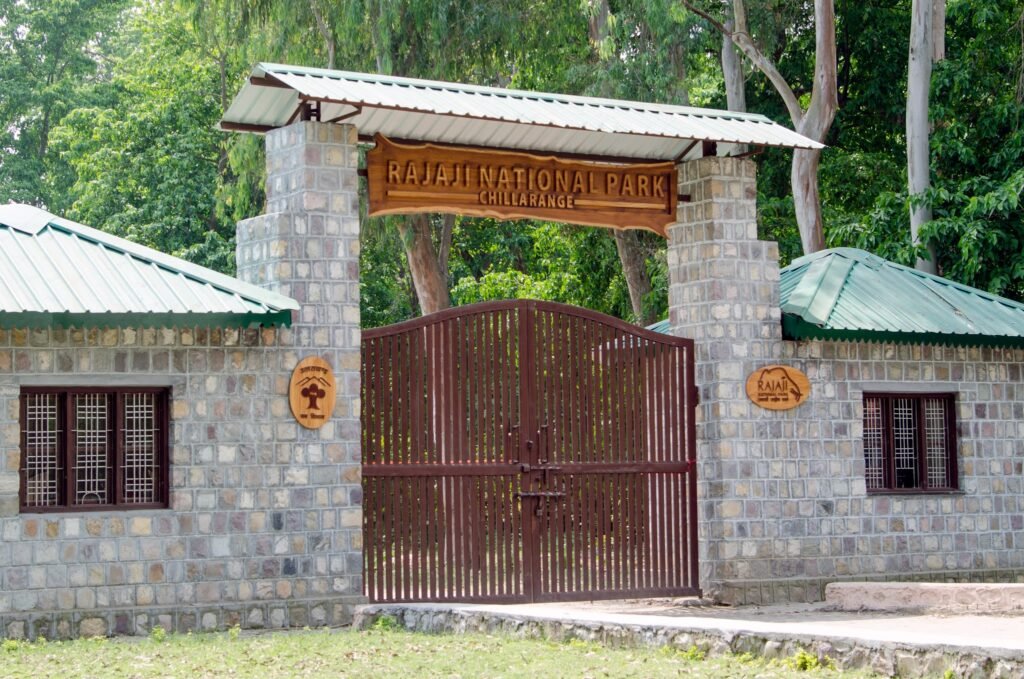
Rajaji National Park was created on 12 August 1983 by the amalgamation of three wildlife sanctuaries: Rajaji Sanctuary (created in 1948), Motichur Sanctuary (created in 1936), and the Chilla Range of the Pauri Forest Division . Each of these units had its own unique conservation history, and their merger created a continuous protected landscape of over 820 square kilometres.
The Rajaji Connection
The park is named after C. Rajagopalachari, who served as the first Indian Governor-General of independent India. According to local lore, when the newly appointed Governor-General was invited for a hunt, he was so impressed by the biological diversity and plethora of wild animals in the area that, instead of hunting, he suggested the creation of a wildlife sanctuary. This suggestion led to the establishment of the original Rajaji Sanctuary in 1948, which later became the nucleus of the national park.
Tiger Reserve Status (2015)
A significant milestone in the park’s conservation history came in April 2015, when Rajaji was officially declared a Tiger Reserve under the Wildlife Protection Act. The notification made Rajaji the second tiger reserve in Uttarakhand after the Corbett Tiger Reserve, and the 48th tiger reserve in India.
The tiger reserve includes:
- Core Area: The existing national park (~820 sq km)
- Buffer Area: Approximately 300 sq km, including parts of the Shyampur range of the Haridwar forest division and parts of the Kotdwar and Laldhang forest divisions
This designation brought additional protection, funding, and management focus to the park, strengthening conservation efforts for the region’s tiger population.
Shivalik Biodiversity Hotspot
The park is often described as a “veritable storehouse of Shivalik biodiversity and ecosystems”. It protects a representative sample of the Shivalik Hill ecosystem, which is characterised by a unique combination of sal forests, riverine vegetation, grasslands, and Chir-pine forests on the higher reaches.
Geography and Location
Geographic Coordinates
- Latitude: 30°03′29″ N
- Longitude: 78°10′22″ E
- Elevation Range: 302 metres (990 ft) to 1,000 metres (3,280 ft)
Location
Rajaji National Park is strategically located at the foothills of the Shivalik Range, spanning three districts of Uttarakhand: Haridwar, Dehradun, and Pauri Garhwal. The park extends from the Dehradun-Saharanpur road in the north-west to the Rawasan River in the south-east, with the River Ganga dividing it into two distinct parts.
Division by the Ganges
The River Ganga flows through the park, splitting it into two sections:
Shivalik Formations
The park showcases classic Shivalik geological formations, including:
- Ravines and ridges
- Minor streams and small plateaus
- Riverine belts and marshy depressions
- Grasslands are locally known as “Chaurs”
Climate
The park is located in the Shivalik biogeographic zone, which experiences a monsoon-influenced subtropical climate. Summer temperatures can reach up to 45°C in May–June, while winters are mild and pleasant.
Flora: The Green Lungs of the Shivaliks
Rajaji National Park is renowned for its diverse vegetation, which forms a bridge between the plains and the Himalayan ecosystems. The forest types include:
Notable Tree Species
The park boasts over 110 tree species. Notable among them include:
The undergrowth is relatively light and often absent, consisting of shrubs like Lantana (an invasive species) in some areas.
Fauna: The Wildlife of Rajaji
Mammals: The Elephant Kingdom
Rajaji National Park is most famous for its large population of Asian elephants, with estimates ranging from 350 to over 600 elephants. The park is at the northwestern limit of the Asian Elephant’s distribution in India, making it a critical habitat for the species.
Elephant Fact: Herds of elephants are frequently sighted in the Chilla and Haridwar zones, often crossing forest roads during early morning safaris. The park serves as a crucial corridor for elephant movement between the Shivalik hills and the Terai grasslands.
Tiger Presence: While tiger sightings are not as common as in Corbett, the park is home to approximately 20 tigers. The thrill lies in tracking their presence through pugmarks, scat, and alarm calls from deer and langurs.
Leopard Sightings: Leopards are sighted more frequently than tigers, particularly in the Motichur and Ranipur zones.
Birds: A Birder’s Paradise
Rajaji National Park is an Important Bird Area (IBA), with over 315 species of birds recorded within the park, while the wider region hosts over 500 species. About 90 species are migrants that visit the water bodies of Bhimgoda and Virbhadra Barrage and the wetlands of the River Ganga during winter.
Hornbills – The Pride of Rajaji:
| Species | Significance |
|---|---|
| Great Pied Hornbill | Frequently sighted in the Chilla zone |
| Oriental Pied Hornbill | Frequently sighted in Chilla zone |
Woodpeckers and Barbets:
Notable Resident Birds:
Winter Migrants (November–February):
| Species | Type |
|---|---|
| Pochards | Waterfowl |
| Gulls | Water birds |
| Mallards | Ducks |
| Teals | Ducks |
| Shellducks | Waterfowl |
These migrants visit the water bodies of Bhimgoda and Virbhadra Barrage and the wetlands of the River Ganga.
Reptiles and Amphibians
Fish
The rivers flowing through the park harbour several fish species, including:
- Golden Mahaseer – prized sport fish
- Trout
- Goonch – large catfish
- Kalabasu – carp species
- Chilwa – local variety
Butterflies and Insects
The forests of Rajaji teem with insects that contribute significantly to the ecology of the area. Spiders, beetles, termites, and scores of other insects can be seen and heard inside the park. The park is also rich in butterflies, making it a delight for lepidopterists.
Safari Zones and Gates
Rajaji National Park has several safari zones, each with its own unique landscape, entry gate, and wildlife experience. The park remains open from 15 November to 15 June annually.
Overview of Safari Zones
Detailed Zone Information
Chilla Zone – The Most Popular Safari Zone
Chilla is the most popular and wildlife-rich zone in Rajaji National Park, especially for visitors coming from Rishikesh and Haridwar. The zone is located on the eastern bank of the River Ganga, near the Chilla Hydel Power Station.
Key Features:
- Entry Gate: Chilla Gate (accessible from Haridwar–Rishikesh road)
- Track Length: 36 km circular route
- Safari Duration: 3–3.5 hours
- Habitat: Dense sal forests, open chaurs (grasslands), riverine vegetation
Wildlife You Can Expect:
- Asian elephants (frequently sighted)
- Tiger (rare but possible)
- Leopard
- Spotted deer (Chital), Sambar, Barking deer
- Wild boar
- Langoor
- Great Pied Hornbill and Oriental Pied Hornbill
- King cobra, python
Birdwatching: Chilla is exceptional for birdwatching, with 3 species of hornbill, 9 species of woodpecker, 5 species of barbet, and 4 species of kingfisher recorded.
Accessibility: Chilla Gate is the closest major entry point from Rishikesh (18–20 km) and Haridwar (~5 km).
Motichur Zone – For Dense Jungle Experience
Motichur is named after the Motichur Sanctuary, one of the original three sanctuaries merged to form the national park.
Key Features:
- Entry Gate: Motichur Gate (near Dehradun side)
- Habitat: Thick sal forests, ideal for leopard sightings
- Best For: Serious wildlife lovers, birdwatchers
Wildlife: Leopards are sighted more frequently here than in other zones. The dense forest cover makes sightings challenging but rewarding.
Ranipur Zone – The Historical Core
Ranipur Zone offers access to the Beribara Forest Rest House, which was the original Rajaji Wild Sanctuary from British times. This area was once a VVIP hunting area, and the landscape still retains an old-world charm.
Key Features:
- Entry Gate: Ranipur Gate
- Track Length: 24 km (straight, not circular)
- Safari Duration: 2–2.5 hours
- Habitat: Flanked by fertile Terai farmland to the south; ber, cheer pine, teak, rohini trees, and scrub forest with Lantana
Wildlife: Very popular for leopard sightings. Also good for elephants and deer.
Jhilmil Zone – The Wetland Special
Jhilmil Zone (also known as Jhilmil Jheel Conservation Reserve) is one of the least explored and most unique safari experiences in Rajaji.
Key Features:
- Entry Gate: Jhilmil Gate (near Haridwar)
- Track Length: 20 km
- Safari Duration: 2.5–3 hours
- Habitat: Marshy grassland, wetlands
Why It’s Special:
- Only the swamp deer (Barasingha) habitat in Uttarakhand
- Rare wetland ecosystem inside the tiger reserve
- Less crowded = more peaceful safari experience
- Rich in birdlife, especially in winter
Best Time: November to March for birdwatching; winter has a crocodile point that is a main attraction.
Chillawali/Mohand Zone – Easy Access from Delhi
Located on the Delhi–Dehradun highway, this zone is easily accessible for travellers driving from Delhi.
Key Features:
- Entry Gate: Mohand Gate
- Track Length: 26 km (circular)
- Safari Duration: 2–2.5 hours
- Known For: Deer sightings
Gohri Range – Year-round Option
The Gohri Range is open throughout the year except August and September. It is best known for sightings of the Goral (mountain goat) and birds. The range is good for twilight safaris.
Safari Booking and Permits
How to Book a Safari
Online Booking (Recommended):
- Visit the official forest department booking portal
- Select your preferred zone (Chilla / Motichur / Ranipur / Jhilmil / Chillawali)
- Choose date and time slot (morning or evening)
- Select vehicle type (jeep/gypsy)
- Enter visitor details (names, ages, ID proof)
- Make an online payment
- Download and print the permit
- Report at the gate 20 minutes before entry time
On-Site Booking:
Permits are also available at each gate, but online booking is strongly recommended, especially during peak season, as slots fill up quickly .
Safari Timings (Season-wise)
Important: Late arrival = no entry & no refund.
Ticket Prices (2026 Estimates)
| Fee Type | Indian (₹) | Foreigner (₹) |
|---|---|---|
| Entry Fee | 150 | 600 |
| Vehicle Fee (Gypsy) | 250–300 | 500 |
| Gypsy Rental (Safari) | 2,500–3,500 | 2,500–3,500 |
| Guide Fee | 800 | 800 |
Additional Fees:
- Still Camera: Free for Indians; ₹50 for foreigners
- Video/Commercial Camera: ₹500 (Indian), ₹1,500 (foreigner)
- Feature Film Shooting: ₹20,000 + security deposit
Note: GST is applicable as per the government slabs. A gypsy can typically accommodate 5–6 people.
Important Rules
- A local guide is mandatory with every vehicle
- Children above 11 years are charged the full entry fee
- Carry original ID proof (Aadhaar/Passport) for verification
- Loud music is prohibited inside the park
- Do not get out of the vehicle except at designated spots
- Feeding animals is strictly prohibited
How to Reach Rajaji National Park
By Air
Nearest Airport: Jolly Grant Airport, Dehradun (approximately 35–40 km from the park)
| Details | Information |
|---|---|
| Distance to Chilla Gate | ~40 km |
| Travel Time | 1–1.5 hours by taxi |
| Airlines | Regular flights from Delhi to Dehradun (approx. 1 hour) |
| Onward Travel | Taxis available from the airport |
By Train
Nearest Railway Station: Haridwar (approximately 5–6 km from Chilla Gate)
| Station | Distance | Travel Time | Notes |
|---|---|---|---|
| Haridwar | 5 km | 15–20 minutes | Most convenient |
| Rishikesh | 18–20 km | 40–50 minutes | Well-connected |
| Dehradun | 56 km | 1.5–2 hours | Major station |
Popular Trains from Delhi to Haridwar:
| Train Name | From Delhi | Departure | Arrival (Haridwar) | Duration |
|---|---|---|---|---|
| Shatabdi Express | Delhi | 6:00 AM | 11:40 AM | 5h 40m |
| Jan Shatabdi | Delhi | 3:20 PM | 9:00 PM | 5h 40m |
| Mussoorie Express | Delhi | 10:05 PM | 5:30 AM | 7h 25m |
From the railway station, take a taxi or auto-rickshaw to your chosen safari gate.
By Road
Rajaji National Park is well-connected by road to major cities in North India:
Road Conditions: The routes are scenic and well-maintained. The drive from Delhi passes through Meerut, Muzaffarnagar, and Roorkee before entering Uttarakhand.
Distances from Major Cities
| City | Distance (km) |
|---|---|
| Delhi | 223–250 |
| Haridwar | 5–20 |
| Rishikesh | 18–25 |
| Dehradun | 55–60 |
| Chandigarh | 200 |
| Nainital | 250 |
| Agra | 380 |
| Jaipur | 500 |
Best Route from Rishikesh
From Rishikesh, the most convenient route is via the Haridwar–Rishikesh highway to the Chilla Gate. The road runs along the Ganga Canal and offers scenic views of the forest boundary. The journey takes approximately 40–50 minutes.
Weather and Best Time to Visit
Climate Overview
Rajaji National Park experiences a monsoon-influenced subtropical climate. The park remains closed during the monsoon season due to heavy rainfall and the breeding season.
Month-by-Month Guide
Best Time to Visit by Season
Park Annual Closure
The park remains closed during the monsoon season from 16 June to 14 November. During this period, the park is closed for safaris to allow animals to breed without disturbance and due to unsafe road conditions.
When to See Specific Wildlife
| Wildlife | Best Time |
|---|---|
| Asian Elephants | March–June (morning safaris) |
| Tigers | April–June (hot season, animals near water) |
| Leopards | March–May (drier forests) |
| Migratory Birds | November–February |
| Hornbills | February–April (breeding season) |
| Goral | Winter months (lower elevations) |
| Swamp Deer (Jhilmil) | November–March |
Best Time of Day for Safari
- Morning Safari: Best for wildlife sightings; cooler temperatures; animals are more active
- Evening Safari: Best for birdwatching; beautiful golden light for photography
Where to Stay: Accommodation Options
Inside the Park (Forest Rest Houses)
Booking Tip: Forest Rest Houses can be booked through the official forest department website or by contacting the park office. Advance booking is essential, especially during peak season.
Near the Park (Outside Gates)
Where to Stay Based on Safari Zone
| Safari Zone | Recommended Stay Location |
|---|---|
| Chilla Zone | Chilla FRH (inside) or hotels in Rishikesh/Haridwar |
| Motichur Zone | Motichur FRH or hotels in Haridwar/Dehradun |
| Ranipur Zone | Ranipur FRH or hotels in Haridwar |
| Jhilmil Zone | Hotels in Haridwar (closest) |
Booking Tips
- Book forest rest houses well in advance (2–3 months for peak season)
- For weekend visits, book at least 1–2 months ahead
- Rishikesh and Haridwar offer a wide range of hotels, from budget to luxury
- Staying inside the park (FRH) offers a more immersive jungle experience
Sample Itineraries
1-Day Rajaji Safari from Rishikesh/Haridwar
Morning Safari Option:
- 5:00 AM: Depart from Rishikesh/Haridwar
- 5:45 AM: Reach Chilla Gate, complete entry formalities
- 6:00 AM – 9:30 AM: Jungle safari in Chilla Zone
- 10:00 AM: Return, breakfast
- 11:00 AM: Depart for Rishikesh/Haridwar
Evening Safari Option:
- 1:00 PM: Depart from Rishikesh/Haridwar
- 1:45 PM: Reach Chilla Gate
- 2:00 PM – 5:30 PM: Jungle safari in Chilla Zone
- 6:00 PM: Return, dinner in Haridwar/Rishikesh
2-Day Rajaji Wildlife Weekend
Day 1: Arrival and Chilla Safari
- Morning: Depart from Delhi (by 6:00 AM) or reach Haridwar/Rishikesh by train
- Afternoon: Check into hotel, rest
- Evening Safari: 2:00 PM – 5:30 PM (Chilla Zone)
- Night: Overnight in Rishikesh/Haridwar
Day 2: Motichur Safari and Departure
- Morning Safari: 6:00 AM – 9:30 AM (Motichur Zone)
- Late Morning: Breakfast, check out
- Afternoon: Visit Har Ki Pauri (Haridwar) or Laxman Jhula (Rishikesh)
- Evening: Depart for Delhi
3-Day Rajaji & Rishikesh Spiritual-Wildlife Combo
Day 1: Arrival in Rishikesh
- Arrive in Rishikesh, check into the hotel
- Evening: Ganga Aarti at Triveni Ghat
- Night: Overnight in Rishikesh
Day 2: Rajaji Safari (Chilla Zone)
- Morning: Safari in Chilla Zone (6:00 AM – 9:30 AM)
- Afternoon: Explore Rishikesh (Laxman Jhula, Ram Jhula, Beatles Ashram)
- Night: Overnight in Rishikesh
Day 3: Haridwar and Departure
- Morning: Drive to Haridwar (45 min)
- Visit Har Ki Pauri, Mansa Devi Temple
- Afternoon: Depart for Delhi
4-Day Complete Rajaji & Haridwar Experience
Day 1: Delhi → Haridwar (drive), evening Ganga Aarti at Har Ki Pauri
Day 2: Morning Safari (Chilla Zone), afternoon visit Chandi Devi Temple
Day 3: Morning Safari (Motichur/Ranipur Zone), afternoon visit to Jhilmil Zone
Day 4: Haridwar sightseeing (Mansa Devi, Daksha Mahadev Temple), depart for Delhi
Nearby Places to Visit
Local Cuisine: What to Eat
There are no restaurants inside the national park. Visitors should carry packed food or eat before/after the safari in nearby cities.
In Haridwar (Pure Vegetarian)
| Restaurant | Known For |
|---|---|
| Hoshiyarpuri | Chole bhature, aloo poori |
| Mohanji Puri Wale | Traditional puri-sabzi |
| Chotiwala | Thalis, North Indian |
| Mathura Walon Ki Dukaan | Jalebis, sweets |
In Rishikesh
| Restaurant | Known For |
|---|---|
| Lovely Omelette Centre | Omelettes, maggi |
| Kalsang Restaurant | Momos, thukpa, chowmein |
| Café Ivy (Landour) | European-style decor, coffee |
| Chic Chocolate | Hot chocolate, pastries |
Dining Tips
- Carry packed breakfast/lunch for the safari (no food inside)
- Most hotels offer meal packages
- Pure vegetarian options are widely available in Haridwar and Rishikesh
- Stay hydrated; carry water bottles
Travel Tips and Important Information
Before You Go
- Park Timings: Remember the park is closed from 16 June to 14 November.
- Book in Advance: Safari slots fill up quickly, especially in Chilla and Motichur zones. Book online 1–2 months ahead for peak season.
- Carry ID Proof: Original ID is mandatory for entry.
- Dress Appropriately: Wear earthy colours (khaki, green, brown). Avoid bright colours and white.
- Carry Essentials: Binoculars, camera with extra batteries, sunscreen, hat, water bottle.
During the Safari
- Reach Early: Report at the gate 20 minutes before entry time.
- Stay Silent: Noise disturbs wildlife and reduces sighting chances.
- Listen to Your Guide: Guides are experienced trackers; follow their instructions.
- Don’t Get Out: Remain inside the vehicle at all times.
- No Smoking/Alcohol: Strictly prohibited inside the park.
- No Littering: Carry back all non-biodegradable waste.
Health and Safety
- Summer Precautions: Carry sunscreen, a hat, and plenty of water. Safaris can be hot.
- Winter Precautions: Morning safaris are cold; carry warm jackets.
- Leopard Safety: If you spot a leopard, remain calm and quiet; do not make sudden movements.
- Elephant Safety: Keep a safe distance; do not provoke elephants.
Responsible Wildlife Tourism
- Do not feed animals – it harms their health and alters natural behaviour
- Maintain silence – loud noises disturb wildlife
- Follow park rules – stay on designated routes
- Support conservation – choose eco-friendly accommodations
- Leave No Trace – carry back all waste
Packing Checklist
| Category | Items |
|---|---|
| Clothing | Light cotton (summer), warm jacket (winter), earthy colours |
| Footwear | Comfortable walking shoes |
| Accessories | Sunscreen, hat, sunglasses, insect repellent |
| Electronics | Camera with zoom lens, extra batteries, binoculars |
| Documents | ID proof (Aadhaar/Passport), safari permit printout |
| Other | Water bottle, snacks, cash (ATMs are limited near gates) |
Photography Tips
- Best Lens: 100-400mm or longer for wildlife shots
- Best Time: Early morning (golden hour) and late afternoon
- Camera Settings: Use shutter priority mode (1/500s or faster) for moving animals
- Patience: Wildlife sightings require patience; don’t rush
- No Flash: Flash photography disturbs animals and is often prohibited
Frequently Asked Questions (FAQs)
Q1: Why is Rajaji National Park famous?
A: Rajaji National Park is famous for its large population of Asian elephants (often called the “Elephant Kingdom”), its tiger reserve status, diverse birdlife (315+ species), and being one of the most accessible wildlife parks near Rishikesh and Haridwar.
Q2: What is the best time to visit Rajaji National Park?
A: The best time to visit is March to June (summer) for wildlife sightings (animals gather near water) and November to February (winter) for birdwatching and pleasant weather.
Q3: How far is Rajaji National Park from Delhi?
A: The distance is approximately 223–250 km, with a travel time of 5–7 hours by road.
Q4: Is Rajaji National Park open today?
A: The park is open from 15 November to 15 June annually. It remains closed during the monsoon (16 June to 14 November) . Always check before planning your visit.
Q5: How do I reach Rajaji National Park from Rishikesh?
A: Rishikesh to Chilla Gate is approximately 18–20 km, taking 40–50 minutes by taxi or shared jeep.
Q6: What are the safari timings in Rajaji National Park?
A: Timings vary by season:
- Winter (Nov–Feb): Morning 6:30–8:00 AM; Evening 1:30–3:00 PM
- Summer (Apr–Jun): Morning 5:30–7:00 AM; Evening 3:00–4:30 PM
Q7: What is the entry fee for Rajaji National Park?
A: Entry fee is ₹150 for Indian citizens and ₹600 for foreign nationals. Jeep rental is approximately ₹2,500–3,500 per safari.
Q8: Which safari zone is best for tiger sightings?
A: While tiger sightings are rare, the Motichur Zone has the highest probability due to its dense forest cover. Leopards are more frequently sighted in the Ranipur and Motichur zones.
Q9: Which zone is best for elephant sightings?
A: The Chilla Zone is the best for elephant sightings, with herds frequently seen, especially during morning safaris.
Q10: What is the Jhilmil Zone known for?
A: The Jhilmil Zone is known for its wetland ecosystem and is the only place in Uttarakhand to see the Swamp Deer (Barasingha). It is also excellent for birdwatching.
Q11: How many tigers are in Rajaji National Park?
A: The park is home to approximately 20 tigers, along with leopards, elephants, and other predators.
Q12: Is Rajaji National Park worth visiting?
A: Absolutely, especially if you:
- Are you staying in Rishikesh or Haridwar and have limited time
- Love elephants, birds, and forests
- Prefer less crowded national parks
- Want a quick wildlife experience without overnight jungle stays
Q13: How does Rajaji compare to Jim Corbett?
A:
Q14: Is there a mobile network inside the park?
A: Mobile connectivity is patchy inside the park. BSNL and Jio work in some pockets. The area around the gates has better coverage.
Q15: Can I do a safari without booking in advance?
A: While permits are available at the gates, online booking is strongly recommended, especially for the popular Chilla and Motichur zones during peak season, as slots fill up quickly.
Plan Your Rajaji National Park Journey with Discover Uttarakhand
At Discover Uttarakhand, we’ve been organising unforgettable journeys across Devbhoomi since 1997. As a trusted local operator with deep knowledge of Uttarakhand’s wildlife destinations, we offer:
- ✅ Customised Rajaji National Park safari packages (1 to 3 days)
- ✅ Combined itineraries covering Rajaji, Haridwar, and Rishikesh
- ✅ Safari booking assistance (all zones)
- ✅ Comfortable transport with experienced drivers
- ✅ Verified accommodations near Chilla and Motichur gates
- ✅ 24/7 customer support throughout your journey
Recommended Rajaji Packages
| Package | Duration | Starting Point | Highlights |
|---|---|---|---|
| Rajaji Day Safari | 1 Day | Haridwar/Rishikesh | Chilla Zone safari, return same day |
| Rajaji & Rishikesh Combo | 2 Nights / 3 Days | Haridwar | Chilla safari, Rishikesh sightseeing, Ganga Aarti |
| Complete Rajaji Explorer | 3 Nights / 4 Days | Delhi | Chilla, Motichur, Jhilmil zones, Haridwar |
Book your Rajaji National Park safari today and discover the Elephant Kingdom of Uttarakhand.
📞 Call / WhatsApp: +91-9997187178, 9760222178, 8171977178
📍 Visit Our Office: Himalayan Colony, opposite DSVV, Haripur Kalan, Haridwar, Motichur Range, Uttarakhand 249411
🌐 Website: www.discover-uttarakhand.com
📧 Email: info@discover-uttarakhand.com
Discover Uttarakhand – Your Local Partner for Unforgettable Himalayan Journeys Since 1997 🐘