Introduction: Where the Face of Shiva Resides
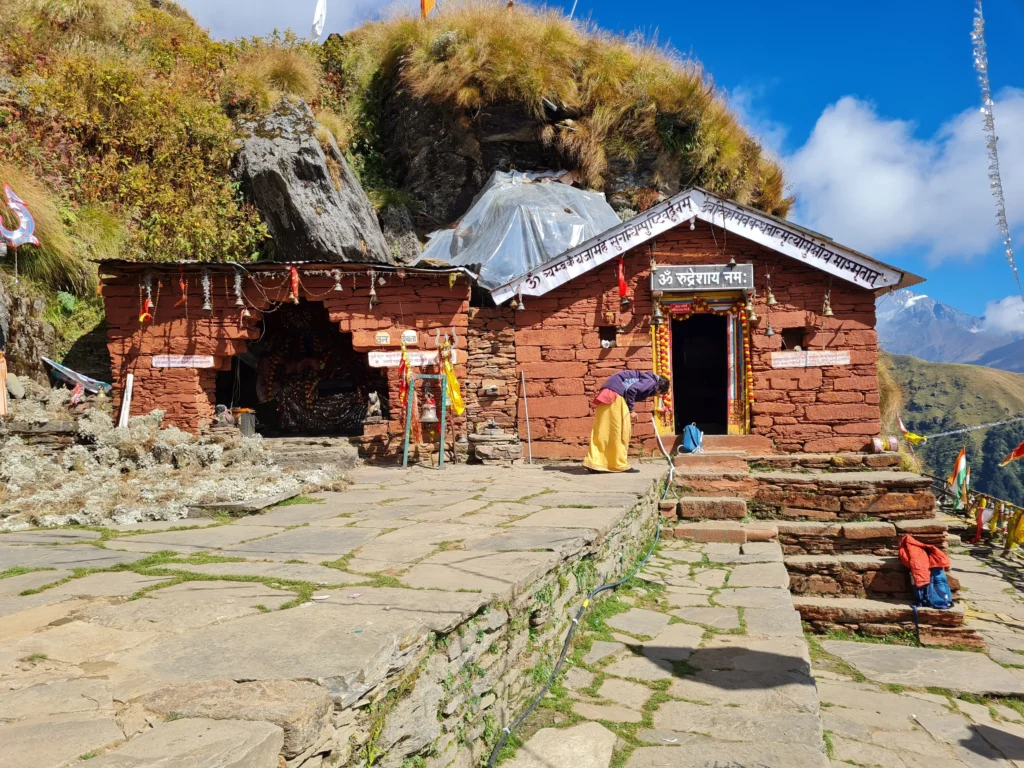
Nestled at an altitude of approximately 3,600 metres (11,811 feet) in the Chamoli district of Uttarakhand, the Rudranath Temple is one of the most revered and challenging shrines in the Panch Kedar pilgrimage circuit. Dedicated to Lord Shiva, this ancient temple holds a unique distinction among the five Kedars—it is the place where the face (mukha) of Lord Shiva is worshipped in the form of Neelkantha.
The name “Rudranath” derives from two Sanskrit words: “Rudra” meaning “the angry one” (a form of Shiva) and “Nath” meaning “lord”. Unlike the grand, constructed temples of Kedarnath or Badrinath, Rudranath is a natural rock temple nestled within a dense forest of rhododendron dwarfs and alpine pastures.
What makes Rudranath truly extraordinary is its location. The temple is situated within the Kedarnath Wildlife Sanctuary, a protected area known for its rich biodiversity of over 1,100 plant species, 240 bird species, and endangered mammals including the Himalayan musk deer and snow leopard. The trek passes through some of the most pristine forests and alpine meadows in the Garhwal Himalayas, offering breathtaking views of Nanda Devi, Trishul, and Nanda Ghunti peaks.
The temple itself is unlike any other Shiva shrine. The deity is a natural rock formation resembling a face—a Swayam Bhu (self-manifested) idol of Lord Shiva’s face, measuring about 3 feet. Every evening, during the elaborate worship, the golden coverings are removed from the face to give a brief glimpse of this rarely-sighted aspect of Shiva—a unique ritual found nowhere else.
Whether you are a devout pilgrim seeking to complete the Panch Kedar circuit, a trekker drawn to the challenge of the most remote Kedar, a nature lover wanting to explore the Kedarnath Wildlife Sanctuary, or a spiritual seeker wanting to witness the unique face of Shiva, Rudranath Temple promises an experience that is both profoundly challenging and spiritually transformative.
Key Information at a Glance:
History and Mythology: The Legend of Shiva’s Hidden Face
The Panch Kedar Legend
The most profound legend associated with Rudranath Temple is deeply rooted in the Mahabharata and the Panch Kedar mythology.
After the bloody Kurukshetra war, the five Pandava brothers were burdened by the sin of “Gotra Hatya” (killing of their own kinsmen) and “Brahmahatya” (killing of Brahmins). Seeking atonement, they renounced their kingdom and set out in search of Lord Shiva to seek his blessings.
However, Lord Shiva, still incensed by the death and dishonesty of the war, was unwilling to meet them easily. He assumed the form of a bull (Nandi) and hid in the Garhwal region.
Not finding Shiva in Varanasi, the Pandavas went to the Garhwal Himalayas. Bhima, the second Pandava brother, stood astride two mountains and spotted a bull grazing near Guptakashi (“hidden Kashi”—named after Shiva’s hiding act). Bhima immediately recognised the bull as Shiva and caught hold of it by its tail and hind legs.
But the bull-formed Shiva disappeared into the ground, reappearing in five different parts across the Garhwal Himalayas :
| Temple | Body Part | Location |
|---|---|---|
| Kedarnath | Hump | Kedarnath |
| Tungnath | Arms | Near Chopta |
| Rudranath | Face | Near Gopeshwar |
| Madhyamaheshwar | Navel and stomach | Near Ukhimath |
| Kalpeshwar | Hair (matted locks) | Urgam Valley |
The Pandavas, pleased with this reappearance, built temples at these five locations to venerate and worship Lord Shiva. The Rudranath Temple was built on the spot where the face (mukha) of Lord Shiva was discovered.
The Swayam Bhu Idol – The Self-Manifested Face
The deity at Rudranath is said to be Swayam Bhu (self-manifested)—an idol that appeared by itself in the form of a Shivalinga with a face, measuring about 3 feet.
There is a natural ledge overhanging the face of Shiva from which droplets of water fall perennially. The large, half-open eyes of the deity are kept covered with larger golden coverings. The enormous upturned golden moustaches transform this face into a terrifying, angry form—reflecting the name “Rudra”.
Every evening, in elaborate worship, the mask is removed from the face of Shiva to give a brief glimpse of a rarely-sighted aspect of Shiva. This is the only temple of Shiva where his face is the symbol.
The Vaitarni River – The River of Salvation
Near the temple flows the holy river Vaitarani (or Baitarani, also called Rudraganga). This river is identified with the “river of salvation,” where souls of the dead cross to reach the other world.
Devotees visit Rudranath to perform rituals of the dead, such as offering pind (pinda-daan). It is believed that offering a pind to ancestors here equals offering a hundred million at the holy city of Gaya.
The Sacred Kunds
The temple is surrounded by a number of sacred pools :
| Kund | Significance |
|---|---|
| Surya Kund | Sacred bathing pond |
| Chandra Kund | Sacred bathing pond |
| Tara Kund | Sacred bathing pond |
| Manas Kund | Sacred bathing pond |
| Narad Kund | Devotees bathe here prior to visiting the temple |
Devotees generally take a bath in the Narad Kund before entering the temple for darshan.
The Legend of the Ancient Swords
At Nandikund (2,439 metres) on the trekking route to Rudranath, devotees worship old historic swords protruding from the rocks, believed to be those of the Pandavas.
The Doli Yatra and Winter Tradition
During the harsh winter months (November–April), when the temple is closed due to heavy snowfall, a symbolic image of Shiva is brought from Rudranath to Gopinath Mandir in Gopeshwar for worship .
The Doli Yatra starts from Gopeshwar via Sagar. The Doli Yatris cross Lyuti Bugyal and Panar and finally reach Pitradhar, where the worship of ancestors is performed. Then, after crossing Dhalabni Maidan, the Doli reaches Rudranath.
The temple opens every year in the month of April/May and closes in the middle of November. The exact opening dates are announced by the Badrinath Kedarnath Temple Committee (BKTC) based on the Hindu calendar.
The Vandevi Protectors
Before entering the main temple, the Vandevi is worshipped first. The local belief is that Vandevi (the forest deity) protects the area .
Temple Architecture and Features
Natural Rock Temple
Unlike the constructed temples of Kedarnath or Badrinath, the Rudranath Temple is a natural rock temple nestled within a dense forest of rhododendron dwarfs and alpine pastures. The structure blends seamlessly with its dramatic natural surroundings.
| Feature | Description |
|---|---|
| Architectural Style | North Indian Himalayan architecture |
| Construction Material | Natural rock |
| Creator (Legend) | Pandavas |
| Setting | Dense rhododendron forest, alpine pastures |
The Deity: Lord Shiva’s Face
The sanctum houses a unique natural rock formation resembling a face—a Swayam Bhu (self-manifested) idol of Lord Shiva, measuring about 3 feet.
| Feature | Description |
|---|---|
| Form | Face (mukha) of Shiva, not a lingam |
| Name | Neelkantha Mahadeva |
| Nature | Swayam Bhu (self-manifested) |
| Distinctive Feature | Enormous upturned golden moustaches; half-open eyes kept covered |
Other Idols in the Temple
The temple also possesses idols of :
- Draupadi – The common wife of the Pandavas
- Kunti – Mother of the Pandavas
- The Pandavas – The five brothers
The Natural Ledge and Perennial Water Drops
There is a natural ledge overhanging the face of Shiva from which droplets of water fall perennially onto the deity . This natural phenomenon is considered highly auspicious.
The Annual Fair (Rakshabandhan)
The temple celebrates an annual fair on the full moon day in the Hindu month of Sravan (July–August) , which mostly coincides with the day of Rakshabandhan. The fair is attended mainly by locals.
| Festival | Time | Highlights |
|---|---|---|
| Annual Fair | July–August (Sravan Purnima/Rakshabandhan) | Local devotees gather, traditional celebrations |
The Priests of Rudranath
The priests at the Rudranath temple are Bhatts and Tiwaris of Gopeshwar.
The Rudranath Trek: Complete Guide
Why Rudranath is the Most Challenging Panch Kedar
Rudranath is considered the toughest temple to reach among the five Panch Kedar shrines. Unlike Kedarnath, which has pony and helicopter services, or Tungnath, which has a well-defined 3.5 km path from Chopta, Rudranath requires a 2-day trek through remote forests and alpine meadows with no motorable road access.
Trek Overview
Day-by-Day Trek Itinerary
Day 1: Sagar Village to Lyuti Bugyal (10–12 km)
| Aspect | Details |
|---|---|
| Starting Point | Sagar Village (1,600 m) |
| Trek Distance | 10–12 km |
| Trek Duration | 5–6 hours |
| Overnight | Lyuti Bugyal (~2,800 m) |
Route Details:
- The trail begins at Sagar Village, which is approximately 5 km from Gopeshwar
- The path climbs gradually through a beautiful forest of oak, rhododendron, and burans trees
- After about 4–5 km, you reach Panar Bugyal—a wide open alpine meadow with stunning views of the surrounding Himalayan peaks
- Continue through the meadow to reach Lyuti Bugyal, your first night’s campsite
Facilities: A forest rest house and some basic shelters are available here during the trekking season.
Day 2: Lyuti Bugyal to Rudranath Temple (8–10 km)
| Aspect | Details |
|---|---|
| Trek Distance | 8–10 km |
| Trek Duration | 5–6 hours |
| Altitude Gain | ~2,800 m → 3,600 m |
| Overnight | Rudranath (camp/basic shelter) |
Route Details:
- This is the most exciting and challenging day of the trek
- The trail climbs steadily through Pitradhar ridge at around 3,300 metres
- On a clear morning, the panoramic views of Nanda Devi, Trishul, Kedarnath, and Chaukhamba peaks are absolutely breathtaking
- You reach Rudranath Temple by mid-morning if you start early
Activities at Rudranath:
- Attend the morning aarti
- Take a dip in the holy Vaitarni Kund
- Worship the unique face of Lord Shiva
- Spend the rest of the day soaking in the peace of this ancient place
Alternative Route: Those completing the full Panch Kedar circuit can descend via Dumak Village to reach the Urgam Valley and proceed to Kalpeshwar Temple—the 5th Kedar .
Day 3: Rudranath Temple back to Sagar Village (18–20 km)
| Aspect | Details |
|---|---|
| Trek Distance | 18–20 km |
| Trek Duration | 6–7 hours |
Most pilgrims descend the same way they came, reaching Sagar Village in a single long day.
Trek Distance Summary Table
Alternative Trek Route from Urgam Valley
The trek to Rudranath can also be commenced from Helang or Urgam village in the Urgam Valley. This route allows pilgrims to combine Rudranath with Kalpeshwar Temple (the 5th Kedar).
Trekking Tips
Permits and Regulations
The trek lies within the Kedarnath Wildlife Sanctuary, which has strict conservation rules :
| Regulation | Details |
|---|---|
| Plastic Waste Deposit | ₹100 per plastic item; refunded on exit by showing wrappers |
| Conservation Zone | Part of Kedar Wildlife Sanctuary |
| Seasonal Access | Open only May–October |
How to Reach Rudranath Temple
By Air
Nearest Airport: Jolly Grant Airport, Dehradun
| Details | Information |
|---|---|
| Distance | ~258 km to Gopeshwar |
| Travel Time | 9–10 hours by taxi |
| Airlines | Regular flights from Delhi to Dehradun (approx. 1 hour) |
| Onward Travel | Taxis available from the airport to Gopeshwar |
From the airport, you can hire a taxi to Gopeshwar (approximately 258 km) .
By Train
Nearest Railway Station: Rishikesh
| Details | Information |
|---|---|
| Distance | ~241 km to Gopeshwar |
| Travel Time | 7–8 hours by taxi |
| Connectivity | Well-connected from Delhi |
Alternative Station: Haridwar (similar distance)
Popular Trains from Delhi to Rishikesh/Haridwar:
| Train Name | From Delhi | Departure | Arrival | Destination |
|---|---|---|---|---|
| Shatabdi Express | Delhi | 6:00 AM | 11:40 AM | Haridwar |
| Jan Shatabdi | Delhi | 3:20 PM | 9:00 PM | Haridwar |
| Mussoorie Express | Delhi | 10:05 PM | 5:30 AM | Haridwar |
From the railway station, hire a taxi or take a bus to Gopeshwar.
By Road to Gopeshwar
Road Conditions: The route is scenic but winding, following the Alaknanda River through the Garhwal Himalayas.
From Gopeshwar to Sagar Village (Trek Start)
From Sagar Village, the trek to Rudranath Temple begins.
From Delhi: Step-by-Step Travel Plan
| Step | Segment | Mode | Time |
|---|---|---|---|
| 1 | Delhi → Rishikesh/Haridwar | Train/Bus | 5–7 hours |
| 2 | Rishikesh/Haridwar → Gopeshwar | Taxi/Bus | 7–8 hours |
| 3 | Gopeshwar → Sagar Village | Taxi | 15–20 minutes |
| 4 | Sagar Village → Rudranath Temple | Trek | 2 days |
Distances from Major Cities
| City | Distance (km) |
|---|---|
| Delhi | 475–520 |
| Dehradun | ~258 |
| Rishikesh | ~241 |
| Haridwar | ~260 |
| Gopeshwar | 0 (base town) |
| Sagar Village | 5 km from Gopeshwar |
| Rudranath Temple | ~20 km (trek) from Sagar |
Weather and Best Time to Visit
Climate Overview
Rudranath Temple experiences a harsh high-altitude alpine climate. The temple remains open only from May to October and is closed during winter due to heavy snowfall.
Month-by-Month Guide
| Month | Season | Day Temp (°C) | Night Temp (°C) | Conditions | Suitability |
|---|---|---|---|---|---|
| April | Spring | 5–12 | -5–2 | Snow melting, trails opening | ❌ Temple closed |
| May | Summer | 5–15 | 0–5 | Pleasant, rhododendrons in bloom | ⭐ Best |
| June | Summer | 5–15 | 0–5 | Pleasant, clear skies | ⭐ Best |
| July | Monsoon | 10–15 | 5–10 | Heavy rain, landslides, leeches | ⚠️ Experienced only |
| August | Monsoon | 10–15 | 5–10 | Heavy rain, landslides | ⚠️ Experienced only |
| September | Autumn | 5–10 | 0–5 | Post-monsoon, clearing | ⭐ Best |
| October | Autumn | 0–10 | -5–0 | Crisp, clear, closing soon | ⭐ Good |
| November–April | Winter | -5–10 | -15–-5 | Heavy snow, temple closed | ❌ Closed |
Best Time to Visit by Season
Why Visit in Summer (May–June)
This is the most popular time to visit Rudranath Temple :
- The temple opens in May (usually between the 1st and 15th) with grand opening ceremonies
- Pleasant weather with temperatures ranging from 5°C to 15°C
- Rhododendron forests are in full bloom, painting the trail in vivid reds and pinks
- Best visibility for mountain views: Nanda Devi, Trishul, and Chaukhamba peaks
- Comfortable trekking temperatures with long daylight hours
- Bugyals (alpine meadows) are lush, green, and covered with Himalayan wildflowers
Verdict: Best overall time for first-time pilgrims and trekkers.
Why Visit in Autumn (September–October)
Autumn is the second-best time to visit :
- Post-monsoon skies clear up dramatically, offering crystal-clear mountain panoramas
- Crisp, cool air and brilliantly clear visibility for mountain photography
- Trails dry out progressively as the monsoon recedes in September
- October brings golden-hued forests—a spectacular autumn colour display
- Temple closes by mid-November, so October is the last comfortable window
Verdict: Ideal for photographers, nature lovers, and those avoiding peak-season crowds.
Why Avoid Monsoon (July–August)
The monsoon months are not recommended for most visitors due to :
- High risk of landslides, slippery trails, and flash floods
- Leeches are common in the lower forest sections of the trek
- Not recommended for solo trekkers or those without prior monsoon trekking experience
Verdict: Suitable only for experienced, well-equipped trekkers. Avoid if this is your first Himalayan trek.
Winter Closure (November–April)
The temple remains closed during winter due to heavy snowfall :
- The entire region receives heavy snowfall, making the trek dangerous and largely inaccessible
- Lord Shiva’s idol is ceremonially moved to the Gopinath Temple in Gopeshwar during this period
- Do not attempt the Rudranath trek between November and April without expert guidance and technical mountaineering equipment
Best Time of Day for Trek
Flora and Fauna: Kedarnath Wildlife Sanctuary
Protected Area Status
The Rudranath trek lies within the Kedarnath Wildlife Sanctuary (also known as the Kedarnath Musk Deer Sanctuary), one of the largest protected areas in the western Himalayas.
Forests and Vegetation
The sanctuary boasts varied climatic zones—sub-tropical, temperate, and alpine—resulting in diverse flora :
| Vegetation Type | Dominant Species |
|---|---|
| Temperate Forests | Oak, Pine, Rhododendron, Birch |
| Coniferous Forests | Deodar, Fir, Spruce |
| Alpine Meadows | Grasses, wildflowers, bugyals |
The trek from Sagar to Rudranath passes through dense forests of oak, rhododendron, and buran trees. The rhododendron forests are especially spectacular in spring when the hillsides burst into vibrant red and pink blooms.
Endangered Medicinal Plants
The sanctuary is home to 22 species of rare and endangered medicinal plants :
| Species | Scientific Name |
|---|---|
| Angelica | Angelica glauca |
| Aconite | Aconitum balfourii |
| Arnebia | Arnebia benthamii |
| Himalayan Orchid | Dactylorhiza hatagirea |
| Bergenia | Bergenia stracheyi |
Wildlife
Birds
The sanctuary is home to a variety of Himalayan bird species :
Reptiles and Fish
| Category | Species |
|---|---|
| Reptiles | Himalayan pit viper, Boulenger’s keelback |
| Fish | Schizothorax (snow trout), mahseer (Tor tor), Barilius, Garra |
Nearby Places to Visit
| Destination | Distance | Highlights |
|---|---|---|
| Gopeshwar | 5 km from Sagar | Gopinath Temple, ancient stone temple, the winter abode of the Rudranath deity |
| Kalpeshwar Temple | Via Urgam Valley | 5th Panch Kedar, open year-round, hair of Lord Shiva |
| Madhyamaheshwar Temple | Trek route | 3rd Panch Kedar, navel of Lord Shiva |
| Kedarnath Temple | ~100 km | 1st Panch Kedar, Jyotirlinga |
| Tungnath Temple | ~90 km | Gopinath Temple, an ancient stone temple, the winter abode of the Rudranath deity |
| Chopta | ~80 km | “Mini Switzerland of India,” meadows, trekking base |
| Auli | ~70 km | Skiing, ropeway, Himalayan views |
| Joshimath | ~65 km | Narasimha Temple, Shankaracharya Math |
| Badrinath Temple | ~100 km | Char Dham temple |
| Valley of Flowers | ~120 km | UNESCO site, 600+ flower species |
Gopeshwar – The Base Town
Gopeshwar is the nearest town to Rudranath and the base for the trek. Key attractions include:
- Gopinath Temple – An ancient stone temple dedicated to Lord Shiva; this is where the deity of Rudranath is moved during the winter months
- The temple is known for its unique architecture and a massive iron trident (trishul) fixed on its roof
Kalpeshwar – The 5th Panch Kedar
Kalpeshwar is the only Panch Kedar temple that remains open throughout the year. Located in the picturesque Urgam Valley, it is dedicated to Lord Shiva’s hair (matted locks). The temple can be reached via a short trek from Helang village and is often combined with Rudranath for pilgrims completing the full Panch Kedar circuit.
Chopta – The Mini Switzerland of India
Chopta is a picturesque hill station known for its lush meadows, trekking trails, and panoramic Himalayan views. It serves as a base for treks to Tungnath Temple (the highest Shiva temple in the world) and Chandrashila Peak.
Accommodation Options
In Gopeshwar (Base Town)
| Category | Price Range (per night) | Examples | Features |
|---|---|---|---|
| Mid-Range Hotels | ₹2,000–4,000 | Various hotels | Comfortable rooms, hot water |
| Budget Hotels | ₹800–1,800 | Local guesthouses | Basic amenities |
| GMVN Guest House | ₹700–2,500 | Government-run | Reliable, basic |
On the Trek
In Sagar Village (Trek Start)
| Accommodation Type | Features |
|---|---|
| Basic Guesthouses | Limited options, simple facilities |
| Homestays | Authentic Garhwali experience |
Booking Tips
- Book well in advance for peak season (May–June, September–October)
- Gopeshwar is the recommended base for starting the Rudranath trek
- For camping on the trek, most visitors arrange through trek operators or bring their own gear
- Carry cash—card facilities are limited in Gopeshwar and non-existent on the trek
Packing List for Rudranath Trek
Clothing (Layering System)
| Layer | Items | Quantity |
|---|---|---|
| Base Layer | Thermal innerwear (top & bottom) | 2 sets |
| Mid Layer | Fleece jacket, woollen sweater | 1–2 each |
| Outer Layer | Down jacket, waterproof windcheater | 1 each |
| Bottoms | Trekking pants (quick-dry) | 2 pairs |
| Head | Woollen cap, sun hat | 1 each |
| Hands | Waterproof gloves | 2 pairs |
| Feet | Woollen socks | 4–5 pairs |
Footwear
- Trekking shoes: Sturdy, waterproof, high ankle support, broken-in
- Camp shoes: Sandals or floaters for evening
Gear and Accessories
| Category | Items |
|---|---|
| Backpack | 20–30 litres |
| Daypack | 20–30 liters |
| Trekking Poles | Essential for steep sections |
| Headlamp/Torch | With extra batteries |
| Water Bottles | 2 litres capacity |
| Water Purification | Tablets or filter |
| Sunglasses | UV protection |
| Rain Protection | Poncho or raincoat |
Health and Hygiene
| Category | Items |
|---|---|
| First Aid | Wet wipes, hand sanitiser, toilet paper |
| Medications | Personal prescription medicines, Diamox (consult doctor) |
| Hygiene | Wet wipes, hand sanitizer, toilet paper |
| Sun Protection | Sunscreen (SPF 50+), lip balm |
Documents and Other Essentials
- Valid ID proof (Aadhaar/Passport)
- Trek permits (arranged by operator)
- Travel insurance
- Cash (no ATMs on the trek)
- Power bank
- Camera with extra batteries
- Energy bars, dry fruits, ORS packets
Travel Tips and Important Information
Before You Go
- Physical Fitness: Rudranath is the toughest of the Panch Kedar treks. Prepare with regular walking, jogging, and stair climbing for 4–6 weeks before.
- Medical Check-up: Consult your doctor before undertaking high-altitude trekking, especially if you have heart or respiratory conditions.
- Check Temple Opening Dates: The temple opens in May and closes in November. Exact dates are announced by BKTC based on the Hindu calendar .
- Carry Cash: ATMs are limited in Gopeshwar and non-existent on the trek; bring sufficient cash.
- Book Through Registered Operators: The trek requires permits and local knowledge. Book through registered tour operators.
- Plastic Waste Deposit: The Kedar Wildlife Sanctuary charges ₹100 per plastic item (deposit refunded on exit).
During the Trek
- Acclimatise: Spend a night in Gopeshwar before starting the trek.
- Stay Hydrated: Drink plenty of water to prevent altitude sickness.
- Dress in Layers: Temperatures can change rapidly; layers allow adjustment.
- Start Early: Begin each day’s trek by 6:00–7:00 AM to complete before afternoon weather changes.
- Hire a Local Guide: The trail is remote and can be confusing; local guides are available in Gopeshwar/Sagar.
- Respect the Environment: Carry back all waste—the area is a protected wildlife sanctuary.
Safety Tips
- Altitude Awareness: Above 3,000 m, altitude sickness is possible. Stay hydrated, walk slowly, and descend if symptoms worsen.
- Monsoon Travel: Avoid July–August due to landslide risk.
- Winter Closure: Do not attempt the trek between November and April without expert guidance.
- Wildlife: The area is part of a wildlife sanctuary; do not feed animals.
- Trek in Groups: The trail is remote; solo trekking is not recommended.
What to Expect at the Temple
Photography Tips
- Best Spots: The unique face of Lord Shiva (ask permission), Vaitarni Kund, Panar Bugyal, Lyuti Bugyal, views of Nanda Devi and Trishul
- Best Time: Morning for soft light; golden hour for mountain views
- Note: Ask permission before photographing inside the sanctum
Frequently Asked Questions (FAQs)
Q1: What is Rudranath Temple famous for?
A: Rudranath Temple is famous for being the place where the face (mukha) of Lord Shiva is worshipped. It is the fourth temple in the Panch Kedar circuit and is considered the toughest to reach among the five Kedars .
Q2: What is the altitude of Rudranath Temple?
A: Rudranath Temple is situated at an altitude of approximately 3,600 metres (11,811 feet) above sea level.
Q3: What is the best time to visit Rudranath Temple?
A: The best time to visit is May to June (summer) and September to October (autumn). The temple remains closed from November to April due to heavy snowfall.
Q4: How difficult is the Rudranath trek?
A: The trek is considered moderate to difficult and is the toughest among all Panch Kedar temples. The total trek distance is approximately 38–40 km round trip, typically completed in 3 days.
Q5: Where does the Rudranath trek start?
A: The most popular trek route starts from Sagar Village, which is approximately 5 km from Gopeshwar.
Q6: What is the trek distance to Rudranath Temple?
A: The one-way trek distance from Sagar Village to Rudranath Temple is approximately 20 km, taking 2 days to reach and 1 day to return.
Q7: How do I reach Rudranath Temple?
A: By road to Gopeshwar (via Rishikesh), then to Sagar Village (5 km), followed by a 2-day trek. The nearest railway station is Rishikesh (~241 km), and the nearest airport is Dehradun (~258 km).
Q8: What is the unique feature of the Rudranath deity?
A: The deity is a natural rock formation resembling a face—a Swayam Bhu (self-manifested) idol of Lord Shiva’s face. Every evening, the mask is removed from the face during worship.
Q9: What is the Vaitarni River?
A: The Vaitarni (also called Baitarani or Rudraganga) flows near the temple. It is identified with the “river of salvation,” where souls of the dead cross to reach the other world. Offering pind here is believed to be equal to offerings at Gaya.
Q10: Is Rudranath Temple open in winter?
A: No, the temple closes in mid-November and reopens in April/May. During winter, the deity is moved to the Gopinath Temple in Gopeshwar for worship.
Q11: What is the annual fair at Rudranath Temple?
A: The temple celebrates an annual fair on the full moon day in Sravan (July–August), which mostly coincides with Rakshabandhan.
Q12: Can I combine Rudranath with Kalpeshwar?
A: Yes, pilgrims completing the full Panch Kedar circuit can descend from Rudranath via Dumak Village to reach the Urgam Valley and proceed to Kalpeshwar Temple (the 5th Kedar).
Q13: Is there a mobile network on the Rudranath trek?
A: Mobile connectivity is very poor or non-existent on the trek. BSNL works in some pockets. Inform family of your travel plans in advance.
Q14: What is the plastic waste deposit?
A: The Kedar Wildlife Sanctuary charges ₹100 per plastic item (deposit). The money is returned on exit by showing wrappers and plastic items brought in.
Q15: What is the distance from Delhi to Rudranath Temple?
A: The distance from Delhi to Gopeshwar is approximately 475–520 km, followed by a 20 km trek from Sagar Village.
Plan Your Rudranath Temple Journey with Discover Uttarakhand
At Discover Uttarakhand, we’ve been organising unforgettable spiritual journeys across Devbhoomi since 1997. As a trusted local operator with deep knowledge of the Garhwal Himalayas and the Panch Kedar circuit, we offer:
- ✅ Rudranath Temple Trek packages (5 to 7 days)
- ✅ Complete Panch Kedar Trek packages (14 to 18 days)
- ✅ Combined itineraries covering Rudranath and Kalpeshwar
- ✅ Permit assistance for the Kedarnath Wildlife Sanctuary
- ✅ Comfortable transport from Rishikesh/Haridwar to Gopeshwar
- ✅ Experienced local guides familiar with the trek
- ✅ Camping equipment (tents, sleeping bags, meals)
- ✅ 24/7 customer support throughout your journey
Recommended Rudranath Temple Packages
| Package | Duration | Starting Point | Highlights |
|---|---|---|---|
| Rudranath Temple Trek | 4 Nights / 5 Days | Rishikesh | Sagar Village, Lyuti Bugyal, Rudranath Temple |
| Panch Kedar Trek (Full Circuit) | 14 Nights / 15 Days | Rishikesh | All 5 Kedars, complete pilgrimage |
| Rudranath & Kalpeshwar Combo | 6 Nights / 7 Days | Rishikesh | Rudranath, Kalpeshwar, Urgam Valley |
Book your Rudranath Temple journey today and witness the sacred face of Lord Shiva in the remote wilderness of the Garhwal Himalayas.
📞 Call / WhatsApp: +91-9997187178, 9760222178, 8171977178
📍 Visit Our Office: Himalayan Colony, opposite DSVV, Haripur Kalan, Haridwar, Motichur Range, Uttarakhand 249411
🌐 Website: www.discover-uttarakhand.com
📧 Email: info@discover-uttarakhand.com
Om Namah Shivaya! Har Har Mahadev! 🙏
Discover Uttarakhand – Your Local Partner for Sacred Himalayan Journeys Since 1997 🏔️