Overview: The Glacier of Resolve
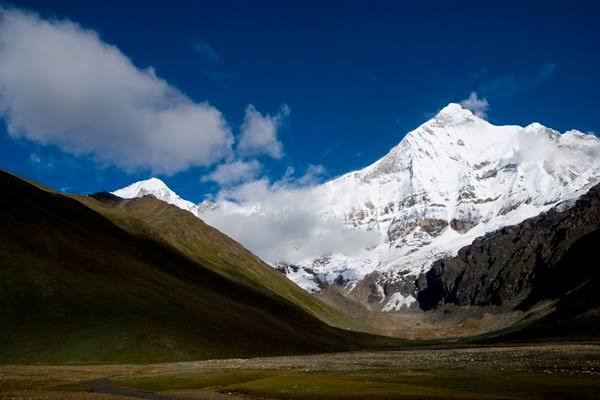
Tucked away in the remote reaches of the Kumaon Himalayas, Sankalpa Glacier—also known as Shunkalpa Glacier or Ralam Glacier—is not just a destination; it is a journey into the heart of the Central Himalaya.
Part of the Goriganga Basin in Pithoragarh District, Uttarakhand, Sankalpa Glacier is one of the largest glaciers in the Central Indian Himalaya, with snout records available since 1886. What makes this glacier truly remarkable is its formation—it is created by the confluence of two mighty glaciers: the Kalabaland Glacier (approximately 10 km long) and the Yankchar Glacier (approximately 9 km long), which merge at an elevation of about 4,280 metres above sea level.
The trek to Sankalpa Glacier, which begins from the picturesque hill town of Munsiyari, is a challenging and adventurous journey through some of the most remote and breathtaking landscapes in the Himalayas. It is a true test of endurance that rewards trekkers with unparalleled views of towering peaks, a profound sense of accomplishment, and a deep connection with the raw, untamed power of the mountains.
Key Information at a Glance
History of Sankalpa Glacier
Scientific Documentation
Sankalpa Glacier holds the distinction of being one of the most well-documented glaciers in the Central Himalaya, with snout records available since 1886. This extensive historical data makes it invaluable for studying glacial retreat patterns and climate change impacts in the region.
Early Expeditions
- 1962 Study: B.S. Jangpangi and C.P. Vohra conducted pioneering research on the retreat of the Shunkalpa (Ralam) Glacier, presenting their findings at the Symposium on Variation of the Regimen of Existing Glaciers in Obergurgl, Austria
- 1977 Expedition: The Kalabaland Glacier region was explored by mountaineers in the summer of 1977, marking early documented expeditions to this remote area
- 1979 First Ascent: The first ascent of Kalabaland Dhura (6,105 m) was achieved on June 6, 1979
Glacial Retreat
Like many Himalayan glaciers, Sankalpa has been experiencing significant retreat:
- The snout receded at a rate of 16 m/year from 1990 to 2016
- Lichenometric evidence suggests that the glacier snout was located at Sankalpa only about sixty years ago
- The retreat has been attributed to climate warming, though detailed monitoring remains limited due to the glacier’s remote location
Geography of Sankalpa Glacier
Location and Topography
Sankalpa Glacier is located in the Pithoragarh District of Uttarakhand, within the Goriganga Basin of the Kumaon Himalaya.
| Feature | Details |
|---|---|
| Coordinates | Approximately between latitudes 30°15’N–30°28’N and longitudes 80°15’E–80°25’E |
| Elevation | 3,720–6,000 m |
| Terrain | Valley glacier surrounded by glaciers, moraines, and towering peaks |
| Key Peaks | Chiring We, Bamba Dhura, Kalabaland Dhura, Rajrambha, Suli Top |
| Glaciers | Kalabaland Glacier, Yankchar Glacier |
| River System | Goriganga River (via Ralam Gad tributary) |
The Shankalpa Divide
The glacier originates from the northwest-southeast trending Shankalpa Divide, which extends for about twenty kilometres from Bamba Dhura to beyond Rajrambha. This divide gives rise to numerous glaciers on both sides:
West Side Glaciers: Kalabaland, Yankchar, Shankalpa, Shivu, Rajrambha
East Side Glaciers: Chiringtashi, Chiring Mabang, Nassa, Damolia, Ghugtan, Jhulang, Nipchukang, Yarkand, Ngalphu
Surrounding Peaks
The Shankalpa Divide features several prominent peaks:
| Peak | Elevation |
|---|---|
| Chiring We | 6,559 m |
| Bamba Dhura | 6,334 m |
| Rajrambha | 6,527 m |
| Suli Top | 6,300 m |
| Sui Tilla | 6,333 m |
| Kalabaland Dhura | 6,105 m |
| Rimla We | 6,242 m |
| Lachar We | 6,291 m |
| Chaudhara | 6,510 m |
Hydrological Significance
The glacier feeds the Goriganga River via the Ralam Gad tributary, which eventually joins the Kali River. The glacier contributes significantly to regional water resources, with summer discharge beginning to rise from May and peaking in July.
Glacial Characteristics
- Surface Velocity: Mean velocity of 22 m/year
- Ice Thickness: Ranges from 15 to 347 metres, with a mean of 109 metres
- Topography: Features multiple icefalls and crevassed sections
- The glacier has gentle slopes in its middle and lower sections with lateral and medial moraines
Flora and Fauna
Flora
The region surrounding Sankalpa Glacier features high-altitude Himalayan vegetation:
- Dense rhododendron forests in the lower reaches
- Bamboo forests along the river valleys
- Alpine meadows (bugyals) at higher elevations
- Limited agriculture in lower settlements with rice and millet fields
Fauna
The area is home to diverse high-altitude wildlife:
Mammals:
- Himalayan Ibex
- Indian Bison (Gaur)
- Takin (Bhutan’s national animal)
- Serow (goat-antelope)
- Goral (small goat-antelope)
- Barking Deer (Muntjac)
- Himalayan Langur
- Red Panda
- Leopard Cat
- Large Indian Civet
Birds:
- Pheasants
- Tragopan (colourful pheasant)
- Flock of Partridges
- Migratory ducks
Conservation Status
The region is ecologically sensitive, with the upper catchment requiring special permits for access due to its proximity to protected areas and international borders.
Religious Beliefs and Significance
The Name “Sankalpa”
The name “Sankalpa” (Sanskrit: सङ्कल्प) carries deep spiritual meaning in Hindu and yogic traditions. It translates to “will,” “intention,” “resolve,” or “determination”.
In Vedic philosophy, Sankalpa represents:
- A one-pointed resolve to focus both psychologically and philosophically on a specific goal
- The creative power (sankalpa-shakti) that allows the divine to manifest forms
- A tool to refine the will and harmonise mind and body
Spiritual Practices
- Before performing any puja, homam, or yagya, practitioners undertake a sankalpa—a formal declaration or intention
- In Yoga Nidra, sankalpa is used as a powerful tool to purify the subconscious and manifest one’s highest purpose
- The Vedas describe Sankalpa as the force that sustains creation
Local Beliefs
The glacier lies in a region traditionally inhabited by Bhotiya communities who have deep spiritual connections to the mountains. The Kumaoni people revere the Himalayan peaks as abodes of deities, with Shiva being particularly significant in the region.
The Goriganga River, fed by Sankalpa Glacier, is considered sacred by locals, and the Ralam Gad tributary holds cultural importance for the villages along its banks.
How to Reach Sankalpa Glacier
The journey to Sankalpa Glacier is a multi-day trek and requires significant physical fitness.
By Air
The nearest airport is Jolly Grant Airport in Dehradun. From there, you can hire a taxi or take a bus to reach Munsiyari (approx. 14–16 hours).
By Train
The nearest railway station is Kathgodam, which is well-connected to Delhi and other major cities. From the station, you can take a taxi or bus to Munsiyari.
By Road
| Route | Distance | Travel Time |
|---|---|---|
| Delhi → Kathgodam | ~280 km | 5–6 hours |
| Kathgodam → Almora → Bageshwar → Munsiyari | ~270 km | 8–9 hours |
| Delhi → Munsiyari | ~550–625 km | 14–16 hours |
The road journey passes through scenic towns like Haldwani, Almora, and Bageshwar.
The Trek
| Segment | Distance | Highlights |
|---|---|---|
| Munsiyari → Lilam | ~12 km | First overnight stop, confluence of Gori Ganga and Ralam Gad |
| Lilam → Pilthi | ~13 km | Forest trails, river views |
| Pilthi → Sapodair (Sapa-Odiyar) | ~8 km | High-altitude camping |
| Sapodair → Ralam Village | ~7 km | Last inhabited settlement before the glacier |
| Ralam Village → Sankalpa Glacier | ~10 km | Glacier approach, moraine crossing |
⚠️ Important: The total trek distance from Munsiyari to Sankalpa Glacier is approximately 40–50 km, taking 8–10 days round trip. The final stretch involves crossing moraines and navigating glacial terrain—the most challenging part of the trek.
Alternative Route for Ralam Dhura Pass
text
Munsiyari → Lilam → Ralam Village → Ralam Glacier → Ralam Dhura Pass
Permits Required
- Inner Line Permit is mandatory for the region
- Trekkers must register with the local forest department before embarking on the trek
- Special permits are required for the upper catchment due to proximity to the international border with Tibet
Best Route from Delhi
- Delhi → Kathgodam (by train or road, ~280 km)
- Kathgodam → Almora → Bageshwar → Munsiyari (by road, ~270 km)
- Munsiyari → Trek to Glacier
Weather and Best Time to Visit
Climate Overview
Sankalpa Glacier experiences a high-altitude alpine climate. Days are cool, but nights can drop well below freezing, even during the open season. Sudden weather changes are common.
Seasonal Breakdown
| Season | Months | Weather | Trekking Suitability |
|---|---|---|---|
| Summer (Peak) | May–June | Pleasant, clear skies, snow melting | ⭐ Best |
| Monsoon | July–August | Heavy rainfall, landslides | ❌ Not Recommended |
| Autumn | September–October | Crisp air, clear views | ⭐ Best |
| Winter | November–April | Heavy snowfall, extreme cold | ❌ Closed |
Best Time to Visit
| Season | Months | Highlights |
|---|---|---|
| Summer | May–June | Pleasant weather, clear views, accessible trails |
| Autumn | September–October | Post-monsoon clarity, crisp air, golden landscapes |
Note: The trek to Sankalpa Glacier is generally open from May to October.
Temperature
- Summer (Day): 10°C to 20°C (at lower elevations)
- Summer (Night): 0°C to 5°C
- Winter: Sub-zero temperatures, often dropping to -10°C or lower
- At Glacier: Temperatures remain near or below freezing year-round
Nearby Places
Other Nearby Attractions:
- Namik Glacier
- Panchachuli Peaks
- Nanda Devi Temple (3 km trek from Munsiyari)
Distance from Major Cities
| City | Distance (Approx.) | Travel Time |
|---|---|---|
| Delhi | 550–625 km | 14–16 hours (by road) |
| Dehradun | 500–550 km | 12–14 hours |
| Rishikesh | 480–520 km | 11–13 hours |
| Haridwar | 470–510 km | 11–12 hours |
| Nainital | ~196 km | 6–7 hours |
| Almora | ~170 km | 5–6 hours |
| Bageshwar | ~96 km | 3–4 hours |
| Pithoragarh | ~120 km | 4–5 hours |
Frequently Asked Questions (FAQs)
General Questions
Q1: What is Sankalpa Glacier also known as?
A: Sankalpa Glacier is also known as Shunkalpa Glacier and Ralam Glacier.
Q2: Where is Sankalpa Glacier located?
A: It is located in the Goriganga Basin, Pithoragarh District, Uttarakhand, in the Kumaon Himalaya.
Q3: How is Sankalpa Glacier formed?
A: It is formed by the confluence of two glaciers—the Kalabaland Glacier (~10 km) and the Yankchar Glacier (~9 km)—at approximately 4,280 metres.
Q4: What is the altitude of Sankalpa Glacier?
A: Confluence point: ~4,280 m; Snout: ~3,720–3,900 m; Accumulation zone: ~6,000 m.
Q5: What is the best time to visit Sankalpa Glacier?
A: The best time is May to June and September to October.
Q6: How long is the trek to Sankalpa Glacier?
A: The trek is approximately 40–50 km from Munsiyari, taking 8–10 days round trip.
Q7: Do I need a permit to visit Sankalpa Glacier?
A: Yes, an Inner Line Permit is mandatory, and trekkers must register with the local forest department.
Q8: Is Sankalpa Glacier retreating?
A: Yes, the glacier has been retreating at a rate of 16 m/year (1990–2016).
Q9: What wildlife can be found in the area?
A: The region is home to Himalayan Ibex, Red Panda, Takin, Serow, Goral, Himalayan Langur, and various pheasant species.
Q10: What is the meaning of “Sankalpa”?
A: In Sanskrit, Sankalpa means “will,” “intention,” “resolve,” or “determination”—a sacred intention declared before spiritual practices.
Q11: What is the nearest town to Sankalpa Glacier?
A: Munsiyari is the nearest town and serves as the base camp for the trek.
Q12: What peaks can I see from Sankalpa Glacier?
A: From Sankalpa Glacier, you can see Chiring We, Bamba Dhura, Kalabaland Dhura, Rajrambha, and Suli Top, among others.
Q13: What is the ice thickness of Sankalpa Glacier?
A: The ice thickness varies between 15 and 347 metres, with a mean of 109 metres.
Q14: Is mobile connectivity available at Sankalpa Glacier?
A: Mobile connectivity is non-existent in this remote region. It is advisable to inform your family of your itinerary before starting the trek.
Q15: Is the trek suitable for beginners?
A: No, this trek is recommended for experienced trekkers with good physical fitness and prior high-altitude trekking experience.
Q16: What is the distance from Delhi to Munsiyari?
A: The distance is approximately 550–625 km by road, taking about 14–16 hours.
Q17: What is the surface velocity of Sankalpa Glacier?
A: The mean surface velocity of the glacier is 22 m/year.
Q18: Can I camp at the glacier?
A: Camping is permitted in designated areas with prior permission from the forest department. Trekkers must follow Leave No Trace principles.
Q19: What should I pack for the Sankalpa Glacier trek?
A: Pack thermal wear, fleece, a down jacket, waterproof trekking shoes, warm socks, gloves, a woolen cap, sunscreen, sunglasses, a headlamp, and a sleeping bag (-10°C rating).
Q20: How many days are required for the Sankalpa Glacier trek?
A: The trek typically takes 8 to 10 days to complete.
Essential Tips for Trekkers
- Acclimatisation: Spend at least 1–2 days in Munsiyari to acclimatise to the altitude
- Physical Fitness: The trek requires good physical fitness and stamina
- Permits: Obtain all necessary permits well in advance
- Guide: Hire an experienced local guide for safety
- Gear: Carry proper high-altitude trekking gear including warm clothing, sturdy boots, and camping equipment
- Weather: Check weather forecasts before starting the trek
- Hydration: Stay well-hydrated; carry water purification tablets
- Leave No Trace: Respect the fragile Himalayan ecosystem
- Insurance: Consider travel insurance covering high-altitude trekking
- Local Assistance: Munsiyari offers good resort accommodations and tour operators
Plan Your Sankalpa Glacier Adventure with Discover Uttarakhand
At Discover Uttarakhand, we’ve been organising unforgettable Himalayan journeys since 1997. As a trusted local operator with deep knowledge of the Kumaon region, we offer:
✅ Customised Sankalpa Glacier trek packages (8 to 10 days)
✅ Combined itineraries with Kalabaland Glacier, Milam Glacier, and Chiring We Peak
✅ Experienced local guides and porters
✅ Comfortable transport with experienced hill drivers
✅ All necessary permits and arrangements
✅ Quality camping equipment and nutritious meals
✅ 24/7 customer support throughout your journey
Recommended Sankalpa Glacier Packages
| Package | Duration | Starting Point | Highlights |
|---|---|---|---|
| Sankalpa Glacier Trek | 8 Days / 7 Nights | Kathgodam | Munsiyari, Ralam Village, Sankalpa Glacier |
| Sankalpa & Kalabaland Trek | 10 Days / 9 Nights | Kathgodam | Both glaciers, moraine walks, peak views |
| Kumaon Glacier Expedition | 10 Days / 9 Nights | Rishikesh | Sankalpa, Kalabaland, Milam glaciers |
📞 Call / WhatsApp: +91-9997187178, 9760222178, 8171977178
📍 Visit Our Office: Himalayan Colony, opposite DSVV, Haripur Kalan, Haridwar, Motichur Range, Uttarakhand 249411
🌐 Website: www.discover-uttarakhand.com
📧 Email: discoveruttarakhand.mail@gmail.com
Plan your expedition to Sankalpa Glacier with proper preparation, permits, and respect for the magnificent Himalayan wilderness. This pristine glacier offers an unforgettable journey into one of India’s most remote and breathtaking landscapes.
Discover Uttarakhand – Your Local Partner for Unforgettable Himalayan Journeys Since 1997 🏔️