Explore the high-altitude wilderness of the Indian Himalayas with Discover Uttarakhand
Imagine standing in the vast, rugged landscapes of the Garhwal Himalayas, watching sunlight move across barren mountain slopes while scanning the rocky ridgelines for signs of one of the world’s most elusive wild cats—the snow leopard.
Nelong Valley in Uttarkashi district, Uttarakhand, is a spectacular high-altitude cold-desert landscape known for its dramatic cliffs, the Jadh Ganga valley, stark mountain scenery and rare Himalayan wildlife. Located within the wider landscape of Gangotri National Park, the region is associated with species such as the snow leopard, Himalayan blue sheep (bharal), musk deer and other high-altitude wildlife.
For wildlife enthusiasts, nature photographers and adventure travellers, Snow Leopard Tours & Expeditions in Nelong Valley, Uttarakhand offer an opportunity to explore a distinctive Himalayan ecosystem. However, this is not a conventional wildlife safari destination: access is restricted, permits and local permissions are essential, and snow leopard sightings cannot be guaranteed.
In this guide, Discover Uttarakhand explains how to plan a Nelong Valley wildlife expedition, the best time to visit, permit considerations, travel routes, photography tips and responsible wildlife practices.
Why Choose Nelong Valley for a Snow Leopard Expedition?
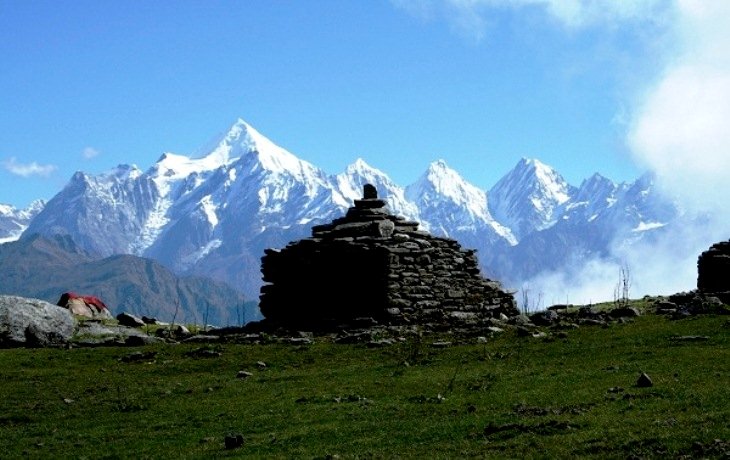
Nelong Valley is often called the “Ladakh of Uttarakhand” because of its barren slopes, rugged mountains and cold-desert appearance. The landscape contrasts sharply with the green forests and river valleys found elsewhere in Uttarakhand.
The valley’s remote terrain and high-altitude ecosystem make it an intriguing destination for travellers interested in Himalayan wildlife and landscape photography.
1. Snow Leopard Habitat
The snow leopard is an elusive mountain predator adapted to rugged, high-altitude environments. It is associated with rocky terrain where prey species such as blue sheep may be found.
Nelong Valley lies within a wider Himalayan landscape known for snow leopard habitat. However, the presence of suitable habitat does not mean that a snow leopard will be visible during a particular visit. Wildlife sightings depend on animal movement, season, weather, visibility and many other factors.
A responsible expedition should focus on learning about the ecosystem and observing wildlife without disturbing it.
2. Himalayan Blue Sheep and Other Wildlife
Blue sheep, also called bharal, are important wild herbivores in high-altitude Himalayan ecosystems. They can sometimes be seen on open slopes and rocky mountain terrain.
The wider Gangotri National Park landscape is also associated with musk deer, Himalayan monal, Himalayan snowcock and other wildlife. The chance of observing any species depends on location, season and prevailing conditions.
3. Cold-Desert Landscapes and Mountain Photography
Nelong Valley’s barren ridges, dramatic gorge formations and distant Himalayan peaks offer excellent opportunities for landscape photography.
Photographers may focus on:
- Mountain ridgelines and dramatic rock formations
- Changing light across the cold-desert terrain
- The Jadh Ganga valley landscape
- Himalayan birds and wildlife, where visible
- Traditional mountain settlements and regional heritage outside restricted areas
4. A Less Conventional Uttarakhand Adventure
Unlike a standard hill-station holiday, a Nelong Valley expedition requires advance planning, flexibility and an understanding of access restrictions.
Travellers should be prepared for cold weather, limited facilities, long road journeys and controlled entry. The experience is best suited to people who value remote landscapes, nature observation and responsible travel rather than guaranteed wildlife encounters.
Where Is Nelong Valley Located?
Nelong Valley is in Uttarkashi district in the Garhwal region of Uttarakhand, close to the India–China border and within the wider Gangotri National Park landscape.
The valley is accessed through the Bhaironghati area on the route toward Gangotri. Uttarkashi is a major administrative and travel base for this part of the region, while Harsil can serve as an accommodation base depending on the itinerary and current access arrangements.
Official destination information is available from the Uttarkashi district administration and Uttarakhand Tourism’s Gangotri National Park guide.
Best Time for Snow Leopard Tours in Nelong Valley
The best time for a Nelong Valley wildlife expedition depends on official access rules, road conditions, weather and the type of experience you want.
There is no guaranteed “snow leopard season” in which sightings are assured. Winter conditions can make wildlife observation challenging, while road access and permits may change according to administrative and weather restrictions.
Spring: Changing Mountain Conditions
Spring brings a transition from winter toward warmer conditions at lower elevations. Snow may remain at higher elevations, and temperatures can vary substantially between daytime and night.
Spring trips should be planned only after confirming that the valley is open to visitors and that the required permissions are available.
Summer: A Period to Explore the Landscape
Summer may offer more manageable road and weather conditions than the coldest part of winter, depending on the year. This can be a suitable period for travellers interested in cold-desert scenery, regional culture and nature photography.
Wildlife sightings remain unpredictable, and the availability of a tour should never be confused with a guarantee of seeing a snow leopard.
Autumn: Clear Light and Dramatic Scenery
Autumn can bring crisp mountain air and striking light across the valley. It may appeal to landscape photographers and travellers looking for remote Himalayan scenery.
Temperatures can fall quickly after sunset, and visitors should confirm the seasonal closure schedule and all access conditions before booking.
Winter: High-Altitude Conditions Require Extra Caution
Winter can bring severe cold, snow and difficult road conditions. Although winter wildlife expeditions are popular in some Himalayan regions, visitors should not assume that Nelong Valley is accessible simply because snow leopard habitat exists there.
Before selecting travel dates, verify current entry rules, winter access arrangements, weather warnings and road conditions with the relevant authorities.
Nelong Valley Snow Leopard Expedition: Permits and Entry Rules
Nelong Valley is a sensitive border-area destination. Access is controlled, and travellers must not assume that a normal tourist permit or hotel reservation automatically authorises entry.
Before confirming a tour, check the following:
- Current entry permission: Confirm the applicable process with the district administration and the relevant forest authorities.
- Identity requirements: Ask which identification documents are accepted for the intended visit.
- Visitor eligibility: Confirm whether any nationality-based or other restrictions apply.
- Transport arrangements: Verify whether entry requires an authorised vehicle or approved local operator.
- Daily entry limits: Ask whether visitor or vehicle quotas apply on your intended date.
- Operating hours: Confirm permitted entry and return times.
- Photography restrictions: Follow all rules concerning military installations, checkpoints, restricted infrastructure and equipment such as drones.
- Weather and road status: Reconfirm conditions shortly before departure.
Official information can be checked through the Uttarkashi district administration and Uttarakhand Tourism.
Requirements can change. Obtain confirmation for your specific travel date rather than relying on an old blog, social media post or previous year’s rules.
How to Reach Nelong Valley, Uttarakhand
Most travellers reach the region by road through Uttarkashi and the Gangotri route. The final approach to the valley is subject to official access arrangements.
By Air
Jolly Grant Airport near Dehradun is a common air gateway for travellers heading toward Uttarkashi. From the airport, a road transfer is required. The journey is long, and actual travel time depends on traffic, weather, road works and stops.
By Train
Haridwar and Dehradun are commonly used railway arrival points for travel toward Uttarkashi. Rishikesh may also be relevant depending on train services and the chosen itinerary.
By Road
A typical approach is:
Dehradun / Haridwar / Rishikesh → Uttarkashi → Harsil or Gangotri route → Bhaironghati → Nelong Valley, subject to authorisation.
The final stretch should be arranged according to current official rules. Do not assume a private vehicle can enter the restricted area.
Recommended Travel Base: Harsil or Uttarkashi
Harsil and Uttarkashi can be useful bases for accommodation and onward travel, depending on the approved expedition plan.
Harsil is known for its mountain scenery and riverside setting. Uttarkashi offers a wider range of travel services and access to administrative offices relevant to the region.
The appropriate overnight stop should be chosen according to the confirmed entry schedule, road conditions and accommodation availability.
Suggested Nelong Valley Wildlife Tour Itinerary
The following is a sample itinerary framework, not a guarantee of entry or a confirmed snow leopard tracking programme. Final arrangements must follow current permissions and the operating schedule.
Day 1: Arrival in Uttarkashi
Arrive in Uttarkashi and check into your accommodation. Review the next day’s plan, verify permits and confirm the current road and weather situation.
Use the evening to organise warm clothing, camera equipment, identification documents and personal essentials.
Day 2: Uttarkashi to Harsil or the Approved Base
Travel toward the Harsil region, subject to road conditions and the approved itinerary.
Enjoy the mountain scenery along the route and rest at the designated accommodation. Your guide or tour coordinator should reconfirm the entry arrangements and departure time.
Day 3: Nelong Valley Excursion, Subject to Permission
Depart early according to the authorised entry schedule.
Explore the permitted landscape with the approved operator and follow instructions from local authorities. The day may include landscape photography, nature observation and scanning suitable terrain for wildlife from permitted locations.
A snow leopard sighting is not guaranteed. The expedition should be considered worthwhile for the landscape and ecological experience even if no large mammals are seen.
Return to the authorised base before the stipulated deadline.
Day 4: Return Journey
After breakfast, begin the return journey toward Uttarkashi, Rishikesh, Haridwar or Dehradun, depending on the package.
Allow sufficient time for mountain-road delays. Avoid booking a tightly timed onward flight or train immediately after the road transfer.
Important: The itinerary must be adjusted to the official entry window, current restrictions and actual travel conditions. Overnight stays inside the restricted valley should never be assumed to be permitted.
Wildlife Photography Tips for Nelong Valley
Nelong Valley’s open slopes and rugged terrain can provide compelling photography opportunities, but wildlife photography requires patience and respect for the animals.
Use Suitable Equipment
A telephoto lens can help photograph distant wildlife without approaching too closely. A wide-angle lens is useful for the dramatic landscape, while spare batteries and memory cards are valuable in remote conditions.
Cold weather can reduce battery performance. Keep spare batteries protected and warm when possible.
Scan the Landscape Patiently
Snow leopards are difficult to detect because their coat blends with rocky terrain. If wildlife observation is permitted, scan ridgelines and rocky slopes slowly rather than expecting animals to appear close to the road.
Follow the guidance of authorised local personnel and never leave permitted areas to pursue an animal.
Avoid Disturbing Wildlife
Do not approach, chase, feed or attempt to attract wild animals. Keep noise low and respect any distance restrictions.
Do not use bait, playback calls or other techniques that may disturb wildlife or violate applicable rules.
Follow Photography Restrictions
The valley is in a sensitive border region. Follow instructions regarding photography, restricted infrastructure, security personnel and electronic equipment. Do not fly drones unless you have explicit legal authorisation and all applicable permissions.
What to Pack for a Nelong Valley Expedition
Conditions can change quickly in high-altitude areas. A practical packing list includes:
- Warm base layers and insulating clothing
- A windproof and waterproof outer layer
- Warm hat, gloves and suitable socks
- Sturdy walking shoes with good grip
- Sunglasses and sun protection
- Personal medicines and any prescribed medication
- Identification documents and required permits
- Camera, telephoto lens, spare batteries and memory cards
- Power bank and charging cables
- Drinking water and personal snacks
- Small daypack
- Cash for locations where digital connectivity may be unreliable
- A basic personal first-aid kit
Pack according to the season and the actual forecast. Ask the operator whether additional equipment is required for the specific excursion.
Safety Guidelines for High-Altitude Travel
Nelong Valley’s altitude and remote setting require sensible preparation.
- Acclimatise appropriately: Do not ignore symptoms that develop at altitude.
- Check medical suitability: Seek medical advice if you have health concerns or are unsure whether high-altitude travel is appropriate.
- Stay hydrated: Drink fluids regularly and avoid overexertion.
- Follow authorised routes: Do not enter closed areas or continue beyond approved boundaries.
- Respect weather warnings: Road access can change quickly during severe weather.
- Carry essentials: Mobile connectivity may be unreliable in remote areas.
- Follow local instructions: Authorities may change access arrangements at short notice.
- Maintain schedule flexibility: Keep time for delays and unexpected changes.
Severe breathlessness, confusion, chest pain or other serious symptoms at altitude require urgent medical assistance.
Responsible Wildlife Tourism in Nelong Valley
Snow leopard expeditions should contribute to awareness of Himalayan ecosystems rather than place additional pressure on wildlife.
Responsible travel means respecting protected-area regulations, minimising disturbance, using authorised operators and following local guidance.
Travellers can support responsible tourism by:
- Never chasing wildlife for photographs
- Avoiding litter and taking waste back out
- Following vehicle and visitor limits
- Respecting local communities and cultural sites
- Avoiding unauthorised off-road driving
- Following restrictions on drones and photography
- Understanding that a wildlife sighting is a privilege, not an entitlement
The broader Gangotri National Park landscape is ecologically important and home to a range of high-altitude species. Protecting its fragile environment is essential for future wildlife observation and sustainable tourism.
Snow Leopard Tour Packages in Nelong Valley with Discover Uttarakhand
Discover Uttarakhand can help travellers discuss a Nelong Valley visit, subject to current permissions and operational feasibility. The proposed experience can be planned around mountain travel, accommodation, local logistics and nature observation.
A tour quotation should clearly specify:
- Pickup and drop-off point
- Travel dates and group size
- Accommodation category and meal plan
- Vehicle and local transfer arrangements
- Permit assistance and what it does or does not cover
- Any guide or authorised operator arrangements
- Included and excluded charges
- Weather-related changes and cancellation terms
Do not book on the assumption that a snow leopard sighting is guaranteed. Any wildlife observation depends on natural conditions.
Enquire About Nelong Valley Expeditions
Discover Uttarakhand
Travel, Hospitality & Destination Management
- Phone: +91-9760222178
- Phone: +91-9997187178
- Phone: +91-8171977178
- Website: Discover Uttarakhand – Best Travel agency in Uttarakhand
Contact Discover Uttarakhand to discuss your intended travel dates, pickup point, group size and preferred accommodation. All itineraries and entry arrangements remain subject to official approval and current conditions.
Frequently Asked Questions About Snow Leopard Tours in Nelong Valley
1. Can tourists see snow leopards in Nelong Valley?
The valley lies within a wider Himalayan landscape associated with snow leopards. However, sightings are rare and cannot be guaranteed. A visit should be planned as a nature and landscape experience rather than a guaranteed wildlife safari.
2. What is the best time for a Nelong Valley snow leopard expedition?
The most appropriate period depends on official access rules, seasonal road conditions, weather and the type of wildlife experience available. Confirm current access before choosing dates; winter access should never be assumed.
3. Do I need a permit to visit Nelong Valley?
Access is controlled because the valley is in a sensitive border area and the wider Gangotri National Park landscape is protected. Confirm the current permit, identification and vehicle requirements with the district administration and relevant forest authorities.
4. Can foreign nationals visit Nelong Valley?
Eligibility restrictions may apply because of the valley’s strategic location. Foreign nationals should obtain explicit confirmation from the relevant authorities before making travel arrangements.
5. Can I drive my own car into Nelong Valley?
Do not assume private vehicles are permitted beyond the designated entry point. Confirm the current vehicle rules and authorised transport arrangements before travelling.
6. Is an overnight stay allowed inside Nelong Valley?
Do not assume overnight stays are permitted in the restricted area. Confirm the current rules and arrange accommodation in an authorised location outside the valley if required.
7. How many days are required for a Nelong Valley tour?
The valley excursion itself may be planned as a day visit when access is authorised. A multi-day trip can allow time for travel from Uttarkashi, an overnight stay in the Harsil region and a more relaxed return journey.
8. Is Nelong Valley suitable for families?
Suitability depends on age, fitness, health, altitude tolerance and the current access arrangements. Families should assess the long road journey, cold conditions and limited facilities before booking.
9. What wildlife can be found in the region?
The wider Gangotri National Park landscape is associated with snow leopard, blue sheep, musk deer, Himalayan monal and Himalayan snowcock, among other species. Sightings depend on location, season and natural conditions.
10. How can I book a Nelong Valley expedition?
Contact Discover Uttarakhand through discover-uttarakhand.com or call +91-9760222178, +91-9997187178 or +91-8171977178 to discuss a proposed itinerary, subject to current access permissions.
Conclusion: Explore the Wild Side of Uttarakhand
Nelong Valley offers a rare perspective on Uttarakhand’s high-altitude cold-desert landscapes and the wider Himalayan ecosystem. Its remote setting, dramatic mountain terrain and association with elusive wildlife make it appealing to nature lovers, photographers and adventure travellers.
The most rewarding expedition is one that respects local rules, prioritises safety and understands that wildlife encounters are unpredictable. Confirm permissions before departure, plan for changing mountain conditions and travel with a responsible approach to the environment.
Plan your Nelong Valley journey with Discover Uttarakhand and experience the landscapes of the Garhwal Himalayas responsibly.