
Introduction: The Sacred Gateway to the Gods
Haridwar, one of the seven holiest cities in India (Sapta Puri), is where spirituality meets natural beauty. Situated on the banks of the sacred River Ganga in Uttarakhand, this ancient city holds immense significance in Hindu culture—it is the precise point where the holy Ganges emerges from the mountains and touches the plains for the first time. Known by various names such as Gangadwara (Gateway of the Ganga), Mayapuri, and Kapilasthana, Haridwar presents a kaleidoscope of Indian culture and civilisation.
The city’s name itself reflects its dual spiritual significance: “Hara” means Lord Shiva and “Dwara” means gateway—making Hardwar the “Gateway to Lord Shiva.” Simultaneously, “Hari” means Lord Vishnu, making Haridwar the “Gateway to Lord Vishnu”. This unique duality makes it the starting point for pilgrimages to both Kedarnath (Shiva’s abode) and Badrinath (Vishnu’s abode), as well as the Char Dham circuit.
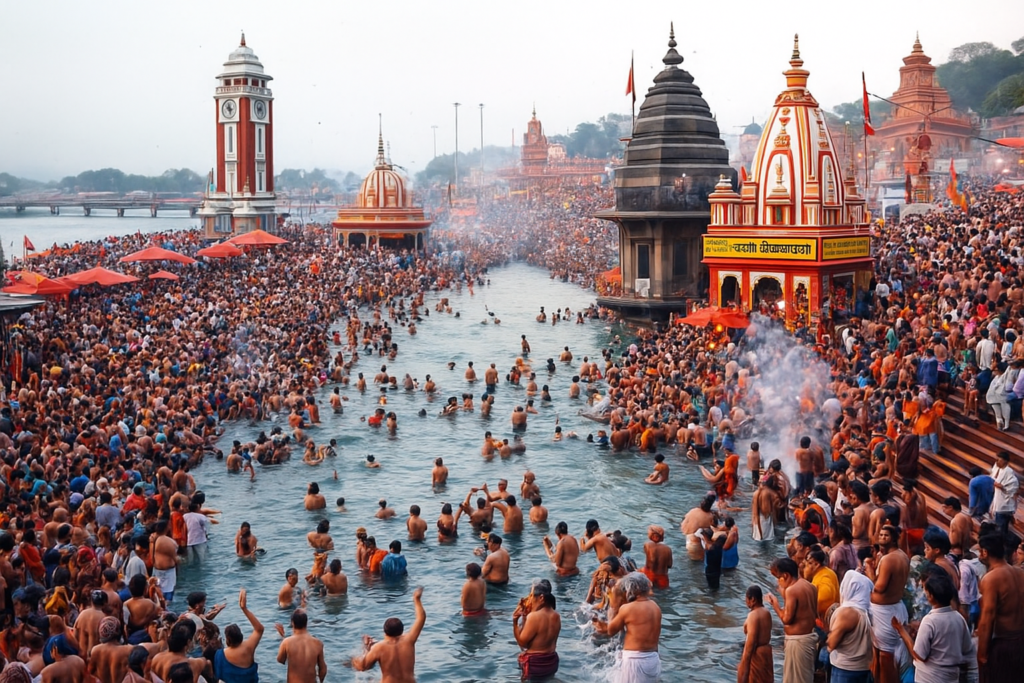
For millennia, millions of devotees have journeyed to Haridwar to bathe in the holy Ganges, believing that a dip in its sacred waters washes away sins and paves the path to salvation (moksha). The city’s spiritual energy culminates in the mesmerising evening Ganga Aarti at Har Ki Pauri, a spectacle that leaves visitors spellbound.
History of Haridwar: A Journey Through Millennia
Ancient Period (1700 BCE – 600 CE)
Archaeological findings have revealed that the terracotta culture, dating between 1700 BCE and 1200 BCE, existed in the Haridwar region, making it one of the oldest continuously inhabited cities in India. The city finds its earliest mention in ancient Hindu scriptures, including the Mahabharata, where it is referred to as Gangadwara—the place where the Ganga rushes past, cleaving the foremost of mountains.
The legendary King Bhagiratha is said to have brought the river Ganga down from heaven through years of penance at this very spot, for the salvation of 60,000 of his ancestors—a tradition continued today by Hindus who bring the ashes of their departed loved ones to Haridwar.
Haridwar came under the rule of the Maurya Empire (322–185 BCE) and later under the Kushan Empire (1st–3rd centuries CE). The first recorded foreign account comes from the Chinese traveller Huan Tsang, who visited India in 629 CE during King Harshavardhan’s reign. He described Haridwar as ‘Mo-yu-lo’ (Mayapur), with a temple north of it called ‘Gangadwara’.
Medieval Period (600 CE – 1700 CE)
According to legend, the sacred ghat of Har Ki Pauri was constructed by King Vikramaditya (1st century BCE) in memory of his brother Bhrithari, who had meditated here and died on the banks of the holy Ganga.
The great philosopher Adi Shankaracharya is believed to have visited Haridwar in the 8th century and established the main statue at Chandi Devi Temple. During his visit, the first Sikh Guru, Guru Nanak (1469-1539), bathed at Kushwan Ghat, where the famous ‘watering the crops’ episode took place. His visit is commemorated by Gurudwara Nanakwara.
The Ain-e-Akbari, written by Abul Fazal in the 16th century during Mughal Emperor Akbar’s reign, refers to Haridwar as Maya (Mayapur) and mentions it as one of the seven sacred cities of Hindus. Akbar himself drank water from the Ganga, which he called ‘the water of immortality’, and had it dispatched to him in sealed jars.
It is said that Raja Man Singh of Amber laid the foundation of the present-day city of Haridwar and renovated the ghats at Har Ki Pauri.
Modern Period (1700 CE – Present)
Haridwar District came into existence on December 28, 1988. Prior to its inclusion in the newly created state of Uttarakhand (then Uttaranchal), this district was a part of the Saharanpur Divisional Commissionery.
Today, Haridwar has evolved beyond its religious importance, developing into a significant industrial hub with SIDCUL (State Industrial Development Corporation of Uttarakhand) and the township of Bharat Heavy Electricals Limited (BHEL).
Geography and Location
Geographic Coordinates
- Latitude: 29°58′ North
- Longitude: 78°10′ East
- Elevation: Approximately 249.7 meters (819 feet) above sea level
- Total District Area: 2,360 sq km
Boundaries
Haridwar District is bounded by:
- West: Saharanpur district (Uttar Pradesh)
- North and East: Dehradun district
- East: Pauri Garhwal district
- South: Muzaffarnagar and Bijnor districts (Uttar Pradesh)
Topography
Located in the southwestern part of Uttarakhand, Haridwar sits at the foothills of the Shivalik range, where the Ganga River emerges from the Himalayas and flows onto the plains. The river Ganga flows through the district in a series of channels separated by wooded islands called aits. Other minor seasonal streams include Ranipur Rao, Pathri Rao, Rawii Rao, Harnaui Rao, and Begam Nadi.
Flora and Fauna: Rajaji National Park
Haridwar District is blessed with significant forest cover, largely protected within the boundaries of Rajaji National Park.
Rajaji National Park
- Established: 1966
- Area: 820 sq km
- Location: Nestled in the Shivalik Hills, accessible through Ranipur and Chilla Gates (about 9 km from Haridwar)
Flora
The park represents diverse ecological zones, including:
Fauna
The park is home to a wide variety of wildlife:
- Mammals: Elephants (herds roaming majestically), tigers, leopards, jungle cat, Himalayan yellow-throated marten, sambar, cheetal, barking deer, wild boar, langur, ghural, sloth bear
- Reptiles: King cobra
- Birds: Numerous species, including woodpeckers; Neel Dhara Pakshi Vihar is a bird sanctuary on the main Ganga at Bhimgoda barrage, attracting migratory birds during winter
The river Ganga itself shelters abundant fish species, supporting local fishing communities and maintaining the river’s ecological balance.
Religious Beliefs and Significance
The Legend of the Amrit (Nectar of Immortality)
According to Hindu mythology, during the Samudra Manthan (churning of the ocean), drops of the nectar of immortality (amrit) fell at four locations: Haridwar, Prayagraj, Ujjain, and Nashik. The spot where the amrit fell at Haridwar is Brahma Kund, located at Har Ki Pauri—considered the most sacred ghat in the city.
Seven Holiest Cities (Sapta Puri)
The Garuda Purana enumerates seven cities that grant moksha (salvation):
Ayodhyā Mathurā Māyā Kāśī Kāñcī Avantikā I
Purī Dvārāvatī caiva saptaitā mokṣadāyikāḥ II
Haridwar (referred to as Māyā) is among these seven sacred cities.
The Myth of Daksha Yagna
King Daksha Prajapati, father of Sati (Lord Shiva’s first wife), performed a yagna at Kankhal to which he deliberately did not invite Shiva. When Sati arrived uninvited and was insulted, she self-immolated in the Yagna Kund (now called Sati Kund). This event led to the establishment of the Shakti Peethas, including Maya Devi Temple, where Sati’s heart and navel are believed to have fallen.
The Legend of Chanda-Munda
According to the Skanda Purana, Chanda and Munda, army chiefs of demon kings Shumbha and Nishumbha, were killed by Goddess Chandi at a location that became known as Chandi Devi Temple.
The Seven Sages (Saptarishi)
Seven great sages—Kashyapa, Vashisht, Atri, Vishwamitra, Jamadagni, Bharadwaja, and Gautam—are said to have meditated at Sapt Rishi Ashram, where Ganga split into seven currents so as not to disturb their penance.
How to Reach Haridwar
By Air
- Nearest Airport: Jolly Grant Airport, Dehradun
- Distance: Approximately 35–40 km from Haridwar
- Connectivity: Regular daily flights from Delhi, Mumbai, and other major Indian cities
- Onward Travel: Taxis and buses are available from the airport to Haridwar
By Train
- Railway Station: Haridwar Junction (station code: HW)
- Connectivity: Direct trains from Delhi, Mumbai, Kolkata, Varanasi, Lucknow, and other major cities
- Travel Time from Delhi: Approximately 4–5 hours
- Popular Trains: Shatabdi Express, Jan Shatabdi, and numerous overnight trains
By Road
- Distance from Delhi: 212–220 km
- Travel Time: 5–6 hours, depending on traffic and road conditions
- Route: Delhi → Ghaziabad → Muradnagar → Muzaffarnagar → Roorkee → Haridwar (via NH 334)
- Bus Services: Regular state transport and private buses from Kashmere Gate ISBT, Delhi
- Taxi Services: Private taxis and cab rentals available from Delhi, Dehradun, and Rishikesh
Distances from Major Cities
| Destination | Distance (km) |
|---|---|
| Delhi | 212 |
| Dehradun | 53 |
| Rishikesh | 20 |
| Roorkee | 31 |
| Mussoorie | 85 |
| Devprayag | 93 |
| Rudraprayag | 160 |
| Joshimath | 274 |
| Badrinath | 316 |
| Kedarnath | 240 |
| Gangotri | 286 |
| Yamunotri | 231 |
| Nainital | 240 |
| Agra | 192 |
Weather and Best Time to Visit
Climate Overview
Haridwar experiences a diverse climate, characterised by hot summers, mild winters, and a monsoon season.
Month-by-Month Temperature Guide
| Month | Min Temperature (°C) | Max Temperature (°C) |
|---|---|---|
| January | 6.4 | 19.3 |
| February | 9.0 | 22.7 |
| March | 12.6 | 28.5 |
| April | 18.0 | 35.0 |
| May | 22.3 | 37.4 |
| June | 25.1 | 35.8 |
| July | 25.3 | 31.5 |
| August | 24.7 | 30.7 |
| September | 22.4 | 30.3 |
| October | 16.3 | 29.3 |
| November | 11.5 | 25.5 |
| December | 7.5 | 21.0 |
Seasonal Breakdown
Winter (October – March): Best Time to Visit
- Temperature: 6.4°C – 28.5°C
- Conditions: Cool and pleasant, ideal for sightseeing and attending the evening Ganga Aarti
- Why Visit: Comfortable weather for temple visits and walks near the ghats
Summer (April – June): Warm to Hot
- Temperature: 18°C – 37.4°C
- Conditions: Hot during the day, especially in May
- Tip: Plan visits for early morning and evening hours
Monsoon (July – September): Heavy Rainfall
- Temperature: 22°C – 31.5°C
- Conditions: High humidity, heavy rains, potential for slippery roads and travel delays
- Caution: River levels rise; bathing should be done with caution
Festival Season Considerations
- Kanwar Mela: July (attracts millions of Shiva devotees)
- Kumbh Mela: Every 12 years (next in Haridwar: 2021, next after that in 2033)
- Ardh Kumbh: Every 6 years (next in Haridwar: 2027)
Top Attractions and Places to Visit
1. Har Ki Pauri – The Spiritual Heart of Haridwar
- Significance: The most sacred ghat where Lord Vishnu is said to have left his footprint
- Ganga Aarti: Evening ceremony (around sunset) with priests chanting, lamps burning, and diyas floating on the river
- Best Time: Arrive at least one hour before sunset for a good viewing spot
2. Mansa Devi Temple
- Location: Bilwa Parvat (top of a hill)
- Deity: Goddess Mansa (wish-fulfilling goddess)
- Access: Ropeway (Udan Khatola) offers panoramic city views
- Timing: 5:00 AM – 9:00 PM
3. Chandi Devi Temple
- Location: Neel Parvat on the banks of the Ganga
- Deity: Goddess Chandi
- History: The main statue was installed by Adi Shankaracharya in the 8th century
- Access: Ropeway or trekking
- Timing: 6:00 AM – 8:00 PM
4. Maya Devi Temple
- Significance: One of the Shakti Peethas—the heart and navel of Goddess Sati fell here
- History: Dates back to the 11th century
- Deity: Goddess Maya, the Adhisthatri deity of Haridwar
5. Daksha Mahadev Temple
- Location: Kankhal town, south of Haridwar
- Significance: Commemorates King Daksha’s yagna and the Sati legend
- Features: Ancient temple with rich mythological importance
6. Bharat Mata Mandir
- Uniqueness: Dedicated to Mother India, not a deity
- Features: Marble map of undivided India
- Timing: 9:00 AM – 5:00 PM
7. Sapt Rishi Ashram & Sapt Sarovar
- Location: Picturesque spot near Haridwar
- Significance: Where the seven sages meditated, Ganga split into seven currents here
8. Shantikunj Ashram
- Significance: Headquarters of the All World Gayatri Pariwar
- Activities: Yoga, meditation, spiritual learning
9. Pawan Dham
10. Doodhadari Temple
Ghats for Holy Bath in Haridwar
Bathing Tips:
- Be cautious of river currents, especially during the monsoon
- Changing rooms available at many ghats
- Avoid bathing at night or in strong currents
Local Cuisine: What to Eat in Haridwar
Haridwar is an entirely vegetarian city, with no meat or eggs served in local restaurants. The food is simple, pure, and deeply flavorful.
Must-Try Street Foods
Traditional Garhwali Dishes
Dining Tips
- Choose busy stalls with fresh preparation
- Drink clean/bottled water
- Avoid uncovered food during hot weather
Shopping in Haridwar
Bara Bazaar
- Famous for: Ayurvedic products, handicrafts, Rudraksha beads
- Best for: Traditional souvenirs and religious items
Moti Bazaar
- Famous for: Ornaments, brass idols, religious souvenirs
- Best for: Traditional jewellery and decorative items
Kankhal Market
Shopping Tips
- Bargain politely in local markets
- Carry cash for small purchases (though cards/UPI accepted at larger shops)
- Avoid following strangers who promise special deals
Nearby Places to Visit
1. Rishikesh – The Yoga Capital of the World
- Distance: 20–25 km
- Travel Time: 45 minutes by road
- Highlights: Laxman Jhula, Ram Jhula, Triveni Ghat, river rafting, yoga centres
2. Dehradun – Capital City
3. Mussoorie – Queen of the Hills
4. Rajaji National Park
5. Neelkanth Mahadev Temple
6. Haridwar Rishikesh Combined Tour
Accommodation Options
Haridwar offers accommodation for every budget:
Booking Tip: Book well in advance during festival seasons (Kanwar Mela, Kumbh Mela) and peak tourist months (October–March).
Travel Tips and Etiquette
Dress Code
- Modest attire required at temples and ghats—cover shoulders and knees
- Remove shoes before entering temples
- Comfortable walking shoes essential for exploring
Safety Tips
- Crowds: Stay with your group and safeguard belongings
- Water safety: Do not drink river water; avoid bathing in strong currents
- Scams: Beware of overpriced guides and puja sellers—agree on prices in advance
- Women travellers: Dress modestly; use reputable transportation after dark
Cultural Etiquette
- Photography: Ask permission before photographing people during rituals
- During aarti: Observe quietly and follow local instructions
- Donations: Welcome but not compulsory
- Alcohol and non-vegetarian food: Prohibited in many areas; respect local norms
Packing Suggestions
- Lightweight modest clothing
- Shawl or scarf for temple visits
- Comfortable walking shoes
- Sunscreen and hat (for summer)
- Water bottle, hand sanitiser
- Portable charger and torch
Frequently Asked Questions (FAQs)
Q1: Why is Haridwar famous?
Haridwar is famous as one of the seven holiest cities in India, known for the Ganga Aarti at Har Ki Pauri, ancient temples, ashrams, and as a Kumbh Mela destination.
Q2: What is the best time to visit Haridwar?
The best time to visit is October to March, when the weather is cool and pleasant for sightseeing.
Q3: How many days are enough for a Haridwar tour?
Two to three days are sufficient to visit major temples, ghats, and attend Ganga Aarti without rushing.
Q4: Is Haridwar safe for tourists?
Yes, Haridwar is safe for families, solo travellers, and senior citizens when basic precautions are followed.
Q5: What should tourists wear in Haridwar?
Tourists should wear modest, comfortable clothing—full-length attire, especially while visiting temples and ghats.
Q6: Can senior citizens visit Haridwar easily?
Yes, Haridwar has good roads, medical facilities, and transport options suitable for senior travellers.
Q7: What is the time of Ganga Aarti in Haridwar?
The evening Ganga Aarti takes place at Har Ki Pauri just after sunset. Arrive early for a good spot.
Q8: Is there a paid entry to bathing ghats?
No, entry to bathing ghats is free.
Q9: Can I take a boat ride on the Ganges?
Yes, boat rides are available from licensed operators—agree on the price in advance.
Q10: Are there ATM facilities available in Haridwar?
Yes, numerous ATMs are available across the city.
Q11: Is alcohol permitted in Haridwar?
Being a holy city, alcohol and non-vegetarian food are prohibited in many areas.
Q12: How far is Haridwar from Delhi?
The distance is approximately 212 km, with a travel time of 4–5 hours by train or 5–6 hours by road.
Q13: Are non-Hindus allowed to visit temples in Haridwar?
Yes, most temples are open to everyone, but modest clothing and respectful behaviour are expected.
Q14: What is the nearest airport to Haridwar?
Jolly Grant Airport, Dehradun, about 35–40 km away.
Q15: Is swimming allowed in the river, Ganga?
Taking a dip is allowed at designated spots, but do not venture deep due to strong undercurrents.
Plan Your Haridwar Tour with Discover Uttarakhand
At Discover Uttarakhand, we’ve been organising spiritual journeys across Devbhoomi since 1997. As a Haridwar-based tour operator, we offer:
- ✅ Customised Haridwar tour packages (1 to 5 days)
- ✅ Combined Haridwar-Rishikesh itineraries
- ✅ Comfortable transport with experienced drivers
- ✅ Verified accommodations near ghats and temples
- ✅ Guided sightseeing with local experts
- ✅ 24/7 customer support throughout your journey
Recommended Tour Packages
Book your Haridwar tour today and experience the divine energy of the Gateway to Gods.
📞 Call / WhatsApp: +91-9997187178, 9760222178, 8171977178
📍 Visit Our Office: Himalayan Colony, opposite DSVV, Haripur Kalan, Haridwar, Motichur Range, Uttarakhand 249411
🌐 Website: www.discover-uttarakhand.com
📧 Email: info@discover-uttarakhand.com
Har Har Gange! 🙏
Discover Uttarakhand – Your Local Partner for Sacred Himalayan Journeys Since 1997