
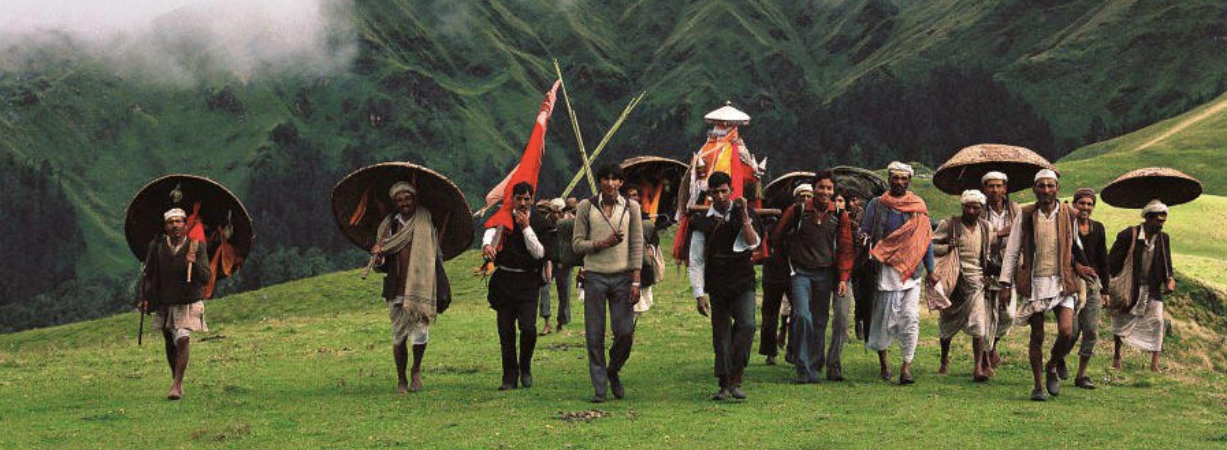
The Himalayan Mahakumbh
Once every 12 years, the remote Garhwal Himalayas come alive with drums, folk songs, and the barefoot footsteps of thousands of devotees. This is the Nanda Devi Raj Jat – a 280‑km royal pilgrimage that has been called the “Himalayan Mahakumbh” . It is the world’s longest religious trek, blending ancient mythology, extreme endurance, and profound faith into a once‑in‑a‑lifetime spiritual event.
In 2026, the goddess Nanda Devi will once again begin her epic 280‑km barefoot journey from her maternal home in Kurur (Nanda Nagar) to unite with Lord Shiva at Homkund, high in the inner Himalayas . For the people of Uttarakhand, it is not merely a festival but the ultimate symbol of devotion, separation and reunion – a chance to escort the daughter of the mountains back to her husband’s abode.
This guide tells you everything you need to know about the Nanda Devi Raj Jat 2026 – its mythology, route, schedule, and how you can witness or participate in this extraordinary pilgrimage.
Key Information at a Glance:
| Aspect | Details |
|---|---|
| Name | Nanda Devi Raj Jat (Himalayan Mahakumbh) |
| Schedule 2026 | 5 September – 30 September |
| Frequency | Once every 12 years |
| Total Distance | 280–290 km (on foot) |
| Traditional Starting Point | Kurur (Nanda Nagar), Chamoli district |
| Ending Point | Homkund (near Roopkund) |
| Altitude Range | 1,200 m to over 4,300 m |
| Route | Kurur → Wan → Bedni Bugyal → Pathar Nachauni → Roopkund → Homkund |
| Unique Feature | Led by a four‑horned ram (Chausingha Meda) |
| Difficulty | Moderate to tough (first‑timers need good preparation) |
History & Mythology: The 900‑Year Legacy
The Legend of King Yashdhaval
The Raj Jat dates back to the 12th century. King Yashdhaval of Kannauj had married Vallabha, the daughter of the ruler of Chandpur (the capital of Garhwal). According to the hymns and folk songs that are still chanted today, the queen showed irreverence toward Goddess Nanda. Enraged, the goddess cursed the kingdom, and it fell into drought, famine and disease .
The royal priests advised the king to undertake a barefoot pilgrimage to Homkund with a four‑horned ram – an animal that would guide the goddess back to her husband’s home. The king, his queen and a large retinue set out, but the trek was filled with tragedy:
- At a cave called Ballawa Swelida, the queen delivered a stillborn child.
- Farther up, at Pathar Nachauni, a blizzard turned all the accompanying dancers into stone – a site whose name literally means “stone dancers” .
- Finally, near the ice‑covered Roopkund Lake, the entire royal family was buried in an avalanche. The lake has remained famous for the human skeletons that are still visible in its waters .
The Royal Consolidation
The tradition was later revived by Raja Ajay Pal of Chand Garh in the 15th century. The duty of conducting the Raj Jat passed to the Kunwars of Kansuwa (the descendants of the royal family) and the Nautiyals of Nauti village, who act as the priests. These families have carried the sacred responsibility for nearly 300 years .
Over time, smaller regional yatras – such as Kurur’s annual yatra, Almora’s yatra and Lata’s yatra – were merged into one grand, 12‑year pilgrimage. The aim was to unify the scattered territories and reinforce the religious identity of the entire Garhwal-Kumaon region .
The 2014 Postponement & 2026 Schedule
The most recent Raj Jat was planned for 2013 but was postponed because of the catastrophic flash floods in Uttarakhand. Eventually, it was held in 2014. The next scheduled yatra is now confirmed for 5 September to 30 September 2026 .
The Four‑Horned Ram: The Divine Escort
The heart of the Raj Jat is the Chausingha Meda – a four‑horned black ram, preferably born around Basant Panchami (January–February) . If such a ram is not born, the yatra cannot take place.
The ram is magnificently decorated with saffron and red cloth, garlands, bangles and ribbons. It is believed to be the carrier of the goddess’s spirit. During the 19‑day journey, the ram leads the procession, and wherever it halts, ceremonies begin . The ram is fed only bread – a holy meal that is also offered to the gods .
At the end of the yatra, near Homkund, the ram is released into the wilderness. According to local belief, after its glory trek, it is never seen again .
The 280‑km Route: From Kurur to Homkund
The Nanda Devi Raj Jat follows a 280‑km route through remote villages, thick forests, alpine meadows, high passes and icy streams. Only about 70 km of the route is motorable; the rest is covered on foot .
Traditional Starting Point: Kurur (Nanda Nagar)
The yatra begins at the Nanda Devi Siddhpith temple in Kurur village (Nanda Nagar), Chamoli district . It proceeds for three weeks, culminating in the final havan at Homkund, near the famous skeletal lake Roopkund.
The yatra uses two traditional pathways:
- Path A (Dasholi route): Kurur → Kumjug → Luntara → Latukhal → Kandai Dasholi → Matai → Wan → Bedni Bugyal → Pathar Nachauni → Bhagwabasa → Roopkund → Shila Samudra → Homkund.
- Path B (Badhan route): Kurur → Ustoli → Bhenti → Bangali → Dungari → Tharali → Nandkesari → Wan.
Both ways meet at Wan, which then continues together towards Homkund .
Major Halts (Samdars)
The Raj Jat has 19 major halts, with altitudes ranging from 1,200 m to over 4,300 m:
| Halting Village | Approx. Altitude | Significance |
|---|---|---|
| Kurur (Nanda Nagar) | 1,300 m | Start point; Siddhpith temple |
| Kansuwa | 1,800 m | Kunwars’ base; ritual ringal chhantoli used here |
| Koti | 2,000 m | Traditional rest point |
| Kulsari | 2,400 m | Scenery of dense rhododendron forests |
| Wan | 2,600 m | Main convergence point of the two routes |
| Bedni Bugyal | 3,354 m | Stunning alpine meadow; annual Nanda Lok Jat ends here |
| Pathar Nachauni | 3,800 m | The “stone dancers” legend; camp with an eerie history |
| Bhagwabasa | 4,100 m | High‑altitude camp; final ascent begins |
| Roopkund | 4,800 m | The “Skeleton Lake”; the royal family perished here |
| Homkund | 4,300 m | Final destination; havan performed; the goddess reunites with Shiva |
Concluding Ceremony
At Homkund, a 18‑km havan kund and 18‑km yagna are performed while the Chausingha Meda is offered 18‑kg packets of jewellery, saffron and sugar. After the ceremony, the ram is set free, while the golden idol of the goddess is brought back to Kansuwa for the next 12 years.
Raj Jat 2026 Schedule and Government Preparations
| Event | Date (Tentative) |
|---|---|
| Start date (Nandastami) | 5 September 2026 |
| End date (Kritika Purnima) | 30 September 2026 |
| Calendar release | Basant Panchami (Spring 2026) |
The Uttarakhand government has already started preparations. In April 2026, a review meeting will be chaired by the Chief Minister to plan infrastructure, medical facilities, road repairs, tented accommodations, drinking water and security along the entire route.
How to Reach the Starting Point
By Air
Nearest Airport: Jolly Grant Airport, Dehradun (DED)
- Delhi → Dehradun → Drive to Kurur (approx. 10–12 hours by taxi)
By Train
Nearest Railway Station: Rishikesh (Yog Nagri Rishikesh Railway Station)
- Delhi → Rishikesh – Shatabdi, Jan Shatabdi, overnight trains
- From Rishikesh: taxi to Kurur (approx. 9–10 hours)
By Road to Kurur (Nanda Nagar)
Kurur (Nanda Nagar) lies in Chamoli district, near Nandprayag:
Road distances:
| City | Distance to Kurur |
|---|---|
| Delhi | 475–500 km (12–14 hours) |
| Haridwar | 270–290 km (8–9 hours) |
| Rishikesh | 260–280 km (8–9 hours) |
| Dehradun | 285–305 km (9–10 hours) |
The route follows the Alaknanda River: Rishikesh → Devprayag → Srinagar → Rudraprayag → Karnaprayag → Nandprayag → Kurur.
Reach the First Trek Point – Wan
From Kurur, the pilgrimage moves on foot towards Wan, the main convergence point. However, the Raj Jat is not open to casual hikers without prior registration. The entire yatra is managed by the organizing committee, Kumayun Mandal Vikas Nigam (KMVN) and the tourism department.
Most visitors opt for the KMVN‑organised observer treks, which allow them to witness the Raj Jat without joining the entire barefoot procession. The observer trek follows the same route but offers camping, guide services and medical support.
Weather and Best Time to Join
| Season | Months | Conditions | Suitability |
|---|---|---|---|
| Monsoon (peak yatra) | September | Heavy rain at lower altitudes; snow begins above 4,000 m; mild daytime temperatures | ⭐ Best for spiritual experience |
| Winter | December–March | Extreme cold, heavy snow; routes closed | ❌ Impossible |
| Summer | May–June | Pleasant, clear skies; great visibility but not the yatra period | ⭐ For scouting only |
The yatra deliberately coincides with the monsoon, because the rains are considered Nanda Devi’s tears as she leaves her father’s home . Days are mild (12–20°C in lower sections), but nights can drop below freezing, especially at camps above 3,500 m. Rain gear and warm layers are essential.
Essential Tips for Participants & Observers
1. Register Through Authorised Channels
- The primary registration is managed by the Kansuwa royal family and KMVN.
- Do not attempt to join the barefoot procession without clearance.
- Observer trek bookings are done one year in advance.
2. Physical Preparation
The yatra involves 280 km on foot over three weeks, often carrying 10–15 kg of supplies. Preparation tips:
- Begin daily walking 4–5 months beforehand (10–15 km/day).
- Practice carrying a loaded rucksack.
- Jogging, stair climbing and yoga improve stamina and flexibility.
3. Medical and Health Advisory
- Visitors with high blood pressure, heart disease, diabetes or severe respiratory problems should first consult a doctor.
- Disclose all health conditions during registration.
- Medical camps are set up at many halts, but hospitals are far away.
4. Packing List
| Category | Items |
|---|---|
| Clothing | Warm jacket, fleece, raincoat, thermal inners, trek pants, woollen cap, gloves, waterproof socks |
| Gear | 40–60 litre backpack, trekking poles, headlamp, power bank, two water bottles, water purification tablets |
| Health | Personal medicines, ORS, bandages, antiseptic, Diamox (after consulting doctor) |
| Documents | Aadhaar/Passport, registered yatra ID card, medical certificate, travel insurance |
5. Respect the Tradition
- Observe the rules. No alcohol or non‑vegetarian food on the yatra.
- Photography of the four‑horned ram and the golden palanquin is restricted – ask before clicking.
- Barefoot sections are not compulsory for observers, but avoid loud behaviour at ritual halts.
6. Hire Guides and Porters
- KMVN provides trained guides and porters for observer treks.
- Local porters are also available at Kurur, Wan and Bedni Bugyal. Bargain upfront.
Nearby Places to Explore
| Destination | Distance from Kurur | Highlights |
|---|---|---|
| Nandprayag | 12–15 km | One of the Panch Prayags; confluence of Alaknanda & Nandakini |
| Karnaprayag | 32–35 km | Confluence of Alaknanda & Pindar rivers |
| Roopkund (Skeleton Lake) | En route | Ice lake with visible human skeletons; high‑altitude trek |
| Bedni Bugyal | Part of yatra | Vast alpine meadow with spectacular Himalayan views |
| Gwaldam | 70–80 km | Scenic hill station; base for Roopkund treks |
| Kausani | 110–120 km | “Switzerland of India”; 300‑km Himalayan panorama |
| Baijnath | 85–95 km | Ancient Parvati temple complex (12th century) |
| Bageshwar | 100–110 km | Religious town at confluence of Saryu & Gomti |
Frequently Asked Questions (FAQs)
Q1: When is Nanda Devi Raj Jat 2026?
A: The yatra will run from 5 September to 30 September 2026.
Q2: Where does it start and end?
A: It starts at the Siddhpith temple in Kurur (Nanda Nagar), Chamoli district, and ends at Homkund, near Roopkund Lake.
Q3: What is the total distance?
A: Approximately 280–290 km, of which 70 km is motorable and the rest is on foot.
Q4: Why is it called the Himalayan Mahakumbh?
A: Like the Kumbh Mela, it attracts thousands of devotees and is held once every 12 years over an immense geographical spread, representing a supreme act of faith.
Q5: What is the significance of the four‑horned ram?
A: The black four‑horned ram is believed to carry the spirit of Goddess Nanda and lead the procession to Homkund. It is mysteriously born in the region before each yatra .
Q6: Can ordinary tourists join the Raj Jat?
A: The barefoot pilgrimage is meant for registered devotees. However, KMVN and the organising committee run observer treks that follow the same route without requiring you to observe all the traditional vows.
Q7: What is the altitude range?
A: Halts range from 1,200 m (Kurur) to over 4,300 m (Homkund). Altitude sickness is a real risk; proper acclimatisation is essential.
Q8: Is the route difficult?
A: Yes. The walk is long, the terrain rugged and the weather unpredictable. Prior trekking experience and good physical fitness are strongly advised.
Q9: Are there accommodation and medical facilities?
A: Villagers open their homes, and the government sets up tented camps at major halts. Medical camps are located at Wan, Bedni Bugyal, Roopkund and Homkund.
Q10: How can I book an observer spot?
A: Bookings open through the Kumaun Mandal Vikas Nigam (KMVN) and the Raj Jat Organising Committee. Due to limited capacity, apply at least one year in advance.
Plan Your Nanda Devi Raj Jat 2026 Journey
The Nanda Devi Raj Jat is not a tour – it is a once‑in‑12‑years invitation to walk in the footsteps of legend. Whether you join as a barefoot pilgrim or as an observer trekker, you will witness a tradition that has remained unchanged for over 900 years.
Key Steps:
- Consult your doctor and assess your physical fitness.
- Register early through KMVN or the organising committee.
- Train – start walking with a loaded backpack at least 3 months prior.
- Pack sensibly – warm layers, rain gear, sturdy boots, medicines and original documents.
- Respect the sacredness – follow the rules, maintain silence at ritual stops, and embrace the spirit of the mountains.
The Nanda Devi Raj Jat 2026 is more than a trek – it is the soul of Uttarakhand manifesting every 12 years. Once you have witnessed the four‑horned ram leading the golden palanquin through misty rhododendron forests, you will understand why the hills call it the “Himalayan Mahakumbh”.
For assistance with observer trek registrations, group size, and local guides:
📞 Call / WhatsApp: +91-9997187178, 9760222178, 8171977178
📍 Visit Our Office: Himalayan Colony, opposite DSVV, Haripur Kalan, Haridwar, Motichur Range, Uttarakhand – 249411
🌐 Website: www.discover-uttarakhand.com
📧 Email: info@discover-uttarakhand.com
Jai Maa Nanda Devi – Jai Himalaya 🙏
Discover Uttarakhand – Your Partner for Sacred Himalayan Journeys Since 1997



Leave a Reply