Introduction: The Prophetic Shrine of the Future
Nestled in the dense forests of the Chamoli district at an altitude of 2,744 metres (9,003 feet), the Bhavishya Badri Temple is one of the most intriguing and spiritually significant shrines in the Sapta Badri circuit of Uttarakhand. Located in the village of Subhain (also spelt Subai), approximately 17 kilometres from Joshimath, this temple is dedicated to Lord Vishnu in his manifestation as Narasimha—the lion-faced, fourth incarnation of the deity.
The name “Bhavishya Badri” translates to “Badrinath of the Future”. According to Hindu prophecy, when the world is plagued by evil and the mountains of Nara and Narayana block the route to the main Badrinath shrine, the deity of Lord Badrinath will relocate to this very temple. Until that time, the temple houses an image of Lord Narasimha—the fierce half-man, half-lion incarnation who vanquished the demon Hiranyakashipu.
What makes Bhavishya Badri truly unique is its location. The approach is through dense deodar and pine forests along the roaring Dhauliganga River, which cuts through perpendicular cliffs hundreds of metres high. The final 3–6 km trek to the temple is an adventure in itself, offering stunning views of the river gorge and opportunities to spot wildflowers and mountain birds.
Whether you are a devout pilgrim seeking to complete the Sapta Badri circuit, a devotee of Lord Narasimha, a trekker drawn to the scenic forest trails, or a traveller wanting to explore one of the most remote and prophetic shrines in the Garhwal Himalayas, Bhavishya Badri Temple promises an experience that is both spiritually profound and naturally breathtaking.

Key Information at a Glance:
History and Mythology: The Prophecy of the Future Badrinath
The Legend of the Future Badri
The most compelling legend associated with Bhavishya Badri Temple is rooted in Hindu eschatology—the prophecy of the end of Kali Yuga. According to the scriptures, as the current age of darkness (Kali Yuga) progresses, evil will eventually overcome the world.
At that time, the Nara and Narayana mountains—the sacred peaks that surround the main Badrinath shrine—will close together, blocking the route to the temple and rendering Badrinath inaccessible to pilgrims. The present world will be destroyed, and a new cosmic cycle will begin.
According to the prophecy, when this occurs, Lord Badrinath will reappear at this very location and will be worshipped here instead of at the original Badrinath shrine. Hence, the name “Bhavishya Badri” —the “Badrinath of the Future”.
The Narasimha Connection
Currently, the temple does not house an image of Badrinath. Instead, it holds a sacred image of Lord Narasimha—the fourth incarnation (avatar) of Lord Vishnu, who manifested as a half-man, half-lion to destroy the demon Hiranyakashipu and protect his devotee Prahlada.
The presence of Narasimha at this “future” shrine is deeply symbolic. Narasimha represents the divine protection that emerges when righteousness is threatened—exactly the role that Lord Badrinath is prophesied to play when evil overcomes the world.
The Connection to Narsingh Temple in Joshimath
The shrine of Narsingh (Narasimha) Badri at Joshimath is closely associated with the legend of Bhavishya Badri. In the Narsingh Temple in Joshimath, there is a famous prophecy: the right hand of the Narasimha idol is gradually becoming thinner over time. When it finally breaks off, it is believed that the route to Badrinath will close forever, and the deity will move to Bhavishya Badri.
This prophecy connects the two temples—the Narasimha shrine in Joshimath and Bhavishya Badri—in a profound spiritual continuum.
The Ancient Pilgrim Route to Mount Kailash
Bhavishya Badri is situated on an ancient pilgrimage route to Mount Kailash and Lake Manasarovar in Tibet. For centuries, pilgrims undertaking the arduous Kailash Mansarovar Yatra would stop at this temple to seek blessings before continuing their journey across the high Himalayan passes. This historic connection adds another layer of significance to this remote shrine.
Part of the Sapta Badri Circuit
Bhavishya Badri is the fourth temple among the Sapta Badri (seven sacred Badri temples) of the Garhwal Himalayas. The Sapta Badri circuit consists of:
| Temple | Location | Significance |
|---|---|---|
| Badri Vishal (Badrinath) | Badrinath town | Main shrine |
| Adi Badri | Near Karnaprayag | Ancient temple complex |
| Vriddha Badri | Animath village | Old form of Badri |
| Bhavishya Badri | Subhain village | Future Badrinath |
| Yogadhyan Badri | Pandukeshwar | Meditative form |
| Dhyan Badri | Urgam Valley | Meditation temple |
| Ardha Badri | Near Joshimath | Half/small form |
Many devotees consider it highly auspicious to visit all seven temples as part of a complete Badri pilgrimage.
Temple Architecture and Features
Simple Himalayan Shrine
Unlike the grand structure of Badrinath, the Bhavishya Badri Temple is a simple, modest shrine that blends harmoniously with its forested surroundings. The temple is built in the traditional North Indian Himalayan style using local stone and materials.
The Deity: Lord Narasimha
The sanctum houses a sacred image of Lord Narasimha, the fierce fourth incarnation of Vishnu. Unlike the main Badrinath temple, which has a black stone idol of Vishnu in meditative posture, Bhavishya Badri’s deity reflects the protective, warrior aspect of the divine.
The Temple Priest
A priest resides next to the temple and is available to open the temple for darshan and explain the legends associated with the shrine. Devotees often receive prasad and hot chai from the priest, adding to the warm, hospitable atmosphere of this remote location.
The Surrounding Forest
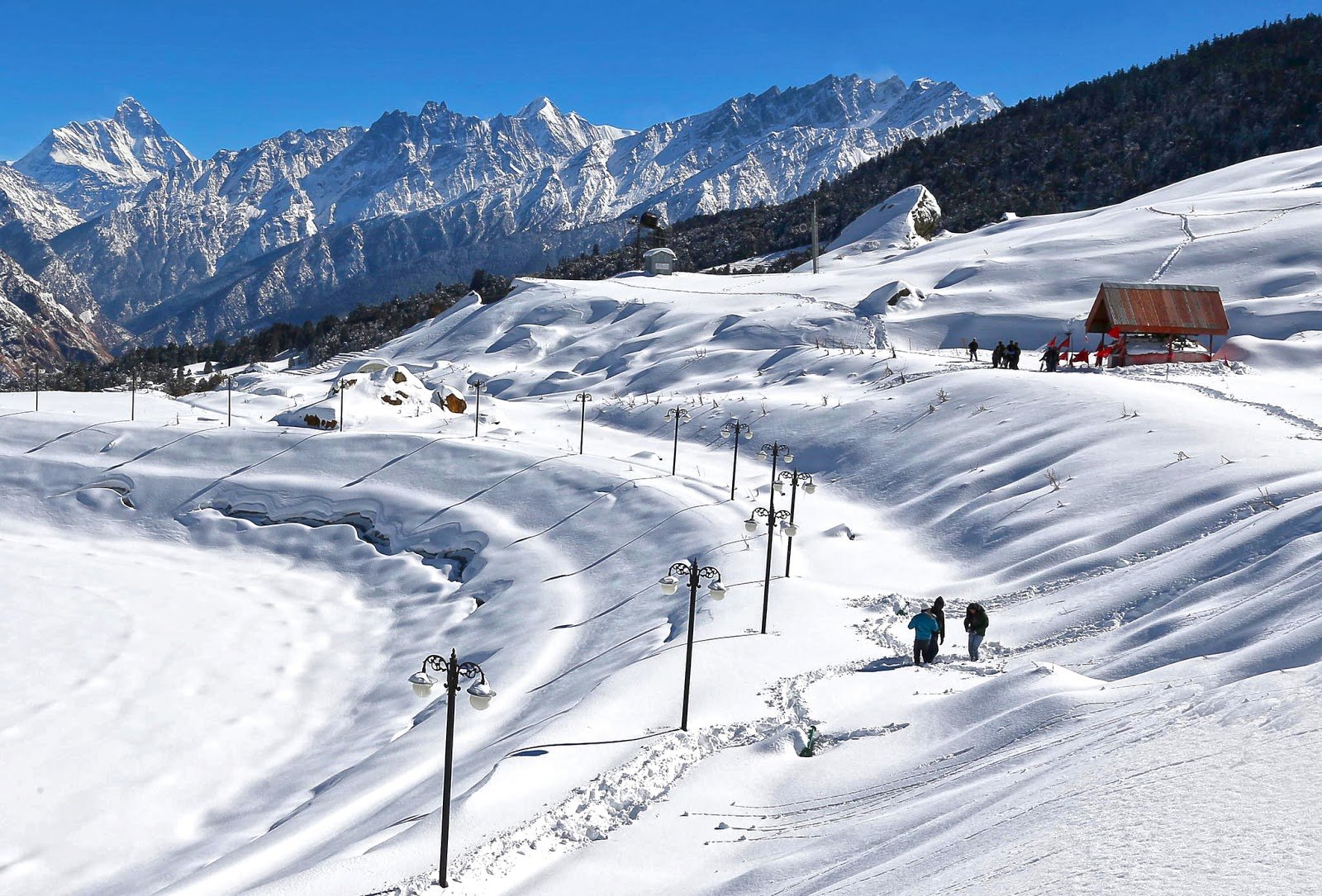
The temple is nestled in a dense deodar and pine forest, with hardly any sound except for the wind in the trees and the distant roar of the Dhauliganga River. The serene, isolated setting creates a deeply meditative atmosphere that is rare even among Himalayan shrines.
Ardh Badri (Nearby)
On the route to Bhavishya Badri, there is a smaller shrine known as Ardh Badri (Half Badri), which is locally recognised as the Shankaracharya Math. Some pilgrims visit this as part of the extended Badri circuit.
How to Reach Bhavishya Badri Temple
By Air
Nearest Airport: Jolly Grant Airport, Dehradun
| Details | Information |
|---|---|
| Distance | ~280 km to Joshimath |
| Travel Time | 10–12 hours by taxi |
| Airlines | Regular flights from Delhi to Dehradun (approx. 1 hour) |
| Onward Travel | Taxis available from the airport to Joshimath |
By Train
Nearest Railway Station: Rishikesh
| Details | Information |
|---|---|
| Distance | ~250 km to Joshimath |
| Travel Time | 9–10 hours by taxi |
| Connectivity | Well-connected from Delhi |
Popular Trains from Delhi to Haridwar/Rishikesh:
| Train Name | From Delhi | Departure | Arrival | Destination |
|---|---|---|---|---|
| Shatabdi Express | Delhi | 6:00 AM | 11:40 AM | Haridwar |
| Jan Shatabdi | Delhi | 3:20 PM | 9:00 PM | Haridwar |
| Mussoorie Express | Delhi | 10:05 PM | 5:30 AM | Haridwar |
By Road to Joshimath
| Starting Point | Distance | Travel Time | Route |
|---|---|---|---|
| Delhi | ~500 km | 14–16 hours | Delhi → Haridwar → Rishikesh → Devprayag → Srinagar → Rudraprayag → Karnaprayag → Chamoli → Joshimath |
| Rishikesh | ~250 km | 9–10 hours | Rishikesh → Devprayag → Srinagar → Rudraprayag → Karnaprayag → Chamoli → Joshimath |
| Haridwar | ~270 km | 10–11 hours | Haridwar → Rishikesh → Devprayag → Srinagar → Rudraprayag → Karnaprayag → Chamoli → Joshimath |
Road Conditions: The route is scenic but winding, following the Alaknanda River through the Garhwal Himalayas.
From Joshimath to Bhavishya Badri
Step 1: Joshimath to Subhain/Saldhar (Drive)
| Aspect | Details |
|---|---|
| Distance | ~17 km |
| Travel Time | 45 minutes – 1 hour |
| Road Condition | Motorable road, but rugged in sections |
| Last Point | Saldhar (19 km from Joshimath) |
Step 2: Subhain/Saldhar to Temple (Trek)
| Aspect | Details |
|---|---|
| Trek Distance | 3–6 km (sources vary) |
| Trek Duration | 2–3 hours |
| Difficulty | Easy to Moderate |
| Trail | Through dense deodar and pine forests |
What to Expect on the Trek:
- The trail follows the Dhauliganga River, a roaring torrent that flows through perpendicular cliffs hundreds of metres high
- The path is well-marked and passes through dense forests
- Opportunities to spot wildflowers and mountain birds
- The final approach to the temple is through a serene, forested setting
Important Note: Some sources indicate that a motorable road now reaches closer to the temple, reducing the trek distance to approximately 1 kilometre. However, most guides still recommend being prepared for a trek of 3–6 km, depending on road conditions.
Distances from Major Cities
| City | Distance (km) |
|---|---|
| Delhi | ~500 |
| Dehradun | ~280 |
| Rishikesh | ~250 |
| Haridwar | ~270 |
| Joshimath | 17 |
| Subhain/Saldhar | 0 (trek start) |
| Bhavishya Badri Temple | 3–6 km (trek) |
Bhavishya Badri Trek: Complete Guide
Trek Overview
What to Expect on the Trek
The Trail:
- The path winds through dense deodar and pine forests
- The trail follows the Dhauliganga River gorge, offering stunning views of the roaring white-water river below
- The cliffs on either side rise several hundred metres, creating a dramatic canyon setting
- The forest is rich in birdlife, and wildflowers bloom during the summer months
At the Temple:
- The simple shrine emerges from the forest clearing
- The temple priest resides nearby and opens the temple for darshan
- Visitors often receive prasad and hot chai as part of the warm hospitality
- The serene atmosphere is perfect for meditation and reflection
Trekking Tips
| Tip | Details |
|---|---|
| Start Early | Begin the trek by 8:00–9:00 AM to complete before afternoon weather changes |
| Carry Water | Bring at least 2 litres of water |
| Wear Sturdy Shoes | The trail can be uneven and slippery after rain |
| Pack Snacks | Limited options on the trail |
| Carry Rain Gear | Even in summer, weather can change rapidly |
| Check Road Conditions | Ask locals in Joshimath about the latest road status to Saldhar |
Trek Difficulty for Different Travelers
| Traveler Type | Suitability |
|---|---|
| Pilgrims | Suitable with moderate fitness |
| Families | Suitable for older children and adults |
| Senior Citizens | May find the trek challenging; consider vehicle access if available |
| Beginners | Suitable for moderate fitness |
| Experienced Trekkers | Easy |
Temple Timings and Darshan
Regular Timings
Seasonal Schedule
| Season | Status | Notes |
|---|---|---|
| Summer (May–October) | Open | Best time to visit |
| Monsoon (July–August) | Open but challenging | Heavy rainfall, landslide risk |
| Winter (November–April) | Closed | Heavy snowfall, temple inaccessible |
Note: The temple follows a schedule similar to the Badrinath Temple, remaining open from May to October/November and closing during the harsh winter months.
Best Time for Darshan
| Time | Experience |
|---|---|
| Morning (7:00–9:00 AM) | Best for peaceful darshan, cool weather |
| Late Morning (9:00–11:00 AM) | Good light for photography |
| Evening (4:00–6:00 PM) | Quiet atmosphere, beautiful forest light |
Aarti Timings
Aarti timings are generally aligned with sunrise and sunset. It is advisable to check with the temple priest upon arrival for exact timings, as they vary by season.
Weather and Best Time to Visit
Climate Overview
Bhavishya Badri experiences a high-altitude alpine climate. The region is accessible only during specific months due to heavy snowfall in winter.
Month-by-Month Guide
Best Time to Visit by Season
Why Visit in Summer (May–June)
This is the most popular time to visit Bhavishya Badri Temple :
- Pleasant weather with temperatures ranging from 15°C to 25°C
- Clear skies offering beautiful views of the surrounding forests and mountains
- Ideal conditions for the 3–6 km trek
- The temple is fully accessible
- Best time for combining with other Badri temples
Why Visit in Autumn (September–October)
Autumn is another excellent time to visit:
- Post-monsoon freshness brings out the lush greenery
- Crisp, invigorating air with clear, cloudless skies
- Perfect for photography
- Fewer crowds compared to the summer peak season
Why Avoid Monsoon (July–August)
The monsoon months are not recommended for visiting due to:
- Heavy rainfall is making trails slippery and dangerous
- High risk of landslides on mountain roads
- Cloud cover obscuring views
- The area is prone to heavy rains and potential landslides, which can make the trek risky and the paths inaccessible
Winter Closure (November–April)
The temple remains closed during winter due to heavy snowfall :
- The region experiences heavy snowfall, causing temperatures to dip well below the freezing point
- The temple and its path may be covered in snow, preventing access
- Roads become inaccessible
Best Time of Day for Trek
| Time | Activity | Tips |
|---|---|---|
| Morning (6:00–9:00 AM) | Trek to temple | Trek to the temple |
| Morning (9:00–11:00 AM) | Temple darshan | Good natural light |
| Afternoon (12:00–3:00 PM) | Return trek | Warmer, but manageable |
| Evening (4:00–6:00 PM) | Evening aarti | Beautiful forest light |
Nearby Places to Visit
| Destination | Distance | Highlights |
|---|---|---|
| Joshimath | 17 km | Narasimha Temple, Shankaracharya Math, Kalpavriksha |
| Badrinath Temple | ~45 km | Char Dham temple, Tapt Kund, Mana Village |
| Auli | ~35 km | Skiing, ropeway, Himalayan views |
| Mana Village | ~50 km | India’s last village, Vyas Gufa, Bheem Pul |
| Vasudhara Falls | ~50 km | 400-foot waterfall, pure heart legend |
| Valley of Flowers | ~80 km | UNESCO site, 600+ flower species |
| Hemkund Sahib | ~80 km | The highest Gurudwara, a glacial lake |
| Adi Badri | ~100 km | Ancient temple complex |
| Vriddha Badri | ~40 km | Old Badri shrine |
| Yogadhyan Badri | ~30 km | Meditative Badri |
Joshimath – The Base Town
Joshimath is the nearest major town and the gateway to Bhavishya Badri. Key attractions include:
- Narasimha Temple – Ancient temple with a 1,200-year-old idol; the prophecy of the shrinking hand is connected to Bhavishya Badri
- Shankaracharya Math – One of the four cardinal mathas established by Adi Shankaracharya
- Kalpavriksha – A 1,200-year-old mulberry tree, considered wish-fulfilling
Badrinath Temple – The Main Shrine
Located approximately 45 km from Joshimath, Badrinath is one of the Char Dham temples and the primary shrine of the Badri circuit. The temple is dedicated to Lord Vishnu in his form as Badrinarayan.
Auli – The Skiing Capital
Auli is a popular hill station known for its skiing slopes, the second-longest ropeway in Asia, and panoramic views of Nanda Devi, Trishul, and other Himalayan peaks.
Mana Village – India’s Last Village
Mana village is famous as the “Last Village of India” before the Tibetan border. Key attractions include Vyas Gufa (where the Mahabharata was composed), Ganesh Gufa, Bheem Pul, and the Saraswati River.
Adi Badri – The Ancient Temple Complex
Adi Badri is a complex of 16 ancient temples dating back to the Gupta period (5th–8th centuries). It is the first temple in the Sapta Badri circuit.
Where to Stay: Accommodation Options
In Joshimath (Best Base – 17 km from Temple)
| Category | Price Range (per night) | Examples | Features |
|---|---|---|---|
| Mid-Range Hotels | ₹2,500 – ₹5,000 | Aryam Resort, Panchvati Inn | Comfortable rooms, hot water, good food |
| Budget Hotels | ₹800 – ₹2,000 | Local guesthouses | Basic amenities |
| Homestays | ₹1,500 – ₹3,500 | Various family-run properties | Authentic Garhwali experience |
Near Bhavishya Badri (Limited)
Important: Accommodation near the temple is very limited. Most visitors stay in Joshimath and make a day trip to Bhavishya Badri.
In Auli (For Extended Stay)
| Category | Price Range | Features |
|---|---|---|
| Luxury Resorts | ₹8,000–15,000+ | Mountain views, premium amenities |
| Mid-Range Hotels | ₹3,000–6,000 | Comfortable rooms |
Booking Tips
- Book well in advance for peak season (May–June, September–October)
- Joshimath is the recommended base for visiting Bhavishya Badri
- For the homestay in Subhai, book through local contacts or online platforms
- Carry cash—card facilities may be limited in Joshimath
Local Cuisine: What to Eat
In Joshimath
| Dish | Description |
|---|---|
| Aloo Ke Gutke | Spiced fried potatoes, a Garhwali speciality |
| Chainsoo | Protein-rich black gram curry |
| Kafuli | Spinach and fenugreek curry |
| Mandua Roti | Finger millet flatbread |
| Gahat Ki Dal | Horse gram lentil soup |
| Jhangora Kheer | Barnyard millet sweet pudding |
At the Temple (Prasad)
| Item | Description |
|---|---|
| Prasad | Offered to Lord Narasimha |
| Bhog | Khichuri and hot chai offered to visitors |
| Simple Vegetarian Meals | Available from the priest |
Dining Tips
- Most hotels in Joshimath offer meal packages
- Pure vegetarian options are widely available
- Carry packaged snacks for the trek
- The temple priest often offers hot chai and bhog to visitors
Travel Tips and Important Information
Before You Go
- Physical Fitness: The trek to Bhavishya Badri is moderate (3–6 km). Prepare with regular walking 2–4 weeks before.
- Carry Cash: ATMs are limited in Joshimath and non-existent at the temple; bring sufficient cash from Rishikesh or Haridwar.
- Check Weather: Avoid monsoon (July–August) due to heavy rainfall and landslide risk.
- Temple Closure: The temple remains closed from November to April due to heavy snowfall.
- Dress Modestly: Bhavishya Badri is a sacred site; dress appropriately when visiting.
- Plan for a Day Trip: Most visitors stay in Joshimath and make a day trip to Bhavishya Badri.
During Your Visit
- Start Early: Begin your journey from Joshimath by 7:00–8:00 AM to complete the trek and return before dark.
- Wear Sturdy Shoes: The trek involves uneven forest paths.
- Carry Water and Snacks: Limited options on the trek and at the temple.
- Respect the Temple: Maintain silence and follow the instructions of the priest.
- Receive Prasad: Don’t miss the hospitality—the priest often offers hot chai and bhog.
Trekking Safety
| Tip | Details |
|---|---|
| Check Road Conditions | Ask locals in Joshimath about the latest road status to Saldhar |
| Start Early | Begin the trek by 8:00–9:00 AM to avoid afternoon weather changes |
| Stay on the Trail | The path is well-marked; do not wander into the forest |
| Be Aware of Wildlife | The weather can change rapidly, especially in monsoon |
| Carry Rain Gear | The weather can change rapidly, especially in the monsoon |
Packing Checklist
| Category | Items |
|---|---|
| Clothing | Light layers for summer; heavy woolens for autumn |
| Footwear | Sturdy trekking shoes with good grip |
| Accessories | Hat, sunscreen, sunglasses, flashlight, rain gear |
| Health | Personal medications, first-aid kit, water bottle, snacks |
| Documents | ID proof (Aadhaar/Passport) |
| Other | Cash, camera, power bank |
Photography Tips
- Best Spots: The temple exterior with forest backdrop, the Dhauliganga River gorge, the trekking trail through the deodar forest
- Best Time: Morning for soft light; golden hour for warm tones
- Note: Ask permission before photographing inside the sanctum
Etiquette and Customs
| Custom | Details |
|---|---|
| Remove Shoes | Before entering the temple premises |
| Dress Modestly | Shoulders and knees should be covered |
| Maintain Silence | Inside the sanctum |
| Ask Permission | Before photographing the deity |
| Offerings | Flowers, coconut, prasad (available in Joshimath) |
Frequently Asked Questions (FAQs)
Q1: What is Bhavishya Badri Temple famous for?
A: Bhavishya Badri Temple is famous for being the “Badrinath of the Future.” According to prophecy, when evil overcomes the world, and the route to Badrinath is blocked, Lord Badrinath will reappear and be worshipped here. Currently, the temple houses an image of Lord Narasimha.
Q2: Where is the Bhavishya Badri Temple located?
A: The temple is located in Subhain village in the Chamoli district of Uttarakhand, approximately 17 km from Joshimath.
Q3: What is the best time to visit Bhavishya Badri Temple?
A: The best time to visit is May to June (summer) and September to October (autumn). The weather is pleasant, and the temple is accessible.
Q4: What is the altitude of Bhavishya Badri Temple?
A: The temple is situated at an altitude of approximately 2,744 metres (9,003 feet) above sea level.
Q5: How far is Bhavishya Badri Temple from Joshimath?
A: The distance from Joshimath to Subhain is approximately 17 km, followed by a 3–6 km trek to the temple.
Q6: Is there a trek to reach Bhavishya Badri Temple?
A: Yes, there is a trek of 3–6 km from the road head at Subhain/Saldhar through dense deodar and pine forests. Some sources indicate a motorable road now reaches closer, reducing the trek to about 1 km.
Q7: What are the temple timings?
A: The temple is open from 5:00 AM to 12:00 PM and 2:00 PM – 9:00 PM.
Q8: Is there an entry fee for Bhavishya Badri Temple?
A: No, entry to the temple is free.
Q9: What is the mythological significance of Bhavishya Badri?
A: According to prophecy, when the world is plagued by evil and the route to Badrinath becomes blocked, Lord Badrinath will appear and be worshipped at this temple. Hence, it is called the “Badrinath of the Future”.
Q10: Who is the main deity at Bhavishya Badri Temple?
A: Currently, the temple houses an image of Lord Narasimha, the fourth avatar of Vishnu, depicted as half-man, half-lion.
Q11: What is the connection between Bhavishya Badri and the Narasimha Temple in Joshimath?
A: According to prophecy, when the right hand of the Narasimha idol in Joshimath breaks off, the route to Badrinath will close, and the deity will move to Bhavishya Badri.
Q12: Are there accommodation options near Bhavishya Badri Temple?
A: Limited homestay options are available in Subhain village. Most visitors stay in Joshimath (17 km away), which offers a range of hotels and guesthouses.
Q13: Is Bhavishya Badri Temple open during winter?
A: No, the temple remains closed from November to April due to heavy snowfall.
Q14: What is the distance from Delhi to Bhavishya Badri Temple?
A: The distance from Delhi to Joshimath is approximately 500 km, with a travel time of 14–16 hours by road. From Joshimath, it is another 17 km drive plus a trek.
Q15: What is the Sapta Badri circuit?
A: The Sapta Badri is a group of seven sacred Badri temples dedicated to Lord Vishnu, located in the Garhwal Himalayas. Bhavishya Badri is the fourth temple in this circuit.
Plan Your Bhavishya Badri Temple Journey with Discover Uttarakhand
At Discover Uttarakhand, we’ve been organising unforgettable spiritual journeys across Devbhoomi since 1997. As a trusted local operator with deep knowledge of the Garhwal Himalayas and the Badri circuit, we offer:
- ✅ Customised Bhavishya Badri Temple tour packages (2 to 4 days)
- ✅ Combined Sapta Badri itineraries covering all seven shrines
- ✅ Char Dham Yatra packages including this prophetic temple
- ✅ Comfortable transport with experienced hill drivers
- ✅ Verified accommodations in Joshimath
- ✅ Local guides for the trek and temple visit
- ✅ 24/7 customer support throughout your journey
Recommended Bhavishya Badri Packages
| Package | Duration | Starting Point | Highlights |
|---|---|---|---|
| Bhavishya Badri Day Trip | 1 Day | Joshimath | Temple darshan, forest trek, Dhauliganga views |
| Joshimath & Bhavishya Badri | 2 Nights / 3 Days | Haridwar | Narasimha Temple, Bhavishya Badri trek |
| Sapta Badri Pilgrimage | 5 Nights / 6 Days | Haridwar | All seven Badri temples, complete circuit |
Book your Bhavishya Badri Temple journey today and seek the blessings of the Future Badrinath in the serene forests of the Garhwal Himalayas.
📞 Call / WhatsApp: +91-9997187178, 9760222178, 8171977178
📍 Visit Our Office: Himalayan Colony, opposite DSVV, Haripur Kalan, Haridwar, Motichur Range, Uttarakhand 249411
🌐 Website: www.discover-uttarakhand.com
📧 Email: info@discover-uttarakhand.com
Jai Badri Vishal! Om Namo Narayanaya! 🙏
Discover Uttarakhand – Your Local Partner for Sacred Himalayan Journeys Since 1997 🔮