
Introduction: The Sacred Eye of the Goddess
Perched on the northern shore of the emerald Naini Lake, the Naina Devi Temple is the spiritual heart of Nainital and one of the most revered Shakti Peethas in India. The name “Nainital” itself derives from this sacred temple – “Naina” meaning eyes and “Tal” meaning lake, together forming the “Lake of the Eye”.
According to Hindu mythology, this is the sacred spot where the left eye (Nain) of Goddess Sati fell when Lord Shiva carried her charred body across the universe in grief. The lake is believed to have formed in the shape of an emerald eye, with the temple standing at its northern end as a timeless symbol of faith, legend, and tranquillity.
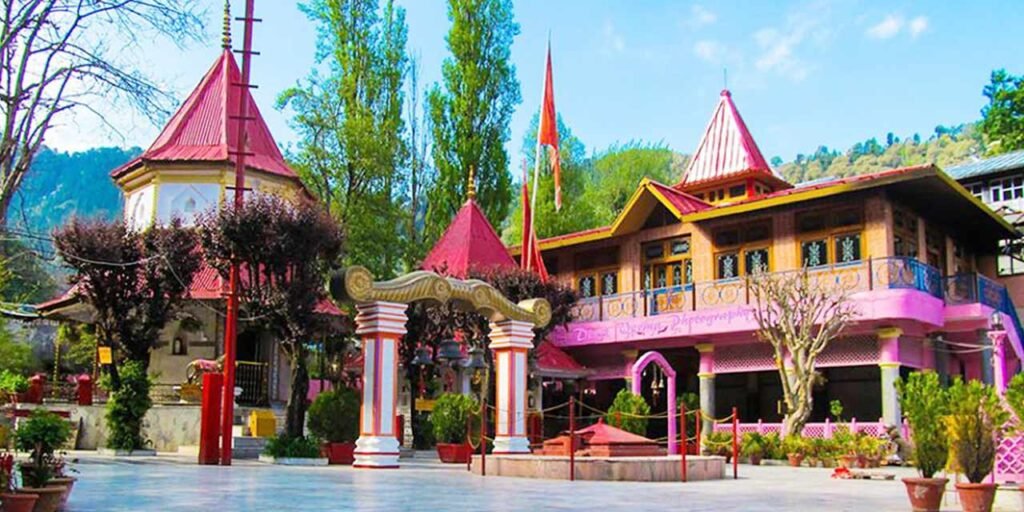
What makes Naina Devi Temple truly unique is its breathtaking location. Unlike most Shakti Peethas situated in remote Himalayan terrain, this temple sits prominently on a hill overlooking the bustling town of Nainital, offering stunning panoramic views of the pear-shaped Naini Lake below. The crimson spire of the temple is a notable landmark visible from across the town.
Within the sanctum sanctorum, three deities stand for darshan – Mata Kali Devi on one side, Maa Naina Devi at the centre (represented by two eyes), and Lord Ganesha on the other. The temple is not merely a place of worship but a living testament to the region’s rich mythological heritage and the devotion of millions.
Whether you are a devout pilgrim seeking the blessings of the Divine Mother, a history enthusiast tracing the footsteps of ancient legends, or a traveller drawn to the serene beauty of the Kumaon Himalayas, Naina Devi Temple promises an experience that is both spiritually uplifting and visually breathtaking.
Key Information at a Glance:
| Aspect | Details |
|---|---|
| Location | Northern shore of Naini Lake, Nainital, Uttarakhand |
| Altitude | 2,084 m (6,837 ft) |
| Deity | Goddess Naina Devi (form of Goddess Sati) |
| Significance | One of 51 Shakti Peethas – left eye of Sati fell here |
| Temple Age | One of 51 Shakti Peethas – the left eye of Sati fell here |
| Architectural Style | North Indian hill temple style |
| Temple Timings | 6:00 AM – 10:00 PM |
| Entry Fee | Free |
| Nearest Airport | Pantnagar (70 km) |
| Nearest Railway Station | Kathgodam (35 km) |
| Distance from Delhi | ~310 km |
| Best Time to Visit | March–June & September–November |
History and Mythology: The Legend of the Falling Eye
The Shakti Peetha Legend
According to Hindu mythology, the story of Naina Devi Temple is intimately connected with the tragic tale of Goddess Sati (Dakshayani). Sati was the daughter of King Daksha and the wife of Lord Shiva. When King Daksha performed a grand Yagna (fire sacrifice), he deliberately did not invite Lord Shiva. Despite Shiva’s protests, Sati attended the Yagna, only to be humiliated by her father, who insulted Lord Shiva in front of all the assembled gods.
Unable to bear the disgrace to her husband, Sati jumped into the sacrificial fire and ended her life. Upon learning of her death, Lord Shiva was shattered with grief and rage. He placed Sati’s charred body on his shoulder and began the Tandava – the dance of cosmic destruction – which threatened to annihilate the entire universe.
To pacify Shiva, Lord Vishnu used his Sudarshana Chakra to cut Sati’s body into pieces. As Shiva wandered across the subcontinent, parts of her body fell at various locations – each becoming a Shakti Peetha, where the Goddess is worshipped in different forms. At Nainital, the left eye (Naina) of Goddess Sati is believed to have fallen, and the lake is said to have formed in the shape of an emerald eye.
The Skanda Purana Reference
Nainital is referred to in the ‘Manas Khand’ of the Skanda Purana as Tri-Rishi-Sarovar – the lake of the three sages (Atri, Pulastya, and Pulaha). According to the Purana, these sages arrived here on a penitential pilgrimage and, finding no water to quench their thirst, dug a hole and siphoned water into it from Mansarovar, the sacred lake in Tibet.
The British Discovery and Temple Reconstruction
The first structure on the northern edge of the lake was destroyed by a devastating landslide in 1880. The destroyed structure was replaced by what stands today as the Naina Devi Temple. Some sources suggest the temple dates back to the 13th or 14th century.
After the British occupied Kumaon and Garhwal in 1815, Nainital grew rapidly as a hill station. In 1862, it became the summer seat of the North Western Provinces, and remarkable expansion occurred. The temple has been rebuilt and renovated several times over the years, particularly after the 1880 landslide that devastated it significantly. It continues to be active not only as a site of worship but also as a symbol of resiliency and continuity.
The Shakti Peetha: One of 51 Divine Sites
What is a Shakti Peetha?
Naina Devi Temple is revered as one of the 51 Shakti Peethas – the most sacred sites dedicated to the Divine Mother in Hinduism. These centres were created wherever parts of the charred body of Sati fell when Lord Shiva carried her corpse in grief. Each Shakti Peetha is associated with a specific body part and a form of the Goddess.
The Unique Deity: Goddess as Eyes
At Naina Devi Temple, the Goddess is represented in the form of two eyes, symbolising the left eye of Sati that fell here. This is unique among Shakti Peethas, where the deity is often represented by a stone or idol. Within the sanctum, three deities stand for darshan :
| Deity | Position | Significance |
|---|---|---|
| Mata Kali Devi | Left side | Fierce form of the Goddess |
| Maa Naina Devi | Centre (represented by two eyes) | The primary deity |
| Lord Ganesha | Right side | Remover of obstacles |
The Sacred Geography
The temple sits atop the Naina hillock, overlooking the pear-shaped Naini Lake. According to legend, the lake itself formed in the shape of an emerald eye, mirroring the divine eye that fell here. This unique geographical formation adds to the temple’s spiritual significance.
Temple Architecture
North Indian Hill Style
The Naina Devi Temple is built in the traditional North Indian hill temple style, characterised by its vibrant colours, a prominent spire (shikhara), and intricate carvings. The temple’s crimson spire is a notable landmark visible from across the town.
Key Architectural Features
The Peepal Tree and Temple Grounds
Upon entering the temple complex, a big peepal tree stands on the left. This sacred tree is considered highly auspicious, and devotees often tie threads around it while praying for their wishes to be fulfilled. On the right side of the entrance, one will find idols of Hanuman and Ganesh. Towards the main entrance, two lion statues stand guard.
The Lake View from the Temple
One of the most cherished experiences of visiting the temple is the breathtaking view of Naini Lake from the temple complex. The emerald waters of the lake, surrounded by forest-clad hills, create a scene of transcendent beauty that has captivated visitors for generations.
How to Reach Naina Devi Temple
By Air
Nearest Airport: Pantnagar Airport
| Details | Information |
|---|---|
| Distance | 70 km |
| Travel Time | 2–3 hours by taxi |
| Airlines | Regular flights from Delhi to Pantnagar (approx. 1 hour) |
| Onward Travel | Taxis available from the airport to Nainital |
Alternative Airport: Indira Gandhi International Airport, Delhi (approx. 310 km from Nainital)
By Train
Nearest Railway Station: Kathgodam Railway Station
| Details | Information |
|---|---|
| Distance | 34–35 km |
| Travel Time | 1.5 hours by taxi |
| Connectivity | Well-connected from Delhi, Kolkata, Lucknow |
Popular Trains from Delhi to Kathgodam:
| Train Name | From Delhi | Departure | Arrival (Kathgodam) | Duration |
|---|---|---|---|---|
| Ranikhet Express | Delhi | 10:05 PM | 5:05 AM | 7 hours |
| Shatabdi Express | Delhi | 6:00 AM | 11:40 AM | 5h 40m |
From Kathgodam station, you can hire a taxi or take a local bus to Nainital. The temple is located in the heart of Nainital town and can be reached on foot from the bus stand.
Alternative Station: Haldwani Railway Station (approx. 40 km)
By Road
Nainital is well-connected by road to major cities in North India:
| Starting Point | Distance | Travel Time | Route |
|---|---|---|---|
| Delhi | 310 km | 7–9 hours | Delhi → Ghaziabad → Moradabad → Rampur → Haldwani → Kathgodam → Nainital |
| Dehradun | 270 km | 7–8 hours | Dehradun → Haridwar → Moradabad → Haldwani → Nainital |
| Haridwar | 240 km | 6–7 hours | Haridwar → Moradabad → Haldwani → Nainital |
| Bareilly | 140 km | 3–4 hours | Bareilly → Haldwani → Nainital |
Road Conditions: The route is scenic but winding, especially after Kathgodam. The last 35 km from Kathgodam to Nainital is a beautiful uphill drive through pine forests. Regular state transport and private buses operate from Delhi, Dehradun, and Haridwar to Nainital.
Local Transport to the Temple
The temple is located on the northern shore of Naini Lake, easily accessible on foot from most parts of the town. The approach involves climbing several steep steps.
Distances from Major Cities
| City | Distance (km) |
|---|---|
| Delhi | 310 |
| Dehradun | 270 |
| Haridwar | 240 |
| Rishikesh | 250 |
| Chandigarh | 380 |
| Agra | 350 |
| Jaipur | 500 |
Weather and Best Time to Visit
Climate Overview
Nainital experiences a pleasant climate with distinct seasons. The temple is situated at 2,084 metres, making it significantly cooler than the plains.
Month-by-Month Guide
| Month | Season | Day Temp (°C) | Night Temp (°C) | Conditions | Suitability |
|---|---|---|---|---|---|
| March | Spring | 12–22 | 5–10 | Pleasant, spring blooms | ⭐ Excellent |
| April | Spring/Summer | 15–25 | 8–12 | Pleasant, clear skies | ⭐ Best |
| May | Summer | 18–27 | 10–15 | Warm, ideal | ⭐ Best |
| June | Summer | 20–30 | 12–18 | Warm, pre-monsoon | ⭐ Best |
| July | Monsoon | 15–22 | 12–18 | Heavy rain, landslides | ❌ Avoid |
| August | Monsoon | 15–22 | 12–18 | Heavy rain, slippery roads | ❌ Avoid |
| September | Autumn | 15–22 | 10–15 | Post-monsoon, clearing | ⭐ Good |
| October | Autumn | 10–20 | 6–10 | Crisp, clear skies | ⭐ Best |
| November | Autumn | 8–16 | 3–8 | Cool, pleasant | ⭐ Good |
| December–February | Winter | 0–10 | -5–2 | Very cold, occasional snow | ⭐ Moderate |
Best Time to Visit by Season
| Season | Months | Suitability | Conditions | Best For |
|---|---|---|---|---|
| Summer | April–June | ⭐ Best | 15°C–30°C, clear skies, pleasant | Temple visit, comfortable weather, festivals |
| Autumn | October–November | ⭐ Best | 10°C–20°C, crisp air, clear views | Photography, peaceful visit |
| Winter | December–February | ⭐ Good | -5°C–10°C, cold, occasional snow | Snow lovers, fewer crowds |
| Monsoon | July–August | ❌ Avoid | 15°C–22°C, heavy rainfall, landslides | Not recommended |
Why Visit in Summer (April–June)
This is the most popular time to visit Naina Devi Temple :
- Pleasant weather with temperatures ranging from 15°C to 30°C
- Clear skies offering spectacular views of the Himalayas
- Ideal conditions for exploring the temple and surrounding attractions
- This period coincides with the annual Chaitra Navratri festival
Why Visit in Autumn (September–October)
Autumn is another excellent time to visit:
- Post-monsoon freshness brings out the lush greenery
- Crisp, invigorating air with clear, cloudless skies
- Coincides with Sharad Navratri and Diwali celebrations
- Perfect for photography
Why Avoid Monsoon (July–August)
The monsoon months are not recommended for visiting due to:
- Heavy rainfall making the approach steps slippery and dangerous
- High risk of landslides on mountain roads
- Cloud cover obscuring mountain views
Winter Visit (December–February)
Winter transforms Nainital into a serene, snow-dusted landscape:
- Very cold temperatures, sometimes dropping below freezing
- Occasional snowfall creates a magical atmosphere
- Carry heavy woollens – thermal layers, jackets, gloves, and woollen caps are essential
Temple Timings and Darshan
Regular Timings
| Period | Timings |
|---|---|
| Morning | 6:00 AM – 12:00 PM |
| Afternoon Break | 12:00 PM – 2:00 PM (approx.) |
| Evening | 2:00 PM – 10:00 PM |
Note: Timings may vary during festivals and winter.
Best Time for Darshan
| Time | Experience |
|---|---|
| Morning (6:00–8:00 AM) | Best for peaceful darshan; fewer crowds |
| Late Morning (9:00–11:00 AM) | Good for photography; lake views are spectacular |
| Evening (6:00–8:00 PM) | Beautiful sunset views; the temple is illuminated |
| Festival Days | Special decorations and celebrations; expect larger crowds |
What to Expect at the Temple
Festivals and Celebrations
Nanda Ashtami – The Grand Festival
Nanda Ashtami is the most important festival celebrated at Naina Devi Temple, involving a large procession and an eight-day fair. This festival honours Nanda Devi, the patron Goddess of the Kumaon hills, and a local princess, Sunanda Devi.
| Festival Detail | Information |
|---|---|
| Time | August–September (during Sharad Navratri) |
| Duration | 8 days |
| Highlights | Grand procession, cultural events, fair |
| Significance | Honours Nanda Devi, patron Goddess of Kumaon |
Navratri Celebrations (Chaitra and Sharad)
The temple sees a significant influx of devotees during the Navratri festivals :
| Navratri | Time | Highlights |
|---|---|---|
| Chaitra Navratri | March–April | Spring festival; grand decorations |
| Sharad Navratri | September–October | Autumn festival; massive crowd flow, special rituals |
Other Festivals
What to See and Do at Naina Devi Temple
1. Seek Blessings of the Divine Mother
The primary reason for visiting is to offer prayers at the sacred Shakti Peetha. Devotees believe that worshipping here brings blessings, fulfils wishes, and purifies the soul. The three deities – Mata Kali Devi, Maa Naina Devi (represented by two eyes), and Lord Ganesha – all receive offerings.
2. Witness the Stunning Lake View
The temple complex offers a breathtaking panoramic view of the pear-shaped Naini Lake below. The emerald waters of the lake, surrounded by forest-clad hills, create a scene of transcendent beauty. This is one of the most photographed spots in Nainital.
3. Explore the Temple Architecture
Take time to appreciate the traditional hill temple architecture, the vibrant colours, the lion statues guarding the entrance, and the sacred peepal tree within the complex.
4. Participate in Aarti
The temple conducts daily aartis in the morning and evening. Participating in these ceremonies is a deeply spiritual experience, with the chanting of mantras, ringing of bells, and the fragrance of incense creating an atmosphere of devotion.
5. Tie a Thread on the Peepal Tree
Devotees often tie threads around the sacred peepal tree on the temple premises while praying for their wishes to be fulfilled.
6. Combine with Boating on Naini Lake
After offering prayers, take a boat ride on Naini Lake. Options include rowboats, paddle boats, and yachts (with guides). The view of the temple from the lake is equally spectacular.
7. Photography
The temple’s location on a hill overlooking the lake makes it a photographer’s paradise. The best time for photography is early morning when the light is soft, or late afternoon during golden hour.
Nearby Places to Visit
Naini Lake – The Heart of Nainital
The pear-shaped Naini Lake is the centrepiece of this hill station. According to Hindu mythology, it is the eye of Goddess Sati, formed where her left eye fell. Cruise the tranquil waters with a rented rowboat or take a guided tour on a brightly coloured gondola. The view of the temple from the lake is spectacular.
Mall Road – The Bustling Promenade
Just a 10-minute walk from the temple, Mall Road is the bustling heart of Nainital. Lined with shops, bakeries, and local vendors, it’s the best place for a scenic stroll. Don’t miss the handmade candles, woollens, and local restaurants offering Kumaoni cuisine. The evening view of the lake, lit with lights, is magical.
Tiffin Top (Dorothy’s Seat)
A 2 km trek from the town, Tiffin Top offers stunning sunrise and sunset views over the Himalayas. This viewpoint is dedicated to Dorothy Kellet, an English artist who loved this spot. The trek is moderate and suitable for most visitors.
Snow View Point
Accessible by a picturesque cable car, Snow View Point offers panoramic views of the snow-capped Himalayas, including Nanda Devi and Trishul peaks. The ropeway ride itself is an experience, offering stunning aerial views of Nainital.
Where to Stay: Accommodation Options
Near the Temple (Walking Distance)
| Category | Price Range | Features |
|---|---|---|
| Mid-Range Hotels | ₹2,500 – ₹5,000 | Comfortable rooms, lake views, hot water |
| Budget Hotels | ₹800 – ₹2,000 | Basic amenities, clean rooms |
| Guesthouses | ₹500 – ₹1,200 | Simple accommodation, local experience |
In Mallital (Northern District)
| Category | Price Range | Features |
|---|---|---|
| Luxury Hotels | ₹6,000 – ₹15,000+ | Lake-facing rooms, premium amenities |
| Mid-Range Hotels | ₹2,000 – ₹4,500 | Comfortable rooms, good locations |
In Tallital (Southern District)
| Category | Price Range | Features |
|---|---|---|
| Budget Hotels | ₹800 – ₹1,800 | Basic amenities |
| Guesthouses | ₹500 – ₹1,200 | Simple accommodation |
Booking Tips
- Book well in advance for peak seasons (April–June, October–December)
- For festival periods (Navratri, Nanda Ashtami), book at least 2-3 months ahead
- Mall Road and Mallital areas offer the most convenient access to the temple
- Carry cash – smaller guesthouses may not accept cards
Local Cuisine: What to Eat
Must-Try Kumaoni Dishes
| Dish | Description |
|---|---|
| Aloo Ke Gutke | Traditional Kumaoni sweet wrapped in a leaf |
| Bhatt ki Churkani | Black soybean curry |
| Chainsoo | Protein-rich black gram curry |
| Mandua Roti | Finger millet flatbread |
| Gahat Ki Dal | Horse gram lentil soup |
| Jhangora Kheer | Barnyard millet sweet pudding |
| Bal Mithai | Famous chocolate-like sweet from Kumaon |
| Singauri | Traditional Kumaoni sweet wrapped in leaf |
Popular Restaurants
| Name | Cuisine | Location |
|---|---|---|
| Sakley’s Restaurant | Multi-cuisine | Mall Road – famous for bakery items |
| Kalsang Restaurant | Tibetan, Chinese, Indian | Mall Road – momos, thukpa |
| Chic Chocolate | Cafe, Bakery | Mall Road – hot chocolate, pastries |
| Hoshiyarpuri | North Indian | Mallital – chole bhature |
| Mohanji Puri Wale | Street food | Mallital – aloo poori |
Dining Tips
- Most hotels offer meal packages
- Pure vegetarian options are widely available
- Street food on Mall Road is popular and affordable
- Try the local chai (tea) at small stalls
Flora and Fauna
Forests and Vegetation
Nainital is blessed with rich Himalayan vegetation typical of the Kumaon region:
| Forest Type | Dominant Species | Characteristics |
|---|---|---|
| Oak Forests | Quercus species | Dense canopies, autumn colors |
| Pine Forests | Chir, Blue Pine | Scented air, carpeted with needles |
| Deodar | Cedrus deodara | Fragrant, tall evergreen trees |
| Rhododendron | Rhododendron arboreum | Spring blooms (March-April), vibrant red/pink flowers |
Wildlife
The forests around Nainital support a variety of Himalayan wildlife:
| Species | Status | Habitat |
|---|---|---|
| Leopard | Vulnerable | Deeper forests, rarely seen |
| Himalayan Black Bear | Vulnerable | Forested areas |
| Langur | Least Concern | Common near the town |
| Musk Deer | Endangered | Higher altitudes |
| Goral | Schedule I | Precipitous slopes |
GB Pant High Altitude Zoo
Located atop the ‘Sher kā Dānda’ mountains, this zoo offers a chance to see animals adapted to the harsh Himalayan climate, including snow leopards, Siberian tigers, and Himalayan black bears. The panoramic views of the valley below add to the charm of this zoo.
Birds
The region is home to various Himalayan bird species, including the Himalayan Monal (state bird of Uttarakhand), woodpeckers, barbets, parakeets, and numerous migratory birds during the winter months.
Travel Tips and Important Information
Before You Go
- Check Weather: Avoid monsoon (July–August) due to heavy rainfall and landslide risk
- Carry Cash: ATMs are available but carry sufficient cash for small shops
- Dress Modestly: The temple is a sacred site; dress appropriately
- Footwear: Remove shoes before entering the temple precincts
- Mobile Phones: May not be allowed inside the sanctum
- Carry Warm Clothing: Even in summer, evenings are cool; winter requires heavy woollens
During Your Visit
- Remove Shoes: Before entering the temple premises
- Maintain Silence: Respect the sanctity of the site
- Photography: Allowed outside; ask permission before photographing inside the sanctum
- Offerings: Flowers, coconut, and chunari are traditional offerings
- Prasad: Available from shops near the temple
Safety Tips
- Road Safety: The roads to Nainital are winding; avoid night driving
- Monsoon Travel: Avoid July–August due to landslide risk
- Altitude Awareness: At 2,084 m, altitude sickness is rare but possible; stay hydrated
- Crowd Management: During festivals, the temple can be very crowded; be patient
What to Pack
| Category | Items |
|---|---|
| Clothing | Light cotton for summer; heavy woolens for winter; modest attire |
| Footwear | Comfortable walking shoes |
| Accessories | Hat, sunscreen, sunglasses, camera |
| Health | Personal medications, water bottle |
| Documents | ID proof (Aadhaar/Passport) |
| Other | Cash, camera, umbrella (for monsoon) |
Photography Tips
- Best Spots: Temple exterior with lake background, the lion statues, the peepal tree
- Best Time: Morning for soft light; golden hour for warm tones
- Note: Photography may be restricted inside the sanctum – ask permission
Frequently Asked Questions (FAQs)
Q1: What is Naina Devi Temple famous for?
A: Naina Devi Temple is famous for being one of the 51 Shakti Peethas, where the left eye (Nain) of Goddess Sati is believed to have fallen. It is also the temple after which the town of Nainital is named.
Q2: Where is Naina Devi Temple located?
A: The temple is located on the northern shore of Naini Lake in Nainital, Uttarakhand, at an altitude of approximately 2,084 metres.
Q3: What is the best time to visit Naina Devi Temple?
A: The best time to visit is March to June (summer) and September to November (autumn). The weather is pleasant, and the skies are clear. Monsoon (July–August) is best avoided.
Q4: What are the temple timings?
A: The temple is open daily from 6:00 AM to 10:00 PM.
Q5: Is there an entry fee for Naina Devi Temple?
A: No, entry to the temple is free. Donations are welcome.
Q6: How far is Naina Devi Temple from Delhi?
A: The distance from Delhi is approximately 310 km, with a travel time of 7–9 hours by road.
Q7: What is the nearest railway station to Naina Devi Temple?
A: The nearest railway station is Kathgodam Railway Station, approximately 34–35 km from the temple.
Q8: What is the nearest airport to Naina Devi Temple?
A: The nearest airport is Pantnagar Airport, approximately 70 km from the temple.
Q9: What is the altitude of Naina Devi Temple?
A: The temple is situated at an altitude of approximately 2,084 metres (6,837 feet) above sea level.
Q10: What festivals are celebrated at Naina Devi Temple?
A: The main festivals are Nanda Ashtami (August–September), Navratri (March–April & September–October), Diwali, and Makar Sankranti.
Q11: Are there accommodation options near Naina Devi Temple?
A: Yes, there are numerous hotels, guesthouses, and homestays within walking distance of the temple, particularly along Mall Road and in Mallital.
Q12: What is the significance of the Shakti Peetha of Naina Devi Temple?
A: Naina Devi Temple is one of the 51 Shakti Peethas where parts of Goddess Sati’s charred body fell. Here, her left eye (Naina) is believed to have fallen.
Q13: What is the best time of day to visit Naina Devi Temple?
A: Morning (6:00–8:00 AM) is best for peaceful darshan and fewer crowds. Evening offers beautiful sunset views over the lake.
Q14: Is photography allowed inside Naina Devi Temple?
A: Photography is generally allowed outside the temple. Ask permission before photographing inside the sanctum.
Q15: What is the story behind Nainital’s name?
A: The name “Nainital” derives from “Naina” (eyes) and “Tal” (lake), meaning the “Lake of the Eye.” It is named after the Naina Devi Temple, where the left eye of Goddess Sati is believed to have fallen.
Plan Your Naina Devi Temple Journey with Discover Uttarakhand
At Discover Uttarakhand, we’ve been organising unforgettable spiritual journeys across Devbhoomi since 1997. As a trusted local operator with deep knowledge of the Kumaon region and its sacred sites, we offer:
- ✅ Customised Nainital tour packages (2 to 5 days)
- ✅ Combined itineraries covering Naina Devi Temple, Naini Lake, and nearby attractions
- ✅ Comfortable transport with experienced hill drivers
- ✅ Verified accommodations in Nainital (budget to luxury)
- ✅ Local guides for temple visits and sightseeing
- ✅ 24/7 customer support throughout your journey
Recommended Nainital Packages
| Package | Duration | Starting Point | Highlights |
|---|---|---|---|
| Nainital Spiritual Getaway | 2 Nights / 3 Days | Kathgodam | Naina Devi Temple, Naini Lake, Mall Road |
| Nainital & Bhimtal Explorer | 3 Nights / 4 Days | Kathgodam | Naina Devi Temple, Bhimtal, Sattal, Naukuchiatal |
| Kumaon Heritage Tour | 4 Nights / 5 Days | Delhi | Nainital, Almora, Kausani, Binsar |
| Nainital with Corbett | 5 Nights / 6 Days | Delhi | Naina Devi Temple, Naini Lake, Jim Corbett safari |
Book your Naina Devi Temple journey today and seek the blessings of the Divine Mother at the sacred Eye of Sati.
📞 Call / WhatsApp: +91-9997187178, 9760222178, 8171977178
📍 Visit Our Office: Himalayan Colony, opposite DSVV, Haripur Kalan, Haridwar, Motichur Range, Uttarakhand 249411
🌐 Website: www.discover-uttarakhand.com
📧 Email: info@discover-uttarakhand.com
Jai Maa Naina Devi! Jai Mata Di! 🙏
Discover Uttarakhand – Your Local Partner for Unforgettable Himalayan Journeys Since 1997 🏔️