Nelong Valley Travel Guide 2027: Location, Route, Inner Line Permit, Entry Rules & Tour Packages
Explore the Hidden Himalayan Frontier of Uttarakhand with Discover Uttarakhand
Nelong Valley, also known as Nilang Valley, is one of the most fascinating and lesser-explored destinations in Uttarakhand. Located in the remote Himalayan region of Uttarkashi district, close to the India–China international border, this spectacular valley is known for its dramatic mountains, rugged terrain, ancient trade-route history and extraordinary natural beauty.
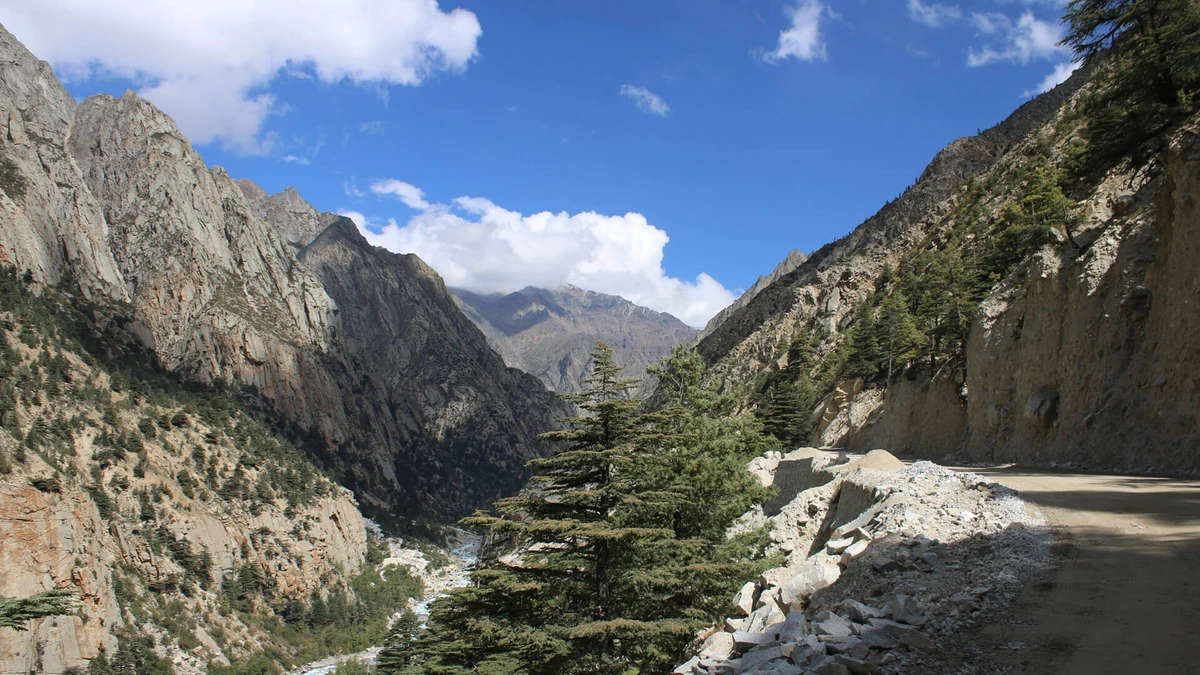
Often compared with the cold desert landscapes of Ladakh and Spiti, Nelong Valley offers a completely different experience from the green forests and popular hill stations of Uttarakhand. The valley’s barren mountains, deep gorges and the Jadh Ganga river landscape create a unique Himalayan setting.
However, visiting Nelong Valley is not like visiting an ordinary tourist destination. It is a strategically sensitive Inner Line area where tourist movement is regulated by the government. Travellers must obtain the required Inner Line Permit (ILP), follow security procedures and comply with the latest instructions issued by the district administration and forest authorities.
If you are planning to visit Nelong Valley in 2027, this detailed travel guide by Discover Uttarakhand explains everything you should know, including the location, history, route, permit process, eligibility considerations, access restrictions, best time to visit, accommodation, nearby attractions and available tour packages.
Whether you are planning a short excursion from Harsil or a complete Himalayan holiday from Delhi, this guide will help you prepare for your journey.
Nelong Valley Travel Guide – Quick Information
| Travel Information | Details |
|---|---|
| Destination | Nelong Valley / Nilang Valley |
| Location | Uttarkashi district, Uttarakhand |
| Region | Near the India–China border |
| Landscape | High-altitude Himalayan cold desert |
| Approximate Altitude | Around 3,350–3,475 metres, subject to location |
| River | Jadh Ganga |
| Administrative District | Uttarkashi |
| Nearest Major Town | Uttarkashi |
| Nearby Destination | Harsil Valley |
| Main Access Route | Uttarkashi – Gangotri – Bhaironghati – Nelong |
| Entry Permission | Inner Line Permit required |
| Issuing Authority | Concerned Uttarkashi administration, including SDM office |
| Visit Type | Day visit only, subject to permission |
| Overnight Stay | Not permitted inside the restricted valley |
| Best Travel Period | Subject to seasonal opening, road conditions and official permission |
| Tour Operator | Discover Uttarakhand |
Important: Distances, altitude references, operating periods, visitor limits and entry conditions may vary by the precise permitted destination and current government instructions. Always verify the latest position before travelling.
1. Where Is Nelong Valley Located?
Nelong Valley is situated in Uttarkashi district in the northern part of Uttarakhand. It lies in the upper reaches of the Jadh Ganga river valley, in a strategically important region close to the Indo-Tibetan border.
The valley forms part of the wider Gangotri National Park landscape and is approached through the Gangotri region.
The journey generally passes through:
- Uttarkashi
- Bhatwari
- Gangnani
- Harsil
- Lanka Bridge and Bhaironghati
- The permitted Nelong Valley access route
Nelong Valley is approximately 100 km beyond Uttarkashi according to the Uttarkashi district administration’s destination information. The actual road distance and journey time depend on the permitted entry point and the section of the valley visitors are authorised to explore.
Its remote location, sensitive border status and challenging mountain environment make advance planning essential.
2. Why Is Nelong Valley Famous?
Nelong Valley is famous for its unusual Himalayan landscape, historical significance and restricted access.
Unlike the green mountain valleys commonly associated with Uttarakhand, Nelong has a rugged, cold-desert appearance.
A. Ladakh-Like Himalayan Landscape
The valley features barren mountains, rocky slopes, dramatic cliffs and striking geological formations. The landscape resembles parts of Ladakh and Spiti, making it particularly attractive to photographers and travellers interested in unusual Himalayan scenery.
B. Jadh Ganga River
The Jadh Ganga river system flows through this mountain region and contributes to the dramatic landscape of the valley.
Its deep gorges, river channels and surrounding rocky mountains make the area especially interesting for nature photography.
C. Ancient Indo-Tibetan Trade Route
The Nelong region has historical connections with traditional trade and movement between the Himalayan communities of India and Tibet.
The surrounding border region was once associated with trade routes used by local communities before movement was disrupted following the 1962 India-China war.
D. Remote Border Region
Nelong Valley’s location near the international border has made it a strategically sensitive area.
Access is therefore regulated through the Inner Line Permit system and security procedures. It is important to respect all official restrictions during the visit.
E. Rare Travel Experience
Because visitor access is controlled, Nelong Valley is very different from conventional tourist destinations.
It appeals particularly to travellers who enjoy remote Himalayan landscapes, photography, geography, mountain history and less-visited destinations.
3. History of Nelong Valley
Nelong Valley and the surrounding Jadh Ganga region have a significant place in the history of Himalayan trade and migration.
Before modern political boundaries and restrictions affected movement, local communities maintained connections across the Himalayan region through traditional trade routes.
The Bhotiya communities of the region were historically associated with seasonal movement and trade between the higher Himalayan settlements and Tibetan areas.
Trade included goods such as wool, salt and other regional products. These routes were important for the local economy and cultural connections.
After the 1962 India-China war, the border region became highly sensitive, and civilian movement was restricted.
Some traditional settlements, including Nelong and Jadung, were abandoned as residents moved to lower areas.
The valley was later opened to regulated domestic tourism, but access continues to be governed by security and administrative requirements.
Today, Nelong Valley represents an interesting combination of natural beauty, Himalayan history and border-region heritage.
4. Nelong Valley Inner Line Permit – Complete Guide
One of the most important things to understand before planning a Nelong Valley trip is the Inner Line Permit.
Nelong Valley is located in a restricted border region. Travellers cannot simply drive into the valley without obtaining the required permission.
The Inner Line Permit system controls the movement of visitors in strategically sensitive areas.
Is a Permit Required for Nelong Valley?
Yes. A valid permit and the required official clearances are necessary for entry into Nelong Valley.
The Uttarkashi district administration continues to enforce the prescribed Inner Line Permit rules.
According to a clarification reported on 31 October 2026 by Pioneer Edge, the District Magistrate stated that there are no exemptions from the prescribed permit process for Nilang and Jadung. The SDM office, Local Intelligence Unit (LIU) and Gangotri National Park Forest Department follow the established verification procedures.
The administration also confirmed that permits are being issued online through the SDM office after verification of the required documents.
Travellers should therefore arrange permission before beginning the excursion rather than assuming that a permit can be obtained immediately at the entry point.
Who Issues the Nelong Valley Permit?
The permit process is handled through the concerned Uttarkashi district administration.
The process involves the relevant authorities and may include:
- The Sub-Divisional Magistrate (SDM) office.
- Local Intelligence Unit (LIU).
- Gangotri National Park Forest Department.
- Other security or administrative authorities, wherever required.
The exact verification process is determined by the authorities and may change.
How to Apply for a Nelong Valley Permit
The general process for arranging a permit is as follows:
Step 1: Confirm Your Travel Date
Decide your intended travel date and confirm whether access is being permitted for that period.
Step 2: Contact the Concerned Permit Authority
Check the current application procedure with the Uttarkashi SDM office or the designated official permit channel.
Step 3: Prepare Traveller Information
Keep the details of every traveller ready. The authorities may require individual identity information, vehicle details, travel dates and other prescribed particulars.
Step 4: Submit the Required Documents
Submit the documents through the current official application process. The SDM office will coordinate the required verification.
Step 5: Complete Security Verification
The relevant authorities, including the LIU and forest department, may carry out the required checks.
Step 6: Receive Permit Approval
Travel only after the required permission has been approved and issued.
Step 7: Carry the Required Documents During Travel
Keep the permit and identification documents available for inspection at checkpoints.
Documents Required for Nelong Valley Permit
The exact document list must be confirmed with the issuing authority before applying.
Travellers should be prepared to provide:
- Valid government-approved photo identification.
- Individual traveller details.
- Passport details or other prescribed identity information, where applicable.
- Vehicle registration details, if requested.
- Driver information, if requested.
- Travel date and intended route.
- Any additional declarations, certificates or documents specifically requested by the authorities.
Do not assume that submitting an Aadhaar card or another identity document alone guarantees permission.
How Many Days Before Should You Apply?
There is no universal processing-time guarantee.
We recommend beginning the enquiry and document preparation well in advance of your intended departure, especially during busy travel periods.
Permit approval depends on document verification, security clearance, administrative procedures and available access.
Can a Travel Agency Arrange the Nelong Valley Permit?
A travel agency can assist with collecting traveller information, coordinating documentation and communicating with the concerned authorities or authorised local channels.
However, a travel agency cannot independently issue the Inner Line Permit or guarantee approval.
Discover Uttarakhand provides assistance with Nelong Valley permit documentation and travel coordination, subject to the official process and approval of the concerned authorities.
Is There a Permit Fee?
Permit fees and other applicable government charges can change.
Travellers should confirm the current official fee schedule before booking. Any permit charges included in a tour quotation should be clearly identified and reconciled with the charges applicable at the time of travel.
Avoid relying on old online permit-fee figures as a guaranteed current tariff.
5. Important Nelong Valley Entry Rules and Restrictions
Nelong Valley is a strategically sensitive border destination. Visitors must follow all rules communicated by the authorities.
1. Entry Only After Official Permission
Travellers must obtain the required approval before entering the restricted area.
2. Daytime Visit Only
The Uttarkashi district administration’s official tourism page describes Nelong Valley as an Inner Line area open to tourists only during daytime.
Visitors must return according to the authorised schedule.
3. No Overnight Stay
Overnight stays inside the restricted valley are not part of the permitted tourist experience. Accommodation should be arranged in accessible destinations such as Harsil or Uttarkashi.
4. Security Verification Is Mandatory
The permit process involves verification by the concerned administrative and security authorities.
5. Follow the Authorised Route
Visitors must use only the routes and locations approved by the authorities.
6. Follow Photography Restrictions
Photography may be restricted at sensitive installations, security locations and other designated areas. Follow instructions given by security personnel.
7. Follow Vehicle and Timing Instructions
Vehicle movement, entry timing and permitted sightseeing areas are governed by the current instructions of the authorities.
8. Access May Be Suspended
Weather conditions, road damage, security requirements and administrative orders may lead to temporary restrictions or closure.
Foreign passport holders and travellers with special documentation requirements should obtain written eligibility guidance from the competent authority before planning the trip. Do not assume that an ordinary domestic tourist permit is applicable to every nationality or passport category.
6. How to Reach Nelong Valley
Nelong Valley is approached by road through Uttarkashi and the Gangotri region.
The most commonly used approach is:
Delhi – Haridwar – Rishikesh – Chamba – Uttarkashi – Bhatwari – Gangnani – Harsil – Bhaironghati – Permitted Nelong Valley Route
The final access depends on the official entry arrangements.
By Road from Delhi
Delhi is a common starting point for travellers visiting Nelong Valley.
The broad route is:
Delhi → Meerut → Haridwar → Rishikesh → Chamba → Uttarkashi → Bhatwari → Gangnani → Harsil → Bhaironghati → Nelong Valley.
The journey from Delhi involves a long mountain road transfer. Travellers should plan sufficient time and avoid treating the journey as a short city-to-city drive.
By Road from Dehradun
Travellers starting from Dehradun can proceed through Mussoorie or the appropriate connecting mountain route towards Chamba and Uttarkashi.
The journey continues through Bhatwari, Gangnani, Harsil and Bhaironghati.
By Road from Rishikesh
Rishikesh is another practical starting point.
Travel through Chamba, Uttarkashi, Bhatwari, Gangnani, Harsil and Bhaironghati before proceeding towards the authorised valley entry route.
By Air
The nearest major airport is Jolly Grant Airport in Dehradun.
From the airport, travellers can hire a taxi or arrange road transportation towards Uttarkashi and Harsil.
By Train
The nearest practical railway connections include Rishikesh, Haridwar and Dehradun.
From the railway station, travellers can continue by road towards Uttarkashi and Harsil.
Travel note: The road journey is long and mountainous. Road conditions, traffic, weather, landslides and administrative restrictions can affect the actual journey time.
7. Route from Harsil to Nelong Valley
Harsil is a convenient base for planning a Nelong Valley excursion.
Harsil is located in the Bhagirathi Valley, and the route towards Nelong proceeds through the upper Gangotri region.
A typical journey involves:
- Early departure from Harsil.
- Travel towards Lanka Bridge and Bhaironghati.
- Completion of required security and permit checks.
- Entry through the authorised route.
- Sightseeing within the areas permitted by the authorities.
- Return to Harsil within the authorised visiting hours.
The actual road distance, vehicle requirement and travel duration depend on the approved access point and prevailing road conditions.
Travellers should not assume that the entire valley, abandoned settlements or areas near the international border are open to tourists.
8. Best Time to Visit Nelong Valley
The best time to visit Nelong Valley depends on the seasonal opening, weather, road conditions and official permission.
The broad travel season is generally associated with the warmer months when the upper Himalayan roads are accessible.
April to May
The spring and early summer period can offer beautiful mountain scenery.
However, high-altitude roads may still be affected by snow or seasonal conditions. Access should be confirmed before departure.
June
June is a popular travel month in the Gangotri and Harsil region.
Visitors can combine Nelong Valley with Harsil and nearby village sightseeing, provided all required permissions are available.
July to August
These months fall within the monsoon season.
Heavy rainfall can affect mountain roads, create landslide risks and interrupt travel schedules.
Travellers should check weather advisories and local road conditions before proceeding.
September to October
The post-monsoon season can offer attractive mountain views and relatively clearer conditions.
It is a favourable period to consider a Himalayan photography and sightseeing trip, subject to official opening and road access.
November to March
Winter conditions can make access to high-altitude areas difficult or impossible.
Snowfall, freezing temperatures and road restrictions may affect the route.
Do not assume that Nelong Valley remains open throughout the year. Always confirm the current seasonal access position with the authorities.
9. Places to Explore Around Nelong Valley
The Nelong Valley excursion can be combined with several attractions in the wider Uttarkashi and Harsil region.
A. Nelong Valley
The primary attraction is the remote mountain landscape, with its rocky slopes, deep valleys and dramatic Himalayan views.
B. Bhaironghati
Bhaironghati is an important geographical point on the route towards the upper Gangotri and Nelong region.
The surrounding river valley and mountain landscape make it a notable stop along the journey.
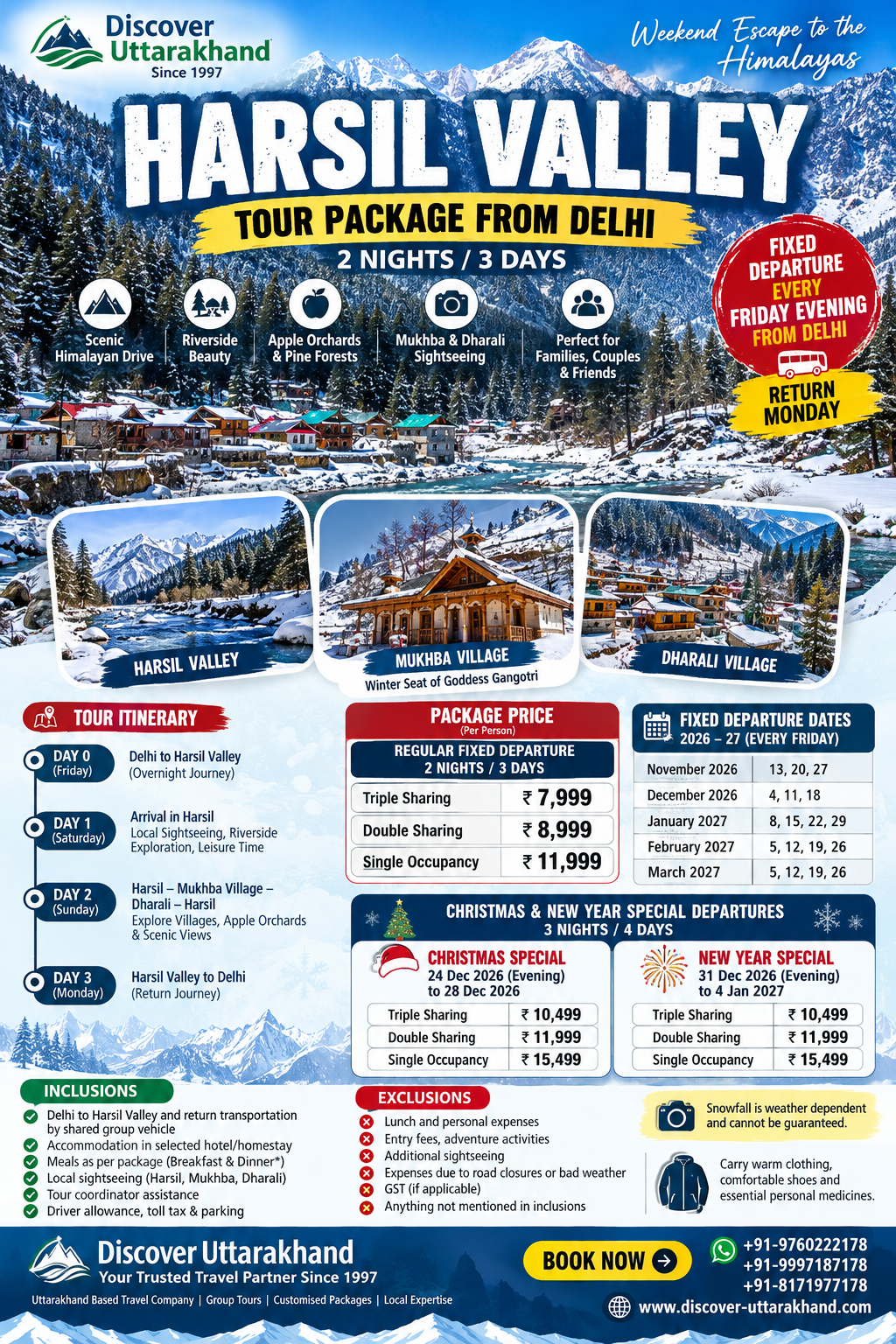
C. Harsil Valley
Harsil is one of the most beautiful destinations in the region.
Its river landscapes, mountain scenery, traditional homes and peaceful atmosphere make it an ideal place to stay before or after a Nelong excursion.
D. Dharali Village
Dharali is a traditional Himalayan village near Harsil.
It is known for its peaceful surroundings, local culture and scenic mountain setting.
E. Mukhba Village
Mukhba has religious significance as the winter seat of Goddess Ganga.
It is an important cultural and spiritual stop for visitors exploring the Gangotri region.
F. Gangotri Dham
Gangotri is one of the four sacred Char Dham destinations of Uttarakhand.
Visitors may include a Gangotri temple visit in their itinerary when the temple is open and road conditions permit.
G. Gangnani
Gangnani is known for its natural hot-water springs and is a popular stop on the route between Uttarkashi and Harsil.
Access to bathing facilities and their operating conditions should be checked locally.
H. Gartang Gali
Gartang Gali is a historic wooden stairway and former trade-route attraction in the Gangotri National Park region.
It is a separate sightseeing attraction and should not be confused with the Nelong Valley permit or entry process.
Gartang Gali has its own access conditions, ticketing and safety rules. Check its current operating status before planning a visit.
10. Nelong Valley vs Harsil Valley – What Is the Difference?
Nelong Valley and Harsil Valley are located in the same broad Himalayan region, but they offer very different experiences.
| Feature | Nelong Valley | Harsil Valley |
|---|---|---|
| Main Experience | Remote border-region landscape | Peaceful Himalayan village and river valley |
| Landscape | Rugged, rocky and cold-desert-like | Green mountains, forests and river scenery |
| Access | Restricted; permit required | Regular tourist access, subject to local conditions |
| Overnight Stay | Not permitted inside restricted valley | Homestays and accommodation available |
| Main Attraction | Remote valley and historic border region | Nature, village life and mountain scenery |
| Travel Style | Regulated day excursion | Relaxed multi-day stay |
| Accommodation Base | Arrange stay outside restricted valley | Suitable base for exploring the region |
For most travellers, combining both destinations creates a more complete Himalayan experience.
11. Where to Stay for a Nelong Valley Trip
Since overnight stays inside Nelong Valley are not permitted, visitors should arrange accommodation outside the restricted region.
Harsil Homestays
Harsil is an excellent base for a multi-day trip.
Local homestays offer an opportunity to experience Himalayan hospitality and enjoy the peaceful surroundings of the Bhagirathi Valley.
Harsil Hotels and Guesthouses
Travellers looking for conventional hotel accommodation can explore the available properties in and around Harsil, subject to seasonal availability.
Uttarkashi Accommodation
Uttarkashi is another option for travellers who prefer to stay in a larger town with more accommodation and service options.
Our recommendation: Choose Harsil for a relaxed trip combining Nelong Valley, Dharali, Mukhba and optional Gangotri sightseeing.
12. Suggested Nelong Valley Tour Itineraries
The ideal itinerary depends on your starting point, available time and permit arrangements.
Option 1: Nelong Valley Day Excursion from Harsil
Suitable for travellers already staying in Harsil.
- Early morning departure from Harsil.
- Drive towards Bhaironghati.
- Complete permit and security formalities.
- Explore permitted Nelong Valley locations.
- Return to Harsil by evening.
This excursion is subject to prior approval and authorised visiting hours.
Option 2: 2 Nights / 3 Days Harsil and Nelong Valley Tour
Day 1: Arrival in Harsil and homestay check-in.
Day 2: Nelong Valley excursion, subject to permit approval. Return to Harsil.
Day 3: Dharali and Mukhba sightseeing, followed by departure towards Uttarkashi or onward destination.
Option 3: 4 Nights / 5 Days Nelong and Harsil Valley Package from Delhi
This package is designed for travellers who want to explore the region through a planned group departure.
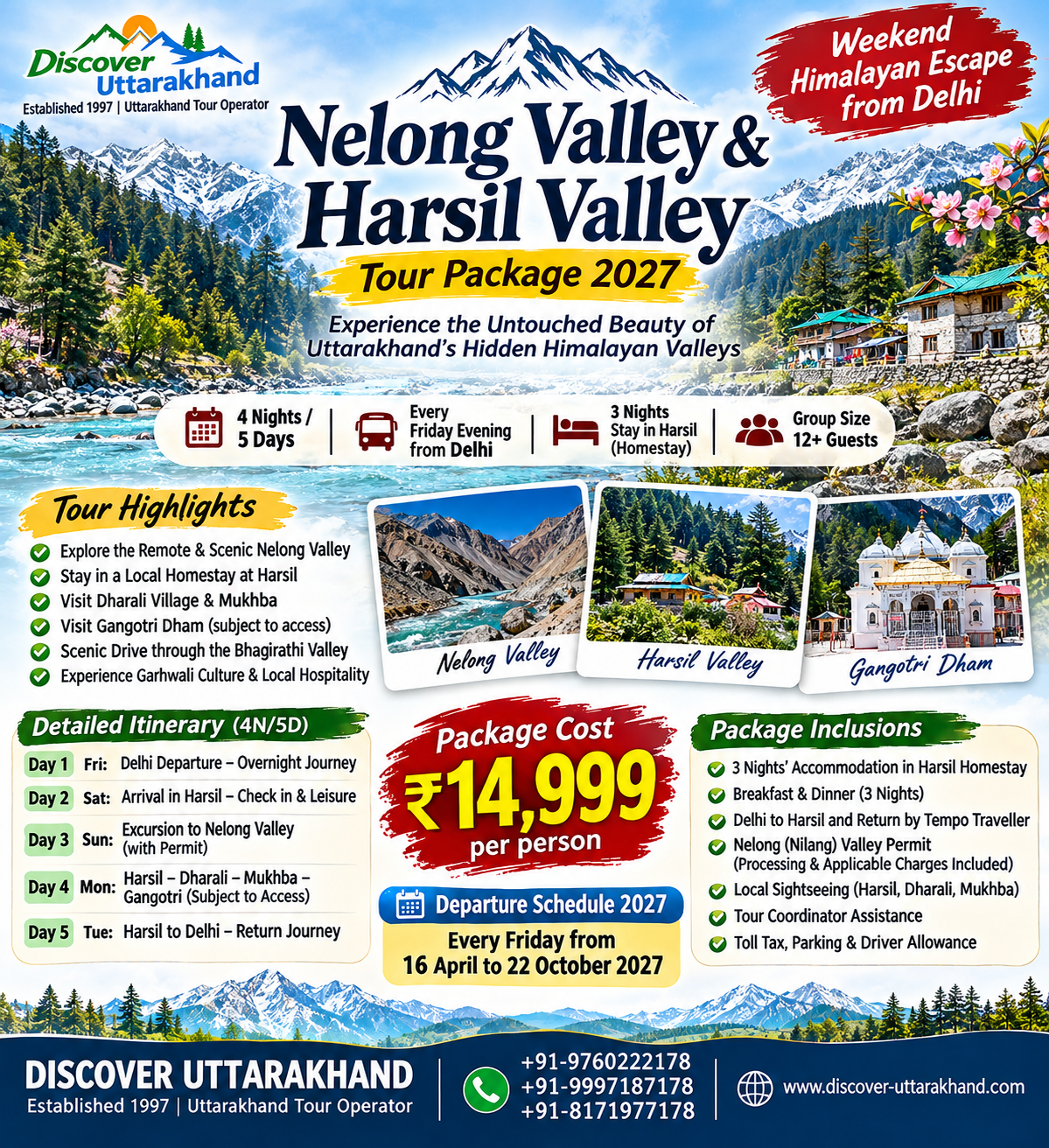
Day 1 – Friday: Delhi departure in the evening. Overnight road journey.
Day 2 – Saturday: Arrival in Harsil, homestay check-in and leisure time.
Day 3 – Sunday: Nelong Valley day excursion, subject to permit approval. Return to Harsil.
Day 4 – Monday: Harsil, Dharali and Mukhba sightseeing. Optional Gangotri visit subject to access.
Day 5 – Tuesday: Breakfast and return journey to Delhi.
This itinerary provides three nights of accommodation in Harsil and includes the main attractions of the region.
13. Nelong Valley Tour Packages 2027 by Discover Uttarakhand
Discover Uttarakhand offers planned travel arrangements for travellers interested in exploring Nelong Valley and the beautiful Harsil region.
Our packages are designed around transportation, homestay accommodation, meals, local sightseeing and assistance with the required permit documentation.
Nelong Valley and Harsil Valley Group Tour from Delhi
<escape>Duration: 4 Nights / 5 Days</escape>
Starting Point: Delhi
Departure: Every Friday evening
Travel Season: 16 April to 22 October 2027
Group Size: 12+ guests
Transportation: Tempo Traveller
Accommodation: 3 nights in a Harsil homestay
Meals: Breakfast and dinner during the three-night stay
Package Price: ₹14,999 per person
Package Highlights
- Explore the spectacular Nelong Valley landscape, subject to official permit approval.
- Enjoy three nights in a local Harsil homestay.
- Visit Dharali and Mukhba.
- Optional Gangotri Dham visit, subject to seasonal access.
- Travel through the beautiful Bhagirathi Valley.
- Experience local Himalayan hospitality.
- Receive assistance with Nelong Valley permit documentation.
Package Inclusions
- Three nights of homestay accommodation in Harsil on a sharing basis.
- Breakfast and dinner during the three-night stay.
- Delhi to Harsil and return transportation by Tempo Traveller.
- Driver allowance, toll tax and parking charges.
- Assistance with Nelong Valley permit documentation.
- Applicable standard permit charges as specified in the confirmed booking, subject to official approval and fee verification.
- Local sightseeing at Harsil, Dharali and Mukhba.
- Tour coordinator assistance.
Package Exclusions
- Lunch, snacks and beverages.
- Personal expenses and shopping.
- Travel insurance and medical expenses.
- Additional local transportation, if required by authorities.
- Additional government charges not included in the confirmed booking.
- Expenses for optional Gangotri sightseeing, if applicable.
- Any service not mentioned under inclusions.
Weekly Friday Departure Schedule – 2027
| Month | Departure Dates |
|---|---|
| April | 16, 23, 30 |
| May | 7, 14, 21, 28 |
| June | 4, 11, 18, 25 |
| July | 2, 9, 16, 23, 30 |
| August | 6, 13, 20, 27 |
| September | 3, 10, 17, 24 |
| October | 1, 8, 15, 22 |
Additional departures around long weekends and public holidays may be arranged on request.
Package booking conditions: The ₹14,999 price is a proposed group selling price based on a minimum of 12 paying adults, shared accommodation and the planned vehicle arrangement. Final availability and pricing must be confirmed at the time of booking.
Important permit condition: The package includes permit assistance, not guaranteed entry. The Nelong Valley excursion will proceed only after the required official approval and security clearance.
14. Travel Tips for Visiting Nelong Valley
A visit to Nelong Valley requires more preparation than a regular hill-station holiday.
Here are some important recommendations.
1. Arrange Your Permit in Advance
Do not travel to the restricted entry point expecting automatic permission.
Complete the required application and verification process before departure.
2. Carry Original Identification
Keep the identity documents specified by the authorities available during the journey.
3. Start Early
A Nelong Valley excursion should be planned as an early-start day trip so that visitors can complete the authorised sightseeing and return within the permitted schedule.
4. Carry Warm Clothing
Temperatures can be low at high altitudes even during summer.
Carry jackets, warm layers, gloves when needed and suitable footwear.
5. Stay Hydrated
High-altitude travel can be physically demanding.
Drink water regularly and avoid rushing during the excursion.
6. Be Prepared for Limited Connectivity
Mobile network availability can be unreliable in remote mountain areas.
Inform family members about your travel plan before entering areas with poor connectivity.
7. Carry Cash
Do not depend entirely on digital payment facilities in remote locations.
8. Follow Security Instructions
Do not enter restricted areas, photograph prohibited installations or ignore instructions from security personnel.
9. Check Road and Weather Conditions
Mountain roads can be affected by rain, landslides, snow and falling debris.
Confirm the route status before starting the journey.
10. Travel with an Experienced Local Operator
A local operator can help coordinate accommodation, transportation, sightseeing and permit documentation.
15. Safety and High-Altitude Travel Guidelines
Nelong Valley is situated at a high elevation, and visitors should take altitude and mountain-road conditions seriously.
Some travellers may experience symptoms associated with altitude exposure, particularly when ascending rapidly.
Recommended precautions include:
- Avoid rushing during the excursion.
- Follow the driver’s and local authorities’ instructions.
- Stay within authorised sightseeing areas.
- Carry personal medicines.
- Inform the tour coordinator about any medical concerns.
- Avoid strenuous activity if you are feeling unwell.
- Seek medical assistance if you develop severe headache, vomiting, unusual breathlessness, confusion or other concerning symptoms.
People with existing medical concerns should seek appropriate medical advice before planning a high-altitude journey.
Safety should always take priority over sightseeing.
16. Responsible Tourism in Nelong Valley
Nelong Valley is a sensitive Himalayan ecosystem and border region.
Visitors should travel responsibly and avoid disturbing the natural environment.
Follow these responsible tourism practices:
- Do not litter.
- Carry back all non-biodegradable waste.
- Do not disturb wildlife.
- Avoid loud music and unnecessary noise.
- Respect local traditions and communities.
- Follow forest and security department instructions.
- Do not enter closed or restricted locations.
- Avoid damaging vegetation and natural formations.
- Support local accommodation and tourism services wherever possible.
Responsible travel helps protect the region’s natural and cultural heritage for future generations.
17. Why Choose Discover Uttarakhand for Your Nelong Valley Tour?
Discover Uttarakhand is a Uttarakhand-based tour operator and destination management company specialising in Himalayan holidays, pilgrimage journeys, group departures and customised travel experiences.
We understand the importance of planning a trip to a destination where access is regulated and travel conditions can change.
Our team assists travellers with:
- Delhi, Dehradun, Haridwar and Rishikesh pickup arrangements, depending on the selected package.
- Tempo Traveller and other suitable vehicle arrangements.
- Harsil homestay and accommodation coordination.
- Local sightseeing planning.
- Permit documentation assistance.
- Group tour coordination.
- Travel guidance and booking support.
Our goal is to help visitors experience the beautiful Himalayan region while respecting local regulations, safety requirements and environmental guidelines.
Frequently Asked Questions About Nelong Valley
1. Where is Nelong Valley located?
Nelong Valley is located in Uttarkashi district of Uttarakhand, in the upper Jadh Ganga region near the India–China border.
2. Is Nelong Valley open for tourists?
Nelong Valley is open to regulated tourist visits when access is authorised. Visitors must obtain the required Inner Line Permit and follow the instructions of the concerned authorities.
3. Is an Inner Line Permit mandatory for Nelong Valley?
Yes. Entry requires the prescribed permit and official clearances. The latest procedure should be confirmed with the Uttarkashi SDM office.
4. Can I get a Nelong Valley permit online?
The Uttarkashi administration has reported that Inner Line Permits are being issued online through the SDM office after verification of required documents. Confirm the current application channel and requirements before travelling.
5. Who issues the Nelong Valley permit?
The permit process is handled through the concerned Uttarkashi district administration, including the SDM office, with verification involving the Local Intelligence Unit and Gangotri National Park Forest Department.
6. Can I visit Nelong Valley without a travel agency?
Travellers can enquire about the official permit process directly with the competent authorities. A travel agency is not a substitute for official approval but can assist with documentation and travel arrangements.
7. Can foreigners visit Nelong Valley?
Eligibility for foreign passport holders and other special categories must be confirmed directly with the competent authorities before planning travel. Do not assume that the standard domestic visitor process applies.
8. Is an overnight stay allowed in Nelong Valley?
No. The official Uttarkashi district tourism information describes Nelong Valley as a daytime tourist destination. Visitors should arrange accommodation outside the restricted valley.
9. How far is Nelong Valley from Uttarkashi?
The Uttarkashi district tourism page gives an approximate distance of 100 km from the district headquarters. Actual travel distance depends on the authorised entry point and route.
10. How far is Nelong Valley from Harsil?
The distance depends on the permitted entry point and the exact location authorised for sightseeing. Harsil is commonly used as a base for planning the excursion through Bhaironghati.
11. What is the best time to visit Nelong Valley?
The warmer travel months are generally more suitable, but the actual season depends on official access, snow conditions and road status. Confirm the latest position before booking.
12. Is Nelong Valley safe for tourists?
It can be visited when official permission is granted and the authorities allow access. Visitors must follow all security instructions and avoid unauthorised areas.
13. Can I visit Nelong Valley and Harsil together?
Yes. A combined itinerary is a practical way to explore the region. Harsil provides accommodation outside the restricted valley and offers additional sightseeing opportunities.
14. Is Gangotri included in the Nelong Valley tour?
Gangotri can be included as an optional sightseeing visit, depending on the itinerary, temple opening schedule, road conditions and available time.
15. What is the price of the Nelong Valley tour package from Delhi?
Discover Uttarakhand’s proposed 2027 group package is priced at ₹14,999 per person for 4 Nights / 5 Days, based on a minimum group of 12 paying adults and the stated accommodation and vehicle arrangements.
16. Does the Nelong Valley package include the permit?
The package includes permit documentation assistance and applicable standard permit charges as specified in the confirmed booking. Entry remains subject to official approval.
17. Can I visit Gartang Gali during my Nelong Valley tour?
Gartang Gali is a separate attraction in the wider Gangotri region. It may be added to a customised itinerary if its access rules, operating status, available time and travel logistics permit.
18. How many days are required for a Nelong Valley trip?
A single day is generally planned for the permitted Nelong Valley excursion. A 3–5 day trip is more suitable when combining it with Harsil, Dharali, Mukhba and optional Gangotri sightseeing.
19. Is mobile connectivity available in Nelong Valley?
Mobile connectivity can be limited or unreliable in remote high-altitude areas. Travellers should not depend on continuous mobile or internet access.
20. How can I book a Nelong Valley tour package?
You can contact Discover Uttarakhand by phone or WhatsApp to enquire about the next group departure, accommodation, transportation, permit documentation and current booking conditions.
Plan Your Nelong Valley Journey with Discover Uttarakhand
Nelong Valley is more than just another Himalayan destination. Its rugged mountain scenery, ancient trade-route history, remote location and regulated access make it a distinctive travel experience in Uttarakhand.
Combine the extraordinary landscapes of Nelong Valley with the peaceful atmosphere of Harsil, the traditional villages of Dharali and Mukhba, and an optional visit to Gangotri Dham.
Whether you are planning a weekend-style group departure from Delhi or a customised Himalayan journey, Discover Uttarakhand can assist with your travel arrangements.
Recommended Tour: Nelong Valley and Harsil Valley Group Tour 2027
Duration: 4 Nights / 5 Days
Starting Point: Delhi
Departure: Every Friday evening
Accommodation: 3 Nights in Harsil Homestay
Transportation: Tempo Traveller
Package Price: ₹14,999 per person
Minimum Group Size: 12 paying adults
Contact Discover Uttarakhand
DISCOVER UTTARAKHAND
Uttarakhand Tour Operator & Destination Management Company
Call / WhatsApp:
- +91-9760222178
- +91-9997187178
- +91-8171977178
Website: Best travel Agency in Uttarakhand
Enquire Now: Contact our team for the latest Nelong Valley permit procedure, travel dates, group availability and package details.
Discover Uttarakhand – Explore More. Experience the Himalayas.

Leave a Reply