Introduction: Where the Pandavas Found Peace
Nestled in the Garhwal Himalayas of Uttarakhand’s Chamoli district, at an altitude of approximately 1,800 meters (5,900 feet), Pandukeshwar is a serene village that holds immense historical, mythological, and spiritual significance. Located on the banks of the sacred Alaknanda River, just 24 km south of the famous Badrinath Temple, this remote Himalayan settlement is the uppermost year-round inhabited village in the valley .
The name “Pandukeshwar” is deeply rooted in Mahabharata lore. According to tradition, King Pandu—the father of the Pandavas—spent his last days performing penance here before attaining Nirvana, hence the name. After the great Kurukshetra war, the Pandavas also handed over Hastinapur to their grandson Parikshit and retired to this tranquil spot to spend their final days in meditation and devotion.
What makes Pandukeshwar truly remarkable is its spiritual duality. During the harsh winter months, when the famous Badrinath Temple is closed due to heavy snowfall, the sacred idol of Lord Badrinath is ceremoniously brought down to the Yogdhyan Badri Temple in Pandukeshwar and worshipped here for six months. This makes Pandukeshwar the “winter abode” of Lord Badrinath, allowing devotees to seek blessings even when the main shrine is inaccessible.
Whether you are a pilgrim on the Char Dham Yatra, a history enthusiast fascinated by 9th-century temple architecture, a devotee wishing to witness the unique Dravidian-style temple in the Himalayas, or a traveller seeking peace in the lap of the Alaknanda River, Pandukeshwar promises an experience that is both spiritually profound and historically captivating.
Key Information at a Glance:
History and Mythology: The Legacy of King Pandu and the Pandavas
The Story of King Pandu
The name “Pandukeshwar” is derived from King Pandu, the father of the five Pandava brothers in the Mahabharata. According to mythology, after being cursed by a sage, King Pandu retired from the throne and spent his last days performing intense penance here in the Garhwal Himalayas. It is believed that he attained Nirvana at this very spot, and the village was named in his honour.
Legend also states that King Pandu married Kunti at Pandukeshwar, near Sri Badrinath. This sacred location is also associated with the birth of Karna—the legendary warrior who was the son of Kunti and Surya (the Sun God). Suryakund, a hot water spring located near the source of the Milam Glacier, is believed to be the place where Kunti gave birth to Karna.
The Retirement of the Pandavas
After the bloody Kurukshetra war, the Pandavas were burdened by the guilt of killing their own kinsmen. They handed over the kingdom of Hastinapur to their grandson, Raja Parikshit, and set out on their final journey toward heaven (Swargarohini) . During this journey, they spent time in Pandukeshwar, meditating and seeking spiritual solace.
This connection to the Pandavas makes Pandukeshwar an integral part of the Panch Kedar and Badri circuit, as pilgrims retrace the footsteps of the epic heroes.
The Katyuri Dynasty and Ancient Copper Plates
Pandukeshwar is not just a site of mythology but also of significant historical importance. The village has yielded several ancient copper plate grants from the Katyuri dynasty, which ruled over the region from the 6th to the 11th centuries CE. These inscriptions, written in Sanskrit, provide valuable information about the early history of the temple and the Katyuri Rajas.
The existence of these copper plates indicates that Pandukeshwar was a thriving religious and cultural centre over a thousand years ago, with established temple traditions and royal patronage.
The Four Copper Plate Grants
The site is notable for being the source of four early copper plate grants from the Katyuri dynasty. These grants provide evidence of a thriving Hindu kingdom and religious tradition in the central Himalayas from the 6th century onwards (post-Gupta era). These historical documents confirm that Pandukeshwar has been a centre of Vaishnavite worship for over 1,400 years.
The Yogdhyan Badri Temple: Architecture and Significance
Part of the Sapta Badri Circuit
Yogdhyan Badri Temple is one of the sacred Sapta Badri (seven Badri) temples, also known as Panch Badri in some traditions . The Sapta Badri circuit includes Badrinath, Adi Badri, Vriddha Badri, Bhavishya Badri, Yogdhyan Badri, Dhyan Badri, and Ardha Badri. Yogdhyan Badri is considered the site where Lord Vishnu is worshipped in a meditative posture (Yogdhyan).
Unique Dravidian Architecture in the Himalayas
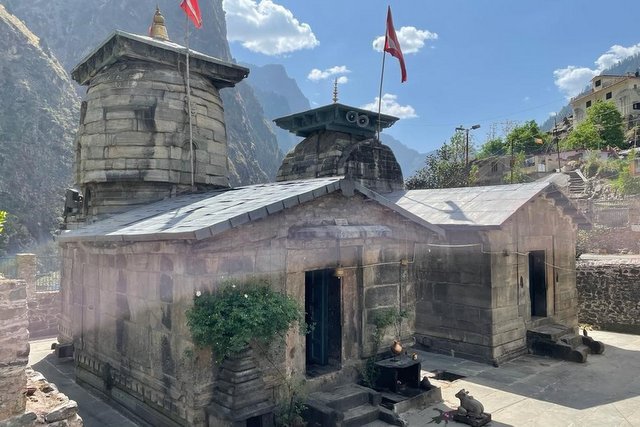
The Yogdhyan Badri Temple is an architectural marvel that stands out among Himalayan temples. While most temples in the region follow North Indian Nagara style, this temple is built in the Dravidian architectural style typical of South India.
Key Architectural Features:
The Idol: Lord Vishnu in Meditative Posture
The temple houses a life-size bronze image of Lord Vishnu in a meditative posture (Yogdhyan). According to tradition, King Pandu installed this bronze statue of Lord Vishnu within the shrine as a tribute to his devotion.
The Vasudeva Temple (Narayana Temple)
Adjacent to the Yogdhyan Badri Temple stands the Vasudeva Temple, also called the Narayana Temple. Key features include:
The Lakshminarayana Temple
To the left of the Yogdhyan Badri Temple is the north-facing Lakshminarayana Temple, which illustrates yet another form of Hindu temple architecture. It has been restored and rebuilt in the 20th century; in form, it is closer to the Vallabhi style.
The Winter Seat of Badrinath
One of the most significant aspects of Pandukeshwar is its role as the winter abode of Lord Badrinath. During the winter months (November to April), when the Badrinath Temple is closed due to heavy snowfall, the Utsav Murti (festival idol) of Lord Badrinath is ceremoniously brought down to the Yogdhyan Badri Temple and worshipped here.
| Season | Location of Deity | Temple |
|---|---|---|
| Summer (May–Oct) | Badrinath | Badrinath Temple |
| Winter (Nov–April) | Pandukeshwar | Yogdhyan Badri Temple |
The Devwar Festival
“Devwar” is the most important festival of the Yogdhyan Badri Temple. This is the day when the deities representing Lord Udhava (cousin of Lord Vishnu) and Lord Kuber go to Badrinath. The other festival falls on the day when the idols return to the Yogdhyan Badri Temple in the winter.
Temple Timings
| Season | Timings |
|---|---|
| Summer (May–October) | 6:00 AM – 12:00 PM, 2:00 PM – 7:00 PM |
| Winter (November–April) | 7:00 AM – 6:00 PM |
Note: During winter, the temple serves as the main shrine when the Badrinath idol resides here.
Religious Significance
The Meditative Form of Lord Vishnu
Yogdhyan Badri is unique among the Badri temples because Lord Vishnu is worshipped here in his meditative posture (Yogdhyan). This represents the cosmic repose of the deity, symbolising peace, contemplation, and the state of ultimate consciousness.
Connection to Udhava and Kuber
The temple also houses idols of Lord Udhava (cousin of Lord Vishnu) and Lord Kuber (the god of wealth). During the winter procession when the Badrinath idol is moved, these deities accompany the main idol, highlighting the interconnectedness of the divine in Vaishnavite tradition.
The Sapta Badri Pilgrimage
Completing the Sapta Badri (or Panch Badri) circuit is considered highly meritorious for devotees of Lord Vishnu. Yogdhyan Badri is an essential stop in this sacred circuit, and many pilgrims visit here after their darshan at the main Badrinath Temple.
The Sapta Badri temples include:
| Temple | Location | Significance |
|---|---|---|
| Badri Vishal (Badrinath) | Badrinath | Main shrine, Char Dham temple |
| Adi Badri | Near Karnaprayag | Ancient temple complex |
| Vriddha Badri | Animath village | Old form of Badri |
| Bhavishya Badri | Subhain village | Future Badrinath |
| Yogdhyan Badri | Pandukeshwar | Meditative form |
| Dhyan Badri | Urgam Valley | Meditation temple |
| Ardha Badri | Near Joshimath | Half/small form |
Flora and Fauna
Kedarnath Wildlife Sanctuary
Pandukeshwar lies near the Kedarnath Wildlife Sanctuary (also known as the Kedarnath Musk Deer Sanctuary), one of the largest protected areas in the western Himalayas. The sanctuary spans approximately 975 square kilometres and is known for its rich biodiversity.
Forests and Vegetation
The area around Pandukeshwar is characterised by dense forests of:
| Forest Type | Dominant Species |
|---|---|
| Temperate Forests | Oak, Deodar, Pine |
| Sub-alpine Forests | Birch, Rhododendron, Fir |
| Alpine Meadows | Grasses, wildflowers, herbs |
The rhododendron forests are especially spectacular in spring (March-April) when the hillsides burst into vibrant red and pink blooms.
Wildlife
The Kedarnath Wildlife Sanctuary is home to several rare and endangered species:
| Species | Status |
|---|---|
| Himalayan Musk Deer | Endangered |
| Snow Leopard | Endangered |
| Himalayan Black Bear | Vulnerable |
| Himalayan Tahr | Near Threatened |
| Bharal (Blue Sheep) | Schedule I |
| Leopard | Vulnerable |
Birdlife
The region is a haven for birdwatchers, with species including:
- Himalayan Monal – State bird of Uttarakhand
- Koklass Pheasant – Resident breeder
- Golden Eagle – High-altitude predator
- Bearded Vulture (Lammergeier) – High-altitude scavenger
How to Reach Pandukeshwar
By Air
Nearest Airport: Jolly Grant Airport, Dehradun (approximately 310 km from Pandukeshwar)
| Details | Information |
|---|---|
| Distance | ~310 km |
| Travel Time | 10–12 hours by taxi |
| Airlines | Regular flights from Delhi to Dehradun (approx. 1 hour) |
| Onward Travel | Taxis available from the airport to Pandukeshwar via Rishikesh and Joshimath |
By Train
Nearest Railway Station: Rishikesh (approximately 295 km from Pandukeshwar)
| Details | Information |
|---|---|
| Distance | ~295 km |
| Travel Time | 10–12 hours by taxi |
| Connectivity | Well-connected from Delhi |
Popular Trains from Delhi to Rishikesh/Haridwar:
| Train Name | From Delhi | Departure | Arrival | Destination |
|---|---|---|---|---|
| Shatabdi Express | Delhi | 6:00 AM | 11:40 AM | Haridwar |
| Jan Shatabdi | Delhi | 3:20 PM | 9:00 PM | Haridwar |
| Mussoorie Express | Delhi | 10:05 PM | 5:30 AM | Haridwar |
By Road
Route from Delhi to Pandukeshwar:
Road Conditions: The route is scenic but winding, following the Alaknanda River through the Garhwal Himalayas. Caution is advised during the monsoon when landslides can occur. During winter, heavy snowfall may block access.
Distances from Major Cities
| City | Distance (km) |
|---|---|
| Delhi | ~500 |
| Dehradun | ~310 |
| Rishikesh | ~295 |
| Haridwar | ~310 |
| Joshimath | 24 |
| Badrinath | ~23 |
| Govindghat | ~45 |
| Auli | ~40 |
Weather and Best Time to Visit
Climate Overview
Pandukeshwar experiences a high-altitude alpine climate. The village is situated at 1,800 metres, and winters are extremely cold with heavy snowfall. The area can be inaccessible during winter due to snow.
Month-by-Month Guide
| Month | Season | Day Temp (°C) | Night Temp (°C) | Conditions | Suitability |
|---|---|---|---|---|---|
| March | Spring | 5–12 | -2–5 | Snow melting, trails opening | ⭐ Good |
| April | Spring | 8–15 | 0–5 | Pleasant, spring blooms | ⭐ Excellent |
| May | Summer | 12–20 | 3–8 | Pleasant, clear skies | ⭐ Best |
| June | Summer | 15–22 | 5–10 | Warm, ideal | ⭐ Best |
| July | Monsoon | 12–18 | 8–12 | Heavy rain, landslides | ❌ Avoid |
| August | Monsoon | 12–18 | 8–12 | Heavy rain, slippery roads | ❌ Avoid |
| September | Autumn | 10–16 | 3–8 | Post-monsoon, clear | ⭐ Best |
| October | Autumn | 5–12 | 0–5 | Crisp, clear, closing soon | ⭐ Best |
| November–April | Winter | -5–10 | -15–-2 | Heavy snow, road blocks | ❌ Closed |
Best Time to Visit by Season
Why Visit in Summer (May–June)
This is the most popular time to visit Pandukeshwar:
- Pleasant weather with temperatures ranging from 12°C to 22°C
- Clear skies offering beautiful views of the Alaknanda Valley
- The Badrinath Temple is open (located 23 km away)
- Ideal conditions for combining with other Badri temples
- The rhododendron forests are in bloom (April-May)
Why Visit in Autumn (September–October)
Autumn is another excellent time to visit:
- Post-monsoon freshness brings out the lush greenery
- Crisp, invigorating air with clear, cloudless skies
- Perfect for photography
- Fewer crowds compared to the summer peak season
- The temple closing ceremonies (late October) are culturally significant
Why Avoid Monsoon (July–August)
The monsoon months are not recommended for visiting due to:
- Heavy rainfall making roads slippery and dangerous
- High risk of landslides and road blockages
- The region is prone to flash floods and cloudbursts
- Cloud cover obscuring mountain views
Winter Closure (November–April)
During winter, the region faces extreme conditions:
- Heavy snowfall makes roads inaccessible
- Badrinath Temple is closed
- While the Badrinath idol resides at Yogdhyan Badri Temple in Pandukeshwar, reaching the village becomes nearly impossible
- Do not attempt to visit during this period without checking road conditions first
Top Attractions in and Around Pandukeshwar
1. Yogdhyan Badri Temple – The Main Shrine
The Yogdhyan Badri Temple is the primary attraction of Pandukeshwar and one of the seven sacred Badri temples. Dedicated to Lord Vishnu in a meditative posture, this 9th-century temple features unique Dravidian architecture, rare in the Himalayas.
What to Expect:
- A life-size bronze idol of Lord Vishnu in meditative pose
- Cylindrical stone shikhara (tower) unique in the region
- Intricate carvings and artwork, including the sejant lion motif
- Peaceful, serene atmosphere away from the crowds of Badrinath
Timings: 6:00 AM – 12:00 PM, 2:00 PM – 7:00 PM
Entry Fee: Free
2. Vasudeva Temple (Narayana Temple)
Located adjacent to the Yogdhyan Badri Temple, the Vasudeva Temple (also called the Narayana Temple) dates to the late 9th century.
What to Expect:
- Curvilinear shikhara in Nagara style
- Beautiful copper statue of standing Narayana (Vishnu)
- Unique blend of South Indian and Bengali artistic influences
3. Lakshminarayana Temple
Located to the left of the main temple, this north-facing shrine illustrates yet another form of Hindu temple architecture. It was restored in the 20th century and features Vallabhi-style architecture.
4. Pandukeshwar Lake
Located within the village, Pandukeshwar Lake is a beautiful spot offering breathtaking views of the surrounding Himalayas.
5. Alaknanda River Banks
The sacred Alaknanda River flows alongside Pandukeshwar. The riverbanks offer peaceful spots for meditation and photography.
6. Badrinath Temple
Located approximately 23 km north of Pandukeshwar, the Badrinath Temple is one of the four Char Dham and the most important shrine in the Badri circuit. It is a must-visit for pilgrims.
Distance: ~23 km
Timings: 4:00 AM – 9:00 PM (during yatra season)
Best Time: May–October
7. Mana Village – India’s Last Village
Located near Badrinath (approximately 26 km from Pandukeshwar), Mana village is famously known as the “Last Village of India” before the Tibetan border.
Highlights:
- Vyas Gufa (where the Mahabharata was composed)
- Ganesh Gufa
- Bheem Pul
- Saraswati River
- “Last Tea Stall of India”
8. Vasudhara Falls
A spectacular 400-foot (122-meter) waterfall located approximately 8-9 km from Mana Village. According to legend, the water falls only on those with pure hearts.
Trek Distance: 5-6 km from Mana village
Best Time: Post-monsoon (September–October)
9. Joshimath – The Winter Seat of Badrinath
Located 24 km south of Pandukeshwar, Joshimath is the winter abode of Lord Badrinath. Key attractions include:
- Narasimha Temple – 1,200-year-old idol with a shrinking arm
- Shankaracharya Math – One of the four cardinal mathas
- Kalpavriksha – 1,200-year-old wish-fulfilling tree
10. Auli – The Skiing Capital of India
Located approximately 40 km from Pandukeshwar, Auli is famous for its skiing slopes and the second-longest ropeway in Asia, offering panoramic views of Nanda Devi, Trishul, and other Himalayan peaks.
Distance: ~40 km
Best Time: December–February (skiing), May–October (ropeway)
Nearby Places to Visit
Where to Stay: Accommodation Options
In Pandukeshwar (Limited)
| Accommodation | Features |
|---|---|
| Guesthouses | Basic rooms, simple facilities |
| Homestays | Limited availability, authentic Garhwali experience |
In Joshimath (24 km from Pandukeshwar – Recommended Base)
| Category | Price Range | Examples | Features |
|---|---|---|---|
| Mid-Range Hotels | ₹2,500 – ₹5,000 | Aryam Resort, Panchvati Inn | Comfortable rooms, hot water, good food |
| Budget Hotels | ₹800 – ₹2,000 | Local guesthouses | Basic amenities |
| Homestays | ₹1,500 – ₹3,500 | Various family-run properties | Authentic Garhwali experience |
In Badrinath (23 km from Pandukeshwar)
| Category | Price Range | Features |
|---|---|---|
| GMVN Guest Houses | ₹1,500 – ₹3,000 | Government-run, reliable |
| Dharamshalas | ₹500 – ₹1,500 | Simple, spiritual atmosphere |
| Private Guesthouses | ₹1,000 – ₹2,500 | Basic amenities |
In Auli (40 km from Pandukeshwar)
| Category | Price Range | Features |
|---|---|---|
| Luxury Resorts | ₹8,000 – ₹15,000+ | Mountain views, premium amenities |
| Mid-Range Hotels | ₹3,000 – ₹6,000 | Comfortable rooms |
| Tented Camps | ₹1,500 – ₹3,500 | Unique camping experience |
Booking Tips
- Book well in advance for peak season (May–June, September–October)
- Joshimath is the recommended base for visiting Pandukeshwar
- For stays near the temple, options are limited; most visitors stay in Joshimath or Badrinath
- Carry cash—card facilities may be limited in smaller towns
Sample Itineraries
1-Day Pandukeshwar Trip (From Joshimath)
| Time | Activity |
|---|---|
| 7:00 AM | Depart from Joshimath |
| 8:00 AM | Arrive at Pandukeshwar |
| 8:00 AM – 10:00 AM | Visit Yogdhyan Badri Temple, Vasudeva Temple, Lakshminarayana Temple |
| 10:00 AM – 11:00 AM | Explore the temple complex, photography |
| 11:00 AM | Depart for Joshimath or continue to Badrinath |
2-Day Pandukeshwar & Badrinath Pilgrimage
Day 1: Joshimath to Pandukeshwar to Badrinath
- Morning: Depart from Joshimath, visit Pandukeshwar temples (1-2 hours)
- Afternoon: Continue to Badrinath (23 km), check into the hotel
- Evening: Badrinath Temple darshan, evening aarti
- Night: Overnight in Badrinath
Day 2: Badrinath to Mana Village to Joshimath
- Morning: Visit Mana Village (Vyas Gufa, Ganesh Gufa, Bheem Pul)
- Afternoon: Visit Tapt Kund, depart for Joshimath
- Evening: Arrive in Joshimath, depart
3-Day Complete Badri Circuit
Day 1: Delhi → Haridwar → Rishikesh (drive)
Day 2: Rishikesh → Joshimath → Pandukeshwar → Badrinath
Day 3: Badrinath → Mana Village → Vasudhara Falls → Joshimath → Delhi
Travel Tips and Important Information
Before You Go
- Check Weather: Avoid monsoon (July–August) due to heavy rainfall and landslide risk.
- Advance Booking: Essential for peak season (May–June, September–October).
- Carry Cash: ATMs are limited in Pandukeshwar; bring sufficient cash from Joshimath or Rishikesh.
- Dress Modestly: Pandukeshwar is a sacred site; dress appropriately when visiting temples.
- Physical Fitness: The temples require minimal walking, but the high altitude (1,800 m) may cause mild breathlessness.
During Your Visit
- Remove Shoes: Before entering the temple premises.
- Respect Temple Rituals: Photography may be restricted inside the sanctum.
- Maintain Silence: The temple is a place of worship and meditation.
- Carry Warm Clothing: Even in summer, mornings and evenings are cool.
Safety Tips
- Road Safety: The roads from Joshimath to Pandukeshwar are winding; avoid night driving
- Monsoon Travel: Avoid July–August due to landslide risk
- Altitude Awareness: At 1,800 m, altitude sickness is rare but possible; stay hydrated
- Winter Access: The area can be inaccessible during winter due to heavy snowfall
Packing Checklist
| Season | Essentials |
|---|---|
| All Year | Comfortable walking shoes, sunscreen, hat, reusable water bottle, power bank, camera, cash |
| Summer (May-Jun) | Light cotton clothes, a light sweater for evenings, a hat |
| Monsoon (Jul-Aug) | Raincoat, waterproof footwear (avoid travel if possible) |
| Winter (Oct-Feb) | Light cotton clothes, a light sweater for evenings, hat |
Photography Tips
- Best Spots: Yogdhyan Badri Temple (Dravidian architecture), Vasudeva Temple (copper statue), Alaknanda River views
- Best Time: Morning for soft light; golden hour for landscapes
- Note: Ask permission before photographing inside the sanctum
Etiquette and Customs
| Custom | Details |
|---|---|
| Remove Shoes | Before entering the temple premises |
| Dress Modestly | Shoulders and knees should be covered |
| Maintain Silence | Inside the sanctum |
| Ask Permission | Before photographing the deity |
| Offerings | Flowers, coconut, prasad (available near the temple) |
Frequently Asked Questions (FAQs)
Q1: What is Pandukeshwar famous for?
A: Pandukeshwar is famous for being the winter abode of Lord Badrinath and for the Yogdhyan Badri Temple—one of the seven sacred Badri temples. It is also known for its unique 9th-century Dravidian architecture, rare in the Himalayas.
Q2: What is the best time to visit Pandukeshwar?
A: The best time to visit is May to October (summer and autumn). The weather is pleasant, and the roads are accessible. Winter visits are challenging due to heavy snowfall .
Q3: How far is Pandukeshwar from Joshimath?
A: Pandukeshwar is approximately 24 km from Joshimath, with a travel time of 45–60 minutes by road.
Q4: How far is Pandukeshwar from Badrinath?
A: Pandukeshwar is approximately 23 km from Badrinath, with a travel time of 40–50 minutes by road.
Q5: How far is Pandukeshwar from Delhi?
A: The distance from Delhi is approximately 500 km, with a travel time of 14–16 hours by road.
Q6: How do I reach Pandukeshwar?
A: By road from Joshimath (24 km) or Badrinath (23 km), by train to Rishikesh (~295 km) followed by taxi, or by flight to Jolly Grant Airport, Dehradun (~310 km) followed by taxi.
Q7: What is the altitude of Pandukeshwar?
A: Pandukeshwar is situated at an altitude of approximately 1,800 metres (5,900 feet) above sea level.
Q8: What is the Yogdhyan Badri Temple?
A: Yogdhyan Badri is one of the seven sacred Badri temples, where Lord Vishnu is worshipped in a meditative posture. It is also the winter seat of Lord Badrinath when the main temple closes due to snow.
Q9: Why is the architecture of Yogdhyan Badri unique?
A: The temple is built in the Dravidian architectural style, which is extremely rare in the Himalayas. It features a cylindrical stone shikhara similar to South Indian temples, with artwork matching 9th-century Dravidian temples.
Q10: What is the connection between Pandukeshwar and the Mahabharata?
A: King Pandu (father of the Pandavas) performed penance here before his Nirvana, and the Pandavas retired here after handing over Hastinapur to their grandson. The village is named after King Pandu.
Q11: What are the temple timings?
A: Summer: 6:00 AM – 12:00 PM, 2:00 PM – 7:00 PM. Winter: 7:00 AM – 6:00 PM. Timings may vary during festivals.
Q12: Is there an entry fee for Yogdhyan Badri Temple?
A: No, entry to the temple is free.
Q13: What is the Devwar festival?
A: “Devwar” is the most important festival of the Yogdhyan Badri Temple. It celebrates the day when the deities representing Lord Udhava and Lord Kuber go to Badrinath, and the day they return in winter.
Q14: What are the nearby places to visit?
A: Nearby attractions include Badrinath Temple (23 km), Mana Village, Joshimath (24 km), Auli (40 km), and Vasudhara Falls.
Q15: Is Pandukeshwar accessible during winter?
A: Winter access is very challenging due to heavy snowfall. Roads may be blocked, and the area can be inaccessible. However, the Yogdhyan Badri Temple serves as the winter abode of Lord Badrinath during this period.
Plan Your Pandukeshwar Journey with Discover Uttarakhand
At Discover Uttarakhand, we’ve been organising unforgettable spiritual journeys across Devbhoomi since 1997. As a trusted local operator with deep knowledge of the Garhwal Himalayas and the Badri circuit, we offer:
- ✅ Customised Pandukeshwar tour packages (2 to 5 days)
- ✅ Combined Sapta Badri itineraries covering all seven shrines
- ✅ Char Dham Yatra packages including Pandukeshwar as an extension
- ✅ Comfortable transport with experienced hill drivers
- ✅ Verified accommodations in Joshimath and Badrinath
- ✅ Local guides for the temple complex and surrounding attractions
- ✅ 24/7 customer support throughout your journey
Recommended Pandukeshwar Packages
| Package | Duration | Starting Point | Highlights |
|---|---|---|---|
| Pandukeshwar Day Trip | 1 Day | Joshimath | Yogdhyan Badri Temple, Vasudeva Temple |
| Pandukeshwar & Badrinath Pilgrimage | 2 Nights / 3 Days | Haridwar | Both shrines, Mana Village |
| Sapta Badri Yatra | 5 Nights / 6 Days | Haridwar | All seven Badri temples |
| Badrinath with Pandukeshwar | 3 Nights / 4 Days | Haridwar | Badrinath Temple, Pandukeshwar, Mana Village |
Book your Pandukeshwar journey today and witness the winter abode of Lord Badrinath in the peaceful Garhwal Himalayas.
📞 Call / WhatsApp: +91-9997187178, 9760222178, 8171977178
📍 Visit Our Office: Himalayan Colony, opposite DSVV, Haripur Kalan, Haridwar, Motichur Range, Uttarakhand 249411
🌐 Website: www.discover-uttarakhand.com
📧 Email: info@discover-uttarakhand.com
Jai Badri Vishal! Om Namo Narayanaya! 🙏
Discover Uttarakhand – Your Local Partner for Sacred Himalayan Journeys Since 1997 🏔️